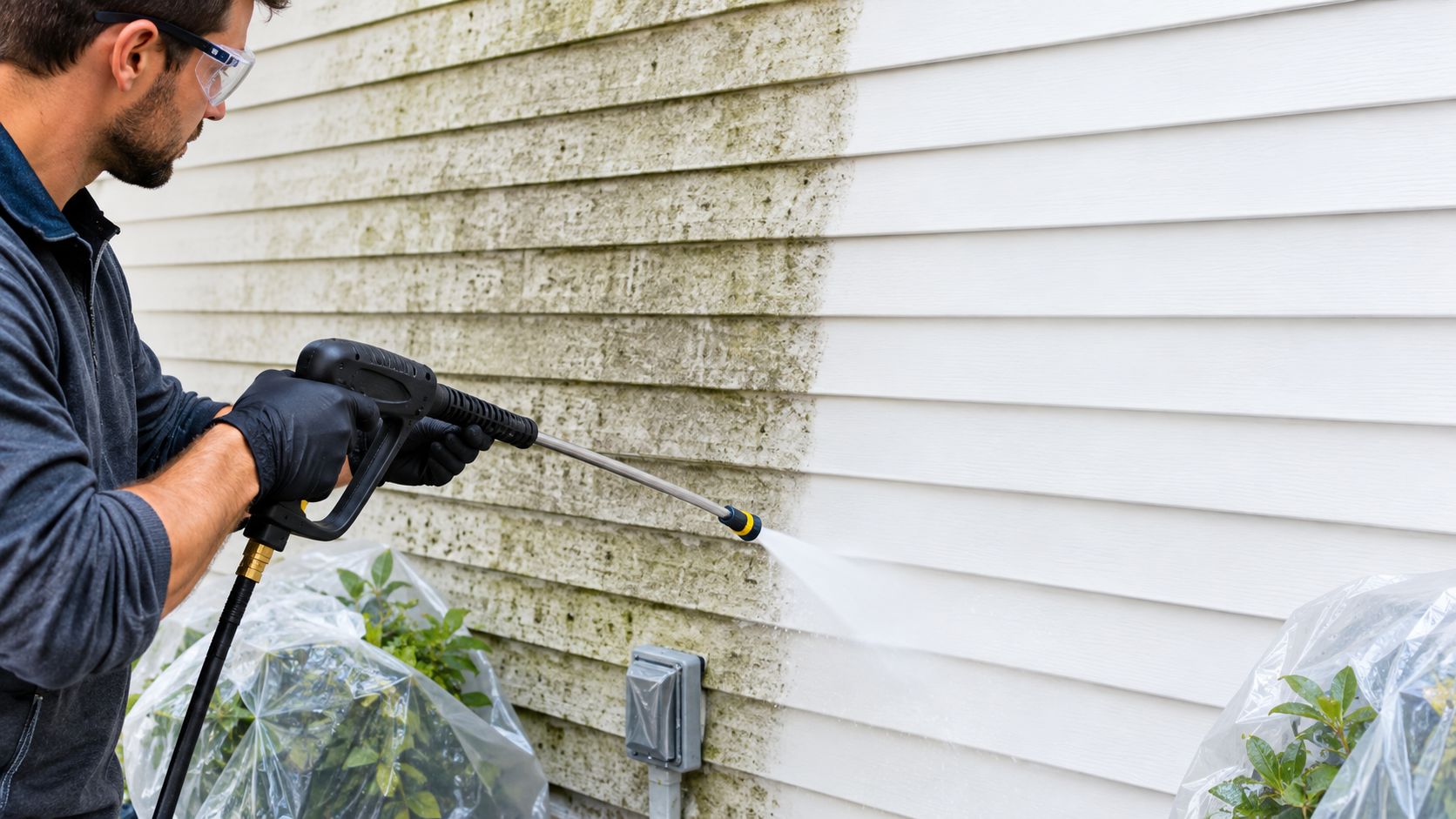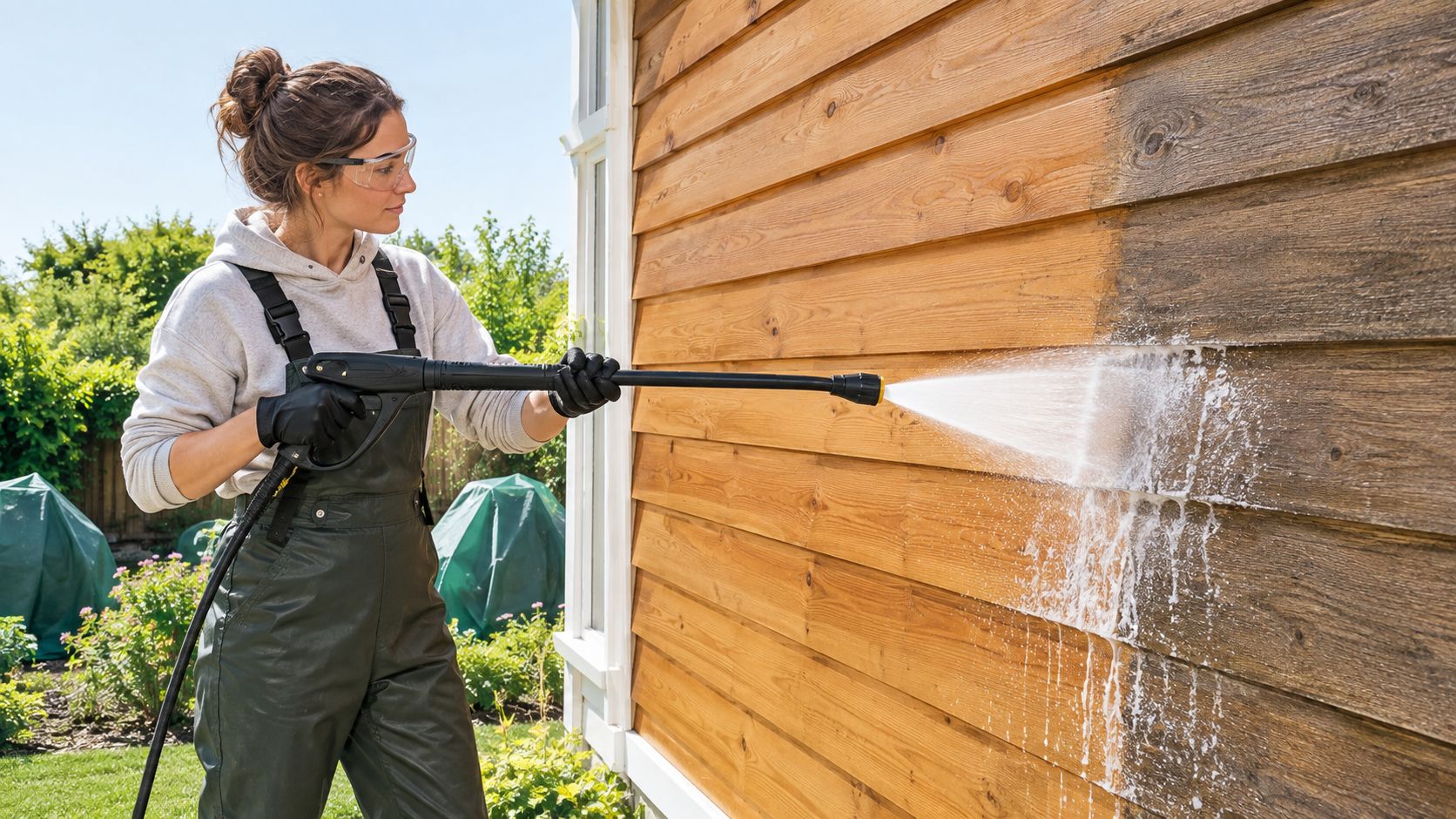
If you live in Colorado Springs, you already know how this goes. A windy afternoon rolls through, pollen drifts in from the trees, dust settles on the siding, and a house that looked clean a week ago suddenly has a dull film on it.
That’s why so many homeowners end up asking the same practical question: how often should you pressure wash your house if you live in a dry, high-altitude climate like ours?
The short answer is that most homes do well on a regular schedule, but Colorado Springs isn’t a generic market. High-altitude sun, wind-blown dust, wildfire ash, and seasonal pine pollen change the timing. Some surfaces can wait longer. Others should be cleaned sooner. The right answer depends on what part of the home you’re looking at, what it’s made of, and what your property is exposed to.
Your Home's Curb Appeal in a Dusty Climate
A lot of exterior cleaning advice is written for humid places where mold is the main problem. That’s not the full story here.
In Colorado Springs, homes often look dirty long before they look damaged. Beige siding starts to read gray. White trim loses contrast. Driveways get that dusty, tired look that makes the whole front of the house feel neglected, even when the landscaping is in good shape.
What homeowners usually notice first
Homeowners often don’t notice the grime all at once. They notice it in pieces.
- The front entry looks dull after a stretch of windy weather.
- North-facing siding shows streaks that didn’t stand out before.
- Patios feel gritty underfoot from dust, debris, and tracked-in residue.
- Trim and eaves collect cobwebs faster than expected.
That slow buildup is exactly why exterior washing matters. Dirt doesn’t always arrive dramatically. It layers on.
Clean houses don’t stay clean for long in a windy, semi-arid climate. The goal isn’t perfection. It’s staying ahead of buildup before it becomes harder to remove.
Why this question matters more than it sounds
Pressure washing isn’t only about appearance. It’s a maintenance decision.
Wash too rarely, and the grime sits long enough to stain, bake onto surfaces, or trap moisture in shaded spots. Wash too aggressively, and you can damage the very materials you’re trying to protect. That trade-off matters even more in Colorado Springs, where one side of the home may stay dry and dusty while another gets shade, sap, and organic buildup.
Homeowners usually don’t need a complicated formula. They need a local schedule that makes sense in real life, one that fits vinyl siding, concrete, foothill pollen, and the occasional wildfire season.
The General Rule for Pressure Washing in Colorado
For most homes, the baseline is simple. Experts recommend pressure washing exteriors once per year as the gold standard according to professional guidance on house washing frequency. That same source notes that in competitive markets, a clean exterior can increase home values by up to 5-7%, and regular washing removes soot and exhaust accumulation 50-60% faster in urban zones.
That annual schedule works well for most Colorado Springs homes because our climate creates steady buildup without the constant moisture pressure you see in humid regions.
Why once a year works for most homes
A yearly wash usually lines up with what collects on the exterior over time.
Dust from wind, pollen from nearby trees, light traffic residue, cobwebs, and general grime all build gradually. If you clean once every year, you remove that layer before it settles in too much or starts affecting the finish of the surface.
Annual washing also fits normal home maintenance rhythms. Many homeowners schedule it in late spring after pollen season or in fall before colder weather sets in.
When annual cleaning is enough
A once-a-year schedule often makes sense if your home:
- Gets good sun exposure and dries quickly after rain
- Isn’t tucked under heavy tree cover
- Doesn’t back up to a high-dust corridor
- Has mostly vinyl or composite exterior surfaces
- Has no obvious staining, algae, or soot buildup
For homes like that, yearly service is usually a practical middle ground. It keeps the house looking cared for without overdoing it.
Practical rule: If your siding still looks clean at the one-year mark, that doesn’t mean washing was unnecessary. It usually means the schedule is working.
When the general rule needs adjusting
The annual rule is a starting point, not a law.
Some homes need attention sooner because of shade, trees, wildfire residue, or heavy dust exposure. Others can stretch certain surfaces a bit longer if the material is delicate and the buildup is light. The key is matching the method and timing to the surface, not treating the whole property the same way.
That’s where a surface-by-surface plan is more useful than one broad recommendation.
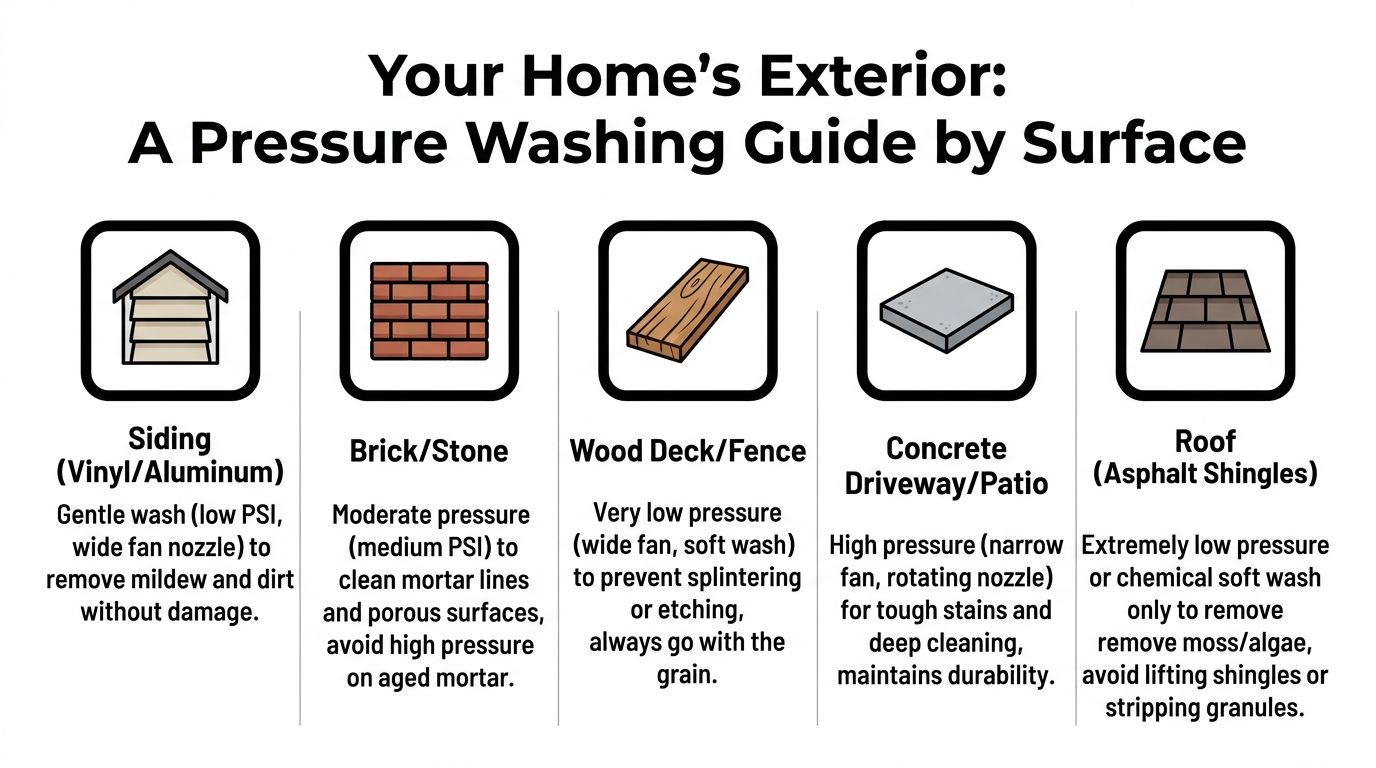
A Surface by Surface Pressure Washing Guide
Colorado Springs homes rarely get dirty evenly. South-facing vinyl can look fine while the north wall holds dust, pollen, and runoff. Concrete usually shows wear first because it catches everything the wind drops and everything tires track in.
Vinyl siding
Vinyl siding usually needs less frequent cleaning than concrete, but it should not be ignored. Around Colorado Springs, a good working schedule is every 12 to 18 months for homes with average exposure, especially where high-altitude sun bakes dust onto the surface and spring pollen settles into laps and corners.
Method matters as much as schedule. Colorado-focused pressure washing guidance for homeowners recommends soft washing for vinyl siding and notes that lower pressure is the safer approach for PVC surfaces. In practice, that means cleaning solution, controlled rinsing, and enough pressure to remove buildup without forcing water behind panels or leaving marks.
I see DIY damage on vinyl more often than homeowners expect. The siding looks tough, so people treat it like concrete. That is how you end up with etched spots, loosened seams, or water pushed where it should not go.
Concrete driveways and patios
Concrete usually needs attention sooner. It is porous, it traps wind-blown dust, and it picks up tire marks, ash, and grime from foot traffic. In Colorado Springs, driveways and patios often land on a 6 to 12 month cycle, with the shorter end making sense for shaded areas, low spots, and surfaces near trees or busy roads, as noted by this exterior cleaning guide on house washing frequency.
A few practical rules help here:
- Clean high-traffic concrete more often than the house itself.
- Treat shaded patios sooner because grime hangs on longer.
- Wash before stains set deep into the pores.
- Pay attention to slip risk on steps, walkways, and damp corners.
If you are also maintaining outdoor entertaining areas, this guide on how to clean your pool deck like a pro is a useful companion resource.
Wood and other delicate exterior surfaces
Wood fencing, deck boards, painted trim, and older coated surfaces need more restraint. Pressure alone is not always the right tool. On these materials, too much force can fur the wood, strip stain, or scar paint long before the surface looks clean.
That is why surface type matters more than a one-size-fits-all schedule. Some wood features need a light wash only when buildup is visible. Others are better cleaned as part of a staining or sealing plan.
| Surface | Typical schedule | Best approach |
|---|---|---|
| Vinyl siding | Every 12 to 18 months | Soft wash, lower PSI |
| Driveway | Every 6 to 12 months | Higher pressure, surface-specific cleaning |
| Patio | Every 6 to 12 months | Adjust for shade and slip risk |
| Wood deck or fence | As needed based on condition | Low pressure, controlled washing |
Visual Signs Your Home Needs Pressure Washing Now
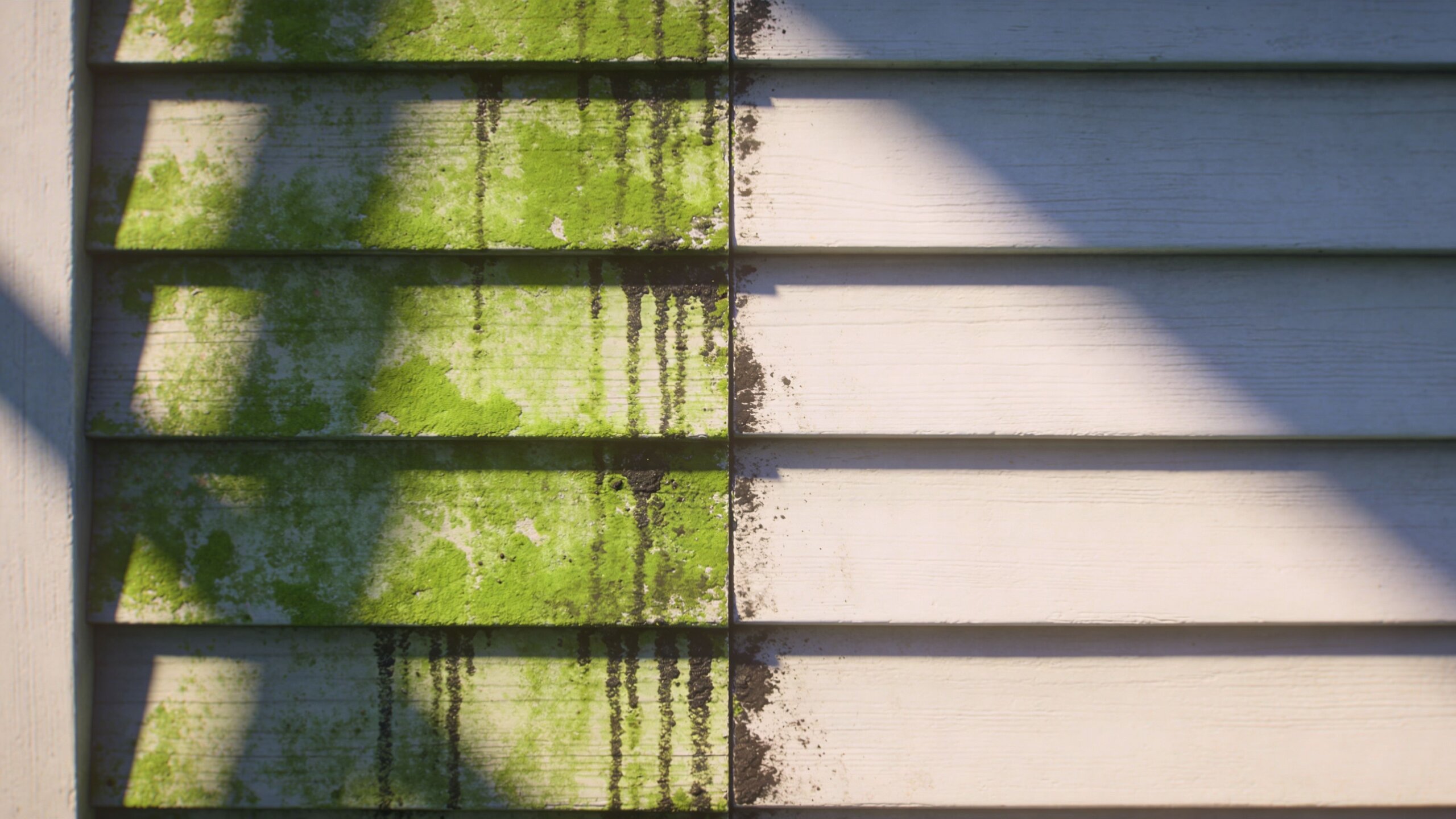
You pull into the driveway after a windy week in Colorado Springs, and the house still looks dull even though it has not seen much rain. That is often the first clue. Around here, buildup shows up as dust, pollen, ash, and traffic film long before homeowners see the heavy green growth common in wetter climates.
What to look for on the house itself
Start with the sides of the home that get the most wind and the least attention. In Colorado Springs, that usually means lower siding, garage doors, trim under eaves, and north-facing walls where debris settles and lingers.
Watch for these signs:
- Gray or tan dust film that makes light-colored siding look flat or dirty
- Green or black staining in shaded spots, especially near downspouts, trim, and under rooflines
- Pine pollen collecting in corners and horizontal laps
- Cobwebs around light fixtures, soffits, and entry areas
- Dark runoff marks below gutters, vents, or roof edges
- A chalky, weathered appearance that does not improve with a basic hose rinse
I tell homeowners to trust what they see at eye level and what they notice up close. If you run a finger across the siding and come away with dust, grime is already built up enough to justify a proper wash.
What to watch on concrete and walkways
Concrete usually shows trouble faster than siding. Front walks, steps, patios, and driveways take constant dust, sprinkler overspray, leaf stain, and foot traffic. In shady pockets, they can also get slick before they look obviously dirty.
A few warning signs call for cleaning now:
- Dark traffic lanes where people walk most often
- Slick patches on steps, patios, or shaded concrete
- Rust-colored, brown, or black stains that stay after a hose rinse
- Uneven color where dust and organic buildup have bonded to the surface
Concrete is porous, so it holds onto contamination more than many homeowners expect. The National Ready Mixed Concrete Association explains that concrete readily absorbs water and chlorides through its pore structure, which helps explain why stains and residue tend to sink in if they sit too long: concrete durability and permeability guidance.
A simple homeowner check
Do a three-point walk-around. Look from the curb, then from a few feet away at the front entry, then along the side yard in full daylight.
If the house looks clean from one angle but blotchy from another, it is usually overdue. In our climate, dirt buildup often shows up as uneven tone first, not heavy discoloration across the whole surface.
Why Our Local Climate Demands a Special Approach
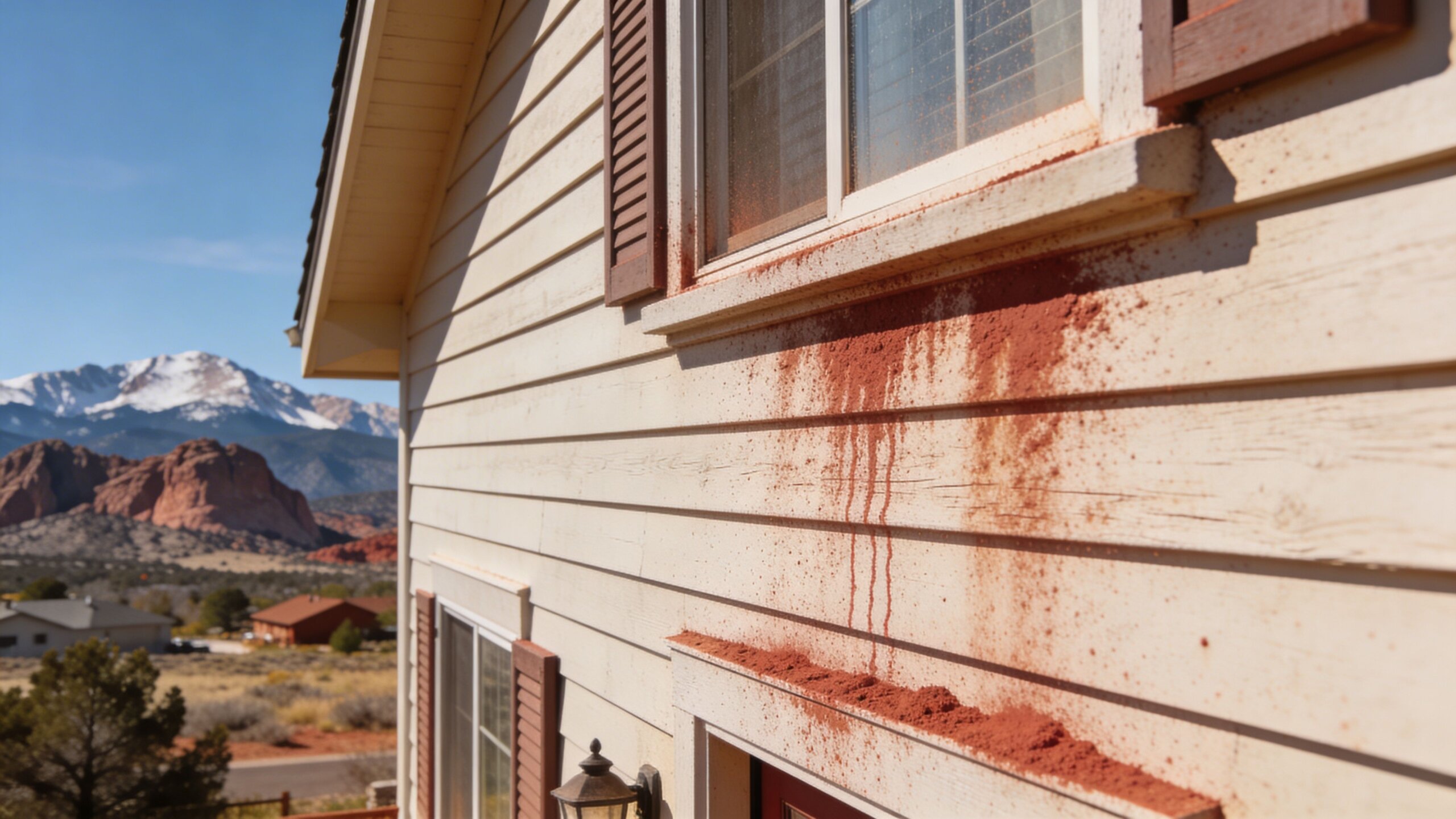
Colorado Springs homes deal with a different mix of stress than homes in humid or coastal climates. Moisture isn’t the only story here. Dry air, altitude, wind, and fire season all change how dirt lands, how long it stays, and how it bonds to exterior surfaces.
High-altitude sun and wind-blown buildup
High-altitude sunlight tends to bake residue onto exposed surfaces. Add wind-blown dust, and you get a fine layer that doesn’t always rinse away with a garden hose.
That’s why homes here can look weathered even without heavy mildew. The grime is often lighter in color but more widespread. It settles on siding laps, window trim, garage doors, railings, and front entry surfaces. If the home faces open space or a busier corridor, that effect becomes more obvious.
Pine pollen, ash, and shaded pockets
Tree cover changes the cleaning schedule fast.
Homes near Black Forest, Monument, or other more wooded pockets often deal with heavier pollen, sap residue, and debris collection than homes in more open neighborhoods. North-facing walls and shaded sides can still develop organic staining even in a generally dry climate.
Wildfire ash adds another layer. After smoky periods, residue can settle into horizontal trim lines, window ledges, and textured exterior materials. It’s not always dramatic, but it leaves the house looking dingy and can be stubborn if left in place too long.
Cleaning for curb appeal and fire mitigation
In fire-mitigation areas, exterior cleaning has a second job. It isn’t only about making the house look sharp.
A report cited in guidance on washing frequency in fire-mitigation zones notes that a 2024 USDA Forest Service report found homes with debris-cleared exteriors had a 40% lower ignition risk. The same source also notes that a clean exterior can boost sale prices by 5-7%.
That matters in places where pine needles, organic debris, dust, and ash can collect in corners, on hardscapes, and against the house.
A Colorado Springs washing schedule should account for exposure, not just time. Two houses built the same year can need very different cleaning intervals if one sits in open sun and the other sits near tree cover and seasonal debris.
DIY Pressure Washing Risks vs Professional Service Value
A lot of homeowners consider renting a machine and handling the job themselves. That can work on the right surface with the right equipment and some patience. It also goes sideways quickly.
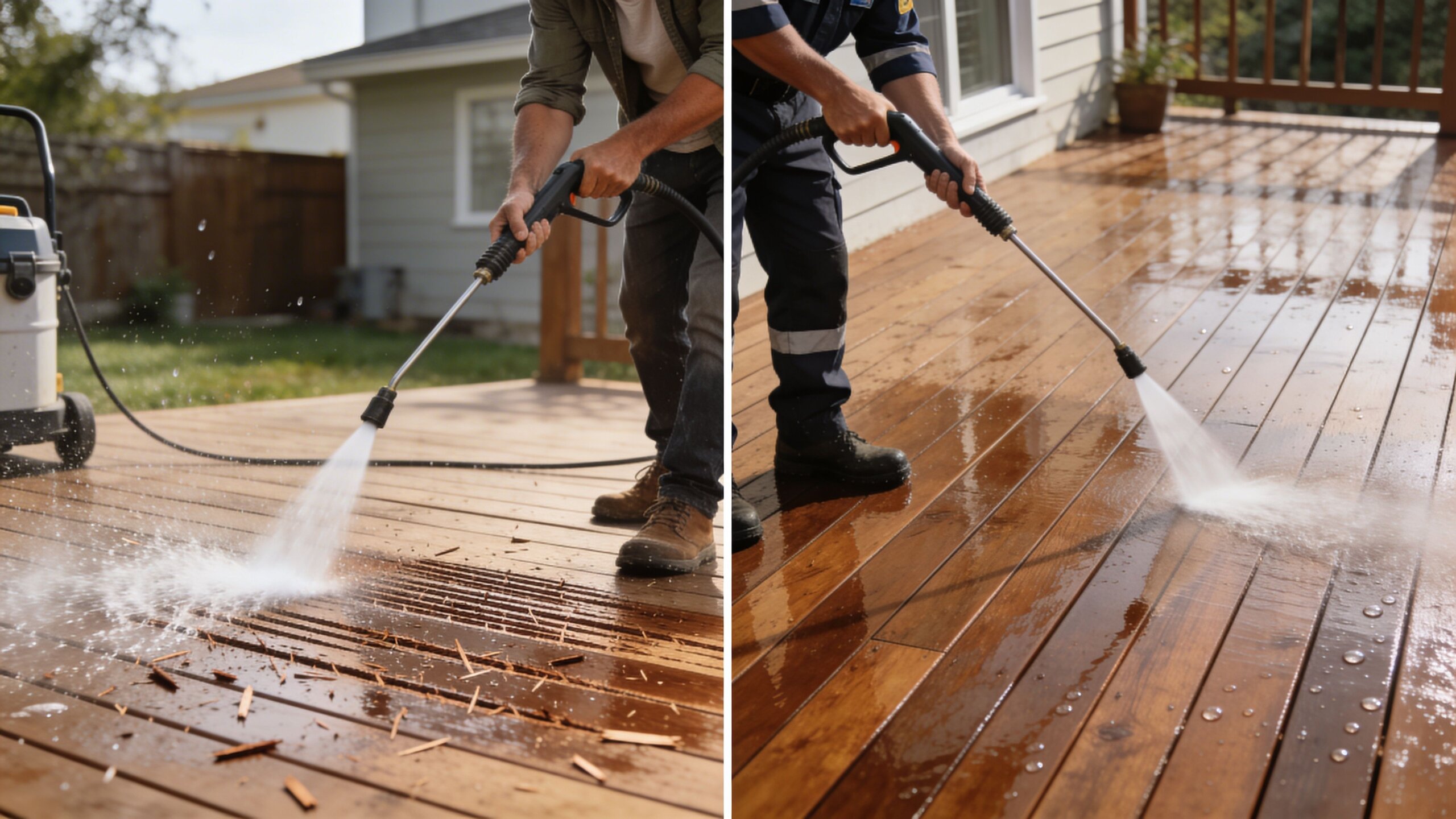
The problem isn’t effort. It’s mismatch. The wrong pressure, the wrong nozzle, the wrong angle, or too much confidence on a ladder can create damage faster than many expect.
Where DIY often goes wrong
DIY pressure washing usually runs into one of these issues:
- Too much pressure on siding and trim, which can scar surfaces or force water where it shouldn’t go
- Uneven cleaning patterns on concrete, leaving visible wand marks
- Damage to wood fibers from working too close or too slowly
- Missed detergent dwell time, which leads to a rinse that looks clean for a day and then doesn’t
- Ladder risk when trying to reach upper sections safely
Many homeowners also use “pressure washing” as a catch-all term when the house really needs soft washing. Those aren’t the same thing. A proper soft wash house cleaning approach uses lower pressure and the right cleaning solutions for delicate exterior materials.
What professional service changes
Professional work adds value in a few practical ways.
First, the method gets matched to the material. Concrete can take a different treatment than vinyl siding, painted trim, or a wood fence. Second, the operator knows how to clean thoroughly without etching, striping, or driving water behind the surface.
Third, the job usually moves faster and more cleanly because the equipment is built for repeated use, not a one-time rental.
The trade-off
DIY can make sense if you’re cleaning a small slab, know your equipment, and understand the surface. It makes less sense when the property has mixed materials, taller elevations, or any surface that needs restraint rather than force.
For most homeowners, the choice isn’t “pay or save.” It’s “accept the risk or avoid the mistake.”
| Question | DIY approach | Professional approach |
|---|---|---|
| Equipment knowledge | Varies a lot | Surface-specific use |
| Risk of surface damage | Higher | Lower with proper technique |
| Speed and consistency | Often uneven | More controlled |
| Safety on ladders and upper areas | Homeowner assumes risk | Managed with process and equipment |
The Cultivate House Detailing Process from Quote to Clean
Hiring exterior cleaning shouldn’t feel complicated. Most homeowners want three things: a clear answer, a clean result, and no surprises.
That process starts with a look at the property and a recommendation based on the surfaces involved. A vinyl-sided home with a dusty driveway needs a different plan than a shaded property with heavy pollen and debris exposure.
What the visit usually includes
A professional service visit typically begins with a quick evaluation of the exterior.
That means identifying what can be safely pressure washed, what should be soft washed, where staining is concentrated, and whether there are any problem areas around trim, concrete, or shaded walls. The goal is to avoid the one-size-fits-all approach that causes damage.
For homeowners comparing local options, residential pressure washing is the type of service that usually covers siding, patios, walkways, and driveway cleaning as part of one exterior care plan.
What a smooth appointment looks like
A good appointment is usually pretty simple:
- Quote and scheduling happen first, with scope based on the surfaces and condition.
- Arrival and setup come next, including a walkthrough and preparation of the work area.
- Surface-specific cleaning follows, with lower-pressure methods where needed and stronger cleaning reserved for the right materials.
- Final review gives the homeowner a chance to look things over and ask questions.
What homeowners tend to value most
It’s usually not the machine. It’s the reliability.
People want the tech to show up when expected, treat the property carefully, clean the obvious problem areas thoroughly, and leave the house looking brighter instead of just wetter. They also want honest guidance on whether the home needs immediate washing or whether it can wait a bit longer.
Cultivate House Detailing serves Colorado Springs and nearby communities with exterior cleaning that fits those local conditions, including dust, pollen, concrete buildup, and the extra maintenance needs that come with foothill and fire-mitigation areas.
If your siding looks dull, your driveway is holding onto grime, or you’re tired of the dust film that keeps coming back, Cultivate House Detailing can help you figure out the right schedule for your home. Request a quote and get a practical recommendation for pressure washing in Colorado Springs that fits your surfaces, your location, and the way your property gets dirty.
Serving Monument and the surrounding Colorado Springs area — see our window cleaning services in Monument.