
The dirt sneaks up on you in Colorado Springs. One month the siding looks fine, then the sun bakes dust onto the west side of the house, pine pollen settles into every corner, and the spring thaw leaves the patio looking older than it is. Add hard-water residue, windblown grit, and debris from nearby trees, and your home can start to feel weathered even when it’s well cared for.
That’s why colorado pressure washing matters here in a different way than it does in milder climates. On the Front Range, exterior cleaning isn’t just about making a home look fresh for the weekend. It’s part of protecting stucco, concrete, decking, trim, and painted surfaces from the constant cycle of buildup, sun exposure, and seasonal mess.
The work also needs to match Colorado conditions. A driveway in Colorado Springs doesn’t behave like a shaded patio in another state. A home in Black Forest has different risks than a townhouse in town. Homes near trees deal with needles, sap, and soot. Homes in open areas deal with relentless dust and bright sun that can make grime stand out fast.
Your Guide to a Cleaner Colorado Home
By March, a lot of Colorado homeowners step outside, look at the siding, the front walk, and the back patio, and realize winter left more behind than a few dirty spots. There is grit packed into corners, runoff stains near the foundation, and a film on concrete that makes the whole place look tired before spring has even started.
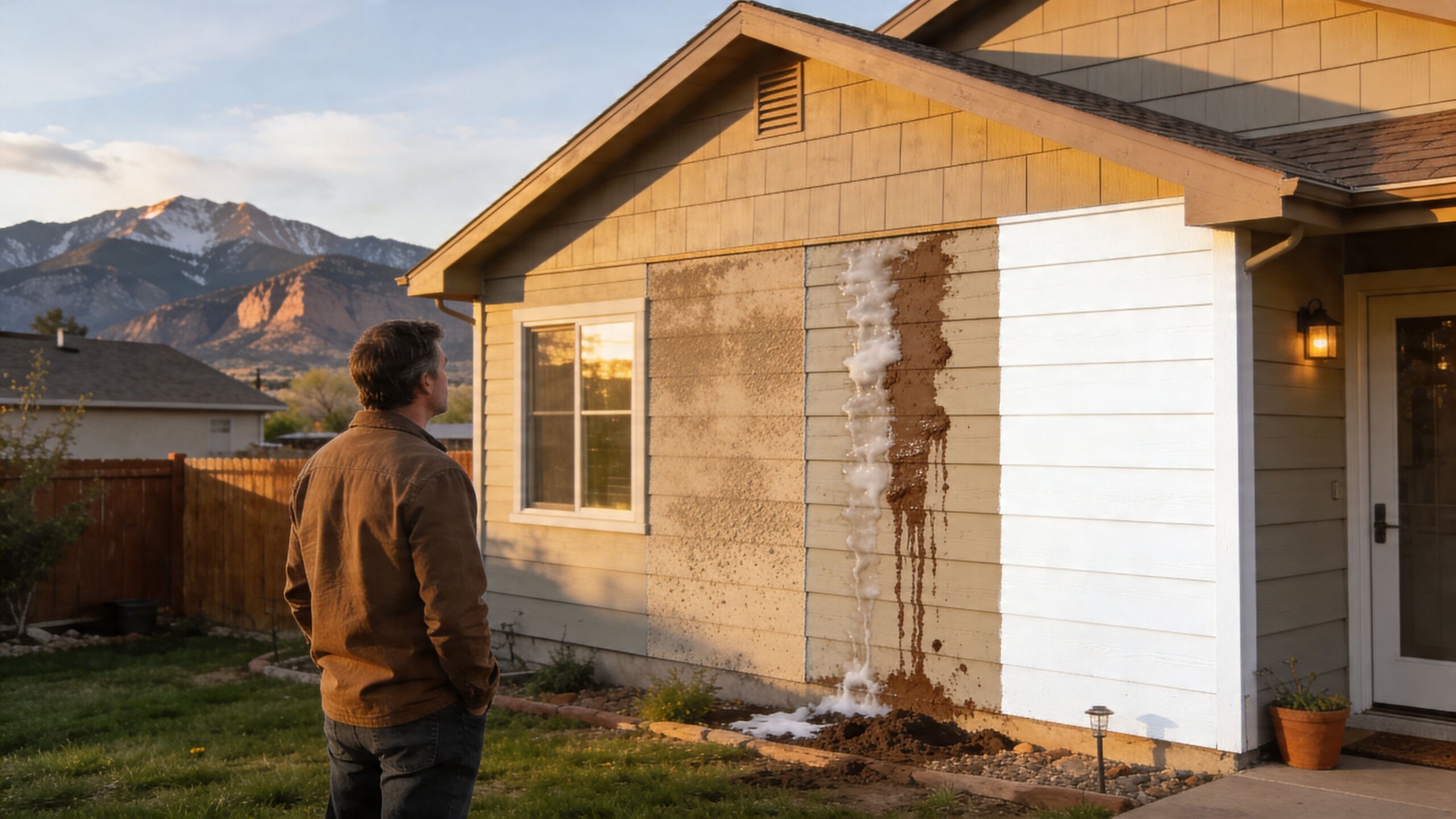
Around Colorado Springs, that buildup is more than a curb appeal issue. High-altitude sun bakes dust and pollen onto surfaces. Sudden storms splash mud up onto stucco and trim. In wooded areas, needles, leaves, sap, and windblown debris collect along fence lines, under decks, and beside foundations. In the wrong spots, that debris becomes part of the fire load around a home.
A good exterior cleaning plan helps with appearance, but it also helps with upkeep and risk reduction. Clearing organic buildup, washing away grime that traps moisture in shaded areas, and removing debris from hard-to-reach exterior surfaces can be part of a smarter maintenance routine in Colorado. It also matters how that work gets done. Runoff control, proper detergents, and the right amount of water pressure protect landscaping, nearby drains, and the surfaces you are trying to preserve.
That is one reason homeowners ask about the difference between pressure washing and power washing for different exterior surfaces. The method affects the result, and it affects whether the surface stays intact afterward.
Why Colorado homes need a different approach
Colorado homes do not all collect the same kind of mess, and they should not be cleaned the same way. A stucco home in a sunny subdivision, a property in Black Forest with heavy tree cover, and a foothills home exposed to wind and dust each need a different plan. The safest process depends on the material, the buildup, the drainage around the house, and nearby vegetation.
Common problem areas include:
- Stucco walls: They hold dust, show runoff streaks, and can scar if pressure is too high.
- Concrete patios and driveways: These can handle more force, but uneven technique leaves visible striping.
- Decks and fences: Wood and composite surfaces need controlled washing to avoid furred grain, marks, or premature wear.
- Areas under eaves and near landscaping: These catch cobwebs, pollen, leaf litter, and fine debris that often need low-pressure cleaning and careful rinse management.
Practical rule: If a contractor talks only about pressure and never about surface type, runoff, nearby plants, or debris removal, that is a warning sign.
Colorado pressure washing works best as part of regular property care. It helps a home look better, last longer, and stay cleaner and safer through the next round of wind, sun, and fire season.
Understanding Pressure Washing Soft Washing and Power Washing
Homeowners often use these terms interchangeably, but they’re not the same. That matters, because the wrong method can mark concrete, strip paint, scar wood, or drive water where it shouldn’t go.
Pressure washing
Pressure washing uses high-pressure water, usually with cold water, to remove grime from durable surfaces. This is the method that comes to mind when cleaning a driveway or blasting buildup off a patio.
On the right surface, it works well. Concrete, certain stone areas, and some heavy-duty exterior flatwork can tolerate stronger pressure. But “can tolerate” doesn’t mean “hit it with the strongest tip you have.” Technique still matters. Wand distance, spray angle, nozzle choice, and flow all affect the result.
Power washing
Power washing is similar, but it uses heated water. Heat can help break down grease, oily residue, and stubborn buildup that cold water struggles to release.
This can be useful in certain commercial settings or on heavily soiled surfaces. For most homeowners, though, the bigger issue isn’t whether the water is hot. It’s whether the operator chooses the correct process for the material in front of them.
Soft washing
Soft washing uses low pressure with cleaning solutions designed to loosen and remove organic growth, surface film, and staining without damaging delicate materials. This is usually the safer route for siding, painted surfaces, trim, stucco, and roof areas.
Soft washing is especially important on Colorado homes with mixed exterior materials. A property might have stucco walls, painted trim, stone accents, and a composite deck all within a few feet of each other. One aggressive setting across all of that is how damage happens.
For a closer look at where these methods overlap and where they don’t, this breakdown of power washing vs pressure washing is useful if you’re comparing service options.
What works where
A simple way to think about it is this:
| Surface | Usually the safer choice | Main concern |
|---|---|---|
| Concrete driveway | Pressure washing | Removing embedded dirt without leaving lines |
| Stucco siding | Soft washing or low pressure | Avoiding surface damage and water intrusion |
| Painted wood | Soft washing | Preventing paint lift and fiber damage |
| Composite deck | Controlled low to medium pressure | Preserving finish and avoiding marks |
| Roof surfaces | Soft washing | Protecting shingles and surrounding areas |
Why the distinction matters in Colorado
Colorado homes often show a mix of dust, mineral residue, organic staining, and wildfire-related debris. Those don’t all respond to the same treatment. A patio may need force and water volume. Stucco may need dwell time from cleaning solution and a gentle rinse. A shaded north-facing wall may have organic buildup that won’t come off cleanly with pressure alone.
The best exterior cleaning jobs usually don’t look dramatic while they’re happening. They look controlled.
That’s the difference between a technician cleaning a property and someone spraying water at it. Good colorado pressure washing is really about matching method to material.
Benefits Beyond Curb Appeal for Colorado Properties
The obvious benefit is visual. Clean siding looks newer. A bright driveway makes the whole front yard feel sharper. Patios become spaces you want to use again. That first impression matters.
But curb appeal is only part of the story. Exterior buildup does more than look bad. It holds moisture in some places, grinds into surfaces in others, and shortens the life of finishes when it’s left in place season after season. Dirt, soot, pollen, and residue don’t just sit there politely.
It protects materials, not just appearance
Concrete is porous. Stucco traps surface dust. Painted trim shows grime quickly under bright sun. When those surfaces stay dirty, homeowners often assume they’re aging faster than they really are. In many cases, they need proper cleaning before they need repair or repainting.
That’s one reason professional equipment matters. Effective residential cleaning in Colorado depends on balancing 1300 to 3100 PSI with at least 4.0 GPM, because water flow helps flush away loosened grime and hard-water deposits common in Colorado Springs. According to KG Facility Solutions’ pressure washing guide, that higher flow can reduce cleaning time by up to 40% compared with consumer-grade units.
That detail matters in practice. Pressure without enough flow often leaves a surface partly cleaned, with residue still sitting in pores or texture. Homeowners then compensate by pushing pressure higher, which increases the risk of etching or striping.
Fire mitigation is the overlooked reason
In Colorado’s wildland-urban interface, exterior cleaning has a safety role too. Homes in Black Forest, Monument, and other tree-adjacent areas collect pine needles, fine debris, and soot in corners, on decks, against siding, and around outdoor living spaces. That material isn’t just messy. It can become part of the fuel load around a house.
Pressure washing’s role in fire mitigation is an important but often under-discussed topic for Colorado properties. In communities like Black Forest, removing flammable pine needle buildup and soot from siding and decks supports defensible space efforts, and coverage from the Colorado School of Public Health notes that forest service analogs suggest pre-fire season cleaning of fine fuels can reduce the chance of ember ignition.
Where homeowners see the biggest payoff
The biggest benefits usually show up in a few practical places:
- Before repainting or staining: Clean surfaces hold finishes better than dirty ones.
- Before fire season: Removing debris from siding, decks, walkways, and gathering areas lowers clutter around the structure.
- Before listing a home: Clean concrete and exterior walls make maintenance visible to buyers.
- After dusty or smoky periods: Washing removes the film that makes a property feel neglected.
Homes near open space often don’t need “more pressure.” They need debris removed from the right places before washing starts.
A maintenance service with real local value
Colorado pressure washing should be thought of the same way homeowners think about gutter cleaning or seasonal yard work. It’s recurring maintenance tied to local conditions. The need is stronger in places with intense sun, dry dust, hard water, and wildfire exposure.
For many properties, the smartest reason to schedule service isn’t that the house looks bad. It’s that letting grime, residue, and fine debris sit longer usually makes the next round of maintenance harder, riskier, and more expensive.
Professional Techniques for Every Surface
A Colorado house can have three cleaning problems at once. South-facing stucco gets baked-on dust. North-facing trim holds moisture longer and shows organic staining. Walkways collect grit, ash, and hard-water residue. Good pressure washing starts by treating those surfaces differently, because the wrong method can scar finishes, drive water into weak spots, or leave behind debris that still matters from a fire-mitigation standpoint.
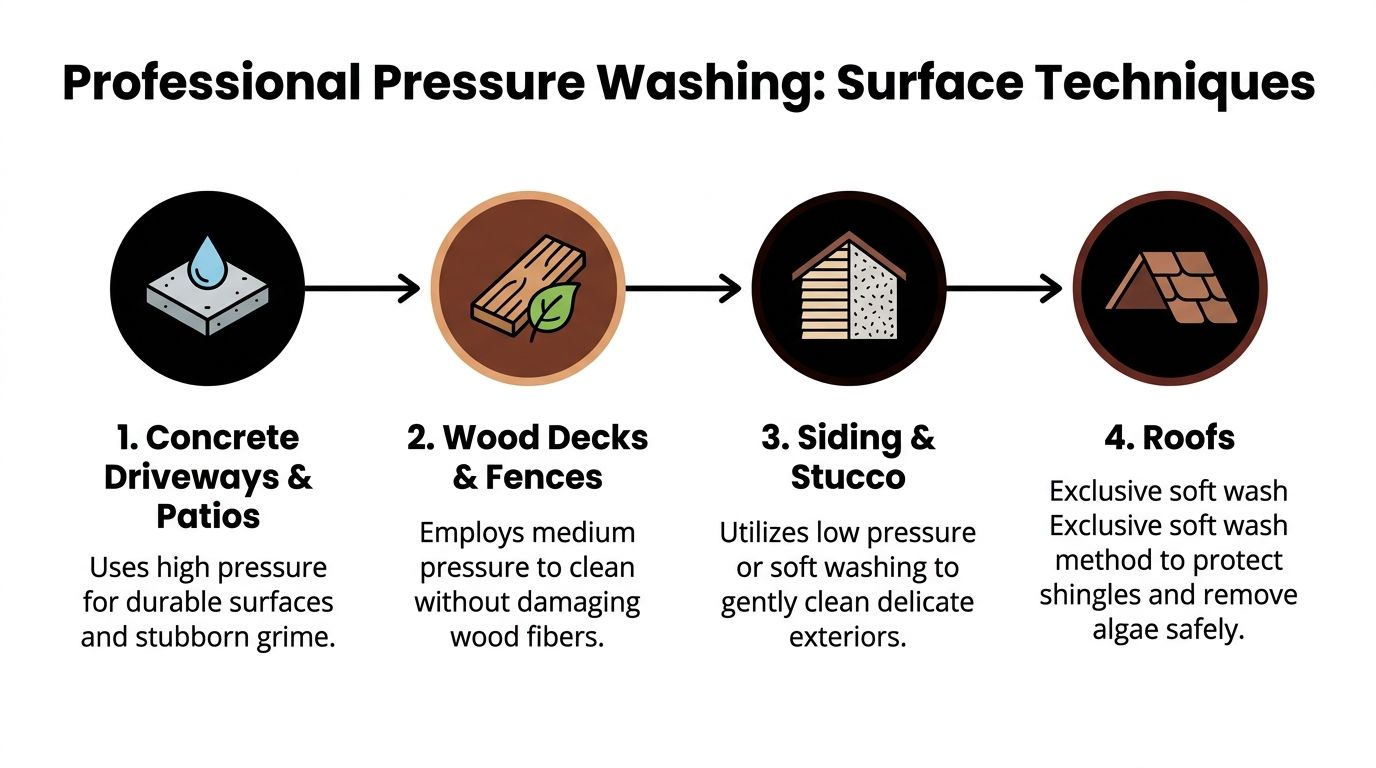
Concrete driveways and patios
Concrete will tolerate more force than siding or wood, but that does not make it forgiving. The main challenge is cleaning evenly without leaving zebra stripes, wand marks, or etched spots that stand out even more in Colorado’s bright sun.
Professionals usually keep a steady nozzle distance, use overlapping passes, and match the tip and flow to the level of buildup. Heavy spots often need pretreatment first. Oil stains, rust marks, and dark traffic lanes do not respond the same way, and blasting all of them with one setting usually creates a patchwork finish.
What usually works:
- Higher flow with controlled pressure: Enough water to carry loosened grit away instead of redistributing it.
- Pretreating stained areas: Better than overworking the whole slab.
- Consistent movement: Lingering in one spot is how etching starts.
Concrete around garages, patios, and outdoor living areas also tends to trap fine debris. Cleaning it well is partly about appearance and partly about removing the dust, needles, and residue that collect in corners and joints.
Stucco and painted siding
Stucco gives people false confidence. It looks hard. It is still easy to damage.
In Colorado pressure washing, stucco and painted siding are usually better served by soft washing or controlled low-pressure cleaning with the right dwell time. The goal is to break the bond of dirt, oxidation, pollen, and surface film, then rinse it away without stripping paint or forcing water behind trim, vents, or hairline cracks. High altitude sun also dries surfaces fast, so chemistry and rinse timing matter more here than they do in milder climates.
A few trade-offs matter:
| Surface | Safer method | Main risk if over-pressured |
|---|---|---|
| Stucco | Soft wash or low pressure | Texture damage, paint wear, water intrusion at weak points |
| Painted siding | Soft wash | Paint lift, streaking, gouging |
| Wood trim | Gentle rinse after cleaner dwell time | Fiber fuzzing and finish damage |
Field note: If a surface looks cleaner only while it’s wet, the method probably isn’t solving the underlying problem.
Homeowners often ask how often you should pressure wash your house after they see dust come back quickly. Frequency depends less on a fixed calendar and more on sun exposure, nearby trees, road dust, sprinkler overspray, and how much residue the surface is holding.
Wood decks and fences
Wood requires patience. Too little cleaning leaves grime down in the grain. Too much pressure raises fibers, roughens the surface, and creates extra prep work before staining or sealing.
A proper approach starts with dry debris removal, especially around board gaps, steps, rail bases, and fence lines where needles and fine plant matter collect. Then comes the right cleaner for the wood condition, followed by a controlled rinse that cleans the surface without chewing it up. Composite decking needs its own approach too. It will not splinter like cedar, but it can still be scarred, dulled, or striped by aggressive washing.
On many Colorado properties, deck cleaning also overlaps with defensible-space maintenance. Packed debris under rails, between boards, and along attachment points should be removed, not just soaked and pushed around.
Roofs and elevated sections
Roofs are soft-wash territory. Asphalt shingles, flashing, vents, gutters, and nearby plants all need protection, and high pressure shortens the life of materials that are expensive to replace.
Upper siding, fascia, soffits, and trim need the same level of care. One side of the house may be dry and dusty while another holds staining from slower drying conditions. That calls for different cleaners, different dwell times, and careful rinsing. It also requires ladder work, fall protection, and runoff control that many homeowners understandably do not want to handle on their own.
Equipment matters more than most homeowners realize
PSI gets the attention, but professional results come from balancing pressure, water flow, nozzle selection, hose length, surface cleaner setup, and chemistry. A machine with poor flow can loosen grime without fully flushing it away. That is why small consumer units often struggle on textured concrete, broad walls, and mineral-heavy buildup from irrigation.
The setup matters just as much as the machine. Plant protection, runoff planning, test spots, and dry-light inspection are part of the job. On a bright Colorado afternoon, streaks and missed passes show up fast.
The process professionals follow
A careful job usually looks like this:
- Inspect the property for surface type, oxidation, weak paint, drainage concerns, and debris buildup.
- Remove loose material first from corners, joints, deck gaps, and other places where fine fuels collect.
- Choose the method by material so concrete, stucco, wood, and roofing each get the right treatment.
- Test a small area before cleaning the full surface.
- Apply cleaners and rinse with control while protecting plants, fixtures, doors, and nearby finishes.
- Check the results in dry light so residue, striping, or uneven cleaning does not hide behind moisture.
That last step matters here. Colorado sun is unforgiving, and it reveals every shortcut.
Colorado Pressure Washing Seasons Costs and Regulations
Timing matters more here than many homeowners expect. Colorado weather changes fast, and exterior cleaning needs to work with temperature swings, not fight them.
Best times of year to schedule service
Late spring is a common choice because winter residue has finally surfaced and the risk of immediate refreezing is lower. Fall is also popular because homeowners want to remove built-up dust, debris, and surface film before colder weather settles in.
That said, the right timing depends on the property. A shaded home with tree cover may need different scheduling than a south-facing house that bakes in full sun. A deck under pines can need cleaning at a different point in the year than a stucco wall exposed to road dust.
A few practical timing cues help:
- After the last major thaw: Concrete and lower siding often show what winter left behind.
- Before fire season peaks: Removing fine debris from decks, siding edges, and gathering areas is easier before conditions turn hotter and drier.
- Before listing or hosting: Exterior cleaning has the biggest visual impact when paired with window cleaning and general outdoor prep.
- Before the first hard freeze: Wet cleaning and cold nights don’t mix well.
For homeowners trying to plan a maintenance calendar, this guide on how often you should pressure wash your house gives a practical starting point.
What affects the cost
Price depends on labor, access, surface type, and how much buildup is present. A flat concrete patio is simpler than a multi-surface exterior with stucco, trim, walkways, and tight runoff constraints. Heavy debris, soot, and mineral staining also change the process.
The main cost drivers usually include:
| Factor | Why it changes the price |
|---|---|
| Surface material | Stucco, wood, and concrete all require different methods |
| Size of area | More square footage means more labor and rinse time |
| Level of buildup | Heavier grime often requires prep work and multiple passes |
| Access difficulty | Slopes, fencing, elevation, and landscaping slow the job |
| Runoff control needs | Compliance steps add setup time and equipment needs |
A useful estimate should explain scope clearly. Homeowners should know what’s being cleaned, what method will be used, and whether the quote includes prep for debris-heavy areas.
Colorado runoff rules are not optional
This is one of the biggest differences between a careful contractor and a careless one. In Colorado, pressure washing is governed by the state’s Power Washing Law, aligned with the EPA’s Clean Water Act. Wastewater from cosmetic cleaning cannot be discharged into storm drains. It must be contained or directed to permeable surfaces where it can soak in, without chemicals, to protect local surface waters. The state guidance also notes that non-compliance can lead to significant fines, as summarized in this explanation of Colorado stormwater regulations for power washing.
That affects how professionals plan the job. They need to think about drainage before they ever pull the trigger. On some properties, that means redirecting flow. On others, it means recovery tools, filtration, or adjusting the cleaning approach altogether.
Runoff isn’t a paperwork issue. It’s part of the job site setup.
Why regulations matter to homeowners
Most homeowners aren’t trying to become experts in environmental compliance. They just want the house cleaned properly. But if wastewater is pushed into the wrong place, the problem can become theirs too.
A contractor who understands Colorado pressure washing should be able to explain:
- Where the water will go
- How chemicals are managed
- Whether the surface can be cleaned legally without runoff problems
- What prep work is needed before washing begins
That conversation should sound normal, not defensive. Responsible runoff control is part of professional exterior cleaning in Colorado, especially in neighborhoods with storm drains, tighter lots, or sloped driveways.
DIY Dangers vs Professional Peace of Mind
A homeowner rents a washer on Friday, plans to knock out the driveway and siding by Sunday, and figures it is mostly a matter of spray angle and patience. By Sunday afternoon, the concrete has wand marks, the north-side stucco still looks blotchy, and dirty runoff has tracked across the walk and into the gutter. That is a common Colorado weekend project for a reason.
Pressure washing looks simple from the driveway. The risk is that surface cleaning here is tied to more than appearance. Colorado homes deal with baked-on dust, mineral staining, brittle paint, intense UV exposure, and in many areas, ash and fine wildfire debris that collect in corners, siding lines, and around decks. Cleaning the wrong way can scar the surface, waste water, and push contaminated runoff where it should not go.
Where DIY goes wrong
The first problem is control. Rental and homeowner-grade machines can still hit hard enough to etch concrete, shred wood fibers, force water behind trim, or leave visible lap marks on painted surfaces.
The second problem is method. A driveway, a stucco wall, a cedar fence, and a composite deck do not get cleaned the same way. Trying to solve every surface with one pressure setting usually creates extra work or permanent damage.
Common DIY mistakes include:
- Using pressure where a soft wash is safer: Siding, trim, painted wood, and some masonry finishes often need chemistry and dwell time more than brute force.
- Working from a ladder with active spray: Hose pull, recoil, and wet footing make falls more likely.
- Chasing stains with a tighter tip: That often trades dirt for etched lines and uneven color.
- Skipping prep: Screens, fixtures, plants, outlets, and door seals need protection before cleaning starts.
- Ignoring wildfire residue and hard-water spotting: Colorado buildup is not always loose soil. Some deposits need treatment, not more force.
DIY also tends to miss the bigger maintenance picture. If a property sits in a higher-risk fire area, cleaning decks, fences, walks, and siding can be part of reducing combustible debris around the home. Done well, that supports defensible space efforts. Done poorly, it just moves debris around.
Why homeowners keep hiring professionals
Homeowners hire out this work for the same reason they hire roofers, electricians, and arborists. The tool is only part of the job. The key lies in knowing what the surface can handle, what should be treated first, what needs to stay dry, and how to finish the job without creating a repair bill.
A professional crew should show up with a plan for pressure, flow, detergents, protection, and cleanup. On Colorado properties, that also means accounting for sun exposure, fast evaporation, mixed exterior materials, and the possibility that ash, mud, and mineral residue all exist on the same house.
If you want a good general screening standard before hiring any home service company, 3 things to consider when hiring contractors is a useful outside resource.
A side-by-side view
| DIY approach | Professional approach |
|---|---|
| One rented machine for every surface | Equipment and method matched to the material |
| Pressure used as the main solution | Pressure, flow, detergents, and dwell time adjusted as needed |
| Homeowner carries injury and damage risk | Insured crew manages the work and protects nearby surfaces |
| Trial and error on visible areas | Process based on surface condition and cleaning goals |
| Results often look uneven after drying | Finish is more uniform and easier to maintain |
If the plan is to start on the house and see what happens, stop and reassess before water hits the wall.
Professional service buys more than labor. It buys judgment. On Colorado homes with stucco, mixed materials, hard-water issues, and wildfire debris, that judgment is what keeps cleaning from turning into repair work.
How to Choose Your Colorado Springs Pressure Washing Pro
A good hire usually comes down to a short list of practical questions. You don’t need a contractor who sounds impressive. You need one who understands surfaces, runoff, and local conditions.
What to ask before you book
Look for these basics:
- Insurance and professionalism: Ask whether they’re properly insured and how they protect surrounding surfaces during cleaning.
- Method clarity: They should explain whether they’ll use pressure washing, soft washing, or a mix based on the material.
- Local knowledge: Colorado Springs homes deal with dust, hard-water residue, sun exposure, and fire-season debris. The contractor should talk about those like normal parts of the job.
- Runoff awareness: They should be comfortable explaining how they’ll avoid sending wastewater into storm drains.
- Clear estimates: A quote should spell out what’s included and what isn’t.
If you want a broader homeowner checklist, 3 things to consider when hiring contractors is a useful outside resource because the same hiring habits apply here too. Clear communication, proof of coverage, and a defined scope matter no matter what trade you’re hiring.
The right colorado pressure washing company should make the process feel straightforward. You should understand what they’re cleaning, how they’re cleaning it, and why that method fits your property. If answers are vague, rushed, or overly focused on “blasting it clean,” keep looking.
If your home in Colorado Springs, Black Forest, Monument, Manitou Springs, or a nearby community needs exterior cleaning, Cultivate House Detailing can help you figure out the right approach for your siding, patio, walkway, or driveway. Request a quote and get a clear plan for cleaner surfaces, safer methods, and results that fit Colorado conditions.
Want it handled by a local crew? Cultivate House Detailing offers pressure washing in Colorado Springs. Get a free quote.