Colorado Springs receives a 30-year average seasonal snowfall of 33.6 inches, so winter gutter cleaning matters, but safe homeowner work is limited to thaw periods and ground-level tasks. Frozen gutters, icy ladders, and active ice dams call for professional help rather than aggressive scraping.
A familiar winter scene starts with a warm afternoon after a snowy night. Meltwater runs toward the eaves, but an icicle line forms over one section of the gutter, and water stains appear near a window or ceiling. The visible problem may look like a simple clog, yet the actual cause can involve frozen debris, a blocked downspout, or heat escaping through the attic.
For Colorado Springs homeowners, gutter cleaning in winter is best treated as drainage and ice-risk management. A clear gutter system gives thaw water somewhere to go, but it won't correct inadequate insulation, air leakage, or roof ventilation. Those conditions can create ice dams higher on the roof, even when the gutters are clean.
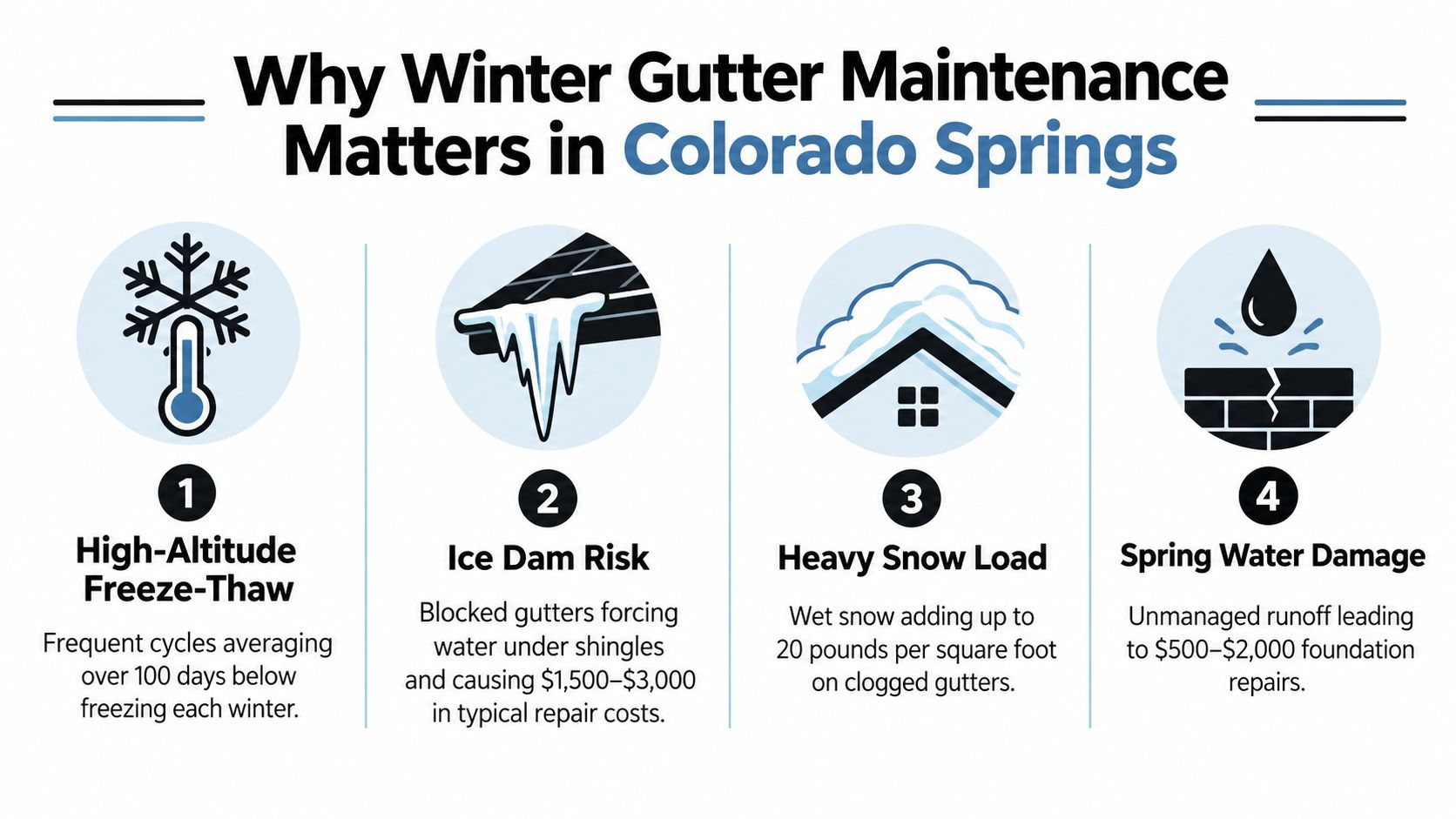
Why Winter Gutter Maintenance Matters in Colorado Springs
A homeowner in the Pikes Peak region may finish fall maintenance, then discover that winter has changed the drainage picture. Pine needles, roof grit, and windblown debris can enter the system after an autumn visit. Snow can cover the gutter channel, and a brief thaw can send water into a downspout that was already restricted.
Colorado Springs has a 30-year average seasonal snowfall of 33.6 inches, measured from July through June and including sleet and hail, according to the National Weather Service seasonal snowfall records. Recent winters show why a calendar-only approach isn't enough. The 2024–2025 winter recorded 20.5 inches, which was 6.9 inches above the winter normal, while the full seasonal total reached 43.3 inches, or 22.6 inches above normal. The snowiest winter on record was 1986–1987, with 56.3 inches.
Why a clear drainage path matters
Snow sitting on a roof can melt when temperatures rise, then refreeze when the roof edge remains colder. If leaves, needles, or sediment obstruct the channel, water may overflow, freeze at the eaves, or collect beside the roof edge. A downspout that looks open at the top may still be blocked at an elbow, outlet, extension, or buried transition.
The National Weather Service recommends clearing leaves, sticks, and other debris before winter and keeping gutters and downspouts clear of snow and icicles during the season. That guidance supports a simple local rule: prepare before sustained freezing, then inspect after major snowfalls and warmups.
Practical rule: A clean gutter is not a complete ice-dam solution, but a blocked gutter removes one of the easiest drainage paths to protect.
Screening can reduce seasonal debris in some homes, though no guard eliminates the need for inspection. Homeowners comparing approaches can review this practical resource on gutter screening for Connecticut homes for broader information about screening and debris control.
Understanding Ice Dams and Gutter Blockages
An ice dam begins with a roof-temperature difference. Snow melts on a warmer portion of the roof, travels downward, reaches a colder eave, and refreezes. The growing ridge can hold water against the roof, allowing it to move beneath shingles and into attics, ceilings, walls, or exterior contents.
Gutters don't create ice dams by themselves. Heat loss through the ceiling, inadequate air sealing, insufficient insulation, roof geometry, solar warming, and ventilation problems are more central causes. Gutters matter because they collect water and ice at the eaves, a vulnerable location. If the channel or downspout is blocked, meltwater has fewer ways to leave the roof system.
The University of Massachusetts explanation of ice dams makes this distinction clear. Building America guidance also recommends cleaning gutters before winter because water trapped in debris can freeze, and snow-loaded gutters can become incorporated into an existing ice dam. The right diagnosis therefore separates two problems:
| What you see | What may be happening | Appropriate response |
|---|---|---|
| Water overflows from one gutter section during a thaw | Debris, ice, poor slope, or a blocked outlet is restricting flow | Inspect from the ground and arrange safe clearing |
| Icicles repeat along the same roof edge | Meltwater is refreezing at a cold eave, often because of roof heat loss | Request a roof and attic assessment |
| Gutter runs sag or pull away | Snow, ice, trapped water, or failed hangers are adding load | Stop ladder work and arrange professional inspection |
| Water stains appear indoors | Meltwater may be backing beneath roofing materials or entering through another roof defect | Seek qualified roof or ice-dam assistance promptly |
The financial exposure can be substantial across the broader category of water damage and freezing. The Insurance Information Institute analysis reports that water damage and freezing represented almost 22% of U.S. homeowners insurance claims, with an average claim cost of $4,024. That figure covers more than gutter-related losses, so it shouldn't be treated as a forecast for a particular home. It does show why winter drainage deserves attention.
A gutter cleaning visit can restore flow through a controllable part of the system. It can't replace attic insulation, air sealing, or ventilation work when those are driving recurring dams.
Safe Winter Gutter Cleaning Methods
Winter maintenance starts with deciding whether conditions are safe enough to touch the gutter at all. Snow-covered roofs, icy ladders, steep pitches, overhead hazards, and falling ice can turn a routine task into a serious fall or impact hazard.
Begin from the ground
Check the weather, wind, roof pitch, ladder footing, and the area below the eaves. Use binoculars or a camera to look for blocked outlets, sagging runs, detached downspouts, heavy icicles, and staining on fascia or walls. Don't climb just because the visible gutter appears full.
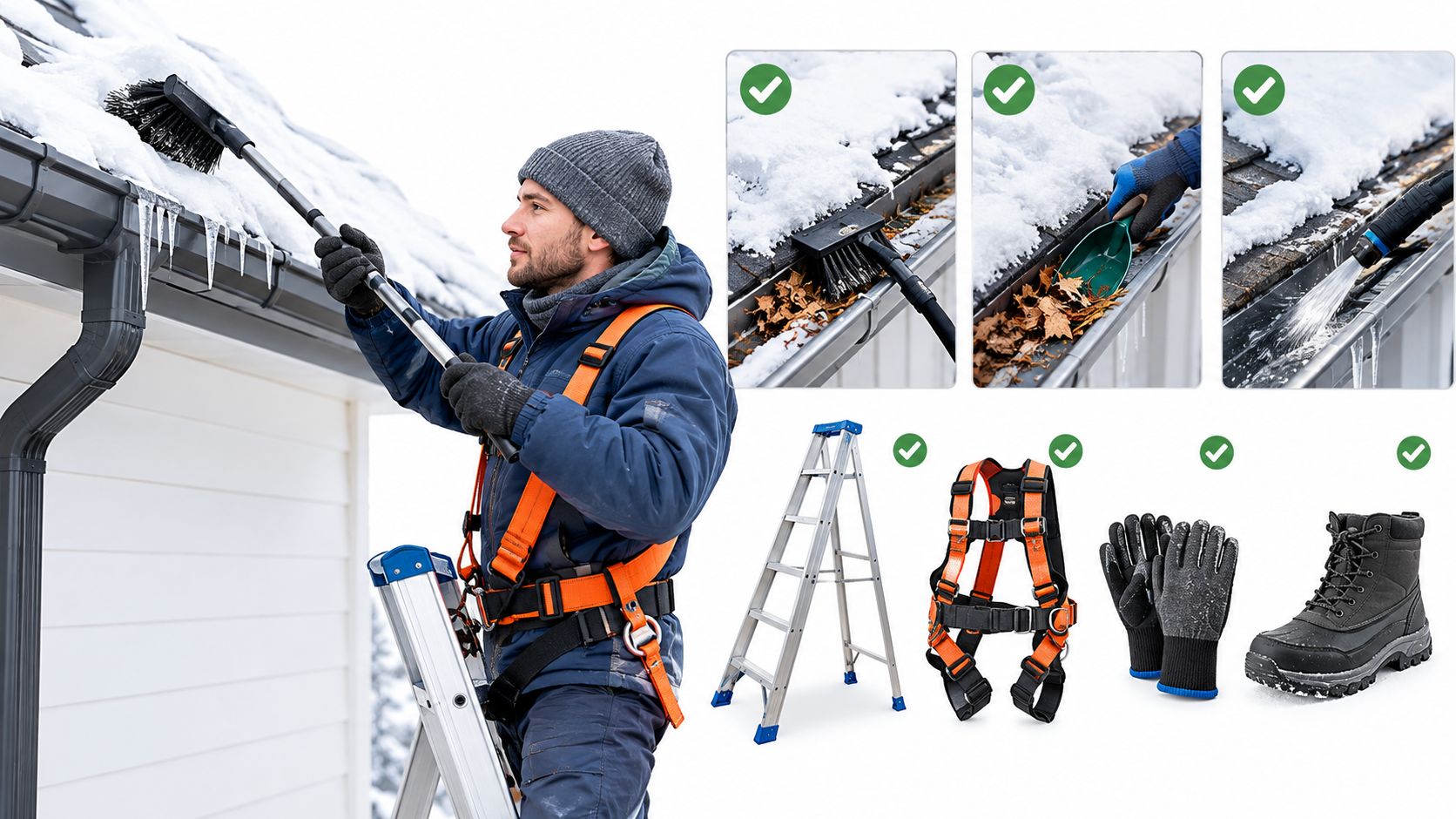
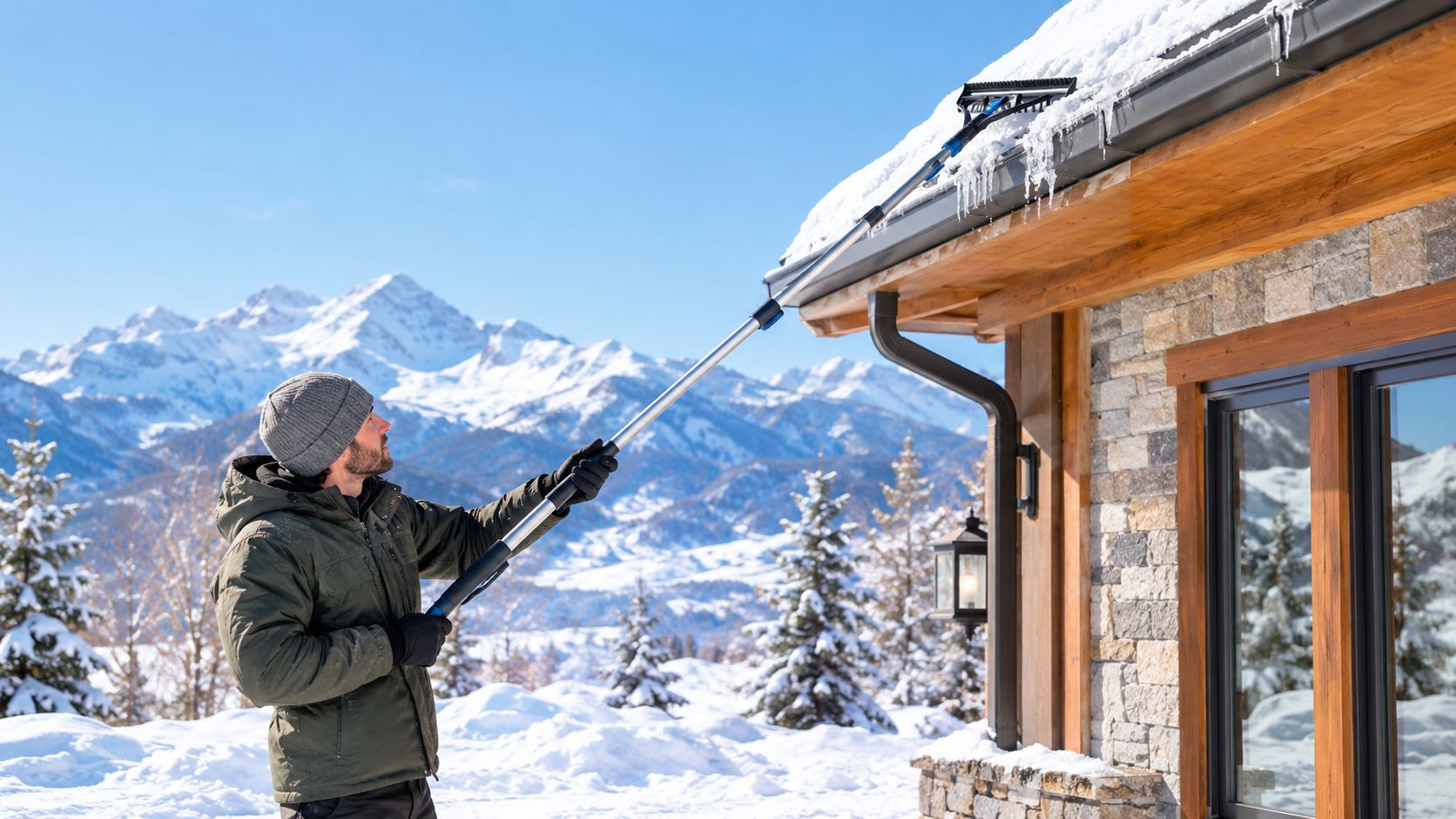
A roof rake can help remove accessible snow from the ground when it can be operated without climbing and without dragging aggressively across shingles or membranes. The National Roofing Contractors Association guidance generally advises homeowners not to remove ice dams or shovel roof snow themselves, because unsafe attempts can worsen damage.
Use a thaw as a maintenance window
During a controlled thaw, a homeowner may be able to clear accessible debris from a stable ground-level position. Focus on the entire drainage route, not only the horizontal trough.
- Gutter runs: Remove leaves, sticks, and sediment without forcing frozen material.
- Outlets and elbows: Check the connection where the gutter enters the downspout, since a visible trough doesn't prove the outlet is open.
- Downspouts: Verify flow from the outlet upward when conditions allow. A blocked lower section can leave meltwater trapped above it.
- Extensions: Confirm that discharge moves away from the foundation rather than pooling beside the wall.
- Hardware: Look for sagging, loose hangers, separated joints, and fascia damage after the gutter is free of snow and ice.
Don't chisel frozen buildup with a hammer, screwdriver, or similar tool. Impact can deform thin metal, tear sealant joints, loosen hangers, and damage shingles or roof membranes. Salt products, open flames, and forceful pressure can also harm roofing, vegetation, and finished surfaces.
Ground-level work is useful for inspection and limited debris removal. It isn't a substitute for safe access, roof diagnosis, or ice-dam removal.
If an active ice dam is causing leakage, don't improvise with fire or aggressive scraping. Qualified technicians may create drainage channels with warm tap water, working upward from the lower edge of the dam, while protecting the roof and surrounding property. After the thaw, recheck the discharge route, gutter pitch, fasteners, and fascia, then record recurring locations for an attic assessment.
When to Call a Professional
The choice is not just between cleaning a gutter yourself and doing nothing. The practical alternatives are limited ground-level maintenance, professional gutter service, or a broader roof and attic evaluation. Each fits a different condition.
| Condition | Reasonable next step |
|---|---|
| Wet leaves or sediment during a safe thaw | Arrange or perform limited ground-level clearing |
| Frozen gutter ice or a downspout encased in ice | Don't scrape aggressively. Request professional evaluation |
| Roof-edge ice dam with active interior leakage | Contact a qualified roof or ice-dam professional |
| Repeated dams in the same location | Investigate insulation, air sealing, ventilation, and roof drainage |
| Sagging gutter, detached downspout, or damaged fascia | Stop ladder work and schedule an inspection |
Persistent icicles, water stains around ceilings or walls, overflowing eaves during a thaw, and one-sided snowmelt are warning signs. A gutter that pulls away from the fascia may also be carrying more weight than its hangers or attachment can safely support. The Hanover Insurance Group warns that clogged gutters can prevent snow and ice from draining, causing overflow or enough added weight for gutters to sag or detach.
Homeowners should also avoid assuming that knocking down icicles solves the problem. It may remove a visible symptom while leaving the frozen channel, roof heat loss, or water path unchanged. Massachusetts emergency-preparedness guidance warns against getting on the roof or chipping away at an ice dam, while North Dakota State University Extension's roof-rake guidance emphasizes the danger of climbing onto snow-covered or icy roofing.
For a straightforward explanation of the fall and ladder risks involved, see why professional gutter cleaning is safer than climbing ladders yourself. Professional assessment is especially valuable when the visible blockage is only one part of a roof drainage problem.
Preventative Maintenance for Year-Round Protection
Winter gutter cleaning works best as one part of a maintenance cycle. Fall service removes leaves, needles, and sediment before sustained freezing, while winter ground-level checks catch new obstructions, abnormal icicles, stalled snowmelt, and discharge problems. Spring inspection then reveals damage that was hidden under snow or ice.
Fix the cause, not only the symptom
Recurring ice dams require attention to the building envelope. Attic air leakage can warm the roof deck, while insufficient insulation and poor ventilation can create the temperature difference that allows snow to melt above a colder eave. Missouri Extension cites attic insulation targets of R-38 to R-49 and ventilation of approximately 2 square feet per 150 square feet of attic area, subject to local code and building design, in its ice-dam guidance.
Those figures aren't a reason to add insulation blindly. An attic assessment should identify air leaks, insulation depth and placement, ventilation paths, bathroom exhaust issues, and roof design. Adding material without addressing air movement can leave the underlying problem in place.
Build a practical service rhythm
A Colorado Springs maintenance plan can include:
- Before sustained freezing: Clear every gutter run and downspout, then verify outlet extensions and visible slope.
- After major snow or a warmup: Inspect from the ground for overflow, concentrated icicles, detached components, and water near the foundation.
- After a thaw: Confirm that meltwater leaves the property instead of pooling along the wall.
- After winter: Check fascia, hangers, seams, downspouts, and roof-edge areas for movement or damage.
- Before the next cold season: Combine gutter service with an attic or roof review when the same ice pattern keeps returning.
A simple written record helps homeowners notice patterns. For a broader way to organize recurring property tasks, you can download the PM checklist template and adapt it to seasonal gutter, roof, attic, and foundation observations.
Gutter guards can reduce the amount of loose debris entering a system, but they still need inspection and won't correct attic heat loss. Homeowners weighing that option can review how gutter guards reduce seasonal maintenance for busy homeowners. In snowy conditions, the priority remains a functioning drainage route and safe access, not a promise that one product will prevent every ice problem.
Cultivate House Detailing provides gutter cleaning for Colorado Springs and nearby communities, including removal of leaves, twigs, and other debris before winter, with attention to visible drainage concerns. Visit Cultivate House Detailing to request a quote for safe seasonal gutter service or discuss related exterior cleaning needs.