What Happens Inside Your Gutters During Heavy Colorado Rainstorms
Colorado weather is famous for its unpredictability. One moment, the sun is shining on the Flatirons or Pikes Peak, and twenty minutes later, the sky turns a bruised purple and unleashes a torrential downpour. While most residents run for cover or watch the lightning show from their living room windows, a frantic, high-stakes battle is taking place just above their heads.
Your roof and gutter system are the unsung heroes of your home’s structural integrity. When a heavy storm hits the Front Range, thousands of gallons of water hit your roof in a matter of minutes. The journey that water takes—from the shingles to the downspout and away from your foundation—is a marvel of gravity and engineering. However, it is also a system that hangs in a delicate balance.
When that balance is thrown off by debris, hail damage, or poor gutter maintenance, the results can be catastrophic for a homeowner. Understanding exactly what happens inside those aluminum or copper channels during a deluge isn’t just interesting trivia; it is essential knowledge for protecting your biggest financial investment. This guide breaks down the mechanics of the storm, the failure points that lead to damage, and how professionals like Cultivate House Detailing ensure your home stays dry when the skies open up.
The Mechanics of Water Flow: A High-Speed Highway
To understand the stress a storm places on your gutters, you first have to understand the volume of water involved. The math is surprisingly intimidating. For a standard 2,000-square-foot roof, just one inch of rainfall generates roughly 1,200 gallons of water. In a heavy Colorado thunderstorm, where rain can fall rapidly and heavily, your roof is essentially a massive catchment area funneling a small river into a channel only five or six inches wide.
The Velocity and Pitch
When rain hits the roof, gravity pulls it down the slope of the shingles. As the water travels, it gains velocity. By the time it reaches the eaves, it is moving fast. The job of the gutter is to “catch” this high-speed sheet of water and redirect its energy horizontally.
This is where the pitch—or slope—of the gutter becomes critical. Gutters are not perfectly level; they are installed with a slight downward angle toward the downspouts (usually about a quarter-inch for every 10 feet). This subtle slope ensures that gravity continues to move the water toward the exit points. During a heavy storm, the water level in the trough rises rapidly. If the pitch is correct and the channel is clear, the water creates a vortex at the downspout, spiraling down and away from the house.
The Downspout Bottleneck
The downspout is the funnel. While the horizontal gutter collects the water, the downspout has to handle the vertical discharge. This is the choke point of the entire system. If the volume of water entering the gutter exceeds the capacity of the downspout to drain it, the water backs up. In a perfectly functioning system, this backup is temporary and clears as the rain lightens. But in a compromised system, this bottleneck is where the trouble begins.
The Chaos Factor: Common Failure Points During Storms
In a sterile lab environment, gutters handle water perfectly. But Colorado is not a lab. It is an ecosystem filled with Ponderosa pines, Aspens, Cottonwoods, and erratic weather patterns including hail. When you introduce these variables to a heavy rainstorm, the mechanics of water flow change drastically.
The Debris Dam
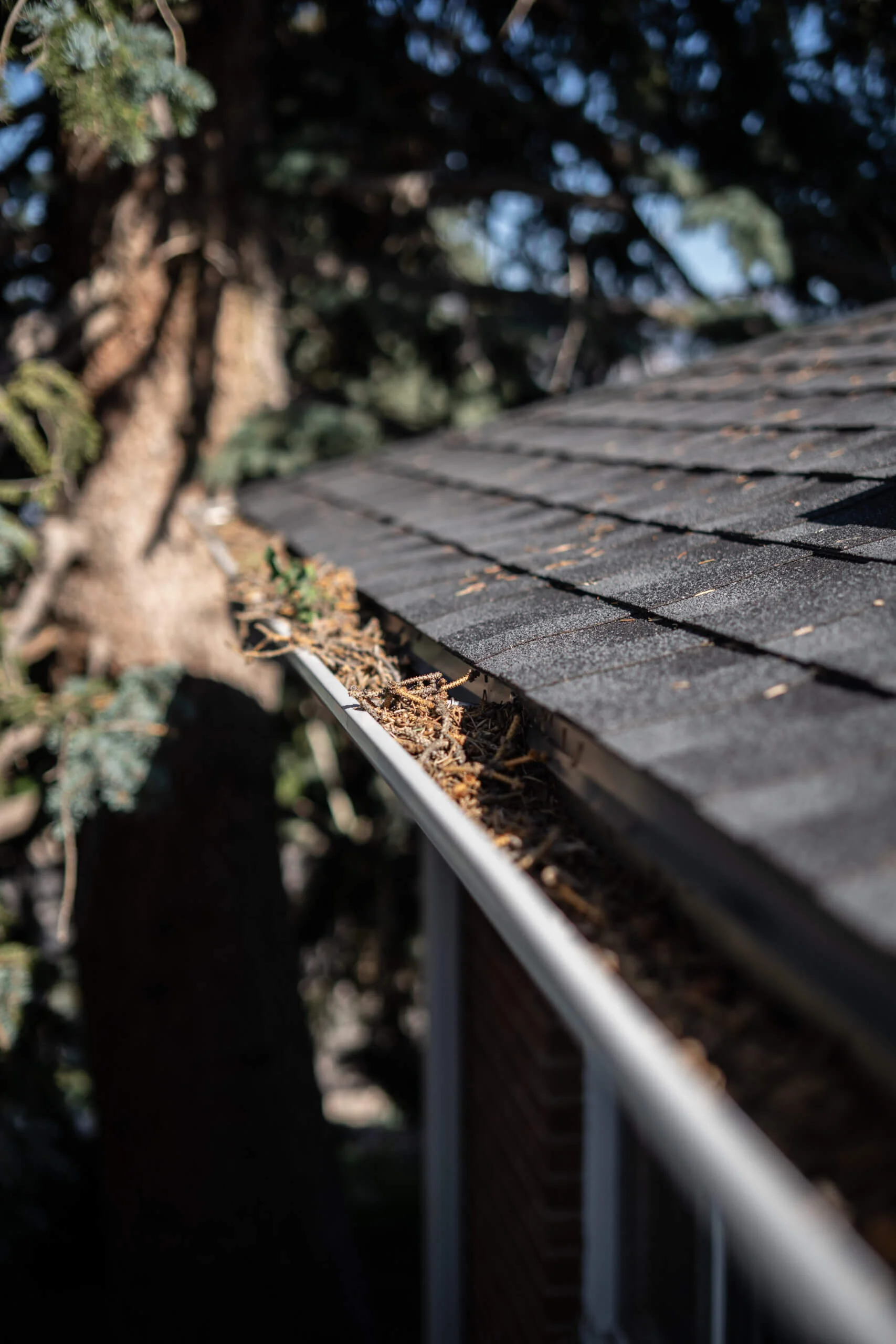
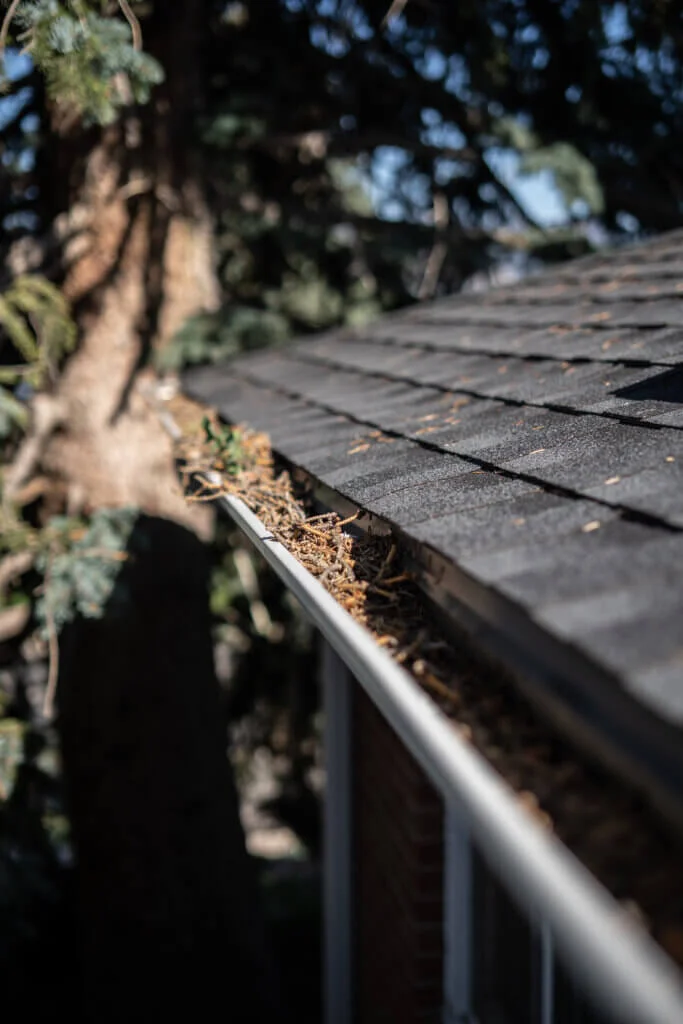
The most common issue is a blockage. It rarely takes a large branch to clog a system. More often, it is a mat of pine needles, decomposed leaves, and asphalt grit from the shingles.
When the storm begins, the initial rush of water pushes loose debris toward the downspout. If a strainer or guard isn’t in place—or if it is already overwhelmed—this debris lodges in the “elbow” of the downspout. As water continues to pour in, the debris compacts, creating a watertight plug.
With the exit sealed, the gutter trough fills up like a bathtub. But unlike a bathtub, there is no overflow drain. The water rises until it spills over the brim. This creates a waterfall effect, often directly in front of windows or entryways, but more dangerously, right against the foundation of the home.
Structural Sagging and Separation
Water is heavy. A single gallon of water weighs over eight pounds. If your gutters are clogged and fill to the brim with water and wet mulch, a 20-foot section of gutter can suddenly be bearing hundreds of pounds of excess weight.
Most gutter spikes or hangers are designed to hold the weight of the metal and a reasonable amount of flowing water, not a stagnant pool of sludge. During a heavy storm, this added weight can cause the spikes to pull away from the fascia board (the wood running along the roofline).
When gutters sag, the pitch is ruined. Water pools in the low spots rather than flowing to the downspouts, even after the rain stops. This standing water becomes a breeding ground for mosquitoes and adds continuous stress to the roofline, eventually leading to wood rot on the fascia and soffits.
The Hail Factor
Colorado is the hail capital of the United States. While we often look for hail damage on cars and shingles, gutters take a beating too. Hail can dent the metal, disrupting the smooth flow of water and creating little pockets where debris gets stuck. More significantly, hail knocks the granules off asphalt shingles. This grit washes into the gutters, forming a heavy, sandy sludge that sits at the bottom of the trough, weighing it down and making it difficult for water to flow freely.
The Risks of Neglected Gutters
When the system fails, the water has to go somewhere. Unfortunately, the path of least resistance usually leads to expensive repairs. The damage caused by overflowing gutters is rarely immediate; it is cumulative, worsening with every storm until a major failure occurs.
Foundation Erosion and Hydrostatic Pressure
The primary purpose of a gutter system is to move water at least six to ten feet away from the home’s perimeter. When gutters overflow, that water is deposited directly at the base of your walls.
Colorado soil often contains high amounts of clay, which is expansive. When it gets wet, it swells; when it dries, it shrinks. Dumping concentrated amounts of water on the soil next to your foundation causes the soil to expand rapidly, putting immense pressure (hydrostatic pressure) on your concrete foundation walls.
Over time, this pressure causes cracks. Once cracks form, water seeps into the basement or crawlspace. Worse, as the water recedes and the soil shrinks, it can leave voids that cause the foundation to settle or shift unevenly, leading to structural damage that can cost tens of thousands of dollars to repair.
Landscape Decimation
Homeowners spend significant time and money cultivating their landscaping. Flower beds, mulch, and ornamental shrubs planted near the house are vulnerable to the “waterfall effect” of overflowing gutters.
A sheet of water falling from a roof twenty feet up hits the ground with significant force. It can wash away mulch, expose plant roots, and create deep trenches in the yard. This erosion ruins the aesthetic of the garden and can also change the grading of the yard, encouraging water to pool toward the house rather than away from it.
Basement Flooding and Mold
If water pools against the foundation long enough, it will find a way in. Basement flooding is a nightmare scenario for homeowners. It destroys flooring, drywall, and furniture. However, the aftermath is often worse. Moisture that gets into the walls creates the perfect environment for mold growth. Remedying a mold issue is invasive and hazardous to your health, often requiring professional mitigation.

The Cultivate House Detailing Approach
Given the high stakes, gutter maintenance is not an area where cutting corners pays off. This is where professional intervention makes a tangible difference. Cultivate House Detailing approaches gutter maintenance not just as a cleaning chore, but as a vital home health inspection.
Safety First
Cleaning gutters is inherently dangerous. It involves working on ladders, often on uneven ground, while reaching and stretching. Falls from ladders are a leading cause of home injury. Professionals are trained in ladder safety and use stabilizers and stand-offs to protect both themselves and your gutters from damage during the cleaning process.
A Comprehensive Clean
The “hand-scoop” method used by many homeowners often leaves behind the grit and sludge that sits at the bottom of the trough. Cultivate House Detailing ensures that the entire system is flushed. This is crucial for removing the shingle grit and heavy sediment that disrupts water pitch.
Furthermore, a visual inspection of the troughs isn’t enough. Professionals test the downspouts to ensure they are flowing freely. A gutter can look clean from above but still be plugged at the elbow. By ensuring the entire hydraulic system is clear, they guarantee that the next time a storm rolls over the Rockies, your home is ready.
Assessing the System
Beyond cleaning, a professional eye can spot early warning signs. They can identify loose hangers, incorrect pitch, or sealant failures at the end caps before these minor issues turn into structural failures during a storm.
Proactive Winter Preparation: The Ice Dam Connection
Come autumn, the water in your gutters will freeze. If they’re clogged with wet leaves from the rainy season, this debris freezes solid, creating a physical barrier.
This barrier is how ice dams form. When snow on your roof melts, it runs down and hits the frozen mass in the gutter. Unable to drain, the water refreezes, building a ridge of ice. This process repeats, and the ice dam grows, forcing water back up under your shingles. When this trapped water melts again, it can leak through your roof deck into your attic, insulation, and ceilings.
By cleaning your gutters after the leaves fall but before the first hard freeze, you protect your home from both winter water damage and summer floods.

Conclusion
A thunderstorm in Colorado is a force of nature—beautiful, powerful, and potentially destructive. While we cannot control the weather, we can control how our homes respond to it. Your gutters are the first line of defense against the elements, a critical system designed to protect your foundation, your landscape, and your peace of mind.
Ignoring what happens inside those troughs during a storm is a gamble with high odds of failure. The debris will accumulate, the water will rise, and eventually, the overflow will cause damage that far exceeds the cost of regular maintenance.
Don’t wait for the water to start pouring over the brim or for the basement to dampen. Take a proactive stance on home maintenance. Reach out to Cultivate House Detailing today to schedule your seasonal inspection and cleaning. Ensure that when the clouds darken and the thunder rolls, your home is prepared to weather the storm.
https://www.google.com/maps?cid=10139285130722580475