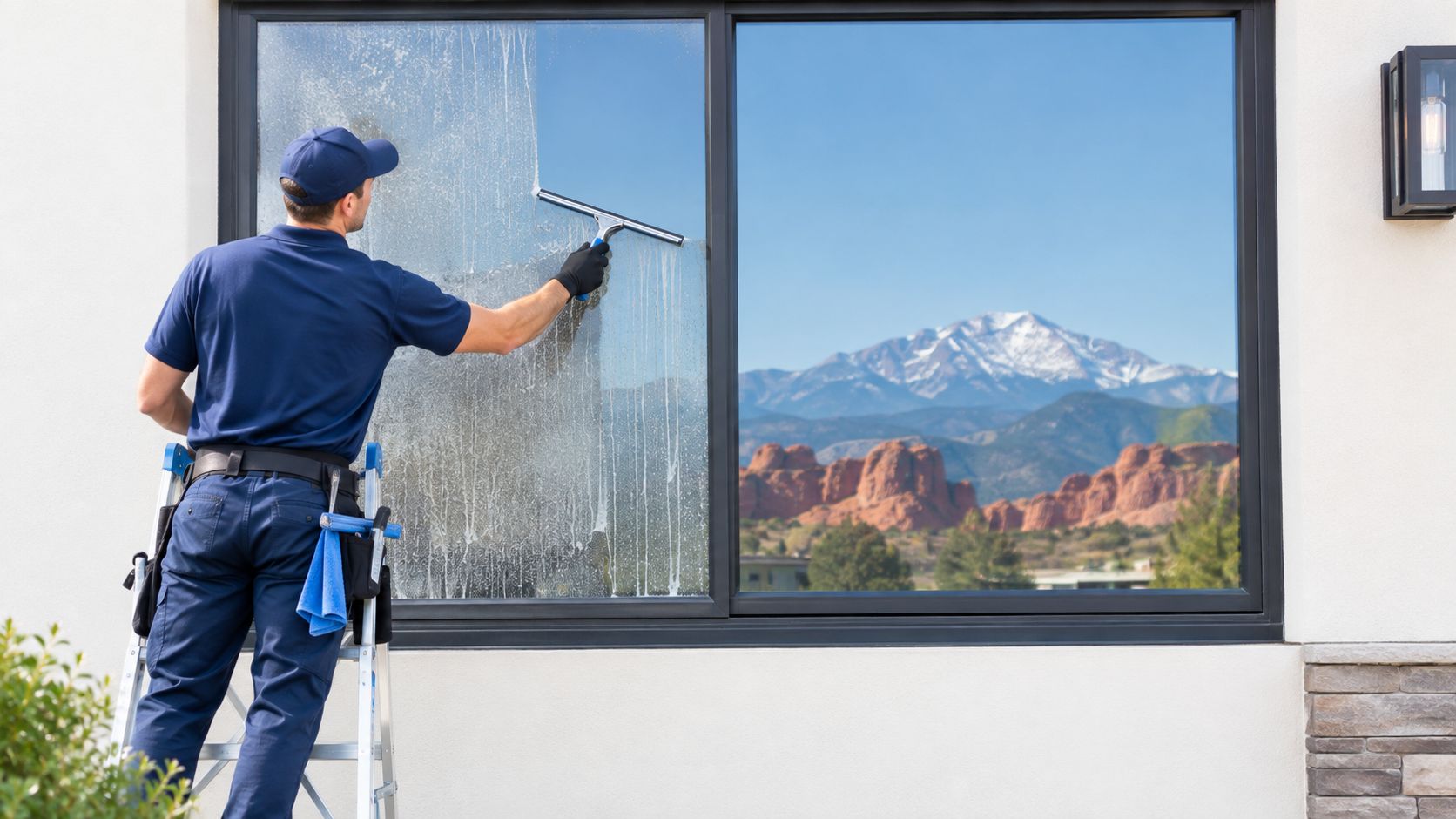
Dirty glass sneaks up on you in Colorado Springs. One week the light is sharp, the mountain view looks perfect, and then pollen, dust, sprinkler spray, and weather leave the windows hazy enough that you start eyeing the old ladder in the garage.
That’s usually the moment to slow down.
A window cleaning ladder can be the right tool in the right hands, but it isn’t forgiving. Around Colorado Springs, the risk climbs fast because houses often sit on sloped lots, gravel shoulders, stepped patios, and windy exposures. What looks like a simple Saturday chore can turn into a dangerous setup in a hurry.
For homeowners and property managers searching for window cleaning near me, professional window cleaning, or window cleaning in Colorado Springs, CO, it helps to know what safe ladder work involves, where DIY usually goes wrong, and when ladder-free methods make more sense.
The View vs The Risk Why Ladder Safety Matters in Colorado Springs
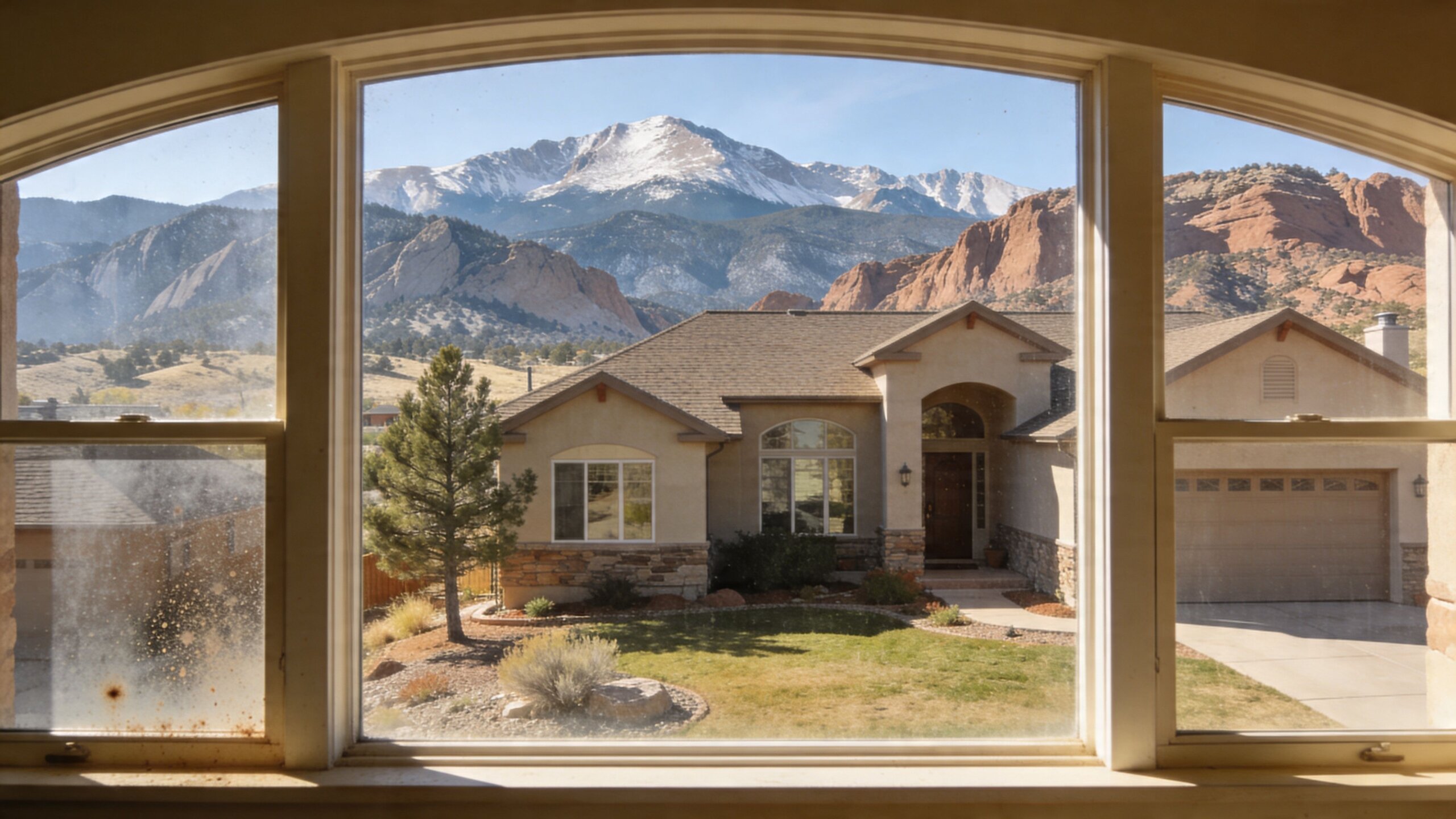
Colorado Springs homes are built for views. Big front windows, second-story glass, tall entryways, and back windows facing the mountains are common. They also collect dust, hard water spotting, and storm residue fast, especially when sun exposure makes every streak obvious.
A lot of people start the same way. They grab a household ladder, a paper towel roll, maybe a bucket, and think they’ll just clean the outside panes that are “not too high.” The problem is that window work changes the normal ladder equation. You’re reaching sideways, carrying tools, working around screens, and trying to see streaks in direct sun. That’s where balance breaks down.
The danger isn’t theoretical. A government agency analysis documented 88 window cleaning accidents over a 15-year period, with 62 resulting in fatalities, which is roughly a 70% fatality rate in those reported incidents. The same analysis notes that many of these accidents involved overreaching or unsecured equipment according to this window washer accident summary.
Why window cleaning is different from other ladder jobs
Painting a wall and cleaning a second-story window don’t create the same movement patterns. Window cleaning asks you to shift, wipe, rinse, twist, and inspect the glass from different angles. That tempts people to lean just a little farther instead of climbing down and resetting the ladder.
Practical rule: If a ladder job requires repeated side reach, wet hands, and constant repositioning, it deserves more caution than most homeowners expect.
Colorado Springs adds another layer. Afternoon gusts, uneven flagstone, decorative rock, hillside landscaping, and narrow side yards all make setup harder than it looks from the driveway.
Why this matters for homeowners
The main takeaway is simple. Dirty windows are annoying. Falls are life-changing.
If your windows are above easy ground access, near sloped terrain, or placed over landscaping, porch roofs, or retaining walls, ladder safety stops being a basic household issue and becomes a job for trained equipment and a careful process.
Choosing the Right Window Cleaning Ladder
Not every ladder belongs in window work. A lot of household ladders are fine for changing a light bulb or reaching a storage shelf, but they’re the wrong choice for exterior glass cleaning.
The first thing professionals look at is the ladder type. The second is the ladder rating. Both matter.
Stepladder vs extension ladder
A stepladder works for lower interior windows, single-story touchups, and places where you need to stand briefly and close to the glass. It’s compact and easy to move, but it has a limited reach.
An extension ladder is the usual choice for taller exterior windows. It gives you the height needed for upper-story access, but setup becomes much more technical. Ground conditions, angle, top support, and safe tie-in all matter.
For many homeowners, the bigger issue isn’t height alone. It’s using the wrong ladder for the location. A stepladder on uneven pavers or an extension ladder on loose gravel can create a bad situation before cleaning even starts.
Material and rating matter more than most people think
Around homes and storefronts, fiberglass is often the smarter material because it isn’t conductive the way metal ladders are. That matters any time service lines, fixtures, or nearby electrical hazards are part of the work area.
Rating matters too. According to this window cleaning safety reference, professional BS EN 131 ladders commonly used by window cleaners have a 115 kg duty rating and a 150 kg maximum load, while many domestic Class 3 ladders are rated at 95 kg and aren’t recommended for commercial or professional use.
Here’s a simple comparison:
| Ladder Type | Common Material | Duty Rating (Max Load) | Best For | Professional Choice? |
|---|---|---|---|---|
| Stepladder | Fiberglass or aluminum | Varies by model | Lower interior or exterior access on firm level ground | Sometimes |
| Extension ladder | Fiberglass or aluminum | Varies by model | Upper-story exterior windows | Yes |
| Professional BS EN 131 ladder | Commonly fiberglass or aluminum | 115 kg duty, 150 kg max load | Professional window cleaning work | Yes |
| Domestic Class 3 ladder | Often lightweight aluminum | 95 kg | Light household tasks | No |
What usually works best in real life
For serious exterior work, professionals tend to favor a sturdy extension ladder and not the lightest ladder on the rack. Cheap ladders flex more, feel less stable, and leave less margin for the worker, the tools, and the motion that comes with cleaning.
A homeowner comparing options should think about:
- Actual working height instead of the label on the ladder
- Ground conditions around the house
- Electrical exposure near the work area
- How much side reach the window requires
- Whether the ladder is rated for real use, not just storage-room chores
If you want a practical breakdown of gear that handles taller glass better, this guide to best window cleaning tools for high windows is a useful place to start.
The ladder that feels “light and easy” in the store is often the ladder that feels least reassuring once you’re three sections up and trying not to leave streaks.
The Professional's Ladder Setup Checklist
Most ladder accidents don’t start with climbing. They start with a rushed setup.
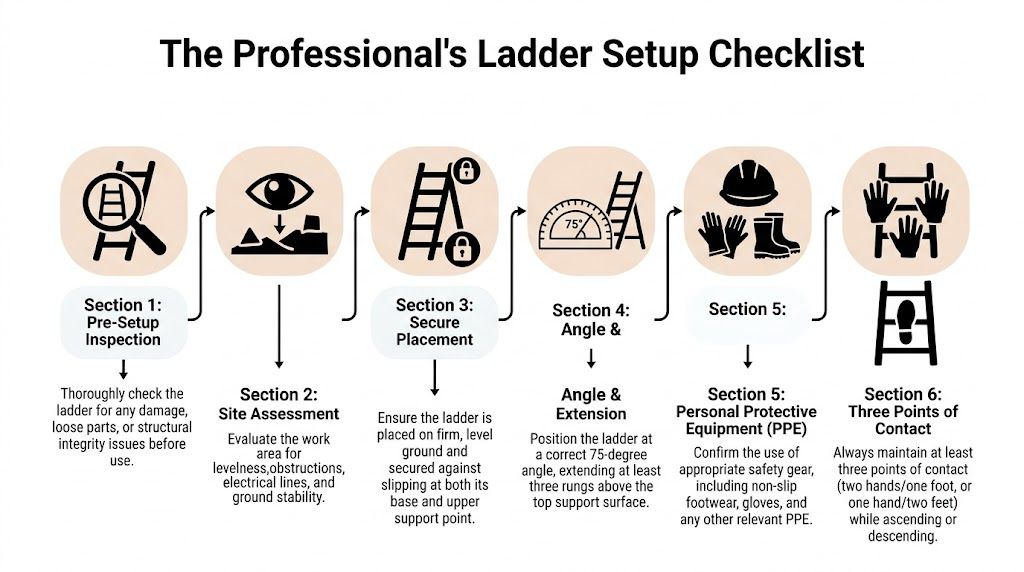
When professionals approach a second-story or third-story window, they don’t just lean a ladder and hope for the best. They run through the same checklist every time because the safe setup is the job.
Start with the ladder before the house
Before the ladder touches the building, inspect it. Look for bent rails, loose rungs, cracked feet, worn rope, damaged locks, and anything that changes the way it loads under weight.
A damaged ladder doesn’t become safe because the job is short.
According to this ladder safety techniques guide, applying the 1:4 rule to create about a 75-degree angle is critical for stability, and fall-avoidance success rates exceed 99% when that rule and proper pre-use inspections are followed.
Read the ground like a professional
Colorado Springs homes can be tricky. A setup area can look flat from a few feet away and still be wrong. Decorative rock shifts. Irrigated grass turns slick. Driveways crown in the middle. Patios settle. Hillside lots create uneven leg loading.
A pro checks all of that before the ladder goes up.
Key checks include:
- Surface firmness. Concrete is one thing. Gravel, mulch, and soft lawn are another.
- Slope direction. Side-to-side lean is especially dangerous.
- Top contact point. The ladder needs a stable resting position, not trim, screen frame, or gutter edge alone.
- Clear climbing path. Hoses, planters, toys, and uneven edging have to go.
Use the 1 to 4 rule every time
The 1:4 rule means the ladder base should sit 1 foot out for every 4 feet of working height. That creates the angle that helps the ladder grip correctly and carry weight down the rails instead of peeling backward or kicking out.
A lot of DIY setups miss here. People place the ladder too upright because they don’t want it sticking into a walkway or flower bed. That feels convenient, but it makes the climb less stable.
Field note: If the angle looks almost vertical, it’s probably wrong.
For homeowners who want a visual refresher, this video helps show the basics of safe ladder handling in action.
Lock, secure, and test before climbing
Once the angle is set, the ladder needs more than a glance.
Use a real checklist:
Extend fully and engage the rung locks
Make sure both locks are seated properly and carrying evenly.Set the feet cleanly
Feet should sit flush on the surface, not half on edging or loose stone.Secure the top where possible
Stabilizers or a firm reveal contact point reduce movement and protect the building.Test load from low height first
Apply body weight gradually before climbing to working position.Climb facing the ladder
Keep three points of contact. No tools in hand while climbing.
What changes on Colorado properties
Homes in Black Forest, Monument, and the west side often force more careful setup because access areas are narrower and terrain is less forgiving. Split-level designs, walkout basements, retaining walls, and stepped landscaping often turn a “quick ladder job” into a poor DIY candidate.
That’s why experienced crews spend more time on placement than is commonly anticipated. The glass cleaning is visible. The safety work usually isn’t. But that invisible part is what keeps the rest of the job routine.
Advanced Safety Gear and Avoiding Common Mistakes
A safe ladder setup can still go bad if the worker’s habits are sloppy. In these instances, the difference between a homeowner and a trained technician really shows.
The most common mistake is overreaching. Someone gets close to the edge of the pane, wants to finish one more corner, and shifts their belt line outside the rails. Once body weight moves past the ladder’s center, recovery gets harder fast.
The gear that makes ladder work safer
Professionals don’t rely on the ladder alone. They add gear that controls movement and improves contact.
Useful examples include:
- Ladder stabilizers or stand-offs that widen the upper contact point and keep the ladder off fragile surfaces
- Leveling devices for uneven approaches
- High-traction footwear that grips rungs and hardscape better than casual sneakers
- Gloves with grip so wet hands don’t turn simple movements into slips
- Tool management that keeps hands free while climbing
These tools don’t make risky behavior safe. They support disciplined work.
Colorado Springs terrain changes the rules
Generic ladder advice is usually written for level suburban lots. That’s not always the case here. In mountainous regions like Colorado Springs, local real estate data suggests up to 40% of residential properties sit on uneven ground, which makes specialized equipment such as angled stabilizers or tripod-base ladders more important for slip prevention, according to this discussion of ladder safety on sloped terrain.
That shows up all over the area. One leg may land on a paver edge while the other lands in decorative gravel. A side yard may slope just enough to feel manageable until the ladder loads and shifts. The mistake isn’t always dramatic. Sometimes it starts with a tiny twist at the foot.
If the terrain forces you to improvise, the setup is already telling you not to proceed.
Mistakes that keep causing falls
Some errors show up again and again:
- Finishing from one position instead of climbing down and moving the ladder
- Working in wind because the glass “will only take a minute”
- Leaning on gutters, screens, or trim that were never meant to bear load
- Cleaning above decks or awkward roof sections without a realistic retreat path
If a fall happens on private property, homeowners often end up sorting through responsibility questions afterward. This guide on prove negligence in slip and fall accident gives a useful overview of how negligence is generally evaluated in slip-and-fall situations.
Good ladder work looks boring. That’s the point. It’s controlled, repetitive, and conservative.
When to Hire a Professional Window Cleaning Service
There’s a point where DIY stops being practical and starts becoming a gamble. For window cleaning, that point usually arrives sooner than people think.
If the windows are on the second story or higher, above a porch roof, over a stairwell, behind landscaping, or reachable only from sloped ground, it’s time to think beyond a household ladder. The same goes for commercial storefronts and multi-unit properties where speed and consistency matter.
A simple decision framework
A homeowner can usually make a good call by asking a few direct questions:
- Can I reach the glass from stable ground without stretching?
- Is the ground level and firm where the ladder would sit?
- Will wind, sprinklers, or tight access affect the setup?
- Do I need to carry tools up and down repeatedly?
- Am I cleaning around power lines, metal fixtures, or awkward rooflines?
If those answers start leaning toward “not really,” the safest move is to hire a professional window cleaning service.
Why water-fed poles changed the conversation
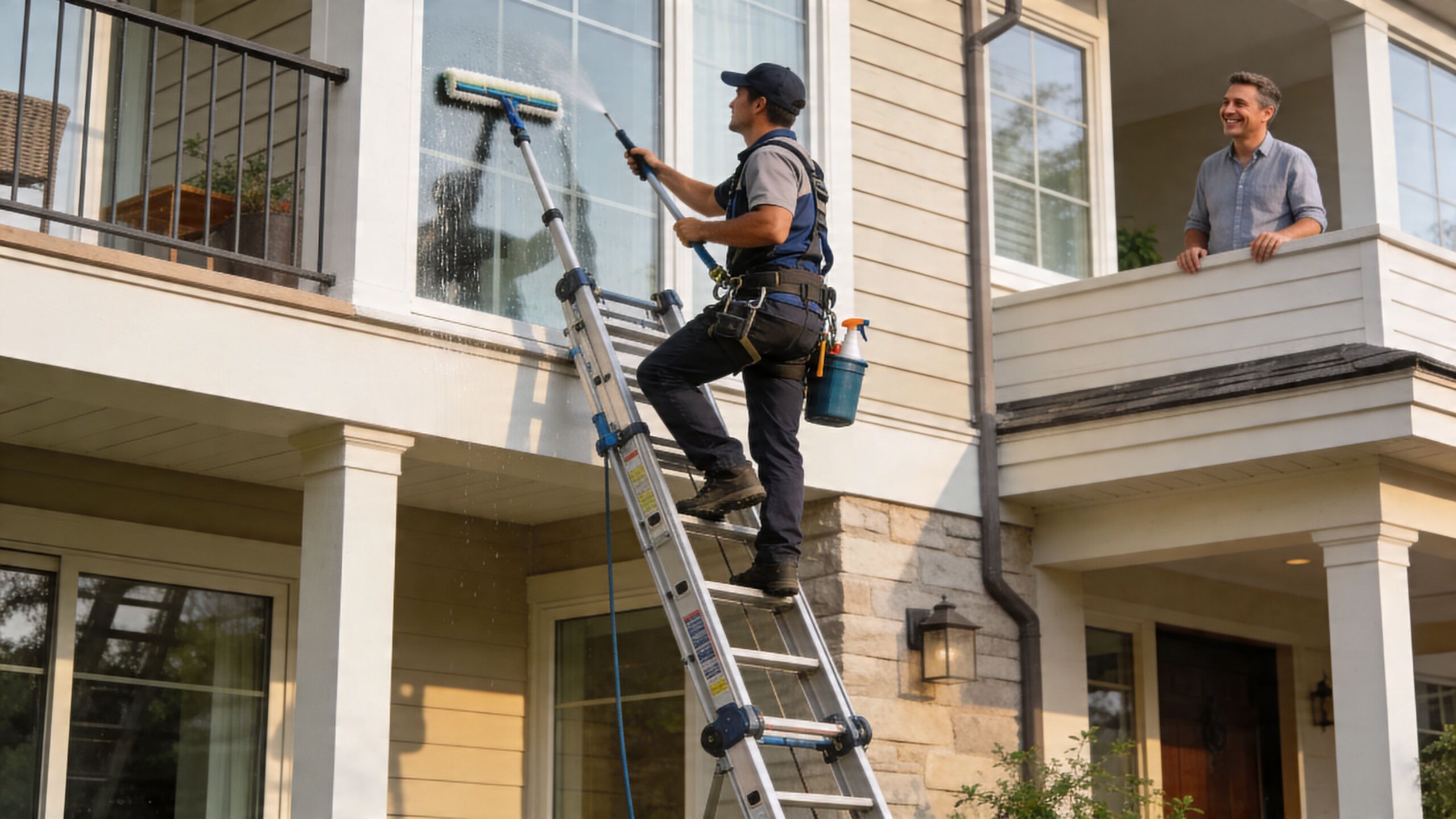
Modern exterior cleaning sees a significant boost in safety. Water-Fed Pole systems can reach up to 60 feet and keep the technician’s feet on the ground. According to this overview of water-fed pole safety and reach, traditional ladders cause 81% of window cleaner falls, while WFP technology reduces ladder-related incidents to zero by eliminating ladder use for that portion of the work.
That matters for both homes and commercial properties in Colorado Springs, especially when upper windows sit over terrain that isn’t friendly to ladder setup.
Better safety and a better finish
Water-fed poles do more than reduce fall risk. They also let crews clean exterior glass, frames, and awkward upper sections with purified water from the ground. That’s often the best fit for:
- Fourth-story residential glass
- Commercial window cleaning
- Large banks of exterior panes
- Windows above landscaping or uneven grade
- Seasonal maintenance cleaning
For homeowners bundling exterior projects, it also helps to understand how windows fit into broader property care. This guide on how to clean the exterior of a house offers a helpful overview of how exterior surfaces work together.
If you’re comparing approaches, this page on why professional window washers are safer than DIY cleaning explains why trained crews often choose ladder-free methods whenever the property allows it.
The main trade-off is simple. DIY may look cheaper at first. Professional service is usually safer, faster, and more realistic once upper-story access enters the picture.
Your Local Solution The Cultivate House Detailing Advantage
For homeowners and businesses in Colorado Springs, the best result usually comes from matching the method to the property. Some windows still call for careful ladder work. Others are better handled with water-fed poles from the ground. A quality company knows the difference and doesn’t force one approach onto every job.
That’s where a local team matters. Colorado Springs properties have their own quirks. Hillside lots, wind exposure, hard-water buildup, sun-baked glass, and mixed-access architecture all change the way safe window cleaning should be done. A crew that works these neighborhoods every week understands those variables before the ladder even comes off the truck.
Cultivate House Detailing is built around that safety-first, detail-focused approach. The team provides residential window cleaning, commercial window cleaning, exterior window cleaning, interior window cleaning, screen cleaning, track cleaning, and related exterior maintenance for Colorado Springs and nearby communities. The goal isn’t just cleaner glass. It’s cleaner glass without streaks, rushed setups, or unnecessary risk.
Clean windows should improve your day, not turn into the most dangerous chore on your weekend list.
If you’ve been searching for window cleaning near me or window cleaning in Colorado Springs, CO, the safest next step is usually to let trained professionals handle the height, access, and finish.
Frequently Asked Questions About Window Cleaning and Ladders
Is a household ladder good enough for exterior window cleaning?
Usually not for upper-story work. Household ladders are often fine for light indoor tasks, but exterior window cleaning adds side reach, wet hands, repeated movement, and more complicated footing. The ladder may not be rated or shaped for that kind of use.
What’s the safest way to clean second-story windows?
The safest option is often ground-based cleaning with a water-fed pole system when the property layout allows it. If ladder work is required, safe setup, proper angle, stable footing, and controlled movement matter every step of the way.
Are ladders more dangerous on Colorado Springs properties?
They can be. Sloped yards, gravel beds, retaining walls, stepped patios, and wind all make setup harder than it would be on a flat lot. That’s why local experience matters so much.
Do professional window cleaners still use ladders?
Yes, but good crews use them selectively. Professionals often combine ladders, stabilizers, and ladder-free tools depending on the access point, the height, and the safest way to reach the glass.
Can you clean windows over a deck, porch roof, or landscaping bed?
Sometimes, but those are exactly the situations where DIY often becomes unsafe. Obstacles below the work area reduce your margin for error and make ladder placement more complicated.
What services should I expect besides glass cleaning?
A complete service often includes interior window cleaning, exterior window washing, screen cleaning, track cleaning, and attention to hard-water spotting or seasonal buildup. For businesses, regular service can also help storefronts and customer-facing glass stay consistent year-round.
If you want clear views without the ladder risk, Cultivate House Detailing provides professional window cleaning for homes and businesses across Colorado Springs and nearby communities. Reach out for a quote and get streak-free glass, safer access methods, and a team that understands local terrain, weather, and what it takes to do the job right.
Looking for a professional to take care of it? Cultivate House Detailing offers residential window cleaning in Colorado Springs. Get a free quote.
Serving Monument and the surrounding Colorado Springs area — see our window cleaning services in Monument.