
A lot of homeowners in Colorado Springs notice their gutters only when they fail. A fast summer downpour rolls in, water pours over the front edge instead of into the downspouts, and suddenly the patio, flower beds, and siding are taking the hit. By then, the problem feels urgent, but the cause is usually simple. Debris built up slowly until the system couldn't move water where it was supposed to go.
That problem shows up differently around the Springs than it does in flatter, milder places. Pine needles pack tightly in gutters around Black Forest and Monument. Wet snow sits heavy on roof edges, then melts and refreezes. Wind pushes seed pods, grit, and roof granules into corners and downspout openings. If you're trying to decide whether to handle drain and gutter cleaning yourself or hire it out, it helps to know what proves effective here and what tends to create more frustration than progress.
Your Guide to Gutter Cleaning in Colorado Springs
If you've lived here through even one spring and one summer, you've probably seen the same pattern. The gutter looked mostly fine from the ground. Then a storm hit, and one section turned into a waterfall right over the walkway. Another section dumped near the foundation because the downspout wasn't flowing.
That doesn't always mean the whole system is ruined. Most of the time, it means the gutter channel is holding compacted debris, the outlet is choked off, or the downspout is partially blocked. In Colorado Springs, those clogs aren't just leaves. They're often pine needles, shingle grit, mud, seed fluff, and the heavy organic sludge that forms when everything sits through snow and wind.
Good gutter care protects more than the gutter itself. It helps keep runoff off your siding, away from entryways, and out of the soil beds that start washing out during hard rain. It also helps you catch loose fasteners, separated seams, and bent sections before they become a repair job.
Clean gutters aren't about neatness. They're about controlling where water goes when Colorado weather gets abrupt.
If you're comparing methods, generic national advice can miss the local issues that make this job harder. A useful outside example is this local guide to Flagstaff gutter care, which also deals with mountain weather, debris load, and seasonal swings that feel familiar to homeowners along the Front Range.
For homeowners who want practical help instead of sales talk, the right approach is simple. Learn the safe process, use the right tools, and be honest about your roof height, comfort on ladders, and the amount of buildup you're dealing with. When the job is straightforward, DIY can work. When the debris is packed tight, the roofline is tall, or the gutters show damage, it makes sense to bring in a local exterior cleaning crew that already has the ladders, rinse tools, and repair awareness for the job.
Why Gutter Maintenance Is Critical for Local Homes
Colorado Springs homes deal with a combination that generic gutter guides often gloss over. You have trees that shed fine, stubborn debris. You have snow that doesn't just fall and disappear. And in many neighborhoods, you also have a real need to reduce combustible buildup around the house.
Pine needles and packed debris aren't a minor nuisance
Needle-heavy gutters behave differently from gutters filled with broad leaves. Pine needles mat together, especially after rain or snowmelt. Once they mix with grit and roof sediment, they stop acting like loose debris and start acting like a filter packed with mud.

That matters in neighborhoods with mature trees, but it matters even more when the home sits near Douglas Firs or similar high-debris trees. While standard advice suggests twice-yearly cleaning, data shows that homes in Colorado Springs surrounded by high-debris trees like Douglas Firs require cleaning three times annually to prevent system failure according to Mr. Handyman's gutter cleaning guidance.
If you want a closer look at what that buildup does after a storm, this breakdown on how gutter debris impacts drainage, siding, and landscaping is worth reading. The key point is straightforward. Overflow rarely stays contained to the gutter line.
Snow and ice change the stakes
A clogged gutter in summer is messy. A clogged gutter before a cold snap can become destructive.
When debris blocks water from draining cleanly, meltwater hangs at the roof edge longer than it should. In Colorado Springs, heavy snow followed by thaw and refreeze can turn that trapped moisture into ice buildup. That added weight stresses hangers, pulls on seams, and can push water where you don't want it, including behind fascia and under roofing edges.
A gutter doesn't have to be full to fail in winter. It only needs enough blockage to slow drainage at the wrong time.
Homes at higher elevations or in exposed areas tend to see this sooner because wind-driven snow and colder overnight temperatures make freeze cycles more aggressive. That's one reason I don't treat gutter cleaning as a one-season task here.
Fire mitigation matters too
This gets missed a lot. Dry debris in gutters is still fuel. Pine needles, leaves, seed pods, and roof litter collect exactly where embers can land.
If your property is in or near a higher-risk area, keeping gutters clear is part of basic exterior housekeeping. It won't replace broader defensible-space work, but it does remove one of the easiest places for dry debris to sit against the roofline. For many homes around the Springs, especially near denser tree cover, gutter cleaning is just as much about prevention as it is about drainage.
Your Pre-Cleaning Safety and Tool Checklist
A lot of gutter jobs go wrong before any debris comes out. In Colorado Springs, I see the same setup mistakes over and over: a ladder planted on rock mulch, boots with no grip, or someone trying to reach one more section instead of climbing down and moving safely.
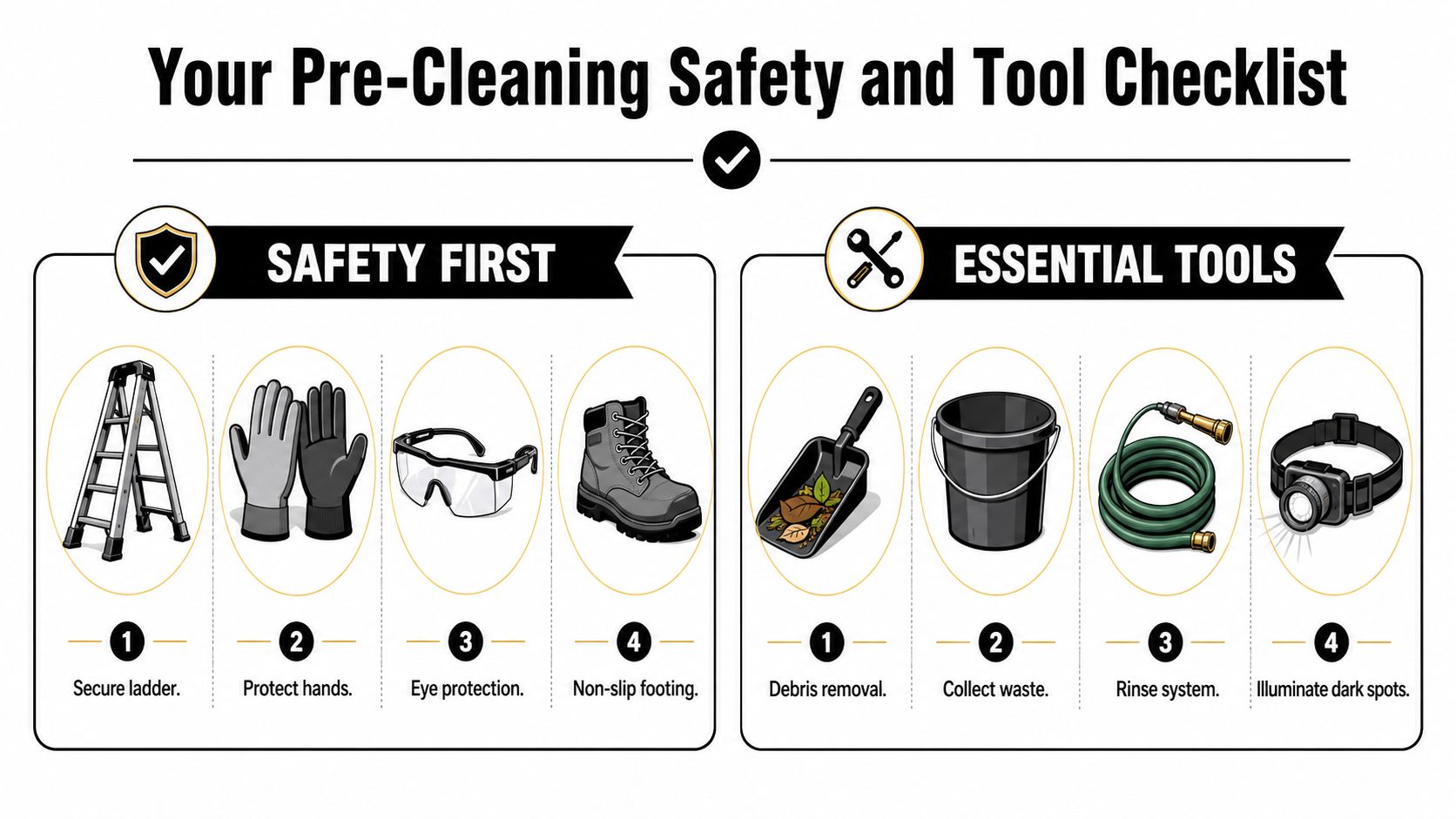
Colorado Springs adds a few complications that generic checklists miss. Pine needles pack tightly into outlet holes, afternoon wind can make ladder work less stable, and snow season leaves behind slick spots long after the roof looks dry. If the ground is uneven, frozen, or muddy from runoff, wait for better conditions.
Safety checks that come first
The ladder deserves your full attention. Set it on firm, level ground, and avoid soft beds, loose decorative stone, and damp soil near downspout discharge areas. A stabilizer helps keep the rails off the gutter face and reduces side-to-side movement while you work.
Use this short checklist before you start:
- Set the ladder on solid footing: Concrete, dry compacted soil, and stable pavers are safer than mulch or river rock.
- Use a ladder stabilizer: It improves reach and helps prevent damage to the gutter edge.
- Keep three points of contact: Climb and work in a controlled position.
- Wear non-slip boots, gloves, and eye protection: Wet grit, shingle granules, and old needle buildup fall fast.
- Check for overhead power lines: Pay extra attention if you're using extension tools or a hose.
- Have someone nearby if possible: Even a routine cleanout is safer with a second person on site.
For a more complete homeowner overview, this guide on how to clean gutters safely covers the basic risk checks in plain language.
Practical rule: If your belt buckle moves past the ladder rails, climb down and reset the ladder.
Essential tools and what each one does
A routine cleanout does not require specialty gear, but the basic tools need to match the job. Around the Springs, that usually means handling dry needles in fall, muddy sludge in spring, and compacted debris after snowmelt.
| Tool | Why it matters |
|---|---|
| Work gloves | Protect your hands from sharp fasteners, rough seams, and decomposed debris |
| Plastic gutter scoop | Removes packed material without scraping painted metal as aggressively as a metal tool |
| Bucket or debris bag | Keeps sludge and needles off walkways, siding, and planting beds |
| Garden hose with spray nozzle | Clears fine sediment and helps you check whether water is reaching the outlet |
| Headlamp or small flashlight | Helps you inspect shaded corners, outlet drops, and areas under steep rooflines |
Nice-to-have tools for stubborn jobs
Some homes need a little more reach or a better way to clear a blocked downspout.
- Hand auger or plumber's snake: Useful for clogs below the visible downspout opening.
- Tarp on the ground: Saves cleanup time and protects rock beds, mulch, and foundation plantings.
- Hose guide or clamp system: Helps manage long hose runs without fighting the siding or ladder.
- Gutter tongs or a ground-based attachment: Handy for single-story sections, but they do not replace a close inspection when needles are packed into corners or outlets.
One more local note. If you pull out dry pine needles, cone fragments, and roof litter, bag them and remove them from the perimeter instead of leaving them piled beside the house. In Colorado Springs, gutter cleaning is also part of basic fire mitigation around the roofline.
If your setup feels improvised, or the roof edge is high, icy, or hard to access, stop and reconsider whether this is a DIY day.
A Step-by-Step Guide to Cleaning Gutters and Drains
The best gutter cleaning workflow is simple. Remove the bulk debris first, rinse second, and verify the downspouts last. Homeowners often reverse that order and end up pushing a bad clog deeper.
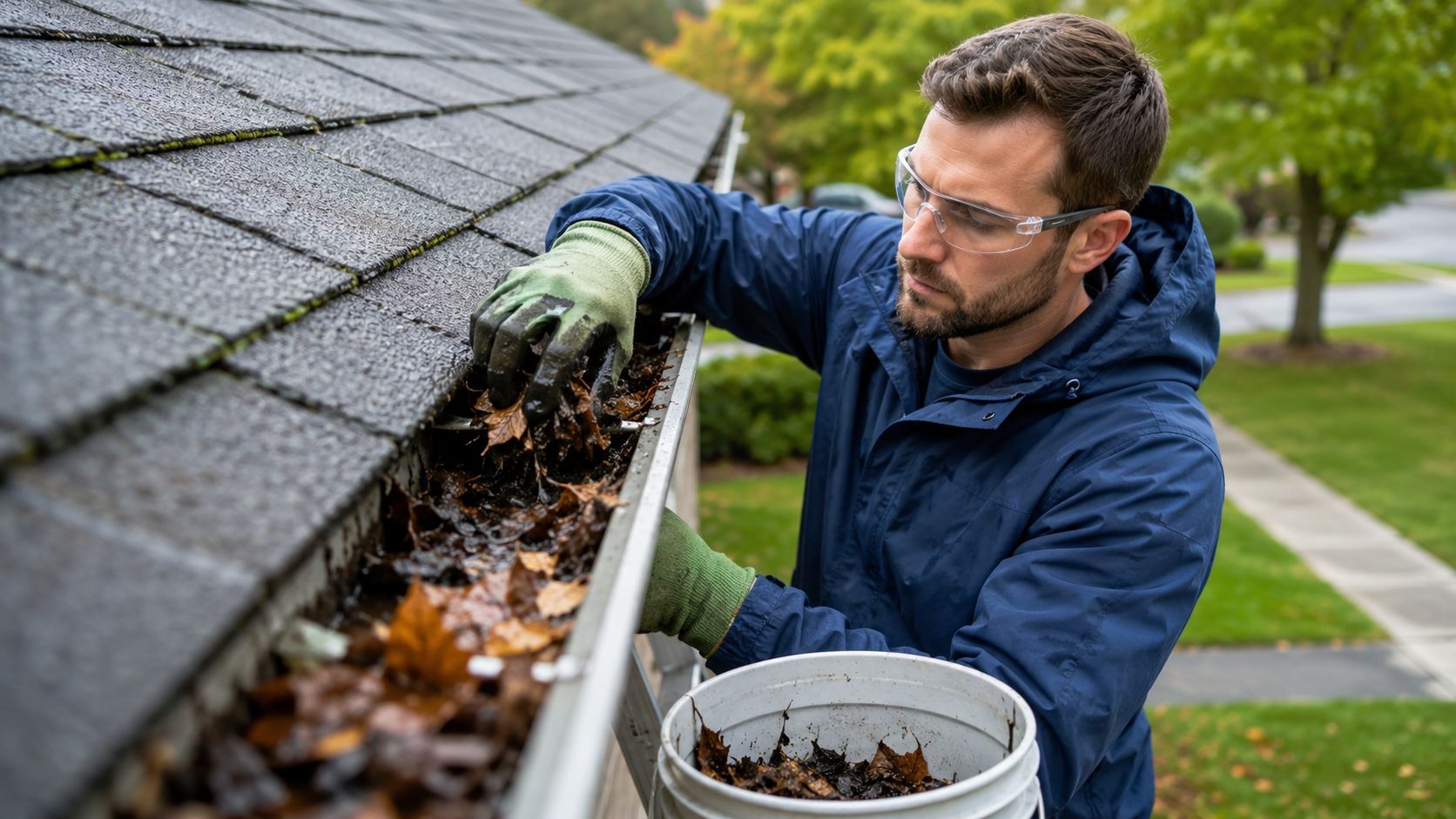
Clear the heavy debris before you add water
Start at a section away from the downspout and work toward it. That keeps you from dumping a fresh pile of sludge directly into the outlet opening. A plastic scoop works well because it removes mud, needles, and granules without being as harsh on painted metal as a sharp hand tool.
Look closely at corners, behind straps, and at the outlet drop. Those areas hold the densest buildup. If the debris is dry, it usually comes up in chunks. If it's wet and compacted, go slower and use smaller scoops so you don't spill over the side onto landscaping.
A tarp below the work area helps a lot. On homes with decorative beds or rock borders, that small prep step saves cleanup time later.
Flush the channel and watch the water
Once the loose material is gone, use a garden hose to rinse the gutter run. You're not just washing out grit. You're checking pitch, flow, and whether water moves cleanly to the outlet.
The most effective pro method uses a two-stage process described in Kärcher's guidance on cleaning gutters with a pressure-washer sled. First, coarse debris is removed by hand so equipment doesn't get jammed or damaged. Then a specialized sled with rear-facing water jets is pulled through the gutter to flush the channel. Kärcher states this method is 3 to 4 times faster than traditional hand-scooping and can reach a 98% debris removal rate compared to 75% for manual methods when dealing with compacted sludge.
That doesn't mean every homeowner needs a pressure-washer sled. It does show why hand removal alone often leaves behind the fine layer that causes drainage problems later.
If rinse water lingers in one spot after visible debris is gone, check for poor pitch, a hidden dent, or residue packed around the outlet.
This video gives a helpful visual on drain cleaning principles that overlap with stubborn flow problems around exterior drainage too:
For readers who also want a general plumbing-side perspective on clearing blocked lines, this Las Vegas drain cleaning guide offers useful context on when buildup is simple and when it points to a deeper obstruction.
Finish by checking the downspouts
Many DIY jobs fail in circumstances like these. A gutter can look clean from above and still overflow in the next rain if the downspout isn't passing water.
Run the hose at full pressure into the outlet area and watch the response. If water backs up at the top, the downspout is clogged. On many homes, the blockage sits near an elbow or lower in the vertical run where wet debris settled and hardened.
If the bottom ties into an underground drain, disconnect that lower section first before snaking the clog. That helps keep debris from getting pushed deeper into the line. Feed a hand auger upward through the downspout, lock the collar, and turn it steadily until the blockage breaks loose.
Keep the finish clean and the site tidy
After the system flows, clean up what's on the ground. Don't leave gutter debris against the foundation or piled in mulch beds. If you're hiring the work out, ask ahead of time whether debris is bagged, hauled off, or left on site. That's one of the most common points of confusion in gutter-cleaning bids.
Cultivate House Detailing handles gutter cleaning as part of its exterior service mix in Colorado Springs, which is useful for homeowners who want one visit to cover windows, surrounding surfaces, and runoff-related cleanup instead of splitting the work across multiple appointments.
Troubleshooting Common Gutter Problems You Might Find
A cleanout often reveals issues that weren't visible from the ground. Some are minor and manageable. Some are signs the gutter system needs repair, not just maintenance.
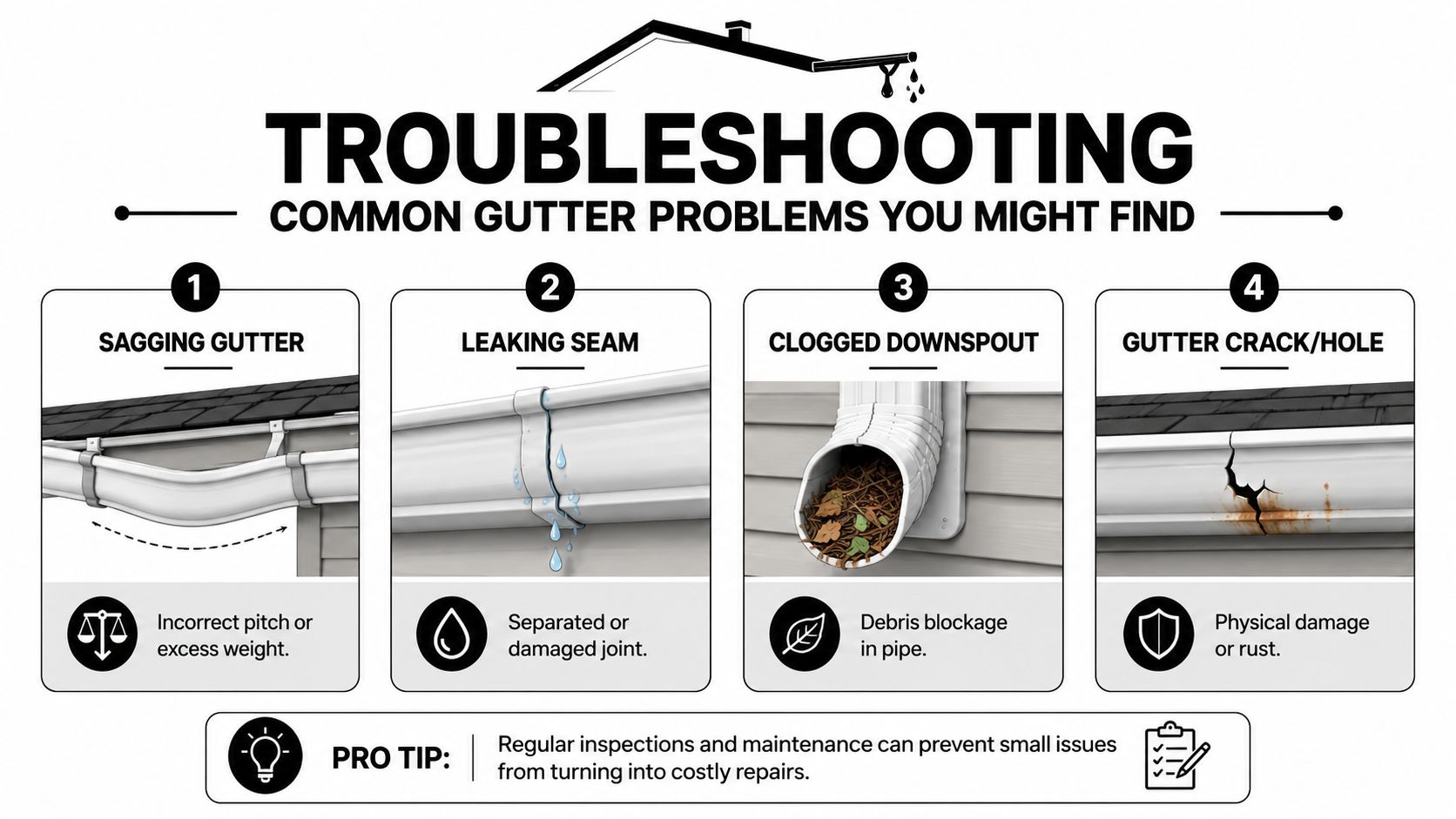
The clog wasn't in the gutter at all
The most common miss is the downspout. A critical pitfall is neglecting to clear downspout clogs, which causes approximately 60% of all gutter overflow failures even after the horizontal sections have been cleaned, according to Taskrabbit's guide to cleaning gutters from the ground.
What to look for:
- Water backing up at the outlet: The channel looks clear, but rinse water pools fast.
- Overflow during a hose test: Water spills over the front edge before it exits below.
- A dull thud when tapping the spout: That can signal compacted wet debris in the vertical run.
What to do:
Remove or loosen the lower downspout connection if it feeds an underground line, then run a hand auger upward. A hose alone usually isn't enough if the clog has hardened.
Seams leak after the debris is gone
Some leaks don't show until the gutter is flowing properly again. Debris can temporarily plug a weak seam, and rinsing exposes it.
Here's a simple check:
| Sign | Likely issue | Practical response |
|---|---|---|
| Drip from a joint | Old sealant or seam separation | Dry the area fully and reseal if the gap is small |
| Water escaping from a pinhole | Rust or minor puncture | Patch if isolated, replace section if damage is spreading |
| Leak behind the gutter | Apron or alignment issue | Inspect roof edge and mounting position |
If the seam is opening up or the metal is distorted, sealant is only a temporary move. That's repair territory.
Sagging sections point to support problems
A sagging gutter usually means one of two things. It has been carrying too much weight for too long, or the hangers have loosened from the fascia. In Colorado Springs, snow load and frozen debris can add enough stress to speed that process up.
A gutter that holds standing water after cleaning isn't just dirty. It's usually telling you the pitch or support has changed.
What to watch for:
- A visible dip between hangers
- Fasteners pulling out
- Water sitting in one section after a rinse test
A minor hanger issue may be fixable on site. A longer run that's pulling away from the house needs a closer inspection before it tears loose.
Cracks and holes need an honest call
Tiny cracks can sometimes be patched short term. Multiple cracks, rusted bottoms, or brittle joints usually mean the material is aging out. If you clean a gutter and notice the metal flexing too easily, flaking, or splitting around fasteners, don't assume another cleaning cycle will solve the underlying problem.
When to Call a Professional Gutter Cleaner in the Springs
Some gutter jobs are reasonable for a careful homeowner. Others stop being a cleaning task and turn into a safety problem or a repair problem.
If your home has second-story or third-story sections, steep roof lines, or awkward ground conditions, the ladder risk changes fast. If the debris is firmly compacted, frozen into place, or packed into long downspout runs, the job can also take more than basic hand tools and a hose. Those are common reasons homeowners decide not to force a DIY approach.
There is also the cost side of the decision. Preventive professional maintenance costing $100 to $300 annually is a high-return investment when compared to the average water damage claim from gutter neglect, which can range from $11,605 to $14,000, based on the verified industry data provided for this article. For many households, that comparison makes the decision clearer. Paying for maintenance is one thing. Paying for water intrusion, damaged fascia, saturated landscaping, or interior leak repairs is another.
Clear signs it's time to hand it off
Consider calling a pro if any of these apply:
- Your gutters are on upper stories: Height alone changes the risk.
- You see sections pulling away from the fascia: Cleaning won't fix failing attachment points.
- The clog won't break loose with a hand auger: That may involve elbows, underground tie-ins, or heavier compaction.
- You spot multiple leaks or visible cracking: The system needs assessment while it's being cleaned.
- You don't have the right equipment: Improvised ladder work isn't worth it.
A good outside reference on why roof edge maintenance and drainage care often belong together is this Columbus guide to roof and gutter care. The climate is different, but the basic point holds up. Water management problems rarely stay isolated for long.
What a professional visit should include
When you hire out gutter work in Colorado Springs, expect more than a quick scoop-and-go. A proper service should include removal of debris, water-flow testing, downspout verification, and a basic check for visible issues like seam leaks, loose hangers, or sections that aren't draining correctly.
It should also be clear what happens to the debris afterward. That's worth asking before the appointment is booked. Homeowners should know whether material is bagged, removed, or placed in onsite yard waste.
If you want help with drain and gutter cleaning around Colorado Springs, Cultivate House Detailing offers local exterior cleaning services that include gutter cleaning and fire-mitigation clearing. Request a quote, ask what's included in the visit, and get the job handled before the next storm or snow cycle turns a clogged gutter into a much bigger repair.