Your windows might be technically clean enough to let light in, but that's not the same as enjoying the view. Around Colorado Springs, that difference shows up fast. Dust settles after a windy afternoon. Water spots bake onto the glass. Upper windows catch more debris, more sun, and more frustration, especially when they're just far enough out of reach to make a quick weekend cleanup turn into a project.
For a lot of homeowners and property managers, that's the exact moment the search starts. You look up “window cleaning near me” or “window cleaning in Colorado Springs, CO,” hoping for a practical answer. Some people want to try it themselves first. Others already know they'd rather hire professional window cleaning and just want to understand what they're paying for.
Both are reasonable.
Knowing how to clean high windows helps you make a smart call. You can decide what's manageable with a telescoping pole, what's likely to leave streaks, and what crosses into a safety issue. In Colorado Springs, where wind, sun, and elevation work against a perfect finish, those trade-offs matter more than most online guides admit.
Reclaiming Your Colorado Views Through Clean Windows
A lot of homes in Colorado Springs were built to capture the scenery. Pikes Peak in the distance. Red rock formations catching evening light. Broad front windows that make a room feel bigger the second the morning sun comes through. Then the glass gets hazy, and suddenly the view looks flat.

That's usually when high windows become the problem. Ground-floor panes are easy enough to wipe down. The second-story and fourth-story glass is where people get stuck. You can see the dirt, pollen, and streaks every time the sun hits at the wrong angle, but getting to it safely and leaving it clear are two different jobs.
Why high windows get dirty so fast here
Colorado Springs has a way of exposing every shortcut in window washing. High-altitude sun dries solution faster than people expect. Wind pushes grit into corners and against screens. Weather changes quickly, so windows collect a mix of dust, moisture marks, and organic buildup that doesn't always come off with basic soap and paper towels.
Homeowners run into the same pattern again and again:
- The reach problem means upper windows stay dirty longer than lower ones.
- The streak problem shows up after the glass dries and the sun hits it.
- The safety problem starts the moment a ladder, uneven ground, or overhead lines enter the picture.
Clean glass should disappear. If you can still see the cleaning work after it dries, the method was off.
That's why high windows deserve a different approach than everyday interior window cleaning. The right tools help. The right technique matters even more. And in some situations, professional window cleaning is the safer choice.
A practical guide for DIY and hiring
This isn't one of those guides that pretends every homeowner should be out washing fourth-story windows on a Saturday. Some jobs are realistic to tackle. Some aren't. The difference comes down to height, access, weather, staining, and whether you have the equipment to work safely.
If you're determined to try residential window cleaning yourself, there are proven ways to do it better. If you're looking at exterior window cleaning on tall glass and thinking it may be time to call for help, that instinct is usually right too. For homes and businesses in Colorado Springs, CO, the goal is simple. Safer work, cleaner glass, and a result that looks streak-free from the curb and from inside the room.
The Essential Toolkit for High Window Cleaning
Most disappointing DIY window washing jobs don't fail because the cleaner was lazy. They fail because the setup was wrong before the first drop of water hit the glass. If you want to know how to clean high windows well, start with gear that lets you reach the window, control the water, and finish without chasing streaks afterward.
The core tools that actually matter
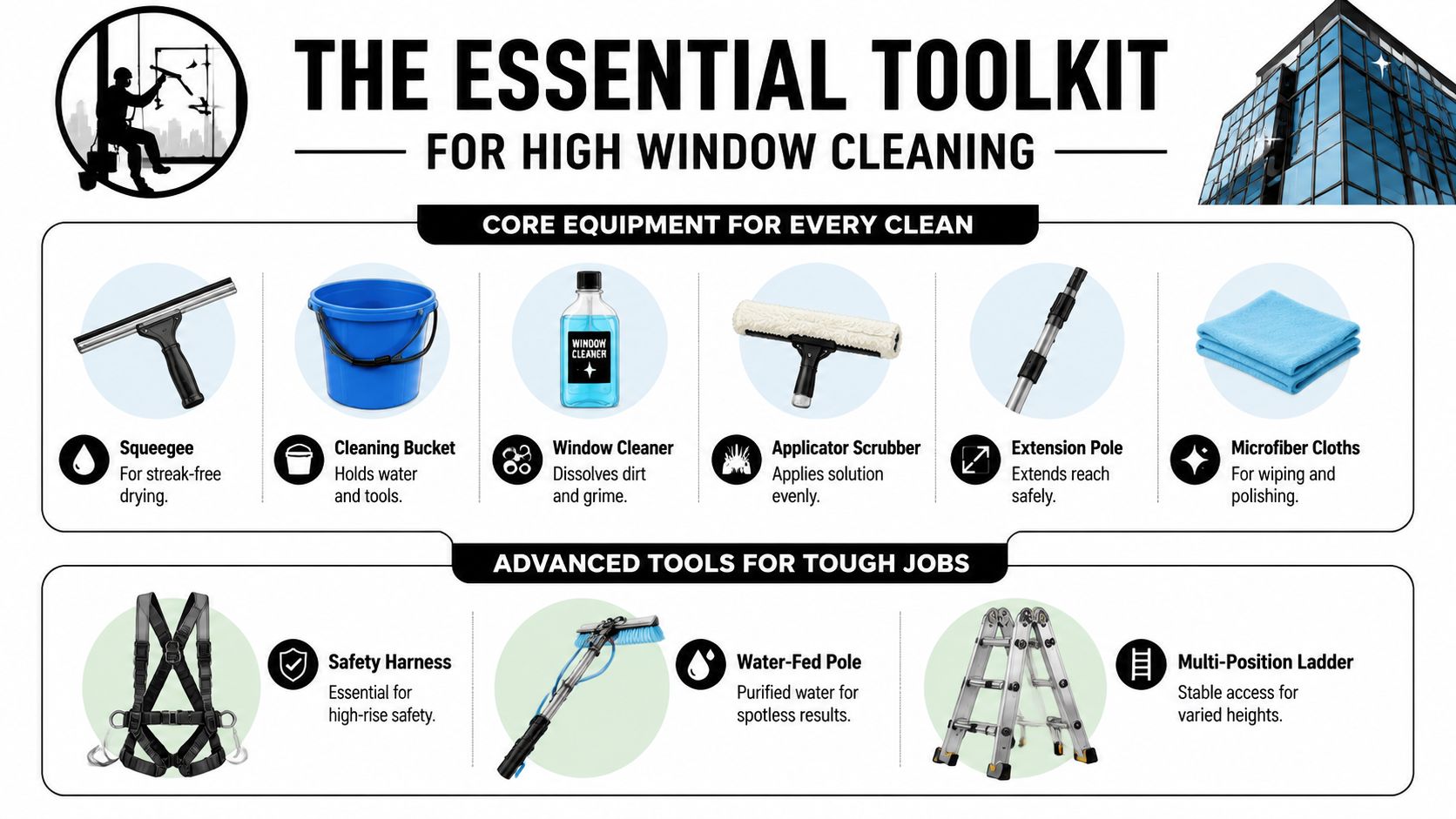
A workable high-window setup usually includes:
- A telescoping pole for safe reach from the ground. Industry guidance for high windows recommends a telescoping pole instead of climbing into severe fall risk, and it also stresses checking for nearby electrical wiring before you start because contact can cause catastrophic injury. The same guidance also warns that direct sun dries solution too fast and creates immediate streaks, so the cloudy day rule matters from the start. See Consumer Reports guidance on cleaning high windows safely.
- An applicator scrubber to loosen grime before you squeegee.
- A quality squeegee with a sharp rubber blade.
- A bucket that's easy to move without sloshing solution across walkways.
- Microfiber cloths for detailing edges and wiping drips from frames.
- A basic cleaning solution that lifts dust and light residue without leaving film.
A lot of homeowners already own half of this. What they usually don't own is a pole setup sturdy enough to stay controllable when fully extended. That's where “I can reach it” turns into “I can't clean it well.”
Three ways people try to reach high glass
Not every access method deserves equal confidence. Here's the honest trade-off.
| Approach | What works | What usually goes wrong |
|---|---|---|
| Ladder | Short, stable access for lower windows | Balance issues, overreaching, unstable ground, poor squeegee control |
| Extension pole | Safer reach from the ground for many upper windows | Fatigue, poor angle control, missed corners |
| Water-fed pole system | Allows cleaning from the ground with specialized equipment | Higher equipment cost, steeper learning curve |
The ladder method is where many DIY jobs start, and it's also where many should stop. A ladder can feel faster until the work angle gets awkward or the ground isn't perfectly stable. High windows demand two-handed control, and ladders reduce that margin quickly.
The extension pole is the practical middle ground for many homeowners. It's the most realistic tool for second-story glass and some hard-to-reach exterior window cleaning jobs. If you want a closer look at what makes a setup workable, this guide to window cleaning tools for high windows is useful for comparing what belongs in a real kit versus what just sounds convenient.
Practical rule: If the pole feels too heavy to keep steady before the glass is wet, it'll feel worse once you start working.
Why professional systems look different
Professional crews often use water-fed pole systems for exterior window washing because they solve two common problems at once. They let the cleaner stay on the ground, and they reduce residue that causes spotting.
That doesn't mean every homeowner needs one. It does mean there's a reason the finish from professional window cleaning often looks sharper, especially on large glass, commercial window cleaning routes, and upper-story windows where every mistake is more visible. Cultivate House Detailing uses professional equipment for this kind of work, which is one reason high windows can be cleaned more safely and consistently than with a basic weekend setup.
A Safety-First Guide to Cleaning Process
Good technique matters, but safe technique matters first. High windows aren't just regular windows that happen to be farther away. The moment you add height, awkward reach, or exterior footing, the cleaning process needs to start with hazard control.
Pre-work checks before any water goes on the glass
Walk the area before you assemble the pole. Look at the ground, not just the window. Uneven soil, decorative rock, wet grass, edging, and sloped concrete all change how stable you'll be while handling a long tool.
Check overhead conditions next. Branches, roof edges, and nearby utility lines all affect your safe working zone. If you want a simple outside resource on the bigger risks involved, Safety Space on working at heights offers a useful overview of why falls and unstable setups escalate fast.
Use this quick screening list:
- Clear the base area so you're not stepping over hoses, planters, or tools while looking up.
- Inspect the window first from the ground. Industry best practices advise checking window integrity before extending tools upward.
- Stop if access requires a risky ladder angle or if you're tempted to lean away from stable footing.
- Delay the job if conditions are bright and hot because the glass will dry too quickly.
A safer ground-based cleaning sequence
Once the area is clear, most homeowners are better off working from the ground with an extension pole instead of trying to build the job around ladder movement. If you're weighing that choice, this breakdown of window cleaning ladder considerations can help you decide where the limit is.
The process itself is straightforward, but the details are what separate clean windows from striped ones.
- Wet the glass with your applicator and work the dirt loose.
- Scrub the edges and corners a little longer than the center. That's where grit hangs on.
- Set the squeegee at the top and keep the blade tilted so water moves away from the finished area.
- Work in controlled passes instead of fast swipes.
For the finish, professionals recommend holding the squeegee blade at a 30-degree angle to the glass. A simple way to check that angle is the two-finger method under the handle, which gives the blade enough lift to move water cleanly across the pane. You can see that technique in this squeegee angle demonstration for streak-free exterior windows.
Keep your eyes on the blade edge, not on the whole window. The blade tells you whether the pass is clean.
What usually goes wrong mid-job
Most DIY problems happen after the first successful pass. Arms get tired. The pole twists a little. The blade picks up debris. Then one drip falls down a section you already finished.
That's why pros work slowly enough to stay in control. If the pole starts feeling unwieldy, stop and reset. If the blade chatters, inspect the rubber. If the glass is drying faster than you can finish, conditions are wrong, not your effort.
A safe process also means knowing when to quit. If the work requires stretching over landscaping, bracing on a slope, or cleaning above a level where you can't clearly control the tool, it's no longer simple residential window cleaning. It's a risk decision.
Tackling Tough Challenges Like Hard Water and Streaks
A high window can look dirty even after a careful wash. On most Colorado Springs homes, the problem is not the loose dust you can see from the ground. It is the mineral film and fine residue left behind after the water dries.
Hard water isn't just dirt
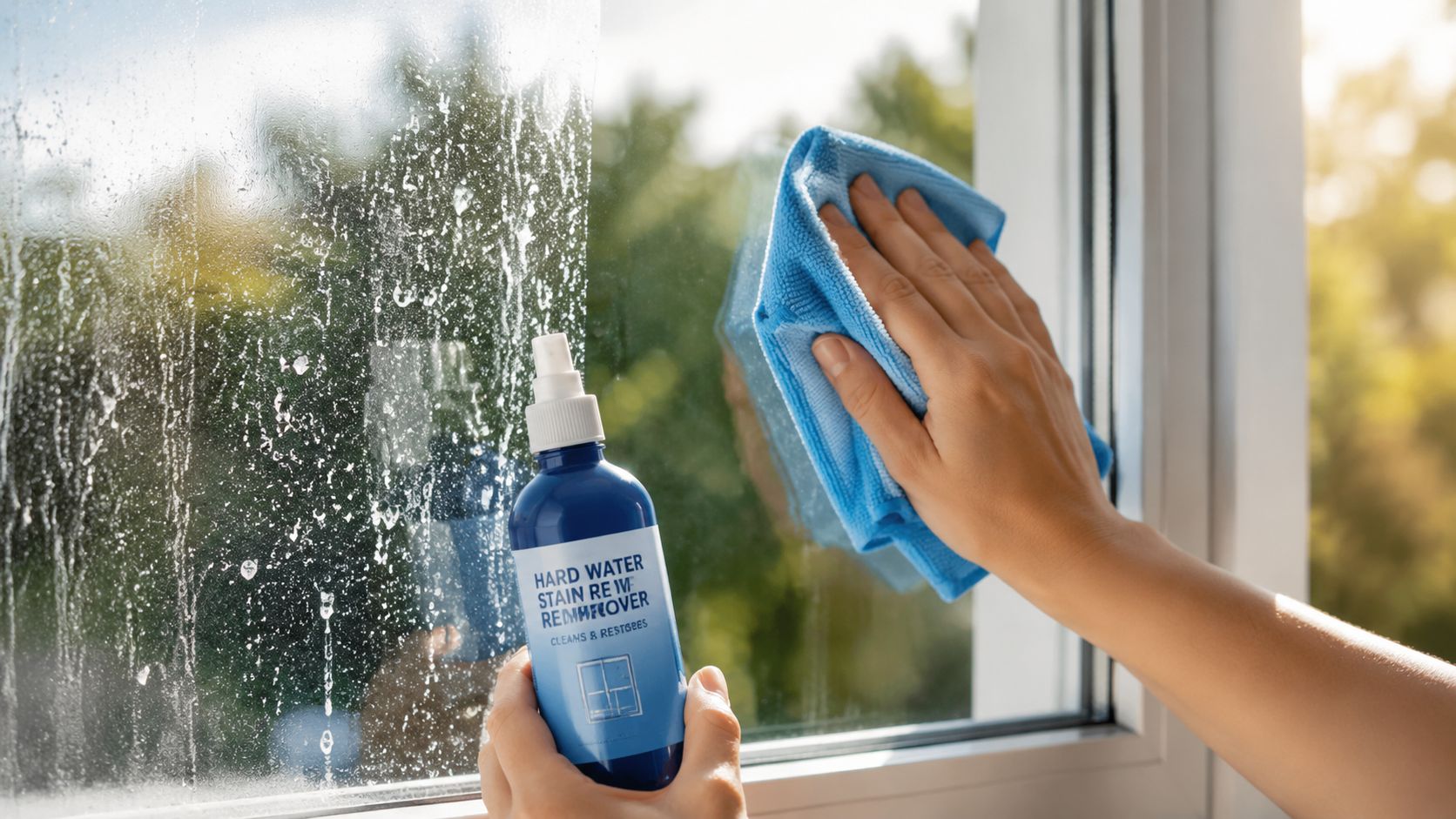
Hard water staining is mineral buildup, usually calcium and magnesium left behind by sprinkler overspray, runoff, or repeated wet-dry cycles. Once that deposit bonds to the glass, a standard wash solution may clean the surface but leave the spotting in place. That is why a window can feel clean to the touch and still look cloudy in direct light.
Upper panes tend to get worse slowly, then all at once. A light haze turns into visible spotting. Spotting turns into a dull film. By the time many homeowners notice it from inside the room, the glass usually needs more than soap, a strip washer, and a squeegee.
Regular cleaning helps prevent that buildup from sitting long enough to etch or haze the surface. In a dry, windy place like Colorado Springs, mineral residue and airborne dust can bake onto sun-exposed glass faster than people expect.
Why streaks show up even with good technique
A lot of streaks come from conditions, not laziness.
Architectural Digest notes that wind, direct sun, and quick drying make windows harder to clean well, especially if the glass dries before you finish detailing the pane, as explained in Architectural Digest's window cleaning article. That matches what we see here at altitude. On an upper-story window, a pane can stay wet for the first pass, then flash dry near the edges before you can correct a line or catch a drip.
Colorado Springs makes that trade-off pretty obvious. The same breeze that feels mild in the yard can push enough dry air across second- or third-story glass to leave trails, edge lines, and mineral ghosts after the water evaporates.
If a window looks clean while it's wet and streaky ten minutes later, the glass usually dried too fast or dried with minerals still on it.
Three factors cause most of the frustration:
- Mineral residue leaves faint outlines and spotting after the water evaporates.
- Wind exposure on upper windows shortens your working time and makes detailing less forgiving.
- Direct sun on the glass speeds up drying and highlights every missed edge.
That is why pros are picky about timing. Early shade, calmer mornings, and cooler glass give you a better shot at a clear finish. Midday sun and afternoon wind usually turn a doable job into a fight.
If you want to see a visual walkthrough of common streak and buildup issues, this video is a helpful reference.
What DIY can fix, and what usually needs pro tools
Light spotting sometimes comes off with repeated cleaning and careful agitation. Heavy hard water staining is different. Once deposits have bonded to the glass, removing them without scratching the surface takes the right chemicals, pads, and pressure control. Use the wrong product or bear down too hard, and you can mark the glass, damage surrounding frames, or leave a patch that looks worse than the original stain.
That is the point where many determined DIY jobs stall out. The issue is not effort. It is that restoration work and maintenance cleaning are two different tasks.
Don't forget the screens, sills, and tracks
Clean glass still looks unfinished if the screen is dusty and the track is packed with grit. On windy Front Range homes, that detail matters. Debris in the track gets kicked back onto the glass, and a dirty screen can make a freshly cleaned window still look hazy from inside.
Screens need a gentler touch. Tracks need vacuuming, brushing, and controlled wiping instead of flooding them with water. That extra detail work is one of the biggest differences between a quick DIY attempt and a professional result people notice from the curb and from inside the room.
When to Call a Professional Window Cleaner in Colorado Springs
You get halfway up the ladder, the afternoon wind starts pushing against the pane, and the angle that looked manageable from the ground suddenly feels different. That is usually the moment homeowners stop asking, “Can I reach it?” and start asking, “Should I be doing this at all?”

In Colorado Springs, high windows get harder fast. Wind, dry air, uneven lots, rock landscaping, and tall entry designs all add friction to a job that already depends on stable footing and good technique. A second-story window over flat concrete is one thing. A third-story pane above a slope, shrubs, or a walkout basement is another.
A professional call makes sense when the risk or the likely result stops matching the savings.
Signs the job has moved past practical DIY
Some situations are clear warnings:
- The glass is above the second story. Height changes the job. So does the consequence of one mistake.
- The ground below is sloped, soft, rocky, or blocked by landscaping. Ladder setup matters as much as cleaning skill.
- The window sits over a stairwell, a roof section, or an awkward bump-out. Access becomes the main project.
- You are still seeing haze after careful cleaning. That usually points to bonded mineral residue, oxidation, or technique issues that basic tools do not solve well.
- You want the whole house to match. Upper panes show every missed edge and every drying line once the sun hits them.
Commercial properties reach that point even sooner. Storefronts, office fronts, and multi-level buildings need a consistent result and a work plan that does not create hazards for staff or customers.
What you are paying for when you hire it out
Professional window cleaning is not just “someone with a squeegee.” On high glass, you are paying for safe access, repeatable technique, and judgment. Good cleaners know when pure water makes sense, when a traditional squeegee finish will look better, when a stain needs restoration instead of routine cleaning, and when conditions outside are bad enough to stop.
That judgment matters in Colorado Springs. I have seen DIY jobs where the glass was technically cleaner, but the homeowner ended up with ladder scuffs, missed corners, drips on frames, and one upper window that still looked cloudy from the street. At that point, the saved money is not always real savings.
Hiring help for high windows usually comes down to risk, access, and whether you want to do the job once or keep revisiting the same problem.
Why local homeowners and business owners make the call
A lot of homeowners start out planning to handle only one tough window. Then they realize the hard part is not the single pane. It is getting every high window clean, clear, and consistent without turning a Saturday into a ladder project.
That is especially true in neighborhoods around Colorado Springs, Monument, and Black Forest, where homes often have tall foyers, walkout layouts, and exposed glass that catches dust and weather quickly. In those settings, professional service is less about convenience and more about controlling variables that are hard to manage from the ground.
For businesses, the math is even simpler. Clean front glass affects curb appeal, daylight, and first impressions right away. Staff should not be balancing on ladders, and customers should not be stepping around a half-finished cleaning setup.
If the window is difficult to access, the buildup is no longer routine, or the result needs to look right from every angle, that is usually the point to bring in a pro. In a place with altitude, gusty afternoons, and plenty of tricky home designs, that choice often saves time, reduces risk, and produces a better finish.
What to Expect with Cultivate House Detailing
Hiring help should feel simpler than doing the job yourself. That's especially true when the work involves high windows, scheduling around weather, and making sure the result looks clean from every angle, not just from the driveway.
From quote request to service day
The process usually starts with a straightforward conversation about the property, the window layout, and whether you need residential window cleaning or commercial window cleaning. Some customers only want exterior window cleaning. Others want the full visit to include interior glass, screen cleaning, and track cleaning so the whole window assembly looks finished.
By the time service day arrives, the biggest relief for most homeowners is that they don't have to solve the access problem themselves. No moving ladders around landscaping. No buying tools that may never be used again. No guessing whether the upper panes are going to dry clear.
What the work looks like on site
A professional visit should be organized and low-drama. The work area is kept orderly, the property is treated carefully, and the cleaning methods match the window type and the level of buildup. On the glass itself, technique is what creates the polished result.
Pella describes an effective professional method as a cut-in approach, where the squeegee creates a dry starting edge, followed by smooth overlapping passes, with the blade wiped clean after every single swipe to prevent drips from spoiling the cleaned section. That technique is outlined in Pella's guide to cleaning windows. It sounds simple, but it's one of those details that separates routine window washing from a streak-free finish.
Clean windows should look effortless when they're done. The effort shows up in the preparation, not in visible streaks or drips afterward.
The result people actually want
Most customers aren't chasing a technical process. They want brighter natural light, better curb appeal, and windows that stop distracting them every time the sun comes through. That's why a good service experience matters as much as the cleaning itself. Clear communication, punctual scheduling, careful work, and a result that holds up in Colorado Springs conditions all matter.
If your upper windows have turned into the kind of project you keep putting off, that's usually your answer.
If you're ready to stop wrestling with streaks, ladders, and hard-to-reach glass, contact Cultivate House Detailing for a quote on professional window cleaning in Colorado Springs, CO and nearby service areas. Whether you need residential window cleaning, commercial window cleaning, exterior window washing, or help restoring bright, clear views from high windows, the next step is easy. Reach out and schedule service that makes your windows look the way they should.
Rather not do it yourself? Cultivate House Detailing offers residential window cleaning in Colorado Springs. Get a free quote.