Spring in Colorado Springs has a way of exposing gutter problems fast. A warm afternoon starts snowmelt, the next storm rolls through, and suddenly water is spilling over the front edge instead of moving cleanly to the downspouts. Homeowners usually notice it when mulch gets displaced, patio edges stay wet, or dirty streaks show up on fascia right when the rest of the house is waking up for the season.
That's why spring gutter cleaning matters more here than it does in a lot of milder climates. Along the Front Range, winter leaves behind a messy mix of needles, grit, seed pods, and compacted debris that doesn't always show itself from the ground. Add pollen and spring storms, and a system that looked fine in February can start overflowing in April.
Why Spring Gutter Cleaning Matters for Colorado Springs Homes
In Colorado Springs, spring gutter cleaning is less about appearance and more about recovery. Winter puts a lot of stress on the gutter line. Snow loads, freeze-thaw movement, windblown debris, and early spring runoff all test whether the system still drains the way it should.

A common pattern around neighborhoods with pines and cottonwoods is simple. The roof sheds winter debris into the gutters, the material packs down, and the first solid spring rain shows you exactly where flow has slowed. Water can run over the face of the gutter, behind it toward the fascia, or dump too close to the foundation and planting beds.
What spring exposes after winter
Spring is one of the standard cleanout windows across the industry. One 2026 cost guide says gutters should be cleaned once or twice a year, specifically in spring and early fall, and reports an average U.S. service price of $168, with a typical range of $119 to $234 per visit in its gutter cleaning maintenance cost statistics. That lines up with what homeowners experience locally. Spring is when winter's leftovers finally show up as drainage problems.
Practical rule: If water is leaving marks on fascia or splashing straight down at the corners, the issue usually started before you could see it from the ground.
This isn't just a gutter problem. Overflow can wet siding, stain trim, erode landscaping, and send water where you don't want it near walkways or the foundation. In Colorado, those small flow problems often show up right as snowmelt overlaps with spring rain.
Why acting early usually works better
The best time to handle it is before the heavy spring pattern settles in. Packed debris is easier to remove before it turns into a soggy mass, and small hardware issues are easier to spot when the system isn't actively spilling water.
For homeowners who already book seasonal exterior care, this is also a natural time to combine gutter service with other curb-appeal work like professional window cleaning, exterior window cleaning, or screen and track cleaning. It keeps the whole exterior moving into spring on the same schedule, especially when dirt, pollen, and winter residue are showing up everywhere at once.
When to Schedule Your Spring Cleaning and How Often You Really Need It
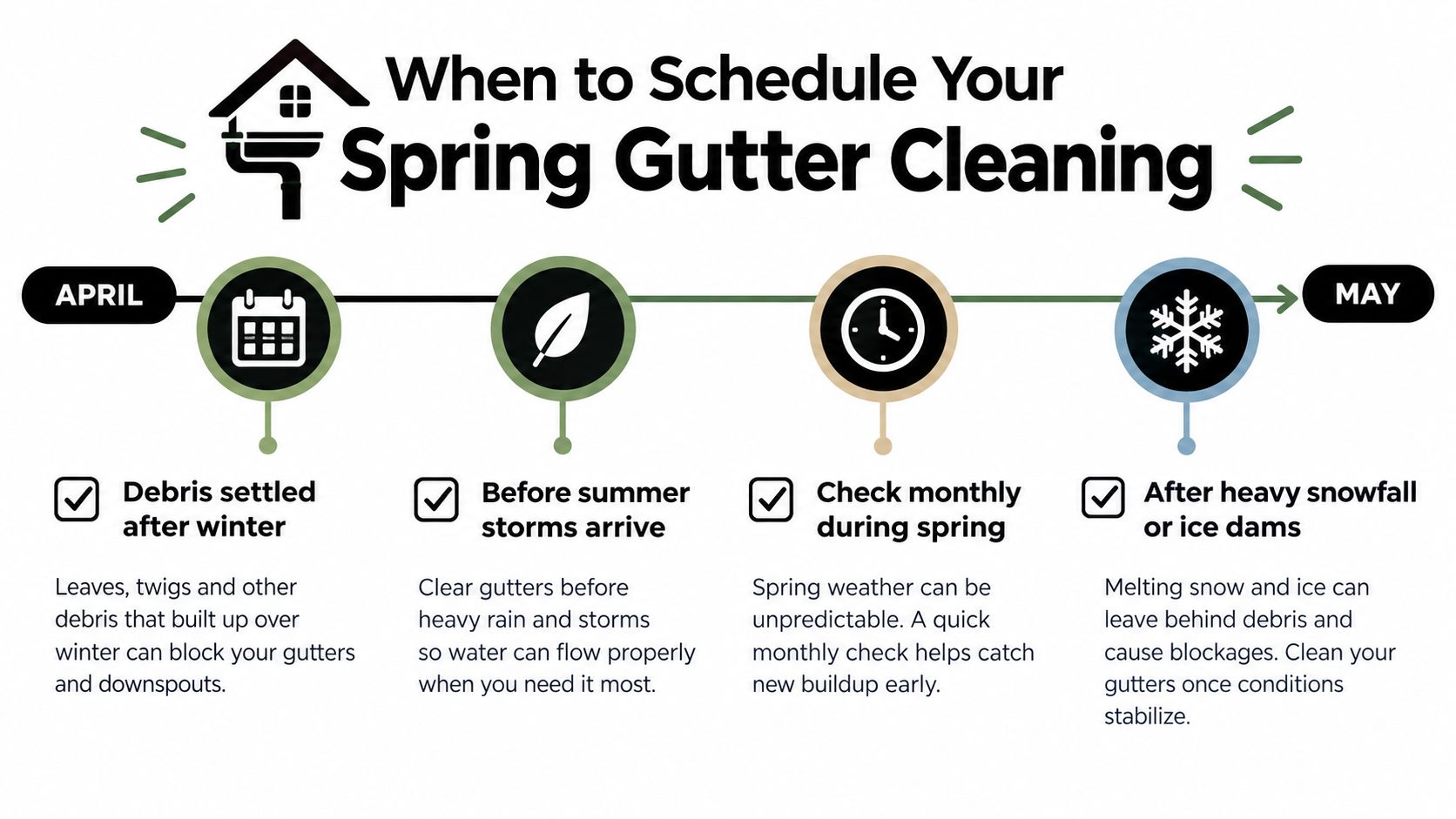
A lot of Colorado Springs gutter problems show up on the first warm stretch after a freeze. Snow starts melting off the roof, the gutters still hold winter grit and pine needles, and then a spring storm pushes the system past its limit. That is why spring cleaning is less about the calendar and more about post-winter recovery.
Most homes do well with a spring cleaning in April or May, after winter buildup has had time to show itself and before late-spring storms settle in, according to this gutter maintenance guide. In town, that timing usually works well. In shaded areas, higher elevations, or neighborhoods with heavier tree cover, the better week may land a little later.
The standard schedule
For a typical home, spring and fall is still the right baseline. If you have a one-story house, light tree coverage, and no history of overflow, that schedule is often enough.
Some properties need more attention. Pine needles, catkins, seed pods, and roof grit can refill a gutter faster than many homeowners expect, especially after windy weeks. In those cases, a quick mid-season check can prevent a full blockage.
When Colorado conditions change the cadence
A fixed schedule does not fit every Front Range property. Regional maintenance guidance recommends adjusting by climate and exposure, with colder areas benefiting from post-freeze checks and storm-prone areas benefiting from after-storm inspections, as outlined in this climate-based gutter maintenance schedule.
That advice fits local conditions well. A home in Black Forest may deal with pine debris and slower snowmelt. A more open lot on the east side may stay cleaner between visits but still need a check after heavy wind or hail. Woodland Park homes often hold snow longer, which can delay when it makes sense to clean.
Use the house in front of you.
- DIY cleaning is usually enough if the gutters are easy to reach, debris is light, and water flowed normally last season.
- Clean more often if you have overhanging pines, heavy spring pollen, or frequent windblown debris.
- Schedule a pro evaluation if gutters overflow even after cleaning, downspouts back up, sections hold standing water, or water dumps at the corners during snowmelt.
- Add an extra inspection after a rough spring storm if your area saw hail, strong wind, or a lot of branch drop.
I usually tell homeowners to judge frequency by performance, not just habit. If the system clears water cleanly in spring and stays that way through early summer, your schedule is probably fine. If it clogs again a few weeks after cleaning, the issue may be capacity, slope, downspout flow, or the amount of debris your roofline collects.
Safety Essentials and Tools to Gather Before You Start
A typical Colorado Springs spring cleanup starts the same way. The snow is gone from the sunny side, the north side is still damp, cottonwood fluff has started moving, and the gutters look close enough to fine from the ground. Then you set a ladder on uneven soil softened by snowmelt and realize the hard part is not scooping leaves. It is staying safe while you do it.
A basic one story cleaning is still within DIY range for plenty of homeowners. The risk climbs fast when runoff has left the ground soft, when spring wind starts pushing the ladder, or when winter debris has packed tight around the outlets. Seasonal ladder injury patterns during spring maintenance are one reason to take setup seriously, as noted in this guide to the dangers of DIY gutter cleaning.

What to decide before the ladder goes up
Start with the conditions, not your confidence level. In Colorado Springs, spring ground can look firm and still shift under a ladder foot, especially near downspout discharge points where snowmelt has been dumping water for weeks. Add a walkout basement, rock beds, or a side yard slope, and a simple cleaning job gets less forgiving.
DIY usually makes sense when you can work from stable, level ground and reach the gutter without stretching. It starts to tip toward a pro evaluation when the roofline is high, the grade drops away below you, the gutter run is sagging, or you already know a downspout is blocked solid. Those are the jobs where the problem is not just debris. It may also be drainage capacity, poor pitch, or a buried clog that needs more than a quick cleanout.
Run through this check before you climb:
- Stable ladder footing: Avoid muddy soil, decorative rock, and thaw-softened spots.
- Comfortable reach: Your belt buckle should stay between the rails. If you need to lean, move the ladder.
- Calm weather: Afternoon gusts along the Front Range are reason enough to wait a day.
- Clear path below: Keep pets, kids, and hoses out of the landing area.
- Your own limits: Bad knees, shoulder pain, or shaky balance are good reasons to stay off the ladder.
Tools that are actually worth bringing up
The right tools keep the job cleaner and cut down on risky extra trips.
- Work gloves: Spring debris often hides shingle grit, screws, sharp metal edges, and roof sediment.
- Eye protection: Dry pollen, dust, and seed fluff fall straight back at you once you start scraping.
- Gutter scoop or small hand tool: Better for packed sludge than trying to wash everything toward the outlet.
- Bucket or debris bag: Keeps mulch, stone, and early-season plants from getting buried below.
- Garden hose with spray nozzle: Use it after debris removal to check flow.
- Plumber's snake: Handy for a stubborn downspout clog, especially after winter freeze and thaw cycles.
- Basic repair supplies: A tube of gutter sealant and a couple of replacement hangers are useful if you find a loose joint or support point.
One rule keeps people out of trouble. If you need one hand on the gutter, one on a tool, and none left to keep yourself steady, stop and rethink the job.
For homeowners who do not want to work off a ladder, a local service can handle the cleaning and flow restoration. The main thing is to match the job to the setup, not to force DIY on a system that is already showing signs of bigger drainage trouble.
How to Remove Debris and Flush Your Gutters and Downspouts
By spring in Colorado Springs, gutter debris is rarely just dry leaves. It is usually a mix of matted needles, roof grit, seed pods, pollen, and the heavy sludge that forms after snowmelt sits in the trough. The job goes faster if you treat it like a drainage check, not a quick scoop-out.
Start at a downspout end and clean one full gutter run before you move the ladder. That helps you catch patterns. If one section is packed tight while the next is mostly clear, the issue may be slope, a partial clog at the outlet, or a spot that has been holding water since winter.

Clear the gutter run without packing the outlet
Scoop debris out by hand or with a gutter tool and pull it away from the downspout opening. Wet spring buildup compacts fast, and pushing it toward the outlet often turns a simple cleanout into a downspout clog. Drop the debris into a bucket or bag instead of dumping it below. That keeps mulch, rock beds, and new plants from getting buried in black sludge.
If the material is light and loose, DIY cleaning is usually enough. If you find repeated standing water, dense sediment in multiple sections, or gutters that fill again as soon as you flush them, the problem may be bigger than debris alone.
Flush each section and watch how the system responds
Once the trough is cleared, use a hose to flush from the end opposite the downspout. A steady stream is enough. You are checking flow, not pressure washing the gutter.
Watch for three things while the water moves:
- Fast pickup at the outlet: Water should head to the downspout without lingering.
- Clean discharge at ground level: The bottom elbow, splash block, or drain connection should carry water away freely.
- No backing up at seams or corners: Those spots often show trouble first after a Colorado winter.
If water stalls in the run, stop flushing and check the outlet by hand. If the downspout is clogged, clear it with a snake or by disconnecting the lower elbow if the setup allows it. Underground extensions can fool homeowners here. The gutter may be clean, but if the buried drain is blocked, the whole system still acts plugged.
This video gives a good visual of the process in action.
Know when a basic cleaning is enough
A good spring cleaning proves that water can move from roof edge to discharge point without pooling or spilling. For many homes, that is the whole job.
For taller homes, heavily treed lots, or gutters that overflow during normal spring rain even after you clear and flush them, it makes sense to get a second look. A local drain and gutter cleaning service in Colorado Springs can clear the system and help determine whether the problem is a hidden clog, poor pitch, or undersized drainage for the roof area.
How to Inspect for Damage and Solve Overflow After Cleaning
A lot of Colorado Springs gutter problems do not show up until the debris is out and the water has a clear path. That is when winter damage, spring pollen paste, and drainage limits become obvious. A gutter can look clean from the ladder and still spill over in the first hard April storm.
Start by looking at the shape of the run. The gutter should carry water toward the downspout without standing water left behind after a hose test. If one section holds water, sags away from the fascia, or twists at the corner, cleaning was only part of the fix.
What to inspect once the debris is gone
Focus on the parts that usually shift after freeze and thaw cycles:
- Low spots in the run: These collect water and debris fast.
- Loose hangers or fasteners: Snow load and ice can pull sections out of line.
- Separated seams and corners: Small gaps often turn into leaks once spring storms pick up.
- Water marks on fascia or siding: That usually means water has been running behind the gutter, not just over the front.
- Bent downspout straps or elbows: A system that moved over winter often shows it here first.
I also pay attention to where the overflow happens. Overflow at one inside corner points to a local problem, like a shifted pitch or a restricted outlet. Overflow across a whole front run during steady rain points to something different. The system may be undersized for the roof area, or it may need another downspout to keep up with snowmelt and spring runoff.
Clean gutters do not guarantee proper drainage.
If you want a practical outside reference on small repair approaches, this roundup of DIY gutter fixes for homeowners is useful for understanding what is simple enough to monitor and what starts moving into repair territory.
Is Cleaning Enough or Is It a Capacity Problem
This is the part many homeowners miss in Colorado. A basic cleanout is often enough on a one-story home with short runs and open discharge. It is usually not enough when the house has long roof lines, steep sections that dump water fast, buried drain extensions, or repeat overflow during normal spring rain.
Pollen and cottonwood fluff can also change the picture. After cleaning, a thin layer can collect at the outlet screen or in a corner and start slowing flow again, especially once the next storm pushes grit into it. If overflow shows up only during heavier rain, watch where the water fails first. That tells you whether you are dealing with a blockage, a pitch problem, or a capacity issue. This article on why gutters overflow after cleaning gives a useful overview of those differences.
| What You See After Cleaning | Likely Cause | Best Next Step |
|---|---|---|
| Water sits in one section | Poor pitch or a sagging run | Adjust slope and check supports |
| Water leaks at seams | Failed sealant or joint movement | Reseal or repair the joint |
| Overflow at one corner during hose test | Partial outlet or downspout restriction | Clear the outlet and confirm discharge is open |
| Overflow only during hard rain | Capacity issue | Watch the system in the next storm and assess for a larger gutter or added downspout |
| Water marks behind gutter | Pull-away from fascia or backflow | Inspect attachment points and check the fascia for rot |
If the gutters are easy to reach, the hose test is controlled, and the problem is isolated to one loose section or one leaking seam, DIY is usually reasonable. If overflow keeps happening after a good cleanout, or if the house is two stories, has steep roof sections, or drains into underground lines, that is the point to get a pro evaluation. At that stage, the question is no longer "is it clogged?" It is "can this system carry and discharge the water this roof produces in a Colorado spring?"
Your Simple Seasonal Maintenance Plan and Next Steps in Colorado Springs
The easiest gutter plan is the one you'll keep. For most Colorado Springs homes, that means anchoring maintenance around spring and early fall, then adding extra checks when the property itself calls for it.
A realistic schedule for local homes
A practical rhythm looks like this:
- Spring cleaning: Clear winter leftovers before regular storm activity ramps up.
- Early fall cleaning: Reset the system before colder weather returns.
- Quarterly checks if tree cover is heavy: Especially around pines and debris-prone roof valleys.
- After-storm inspections: Worth doing when wind, hail, or heavy runoff hits your block hard.
That approach is a lot more useful than guessing. It matches how gutters fail here. Not all at once, but in predictable seasonal patterns.
When professional service makes more sense
Hiring out the work is usually the better call when access is awkward, the system is tall, or overflow continues after a normal cleanout. Homeowners also tend to get better results when the service includes protecting landscaping, flushing the full system, and pointing out attachment or drainage issues before they turn into repairs.
If you're thinking beyond basic cleanouts, this guide on San Antonio gutter and roof advice is a helpful read because it frames the bigger question many homeowners ask after repeated overflow. Is the issue maintenance, or is it time to rethink the setup itself?
For homes that collect debris every season, gutter guards can also be worth evaluating. This local guide to how to pick the best gutter guard option for your home helps sort through when guards make sense and when they don't.
A lot of homeowners pair spring gutter service with residential window cleaning, interior window cleaning, exterior window washing, screen cleaning, or pressure washing because the whole exterior is already due for attention. For businesses, the same seasonal reset often lines up with commercial window cleaning and entry-area maintenance so the property looks cared for heading into the busier months.
If your gutters are overflowing, staining trim, or still not draining right after winter, Cultivate House Detailing can help with practical exterior care that fits Colorado Springs conditions. From spring gutter cleaning to window cleaning, pressure washing, and screen repair, the team handles the seasonal work that keeps your property looking sharp and draining properly. Visit Cultivate House Detailing to request a quote or schedule service.