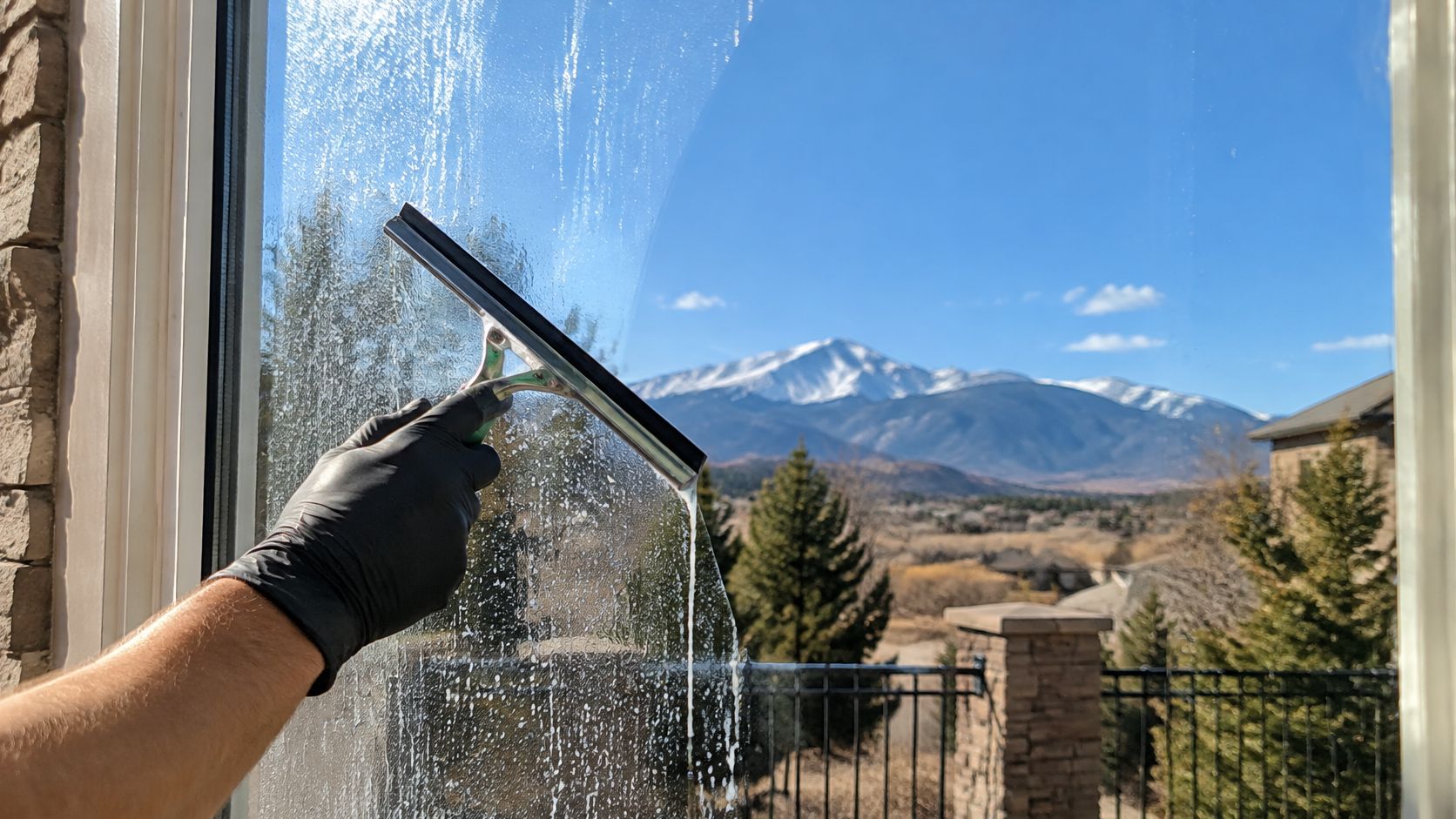
The morning is clear, but the mountain view through your window looks washed out. You wipe a corner, and the smear only gets wider. For homeowners and business owners considering window cleaning in Colorado Springs, CO, the useful question isn't which cleaner is strongest. It's which method fits the glass, the buildup, and the access. Cultivate House Detailing helps local property owners make that choice when a simple, safely reachable wipe isn't enough.
Window Cleaning in Colorado Springs and Why Glass Goes Dull
On a bright Colorado Springs morning, you should be able to enjoy the outline of Pikes Peak without looking through a dusty veil. Instead, pollen gathers along the bottom edge, fingerprints catch the light, and a milky patch stays visible after you've wiped it. A seller preparing for showings notices it in listing photos. A storefront owner notices it before opening the door.
The spoiled view is familiar to homeowners who want brighter rooms and owners of offices, shops, and small commercial buildings who want a cared-for entrance. The buildup isn't always the same, though. Treating every mark with another spray of glass cleaner can leave you working harder without getting clearer glass.
A dusty pane can soften an otherwise sharp Colorado view.

Start with the exposure, not the bottle
Several everyday conditions can leave different marks on local windows:
- Wind-blown grit and pollen: Loose material needs to come off without being dragged across the pane.
- Wildfire smoke and road grime: A thin film can require washing rather than a quick dry wipe.
- Irrigation overspray: Droplets can leave mineral spots after the water evaporates.
- Strong sunlight: Light across the surface makes leftover moisture, lint, and streaks easy to see.
Say your lower patio window looks chalky while the upstairs bedroom window looks dusty. Those panes don't need identical treatment. The patio glass needs a deposit assessment; the upper opening needs a safe access plan before anyone chooses a cleaning tool.
Glass window cleaning works best when you identify the surface and the soil first. That approach helps you choose a routine wash, recognize a possible restoration problem, and avoid damaging an unfamiliar coating.
For properties in Colorado Springs, Black Forest, Monument, Manitou Springs, and Woodland Park, the practical goal is the same: match care to the opening. When the job moves beyond safe ground-level work, Cultivate House Detailing is the local crew to contact. Dull glass is a maintenance issue with a practical next step, not automatically a reason to buy a harsher chemical.
Glass Window Cleaning Methods Compared
Glass window cleaning methods at a glance
| Method | Best for | Main risk | Expected result |
|---|---|---|---|
| Spray and paper towels | Light interior fingerprints | Lint and sun streaks | Short-lived shine |
| Vinegar or dish soap | Greasy indoor film | Residue and possible coating or frame damage | Often hazy in direct sun |
| Squeegee and mild solution | Ground-level everyday soil | Ladder risk above one story | Streak-free when grit is rinsed first |
| Purified-water pole | Exterior glass up to about four stories within our service scope | Won't remove heavy deposits or repair etching | Spot-free drying when the rinse is pure and soil is removed |
| Mineral treatment after a wash | Sprinkler and hard-water film | Can harm coatings or nearby stone if misused | Clearer glass if permanent etching hasn't developed |
| Full professional service | Interior, exterior, screens, and tracks | Wrong tool on coated or historic glass | Maintained clarity with less homeowner exposure |
Start with the least aggressive method that suits the pane. Don't move down the table just because the previous approach didn't work. A stubborn mark might need a different diagnosis, not more force.
Spray and paper towels can handle a small fingerprint, but they're inefficient for washing a whole dirty window. Once the paper spreads dissolved soil around, the pane may look clean indoors and streaky when sunlight reaches it.
Match the method to the working conditions
A small amount of mild dishwashing solution can help loosen greasy film. Vinegar isn't a universal substitute, especially when the coating, frame finish, or adjacent stone is unknown. Keep cleaning liquid from collecting around seals, and remove residue rather than letting it dry.
For ordinary reachable glass, a rubber squeegee and mild, non-abrasive solution give better control over the finish. Pre-rinsing matters because the wash tool should lift dirt, not push dry grit across the surface.
Purified-water poles address a different problem: washing exterior glass without leaving dissolved minerals behind as the rinse dries. At Cultivate House Detailing, we use poles that pump highly purified water to high exterior windows. Our access scope extends through fourth-story windows, but equipment selection still follows the building and working conditions.
Access rule: A pole reduces ladder exposure. It doesn't remove electrical, slipping, or falling-object hazards.
OSHA's residential fall-protection guidance requires conventional fall protection for residential construction activities at or above 6 feet above a lower level, with specified alternatives in limited circumstances. That construction threshold isn't a blanket rule for every window-washing task; workers must assess their actual exposure, equipment, and rescue needs.
Facility staff coordinating routine cleaning can also consult WipesBlog.com's window cleaning guidance for facility managers when reviewing product choices. Building-specific glass instructions still take priority.
Before choosing any row, identify the glass. If it's hot, labeled as coated, visibly etched, or beyond comfortable ground-level reach, pause the DIY work and arrange an assessment.
Streaks, Hard Water, and Other Local Stains
A gray streak that appears when the sun moves across the pane doesn't necessarily mean you used the squeegee badly. Soap residue, dirty rinse water, or minerals left behind during drying can produce a similar haze. Repeating the same wash with the same dirty cloth won't solve the cause.
Name the mark before choosing the product. The following signs are useful starting points, not proof that an unfamiliar pane can tolerate a stronger treatment.
Window stains common around Colorado Springs
| What you see | Likely local cause | What works | Stop DIY when |
|---|---|---|---|
| Gray streaks in sunlight | Soap or mineral rinse left to dry | Clean tools, purified rinse, squeegee away from direct sun | Haze returns the same day |
| White rough dots | Irrigation or hard-water minerals | Remove grit, then use a compatible mineral treatment | Glass stays cloudy in shade |
| Brown corners and road film | Dust, pollen, smoke, or traffic film | Lubricated wash before any pad | Grit is trapped under the tool |
| Sticky outdoor specks | Tree sap or bird droppings | Soak, then lift without scraping coated glass | The mark is bonded to a coating |
| Oily indoor film | Cooking grease, pets, or fingerprints | Separate interior wipe with mild solution | The film is actually condensation |
| Wet sills and repeat droplets | Indoor humidity or a leak | Dry the area and correct the moisture source | Moisture returns after drying |
Separate removable deposits from damaged glass
White, rough spots often follow the path of sprinkler spray. Calcium, magnesium, and other dissolved material remain after the droplets dry. A neutral glass cleaner may remove nearby dirt while leaving the mineral deposit untouched.
Persistent cloudiness needs closer inspection. If a properly cleaned test area remains dull, the problem could be a stubborn deposit or etching in the glass, which ordinary washing won't repair. Our explanation of mineral deposits on glass helps distinguish routine cleaning from deposit treatment.
New residue deserves prompt attention. A pitted or persistently cloudy surface deserves assessment, not repeated scraping.
Bird droppings and tree sap also need more than a quick shine. Our technicians scrub away bird droppings, tree sap, and hard-water stains from exterior glass, choosing tools that suit the surface. During specialized treatment, runoff needs control because prolonged wetting or incompatible chemicals can mark surrounding stone and painted finishes.
Don't mistake condensation for dirty glass
Indoors, cooking film and fingerprints usually respond to a mild wash. Repeated droplets are different. The EPA's indoor-air-quality guidance recommends keeping indoor relative humidity below 60%, ideally between 30% and 50%, and addressing condensation by reducing moisture and drying affected surfaces.
Don't wait for recurring dampness to become a cleaning appointment. The EPA's indoor microbiome guidance advises drying wet or damp materials within 24 to 48 hours to reduce the likelihood of mold growth. Cleaning can reveal the pattern, but a leak, ventilation issue, or humidity source needs its own correction.
Safe Cleaning by Type of Glass
Start at the corner of the window, not the stubborn spot. Look for a manufacturer mark or low-e label, then check the spacer between panes and any installation paperwork. No visible label doesn't prove that glass is uncoated.
If the window is newer and energy-efficient but you can't confirm its construction, treat it as coated until you have reliable instructions. The identification sequence is simple:
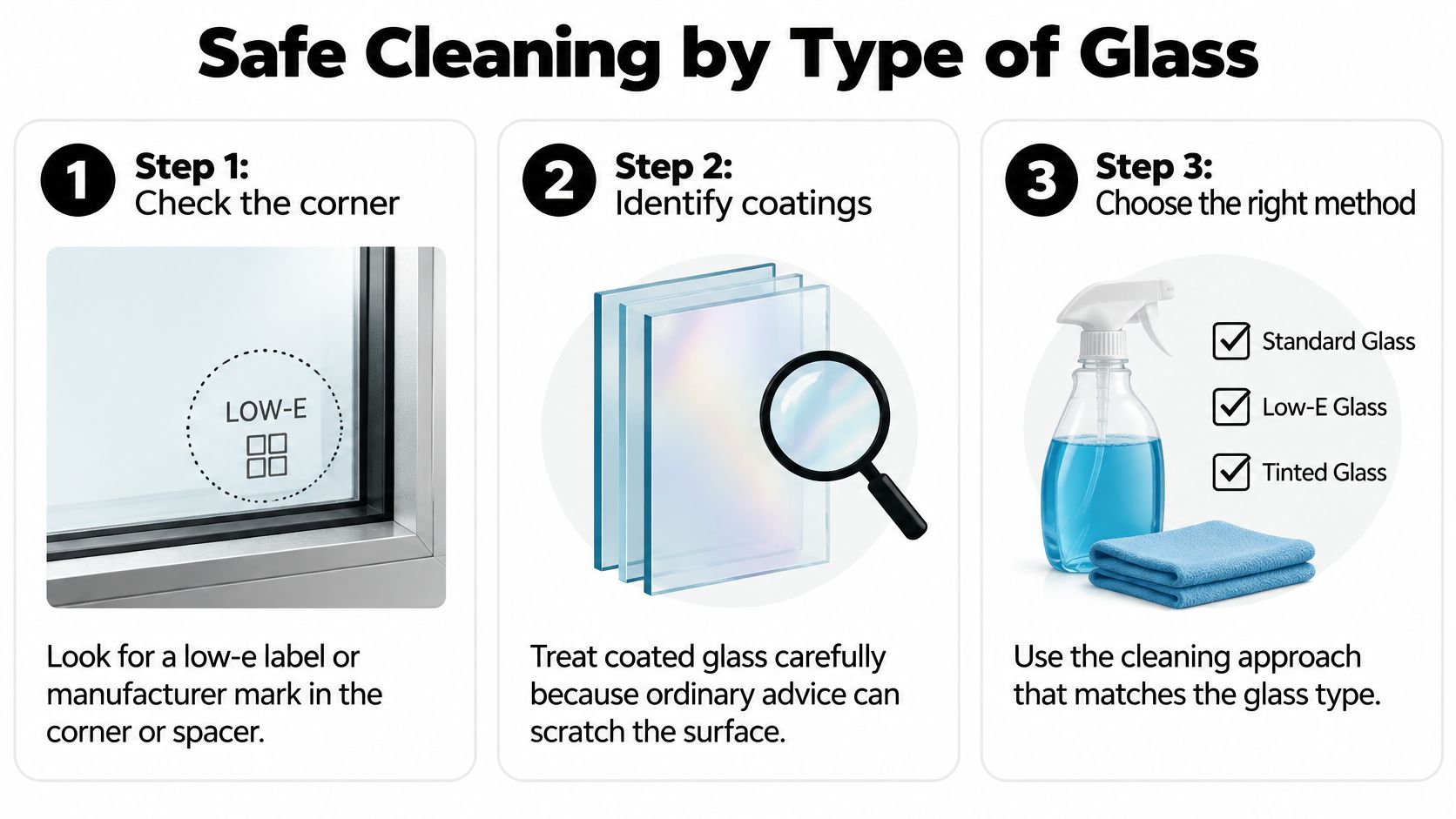
Safe cleaning method by glass type
| Glass type | How to identify it | Safe method | Avoid |
|---|---|---|---|
| Standard clear glass | No tint, plus documentation confirming no sensitive coating | Pre-rinse, mild solution, squeegee | Dry scraping on dusty glass |
| Tinted or reflective glass | Dark or mirrored look | Gentle wash in shade when cool | Wiping hot glass in direct sun |
| Low-e or coated glass | Corner or spacer label, or installation paperwork | Mild non-abrasive solution and soft cloth | Razor blades, metal scrapers, abrasives, harsh chemicals |
| Patterned or etched glass | Textured or decorative surface | Soft wash and gentle wipe | Blades that can't follow the texture |
| Historic wood or modern vinyl frame | Wood sash or vinyl surrounding the seal | Controlled wetting and tools suited to the frame | Flooding wood or forcing tools into vinyl corners |
Why a cleaner-looking pane can still be damaged
The manufacturer glass-cleaning guidance cautions against aggressive tools and cleaning tinted or coated glass in direct sunlight. A hot surface can dry the solution before you remove it, while an unsuitable blade or abrasive can permanently damage the surface.
A scraper can leave a shiny-looking pane and permanent scratches at the same time.
At Cultivate House Detailing, our crews tailor methods to tinted glass, historic wooden frames, and modern vinyl fixtures. The frame matters alongside the pane: excess water around wood and a forced tool near a brittle vinyl corner create avoidable risks.
For another glass surface, Maid in America explains how to remove grease from oven glass. Keep that application separate from architectural windows; an approach intended for oven grease isn't permission to use the same treatment on an exterior coating.
This video offers an additional visual reference for window-cleaning technique.
Match your pane to a confirmed row before working. If the label is missing, the surface feels etched, or the opening requires a stretch, a professional assessment is safer than another experimental pass.
Tools and Routine Care Between Professional Visits
A small, clean kit is more useful than a cupboard full of strong products. Keep a rubber squeegee with a fresh blade, a washer sleeve, clean lint-free microfiber cloths, a bucket, and a mild non-abrasive cleaning solution together. Add a soft brush and a vacuum brush attachment for loose debris around screens and tracks.
A repeatable ground-level routine
- Prepare the opening. Move nearby items, protect the sill, and check the glass and frame for existing damage. Work in shade or early morning when the pane is cool.
- Remove loose grit. Rinse suitable exterior glass gently before touching it with a wash tool. Indoors, lift loose dust carefully without flooding the frame.
- Wash with clean tools. Wet the washer sleeve with mild solution and loosen ordinary film. Replace dirty water rather than carrying soil to the next opening.
- Squeegee from the top. Use overlapping strokes and wipe the blade between passes. Finish edges with a clean microfiber cloth instead of repeatedly polishing the whole pane.
- Leave the surround dry. Remove drips from the sill and frame, then check the glass from an angle.
Small checks that prevent repeat work
Look for fresh white spots after irrigation, and adjust sprinkler spray so it misses the windows. Dry interior condensation promptly rather than treating it as a stain.
Keep a separate cloth for dirty frames so you don't transfer grit back to the glass. Replace damaged squeegee rubber when it leaves lines, and keep metal scrapers and abrasive pads away from coated or unidentified panes. If cleaner reaches nearby paint or stone, remove the overspray promptly with a compatible rinse and dry finish.
How Often Local Windows Need Washing
A sheltered bedroom pane and a road-facing storefront can sit on the same building and need different cleaning schedules. In Colorado Springs, choose an interval by how each window is exposed, then adjust it when visible film or spots appear.
BRANZ's glazing-selection bulletin gives every three to six months as a starting interval for ordinary urban glazing, with more frequent cleaning where airborne contaminants build up. The table applies that baseline to common conditions and adds a practical trigger for adjusting the schedule.
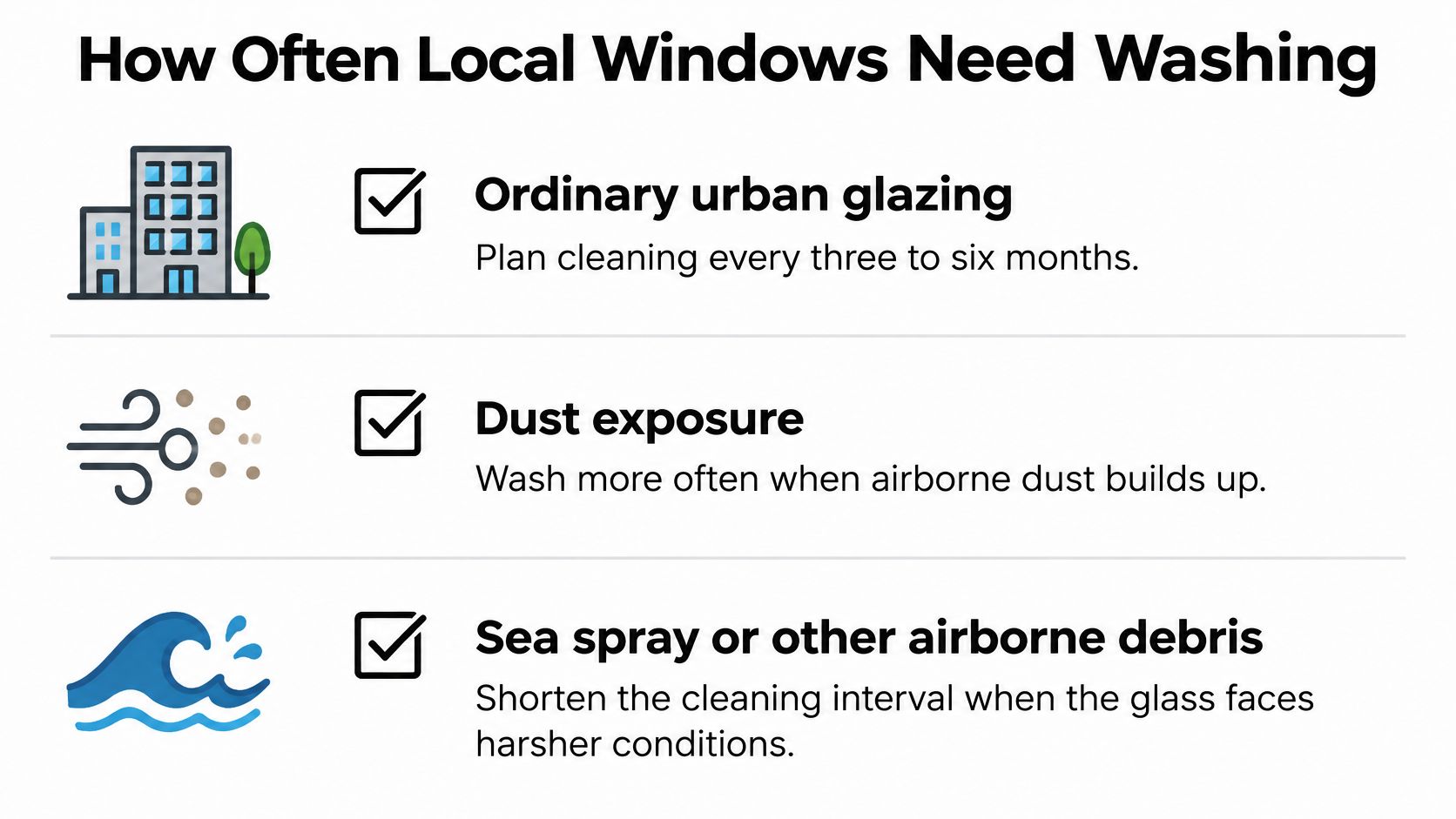
Cleaning interval by exposure
| Exposure | Suggested interval | Extra trigger |
|---|---|---|
| Ordinary urban glazing | Every three to six months | Construction dust or heavy pollen |
| Sprinkler overspray under roof edges | Check and wash as soon as spotting dries | Hard-water film on the pane |
| Road-facing storefronts | Every three to six months, shortened when film is visible | Traffic buildup |
| South-facing high-altitude glass | At least once each season, adjusted for visible residue | Spots become conspicuous in sun |
| Wildfire smoke or heavy pollen | Wash after the event when conditions are suitable | Smoke film or pollen haze |
| Before a listing or busy storefront period | Before photos or the busy period | Visible dust or spots |
Make the calendar specific to your building
Compare different sides of the property rather than giving every pane the same schedule. Bright sun can make spots on south-facing glass stand out, while shaded openings may stay damp longer. Windows beneath runoff paths can collect concentrated dirt, so check them separately.
A recurring quarterly inspection is a useful planning habit, not a required washing interval. Look for cloudy glass and check where sprinklers spray or runoff collects. How Colorado's seasons challenge your windows year-round offers seasonal context for planning those checks.
Pair calendar reminders with event-based checks. After construction, look for dust before wiping the glass. After smoke or heavy pollen, check for a visible film. Before listing photos or a busy retail period, account for both sides of the glass, since an exterior wash won't remove interior smudges.
Winter does not automatically end the cleaning schedule. Cultivate House Detailing crews clean windows on warmer winter days and adjust the solution for colder temperatures when needed. Frozen glass, icy access, or an active storm can make postponing the work sensible.
Set the interval by exposure, not by package name. If screens or tracks are holding dirt, choose those add-ons when requesting a quote. Persistent cloudiness calls for an assessment, rather than repeated routine washing.
What a Professional Visit Improves
A professional visit begins before the final squeegee pass. The crew identifies the opening, checks access, and removes loose exterior grit. Washing follows, with separate attention to bonded soil such as sap or mineral film when the glass can tolerate treatment.
The order matters because a clear finish starts with controlled soil removal, not aggressive polishing.
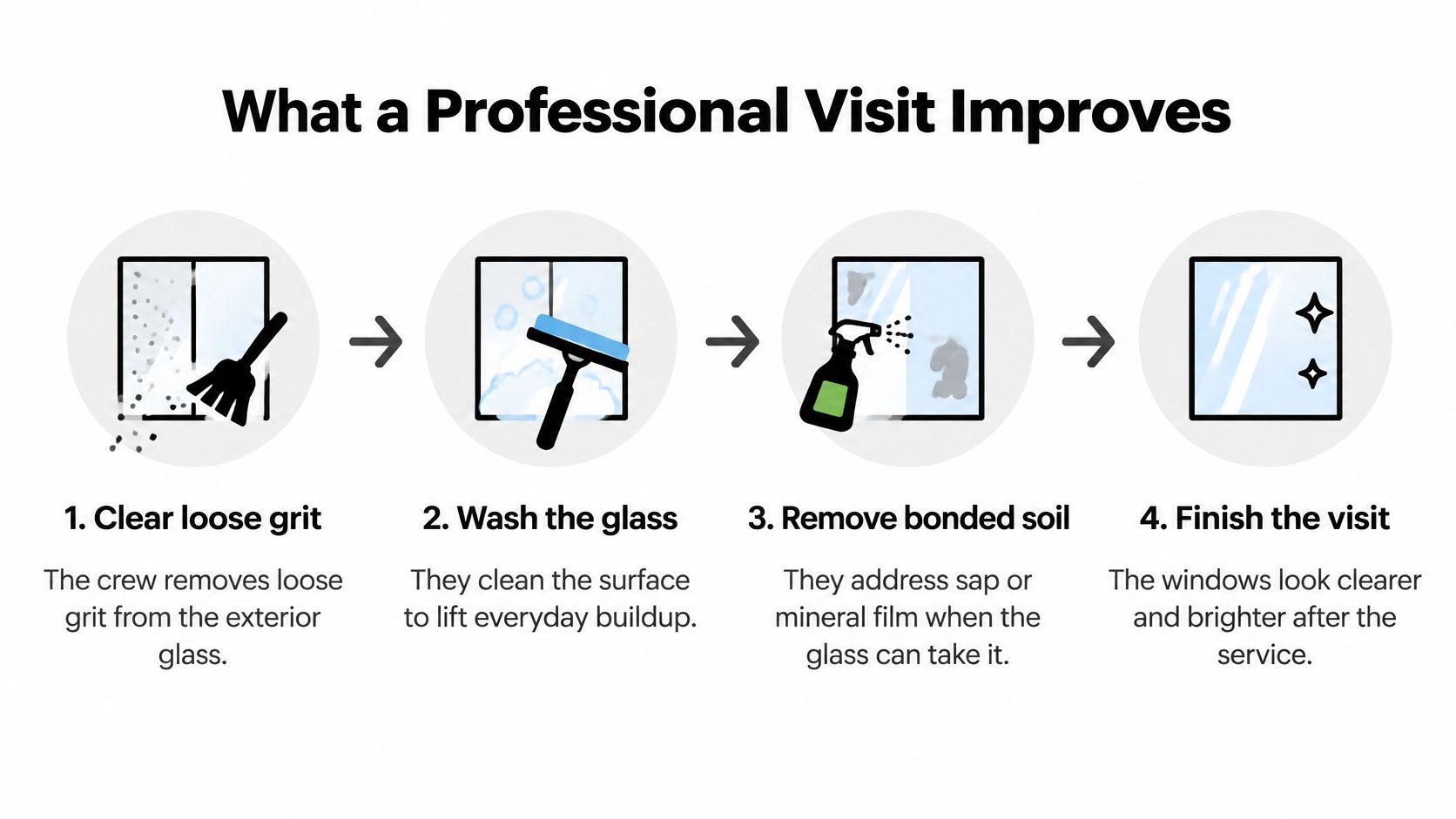
The difference includes the edges
At Cultivate House Detailing, we clean window screens and wipe exterior frames as part of exterior work. That attention prevents a freshly washed pane from sitting beside an untouched, dirty surround. Confirm the quoted scope so you know which openings and details are included.
Inside, our wipe-down removes fingerprints, pet smudges, and cooking grease. Technicians also vacuum and wipe window tracks during interior service, including the corners where loose debris gathers. That's a different result from cleaning only the easy-to-reach center of each pane.
What homeowners and businesses notice
The benefits are practical rather than mysterious:
- A less obstructed view: Removing film lets you enjoy daylight without looking through smears.
- A more finished appearance: Clean glass, screens, and frames make an entrance or room look cared for.
- Better presentation: Sellers can prepare windows for photographs and showings without leaving obvious interior fingerprints behind.
- Useful maintenance observations: Cleaning exposes damaged seals, recurring wet areas, and deposits that need separate attention.
For a shop, restaurant, dealership, or office, the entrance glass is part of the customer's first impression. A clean storefront also makes displays easier to see without a layer of traffic film competing for attention.
The limit remains important: washing isn't a repair for a leaking opening, failed glazing unit, or indoor moisture problem. A careful visit should make those concerns easier to identify, not conceal them with another wipe.
You can expect methods matched to each opening and clear communication from estimate through follow-up. The booking decision should account for glass, access, screens, frames, and tracks, so the finished result matches what you meant by professional window cleaning.
Schedule Glass Window Cleaning in Colorado Springs
Keep DIY for cool, reachable, confirmed ordinary glass with light soil. Book professional help when the opening requires awkward access, the coating is unknown, deposits resist a gentle wash, or dirty screens and tracks make the project larger than a quick wipe.
If you're searching for window cleaning near me, compare the actual work you need rather than the shortest service description. Residential window cleaning, commercial window cleaning, and specialized hard-water stain removal can involve different preparation and access.
What to include in your quote request
Give Cultivate House Detailing a clear picture of the property:
- Building and access: Describe the home or business and identify windows above the ground floor, including fourth-story openings.
- Inside and outside: Specify interior window cleaning, exterior window cleaning, or both.
- Visible buildup: Mention sprinkler spots, smoke film, sticky marks, or cloudiness that remains after washing.
- Surrounding details: Note dirty screens, loaded tracks, delicate frames, and any known coating.
- Your timing: Include listing photography, a showing, or an upcoming busy storefront period.
We offer residential and commercial window cleaning, including interior and exterior access from ground level through the fourth story. Our process removes hard-water stains and restores clarity where the remaining issue is removable buildup, not permanent damage. Commercial window washing typically starts at $100, with the project's scope guiding the estimate.
The team serves Colorado Springs and nearby communities including Black Forest, Monument, Manitou Springs, and Woodland Park. A useful quote starts with the condition of your windows, not an assumption that every pane needs the same treatment.
Cultivate House Detailing offers residential and commercial glass window cleaning, with methods suited to the pane, its exposure, and its access. Visit Cultivate House Detailing to request a quote, describe your problem windows, and plan service before more dust and irrigation residue settle in.