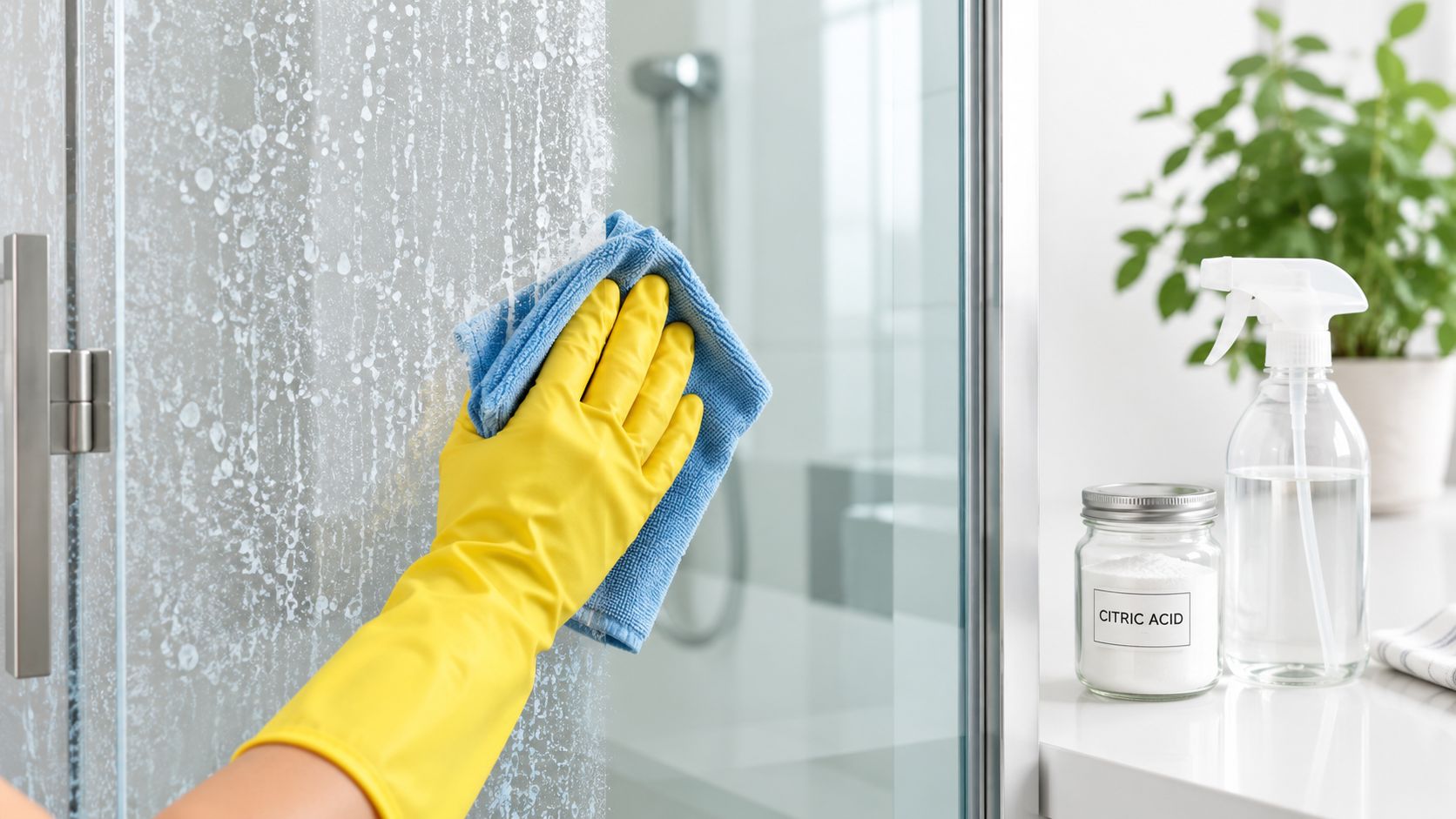
You clean the inside glass, step back, and the view still looks dull. The lines of Pikes Peak are there, but a chalky haze keeps catching the light. A lot of Colorado Springs homeowners assume that means the windows just need more elbow grease. Often, it means something else is sitting on the glass.
Those stubborn white spots are usually mineral deposits on glass, not ordinary dirt. Around Colorado Springs, that matters because windows get hit by sprinkler overspray, runoff, shower moisture, and repeated dry-down in strong sun. Once that residue bonds to the surface, regular glass cleaner usually isn't enough.
When considering window cleaning in Colorado Springs, CO, this is typically the first clarification sought. What can you clean safely yourself, and when is it smarter to bring in a professional window cleaning service instead of risking scratches or permanent haze?
Why Your Colorado Springs Windows Get Those Stubborn White Spots
A common local scenario goes like this. A homeowner notices small pale dots on the lower panes near the lawn first. Then the shower glass starts looking cloudy. Then the back windows that catch sprinkler mist every morning never seem fully clear, no matter how often they get wiped down.
That residue is usually coming from hard water. Mineral deposits on glass are typically caused by dissolved calcium and magnesium left behind after water evaporates. The water disappears. The minerals don't. They stay on the glass as visible spots, streaks, or a cloudy film. Industry guidance also notes that the U.S. Geological Survey estimate often cited in this context is that 85% of American homes have hard water, which is one reason this issue is so common in residential settings like Colorado Springs and other major markets (Crystal Quest on hard water and spotty glassware).

Why Colorado Springs homes notice it fast
Colorado Springs gives you amazing light, but that same bright exposure makes residue easier to see. The high-altitude sun highlights every spot, especially on west-facing glass and shower panels. If irrigation hits a window over and over, those deposits usually build gradually instead of showing up all at once.
A few common culprits show up again and again:
- Sprinkler overspray that repeatedly hits lower exterior windows
- Rain runoff that dries in place near frames or trim
- Screens trapping moisture so residue lingers longer on the glass
- Shower enclosures where water dries daily without being squeegeed
Practical rule: If the mark comes back after normal cleaning, you're probably not dealing with ordinary grime anymore.
Water spots versus bonded deposits
Fresh spotting is one thing. True mineral deposits are different. The difference matters because your cleaning method should match the problem.
| What you see | What it usually means | What usually works |
|---|---|---|
| Light spots after recent water exposure | Surface residue that hasn't bonded much | Basic cleaning or mild acid dwell |
| Cloudy film that keeps returning | Mineral buildup from repeated drying | More targeted stain removal |
| Rough-feeling haze | Possible advanced buildup or damage | Professional evaluation |
That's where many homeowners start looking for window cleaning near me and realize window washing isn't always just about soap and a squeegee. Some glass needs cleaning. Some needs stain removal. Some is already drifting into restoration territory.
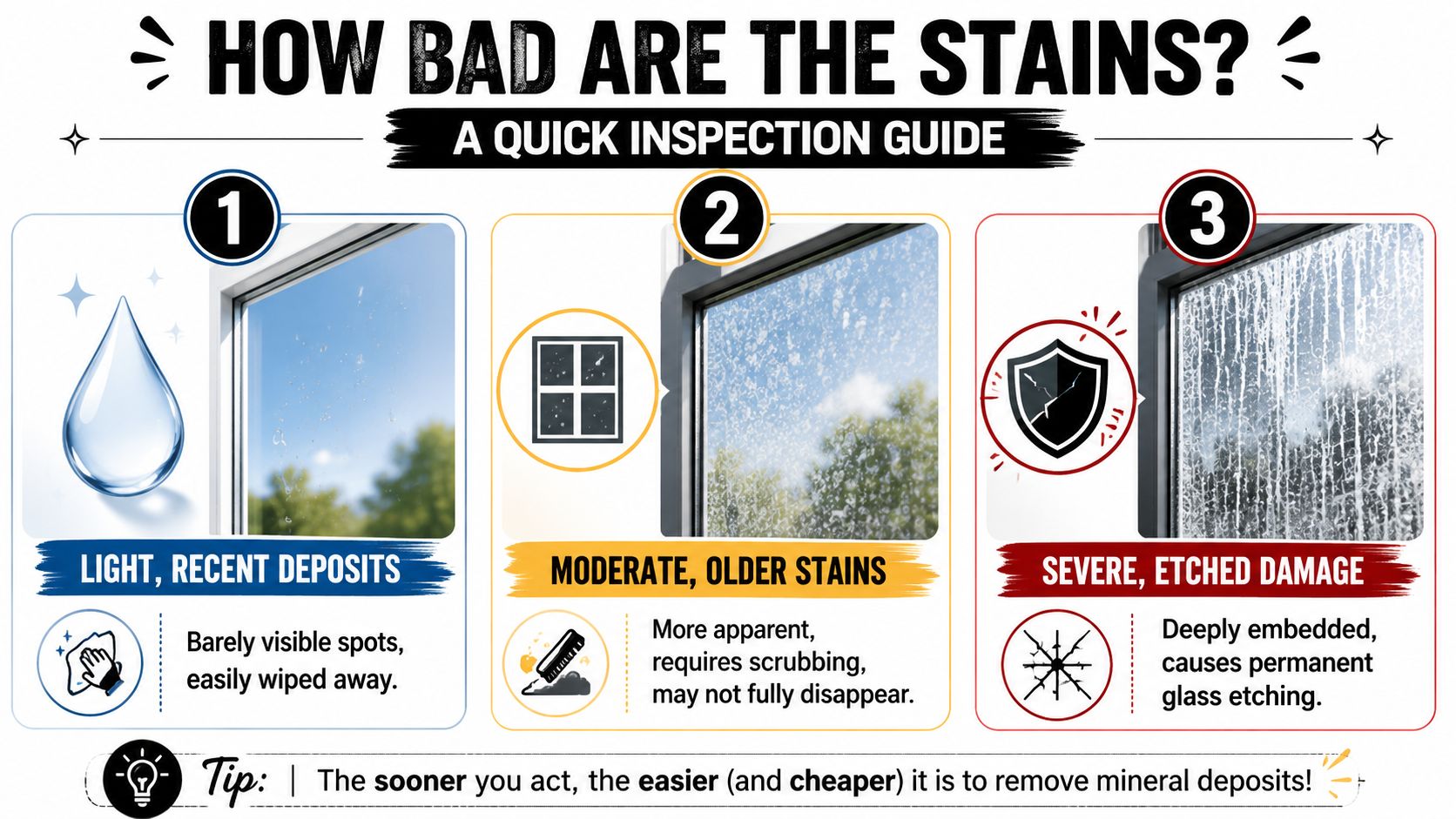
How Bad Are The Stains A Quick Inspection Guide
Not every stain deserves the same response. Before you grab vinegar or a store-bought remover, inspect the glass like a pro would. Hard-water stains are different from temporary water spots because the minerals have already bonded to the surface, and they become harder to remove as the buildup progresses (Window Genie on hard-water stains).
Stage 1 light recent deposits
These are the easiest to deal with. You usually see faint dots or light rings when the sun hits the pane at an angle. The glass still feels smooth. The spots may fade when wet, then reappear when dry.
This is usually a cleaning problem, not a restoration problem.
Stage 2 moderate older stains
At this point, the glass starts to look hazy or milky, especially on shower doors, lower exterior panes, and windows near irrigation zones. You can still see through it, but the clarity is off. Standard glass cleaner won't touch it.
Signs of Stage 2 include:
- Cloudy appearance that covers part or all of the pane
- Visible spotting patterns after the glass dries
- Resistance to routine cleaning with normal window sprays
- Repeat buildup in the same exposure areas
If you're scrubbing harder every time and getting the same result, the issue isn't technique. It's mineral bonding.
Stage 3 severe deposits or possible etching
Homeowners often find this frustrating. The glass may feel rough in places. The haze can look embedded instead of sitting on the surface. You may improve it somewhat with treatment, but complete clarity doesn't always return if the glass has been neglected too long.
A quick field check helps:
- Wash the pane normally and dry it fully.
- Inspect in side light early morning or late afternoon.
- Run clean fingertips lightly across the glass. If it feels textured, that's a warning sign.
- Look for clouding that seems inside the surface rather than on top of it.
A fast triage table
| Stage | What you notice | Likely next step |
|---|---|---|
| 1 | Light spots, smooth glass | Safe DIY treatment |
| 2 | Hazy film, stubborn residue | Stronger method or pro help |
| 3 | Roughness, lingering cloudiness | Restoration assessment |
For homeowners in Colorado Springs, this quick check saves time. It also helps you avoid the classic mistake of treating a Stage 3 problem like it's just another Saturday residential window cleaning task.
DIY Hard Water Stain Removal Methods That Work
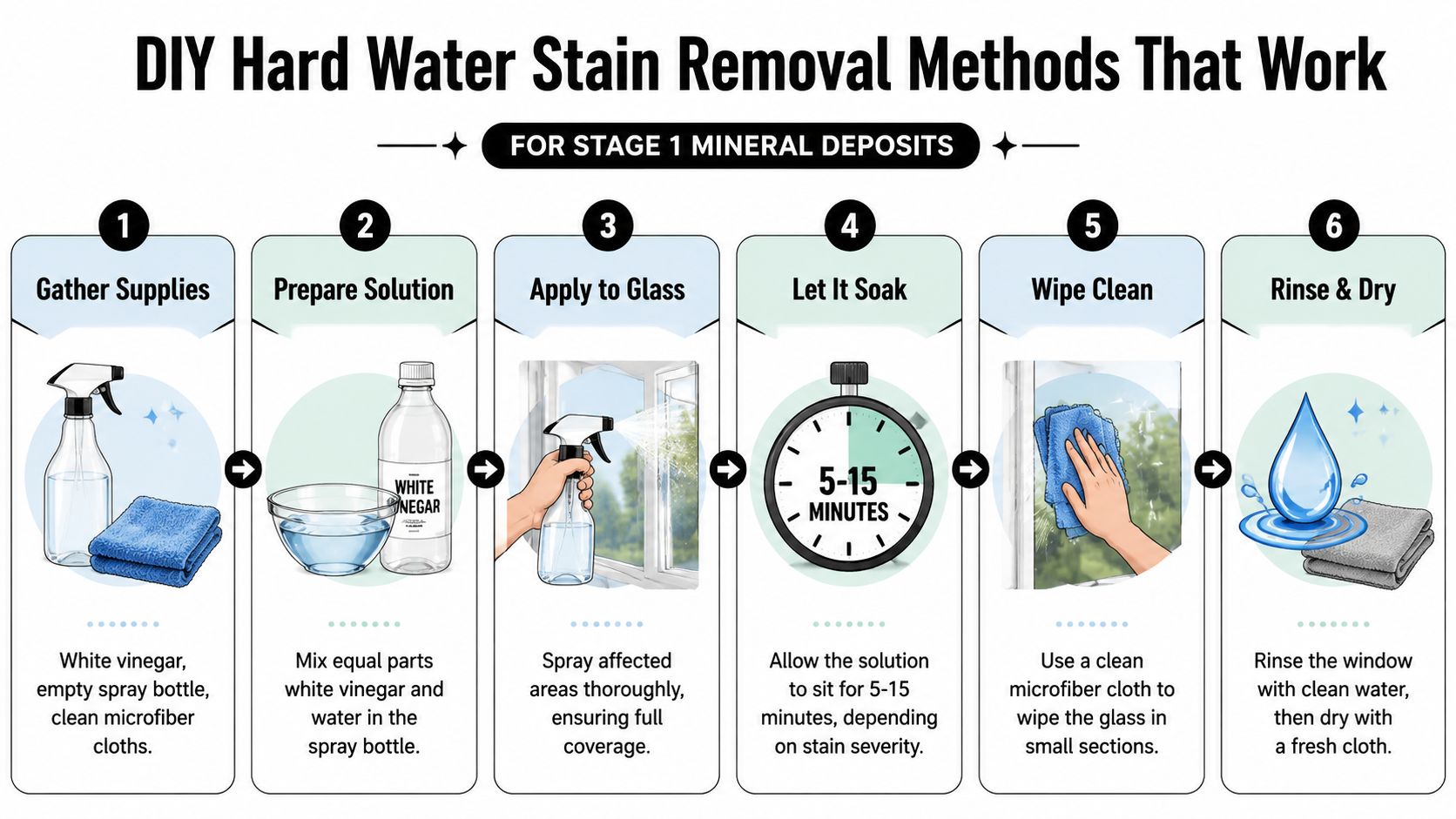
If your glass falls into Stage 1, a careful DIY approach can work well. The field method that makes the most sense for mild hard-water mineral deposits is straightforward. Soak the affected area with undiluted white vinegar for about 10–15 minutes, agitate with a soft sponge or microfiber cloth, and finish with a squeegee. Test a small inconspicuous area first before doing the full pane (Better View on removing calcium deposits from glass).
The safe DIY setup
Use the right tools. Many homeowners frequently make mistakes here.
- White vinegar for the acid dwell
- Microfiber cloths for wiping and drying
- Soft sponge or non-scratch applicator for agitation
- Squeegee to remove residue and avoid re-spotting
- Clean water for rinsing if needed
Avoid steel wool, abrasive scrub pads, and aggressive scraping. Those can scratch the glass, and scratched glass tends to hold onto future deposits even more easily.
A simple process that fits light buildup
The infographic above shows a vinegar-and-water prep method, which many homeowners use for lighter cleaning. For actual bonded mineral spotting, the stronger field guidance is to let undiluted white vinegar dwell on the area first, then work it gently.
- Test a corner first. Don't skip this.
- Apply the vinegar generously so the deposit stays wet.
- Wait about 10 to 15 minutes.
- Agitate gently with a soft sponge or microfiber.
- Squeegee the glass dry instead of letting water air dry.
- Inspect in direct light after the pane is fully dry.
For a related DIY approach to everyday glass maintenance, Cultivate has a guide on a homemade window cleaner with alcohol that can help with routine soil and finish work after the mineral residue is addressed.
A quick visual walkthrough can also help if you want to see removal methods in action.
What works and what doesn't
DIY can solve a real problem, but only when the stain is still manageable.
What usually works:
- Short acid dwell times on mild deposits
- Repeated gentle passes instead of force
- Drying the glass fully after treatment
What usually disappoints:
- Standard blue glass cleaner on bonded minerals
- Paper towels alone on cloudy buildup
- Heavy scrubbing that still leaves haze behind
If you like understanding how mineral scale shows up in other household equipment too, this guide on how to prevent mineral buildup in Keurig is a useful comparison. Different surface, same basic issue. Water evaporates, minerals stay behind.
Field note: The moment you feel tempted to "scrub harder," stop and reassess. More pressure doesn't dissolve minerals.
When to Call a Professional Window Cleaner in Colorado Springs
Stage 2 and Stage 3 glass is where DIY often stops being efficient. A homeowner can spend a full afternoon on one shower enclosure or a bank of exterior windows, only to end up with partial improvement and sore arms. The bigger risk isn't wasted time. It's accidental damage to the glass, nearby seals, or the window assembly.
For stubborn mineral deposits, professional restoration methods rely on the right chemistry paired with mechanically safe tools. Guidance for restoration work recommends gentle acids such as citric or oxalic-acid-based removers, applied with a non-scratch applicator, then buffed and rinsed thoroughly. That approach is safer and more effective than brute force or overly aggressive chemicals (McPherson Window Cleaning on mineral damage and restoration).
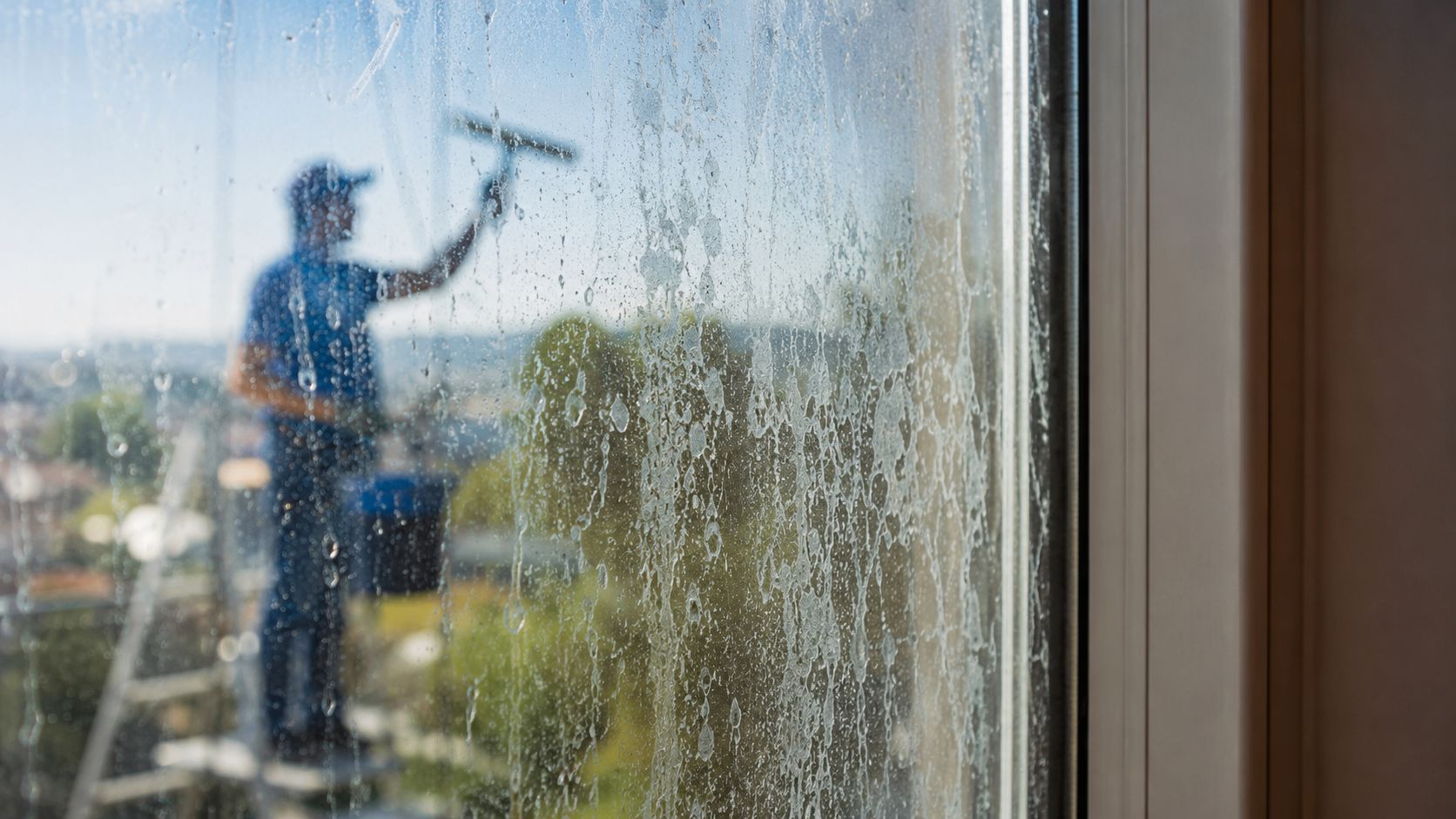
Why stronger DIY products can backfire
The bottle at the hardware store may promise fast stain removal, but stronger acid products come with trade-offs. Left on too long, they can affect surrounding materials. Used carelessly, they can create more problems than they solve.
A few common trouble spots:
- Window frame contact can stain or discolor adjacent materials
- Seal exposure can create long-term assembly issues
- Improper applicators can leave fine scratches
- Overuse of acid can turn a stain-removal attempt into a restoration bill
What professional service changes
A trained window cleaner doesn't just clean what's visible. The work starts with identifying whether the residue is removable buildup or likely surface damage. That saves homeowners from chasing a perfect result on glass that may already be etched.
For professional window cleaning and hard water stain removal in Colorado Springs, CO, one option is Cultivate House Detailing. The service is relevant when homeowners need exterior window cleaning, interior window cleaning, screen cleaning, and help evaluating mineral staining without resorting to abrasive DIY methods.
Some windows need cleaning. Some need restoration. Knowing the difference is where the value is.
Good candidates for a pro visit
You should consider calling for help if any of these sound familiar:
| Situation | Why pro help makes sense |
|---|---|
| The haze stays after vinegar treatment | The deposit may be advanced or the glass may be etched |
| The glass is high or hard to reach | Ladder work and exterior access add risk |
| You see spotting across many panes | A whole-home approach is faster and more consistent |
| Store-bought removers make you nervous | That's usually a good instinct |
This is also where commercial window cleaning matters for storefronts, offices, restaurants, and multi-pane buildings. Mineral staining on customer-facing glass changes how the whole property reads from the curb.
Protecting Your Windows and Keeping the Views Clear
The cheapest mineral stain to remove is the one that never bonds in the first place. Once you clean the glass, prevention matters more than most homeowners expect. Repeated wet-and-dry cycles are what turn occasional spotting into stubborn buildup.
Fix the source first
If a sprinkler head is spraying the same lower panes every morning, cleaning alone won't solve the problem. The glass will spot again. The same goes for shower doors that never get dried and windows that catch heavy runoff from trim or roof lines.
Start with practical prevention:
- Redirect sprinkler heads so they don't hit the glass
- Use a squeegee after showers instead of letting water dry in place
- Wipe wet glass promptly after heavy water exposure
- Watch recurring trouble spots near screens, trim, and lower panes
Add a barrier after cleaning
Professional guidance on mineral residue prevention also points to hydrophobic sealants or coatings because they reduce mineral adhesion and make re-accumulation less likely. On homes that repeatedly battle hard-water exposure, a protective treatment can make regular maintenance much easier.
If you're curious how purified water fits into streak-free exterior maintenance, this overview of deionized water window cleaning explains why many pros use it for cleaner final results.
Think beyond the window
In some homes, the recurring issue is the water itself. If you're seeing mineral residue on glass, fixtures, and appliances, it can make sense to explore water filtration solutions to reduce the source problem, not just the symptoms.
Clean glass lasts longer when the water hitting it is controlled.
For many Colorado Springs properties, the smartest maintenance plan is simple. Correct overspray, dry high-exposure glass quickly, and schedule regular exterior window cleaning and interior window cleaning before buildup turns into a restoration issue. That improves curb appeal, helps natural light come through cleanly, and reduces the odds of permanent surface damage.
Your Questions About Mineral Deposits Answered
How do I know if it's a stain or permanent etching
A removable stain usually sits on the surface, even if it's stubborn. Etching is different. Once deposits stay on the glass too long, they can affect the surface itself. A useful rule is this: if cloudiness remains after an acid treatment or the glass feels rough, it likely needs professional restoration rather than ordinary cleaning (Pure Southern Water on removing and preventing hard water stains on glass).
If you're unsure, don't keep escalating with stronger products. That's how many homeowners make the finish worse.
Is professional removal worth it compared with replacement
In many cases, yes, because the first step is figuring out whether the glass can still be restored. If the problem is bonded mineral residue, proper treatment may improve clarity without jumping straight to replacement. If the glass is etched, a pro can usually tell you that before you spend more time and money on DIY products that won't solve it.
A good assessment keeps you from paying twice. First for cleaners and tools, then again for damaged glass.
Why do Colorado Springs windows seem to show this problem so clearly
Local homeowners notice it because the environment makes residue easy to see and easy to bake onto the glass. Strong sun, recurring irrigation, and repeated dry-down all work against clear panes. On exterior glass, that often shows up on lower windows and view-facing sides. On interior bathroom glass, it shows up as haze that keeps coming back.
When regular window washing isn't fixing the problem, and you're looking for window cleaning near me, that's usually your sign to stop treating mineral deposits like ordinary dirt.
If your windows in Colorado Springs still look cloudy after routine cleaning, it may be time for a closer look. Cultivate House Detailing handles residential and commercial window cleaning, including stubborn hard water stain issues, with methods designed to protect the glass while improving clarity. Request a quote if you'd like help figuring out whether your windows need simple cleaning, stain removal, or restoration-focused care.
Prefer to leave it to a professional? Cultivate House Detailing offers residential window cleaning in Colorado Springs. Get a free quote.