The difference between a streaky driveway and a uniformly clean one comes down to method, not muscle. There's another surprise for local homeowners: Colorado Springs Utilities' Water-Wise Rules say hard surfaces such as driveways should be cleaned with water only when there's a public-health or safety concern. Ordinary loose dirt may call for a broom, not a pressure washer.
When washing is appropriate, the best way to pressure wash driveway surfaces depends on the stain, the material, and the season. Winter road grit needs a different approach from oil drips, shaded mildew, or hard water spotting. Freeze-thaw wear also makes a careful inspection more important than choosing an aggressive nozzle.
These seven methods range from fan-tip sweeping to hot water and targeted pre-treatments. At Cultivate House Detailing, we offer driveway pressure washing alongside professional window cleaning in Colorado Springs, CO, so homeowners can plan an exterior refresh without treating every surface the same way.
1. Standard Fan-Tip Sweeping
Best for routine dirt on sound concrete, fan-tip cleaning uses a flat spray pattern and steady, overlapping wand passes. It's a practical choice for a Colorado Springs driveway with a film of winter dust and road grit, provided washing is appropriate under local water rules.
Start by moving vehicles, planters, and loose objects. Sweep and collect grit before adding water, then inspect cracks, flaking areas, joints, and any existing sealer. Don't assume asphalt, decorative concrete, and plain concrete can tolerate the same treatment.
Make the first pass a test
Begin with a wide fan and the lowest effective pressure in an inconspicuous area. Hold the wand well back initially, keep its angle consistent, and move at an even pace. If you see a lighter carved line or newly exposed aggregate, stop rather than trying to blend the damage with more pressure.
The University of Kentucky's pressure-washer safety guidance recommends reading the equipment manual, wearing eye and hearing protection, and keeping your body out of the spray path. Never operate gasoline-powered equipment inside a garage, even while cleaning the garage entrance.
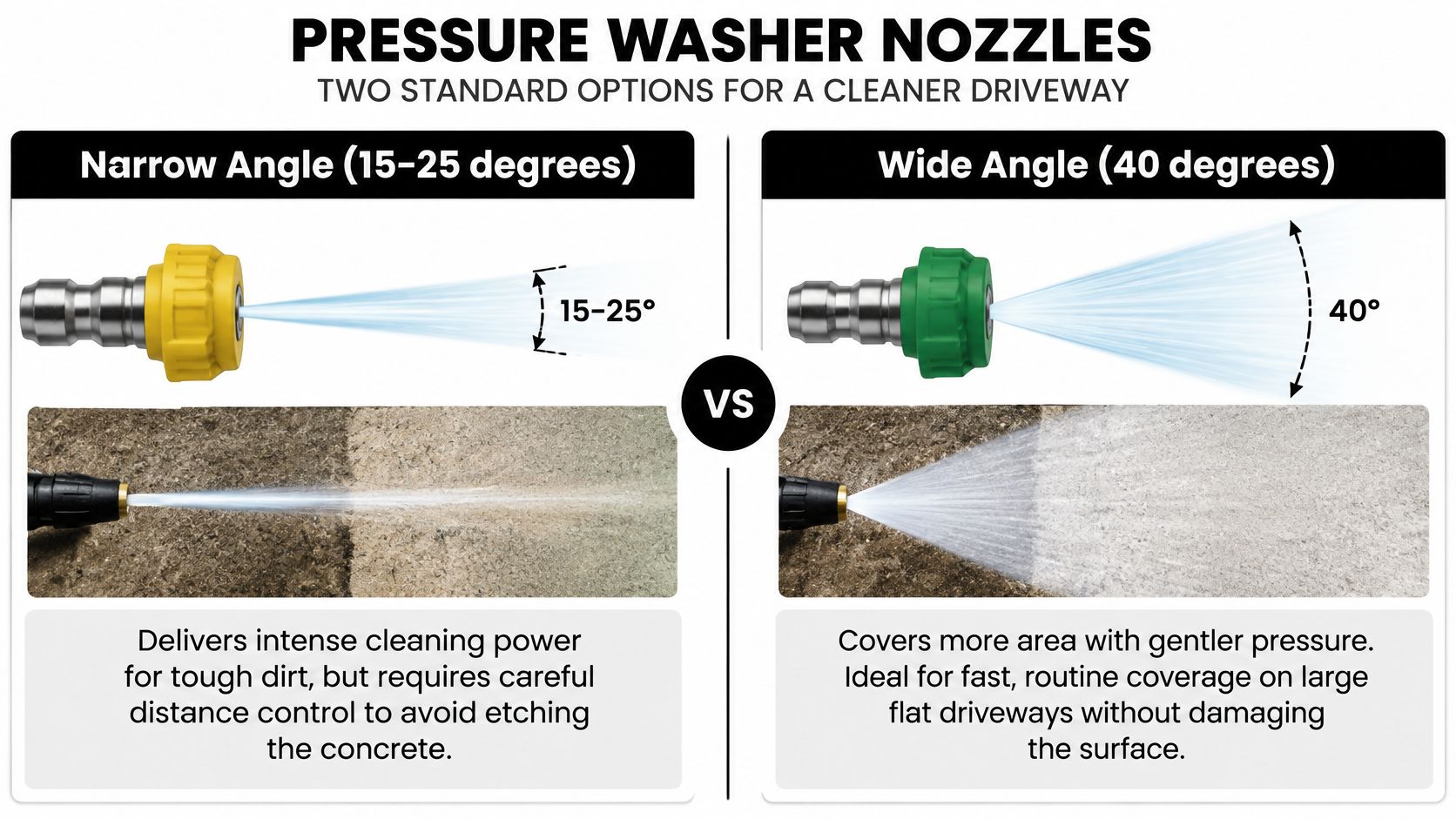
Work from the higher end toward your planned collection area, not automatically toward the street. A downhill workflow helps keep dirty water off cleaned sections, but runoff containment still determines where that water can go.
2. Rotary Surface Cleaner
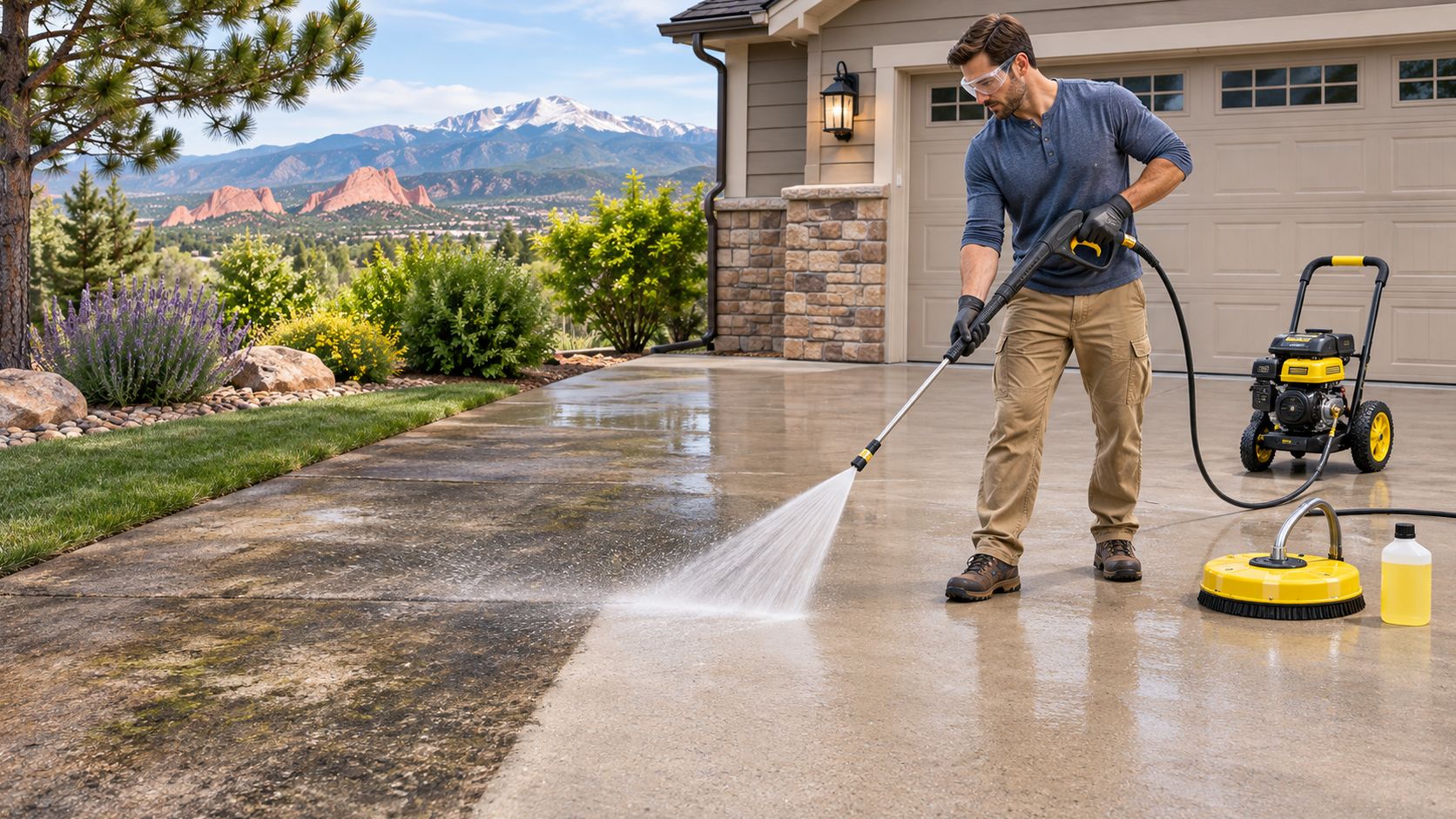
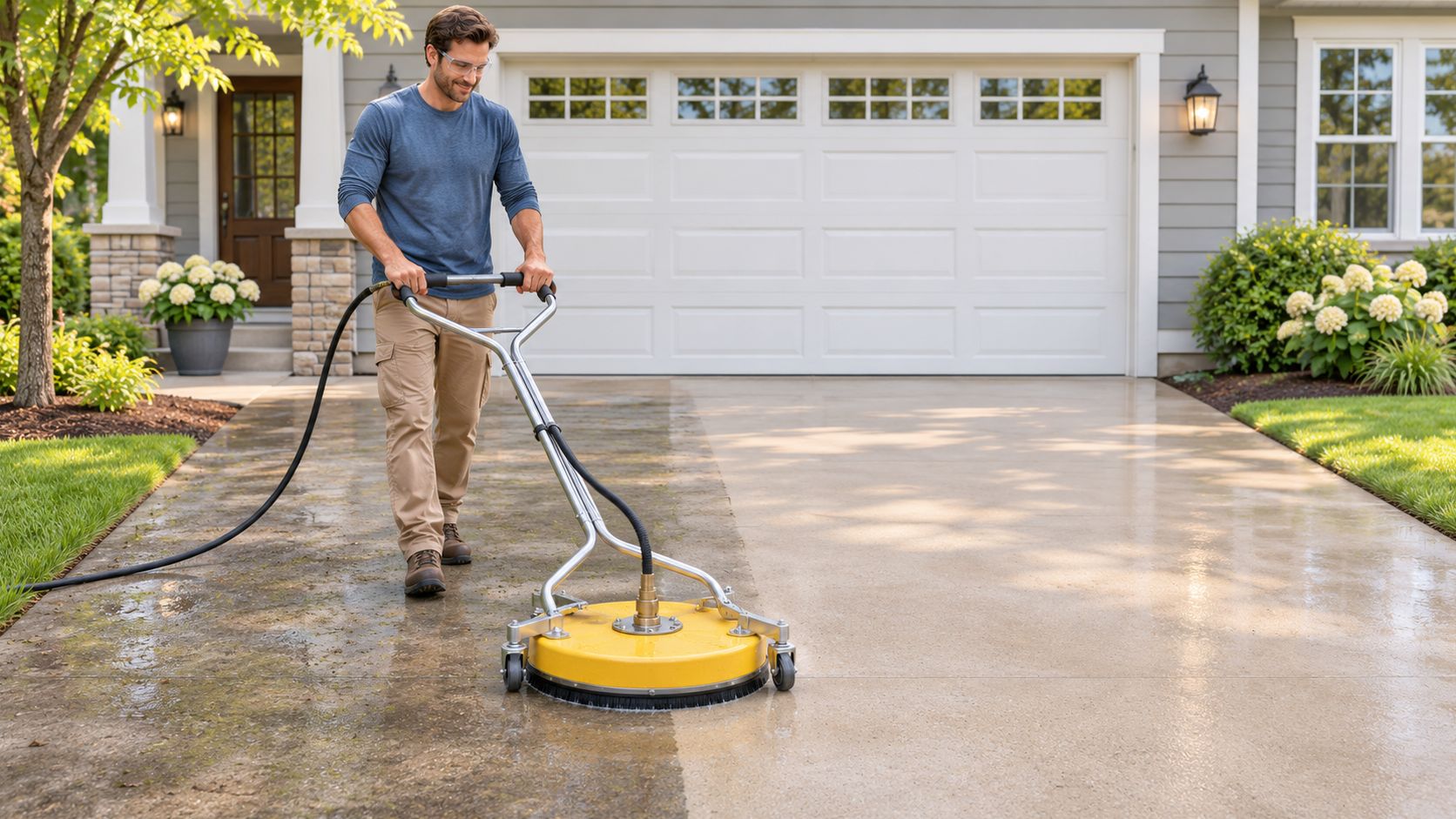
A broad concrete driveway that needs an even finish is a good candidate for a rotary surface cleaner. Its enclosed spinning spray bar cleans a wider path while keeping the jets at a more consistent distance than a hand-held wand.
Say you're preparing a Monument home for sale and the driveway has an uneven gray film across the parking area. A surface cleaner can handle the main field, while a fan-tip wand reaches edges and tight corners. It's generally easier to produce a consistent appearance this way than by tracing the entire driveway with narrow wand strokes.
Match the attachment to the machine
AppliancePartsPros' concrete-cleaning guidance gives a practical residential benchmark of approximately 2,000–2,800 PSI with 2–3 GPM. Those figures are equipment guidance, not permission to apply maximum pressure to worn concrete.
Choose a cleaning head compatible with the washer's output. An oversized attachment on an underpowered machine can leave you moving too slowly or revisiting missed strips.
- Clear the path: Remove stones, sticks, and loose debris before lowering the head.
- Inspect the attachment: With the machine off and pressure released, check for obstructions and damaged nozzles.
- Keep a steady pace: Overlap passes slightly instead of stopping over dark patches.
A surface cleaner improves consistency. It doesn't repair freeze-thaw scaling or make fragile concrete safe to blast.
Afterward, rinse loosened sediment toward containment and inspect the surface once it dries.
3. Soft Washing
Green growth beside a shaded retaining wall needs a different approach from dusty concrete in full sun. Soft washing relies on a suitable cleaning solution and low-pressure rinsing, rather than trying to remove everything through force.
For a shaded Manitou Springs driveway, the first question is whether the dark area is organic growth, an oil stain, or damp concrete. Treating every dark patch with the same solution wastes cleaner and can leave an uneven finish.
Let the cleaner do the work
Select a product labeled for both the driveway material and the growth you're treating. Apply it evenly, allow the specified contact time, and keep it from drying before rinsing. Older concrete, pavers, and coated surfaces still need a test patch, because low pressure doesn't make an incompatible chemical safe.
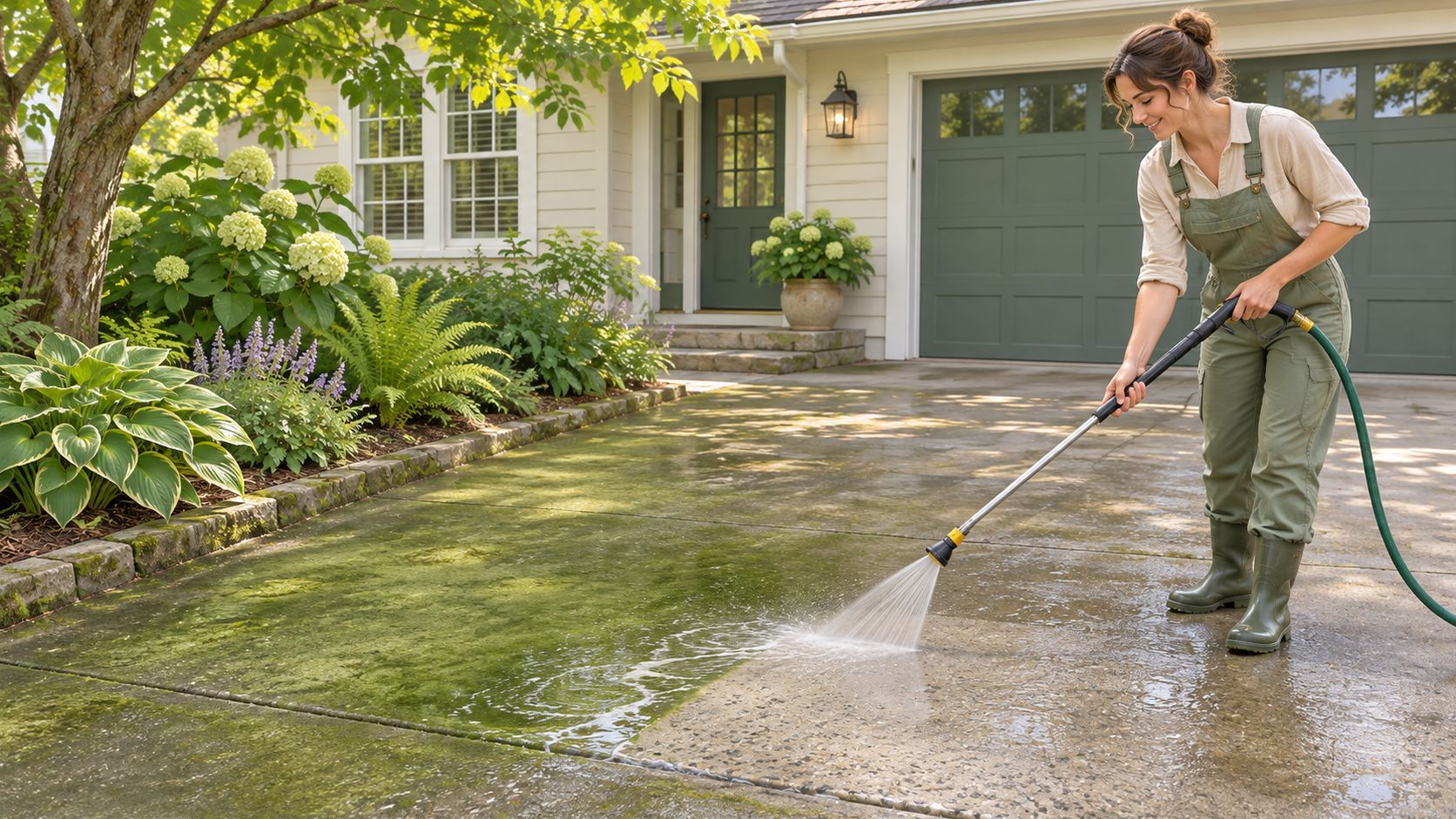
Protect adjacent plants before application and control overspray around doors, metalwork, and landscaping. Pre-wetting plants can help, but it isn't a substitute for keeping cleaning solution out of planting beds and collecting contaminated runoff.
The main trade-off is patience. You'll spend more time selecting and applying the right cleaner, but you may avoid unnecessary mechanical stress on the surface. For widespread growth or a delicate finish, understanding when to hire soft washing pros helps you decide whether the job belongs beyond a DIY setup.
Soft washing won't correct poor drainage. If snowmelt repeatedly collects beside the driveway, address that moisture source alongside cleaning.
4. Hot Water Pressure Washing
Oil near a garage entrance is a cleaning problem, not automatically a pressure problem. Heated water can help loosen greasy, sticky deposits that cold water struggles to move, especially when paired with an appropriate cleaner.
Consider a Colorado Springs driveway where a parked vehicle has left a greasy patch. Hot water may help with the surface residue, but oil that has penetrated the concrete can still leave a shadow. A realistic goal is substantial improvement, not a promise that every old stain will disappear.
Heat needs a runoff plan
Before heating anything, absorb free oil and collect loose deposits. Test the surface, particularly if it has a coating or sealer, and keep the cleaning head moving. Hot water isn't a shortcut for cleaning frozen pavement or working when rinse water could refreeze.
Fairfax County's pressure-washing guidance explains that pavement washing can dislodge oil, paint, sealants, detergents, and other pollutants. It recommends controls such as drain covers, absorbent booms, and diversion barriers to keep contaminated water out of storm drains.
Practical rule: Loosening grease is only half the job. You still need to capture the oily wash water.
Heated equipment adds burn hazards, fuel considerations, and more complicated handling. It's generally a professional option rather than the first rental choice for ordinary driveway dirt.
For a restaurant entrance or heavily used vehicle parking area, that extra capability may be worthwhile. For a lightly dusty residential driveway, heat usually adds complexity without solving a problem that needs it.
5. Turbo Nozzle Cleaning
A turbo nozzle concentrates the spray into a rotating pattern. That makes it useful for selected stubborn deposits, but also makes it a poor default for whole-driveway cleaning.
A dark tire mark near a Colorado Springs garage door might justify a carefully tested spot treatment. A crumbling joint, exposed aggregate, or peeling sealer does not. Winter residue should be identified and pre-treated as needed before you reach for a more aggressive attachment.
Reserve it for sound, plain concrete
Start farther away than you would with a fan tip and approach cautiously. Keep the stream moving in short passes, stop frequently to inspect, and avoid decorative or sealed surfaces unless the finish manufacturer permits that method.
Bob Vila's driveway-cleaning guide advises at least 2,000 PSI for embedded dirt while warning against exceeding 3,000 PSI because excessive pressure can etch concrete. A turbo nozzle concentrates the impact, so a machine's pressure rating alone doesn't establish a safe working setup.
For help weighing equipment settings against concrete condition, use our guide to how much PSI to pressure wash a driveway.
This demonstration provides a visual reference for the attachment's movement.
Follow spot work with a controlled fan-tip rinse. Don't keep cutting into a persistent mark to force a color match, because the remaining discoloration may be deeper than surface cleaning can reach safely.
6. Alkaline Degreaser Pre-Treatment
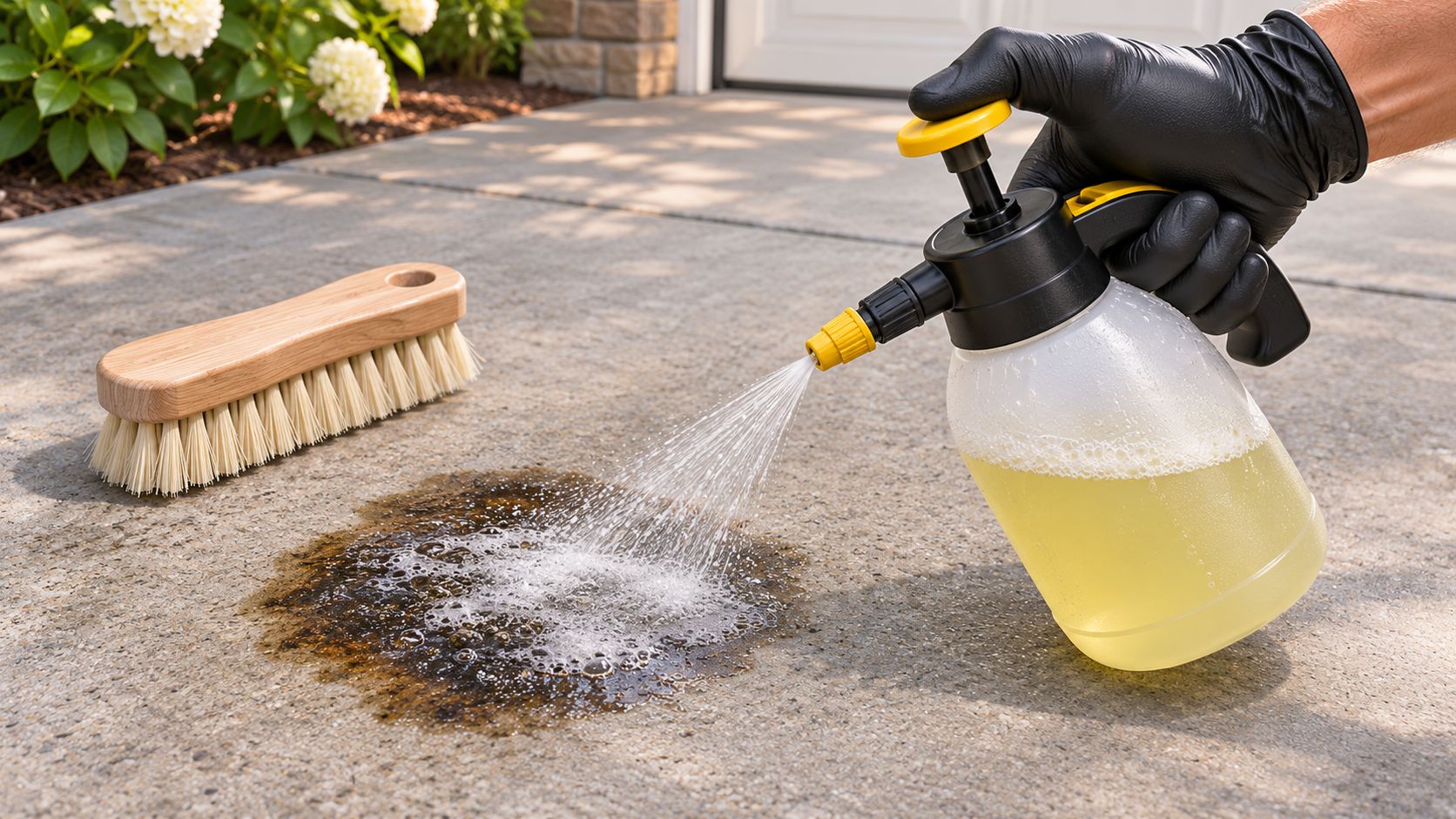
For vehicle oil, pre-treatment usually makes more sense than increasing pressure. An alkaline concrete degreaser helps loosen petroleum residue so brushing and controlled rinsing can remove it.
A driveway apron in Woodland Park with repeated oil drips is a typical use case. Start by fixing or containing the leak, then absorb fresh oil before treating the stain. Otherwise, you'll wash the driveway only to have the vehicle mark it again.
Treat the stain, not the entire property
Use a degreaser labeled for concrete and compatible with any sealer. Apply to a dry or damp surface as the product specifies, give it the required contact time, and agitate with a stiff nylon brush. Don't substitute a stronger mixture for adequate brushing.
- Protect yourself: Wear chemical-resistant gloves and splash protection suited to the product.
- Work small: Treat a manageable patch so the cleaner doesn't dry before recovery and rinsing.
- Contain the residue: Keep oily solution away from gutters, drains, and planting beds.
The City of Eugene's pressure-washing handout recommends dry cleanup first and recovery when wash water can't safely infiltrate, followed by approved disposal. Redirecting greasy detergent water onto the lawn isn't an acceptable substitute.
Our guide to how to pretreat a driveway for pressure washing explains how preparation fits into the cleaning sequence. Deep stains may need repeat treatment, and some discoloration can remain even after the greasy residue is removed.
7. Oxidizing Cleaner Pre-Soak
A shaded Black Forest driveway with slippery organic buildup may benefit from an oxidizing cleaner pre-soak before moderate-pressure washing. Bleach-based and oxygen-based products aren't interchangeable, so choose a product specifically labeled for the surface and stain.
This differs from soft washing mainly in the overall workflow. Soft washing emphasizes low-pressure cleaning, while a pre-soak prepares the surface for a subsequent controlled wash. Neither approach calls for applying an arbitrary chemical mixture.
Diagnose before you bleach
Green growth, leaf staining, rust, and hard water deposits can all look like general discoloration from a distance. An oxidizing cleaner may suit organic staining, but it isn't a universal treatment for mineral deposits or vehicle oil.
Test a hidden patch for color changes, protect nearby plants, and avoid applying cleaner in wind that could carry spray onto windows or neighboring property. Follow the product's dilution and contact-time directions, keep it from drying, and rinse thoroughly while containing the wastewater.
Never mix bleach-based cleaner with acids, ammonia, or another cleaning product.
For a rental property approaching a showing, start early enough to let the driveway dry before judging the result. Wet concrete can hide both remaining stains and uneven cleaning.
If growth is widespread, we can help with driveway pressure washing rather than leaving you to experiment across the entire surface. Also check downspout discharge, sprinkler overspray, and low spots where water collects. Cleaning removes buildup, but reducing persistent moisture is what makes ongoing maintenance more manageable.
Driveway Pressure Washing Methods at a Glance
| Method | Best For | Surface Risk | DIY or Pro |
|---|---|---|---|
| Standard Fan-Tip Sweeping | Routine dirt and grime on large paved areas | Moderate; close or excessive pressure can etch concrete | DIY-friendly with care |
| Rotary Surface Cleaner | Fast, even cleaning of large, flat surfaces | Low to moderate; use caution on slopes and edges | DIY with compatible equipment |
| Soft Washing | Algae, mold, and mildew on delicate or older surfaces | Low; protect plants and rinse thoroughly | DIY with chemical precautions; pro for solution selection |
| Hot Water Pressure Washing | Heavy oil, grease, and sticky residue | Moderate; excess heat can damage some surfaces | Best handled by a pro |
| Turbo Nozzle Cleaning | Stubborn spots, tire marks, and embedded dirt | High; can etch or pit concrete | Best handled by an experienced user or pro |
| Alkaline Degreaser Pre-Treatment | Oil and grease stains | Moderate; chemicals can harm plants and require careful handling | DIY with protective gear; pro for deep stains |
| Oxidizing Cleaner Pre-Soak | Algae, mold, mildew, and other organic stains | Moderate; may harm plants, metals, or sealed finishes | DIY with surface testing and careful rinsing |
Get a Spotless Driveway Without the Guesswork
Choose the least aggressive method that solves the actual problem. Routine grime on sound concrete usually calls for a fan tip or rotary surface cleaner. Organic growth calls for a compatible soft-wash treatment or oxidizing soak, while oil often needs degreaser, agitation, and sometimes heated water.
A turbo nozzle belongs at the cautious end of that decision, not the beginning. If the surface is scaling, cracked, sealed, or decorative, assess its condition before selecting equipment. Cleaning won't restore missing concrete, and more force can turn existing wear into permanent damage.
Plan the driveway and windows together
Cultivate House Detailing recommends pressure washing the home and surrounding areas at least once a year between March and November, with timing adjusted to the area of town. That maintenance recommendation doesn't override local water rules, unsafe temperatures, or the need to contain runoff. Sometimes the right seasonal service is dry sweeping and targeted treatment rather than a full wash.
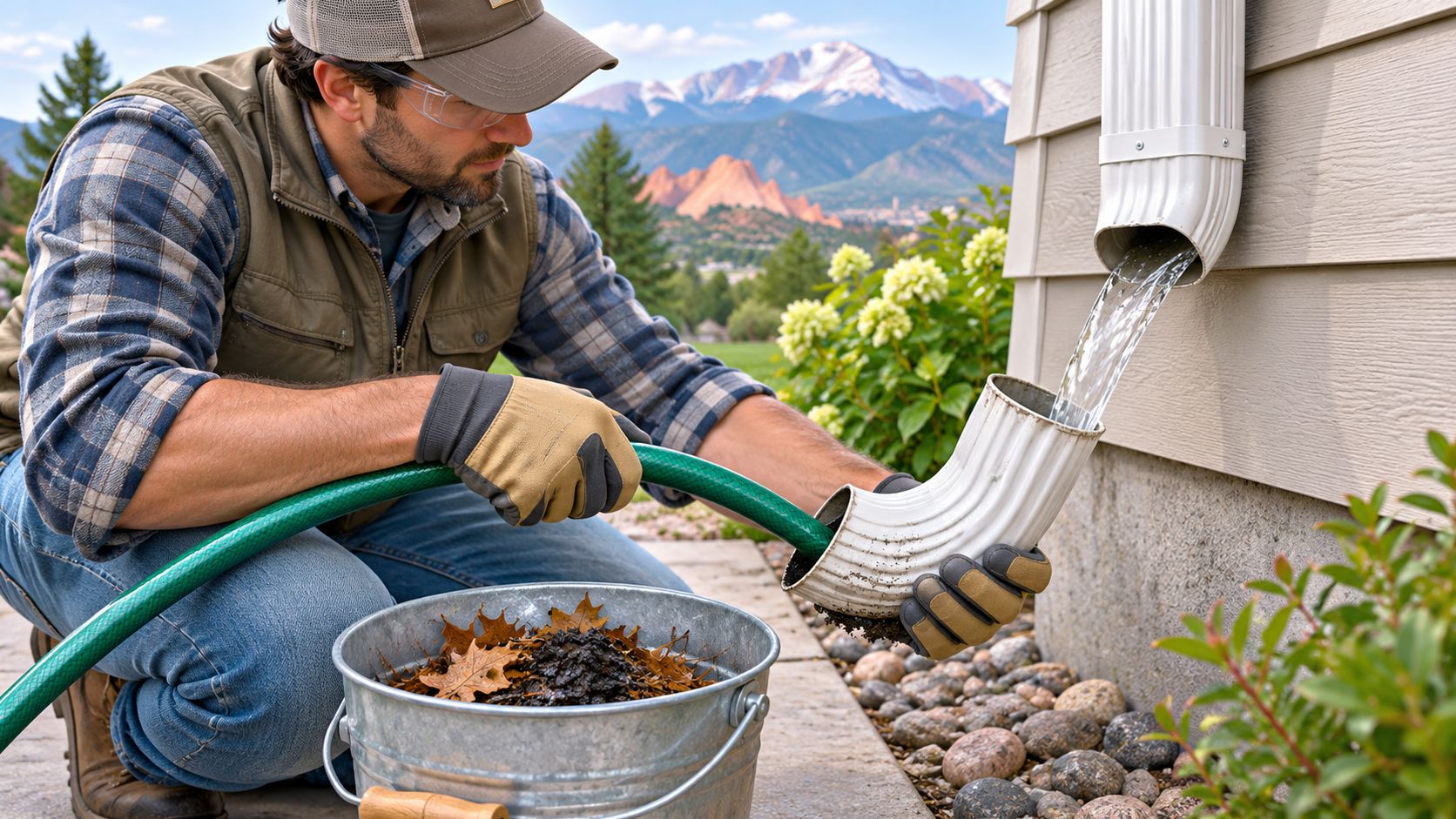
We use different pressure levels for hard and soft surfaces, along with commercial-grade tools and eco-friendly solutions. Our exterior services can be bundled with residential window cleaning, commercial window cleaning, and gutter cleaning, making it easier to coordinate property maintenance.
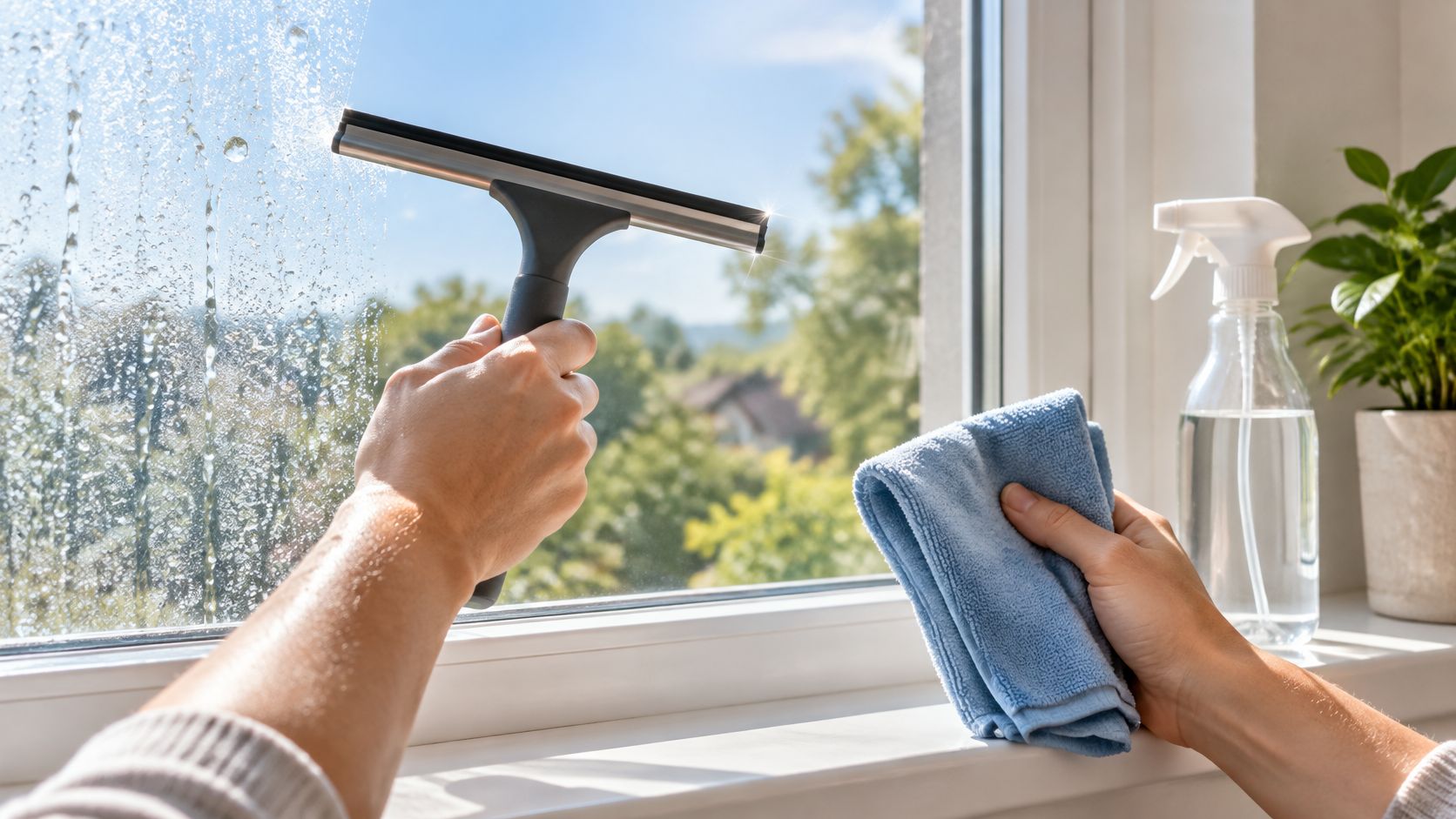
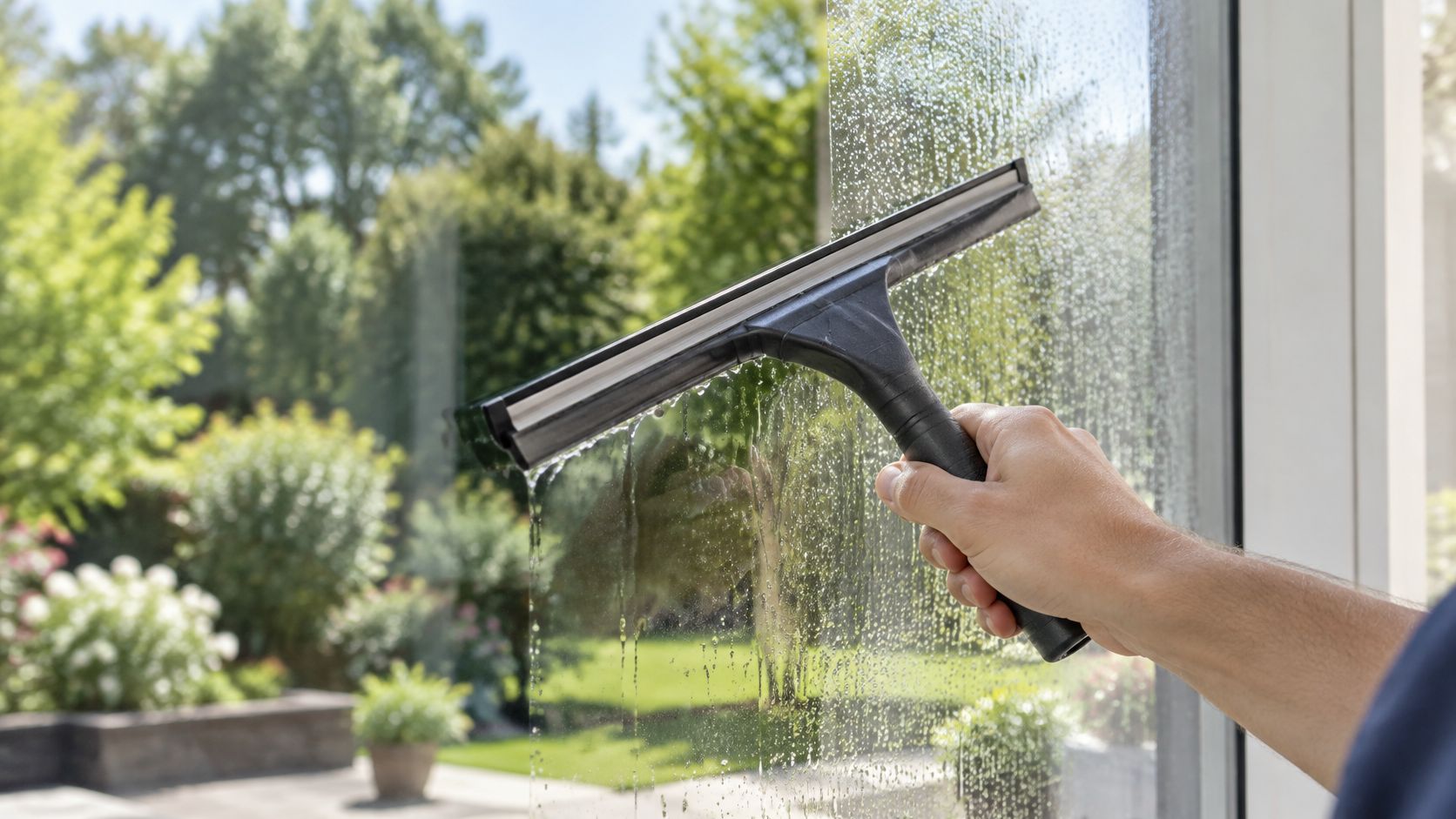
Dirty glass, hard-to-reach windows, and seasonal buildup deserve their own approach. Our professional window cleaning uses squeegees and streak-free solution, while purified-water poles help us clean high exterior glass. Regular window cleaning also helps prevent hard water damage and keeps Colorado views clearer.
If you're comparing window cleaning near me, consider interior window cleaning, exterior window washing, and screen needs alongside the driveway rather than assuming one cleaning method fits everything. Request a free, up-front quote for driveway pressure washing in Colorado Springs and surrounding communities, and discuss bundling services for a coordinated exterior refresh.
Cultivate House Detailing offers driveway pressure washing, window cleaning, and gutter cleaning in Colorado Springs and nearby communities. Visit Cultivate House Detailing to request your free, up-front quote and tell us whether you're dealing with winter grit, oil spots, shaded growth, or an exterior refresh that includes your windows.