A Colorado Springs driveway can tell the story of an entire season. After a snowy Front Range winter, you may see tire tracks, leaf stains, an oil spot beneath the pickup, and dark algae spreading across the shaded north side. If you're searching for how to pretreat a driveway for pressure washing, the most important lesson is simple: don't start by reaching for the highest pressure.
Pretreatment breaks the bond between the stain and the porous surface. The pressure washer then lifts and rinses loosened contamination instead of trying to blast everything away. That approach helps protect concrete from etching, decorative finishes from whitening, paver joints from losing sand, and nearby grass from chemical damage.
The right process depends on two questions: What is the driveway made of, and what caused the stain? Concrete, pavers, asphalt, stamped concrete, and sealed surfaces need different care. Oil, algae, rust, leaf discoloration, and tire marks also respond to different cleaners. The practical guidance below follows that surface-specific approach used by experienced exterior cleaning technicians and concrete cleaning professionals.
Why Pretreating Your Driveway Matters Before Pressure Washing
Concrete is porous, so dirt and staining can settle below the loose material sitting on top. A pressure washer may remove surface grime while leaving oil, organic growth, or traffic film behind. Pretreatment gives the cleaner time to penetrate those pores and weaken the stain before the rinse.
For general concrete cleaning, a common sodium hypochlorite-based pretreatment is about 2–4%, with many driveway-cleaning guides recommending a 5–10 minute dwell time before pressure washing. Stronger organic-growth treatments are often cited at 3–6% sodium hypochlorite, particularly for mold, mildew, and algae on concrete surfaces. These ratios and dwell windows come from practical driveway-cleaning guidance at Linea.
Oil and grease require a different strategy. Bleach is an oxidizer, but petroleum-based stains usually respond better to a concrete-specific alkaline degreaser containing surfactants. The degreaser breaks down the oily material, while agitation and pressure remove what the chemistry has loosened. Professional guidance commonly places degreaser dwell time at about 5–15 minutes, with the longer end used for heavy staining, as explained by HMNDP.
Practical rule: Use chemistry to loosen the stain, then use controlled pressure to rinse it away. Maximum PSI is not a substitute for proper pretreatment.
Skipping this step often leads homeowners to slow the wand down, move closer, or increase pressure. That can leave visible etching, strip a sealer, disturb paver joint sand, or create uneven cleaning marks. Pretreatment also reduces wasted detergent because each product is aimed at the contaminant it is designed to break down.
Clearing and Prepping the Driveway Surface
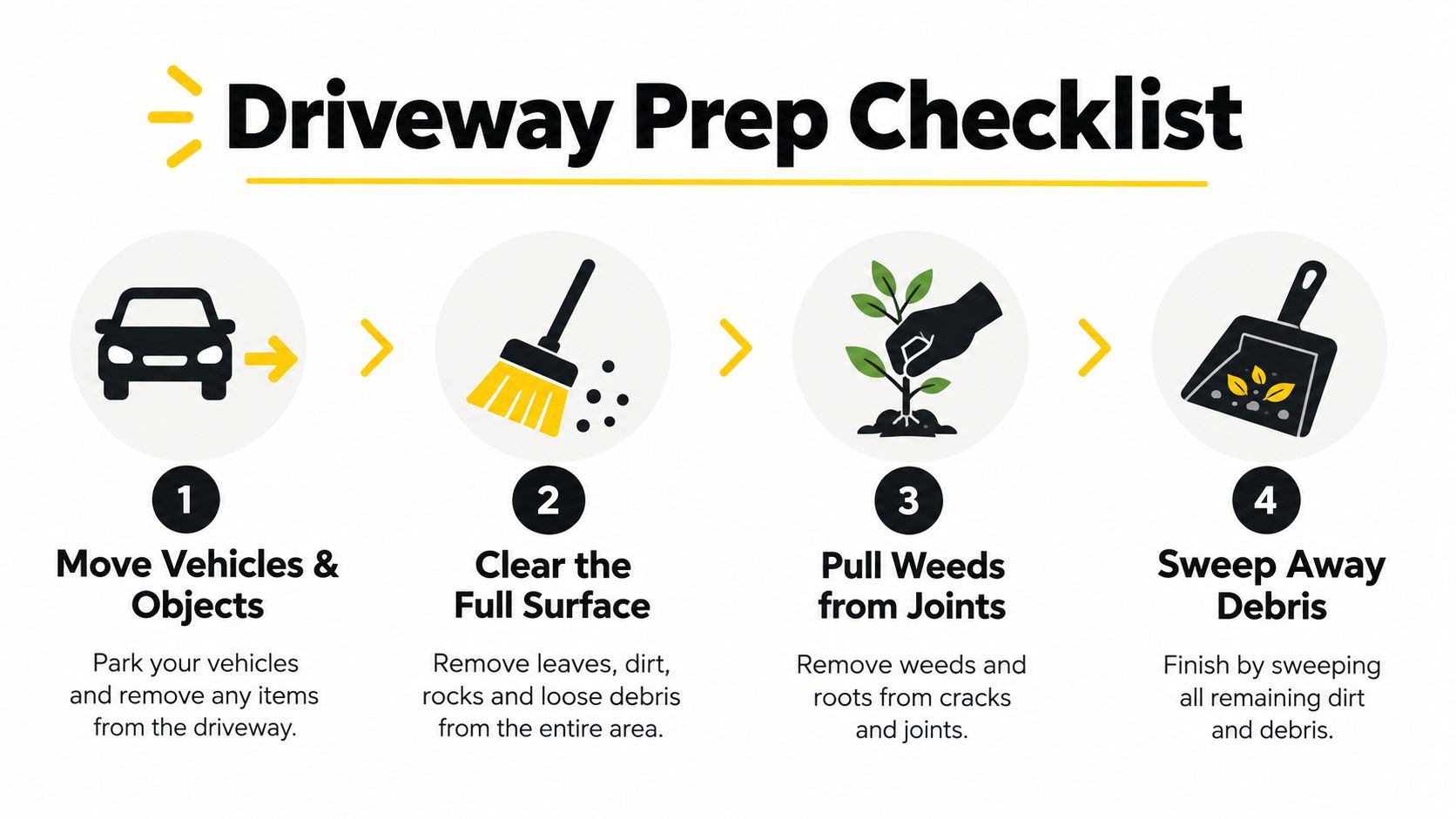
Chemical preparation starts before the sprayer comes out. Move vehicles, potted plants, basketball hoops, trash bins, hoses, and other objects away from the driveway. Exposing the full surface prevents missed strips and gives runoff fewer places to collect around stored items.
Pull weeds from expansion joints and cracks where roots hold moisture and debris. Then sweep or blow away pine needles, grit, leaves, and loose soil. Cleaner applied over dust may sit on top rather than reaching the concrete and the stain beneath it. Mechanical preparation is also recommended in practical driveway-cleaning guidance from Klein Pressure Washing.
Protecting the edges
Wet nearby grass, shrubs, and other plantings with clean water before applying any solution. Pre-wetting dilutes accidental overspray before it reaches leaves or roots. Wet metal fixtures, downspouts, air-conditioning condensers, and other nearby surfaces as well, since chemical splash can mark or corrode sensitive materials.
Use breathable tarps for delicate items that must remain near the work area. Plastic sheeting can trap heat against plants and finishes, especially in direct Colorado sun. Keep the covering secure without creating a channel that sends concentrated chemical runoff toward landscaping.
Finish with a dry sweep and a short inspection. Mark the oil spots, organic growth, rust marks, tire scuffs, and heavily trafficked lanes so each area receives the cleaner intended for it. If snow has left packed debris at the driveway entrance, clear it methodically, much as you would clear deep snow with a 2 stage approach, rather than pushing a wet, gritty mass across clean concrete.
Matching the Right Cleaner to Each Stain Type
Start with the stain and driveway material. Petroleum marks need an alkaline degreaser, organic growth usually needs sodium hypochlorite, and rust calls for an oxalic acid product. Using bleach on every dark mark, or acid on every stain, can discolor decorative pavers, strip sealers, and weaken finishes.
Oil, grease, and transmission fluid respond best to a concrete-specific alkaline degreaser on dry concrete. Follow the label dilution and keep the product wet for its working time. Agitate stubborn areas with a stiff nylon brush. A second treatment is safer than mixing a stronger solution unless the label specifically permits it. On sealed or decorative concrete, test first and avoid harsh scrubbing that can dull the finish.
Algae, mildew, mold, and similar organic growth generally call for a sodium hypochlorite solution approved for the surface. Keep it wet during dwell, then rinse thoroughly. Protect nearby plants and avoid this chemistry on unsealed metal or sensitive decorative coatings. Leaf tannins can react differently, so test an inconspicuous area before treating the full driveway.
Rust from sprinkler runoff or metal contact needs an oxalic acid-based rust remover used according to its label. Never mix acid with bleach or degreaser, and use separate sprayers or rinse equipment when changing chemistry. Tire marks and rubber scuffs may respond to a butyl-based degreaser with short dwell and light agitation.
| Stain Type | Cleaner | Dilution | Dwell Time |
|---|---|---|---|
| Oil and grease | Concrete-specific alkaline degreaser | Follow label; use a stronger application only where the label permits | About 5–15 minutes, with heavier stains often needing the longer end, HMNDP |
| Algae, mildew, and mold | Sodium hypochlorite-based cleaner | About 2–4% for general concrete cleaning, with stronger organic-growth treatments often cited at 3–6%, Linea | About 5–10 minutes while kept wet |
| Rust | Oxalic acid-based rust remover | Per product label | Follow label, then rinse thoroughly |
| Tire marks and rubber scuffs | Butyl-based degreaser | Per product label | About 5 minutes |
Concrete pores, paver joints, asphalt binders, and sealed surfaces do not tolerate identical chemistry. Avoid strong solvents or aggressive acid on asphalt, and keep alkaline degreasers away from decorative coatings unless the manufacturer approves them. This concrete driveway pressure washing guide provides further guidance for selecting cleaners for concrete. Wear suitable protective equipment, test first, and keep each product separate from the others.
Applying Pretreatment Safely and Evenly
Apply the solution with a pump sprayer or downstream injector, covering the dry surface in overlapping passes. The goal is even coverage, not a heavy flood. Uneven application creates uneven dwell time, so some sections may brighten while others remain stained.
Keep the spray pattern controlled and work at a steady walking pace. For hand spraying, keeping the wand roughly 12–18 inches from the concrete helps distribute the solution consistently. Heavy oil spots can receive a second pass followed by gentle agitation with a stiff nylon brush, but scrub before the product dries.
Break a large driveway into manageable sections of roughly 200 square feet. That makes it easier to monitor the dwell window and rinse each area while the solution remains active. If wind or sun begins pulling moisture away too quickly, mist the surface lightly with clean water, provided the product label allows that adjustment.

Keeping chemistry under control
Don't let sodium hypochlorite, degreaser, or acid dry on the driveway. Drying can leave residue, create hazing, or concentrate chemistry in the pores. Rinse the sprayer between cleaners, especially before switching from an alkaline degreaser to an acid-based rust remover.
Keep clean water nearby for accidental skin contact, and wear gloves, eye protection, closed-toe footwear, and clothing suitable for chemical work. Protect siding, vehicles, garage doors, and landscaping from overspray. A surface cleaner should handle the broad rinse, while a controlled wand pass can reach edges, corners, and expansion joints.
The following video demonstrates the general relationship between mixing, application, dwell, and rinsing:
Adjusting for Driveway Material and Climate
A Colorado driveway can look clean after pressure washing and still suffer damage if the pretreatment does not match its surface. Bare, broom-finished concrete usually tolerates a properly diluted alkaline degreaser or sodium hypochlorite cleaner. Stamped and sealed concrete need gentler chemistry and shorter contact time. Pavers raise joint-sand concerns, while asphalt can react badly to solvents or acids that affect its bitumen binder.
| Material | Safe Pretreatment | Dwell Time | Avoid |
|---|---|---|---|
| Bare concrete | Label-directed alkaline degreaser or diluted sodium hypochlorite matched to the stain | Use the relevant stain window and keep wet | Excessive pressure, dried chemical, untested strong mixes |
| Stamped concrete | pH-neutral cleaner suitable for the finish | Shorter, label-directed dwell | Aggressive bleach, acid, harsh agitation, sealer stripping |
| Sealed concrete | Manufacturer-approved cleaner | Conservative dwell with close monitoring | Strong chemistry that can whiten or soften the sealer |
| Pavers | Paver-safe cleaner that won't harm joint sand | Short, controlled dwell | Products that loosen joint material or aggressive rinsing into joints |
| Asphalt | Asphalt-safe detergent or degreaser approved for the surface | Label-directed dwell | Solvents, acid, and harsh heat or pressure |
Match the treatment to the stain as well as the material. Oil on bare concrete may need an alkaline degreaser, while organic growth may respond to a properly diluted sodium hypochlorite cleaner. Rust requires a suitable rust remover, not an improvised acid mix. Keep acid away from stamped, decorative, and sealed finishes unless the manufacturer specifically approves it.
Colorado's dry air and strong sun can shorten the wet working window. Apply in early morning or shade when possible, especially on a west-facing slab. Wind can carry spray onto siding, vehicles, and landscaping, so wait for calmer conditions rather than compensating with a stronger mix.
Freeze-thaw weather makes a complete rinse especially important. Residue left in pores or paver joints can create problems as temperatures drop. If the surface is sealed, stamped, or badly weathered and you cannot identify the finish, have it assessed before cleaning. Guidance on replace your residential driveway can help place surface condition in context, while this guide to driveway cleaning and sealing covers how cleaning and protection work together.
Common Pretreatment Mistakes That Damage Concrete
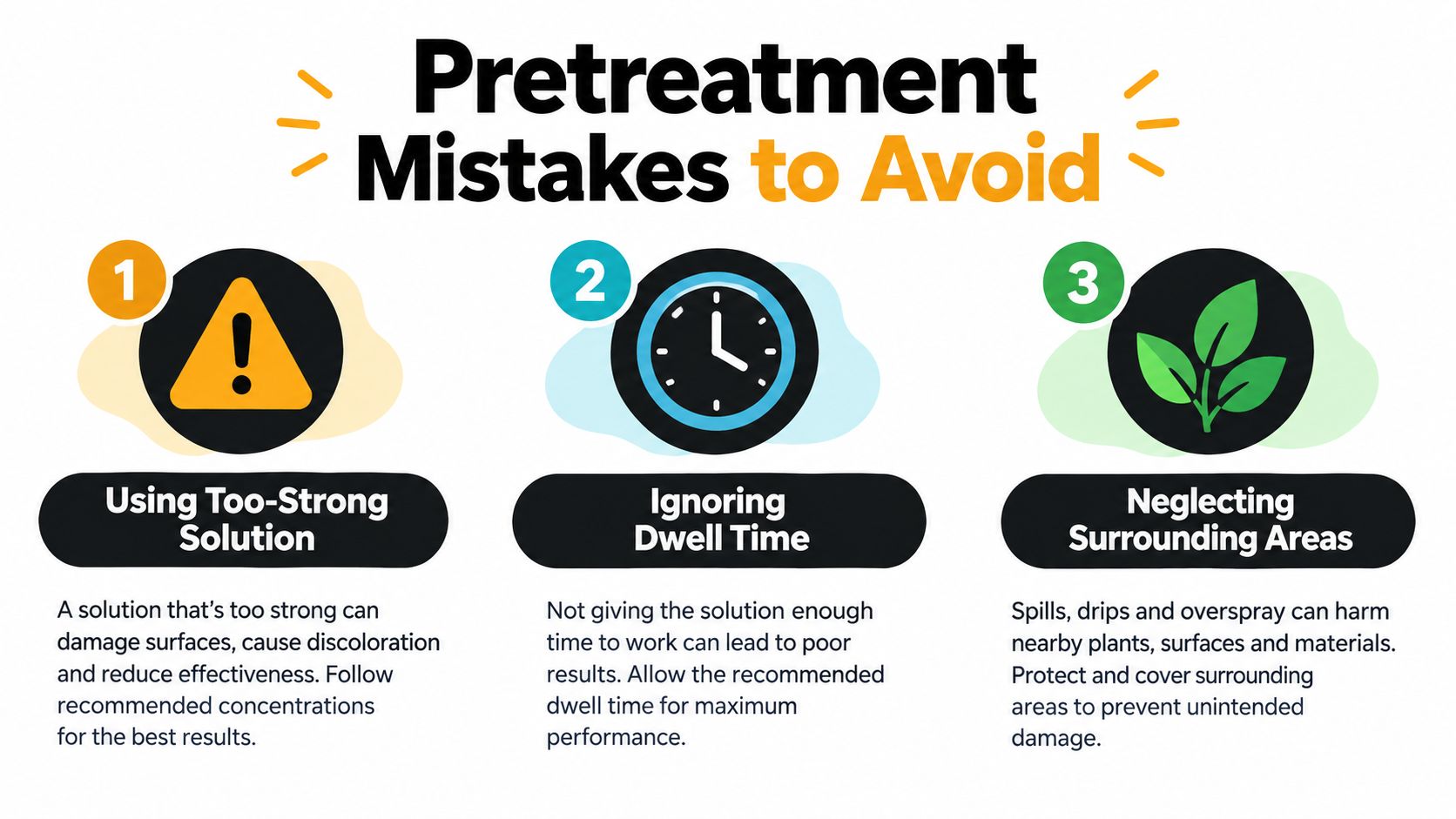
A strong chemical mix can damage a driveway faster than it cleans one. Exceeding the label ratio may etch bare concrete, strip a sealer, discolor decorative work, or injure nearby turf. Use the product's stated dilution and control the dwell time. Surface and stain still matter: alkaline degreaser suits oil on bare concrete, diluted sodium hypochlorite can address organic growth, and rust needs a compatible rust remover. Keep acid off stamped, decorative, or sealed finishes unless the manufacturer approves it.
Never let pretreatment dry on the slab. Drying can leave white haze or concentrated residue, and the rinse may spread it or force loosened soil into pores. Colorado's dry air and strong sun make early-morning or shaded application safer, particularly on a west-facing slab. Wind can carry spray onto siding, vehicles, and plants, so wait for calmer conditions instead of mixing stronger chemistry.
Errors that deserve a hard stop
- Mixing incompatible cleaners: Never combine acid and bleach. Keep products separate, and rinse equipment before changing chemicals.
- Using muriatic acid casually: It can burn the cream layer on decorative concrete permanently. Use a suitable labeled rust remover instead.
- Skipping a test spot: Age, porosity, finish, and sealer vary. Test a hidden corner first.
- Ignoring the surroundings: Protect dry plants, fixtures, open garage doors, and nearby vehicles from overspray.
- Relying on pressure alone: Pressure may remove surface color while leaving the stain below, and can create wand marks or etching.
The safer result usually comes from moderate chemistry, complete dwell, controlled agitation, and a thorough rinse, not the strongest mixture available.
Freeze-thaw conditions make residue removal especially important. Rinse pores and paver joints thoroughly, and have sealed, stamped, or badly weathered surfaces assessed when the finish is uncertain.
Runoff Safety and When to Call a Professional
Runoff planning belongs at the start of the job, not after dirty water reaches the street. The EPA advises keeping wash water and cleaning chemicals out of storm drains and surface waters. That means you need to understand where the driveway slopes and where the water will collect before applying degreaser, sodium hypochlorite, or an acid-based rust remover.
Use appropriate drain covers or rubber mats where permitted, and create containment along driveway edges with sand or absorbent socks. Keep contaminated water on the work area so it can be collected or managed properly. Don't hose detergent-laden runoff toward a curb inlet or gutter. Sweep or vacuum small puddles rather than pushing them into the street.
Protecting landscaping and choosing help
Pre-wet grass and shrubs before chemical application, and use breathable covers where plants are close to the work area. Dilution at the leaf surface is safer than allowing concentrated overspray to dry. Containment becomes more important when the driveway has heavy oil, broad organic growth, or a slope leading directly to a drain.
A professional evaluation makes sense when:
- Oil covers a broad area: Recurring petroleum stains need targeted treatment and may require repeated controlled applications.
- The material is uncertain: Pavers, sealed concrete, and decorative finishes can be costly to repair after the wrong chemical or pressure setting.
- Organic growth is widespread: Black mold, algae, and mildew across shaded areas require careful plant protection and even application.
- Runoff cannot be contained: If you can't safely keep wash water away from storm drains and surface waters, stop rather than improvising.
- The surface is already failing: Flaking, cracks, exposed aggregate, and deteriorated joints need a condition assessment before washing.
Cultivate House Detailing handles driveway pressure washing alongside other exterior cleaning work for properties in Colorado Springs and nearby communities. The team also provides residential and commercial window cleaning, screen repair, gutter cleaning, fire-mitigation clearing, and cleaning for patios, walkways, siding, and driveways. For homeowners, property managers, and local businesses, matching the method to the surface and controlling runoff is more important than just turning up the machine.
If your Colorado Springs driveway has oil, algae, rust, or winter buildup, Cultivate House Detailing can assess the surface, match the pretreatment to the material and stain, and complete the pressure washing with careful protection for your landscaping. Visit the company to request a quote or schedule driveway and exterior cleaning for your home or business.
Rather not do it yourself? Cultivate House Detailing offers pressure washing in Colorado Springs. Get a free quote.