You're looking out through a hazy window toward Pikes Peak, but the view is muted by dust, pollen, water spots, and grime. The driveway has dark tire marks, the siding looks tired, and the patio hasn't had a proper rinse since last season. A residential pressure washing service in Colorado Springs can correct those problems, but only when the crew treats each surface differently.
Professional exterior cleaning isn't a contest to see how much pressure a machine can produce. It's a controlled process that combines surface assessment, detergents, rinse water, tools, access planning, and runoff management. Whether you're searching for window cleaning near me, exterior window washing, siding cleaning, or a complete house wash, the right provider should protect the materials while improving the appearance of the property.
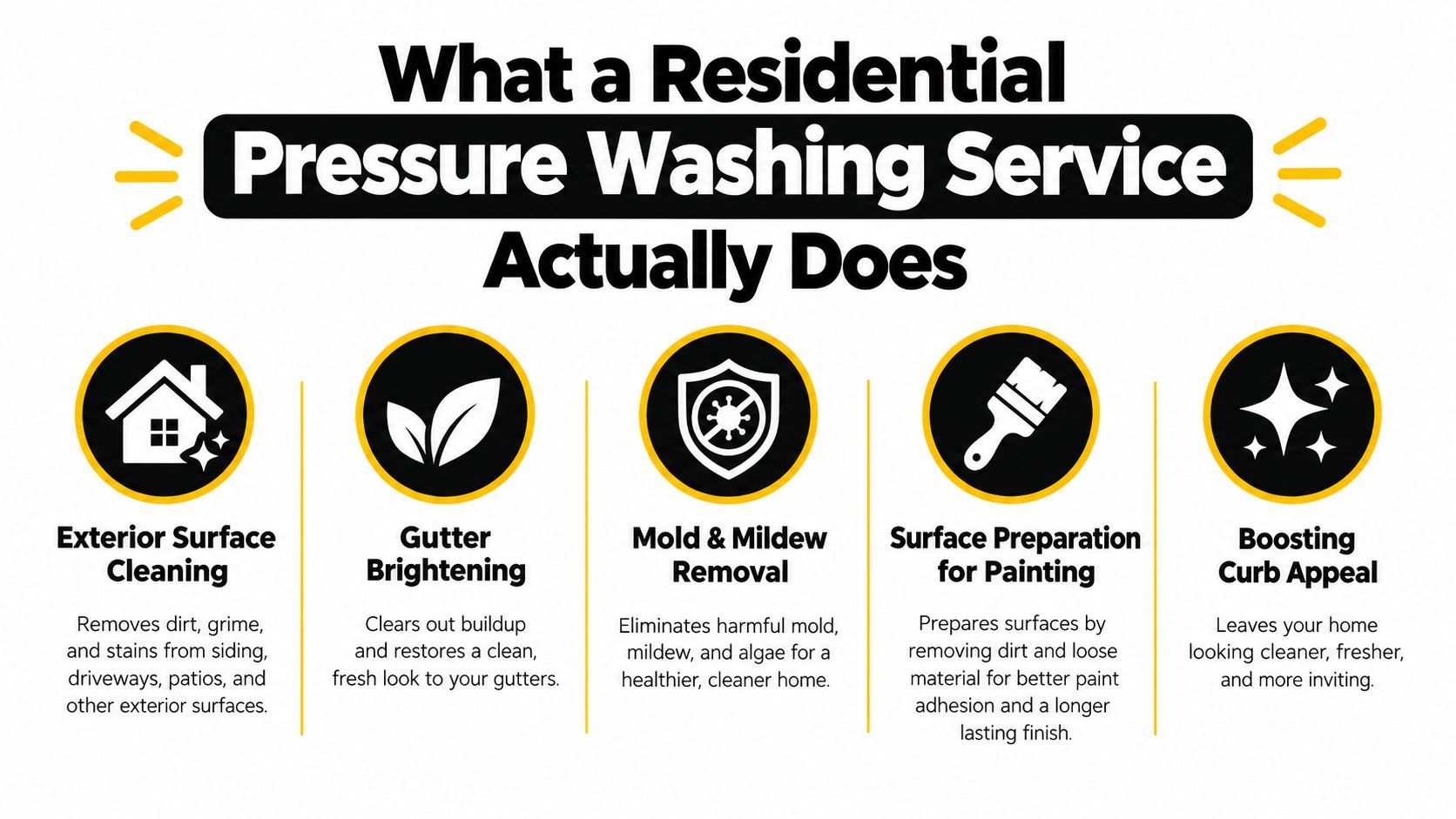
What a Residential Pressure Washing Service Actually Does
A proper visit starts before the wand touches the house. The technician looks at the siding, concrete, wood, windows, gutters, landscaping, drainage, and areas where old caulk or paint may already be failing. That assessment determines whether the job calls for soft washing, moderate pressure, hand detailing, or a combination of methods.
The equipment follows the surface
A professional crew may arrive with a trailer-mounted or truck-mounted pressure washer, downstream injectors, adjustable nozzles, surface cleaners, gutter-flush attachments, and exterior-safe detergents. Those tools don't all perform the same job. A surface cleaner helps produce an even result on flat concrete, while a downstream injector applies cleaning solution without forcing concentrated pressure directly onto delicate materials.
For siding, stucco, fiber-cement, and painted wood, low-pressure chemical cleaning is often safer than aggressive blasting. Concrete and aggregate can accept more pressure, while wood decks need a gentler rinse that won't raise the grain or strip a failing sealer. Windows usually receive a carefully controlled rinse and a separate detailing process, often with purified water or professional window-cleaning tools.
A written scope should make clear what's included. Common services include siding, walkways, patios, driveways, decks, fences, gutter exteriors, and exterior windows. Roof soft washing, interior window cleaning, screen cleaning, track cleaning, and hard water stain removal may be priced as add-ons.
Practical rule: The objective is to remove algae, pollen, dust, soot, and grime without damaging paint, sealants, mortar, window seals, or landscaping.
The broader market reflects why homeowners see this as recurring maintenance rather than a rare specialty service. A 2026 industry analysis estimated that residential work represents about 62% to 67% of pressure-washing revenue, with typical residential appointments priced at roughly $275 to $425 and taking 2 to 4 hours. The 2026 pressure-washing industry analysis provides that market context, but the quality of a local job still depends on matching the method to the home.
Why Colorado Springs Homes Need Exterior Cleaning So Often
A south-facing wall can look clean in spring and show baked-on dust by late summer. Colorado Springs exteriors deal with high-altitude sunlight, dry wind, airborne grit, and sharp weather changes, so buildup returns at different rates across the same property. Sun gradually weakens paint, caulk, and exterior sealants. Dust and organic debris settle on walls and hardscape, giving algae and mildew a place to develop where moisture remains.
Water leaves its own signature. Colorado Springs water measures 5 to 10 grains per gallon, ranging from moderately hard to hard, according to this Colorado Springs water-quality summary. Sprinkler overspray and runoff can deposit minerals on glass, concrete, and painted surfaces. Windows often need water treatment and controlled drying, while heavier deposits on masonry may require targeted removal rather than another quick rinse.
Freeze-thaw cycles add wear. Moisture enters small defects, freezes, expands, and leaves roughened spots that collect more dirt. South- and west-facing walls near Austin Bluffs or Briargate may show sun-baked grime and dark streaks sooner. Shaded north-facing walls tend to hold moisture longer, increasing the chance of mildew.
A surface-by-surface view
| Surface | Typical Buildup | Main Cause |
|---|---|---|
| Siding | Dust, pollen, algae, mildew, soot | Sun exposure, windblown debris, retained moisture |
| Concrete | Tire marks, soil, organic staining, mineral residue | Traffic, runoff, freeze-thaw wear |
| Decks | Dirt, pollen, gray weathering, organic growth | UV exposure, moisture, failing finish |
| Windows | Hard water spots, dust, sprinkler residue | Moderately hard to hard water and overspray |
The right service responds to each surface, not to the house with one pressure setting. Siding may need a low-pressure wash, concrete can usually tolerate stronger cleaning, and windows require tighter control to avoid spotting or seal damage.
Runoff control matters in a drought-conscious region. Nationwide's pressure-washing guidance explains that soap runoff should be controlled, storm drains blocked, solids screened, and wastewater directed to a sanitary sewer when required, with pH maintained between 6 and 10 before disposal. Good exterior cleaning protects the property and manages what leaves it.
What Happens During a Typical Service Visit
A dependable residential pressure washing service should feel organized from the first conversation. The provider reviews photographs or visits the property, measures relevant surfaces, and identifies access issues such as steep grades, narrow side yards, fragile landscaping, or limited drainage.
Before the cleaning begins
The estimate should become a written scope. It should identify the surfaces being cleaned, the proposed methods, any exclusions, access requirements, and the price for each component. If you want siding, a driveway, a deck, gutters, and windows handled together, those items should appear clearly instead of being bundled into an unclear total.
On arrival, the crew protects vulnerable areas. That can include pre-wetting nearby plants, placing drop cloths where appropriate, checking gutter and downspout flow, moving hoses away from delicate fixtures, and confirming that windows and doors are closed. The technicians should also ask about known leaks, loose boards, peeling paint, or previous repairs.
During and after the work
Cleaning normally proceeds from the safest upper areas downward. Siding may receive a detergent application and low-pressure rinse. Flatwork is commonly treated and cleaned with a surface cleaner, decks receive a controlled low-pressure rinse, and windows are often completed near the end so dust and overspray don't undo the glass work.
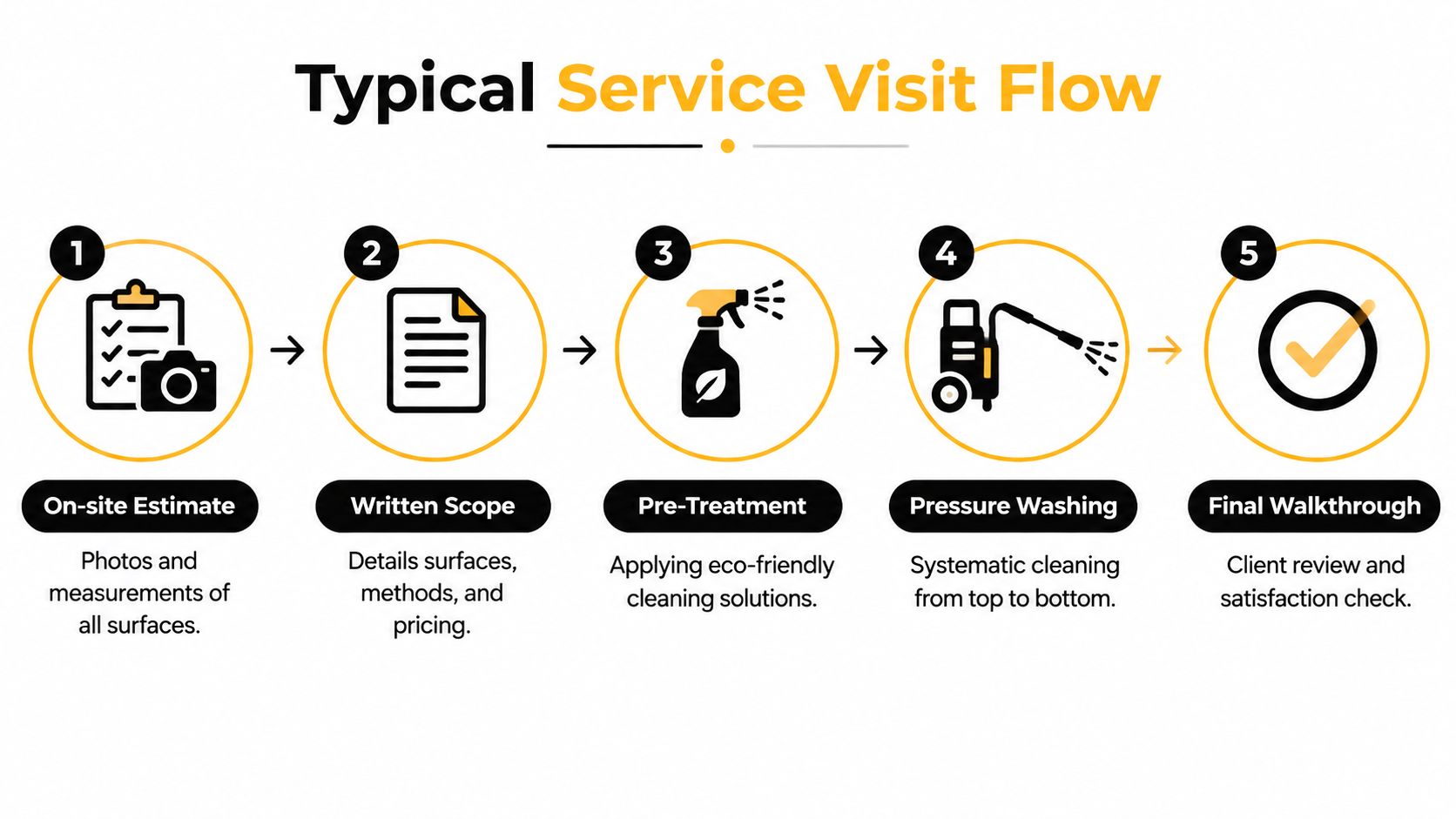
Detail work follows the main wash. Crews may address corners, trim, fixtures, gutter faces, entry steps, and visible spots such as oil drips or rust staining when those treatments are included in the scope. Specialty stains don't always disappear completely, so an honest technician will explain what the surface can safely tolerate.
A single-story home of about 2,000 square feet commonly takes 2 to 4 hours, while a project involving several surfaces may occupy a full day. Those time ranges are included in the service planning guidance for this job type, not a guarantee for every property. The final walkthrough gives you an opportunity to inspect the work, ask questions, and identify an area that needs adjustment before the crew leaves.
Matching Pressure, Nozzles, and Soap to Each Surface
The most important technical decision isn't choosing the strongest machine. It's choosing the correct combination of pressure, flow, nozzle angle, detergent, distance, and dwell time for the material underneath the dirt.
Vinyl siding is a clear example. A common technical benchmark is 1,300 to 1,600 PSI with a 25° or 40° fan tip, applied from the bottom up and rinsed from the top down, as described in this surface-cleaning pressure guide. Spraying upward or getting too close to lap seams can force water behind panels, creating a risk of trapped moisture, hidden mold, and warping. A wider fan spreads force over more area and reduces the chance of substrate damage.
Concrete can tolerate considerably more force. A common benchmark for patios and driveways is 3,000 to 3,500 PSI, approximately 3 to 4 GPM, and a 15° to 25° nozzle, with the wand kept about 6 to 12 inches from the surface in overlapping passes. This concrete-cleaning guide explains the trade-off. Higher flow and moderate-to-high pressure improve rinsing and shear force, but lingering in one place can cause etching, wand marks, or aggregate exposure.
Consumer Reports gives a lower threshold for the same material. A machine capable of at least 1,500 PSI can clean concrete, while 2,500 to 3,000 PSI can speed the work considerably, according to Consumer Reports' surface guidance. The difference reflects efficiency, not permission to use maximum pressure everywhere.
Where pressure washing stops making sense
Aged decks, painted wood, stucco, roofs, and older seals may need soft washing instead. Roof cleaning guidance warns against treating a roof like a driveway and discourages zero-degree nozzles because concentrated jets can puncture or scar surfaces. This pressure-washing safety overview also identifies siding seams, window and door perimeters, vents, and exterior penetrations as common water-intrusion points.
Windows need a controlled rinse and careful drying, especially where hard water has left mineral deposits. A provider may combine screened detergent, purified water, squeegee work, or spot treatment depending on the glass. For a clearer explanation of the difference between methods, see this guide to soft washing versus pressure washing.
A technician should test an inconspicuous area, adjust distance and angle, protect plants, and manage runoff. The right process leaves the surface clean without making the homeowner pay for damage caused by an overly simple machine setting.
What Drives the Price of a Residential Pressure Washing Service
A quote depends on the work involved, not just the home's street address. Surface area, material, condition, access, and the number of services requested all affect labor, chemical use, setup, and cleanup.
A small property with lightly soiled vinyl siding may be straightforward. A larger home with second-story walls, heavily shaded sections, rust marks, oil-stained concrete, deck railings, and difficult drainage requires more preparation and detail work. Quotes may be based on exterior dimensions, linear feet of siding, or the number and type of surfaces included.
| Pricing Factor | Why It Changes the Quote | Homeowner Note |
|---|---|---|
| Home size | More wall and hardscape area requires more labor and solution | Ask whether the estimate uses measurements or a visual range |
| Surface mix | Concrete, wood, stucco, glass, and roofs need different methods | Make sure each surface appears as its own line item |
| Access | Second stories, steep grades, gates, and tight staging areas slow setup | Mention obstacles before the appointment |
| Condition | Heavy algae, pollen, rust, oil, or baked-on grime may need pretreatment | Ask what results are realistic for permanent staining |
| Add-ons | Windows, gutters, roofs, decks, and screens expand the scope | Confirm whether add-ons are optional or included |
Second-story walls, steep terrain, delicate stucco, roof soft washing, window cleaning, gutter brightening, and furniture movement can all change the workflow. Limited water access, equipment staging, drainage concerns, and local restrictions may affect the quote as well. Colorado Springs hard-water deposits and intense sun exposure can make some areas slower to restore, especially where mineral residue has bonded to glass or concrete.
Routine home exterior cleanings often fall in the low hundreds, while larger homes, multiple surfaces, or specialty treatments can reach the high hundreds or more. Those are broad budgeting descriptions rather than a promise of a local price. Request an itemized estimate that separates siding, driveways, patios, decks, windows, and roofs.
For homeowners comparing individual services, Estimatty's resource on pressure washing add-on rates can help explain why a driveway, deck, or window package changes the final quote. You can also review this overview of pressure washing pricing per square foot before requesting estimates.
How to Prepare Your Home and Maintain the Results
A smooth visit starts before the crew loads in. Move vehicles from the driveway, bring patio furniture and toys indoors, clear objects from exterior walls, close windows and doors, and secure pets.
Your pre-service checklist
- Move vehicles: Leave room for hoses and surface-cleaning equipment.
- Protect fragile items: Remove decorations, planters, and delicate porch objects.
- Clear the walls: Move belongings away from siding, fences, and garden-bed edges.
- Expose access points: Keep gutters, downspouts, gates, outdoor spigots, and electrical outlets reachable.
- Secure pets: Keep dogs and other animals indoors while detergents and equipment are in use.
- Share concerns: Identify loose deck boards, peeling paint, damaged siding, leaking faucets, repaired areas, wells, drainage channels, and water features.
Tell the contractor about irrigation schedules. Depending on the cleaning method, weather, and plant-protection plan, the crew may suggest running irrigation before or after the visit. Mark delicate plants so technicians can protect drought-stressed landscaping and avoid unnecessary water exposure.
A professional should protect plants, cover sensitive fixtures when appropriate, and complete a walkthrough before leaving. After washing, let siding, decks, and concrete dry fully. Check for missed areas, chemical residue, or signs of water intrusion before placing belongings against the walls again.
After-service observation: Do not seal a deck immediately after washing. Wood may need several dry, low-humidity days, and Colorado's intense sun can dry boards unevenly.
Maintenance keeps a clean exterior from turning into another major cleanup. Rinse dirt from entryways, trim trees and shrubs away from siding, keep gutters on schedule, and correct irrigation overspray that deposits hard-water minerals on glass or concrete. High-altitude sun, dust, pollen, shade, and storm exposure all affect how long the result lasts, so a recurring cleaning schedule should follow the condition of each surface.
Runoff also deserves attention. Keep wash water, loosened debris, and cleaning solution away from storm drains and areas where it could affect plants or neighboring property. A careful crew should explain its runoff plan before work begins.

How to Choose a Trusted Local Provider in Colorado Springs
A reliable provider should answer practical questions before you book. Ask for proof of general liability insurance and workers' compensation coverage. That documentation helps protect you if a technician falls, damages a fixture, or creates a water-related problem.
The cleaning method matters just as much. A company that uses maximum PSI for every surface may be treating your home like a concrete slab. Look for soft-wash alternatives for siding, roofs, painted surfaces, stucco, and aging materials, along with a willingness to test a small area first.
Questions worth asking
- What will you clean? The estimate should list siding, concrete, decks, windows, gutters, and any exclusions separately.
- How will you handle runoff? Ask whether dirty water is redirected, captured, screened, or kept away from storm drains.
- How do you protect landscaping? The answer should address xeric plants, garden beds, shrubs, and drought-stressed areas.
- What causes hard-water spots? A knowledgeable window cleaner should explain treatment and drying rather than promising that every stain will vanish.
- What happens if a surface is already failing? Good providers identify loose paint, deteriorated caulk, weak wood fibers, or damaged mortar before cleaning.
- What documentation do you provide? Written scopes, clear invoices, care notes, and warranty terms show that the operation has systems.
Look for local before-and-after photographs, reviews that describe specific crews or services, and direct answers about detergent safety around pets and gardens. Avoid door-knockers who pressure you into immediate decisions, cash-only operators who won't provide a written scope, and providers who bundle work you didn't request.
Marketing materials can look polished without revealing how a crew works onsite. Pipeline On's guide to pressure washing ads is useful background for understanding how providers present their services, but homeowners should still verify insurance, methods, reviews, and scope independently.
For Colorado Springs residents, the right local conversation should include hard-water spotting, sun exposure, runoff control, and protection of water-conscious landscaping. Cultivate House Detailing provides pressure washing for patios, walkways, siding, and driveways alongside residential and commercial window cleaning, so homeowners can discuss related exterior surfaces with one provider.
Ready to Book Your Residential Pressure Washing Service
Booking becomes easier when you define the scope before requesting a quote. Make a list of the surfaces you want addressed, such as vinyl siding, the driveway, a back deck, gutter exteriors, and windows. Include reference photos of algae streaks, oil drips, rust marks, hard-water spotting, or areas that are difficult to reach.
Ask for a written estimate that identifies each surface, the cleaning method, expected duration, preparation requirements, and any exclusions. If you're comparing quotes, make sure one provider hasn't included windows or gutters while another has priced them separately. A lower total may only reflect a smaller scope.
Details to confirm before the appointment
- Weather window: Colorado Springs afternoons can bring sudden gusts. Morning scheduling often gives detergent more consistent dwell time and helps keep overspray manageable.
- Water access: Confirm whether the crew needs an outdoor spigot, a specific hose connection, or another water arrangement.
- Electrical access: Ask whether an exterior outlet is needed for window-cleaning equipment or detailing tools.
- Arrival window: Get a realistic time range and a contact method for weather-related changes.
- Property access: Move patio furniture, close windows, secure pets, open gates, and identify areas the crew shouldn't enter.
- Care instructions: Keep the invoice and post-service notes so you can plan seasonal maintenance.
For siding, many homeowners schedule service on a 12- to 18-month cycle, with shaded north-facing walls often needing attention sooner. The right interval depends on how quickly dust, pollen, moisture, mineral residue, and organic growth return to your specific property.
If you're looking for window cleaning in Colorado Springs, CO, professional window cleaning, exterior window cleaning, interior window cleaning, screen cleaning, or a complete residential pressure washing service, request a quote with the full surface list. A provider should be able to explain which areas need pressure washing, which need soft washing, and which are better handled with dedicated window-washing tools.
Cultivate House Detailing offers residential pressure washing for Colorado Springs patios, walkways, siding, and driveways, along with streak-free exterior and interior window cleaning. Visit Cultivate House Detailing to request a quote, describe the surfaces you need cleaned, and schedule a careful local service.
Rather not do it yourself? Cultivate House Detailing offers pressure washing in Colorado Springs. Get a free quote.