If you're looking at dust-caked siding, black roof streaks, or a driveway that makes the rest of the house look tired, you're not alone. Around Colorado Springs, homes take a beating from wind, sun, snow, pine debris, and fast weather swings. What starts as “just dirty” can turn into staining, organic growth, and premature wear if it sits too long.
Most homeowners end up comparing soft washing vs. pressure washing at exactly this point. The problem is that the wrong method can do more harm than good. A strong spray might clean concrete beautifully, but it can also scar wood, strip paint, force water behind siding, or damage roofing materials if used in the wrong place.
That choice matters because exterior cleaning is a large, established service category. One industry summary says the global pressure washing market was estimated at $1.88 billion in 2019, grew to about $2.5 billion by 2021, and is projected to reach $3 billion by 2026, with the United States home to more than 22,000 pressure washing businesses employing over 33,000 people, according to pressure washing industry statistics and facts. In other words, this isn't a niche decision. It's a standard part of protecting a home.
Is Your Home's Exterior Ready for the Colorado Climate
A lot of homeowners notice the same pattern. The south and west sides get baked by intense sun. The north side stays damp longer after storms and starts showing dark streaks or green buildup. Roof valleys collect pine needles. Gutters hold debris. By late summer, the whole exterior can look dull even if the home is otherwise well cared for.
In places like Black Forest, Monument, and the edges of Colorado Springs, that buildup isn't only cosmetic. Pine litter on roofs and around exterior edges can become part of a bigger maintenance issue, especially when you're already thinking about defensible space and seasonal cleanup.
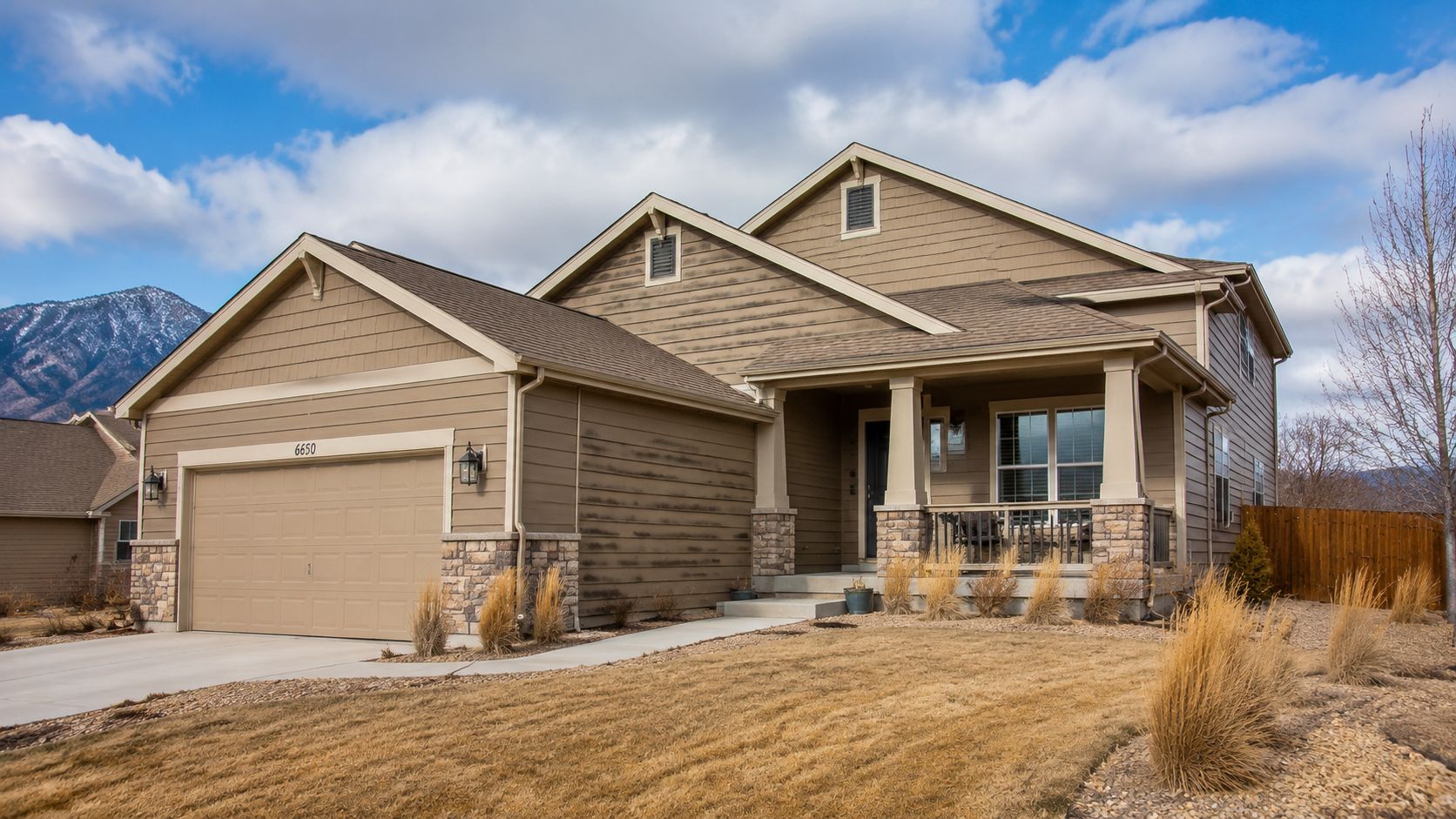
Trying to fix it yourself often starts with a hose, then a rented machine, then a lot of guessing. Homeowners scrub too hard, spray too close, or assume every stain needs more force. That's usually where damage happens. Siding gets etched. Window seals get stressed. Water gets pushed where it shouldn't go.
What Colorado weather does to exterior surfaces
Colorado Springs creates a strange mix of cleaning problems because the climate isn't gentle and it isn't consistent.
- Wind-blown dust: Fine grit settles on siding, trim, and window frames.
- Fast freeze-thaw cycles: Moisture works into tiny gaps and weak spots.
- High-altitude sun: Finishes fade faster, and neglected grime becomes more visible.
- Organic buildup in shaded areas: North-facing walls and roof sections often hold onto discoloration longer.
A clean exterior isn't just about appearance. It gives you a better chance of catching failing caulk, worn paint, clogged gutters, and problem spots before they turn into repairs.
The right answer usually comes down to matching the method to the material. Some surfaces need a gentle, chemistry-based wash. Others need the cleaning power of high-pressure water. Knowing the difference is what protects the house instead of just blasting at the symptoms.
The Core Difference Pressure vs Chemistry
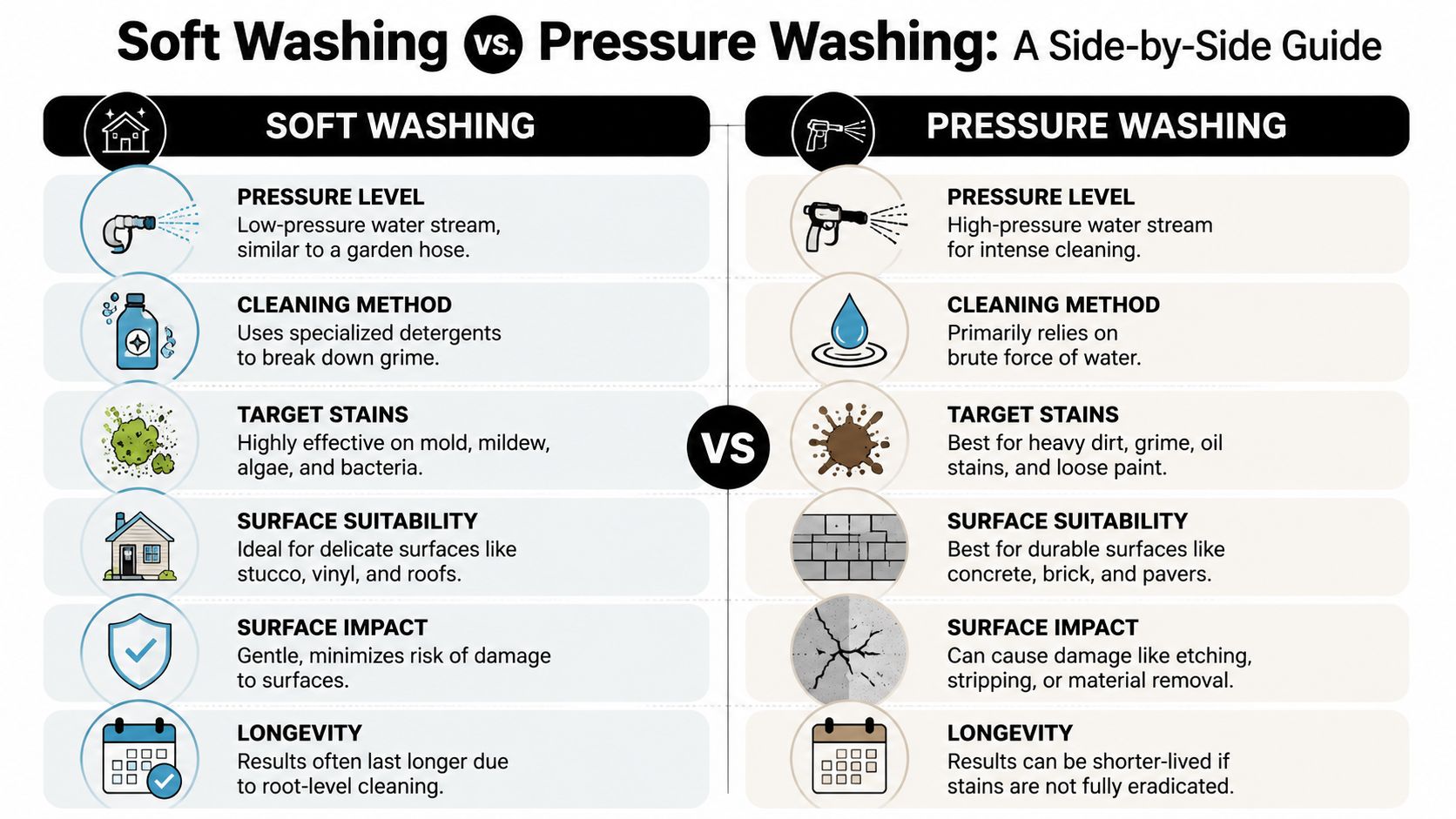
The shortest explanation is this. Pressure washing uses force. Soft washing uses cleaning chemistry and low pressure.
That sounds simple, but it changes everything about which method belongs on your home.
| Method | How it cleans | Best use | Main risk |
|---|---|---|---|
| Soft washing | Low-pressure application plus cleaning solutions | Roofs, siding, painted surfaces, stucco, delicate exterior materials | Poor chemical handling if done carelessly |
| Pressure washing | High-force water stream removes buildup mechanically | Concrete, stone, some metal, hardscape surfaces | Surface damage if used on delicate materials |
Pressure washing uses raw force
Pressure washing is often the first method considered. It relies on a concentrated stream of water to knock dirt, mud, loose paint, and surface grime off a hard material.
A key technical distinction is pressure level. Soft washing is generally defined as 500 PSI or less, while pressure washing commonly runs around 1,300 to 4,000+ PSI, according to MTM Hydro's explanation of soft washing and pressure washing. In practical terms, pressure washing can use roughly 3x to 8x+ more force than soft washing.
That's why concrete handles pressure well while a roof or painted lap siding may not.
Soft washing treats the cause, not just the stain
Soft washing works at low pressure and leans on cleaning solutions to break down grime and kill organic growth. On surfaces with algae, mildew, or similar staining, the goal isn't to blast the mark off. The goal is to treat what's growing there so the surface can be cleaned without abuse.
Think of it this way. Pressure washing is like using a stiff scraper on a hard surface. Soft washing is more like applying the right cleaner, letting it work, and rinsing carefully.
For homeowners dealing with shaded siding or roof staining, that's why a dedicated soft wash house cleaning service makes more sense than turning up the machine.
Practical rule: If the surface is fragile, painted, finished, or part of the building envelope, more pressure usually isn't the smarter answer.
The biggest mistake homeowners make is assuming “dirtier” means “needs more PSI.” In reality, the right method depends on what the material is and what the stain is.
Comparing Methods Side by Side
When homeowners ask about soft washing vs. pressure washing, they usually want one answer. Which one is better? The honest answer is that each method is excellent when used in the right place and a bad idea when used in the wrong one.
Which one cleans better
For organic staining, soft washing usually wins. If you're dealing with algae, mildew, lichen, or dark biological streaks, a low-pressure treatment can address the growth itself instead of only removing the visible layer.
For embedded dirt and hard-surface grime, pressure washing is often the better tool. Concrete driveways, pavers, retaining walls, and some masonry surfaces respond well to mechanical cleaning power.
That difference matters because not every ugly surface is dirty in the same way. A green film on siding is a different problem than compacted grime on a walkway.
Which one is safer for the surface
The trade-off is significant: Pressure washing cleans aggressively, but that same force can mark or remove material. On the wrong setting, with the wrong tip, or from too close a distance, it can leave visible damage.
Soft washing is gentler on delicate exteriors because it doesn't depend on brute force. That's especially important for roofs, painted trim, vinyl siding, stucco, and aged materials that already have some wear.
A simple perspective:
- Choose soft washing when the material can be damaged by force.
- Choose pressure washing when the material is tough enough to handle it.
- Avoid guessing when the surface is older, brittle, or already compromised.
Which one lasts longer
If a stain comes from living growth, soft washing usually gives a longer-lasting result because it addresses the source. Pressure washing may make the surface look clean quickly, but if the underlying growth isn't treated, the problem can return sooner.
On a concrete slab, longevity works differently. There, the issue may be tracked-in dirt, clay, or surface grime. Pressure washing can be the more durable solution because the surface itself can handle the method.
The longest-lasting clean usually comes from matching the method to the stain, not from choosing the strongest machine.
Water, chemistry, and site conditions
Homeowners sometimes assume soft washing is automatically safer in every sense because it's gentler on the material. That's only partly true. It reduces mechanical risk, but it also introduces cleaning solutions that must be handled correctly around plants, pets, drains, and nearby surfaces.
Pressure washing avoids that chemistry-focused concern in many cases, but it can create its own mess by driving dirty runoff across patios, flower beds, and adjacent areas.
If you're also comparing costs for large screened enclosures or adjacent outdoor structures, these price breakdowns for pool cages from Rescreen Rescue give a useful look at how exterior cleaning scope can vary by structure and condition.
Choosing the Right Service for Your Colorado Home
The easiest way to decide is to stop thinking about the whole property as one job. A Colorado home usually needs different cleaning approaches for different surfaces. Roofs are not driveways. Siding isn't the same as fencing. Glass needs its own process.
Roofs and upper exterior surfaces
Black streaks on asphalt shingles are one of the most common homeowner complaints. The instinct is to blast them off. That's exactly what shouldn't happen on most residential roofs.
Roofs need a gentle process that removes staining and organic growth without tearing into shingles, loosening granules, or forcing water into vulnerable areas. The same logic applies to fascia, soffits, and many upper trim surfaces where direct high pressure creates unnecessary risk.
If your home sits near pines or gets heavy debris buildup, roof cleaning also ties into general fire-season prep. Debris removal and surface-safe cleaning belong together.
Siding, stucco, painted trim, and wood
Colorado Springs homes have a wide mix of exterior materials. Vinyl, engineered siding, stucco, painted wood, and composite trim all respond differently to water and force, but most have one thing in common. They don't benefit from careless pressure.
Soft washing is usually the safer choice for:
- Vinyl siding: It can flex, crack, or allow water intrusion behind seams if sprayed improperly.
- Stucco: It holds texture and can be scarred or saturated if handled aggressively.
- Painted exteriors: Strong pressure can strip or lift weak paint.
- Older wood siding: It can fur, splinter, or absorb unwanted moisture.
For hardscape surfaces and selected exterior areas that need stronger cleaning power, a professional Colorado pressure washing service makes sense when the material can handle it.
Decks, fences, and outdoor living spaces
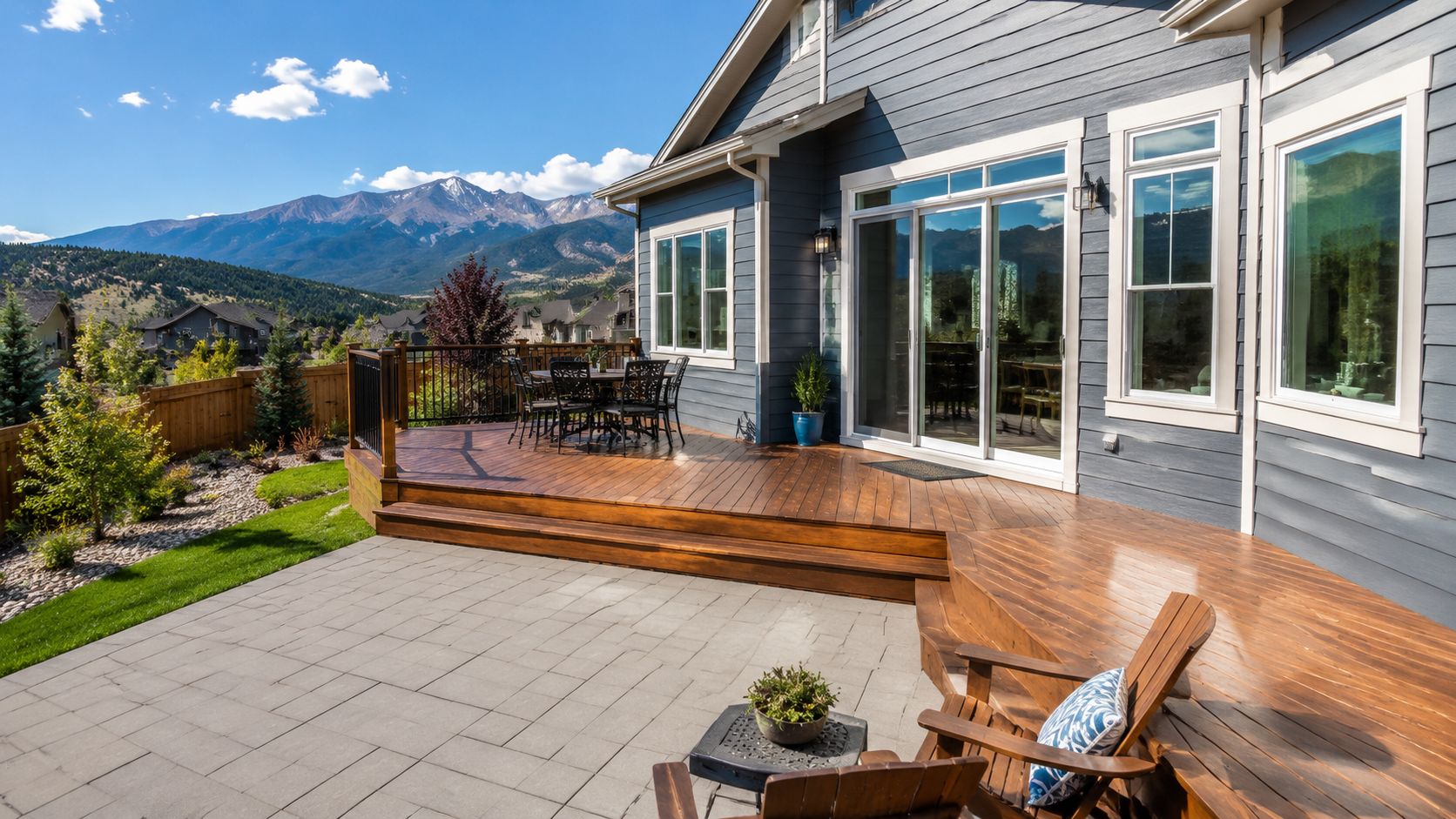
Wood decks require restraint. High pressure can leave lap marks, raise fibers, and turn a smooth walking surface rough. Composite decking has its own concerns, especially with surface texture and finish.
Fences are similar. A weathered cedar fence may look rugged, but it can still be damaged by too much force. In many cases, a lower-pressure approach with the right cleaner produces a more even result.
A patio area usually needs a split decision:
- The furniture zone and railings may need a gentler wash.
- The concrete pad may benefit from pressure washing.
- Nearby plants and decorative surfaces need protection during either process.
If one contractor recommends the same method for every exterior surface, that's a red flag. Good cleaning plans change from one material to the next.
Driveways, walkways, and retaining walls
Pressure washing typically proves most effective on surfaces like concrete. Concrete can hold onto mud, tire marks, grime, and winter residue in a way that siding never will. Hard surfaces generally respond well to a stronger mechanical clean, especially in high-traffic areas.
Walkways also matter for safety and appearance. A bright, clean entry path changes the look of the whole property. On textured concrete or stone, pressure washing can lift years of buildup that a soft wash alone won't fully remove.
Not every stain comes out perfectly, especially if oil or rust has sat for a long time, but pressure washing is typically the correct starting point for these surfaces.
Windows need a different approach
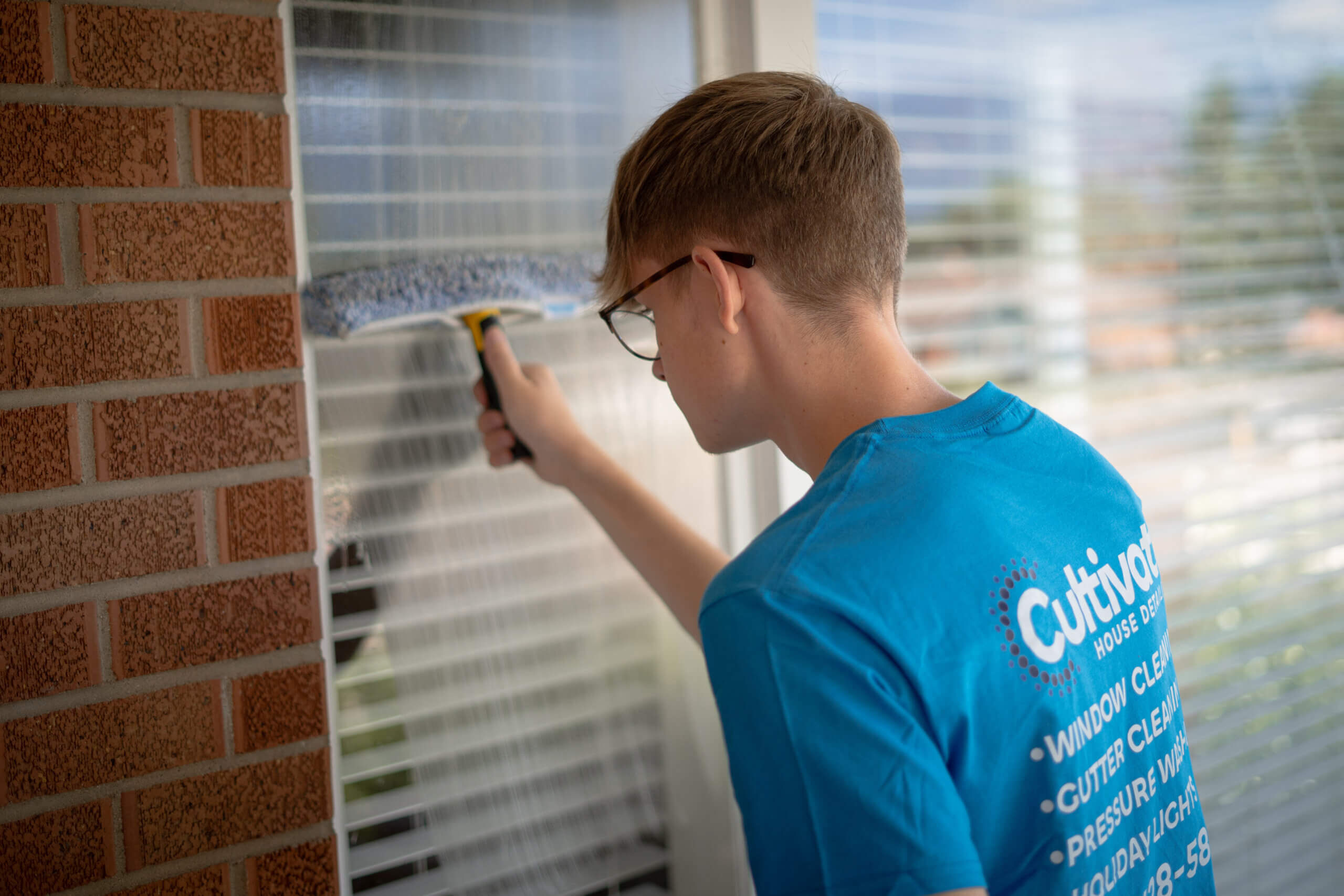
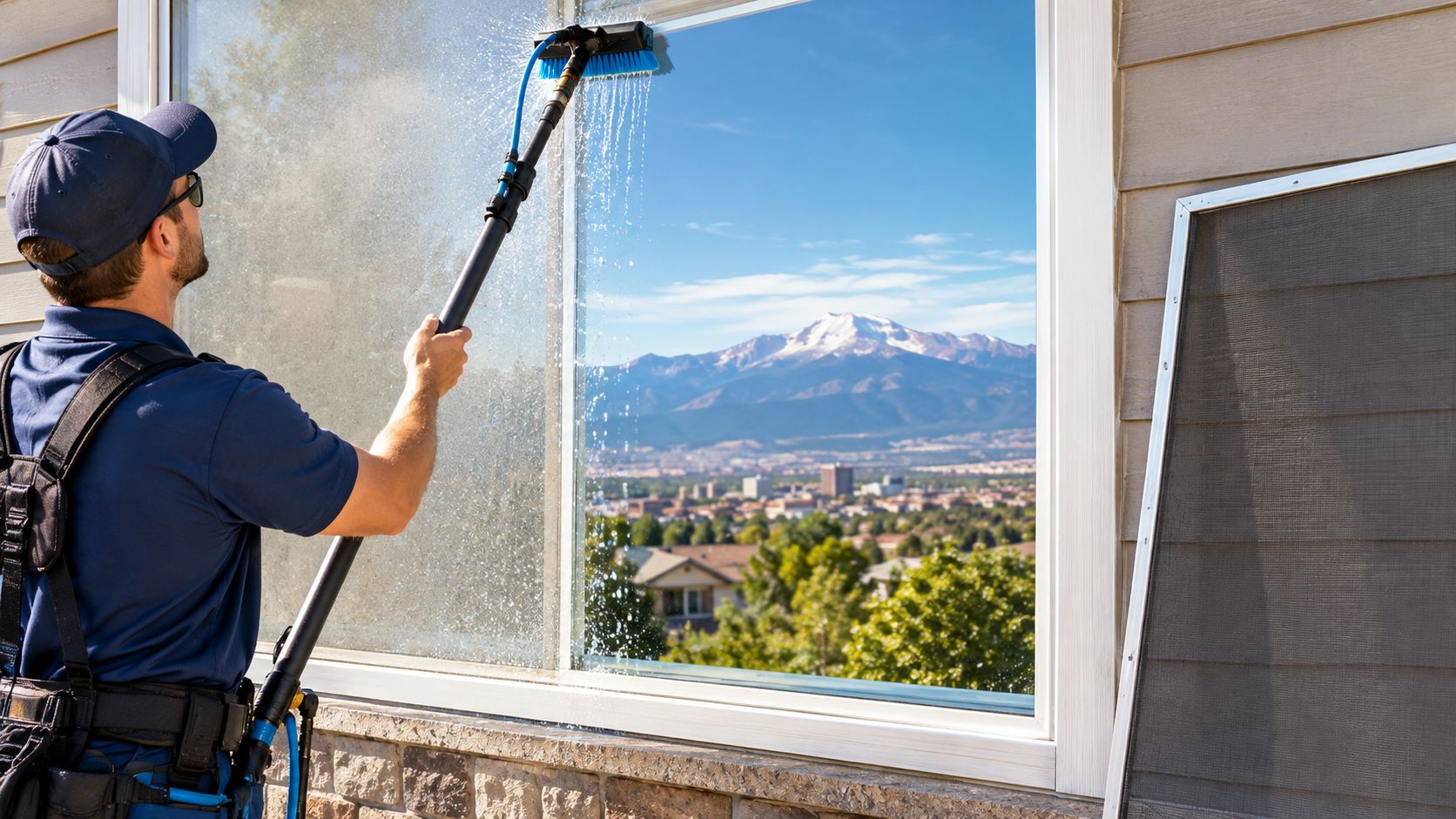
Neither soft washing nor pressure washing is the right finishing method for glass. Exterior cleaning can rinse around windows, but that doesn't replace professional window cleaning.
Windows need dedicated tools and technique for a streak-free result. That usually means purified water systems, proper squeegee work, frame detailing, and attention to screens and tracks when needed. It also means avoiding the common mistake of hitting glass seals and edges with unnecessary pressure.
For homeowners in Colorado Springs, this is one of the biggest distinctions worth remembering. A house wash and a window cleaning are related services, but they are not the same service.
Local Factors Wildfire Mitigation and Environmental Safety
Generic cleaning advice misses some of the biggest issues facing homes in the Pikes Peak region. Here, exterior maintenance is tied to weather exposure, tree debris, and in some neighborhoods, wildfire preparedness.
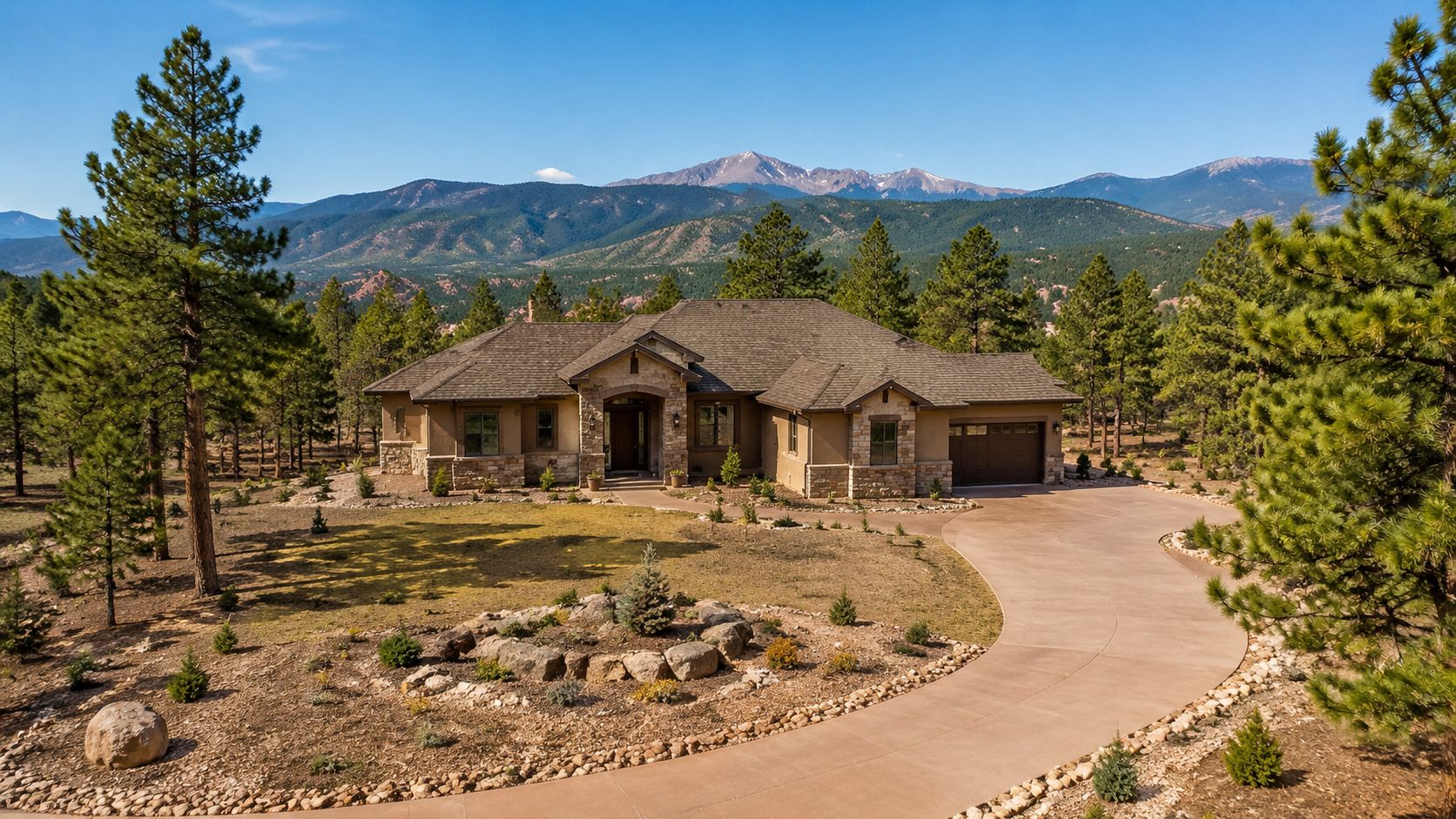
Why this decision is different in Colorado
Homes near wooded areas often collect pine needles in rooflines, gutters, corners, and behind trim details. Dust adds another layer. Shaded spots can hold organic buildup longer than homeowners expect, even in a generally dry climate.
Cleaning isn't wildfire mitigation by itself, but it supports the same goal. A maintained exterior is easier to inspect, easier to clear, and less likely to hide debris accumulation in problem areas.
That matters in communities where seasonal cleanup isn't optional. It's part of protecting the property.
Chemical handling matters as much as surface safety
One of the most overlooked parts of soft washing is that the method depends more on chemistry than pressure. A source focused on historic home safety notes that soft washing often uses bleach-based mixes and surfactants to kill organic growth, which means the better question isn't only which method is gentler, but which process is safer for the specific property, including landscaping, pets, and runoff conditions, as explained in this discussion of soft wash safety for site conditions and runoff concerns.
That is exactly why professional handling matters.
- Plants need pre-treatment and protection: Overspray and runoff can't be treated casually.
- Pets and occupants matter: Entry timing, access points, and rinse procedures need planning.
- Storm drains and downhill flow matter: The cleaning crew has to think about where solution travels.
- Windows, gutters, and adjacent finishes matter: One surface may tolerate a solution that another doesn't.
Gentler pressure doesn't mean zero risk. It means the risk shifts from force to process.
Why DIY goes sideways fast
Colorado homeowners are capable and hands-on, but exterior cleaning is one of those jobs that looks easier than it is. Rental machines give people a lot of pressure without much guidance. Store-bought chemicals often get applied without a clear plan for dwell time, runoff, plant protection, or material compatibility.
The local climate raises the stakes. Wind can carry overspray. Afternoon weather shifts can interrupt drying and rinse timing. Strong sun can speed up evaporation on one side of the house while shaded areas behave completely differently on another.
That's why the smartest approach isn't picking one method and using it everywhere. It's using the right method, with the right safeguards, for the specific site.
Your Next Step to a Cleaner Home with Cultivate
By this point, the decision is usually simpler than it first seemed. If you're looking at black roof streaks, algae on siding, or organic staining on a delicate surface, soft washing is typically the right path. If you're dealing with packed-in grime on a driveway, walkway, or other hardscape, pressure washing is usually the stronger fit.
For the rest of the house, the answer depends on the material, the stain, and the surroundings. That's especially true in Colorado Springs, where high sun, wind, debris, and mountain weather can turn a basic cleaning job into a surface-protection job.
A simple homeowner checklist
- Use soft washing for roofs, many siding materials, painted exterior surfaces, and places where force can cause damage.
- Use pressure washing for concrete, stone, and other durable surfaces built to take a stronger stream.
- Use dedicated window cleaning for glass, screens, and tracks if you want a clear, streak-free finish.
- Ask about runoff and plant protection before any soft wash service begins.
If you're building an annual maintenance routine, this annual home maintenance checklist from Northpoint Construction is a helpful companion because it puts exterior cleaning in the broader context of protecting the whole property through the year.
The main takeaway is straightforward. You don't need one cleaning method. You need the right method in the right place, handled with care.
If you're ready for a cleaner exterior, clearer windows, and a plan that fits your Colorado Springs home, contact Cultivate House Detailing. They can help you sort out what needs soft washing, what needs pressure washing, and what needs professional window cleaning so your home looks better without taking unnecessary risks.
Rather not do it yourself? Cultivate House Detailing offers pressure washing in Colorado Springs. Get a free quote.