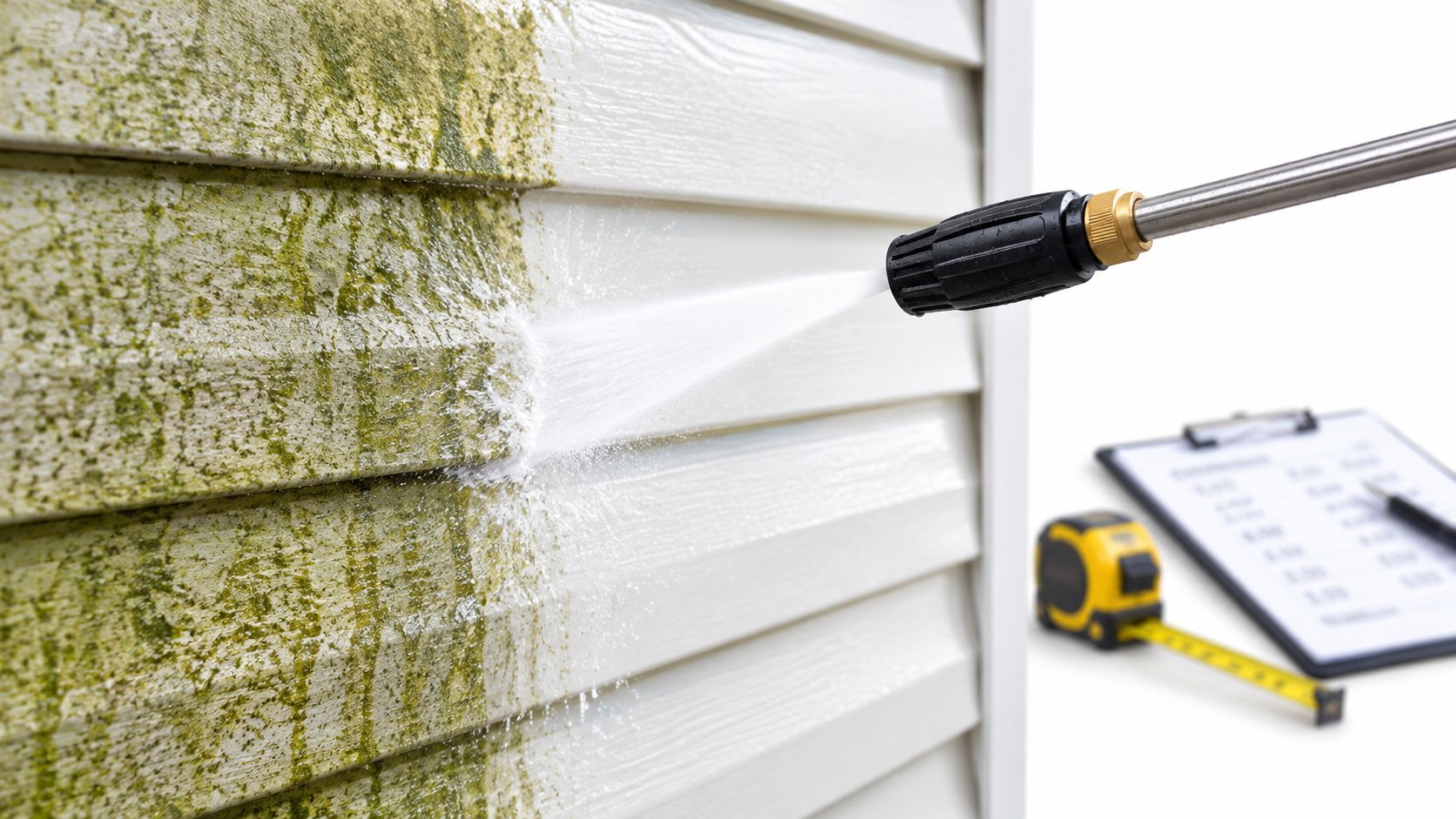
On a busy Saturday in Colorado Springs, a dealership can lose ground before a salesperson even says hello. A customer pulls in, sees dust gathered at the entry, fingerprints on the front glass, water spots catching the sun, and smudges on the showroom doors. That first impression doesn't stay at the curb. It follows them straight to the vehicles.
In auto retail, customers judge the environment along with the inventory. If the building looks neglected, buyers often assume the same about the details they can't see. The opposite is also true. Clean glass, bright floors, tidy waiting areas, and orderly service spaces tell people your team pays attention.
That's why auto dealership cleaning services aren't just about janitorial coverage. They support sales, customer retention, safety, and day-to-day operations. In Colorado Springs, they also have to account for local realities like blowing dust, strong sun, winter residue, and the constant wear that comes from cars, customers, and service traffic moving through the same property.
Your Dealership's First Impression Starts at the Curb
A dealership manager usually notices cleanliness problems in layers. First it's the obvious stuff. Smears on the front doors. Dirt tracked into the lobby. A showroom window that looked fine at sunrise but shows every streak by mid-morning. Then the subtler issues show up. Dust on display surfaces. Restrooms that don't match the sales floor. Entry concrete that makes the whole property feel older than it is.
What customers see before they see the cars
The curb, sidewalks, facade glass, and entrance set the tone. If those surfaces look sharp, the vehicles inside benefit immediately. If they don't, your inventory has to work harder to overcome the setting around it.
Colorado Springs properties deal with a mix of dry conditions, wind, seasonal grime, and intense light that makes every streak visible. Clean windows matter here because natural light is part of the showroom. When the glass is cloudy, the whole sales floor feels dimmer and less polished. For dealerships that need exterior presentation handled consistently, commercial window cleaning for business properties is one piece of the larger maintenance picture.
A lot of managers think of curb appeal as grounds plus signage. That's too narrow. Good exterior presentation also depends on concrete, glass, building edges, and irrigation overspray control. If you're reviewing the outside appearance of a property, this piece on effective landscape water management is useful because it highlights how maintenance systems affect what customers see.
Cleanliness at the entrance doesn't feel like a separate task to customers. It feels like part of your brand.
Why first impressions carry farther than the front door
Once a shopper forms an opinion about the property, they interpret everything through that lens. A spotless showroom supports trust. A neglected entrance creates doubt that sales staff then have to overcome.
That's the practical reason dealerships benefit from a structured cleaning plan instead of reactive spot cleaning. You don't want your team noticing problems only after customers are already on the lot. You want the facility to look ready before the first appointment, test drive, or weekend rush begins.
What Professional Dealership Cleaning Actually Includes
Auto dealership cleaning services work best when they're organized by zone, not by a generic office-cleaning checklist. A dealership has customer-facing retail space, administrative areas, vehicle display areas, exterior glass, restrooms, and operational spaces that deal with grease, grit, and constant traffic. Each area needs a different standard and a different method.
Showroom and sales floor work
The showroom is where presentation has to hold up under bright light and close inspection. That usually means:
- Glass care: Interior glass, front entry glass, sidelights, and showroom panels need streak-free cleaning because sunlight exposes every missed wipe.
- Floor appearance: Polished hard floors need dust removal, spot treatment, and routine machine care so tire marks and foot traffic don't dull the finish.
- Display surfaces: Desks, counters, brochures stands, and fixtures collect dust quickly in dry climates.
- Vehicle touchpoints: Door edges, handles, and surfaces around display vehicles need careful cleaning so the surrounding space looks as sharp as the inventory.
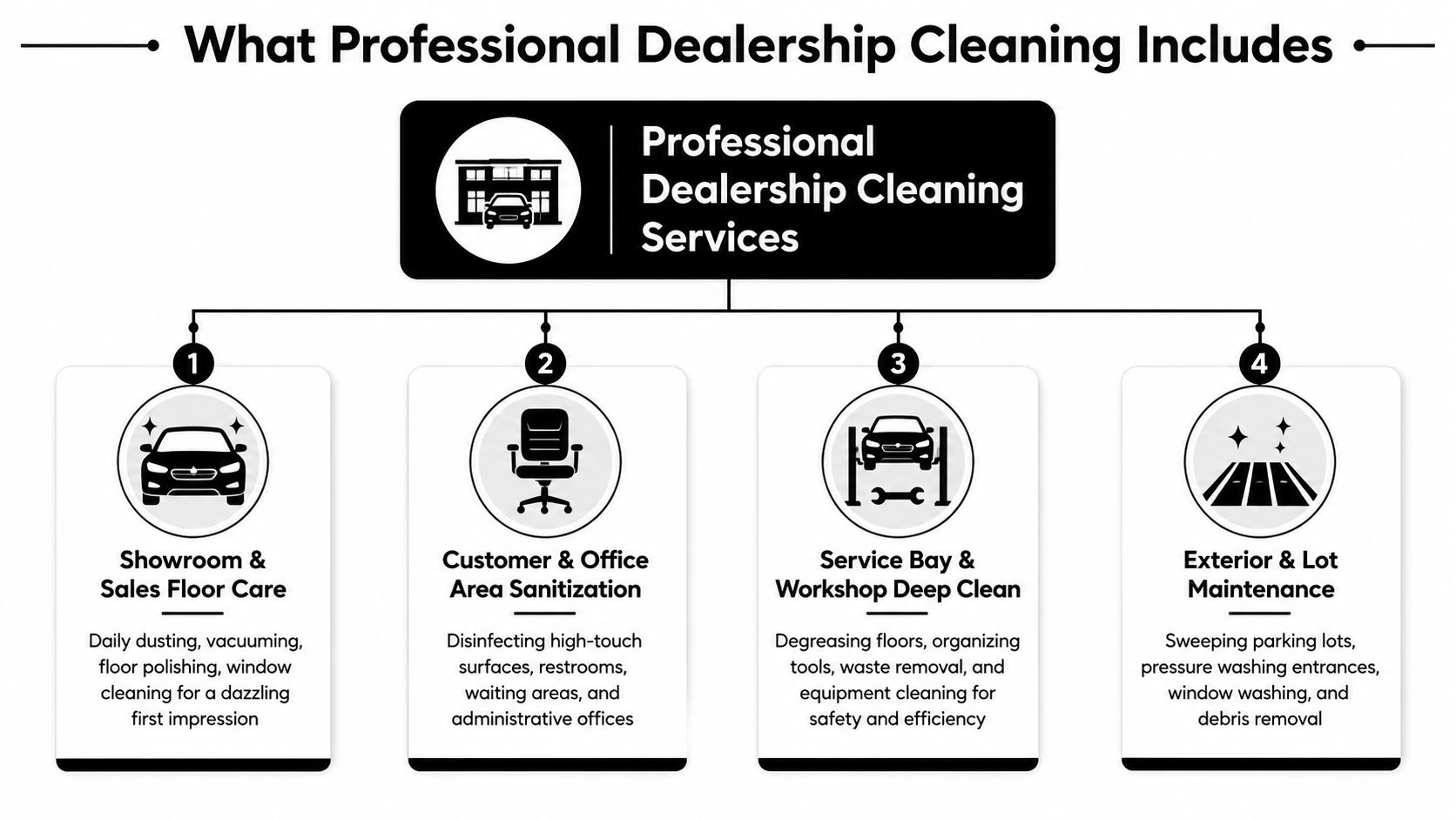
Customer areas and office spaces
Waiting rooms and offices have a different job. They need to feel comfortable, hygienic, and consistent with the showroom standard. That includes chairs, tables, service desks, coffee stations, interior glass, and floors that can handle repeat traffic all day.
One point that should never be skipped is daily disinfection of high-touch surfaces. Industry guidance for dealerships specifically highlights surfaces like door handles, service counters, and showroom vehicle interiors for daily wipe-downs, and notes that electrostatic spraying is often used for more even disinfectant coverage across complex shapes and fabrics than manual wiping alone, as described in this auto dealer cleaning checklist guidance.
Practical rule: If customers and staff touch it all day, it needs a daily plan, not an occasional reset.
Exterior surfaces and lot presentation
Outside, the standard changes again. The goal isn't only shine. It's control. Leaves, grit, mud, and stains spread visual disorder fast on dealership properties.
Exterior work often includes:
- Entrance cleaning: Walkways, approach areas, and concrete near doors pick up heavy soil.
- Facade glass and entry framing: Weather and irrigation marks are most visible here.
- Signage and building trim: Dust buildup can make branding look faded.
- Lot debris management: Curbs, corners, islands, and drainage edges collect trash and sediment.
- Pressure washing where appropriate: Entry concrete, service approach lanes, and high-soil areas often need more than a broom can handle.
The areas that basic office cleaners miss
A dealership isn't just a showroom with desks. It has transition zones between front-of-house and operations. That's where many cleaning plans break down. Storage rooms, advisor stations, delivery bays, and employee corridors need enough attention to keep dirt from moving into the polished spaces customers do see.
This is where a detailed scope matters. Auto dealership cleaning services work when the provider understands surfaces, traffic patterns, and timing. A crew that's great at small-office janitorial work can still struggle in a dealership if they don't know how to protect glass, floors, and vehicle-adjacent areas without leaving residue, streaks, or avoidable disruptions.
The Business Case for Impeccable Cleanliness
A shopper pulls onto the lot after visiting two other stores. The inventory may be comparable. The pricing may be close. What often tips the first few minutes is whether the property feels controlled, professional, and ready for business.

Cleanliness supports return business
Customers read condition as a proxy for management standards. If the showroom glass is streaked, the restroom is behind, or the lounge feels neglected, some buyers start asking themselves what else gets missed. In a dealership, that doubt affects more than one sale. It affects repeat visits, service retention, and referrals.
Managers usually hear about major issues. They hear less about the smaller signals that shape customer comfort, such as dusty ledges, smudged entry glass, coffee spills at the advisor counter, or grime tracked into the waiting area by noon. Those details influence whether a customer feels confident leaving a vehicle for service or spending another hour with your team.
Clean presentation protects gross and perceived value
Vehicles are displayed inside a setting, not on an island. Lighting, floors, windows, and adjacent surfaces all change how inventory is perceived. A clean environment helps newer units feel premium and helps used units feel better cared for.
That matters during appraisal and sale conversations. Buyers are already judging condition with their eyes before they ask a question. The same principle shows up in retail detailing. This article offers practical help for Central PA car owners selling, and while that audience is different, the takeaway applies here too. Better presentation lowers hesitation.
There is also a hard-cost side to this. Dirt and residue left too long on entry concrete, service drives, or customer approach areas can become tougher and more expensive to remove. Periodic exterior washing helps protect appearance and reduces buildup in high-traffic zones. Many dealerships pair janitorial work with commercial pressure washing for business properties to keep those surfaces from dragging down the rest of the facility.
A cleaner building runs better
I have seen dealership managers treat cleaning as overhead right up until the day poor conditions start interrupting operations. Then it becomes urgent. A neglected facility creates avoidable manager callouts, distracts front-line staff, and adds friction to the customer experience.
It also affects the back of house more than many operators expect.
If grime from service lanes, tech corridors, and employee access points migrates forward, the sales floor pays for it. If break rooms, interior hallways, and shared touchpoints are consistently dirty, morale slips. People notice whether the building they work in is being maintained with the same discipline expected from them.
A strong cleaning program supports sales, service, and staffing at the same time. It protects customer confidence up front, helps employees stay focused during the day, and reduces the slow wear that shows up later as complaints, rushed spot-cleaning, and preventable facility issues.
Beyond the Showroom The Critical Role of Service Bay Cleaning
Most dealership cleaning conversations stay stuck in the front of the building. That's a mistake. The service bay is one of the most operationally important spaces on the property, and it often carries the highest cleaning risk.
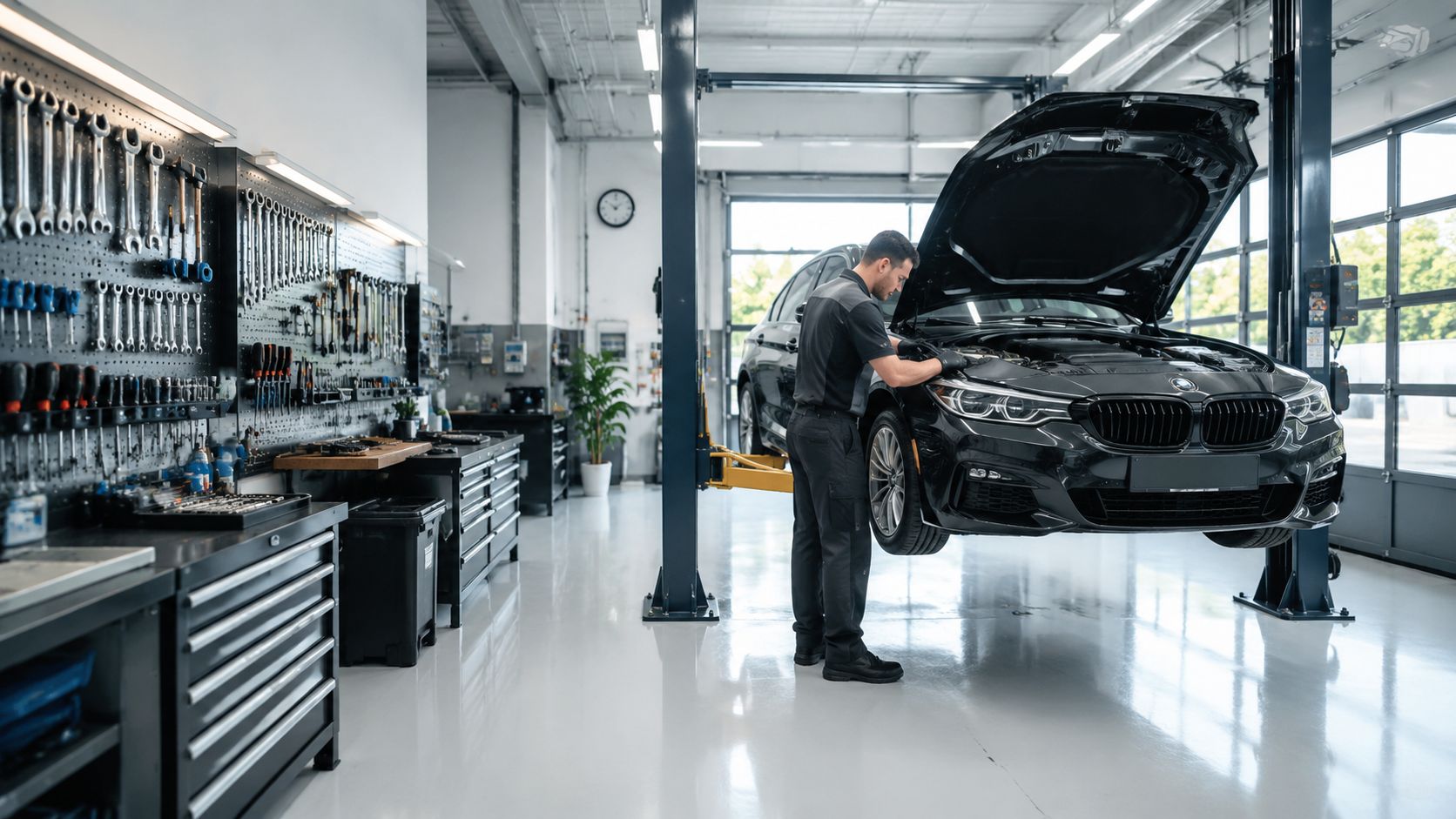
Why the back of house deserves its own plan
Many cleaning programs focus on showrooms but overlook contamination control in service bays. Neutral industry guidance points out that this is a serious gap because those areas generate oil, brake dust, and tire residue that create safety risks and can affect air quality. It also notes that a clean service bay is important to profitable fixed operations, as covered in this auto dealer facility cleaning guidance.
That's the right way to frame it. Service bays aren't just dirty versions of customer areas. They are a separate cleaning environment with different hazards, different residues, and different workflow demands.
What doesn't work in a service bay
A light mop pass alone won't solve oil film. Generic all-purpose cleaners won't cut through heavy shop residue. And if crews treat brake dust, tire debris, and fluid drips like normal office dirt, the floor will keep looking dirty no matter how often it's cleaned.
Common weak spots include:
- Grease spread instead of removal: Wrong products can smear residue across larger areas.
- Missed edges and drains: Contaminants collect where water and debris settle.
- Poor separation between zones: Dirt from the bay gets tracked into customer corridors and advisor desks.
- Inconsistent timing: Cleaning during active service creates disruption and leaves half-finished results.
For heavily used exterior approaches and operational concrete, dealerships often pair bay cleaning with pressure washing support for business properties so the grime doesn't build up at the threshold between the shop and the rest of the site.
Safety, morale, and customer confidence
When a service drive or bay area looks controlled, technicians work in a safer environment and advisors feel more confident bringing customers near it. Even a brief customer glance into the shop can reinforce whether the operation feels disciplined.
This walkthrough adds useful visual context:
A clean bay also changes employee behavior. Teams are more likely to keep tools organized, report spills quickly, and take ownership of the space when the baseline condition is already solid. If the floor always looks neglected, people stop seeing individual messes as worth correcting.
That's why the service department needs its own cleaning scope, not a footnote under “shop areas as needed.”
Setting a Cleaning Cadence and Budget for Your Dealership
A workable cleaning plan starts with traffic, not theory. If your showroom gets reset every night but the service drive carries salt, dust, and oil residue into the building by 10 a.m., the schedule is missing the part of the dealership that creates the mess and the risk. The best cadence matches how each area is used, how fast it soils, and how visible the condition is to customers and staff.
That usually means treating the front of house and fixed operations on separate rhythms.
A practical frequency model
Most dealerships do well with a daily, weekly, and monthly structure, but the scope should be different by zone. Customer-facing spaces need consistent presentation. Service areas need consistent hazard control. Back offices and low-traffic rooms can run on a less frequent cycle if the basics stay covered.
Here's a sample operating schedule managers can adapt:
| Frequency | Showroom & Offices | Restrooms & Waiting Areas | Service Bays | Exterior & Lot |
|---|---|---|---|---|
| Daily | Dust surfaces, spot clean glass, vacuum or dust mop floors, tidy desks and counters | Sanitize touchpoints, clean fixtures, restock paper goods, remove trash | Remove loose debris, address spills, sweep traffic paths, wipe shared surfaces | Pick up debris, clean entrance glass, check sidewalks and front approach |
| Weekly | Detail interior glass, clean baseboards, treat floor buildup, wipe display fixtures | Deep clean floors, partitions, chairs, and touch surfaces | Degrease problem spots, clean edges, address tracked residue near doors | Sweep curbs and corners, wash high-visibility concrete as needed |
| Monthly | High dusting, deeper floor maintenance, inspect hard-to-reach glass | Detailed cleaning of vents, walls, and less-frequented surfaces | More thorough floor scrubbing and contamination control review | Wash signage, facade glass, entryways, and other weather-exposed surfaces |
A missed showroom dusting is a presentation problem. A missed bay cleanup can become a slip claim, a morale issue, or a sign that the service department is being managed loosely. Those costs land in different buckets, but they still hit the store.
If a task only happens after a complaint, it is not part of operations. It is deferred maintenance.
Budgeting the right way
The biggest budgeting mistake is asking for one flat number before the scope is defined. Price moves with square footage, floor type, amount of glass, dealership hours, and how much of the work has to happen after close. It also changes when the service department needs special handling for grease, debris, and wet-floor control.
Condition matters too. Initial cleanup usually takes more labor than steady maintenance.
There is also a real staffing trade-off. In-house teams can help with immediate touch-ups during the day, but they need supervision, coverage for callouts, and clear standards. Contracted crews can bring consistency and specialized equipment, but only if the scope is written tightly and the schedule fits how your dealership runs. Managers who treat cleaning like any other operating line item usually get better results because they tie the spend to CSI, safety exposure, and fixed-ops throughput instead of treating it as a generic overhead cost.
A simple rule helps. Budget more for the areas that either influence buying decisions or interrupt revenue when they are neglected. That includes the showroom, customer restrooms, service drive, technician lanes, and the walk paths connecting them.
Colorado Springs factors that affect scheduling
Colorado Springs adds its own pressure to the schedule. Winter brings slush, deicer, and sand at entries and drive lanes. Dry months bring dust that settles fast on dark furniture, glass, and display vehicles. Bright sun exposes streaks and floor haze that might pass unnoticed in other markets.
For many stores, the best fit is a hybrid plan. Daily interior upkeep. Weekly corrective detail work. Monthly exterior resets timed around weather and traffic patterns. If your dealership is also investing in visibility and lead flow, Transactional LLC's local SEO tips are a reminder that online reputation gets the click, but the on-site experience still has to close the gap when the customer arrives.
Cultivate House Detailing is one local option for commercial exterior work such as dealership window cleaning and related building-surface maintenance when those tasks need to be coordinated with a broader facility plan.
How to Vet Your Commercial Cleaning Partner in Colorado Springs
Hiring the wrong vendor creates almost as many headaches as skipping the work. Missed visits, weak communication, improper chemicals, and poor scheduling usually show up fast in a dealership environment. The right questions save time.
Questions worth asking before you sign

Use a short checklist when you interview providers:
- Insurance matters: Ask whether they carry general liability and workers' compensation coverage.
- Training matters: Ask what safety instruction their crews receive for commercial properties, slip hazards, glass, and chemical handling.
- Scheduling matters: Ask how they avoid disrupting showroom traffic, service intake, and closing procedures.
- Scope matters: Ask them to separate showroom, restroom, office, and service-bay tasks in writing.
- Communication matters: Ask who your team contacts if something gets missed or a special cleanup is needed.
- Local fit matters: Ask for references from businesses in Colorado Springs and nearby areas.
Look for operational awareness, not sales talk
A capable vendor asks good questions back. They'll want to know where foot traffic is highest, which doors are customer-facing, how service vehicles move through the property, and which surfaces need special care.
If you're evaluating how visible your dealership is in local search while also reviewing vendors, these Transactional LLC's local SEO tips are a helpful side read. Good local visibility gets people to your property. Good facility standards help convert that visit into trust.
On-site test: Walk the building with any vendor candidate and see what they notice without being prompted. The details they point out usually tell you how they'll perform after the contract is signed.
Dealership Cleaning FAQs for Colorado Springs Businesses
How often should a dealership be cleaned?
Most dealerships need daily attention in customer-facing areas, with deeper work scheduled weekly and monthly. The exact cadence depends on foot traffic, the number of service appointments, weather exposure, and how much glass and hard flooring the facility has.
Should service bays be handled differently from the showroom?
Yes. Service bays need a separate plan because the soil is different and the safety issues are different. Oil, brake dust, tire residue, and shop debris require methods that go beyond normal office or retail cleaning.
Can cleaning be scheduled around sales and service hours?
It should be. The best plans work around customer traffic, vehicle movement, and advisor workflows. Some tasks are better done before opening. Others fit after closing or during slower service windows.
What should a dealership manager ask for in a quote?
Ask for a written scope by area. That should include showroom glass, offices, waiting areas, restrooms, service bays, entryways, and exterior surfaces if those are part of the plan. A clear scope makes it easier to compare vendors and hold the work accountable.
Is professional cleaning worth it for smaller dealerships in Colorado Springs, Monument, or Black Forest?
Yes, if the scope matches the property. Smaller locations still deal with the same customer expectations. They just need a right-sized plan rather than a one-size-fits-all package.
How do you protect high-value inventory while cleaning?
Good crews use the right tools, products, and workflow around vehicles and glass. They should know where overspray, residue, or careless equipment placement can create avoidable risk. That's one reason dealership-specific experience matters.
If your dealership in Colorado Springs needs cleaner glass, sharper curb appeal, and a more disciplined exterior presentation, Cultivate House Detailing can help you evaluate the visible trouble spots and build a practical maintenance plan around your property, schedule, and customer traffic.
Serving Monument and the surrounding Colorado Springs area — see our window cleaning services in Monument.