Spring winds, winter grime, and our dry Colorado Springs air can leave siding looking dull fast. A lot of homeowners stand in the driveway, look up at the house, and think the same thing. I probably just need a pressure washer.
Sometimes that's true. Sometimes it's the fastest way to clean off dirt, pollen, and organic buildup. But siding is one of those surfaces where the wrong machine, the wrong nozzle, or the wrong angle can turn a cleaning project into a repair project.
If you're trying to figure out the best pressure washer for house siding, the solution isn't the biggest unit on the shelf. It's the machine and method that clean effectively without driving water behind panels, scarring paint, or roughing up softer materials. Around Colorado Springs, that matters even more because homes here deal with dust, sun exposure, hard water residue, and weather swings that generic advice doesn't always account for.
Is a Pressure Washer Right for Your Siding
A common local scenario goes like this. Snow melts, spring shows up, the mountains look great, and suddenly the siding looks tired. The north side has grime on it, the shaded spots have buildup, and the sunny elevations still look dusty no matter how often the yard gets cleaned up.
That's when pressure washing starts to sound like an easy weekend fix.

The problem is that siding doesn't all respond the same way. Vinyl can flex and let water slip behind it. Painted wood can lift or fuzz if the spray is too aggressive. Fiber cement is tougher, but finishes can still suffer. Stucco can chip if the operator gets too close or uses the wrong tip.
When pressure washing makes sense
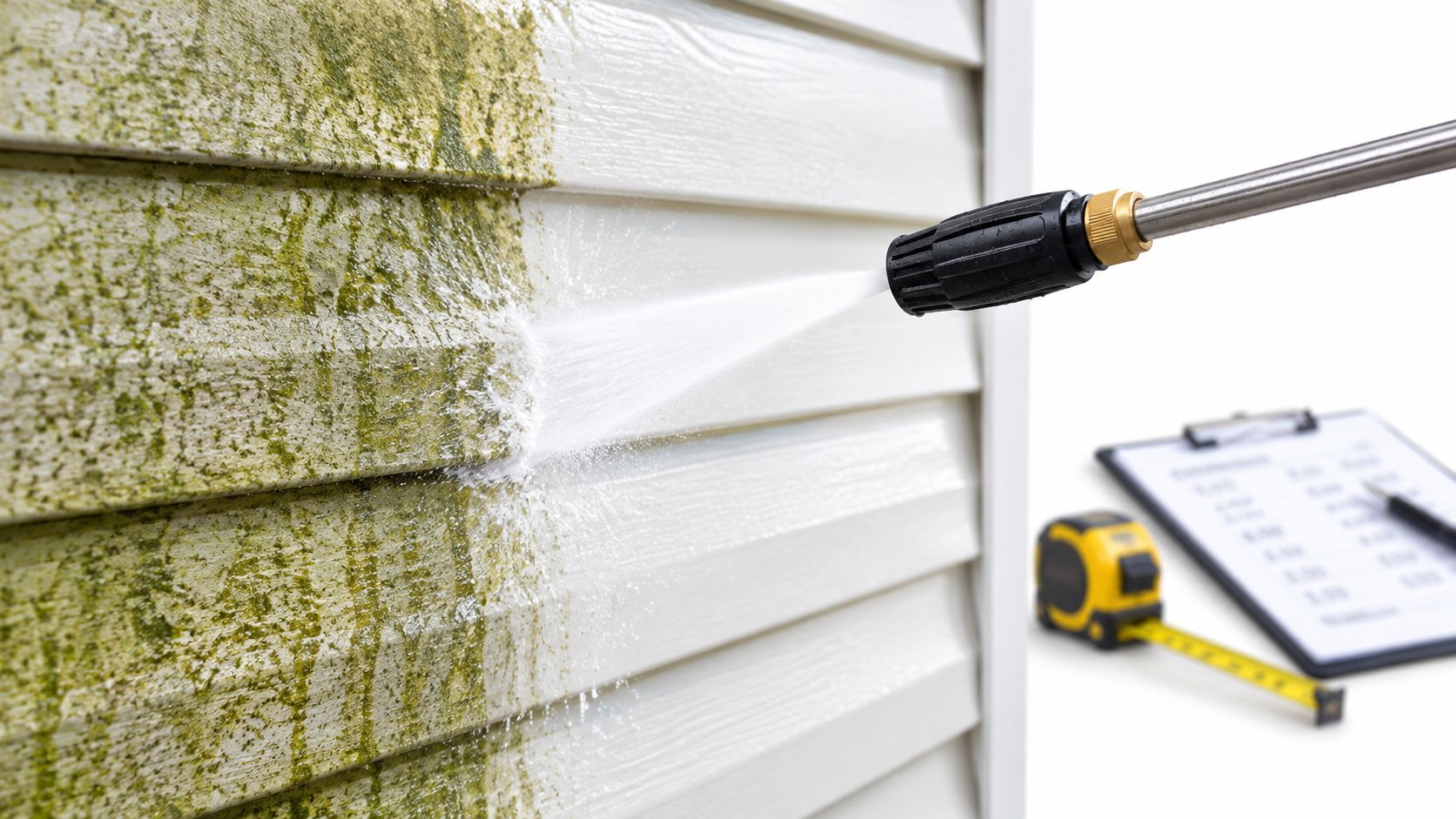
Pressure washing is usually a reasonable option when the siding is structurally sound and the issue is surface-level grime, dust, pollen, or light staining. It also helps when the home layout gives you enough room to work from the ground with the right extension and proper spray angle.
A few signs it may be a good DIY candidate:
- The siding is in solid shape with no loose panels, peeling sections, or obvious cracks.
- The staining looks superficial rather than baked in, painted over, or tied to underlying moisture problems.
- You can reach most areas safely without leaning off a ladder while handling a live spray wand.
Practical rule: If you already see loose caulk, failing paint, or warped siding, cleaning pressure won't fix the problem. It often exposes it faster.
When a pressure washer is the wrong tool
Some homes need a softer wash process instead of direct pressure. Others need spot treatment first. And some should be left alone until repairs are made.
Pressure washing isn't a smart choice when water intrusion is likely, when old paint is unstable, or when the surface is delicate enough that “clean” and “damaged” are separated by a very small margin. That's where experienced exterior cleaners earn their keep. They know when to use pressure, when to back off, and when a siding issue is really a maintenance issue in disguise.
Understanding Pressure Washer Specs PSI and GPM
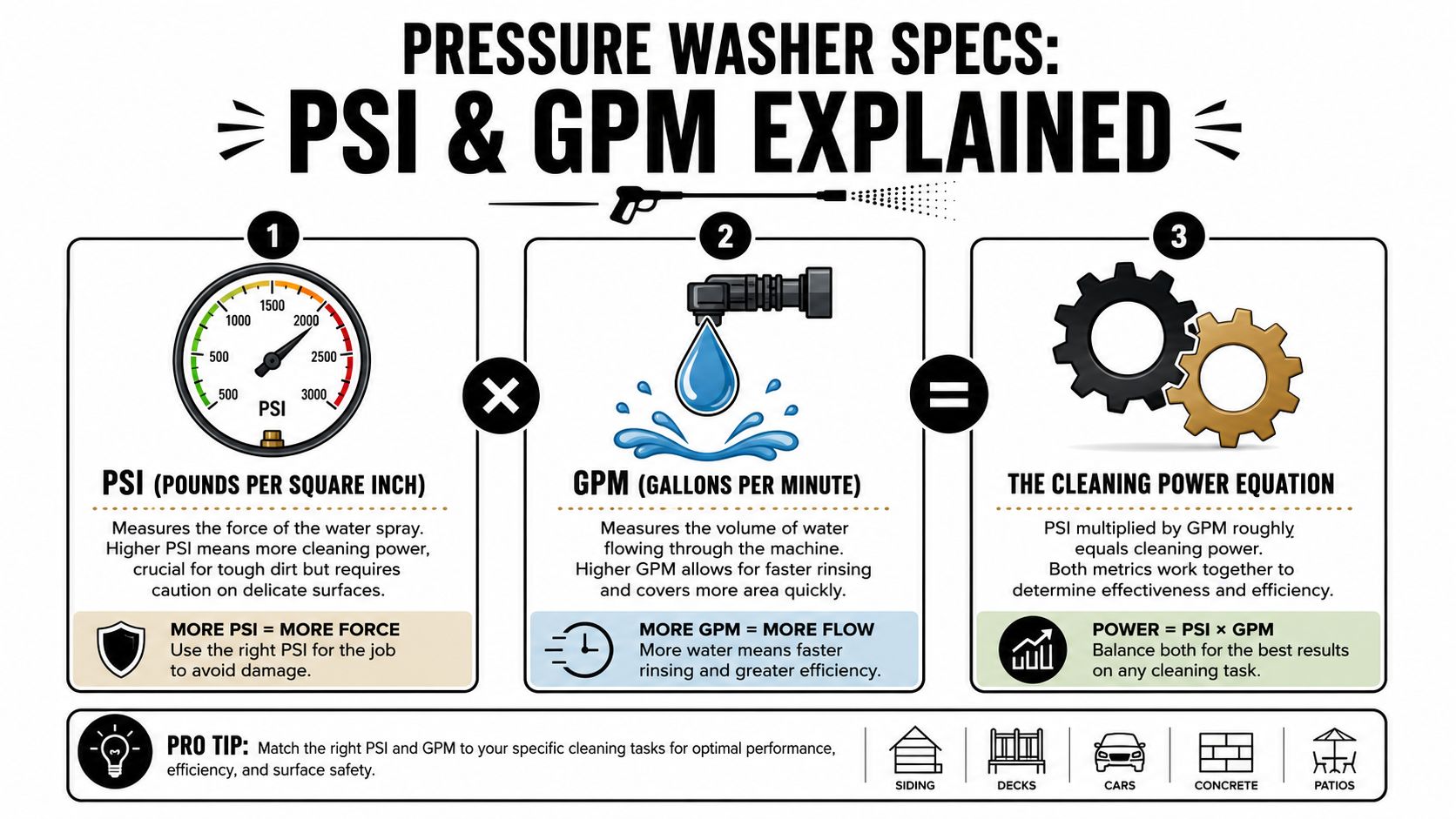
Shoppers usually get pulled toward PSI first because it sounds like power. That's only part of the story. For siding, you need to understand PSI, GPM, and how they work together.
What PSI actually does
PSI stands for pounds per square inch. Think of it as the force of the spray. Higher PSI hits harder, which can help break loose stubborn grime, but it also raises the chance of damaging finishes or forcing water where it doesn't belong.
For house siding, the safe target is much lower than many buyers assume. The optimal PSI range is generally between 1,300 and 2,000 PSI, with 1,500 to 2,000 PSI called out as an effective sweet spot for softer siding materials such as vinyl, wood, and aluminum according to pressure washer PSI guidance for different tasks. That same guidance notes that using pressures above 3,000 PSI on standard siding can lead to serious damage, including cracked vinyl or gouged wood.
That's why the best pressure washer for house siding usually isn't the most aggressive one in the aisle.
Why GPM matters more than many homeowners think
GPM means gallons per minute. It tells you how much water the machine moves. PSI helps break dirt loose. GPM helps carry it away.
A simple way to think about it is this:
- PSI is the push
- GPM is the rinse
- Both together determine how fast and how safely you clean
A machine with decent flow often feels more efficient on siding because it rinses loosened grime better. You spend less time making repeated passes over the same area, which also lowers the temptation to move too close.
More pressure doesn't automatically mean better siding results. On houses, patience and flow usually beat brute force.
Cleaning Units in plain English
You may also see Cleaning Units, sometimes shortened to CU. That number is calculated by multiplying PSI by GPM. It's a rough way to compare overall output.
One example from product testing is the Westinghouse WPX3200, which produced 5,980 CU in lab testing and was identified as a top-tier residential model, while the Simpson CM61083 was listed at 4,968 CU in the same comparison, as reported in TechGearLab's pressure washer testing. That's useful for understanding raw capability, but it doesn't mean you should unleash full output on siding.
A better way to judge a machine for siding
If you're shopping for siding work, focus on these decision points instead of headline power:
| Spec | What you want for siding | Why it matters |
|---|---|---|
| PSI | Controlled output, not maximum force | Keeps cleaning effective without chewing up surfaces |
| GPM | Strong enough flow to rinse well | Helps move dirt off the wall faster |
| Nozzle options | Wide fan patterns | Reduces concentrated impact |
| Spray control | Easy trigger and stable handling | Makes it easier to keep a consistent distance |
A machine can be excellent for concrete and still be a poor choice for siding if it encourages you to clean with too much force.
Matching the Washer to Your House Siding
The biggest gap in most buying guides is simple. They talk about machines, but they don't spend enough time on how different siding materials react to pressure.
Generic advice often says to start low and use a 15-degree nozzle. That's not always careful enough. As noted in Ferguson's guide to cleaning siding with a power washer, many guides fail to address siding-specific risk management and may still suggest approaches that are too aggressive for some surfaces.
Vinyl siding
Vinyl is common, and it fools people because it looks durable. It is durable in some ways. It is not forgiving when water gets driven upward under laps or seams.
For vinyl, the main risks are:
- Forcing water behind panels
- Cracking older brittle sections
- Leaving lap lines or uneven cleaning marks
Keep the wand angle working with the siding, not up into it. Stay back farther than you think you need to at first. A wider fan pattern is usually the safer call.
Painted wood siding
Painted wood is where DIY jobs go sideways fast. High pressure can strip paint, raise wood fibers, and leave a fuzzy or scarred surface that looks worse after it dries.
On wood, the issue isn't just visible damage. It's also what happens next. Once the finish is compromised, weather gets to work. If you want a helpful overview of how exterior envelope materials work together, this resource on understanding roofing and cladding gives useful context on why surface protection matters.
If the goal is to preserve paint, the right answer is often less pressure and more chemistry, dwell time, and rinse discipline.
Fiber cement and engineered products
Fiber cement can handle more than soft vinyl, but that doesn't mean it should be blasted. Factory finishes still wear, and water still finds weak points around joints, trim, and penetrations.
Homeowners often benefit from a lower-pressure house washing approach instead of straight pressure-first thinking. A service built around soft wash house cleaning is often better suited to delicate finishes and mixed-material exteriors.
Stucco and textured surfaces
Stucco is a different animal. Dirt hides in texture, but aggressive pressure can chip the surface or open weak spots. The rougher the profile, the more tempting it is to get closer. That's exactly what causes trouble.
A safer approach usually includes:
- Testing a small section first
- Using a broad spray pattern
- Watching edges, cracks, and patched areas carefully
If the stucco already shows hairline cracking or old repairs, pressure may not be the tool to lead with.
Electric vs Gas Pressure Washers Which Is Right for You
Most homeowners don't need a complicated answer here. They need the honest trade-offs.
For residential cleaning, siding is often treated as a medium-duty task. Consumer buying guidance pairs that kind of work with machines around 2.8 GPM, while heavier-duty gas units can reach 3,300 to 4,600+ PSI, according to Home Depot's pressure washer buying guide. That tells you two things. First, gas units can create a much bigger margin for error. Second, flow and control matter just as much as raw pressure.
Electric pressure washers
Electric models are usually the easier entry point for homeowners. They're quieter, simpler to start, and don't require fuel storage or engine upkeep. For a smaller home with lighter grime, they can be a very practical option.
They also tend to encourage a slower, more controlled pace, which isn't a bad thing on siding. A lot of DIY damage happens because the tool overpowers the operator.
Electric tends to fit best when:
- The house is smaller or only needs spot cleaning
- The buildup is light to moderate
- You want less maintenance and easier storage
Gas pressure washers
Gas models offer more output and more mobility. If you're cleaning long fence lines, bigger homes, or multiple exterior surfaces, that extra performance can save time.
But gas power comes with real drawbacks. They're louder, heavier, and easier to misuse on delicate materials. In Colorado Springs, there's another issue homeowners don't always think about. High altitude can affect gas engine performance, so a machine that feels strong in generic reviews may behave differently here than it would closer to sea level. That doesn't make gas a bad choice. It just means local conditions matter.
Electric vs Gas Pressure Washer Comparison
| Feature | Electric Pressure Washer | Gas Pressure Washer |
|---|---|---|
| Power feel | More limited, usually easier to control | Stronger output, wider performance range |
| Noise | Quieter | Louder |
| Maintenance | Lower maintenance | More engine upkeep |
| Portability | Limited by power cord | Easier movement without cord dependence |
| Best fit | Lighter-duty home cleaning | Larger areas and tougher grime |
| Risk on siding | Lower if used correctly | Higher if pressure and nozzle choice aren't managed carefully |
Which one makes the most sense
If your main job is house siding, don't buy based on driveway envy. Buy based on control. A machine that feels a little underpowered on concrete may still be exactly right for siding.
A gas washer makes sense when you know how to regulate output and you have other heavy cleaning tasks around the property. An electric washer makes sense when your main priority is safer residential cleaning and you're willing to work at a steadier pace.
The right machine is the one you can control consistently for an entire wall, not the one with the biggest badge on the box.
DIY Dangers vs Professional Perfection
A pressure washer can make a house look dramatically better. It can also leave permanent marks in less time than it takes to read the manual.
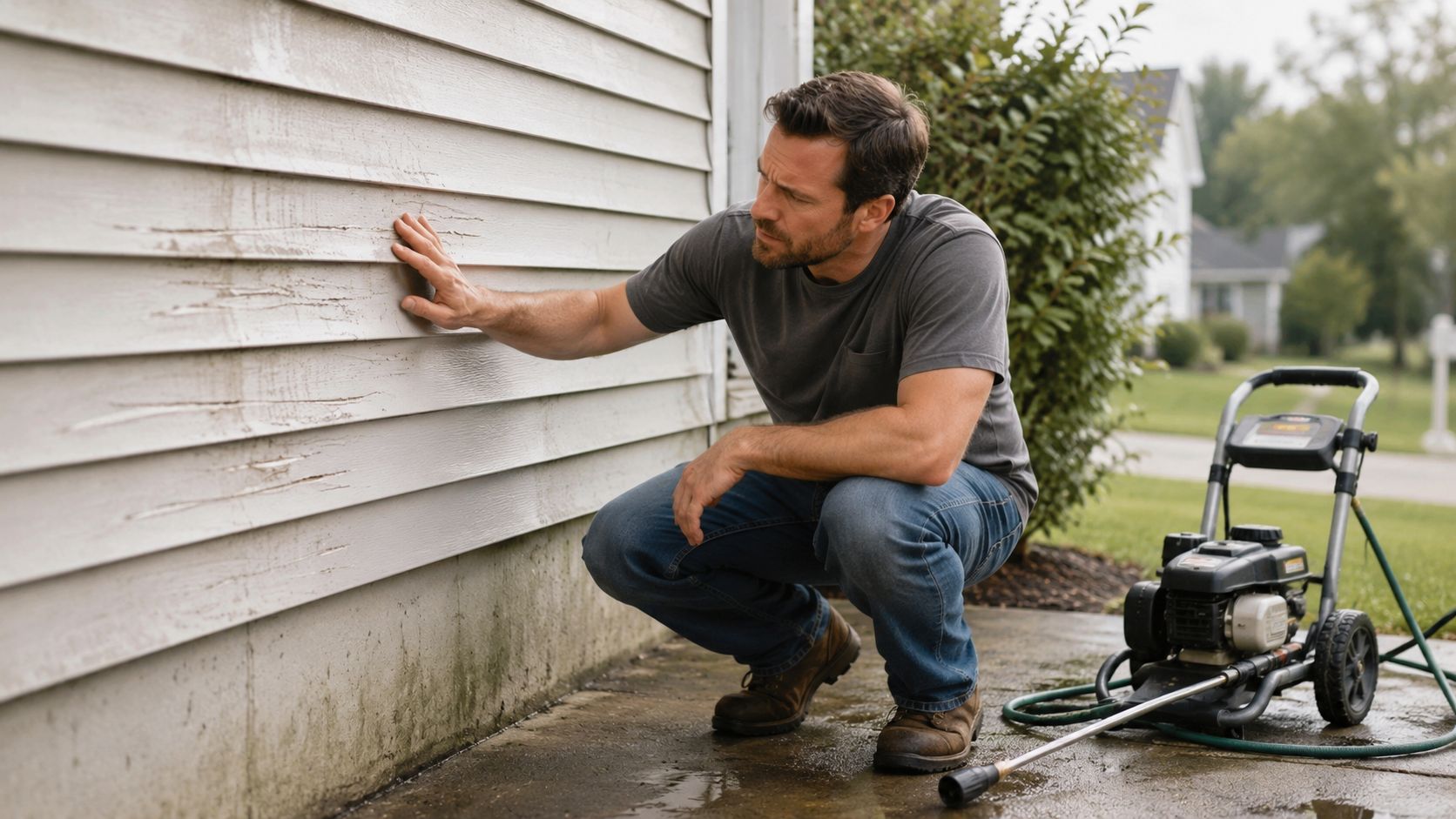
Most DIY frustration doesn't come from effort. It comes from hidden variables. The siding may be dirtier on one elevation than another. One wall may have more oxidation. One section may clean beautifully, while another starts streaking because the operator changed distance or nozzle angle without realizing it.
What goes wrong in DIY jobs
The classic mistakes are predictable:
- Too much pressure and the surface gets etched, chipped, or stripped.
- Too steep an angle and water gets pushed behind siding.
- Uneven passes leave tiger-striping or patchy results.
- Ladder use with active spray equipment adds a real safety problem.
Then there's the time factor. Homeowners often spend a full weekend on setup, testing, washing, re-washing, and cleanup, only to end up with a result that still looks inconsistent in direct sun.
What professionals do differently
A pro doesn't just show up with a stronger machine. The key difference is judgment.
Professionals assess the siding type, the condition of finishes, the likely source of staining, and whether pressure washing is even the correct method. They also work with equipment setups designed for consistency, including better hose management, nozzle selection, and application methods that reduce the chance of damage.
If you're trying to compare whether DIY or hiring out makes more sense financially, a practical starting point is this overview of how homeowners often budget for home power washing. It's useful because a complete comparison isn't just service cost versus rental cost. It's service cost versus rental, your time, and the risk of making a visible mistake on the front of the house.
A quick example helps here.
Watching a pressure washer in motion makes it look simple. The hard part is controlling the spray over changing materials, trim details, sun exposure, and ladder-reach areas without overcleaning one section and undercleaning the next.
When calling a pro is the smarter move
For many homeowners, the tipping point is one of these:
- The house has multiple siding materials
- You see oxidation, peeling paint, or older caulk lines
- Upper sections are hard to reach from the ground
- You want uniform results on the whole exterior
Cultivate House Detailing offers siding pressure washing as part of its exterior cleaning services, which is useful when the job needs a house-specific approach rather than a rental-machine approach. That matters most when the goal is to clean thoroughly while protecting the finish you already paid for.
Why Local Expertise Matters in Colorado Springs
Colorado Springs homes don't clean the same way homes do in milder, wetter places. Our conditions create a different mix of problems. Dust settles fast, weather shifts are sharp, and many homeowners are also dealing with hard water residue that can leave surfaces looking chalky or streaked after a rinse if the process isn't dialed in.
That's one reason generic advice often falls short here. Another is equipment behavior. Gas machines can perform differently at elevation, and that changes how a setup feels in the hand and how consistently it cleans across a full exterior.
Local conditions change the job
A house near open areas may collect more airborne dust. A shaded elevation may hold onto grime longer. A sun-beaten wall may show wear more quickly after an aggressive wash. Those are practical field conditions, not just theory.

That's why local service matters. A company working in this market regularly can account for regional dirt patterns, common siding mixes, and the fact that many homes need a more careful wash process than a generic “high PSI and go” approach.
The better choice for many homeowners
If you're weighing a purchase against hiring it out, the smartest question usually isn't which machine is strongest. It's which option is least likely to leave you with damaged siding, uneven results, or water where it shouldn't be.
For homeowners comparing service options, professional pressure washing services in Colorado Springs can be a better fit when the house has delicate finishes, difficult access, or visible staining that needs more than simple force.
If your siding needs attention and you'd rather get it cleaned safely than gamble on the wrong setup, reach out to Cultivate House Detailing. They serve Colorado Springs and nearby communities with exterior cleaning that's suited to local conditions, so you can get cleaner siding without taking unnecessary risks with your home.
Looking for a professional to take care of it? Cultivate House Detailing offers pressure washing in Colorado Springs. Get a free quote.