A lot of Colorado Springs business owners notice the same thing at the same time. The morning light hits the front glass, the mountain view should look sharp, and instead the windows show dust, sprinkler spots, fingerprints, and a dull film that makes the whole storefront feel a little neglected.
That's frustrating because customers read more from glass than most owners realize. Clean windows suggest order, care, and consistency. Dirty glass suggests the opposite, even when the inside of the business is run well.
The difference usually isn't effort. It's equipment, technique, and knowing how our local conditions change the job.
Why Your Business's First Impression Starts with Glass
A clean storefront in Colorado Springs does more than look nice. It frames everything behind it. Retail displays look brighter. A restaurant entry feels more polished. Office glass looks intentional instead of overlooked. When windows are hazy, customers notice before they ever read a sign or speak to your staff.
Colorado Springs makes glass harder to keep clean
Colorado Springs businesses deal with more than ordinary dust. As noted in guidance on regional equipment considerations for professional window cleaning, high-altitude conditions, intense UV radiation, low humidity, mineral-rich hard water, and seasonal dust storms create cleaning problems that generic kits don't address well.
That combination matters in practice. Low humidity speeds drying, which makes poor technique show up fast as lines and drag marks. Hard water leaves mineral spotting that doesn't come off with a quick spray-and-wipe. Dust settles on glass and frames, then mixes with moisture and turns into grime that standard household tools tend to smear instead of remove.
Customers notice the details at the entry
A business owner might only see “dirty windows.” A customer sees a first impression.
That's why commercial glass has to be treated as part of the property, not an afterthought. At a storefront, the entry door glass, sidelights, and front panes all work together. If one panel is streaky or spotted, the whole facade looks uneven.
Clean glass tells people your business pays attention before anyone says a word.
There's also a local visual factor that matters here. In Colorado Springs, we're surrounded by views that are part of the appeal. Pikes Peak, bright skies, and reflected light all make glass more noticeable. When the sun catches leftover residue, even a “mostly clean” window can look messy.
Why amateur cleaning falls short
Many owners or staff members try to handle it in-house with paper towels, a store-bought squeegee, and a basic spray cleaner. That works for a touch-up on interior glass. It doesn't work well for larger commercial panes, repeated hard water exposure, or windows that need consistent, streak-free results from the sidewalk.
The issue isn't motivation. It's that commercial window cleaning is a system. Once you understand what's in a real commercial window cleaning kit, the gap between amateur and professional results becomes obvious.
Anatomy of a Professional Commercial Window Cleaning Kit
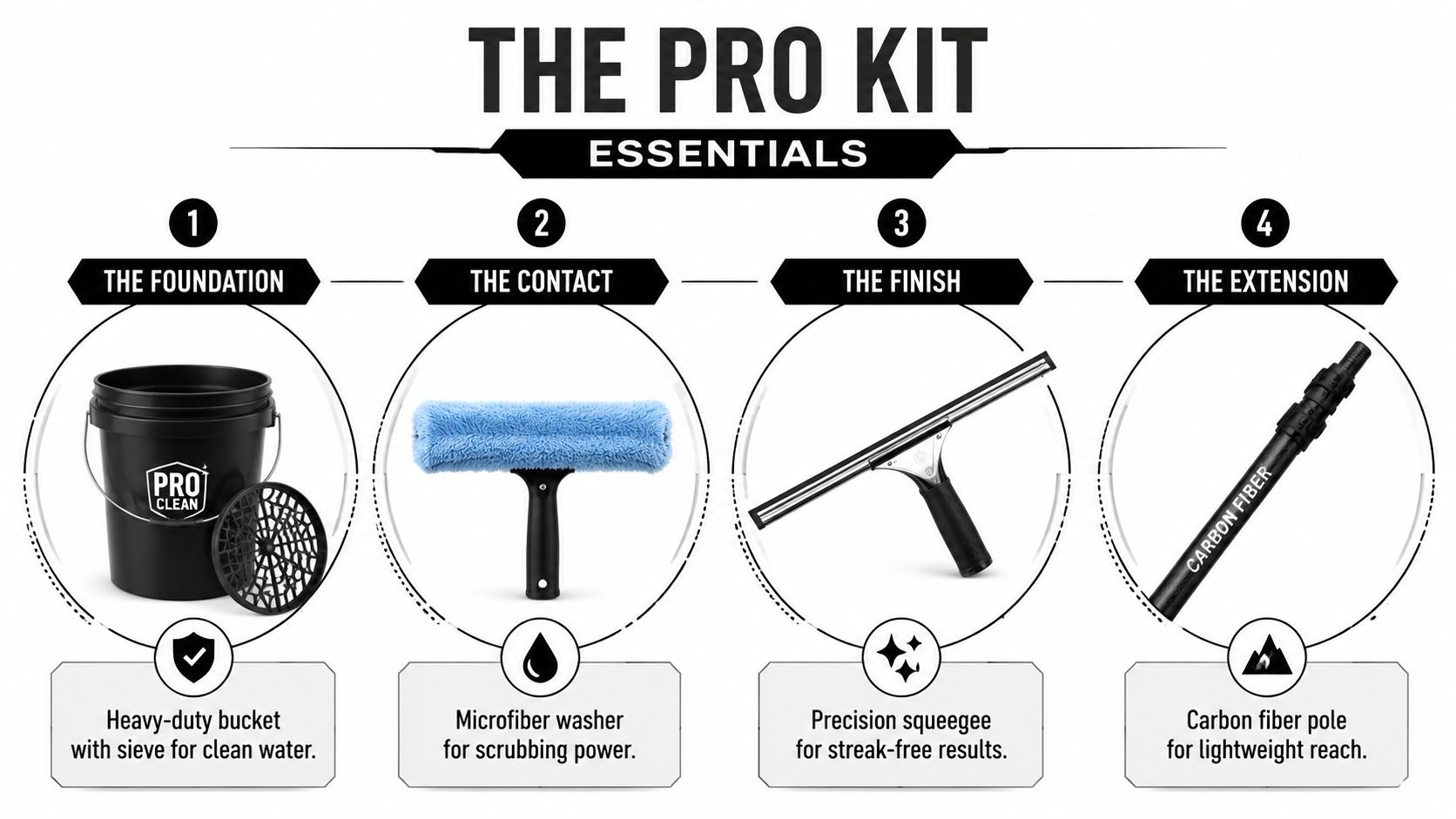
A real commercial window cleaning kit isn't one tool. It's a coordinated setup where each piece handles a specific part of the job: loosening soil, controlling water, removing it cleanly, and reaching glass safely.
The tools that do the real work
Most pro kits start with a washer and a squeegee, but the details matter.
A washer applies and agitates the cleaning solution. On commercial glass, that means lifting dust, traffic film, and stuck-on grime without flooding the window. A pro sleeve holds more water and scrubs more evenly than the thin pads found in basic kits.
A squeegee removes the water in a controlled sheet. That's what creates the clean finish. The channel, handle, and rubber quality determine whether the glass clears cleanly or leaves light lines behind.
A scraper is there for specific contamination. Paint specks, adhesive residue, insect debris, and mineral buildup often need careful removal before the final pass. Used correctly, it solves problems that wiping alone can't.
Then there's the bucket. On a commercial site, a proper bucket isn't just for carrying water. It gives enough room to load sleeves, rinse tools, and keep the setup moving efficiently from pane to pane.
Reach matters as much as cleaning power
The moment a business has taller entry glass, transom windows, or upper-story panes, extension tools become the dividing line between professional work and risky improvisation.
A product example makes that clear. The Gritt Commercial Pro Window Washing Kit includes a 14-inch swivel T-bar and a 6-foot telescopic pole, and that setup reduces ladder use by 70% for ground-level cleaning of buildings up to the fourth story, which supports safer work practices.
That matters because ladders slow the job down, limit angles, and add avoidable exposure in busy commercial areas.
Practical rule: If a pane can be cleaned effectively from the ground with the right pole and tool head, that's usually the better option for safety and consistency.
A pro kit is built as a system
Here's how the pieces typically work together on commercial glass:
- Initial contact: A washer loosens dirt, dust, and buildup across the full pane.
- Detail work: A scraper handles isolated debris that would otherwise drag under the blade.
- Water control: A pro squeegee removes the solution evenly instead of pushing it around.
- Safe reach: A telescopic pole keeps upper glass accessible without constant ladder repositioning.
What businesses often miss
Owners sometimes assume the main difference is that pros bring “better squeegees.” That's part of it, but not the whole story. The actual difference is that each tool is selected for a job condition: large panes, repeated service, mineral spotting, higher glass, or fast exterior touch-ups between customers.
That's why a commercial window cleaning kit used by a trained crew feels organized and fast. The setup reduces wasted motion. It also reduces the common mistakes that create callbacks, especially around edges, corners, and high-visibility front entry glass.
What Separates Pro-Grade Tools from DIY Gear
The easiest way to spot the difference between DIY gear and pro-grade equipment is to watch what happens at the end of a pass. Cheap tools leave a wet edge, chatter on the glass, or miss water at the frame. Professional tools stay stable and clear the pane cleanly.
Better squeegee channels change the result
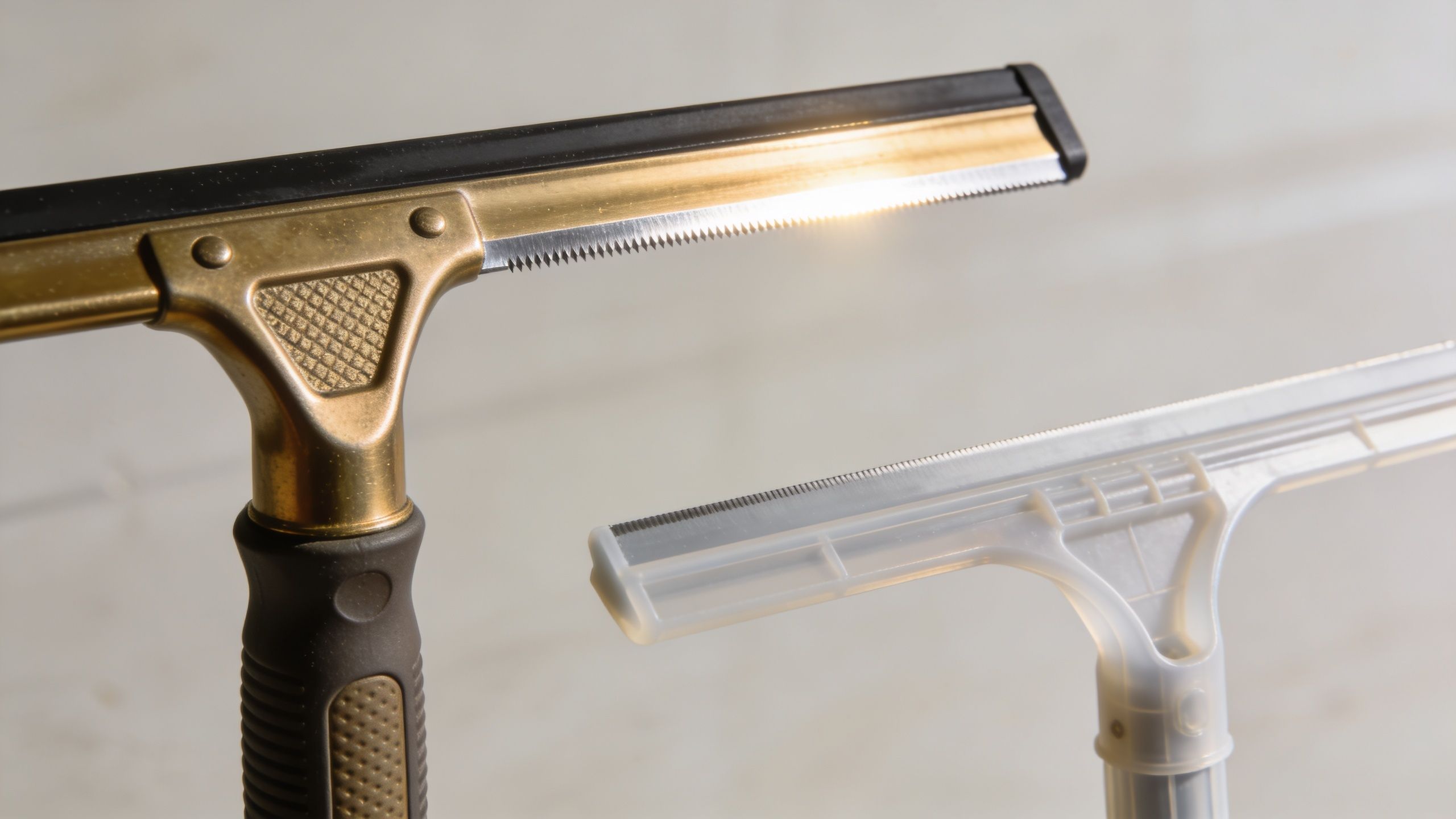
One of the clearest examples comes from the IPC Pulex Kristalset Window Cleaning Starter Kit. Its modular stainless steel squeegee channels maintain rubber tension for 99% water removal efficiency, compared with 5% to 10% residual moisture from consumer-grade kits. That leftover moisture is what turns into visible streaks and spots.
That's a practical difference, not a marketing one. On a sunny Colorado Springs afternoon, any moisture left behind has very little time to hide. The window dries fast, and flaws lock in.
DIY kits usually use softer plastic parts, less stable channels, and rubber that wears unevenly. They can work on a small bathroom mirror. They struggle on commercial storefront glass where every line catches reflected light.
Cheap gear asks the user to compensate
The common mistake is assuming more effort fixes weak tools. It usually doesn't.
With bargain gear, the user has to push harder, repeat passes, and wipe edges constantly. That adds time and often makes the finish worse. It also creates inconsistent results from one window to the next, especially if multiple staff members are handling the job.
For business owners who want to better understand technique before deciding whether to outsource, it can help to learn pro window cleaning methods and see how tool choice and hand control work together on real glass. It's also useful to compare that with this breakdown of why professional window cleaning tools make all the difference when evaluating what a service crew is bringing to the property.
Local conditions punish weak equipment
Colorado Springs is hard on mediocre tools. Dust creates abrasion. Hard water leaves deposits. Fast drying punishes hesitation. A flimsy blade or uneven channel might look acceptable on the first pane and fail by the third.
A better setup keeps pressure more uniform across the glass. It also gives the technician more control at the edges, where amateur results usually break down first.
Here's a useful demonstration of how professional technique and tool handling affect the finish:
What pro-grade really means
It doesn't mean complicated. It means reliable under real commercial conditions.
- Consistent contact: The blade stays engaged across the full channel.
- Cleaner finish: Less leftover moisture means fewer touch-ups.
- Faster workflow: Better tools reduce rework, especially on large panes.
- More predictable results: Different technicians can produce the same standard.
The biggest leap from amateur to professional cleaning usually comes from water control, not from scrubbing harder.
Safety and Best Practices for Commercial Window Cleaning
Commercial window cleaning isn't just about making the glass look good. It has to be done without disrupting customers, creating slip hazards, or putting workers in bad positions around ladders, doors, and active storefront traffic.
Safety starts before the first pane
Good crews think about the work zone first. Entry doors may need to stay usable. Sidewalk traffic has to be accounted for. Interior glass near reception areas, waiting rooms, or dining spaces calls for clean technique that controls drips and keeps floors dry.
That's one reason DIY commercial cleaning often becomes a hidden management problem. Someone has to move signs, watch the entrance, coordinate access, and make sure no one walks into wet flooring or tools left near a doorway.
Best practices go beyond the tools
A professional setup includes habits as much as hardware.
- Controlled work area: Cones, signs, and clear communication help protect staff and customers.
- Right access choice: Poles are often safer and more efficient than constant ladder movement on storefront work.
- Glass-specific technique: Different soil loads need different approaches. Dry dust, mineral spotting, and adhesive residue shouldn't all be treated the same way.
- Interior protection: Floors, frames, and adjacent finishes need to stay clean while the glass is being serviced.
Some commercial properties also deal with related entry issues like screen or door traffic flow. If your building uses service doors or utility access points that take a beating, reviewing options like high-traffic screen doors from Premier Screens Ltd can help when you're thinking about the broader maintenance picture around entrances and back-of-house areas.
Why this matters for business owners
The risk in DIY work isn't only poor results. It's interruption.
If staff members are cleaning glass between customer tasks, they're splitting attention. If they're reaching awkwardly, carrying ladders, or rushing touch-ups before opening, the business is accepting risk that has nothing to do with its core work.
A safe commercial window cleaning job looks calm. The public barely notices it's happening.
That's usually the clearest sign of professionalism. The windows get cleaned. The property stays orderly. Customers keep moving in and out without hassle.
DIY vs Hiring a Pro for Your Colorado Springs Business
For a small business, the DIY option sounds reasonable at first. Buy a kit, have staff handle touch-ups, and avoid another service line item. Sometimes that works for very limited interior glass. It usually breaks down once the property has larger panes, recurring hard water spotting, or upper glass that needs regular attention.
The real cost of doing it yourself
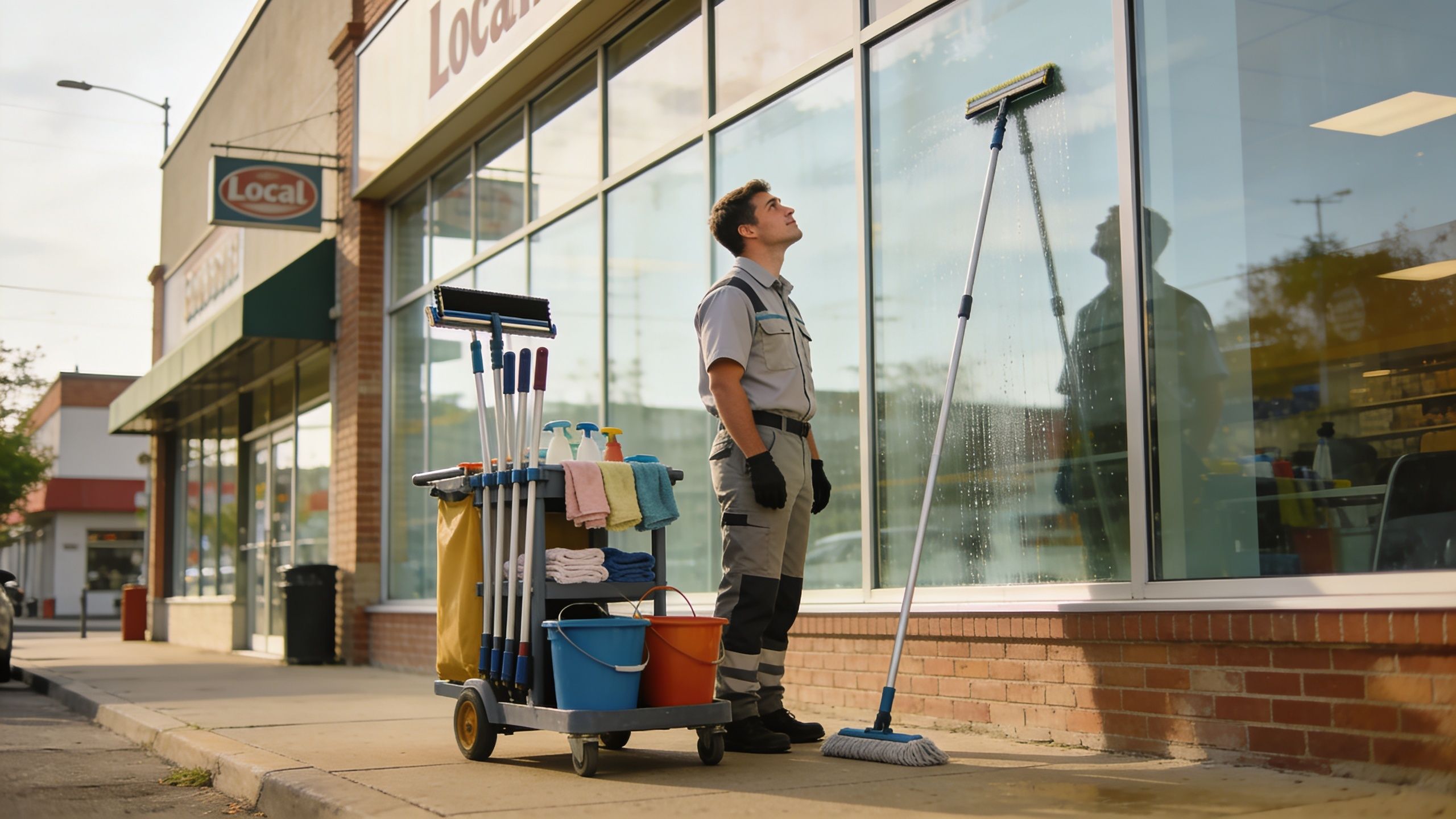
The purchase price of tools is only the beginning. As listed by Detroit Sponge commercial window cleaning kits, starter kits cost $50 to $100 and pro-grade sets cost $300 to $500. That still doesn't answer the business question, which is whether managing the work in-house makes sense once you factor in training, consistency, and risk.
For Colorado Springs businesses, clean glass affects customer perception and foot traffic. Hiring a professional service provides that recurring benefit without asking your team to buy equipment, learn technique, and handle the exposure that comes with exterior glass work.
A simple decision checklist
If you're deciding between staff cleaning and hiring a pro, use these questions:
- How visible is the glass? Front entry glass, showroom windows, and lobby panels have very little margin for streaks.
- How difficult is access? Tall storefront panes, transoms, and multi-level glass usually need more than a household setup.
- What kind of buildup are you seeing? Dust film and fingerprints are one thing. Hard water and stuck-on residue are another.
- How valuable is staff time? If employees are cleaning windows during opening or closing routines, that time is coming from somewhere else.
- How consistent do the results need to be? A business with daily foot traffic needs a repeatable standard, not “good enough today.”
Side-by-side comparison
| Decision factor | DIY approach | Professional service |
|---|---|---|
| Tool quality | Often basic or mixed | Built around commercial-grade systems |
| Training | Learned on the job | Established technique and workflow |
| Safety | Owner or staff carry the burden | Managed by trained technicians |
| Consistency | Varies by employee and schedule | More repeatable from visit to visit |
| Local problem-solving | Often reactive | Better suited to hard water, dust, and fast drying conditions |
Where DIY still makes sense
There are situations where a business can handle part of the upkeep in-house. Interior door glass can be spot-cleaned during the day. Fingerprints on entry panels can be touched up between full services. Small offices with very limited glass may not need a large service scope.
That's different from trying to replace professional commercial cleaning with a spray bottle and a breakroom roll of paper towels.
Where hiring a pro usually wins
A professional crew is the smarter choice when the business needs polished front glass, regular service, and minimal disruption. That includes restaurants, retail spaces, offices, grocery storefronts, and auto-facing commercial properties where windows are part of the presentation.
Owners who manage multiple tasks at once are also looking at workflow now, not just labor. Broader operational tools can support scheduling and service coordination too. For businesses exploring process improvements across cleaning and maintenance, it's worth seeing how companies enhance cleaning operations with AI to reduce admin friction around recurring service work.
If your building needs dependable exterior and interior care, a dedicated commercial service makes the most sense. You can see what that looks like through a local commercial window cleaning service in Colorado Springs that's built for recurring business maintenance rather than occasional DIY cleanup.
If the window is part of the customer experience, it should be cleaned like a business asset, not a side task.
Get a Flawlessly Clear View for Your Business Today
A commercial window cleaning kit is the line between casual cleanup and professional results. The tools matter, but the bigger difference is how those tools are used under real conditions. In Colorado Springs, that means working around fast drying air, airborne dust, and hard water spotting that make weak equipment and rushed technique obvious.
For businesses, the goal isn't just cleaner glass. It's a more professional storefront, clearer views, better natural light, and a property that looks maintained from the curb. That's why the best results come from the full package: pro-grade tools, safe work habits, and methods that fit the local environment.
What good service should include
When you hire a professional for commercial glass, you should expect more than a quick wash.
- Exterior window cleaning: To remove dust, grime, water spotting, and traffic film.
- Interior window cleaning: For fingerprints, haze, and customer-facing smudges.
- Attention to details: Frames, edges, and problem areas shouldn't be left half-finished.
- A reliable schedule: Regular service keeps buildup from becoming a bigger maintenance issue.
Colorado Springs businesses don't need one-size-fits-all cleaning. They need a service approach that understands how local conditions affect storefront and office glass from week to week.
If your windows are starting to distract from the business you've worked hard to build, it's probably time to stop treating them like a side job and get them handled professionally.
If you want streak-free commercial window cleaning in Colorado Springs, Monument, Manitou Springs, or nearby areas, Cultivate House Detailing is ready to help. Request a quote and see the difference professional tools, safe methods, and local experience make for your business.
Serving Manitou Springs and the surrounding Colorado Springs area — see our window cleaning services in Manitou Springs.