How Dust, Pollen, and Pollution Affect Window Clarity Over Time
We often think of our home’s windows as static, impermeable shields. They protect us from the elements while offering a portal to the outside world. When we look through them, we expect a clear view, assuming that any obstruction is simply a temporary layer of dirt that can be wiped away with a paper towel and some spray.
However, glass is not the invincible barrier many homeowners believe it to be. Over time, the clarity of your windows is under constant assault from microscopic forces. It is a slow, cumulative process where biology, chemistry, and meteorology collide on a vertical surface.
For homeowners who value the aesthetic and structural integrity of their property, understanding why windows fog, stain, and degrade is the first step toward preserving them. It isn’t merely about being fastidious; it is about protecting a significant architectural investment. When neglected, the interplay of environmental factors can turn a simple window cleaning job into a complex restoration project.
The Chemistry of Contamination
To understand why your windows get dirty—and stay that way—you have to understand the nature of glass itself. To the naked eye, a windowpane looks perfectly smooth. If you were to look at that same piece of glass under a high-powered microscope, however, you would see a landscape of peaks, valleys, and pores.
This porous surface is the perfect trap for contaminants. It creates a foothold for particles that would otherwise slide off a truly smooth surface.
The Bonding of Dust
Dust is rarely just “dirt.” In an urban or suburban environment, dust is a complex cocktail of soil, skin cells, textile fibers, and particulate matter. When this dry matter hits a window, it often carries a static charge. Friction from wind creates an electrostatic attraction, pulling the dust particles into the microscopic valleys of the glass.
Once settled, these particles act as a magnet for moisture. Even on a dry day, humidity in the air clings to the dust, creating a microscopic mud that begins to harden. This layer reduces the amount of light entering the home, creating a subtle, gray filter over your view.
The Role of Pollution
While dust provides the base layer, pollution acts as the binder. In populated areas, the air is filled with hydrocarbon exhaust from vehicles, industrial emissions, and heating systems. These airborne oils are particularly insidious because they are hydrophobic—they repel water but attract other oils and dirt.
When these hydrocarbons settle on your window, they create a sticky, oily film. This film grabs onto the dust and holds it in place against the glass. Rain, which should theoretically rinse your windows, often makes the problem worse. As the rainwater runs down the glass, it mixes with this oily film, creating streaks that harden into a stubborn grime. This chemical bond is strong enough that standard rainfall cannot break it; it requires agitation and chemical emulsification to remove.

The Seasonal Assault: A Chicago Case Study
The environment dictates the type of debris your windows face, and few environments offer a more punishing cycle than the Midwest. Chicago’s distinct seasons create a “one-two punch” that accelerates window degradation.
The Spring Pollen Coating
As winter fades, nature releases a massive amount of biological material into the air. Pollen is, by evolutionary design, meant to stick to things. It possesses a spiky microscopic structure intended to latch onto insects or other plants. Unfortunately, it latches onto your windows just as effectively.
In the Chicago area, tree pollen in early spring serves as a primary offender. This substance is often acidic. When mixed with morning dew or light rain, it forms a paste that can be incredibly difficult to remove. If left to bake in the sun, this biological paste hardens like cement. The acidity can slowly begin to affect the glass surface over time, leading to a hazy appearance that doesn’t disappear after a simple wash.
The Winter Grime
If spring provides the sticky binder, winter provides the abrasive grit. The greatest threat to window clarity in a Chicago winter isn’t the snow itself; it’s the road maintenance.
Salt and chemical de-icers are essential for safe driving, but they are terrible for residential glass. As cars drive through slush, they kick up a fine mist of dirty, salty water. This aerosolized grime drifts onto homes, coating windows in a crusty, white film.
Magnesium chloride and sodium chloride (common road salts) are highly corrosive. When this salty slurry dries on your windows, it crystallizes. These sharp crystals can cause micro-scratches on the glass surface if they are wiped off incorrectly (for example, with a dry cloth). Furthermore, the freeze-thaw cycle of a Midwest winter causes the glass to expand and contract, potentially working these contaminants deeper into the pores of the material.
Understanding Long-Term Glass Degradation
The most common misconception about window washing is that it is purely cosmetic. Homeowners often believe they can leave windows dirty for years and simply scrub them clean when they are ready to sell the house. This is a dangerous gamble. Glass is a liquid solid, and it is chemically reactive. Neglect leads to permanent damage.
The Threat of Hard Water
One of the most persistent enemies of window clarity is hard water. This occurs when water rich in minerals—specifically calcium and magnesium—evaporates on the glass, leaving the solids behind.
Sources of hard water staining include:
- Groundwater sprinklers: Irrigation systems that overspray onto the house are the number one cause of hard water damage.
- Building runoff: Water running over concrete or brick leaching lime and depositing it on the windows below.
- Acid rain: Precipitation carrying atmospheric pollutants.
From Staining to Etching
There are two stages to this type of damage.
- Stage 1: Mineral Deposits. This is when the minerals are sitting on top of the glass. The window looks spotted and white. At this stage, professional window cleaning with specialized acids or polishing compounds can usually remove the buildup and restore the view.
- Stage 2: Chemical Etching. If mineral deposits are left for too long, they begin to chemically react with the silicates in the glass. The minerals literally eat into the surface, creating small craters. Once a window is etched, it cannot be cleaned. The glass structure itself has been altered. The only way to fix etched glass is through an expensive restoration process involving grinding and polishing the glass, or total replacement.
Regular maintenance interrupts this cycle. By removing the minerals before they have time to bond and etch, you preserve the lifespan of the window unit.
The Psychology of Clarity: Why The View Matters
Beyond the chemistry and the maintenance costs, there is a human element to window clarity. We are phototropic beings; we are naturally drawn to light. The quality of light in our home has a direct impact on our physiological and psychological well-being.
Circadian Rhythms and Serotonin
Natural light is the primary regulator of our circadian rhythms—the internal body clock that tells us when to wake up and when to sleep. Disrupted rhythms are linked to insomnia, fatigue, and mood disorders.
Dirty windows act as a filter. A heavy layer of grime can significantly reduce the amount of daylight entering a room, shifting the color spectrum and dimming the interior. This reduction in light can dampen serotonin production, the hormone associated with boosting mood and focus. In the darker months of the year, maximizing every photon of available sunlight is crucial for mental health.
The Concept of Prospect and Refuge
Architects often refer to a theory called “Prospect and Refuge.” Humans feel most comfortable when they have a shelter (refuge) with a clear view of their surroundings (prospect).
Unobstructed windows provide this connection to the outdoors. They allow us to observe the weather, the landscape, and the neighborhood from a place of safety. When windows are caked in dust and pollen, that connection is severed. The home can feel smaller, more enclosed, and more isolating.
Clear windows blur the boundary between inside and outside, expanding the perceived visual space of the room. A clean window transforms a wall into a landscape painting; a dirty window turns it into a barrier.
Professional Solutions vs. DIY Limitations
Given the complexity of the contaminants—hydrophobic oils, acidic pollen, and corrosive salts—the traditional “paper towel and spray cleaner” approach is rarely sufficient. In fact, many household glass cleaners contain soaps or scents that leave behind a residue. This residue acts as a magnet for fresh dirt, causing the windows to soil faster than before.
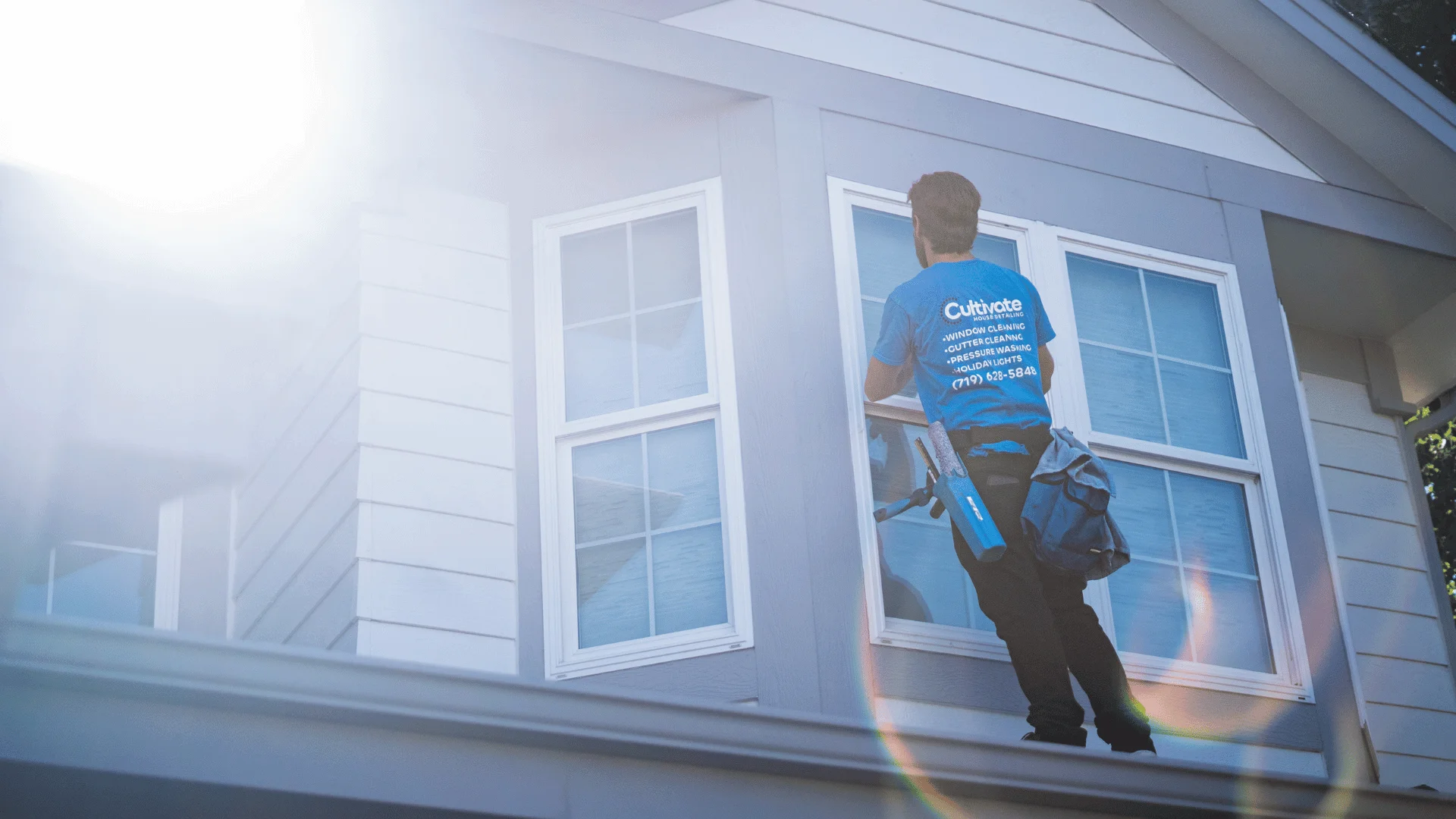
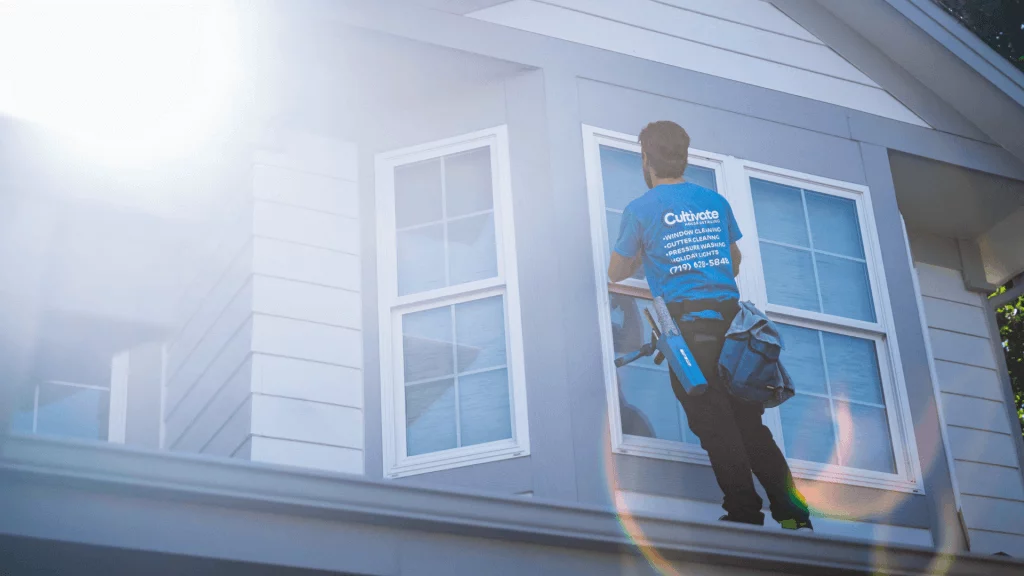
This is where professional intervention shifts from a luxury to a necessity. Companies like Cultivate House Detailing approach window cleaning not as a chore, but as a preservation service.
The Power of Pure Water
Professional detailers often utilize pure water technology. Tap water contains dissolved solids (minerals). If you spray tap water on a window and let it dry, it leaves spots.
Professionals use deionization and reverse osmosis filtration systems to remove these impurities. When pure water is applied to glass, it acts as a hungry sponge. Because the water molecules are chemically unbalanced (wanting to return to a natural state), they aggressively absorb dirt and minerals from the glass surface. When rinsed, the water evaporates completely clean, leaving no residue or spots.
Protection and Prevention
A service like Cultivate House Detailing does more than just remove the current layer of grime. They assess the condition of the glass. They can identify early signs of hard water staining or seal failure (fogging between panes) that a homeowner might miss.
Furthermore, professional cleaning involves the cleaning of frames and screens. A clean glass pane is useless if it sits in a dirty frame; the next rainstorm will simply wash the dirt from the frame back onto the glass. Comprehensive detailing ensures the entire window system is purged of contaminants.
Safety and Access
Finally, there is the practical matter of reach. Properly cleaning exterior windows, particularly on second or third stories, requires ladders and extension poles. It carries an inherent risk. Professional teams are equipped with the safety gear and the carbon fiber extension tools necessary to clean hard-to-reach angles without damaging the property or risking injury.

Ensuring the Long-Term Value of Your Home
Your home is likely your most valuable asset, and your windows are a critical component of that asset’s envelope. They regulate temperature, provide security, and define the aesthetic character of the house.
Allowing dust, pollen, and pollution to accumulate is not a passive act; it is a choice that allows slow-motion damage to occur. The degradation of glass surfaces diminishes curb appeal, lowers property value, and reduces the quality of life for the inhabitants inside.
Regular, professional attention reverses this process. It resets the clock on environmental wear and tear. By entrusting your windows to experts like Cultivate House Detailing, you are doing more than buying a cleaning service. You are investing in the longevity of your home and ensuring that your view of the world remains bright, sharp, and unobstructed.
https://www.google.com/maps?cid=10139285130722580475