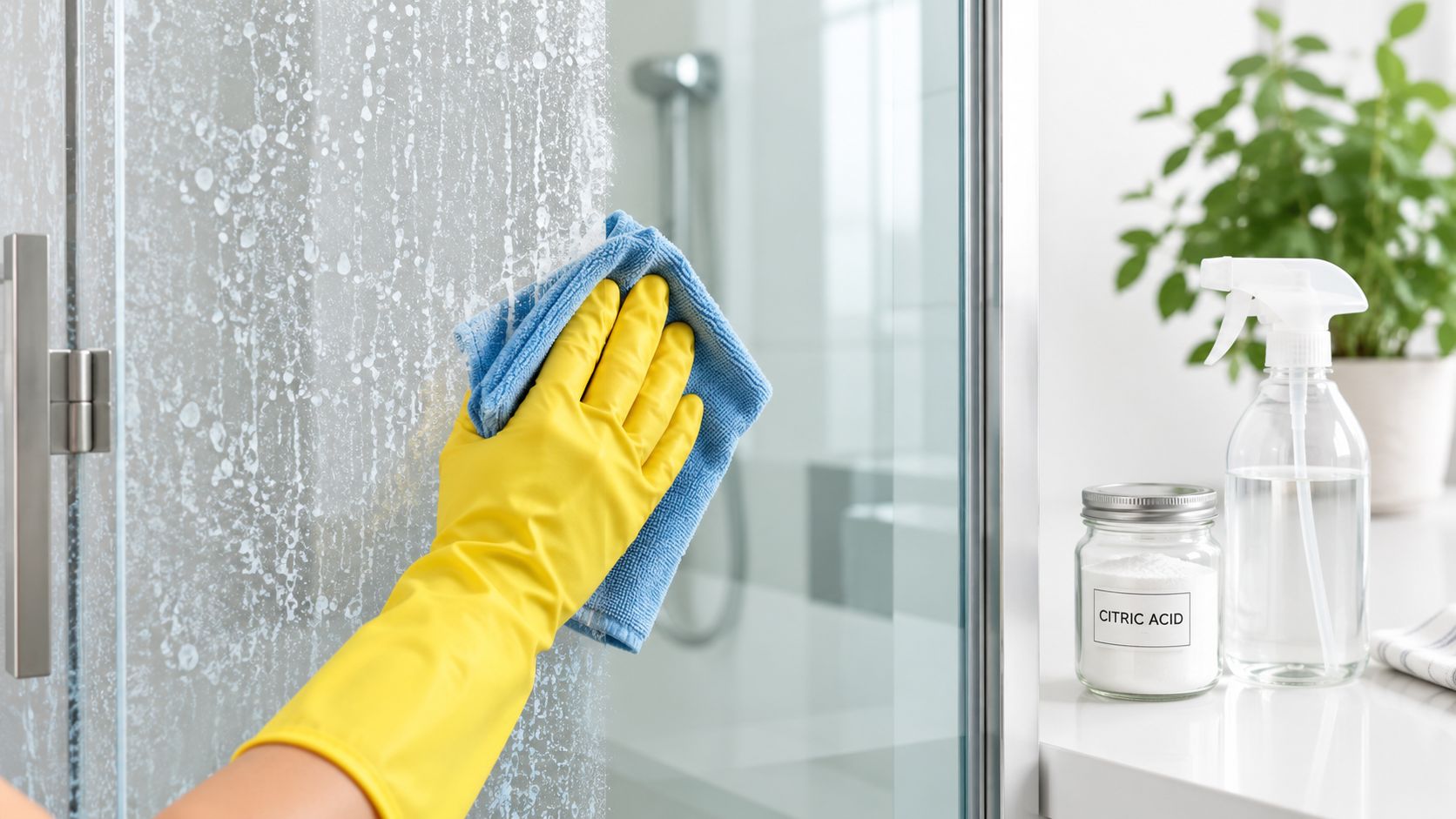
You've finished spring cleaning in Colorado Springs, but the windows still look cloudy. White rings remain on the exterior glass where sprinklers reached the panes, and the shower door shows spots that ordinary glass cleaner won't touch. The problem usually isn't dirt. It's mineral residue, and the right answer to what takes hard water spots off glass depends first on whether the residue is removable or the glass has already been etched.
Cultivate House Detailing serves Colorado Springs, CO and nearby communities with professional window cleaning, hard water stain removal, interior window cleaning, exterior window washing, screen cleaning, and track cleaning. Before you reach for a stronger scrub pad, use the diagnostic process below. It can prevent scratches, protect coatings, and show you when a professional restoration assessment makes more sense than another round of household cleaner.
Why Hard Water Spots Plague Colorado Windows
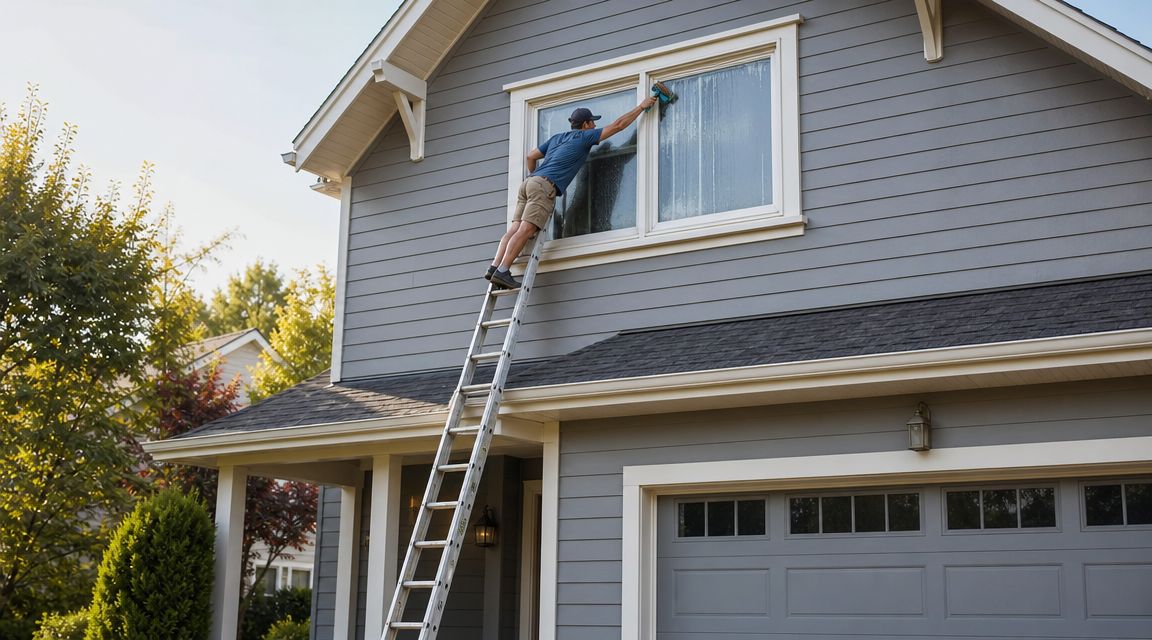
A homeowner in Colorado Springs may notice the problem after washing the house, running the sprinklers, or opening the shower door after a busy week. The glass looks clean from a distance, but sunlight reveals pale rings and cloudy patches. Exterior windows often collect deposits from irrigation overspray, while bathroom glass receives repeated droplets that dry in place.
Hard-water spots form when water evaporates and leaves dissolved minerals behind. The U.S. Geological Survey's explanation of water hardness identifies calcium and magnesium as the main contributors and expresses hardness as milligrams per liter of calcium carbonate equivalent. Its scale classifies water from 0–60 mg/L as soft, 61–120 mg/L as moderately hard, 121–180 mg/L as hard, and more than 180 mg/L as very hard.
That classification helps explain why two homes can follow the same window cleaning routine and see different results. A supply above 120 mg/L is already considered hard, while water above 180 mg/L is very hard and more likely to leave visible buildup. Colorado homeowners don't need to guess whether water chemistry matters. Repeated mineral-laden droplets create a predictable maintenance problem.
Why ordinary glass cleaner fails
A standard glass cleaner is designed to lift dust, fingerprints, oils, and light grime. It may leave a streak-free finish on normally dirty glass, but it usually won't dissolve calcium-carbonate-rich scale. Wiping with plain water can spread the residue without removing it, and repeated dry buffing may make the glass look temporarily better while leaving the deposit bonded to the surface.
Practical rule: If the mark returns in the same pattern after every sprinkler cycle or shower, treat it as a water chemistry problem, not a routine window washing problem.
The first response should be gentle and mineral-focused. Loosen the deposit, use a mild acid with controlled contact time, rinse thoroughly, and dry the pane immediately. Hard scrubbing is not a substitute for chemistry. Excessive friction can scratch glass or damage a coating, especially when grit is trapped beneath a pad.
Colorado weather and property design can amplify the issue. Sloped landscaping may direct irrigation toward lower panes, while large storefronts and homes with expansive glazing can receive repeated overspray before anyone notices. A useful overview of how Colorado's climate can damage windows adds context for homeowners planning exterior maintenance.
The practical distinction is simple. Fresh deposits may respond to a careful home treatment. Older buildup needs a staged restoration approach, and some cloudy glass can't be cleaned back to its original clarity because the surface itself has been etched.
Testing Your Glass Before Treatment
Don't start by choosing the strongest product. Start by determining whether the haze sits on the glass or has altered it.
Use a small concealed test area
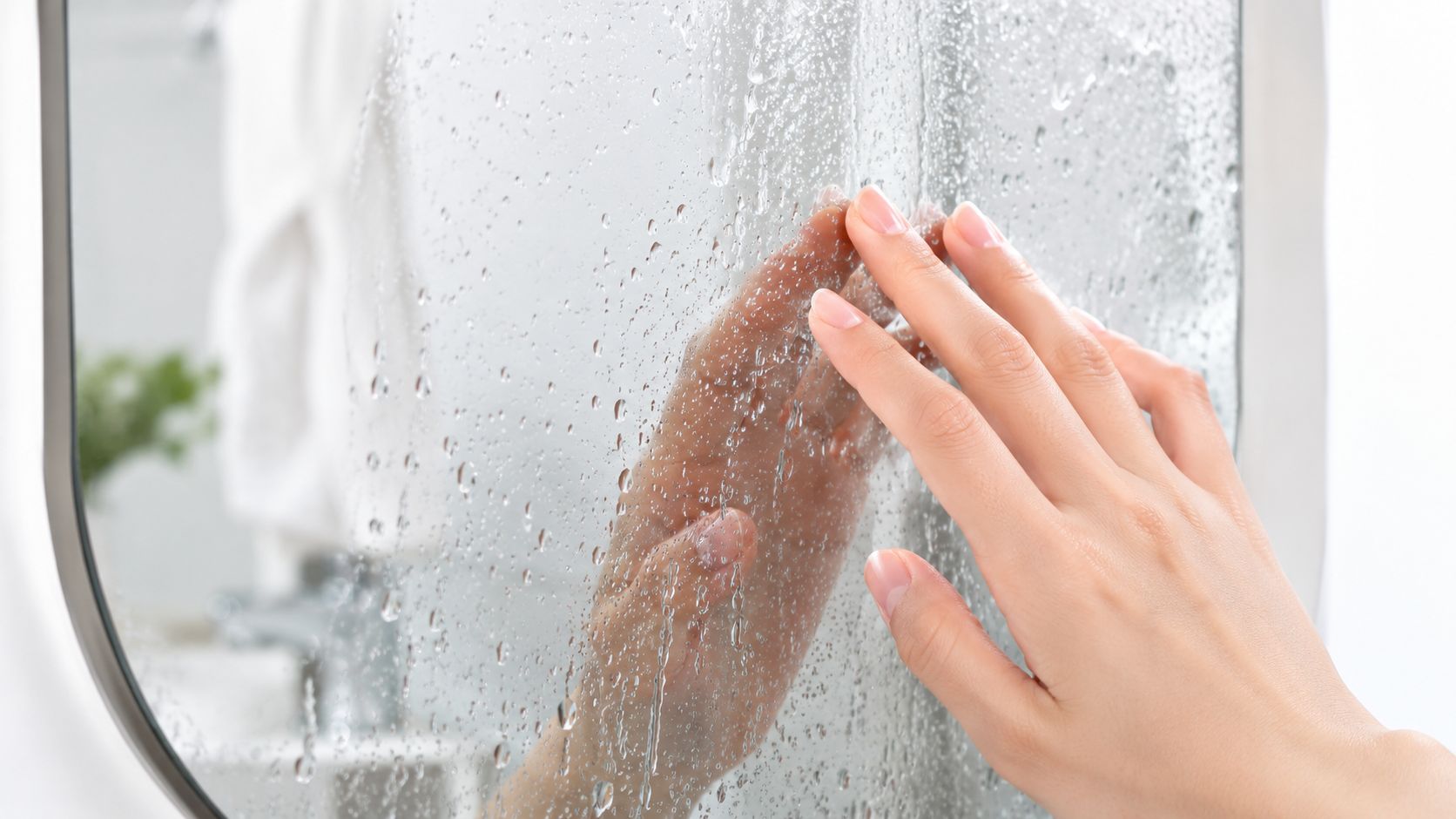
Choose an edge, corner, or other inconspicuous section. Inspect it under angled or oblique light, then wet the area with plain water. Watch the appearance while the glass is saturated.
- If the haze fades or changes when wet, a surface deposit is more likely.
- If it stays milky and unchanged, the glass may need closer evaluation.
- If the surface feels rough, pitted, or frosted, treat possible etching seriously.
A smooth surface that stays hazy when wet can still contain stubborn scale, so the water test isn't the final answer. It's a way to avoid treating the entire pane before you understand what you're facing.
Run a diluted vinegar test
For uncoated glass, mix household white vinegar and water in a 1:1 ratio. Saturate a microfiber cloth with the solution and hold it against a small test area for 60 seconds. Don't let the solution run onto painted frames, natural stone, metal finishes, or other materials that may react with acid.
Rinse the test patch completely and dry it. If the haze visibly improves, the mark is likely a removable mineral deposit. If there's no improvement, or if the test leaves a white haze, rainbow-like patch, or other unusual change, stop and reassess.
Stop at the test stage if the glass is coated. Low-emissivity, hydrophobic, anti-reflective, and self-cleaning glass can react differently to acids and abrasives. Confirm compatibility with the manufacturer before applying any treatment.
This small test protects you from the most common mistake in hard water stain removal, escalating pressure when chemistry isn't solving the problem. If gentle acid treatment produces no visible improvement and the glass remains cloudy when wet, the issue may be permanent etching. Cleaning won't reliably reverse etched glass. Specialist polishing or pane replacement may be the more honest option.
Using Vinegar for Fresh Mineral Deposits
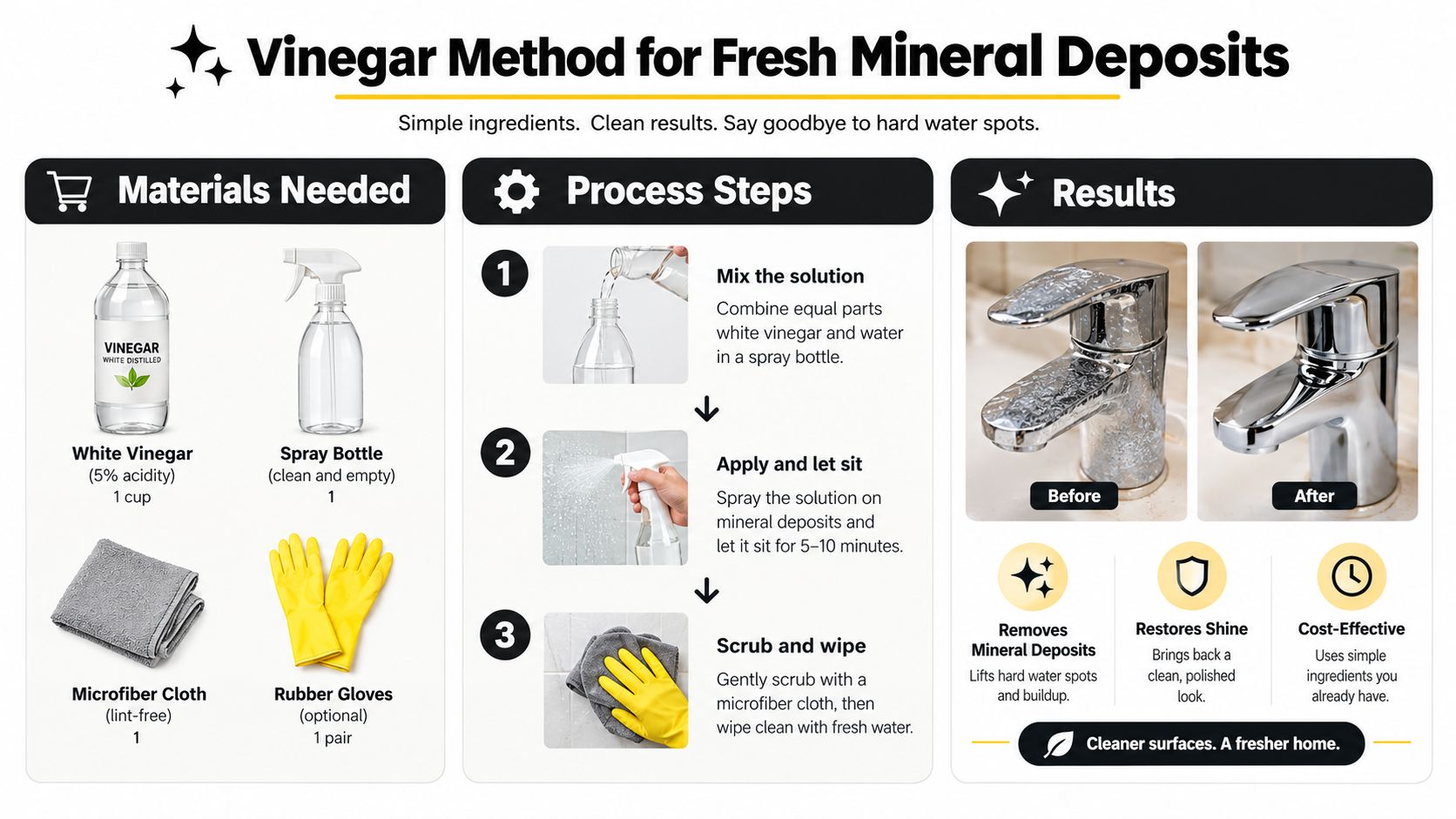
For fresh-to-moderate spotting on uncoated glass, vinegar is a reasonable first treatment because its acetic acid can soften alkaline mineral residue. It works through contact time, not brute force.
Mix equal parts household white vinegar and water in a bowl or spray bottle. On vertical panes, saturate a microfiber cloth instead of spraying the glass heavily. A cloth held against the deposit keeps the solution in contact with the affected area, while a direct spray can run down the pane and disappear before the acid has time to react.
Follow a controlled process
- Remove loose grit. Rinse or gently wipe the glass so dirt doesn't become an abrasive beneath the cloth.
- Saturate microfiber. Soak the cloth with the 1:1 vinegar solution and press it onto the spotted area.
- Maintain contact for 5–10 minutes. Keep the deposit wet. Don't allow the vinegar to evaporate on the glass.
- Agitate gently. Use microfiber or a non-scratch pad with light pressure.
- Rinse completely. Deionized or distilled water is preferable because it reduces the chance of leaving fresh minerals behind.
- Dry immediately. Use a clean lint-free cloth or squeegee.
The acid does the important work by reacting with alkaline calcium and magnesium deposits. Scrubbing pressure only helps remove residue after the mineral bond has softened. If the glass is still cloudy after one controlled pass, don't immediately reach for a razor, steel wool, or powdered abrasive.
Know when vinegar has reached its limit
Vinegar can help with surface scale, but it can't prevent new mineral-laden water from drying on the pane. It also won't repair etching. Never use it on coated glass without confirmation, and never mix acids with chlorine products.
For a technical comparison, a homeowner-focused explanation of acid treatment for hard-water stains describes vinegar and lemon juice as mild acids that need adequate contact time. That principle matters more than aggressive rubbing. A quick spray-and-wipe often fails because the solution runs off or dries before it can soften the deposit.
The finish matters, too. Rinse until no acidic residue remains, then inspect the pane from several angles. If spots remain in the same places and the test area shows no response, move to a professional-compatible descaler or stop if etching is suspected.
Applying Citric Acid for Stubborn Buildup
Vinegar and citric acid solve related problems, but they aren't interchangeable in every situation. Vinegar is accessible and useful for lighter deposits. Citric acid can provide a more concentrated descaling approach for established buildup, provided the product is compatible with the glass and any surrounding materials.
A technical cleaning guide reports that a 3% citric-acid solution, approximately 30 g/L with a pH of 2.0–2.2, achieved more than 92% dissolution of 72-hour limescale within five minutes in laboratory trials. That result is a controlled laboratory finding, not a guaranteed field outcome. Coatings, deposit thickness, temperature, application technique, and prior damage can all change the result.
Compare the treatment choices
| Approach | Where it fits | Main advantage | Main risk |
|---|---|---|---|
| Diluted vinegar | Fresh-to-moderate deposits on confirmed uncoated glass | Accessible and mild | Often insufficient for established scale |
| Citric-acid solution | More persistent mineral buildup | Stronger descaling action with controlled use | Requires careful concentration and compatibility testing |
| Purpose-formulated descaler | Heavy or layered deposits | Designed for mineral removal | Label directions and coating restrictions matter |
| Abrasive restoration | Specialist work after testing | May address deposits that chemistry can't fully lift | Incorrect pressure or material can scratch or haze glass |
For stubborn buildup, work section by section. Test a concealed area for 60 seconds, apply a glass-compatible descaler, and follow the label's specified dwell time while keeping the surface wet. Use the mildest effective non-scratching applicator. Rinse extensively before a normal soap-and-squeegee clean, then inspect under angled light.
Avoid steel wool, razor scraping on coated glass, powdered abrasives, undiluted strong acids, and any acid mixed with chlorine products. Even uncoated glass can be damaged by careless abrasion when grit is present.
Cultivate House Detailing uses a mild, glass-safe acidic process and professional polishing compounds for hard-water stain removal when a homeowner's controlled DIY test isn't enough. The right service decision depends on the test area, the glass type, the deposit, and whether the haze responds to treatment.
If the mineral film comes off but a milky shadow remains, that shadow may be etching. More cleaning won't reliably restore chemically altered glass. A specialist may recommend polishing, but replacement can be necessary when optical damage is extensive.
Preventing Hard Water Spots After Cleaning
Removal is only half the job. If the same sprinkler head keeps wetting the same pane, or shower water dries on the door after every use, the deposit will return. Prevention starts by identifying where the mineral-rich water comes from and how often it reaches the glass.
Walk the property while irrigation is running. Redirect heads that spray windows, adjust overspray, and look for lower panes that receive repeated wetting. Inside the home, squeegeeing shower glass and drying edges reduces the time water remains on the surface. After exterior window cleaning, purified rinse water and immediate drying help prevent a freshly cleaned pane from spotting again.
Match prevention to water conditions
Water testing gives homeowners a more useful starting point than guessing at products. Under the USGS hardness classification, water above 120 mg/L is hard and water above 180 mg/L is very hard. Frequent recurrence at those levels suggests that routine cleaning alone may not address the source.
A cited hard-water guide places more significant scale-management decisions around 200–400 mg/L as calcium carbonate and identifies ion-exchange softening as the most reliable prevention approach above 400 mg/L. These thresholds should support a decision, not replace a local water assessment or plumbing advice.
- Occasional exterior spotting: Correct irrigation overspray and schedule seasonal exterior window cleaning.
- Recurring bathroom buildup: Squeegee after use and clean mineral film before it cures.
- Frequent whole-property deposits: Test the water and discuss conditioning or softening options.
- Etched or coated glass: Stop aggressive DIY work and request a professional evaluation.
For homeowners comparing plumbing solutions, information about water softener service from Stultz Plumbing can help explain when a water-treatment conversation belongs with a plumbing professional. A softener may reduce the mineral load reaching fixtures and glass, but it won't remove existing etching or eliminate the need to manage irrigation and drying.
Regular maintenance also protects commercial properties. Storefronts, restaurants, offices, dealerships, and other businesses in Colorado Springs can schedule commercial window cleaning before deposits become difficult restoration work. Residential clients may combine exterior window cleaning with interior glass, screens, tracks, and seasonal maintenance.
More practical prevention ideas are outlined in this guide to preventing hard-water stains on glass. The central decision is straightforward: use mild treatment for fresh deposits, escalate carefully for established scale, and stop cleaning when the evidence points to etching.
Cultivate House Detailing provides residential and commercial window cleaning in Colorado Springs, CO and nearby communities, including interior window cleaning, exterior window washing, screen and track cleaning, and hard-water stain removal. If your glass has recurring spots or cloudy buildup, visit Cultivate House Detailing to request a quote and schedule a professional assessment.