If you're standing in your living room in Colorado Springs and looking out at Pikes Peak through a haze of white spots, you're not alone. A lot of homeowners don't notice hard water stains at first. Then one sunny afternoon the light hits the glass just right, and suddenly every sprinkler mark, shower spot, and chalky streak is impossible to ignore.
That frustration is especially common around Colorado Springs, Manitou Springs, Black Forest, Monument, and Woodland Park. We get strong sun, dry air, and plenty of mineral-heavy water. That combination is rough on glass. Water dries fast here, and when it dries, it leaves behind the minerals that were dissolved in it.
For homeowners searching for window cleaning near me, window cleaning in Colorado Springs, CO, or reliable professional window cleaning, prevention is equally important as cleaning. Good glass care isn't only about making windows look nicer for the week. It's about protecting your view over time so the glass stays clearer, brighter, and easier to maintain.
Protecting Your Colorado Views From Hard Water Stains
One of the best parts of living in Colorado Springs is the view. Some homes face Pikes Peak. Others catch red rock formations, pine-covered hills, or wide-open Front Range skies. Clean glass makes those views feel bigger. Hard water stains do the opposite. They flatten the light and make even beautiful windows look tired.

In this part of Colorado, the problem often starts outside. Sprinklers hit lower windows. Hose water splashes patio doors. Afternoon sun bakes droplets onto the glass before anyone thinks to wipe them off. Inside, shower doors and bathroom glass collect the same kind of mineral residue. The result looks harmless at first, but over time those spots become harder to remove.
Why Colorado homes deal with this more often
High-altitude sun speeds up evaporation. Mineral-rich water leaves residue behind. Wind and dust can add another layer that makes the glass look dull even after a basic wipe-down.
That's why homeowners often try standard window washing and still feel disappointed. The glass may be clean of dust and fingerprints, but the white spotting remains. It isn't regular grime. It's mineral buildup.
Hard water staining isn't just a cleaning nuisance. For many homes, it's a maintenance issue that slowly steals clarity from the windows you look through every day.
If you're looking for residential window cleaning, exterior window cleaning, or streak-free window cleaning in Colorado Springs, it helps to understand what's happening on the surface. Once you know that, the right prevention steps make a lot more sense.
What Causes Those Stubborn White Spots on Your Glass?
Those cloudy white spots are usually mineral deposits. The most common culprits are calcium and magnesium. They ride in with the water, land on the glass, and stay behind after the water evaporates.
What's actually happening on the glass
The process is simple. Water from a sprinkler, shower, or hose lands on the glass. Then the water dries. The liquid disappears, but the minerals don't. They remain as a chalky film or scattered spots.
This is why normal glass cleaner often doesn't solve the problem. Dirt, pollen, and fingerprints wipe away easily. Hard water stains don't, because you're not dealing with ordinary surface mess. You're dealing with dried mineral residue.
Why Colorado Springs windows get hit hard
Colorado's climate makes the problem more noticeable. Strong sunlight speeds up drying. Dry air doesn't give you much time to catch droplets before they leave deposits. Exterior glass near irrigation zones tends to suffer first, but interior shower glass can get the same buildup.
A few common sources include:
- Sprinkler overspray that reaches ground-floor windows and glass doors
- Hose water used around patios, decks, and landscaping
- Shower spray that dries on doors and panels
- Rain mixed with existing residue that can leave spotting behind as it dries
If a window keeps spotting up in the same area, look nearby before you scrub harder. Most repeat stains come from repeat water exposure.
For homeowners and property managers booking commercial window cleaning or interior window cleaning in Colorado Springs, this matters because the right cleaning plan depends on the cause. If you only clean the glass without addressing the water source, the spots come right back.
Simple Daily Habits to Keep Glass Spotless
The best prevention isn't complicated. It's consistency. The most effective method to prevent hard water stains on glass is to physically remove water immediately before it evaporates, because hard water spots are mineral leftovers from dried water. A simple 10-second wipe-down after each shower or use of a squeegee can significantly reduce the risk of stains forming, according to Pure Southern Water's hard water stain guide.
The habits that work best
For shower glass, keep a squeegee in the stall. Use it every time. Then follow with a microfiber cloth if you still see droplets along the edges or around the hardware. That small routine does more than most specialty cleaners.
For exterior glass, prevention is more about controlling where water lands. If your sprinklers are tagging the same windows every morning, aim them lower or redirect the spray pattern. If you wash patio furniture, rinse planters, or water flower beds near large panes of glass, pay attention to the splash zone.
A few simple habits make a real difference:
- Use a squeegee after showers to remove water before it dries on glass panels and doors
- Keep microfiber towels handy near bathrooms, kitchen windows, and patio doors where splash marks show up often
- Adjust irrigation heads so they don't hit windows, trim, or screens
- Dry glass after rinsing nearby surfaces if overspray reaches the pane
- Clean screens and tracks periodically so dust and mineral residue don't migrate back onto clean glass
Why small routines beat heavy scrubbing
A lot of homeowners wait until the stains are obvious, then spend a weekend trying to scrub them off. That's the hard way to do it. A few seconds of prevention usually saves far more effort later.
If you're seeing repeated spotting around sinks, showers, or glass near fixtures, the water source may need attention too. In that case, it's worth reviewing Expert bath and kitchen plumbing to address the splash, leak, or fixture issue that's feeding the problem.
Practical rule: If water touches glass often, your goal is simple. Don't let it dry there.
For day-to-day upkeep, that mindset works better than relying on a stronger spray bottle. Prevention starts with removing the water, not fighting the mineral after it hardens.
DIY Solutions and Protective Coatings for Glass
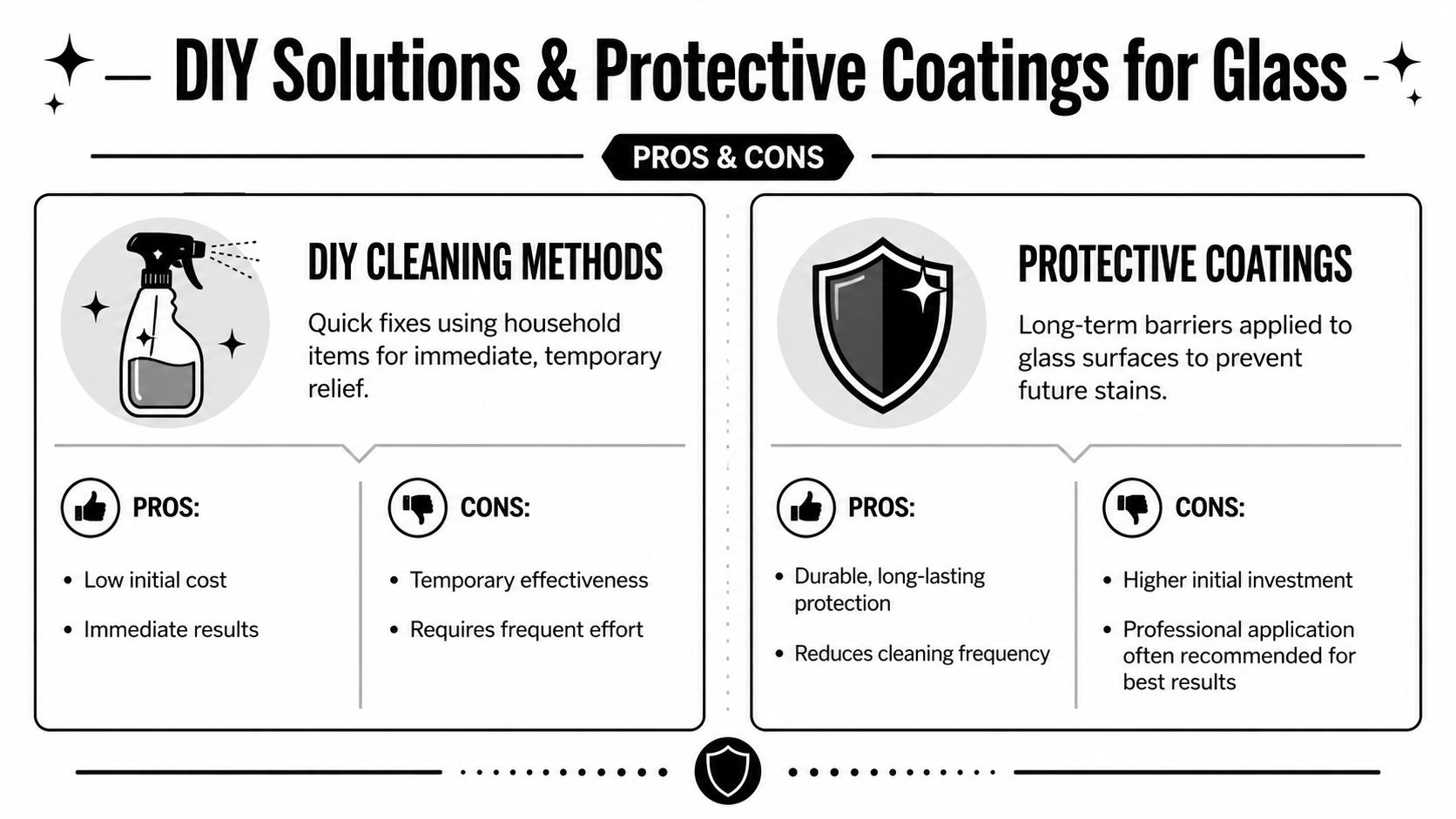
A lot of Colorado Springs homeowners hit the same point. The glass looks better after a quick scrub, then the white haze comes right back because our water carries minerals and our high-altitude sun bakes those droplets dry fast. DIY work can help, but it helps most when you match the method to the level of buildup.
DIY cleaning methods for light stains
For fresh spotting or a thin mineral film, start simple. Mix equal parts white vinegar and warm water, spray the glass well, let it dwell for a few minutes, then wipe with a soft microfiber cloth or a non-scratch sponge. The acid in vinegar loosens calcium and magnesium deposits before they fully harden, which is why it works better on newer stains than old crusted buildup.
If you need a little more bite, add a light dusting of baking soda and scrub gently. The goal is to break the bond of the residue without scratching the glass or wearing down nearby finishes, especially around shower frames and window trim.
Older buildup takes more patience. One homeowner trick is to soak paper towels in vinegar and press them against the stained area so the surface stays wet longer. That gives the acid more contact time, but it is still a maintenance-level fix, not a restoration method for heavily etched glass.
If you want another practical homeowner reference, this walkthrough on how to clean mineral buildup on glass is useful for understanding what to try first and when to stop before over-scrubbing.
Protective coatings for longer control
Cleaning removes what is on the glass today. A hydrophobic coating changes how water behaves on the surface after that. Instead of spreading out and drying in place, water beads up and slides off more easily, which means fewer minerals are left behind to bake onto the pane.
That matters even more in Colorado. Strong sun speeds up evaporation, and fast evaporation leaves mineral residue behind. A good coating helps slow that cycle, especially on shower glass, south-facing windows, and exterior panes that catch sprinkler mist or hose spray.
Koenig Polish notes in its guide on preventing hard water stains on glass that protective coatings need regular reapplication and can significantly reduce future stain buildup when paired with routine cleaning: https://koenigpolish.com/blog/how-to-prevent-hard-water-stains-on-glass-for-good/
Here's the practical trade-off:
| Approach | Best for | Limitation |
|---|---|---|
| Vinegar and warm water | Fresh spotting and light mineral film | Limited results on older, bonded deposits |
| Baking soda with gentle scrubbing | Buildup that needs mild abrasion | Too much pressure can scratch or dull surrounding surfaces |
| Hydrophobic spray or sealant | Reducing future spotting | Needs upkeep and works best after glass is cleaned properly |
A two-step approach usually gives the best result. Remove the residue first, then protect the clean surface so the next round of mineral deposits has a harder time sticking. For in-between cleanings, this guide to a homemade window cleaner with alcohol is a solid option for routine touch-ups.
DIY methods make sense for light stains and upkeep. Once hard water has started etching the glass, or the same windows keep getting hit by mineral-heavy irrigation, professional care becomes less about appearance and more about preserving the view you paid for.
Investing in Whole-Home Hard Water Prevention
If you're tired of fighting the same stains on windows, shower glass, siding, and even vehicles, it may be time to deal with the water itself. Surface cleaning helps, but whole-home prevention changes the pattern that keeps causing the problem.
Three long-term approaches homeowners consider
A water softener is the most direct option when mineral-heavy household water is the root issue. The goal is straightforward. Reduce the minerals before the water reaches showers, sinks, and fixtures that regularly leave spotting behind.
A whole-house filtration system can also be part of the solution, depending on the setup and what you're trying to improve. Some homeowners want broader water treatment for the entire property, not just cleaner shower glass. If you're comparing systems and want a general overview, the NoCo water filtration guide is a helpful place to start.
Then there are spot-free rinse systems, which are especially relevant for exterior maintenance. These systems are designed for targeted applications where drying without mineral residue matters most, such as exterior window washing or vehicle rinsing.
How to think about the decision
This usually comes down to where the problem shows up most.
- Mostly on shower doors and bathroom glass means a whole-home water treatment conversation may make sense.
- Mostly on exterior windows near irrigation means your sprinkler layout and cleaning routine may matter more than a full system.
- Across several surfaces around the property points toward a broader prevention strategy.
The best long-term fix depends on whether the source is household water, outdoor overspray, or both.
For Colorado Springs homeowners serious about protecting their view, these systems aren't just about convenience. They can reduce repeat buildup and make future residential window cleaning, screen cleaning, and maintenance services much easier to manage.
The Professional Solution for Hard Water Stains in Colorado Springs
You wash the glass, the windows look better for a day, and then the afternoon sun hits them just right. The white spotting is still there. Around Colorado Springs, that usually means the minerals have bonded to the surface long enough that basic cleaning is no longer enough.

At that stage, the job shifts from routine cleaning to evaluating the glass itself. Some stains are still removable mineral deposits. Some have started to etch the surface, especially on south- and west-facing windows that take hard Colorado sun day after day. High altitude UV, repeated sprinkler overspray, and mineral-heavy water make that process faster here than many homeowners expect.
When professional help makes more sense
The pattern is pretty consistent. Lower panes near irrigation lines collect repeat spotting. Shower glass turns cloudy after minerals dry on the surface over and over. Large entry glass and second-story windows get neglected because they are awkward to reach, so deposits sit longer and bake in.
Aggressive DIY scrubbing can make things worse. I have seen homeowners use abrasive pads or the wrong chemicals, only to leave scratches, haze, or damaged seals behind. Once the glass is marked up, there is no easy fix.
A professional window cleaner brings more than soap and a squeegee:
- A trained eye to tell the difference between removable residue and permanent etching
- Safer access for upper-story windows, tall foyer glass, and awkward exterior panes
- Better tools and methods for hard water treatment without unnecessary abrasion
- A maintenance plan that reduces repeat buildup instead of treating every visit like a fresh emergency
That last point matters in Colorado Springs. A one-time cleanup helps, but prevention is what protects the view.
What homeowners and businesses should expect
Good service should be straightforward. Clear pricing, a defined scope of work, careful technicians, and glass that looks sharper in full sun, not just from the curb. Whether the property is a home in Black Forest or a storefront in town, the goal is the same. Restore clarity and slow the return of mineral buildup.
Professional service also saves wear on the glass over time. Clean windows bring in more natural light, improve curb appeal, and make a home feel better maintained. On view-facing properties, that is not a small detail. In this part of Colorado, the windows are part of the experience of the home.
If you are trying to figure out whether your windows need basic cleaning or more involved stain removal, this guide on removing hard water stains from windows is a useful next step.
Here's a closer look at the kind of exterior care and glass maintenance homeowners often look for in this area:
Why this matters in Colorado Springs
Colorado homes are built for light, mountain views, and big open sightlines. Hard water stains chip away at all of that. They dull the glass, catch glare, and make an otherwise well-kept property look tired.
Many people start by looking for window cleaning because they want the spots gone. What they really need is ongoing care that accounts for local conditions, from sprinkler patterns to sun exposure to seasonal dust. That is why professional window cleaning works best here as preventive maintenance, not just cleanup.
If your windows are losing clarity to hard water stains, sprinkler spotting, or seasonal buildup, Cultivate House Detailing can help you protect your view with professional window cleaning in Colorado Springs, CO and nearby communities. From streak-free residential window cleaning to dependable commercial window cleaning, exterior window cleaning, interior window cleaning, screen cleaning, and track cleaning, the team delivers careful service and clear communication from estimate to follow-up. Request a quote and get your glass back to the bright, sharp finish your home or business deserves.
Prefer to leave it to a professional? Cultivate House Detailing offers residential window cleaning in Colorado Springs. Get a free quote.