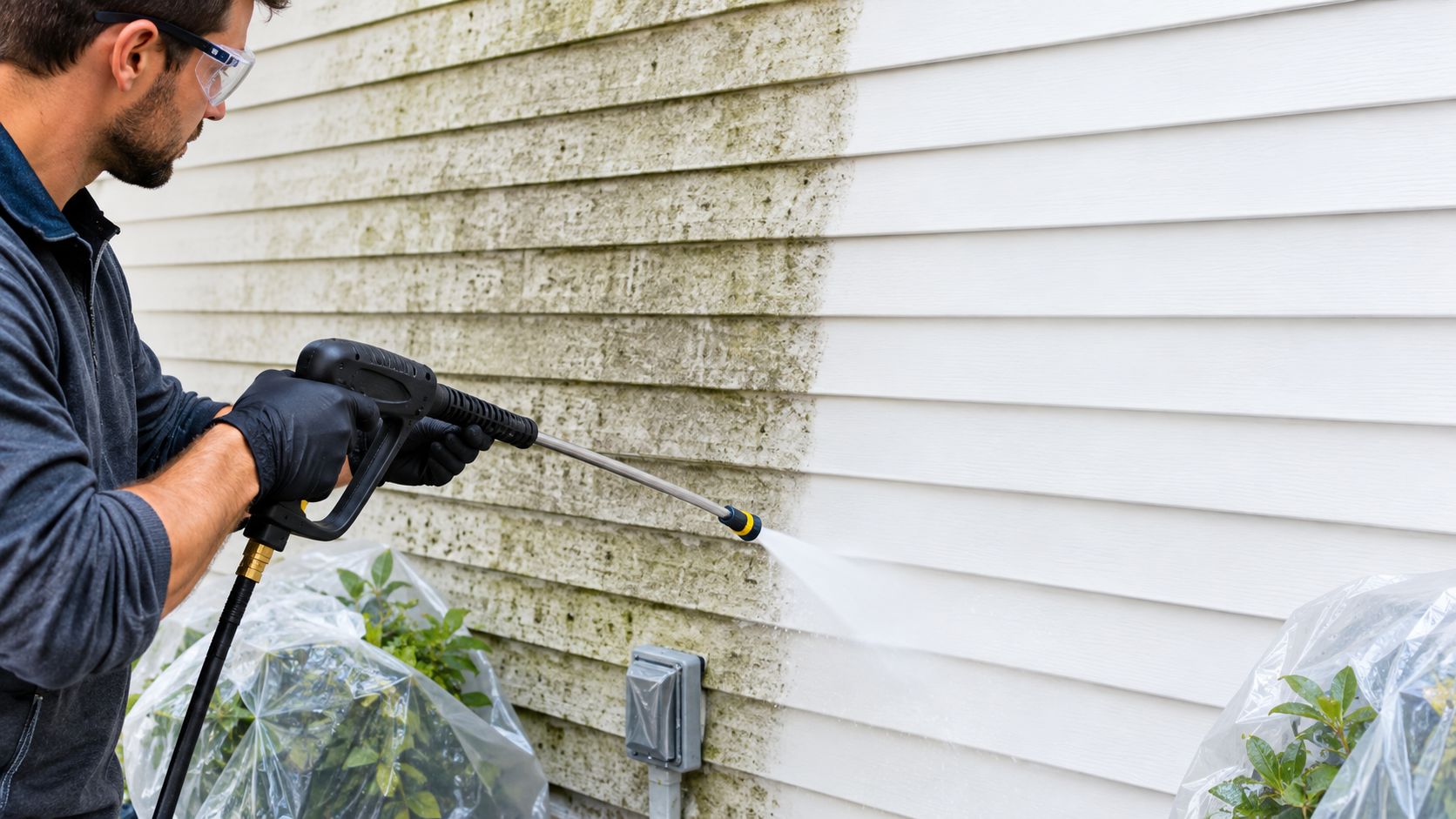
A lot of Colorado Springs homeowners have the same moment every year. A windstorm rolls through, pine needles collect in every corner of the yard, then the next rain hits and you start watching the roofline a little too closely. If water spills over the gutter edge instead of moving cleanly to the downspouts, you're not looking at a cosmetic problem. You're looking at runoff heading toward siding, fascia, landscaping, and the area around your foundation.
That's why the cleaning of gutters matters so much here. In a milder climate, people can sometimes get away with a simple spring and fall routine and not think much about it. Around Colorado Springs, conditions change faster. Pine needles drop for long stretches, high winds move debris where it doesn't belong, and freeze-thaw weather can turn a small drainage issue into a bigger repair.
Clean gutters do one simple job. They move water away from the house. When that stops happening, the damage usually shows up somewhere else first.
Your Guide to Gutter Cleaning in Colorado Springs
After a Front Range storm, the pattern is usually easy to spot. Needles pack into the valleys of the roof. Twigs settle in gutter corners. Fine debris drifts toward the outlet and turns into a wet mat. Everything looks manageable from the ground until the next heavy runoff shows you the truth.
That's the part many homeowners miss. Gutters don't need to be completely full to fail. A partial blockage near the outlet can slow water enough that the whole run starts backing up. In Colorado Springs, that matters because weather doesn't wait for a convenient maintenance weekend.
What local homes deal with most
The biggest difference here is debris type. Broad leaves are messy, but pine needles are more stubborn. They tangle together, trap roof grit, and hold moisture. Once that mix settles into a downspout opening, flow drops fast.
A second issue is timing. Homes near taller trees, open windy lots, or foothill areas can look clear one week and clogged again not long after. That's why a generic gutter article often doesn't help much around here.
Practical rule: If your property collects needles on the driveway, in window wells, and along fence lines after every wind event, your gutters are collecting more than you think too.
What homeowners usually want to know
Many homeowners aren't asking whether gutters get dirty. They're asking more practical questions:
- How often is often enough for my lot, not somebody else's?
- Can I clean them safely myself, or is the ladder risk not worth it?
- If they overflow after cleaning, is the problem a repair issue?
- How do I handle pine needles and fire risk without turning this into a constant project?
The answers depend on the roofline, the tree cover, and how exposed the house is to wind. The good news is that gutter maintenance is straightforward when you approach it as prevention instead of waiting for visible overflow. That's the right mindset for protecting a home in Colorado Springs.
Why Gutter Cleaning is Crucial for Colorado Springs Homes
The usual advice is to clean gutters twice a year. That's a good baseline, but it isn't always enough here. Major consumer guidance commonly recommends at least twice-yearly cleaning, and homes with year-round shedding trees may need service as often as every three months according to Leafguard's gutter cleaning guidance.

Pine needles change the schedule
If your house is under heavy pine cover, a fixed spring-and-fall plan can leave long stretches where debris keeps building. Pine needles don't arrive in one clean seasonal dump. They accumulate gradually, then wind pushes them into the same trouble spots over and over, especially at corners and downspout outlets.
That's why many Colorado Springs homes need a risk-based schedule rather than a calendar-based one. A home in an open neighborhood with little tree cover may stay close to the baseline. A home in Black Forest or a needle-heavy lot often needs more frequent attention.
From a practical standpoint:
| Property condition | Cleaning approach |
|---|---|
| Light tree cover | Start with spring and fall |
| Moderate debris and wind exposure | Add checks after major wind events |
| Heavy pine coverage | Consider much more frequent service |
| Wildfire-prone setting | Prioritize pre-season and post-wind cleanup |
Gutters are part of fire mitigation
This is the angle generic articles usually miss. In Colorado Springs, dry gutter debris isn't only a water-flow issue. It can also become part of the fuel load around the roofline. Pine needles in gutters are highly flammable, which is one reason more local homeowners treat gutter cleaning as part of home hardening and defensible-space maintenance.
Clean gutters help with drainage, but in our area they also remove one more place where dry debris can sit against the house.
That local reality changes how you schedule work. Instead of only thinking about spring rain and fall leaves, many homeowners should also think about after wind events, during pine needle drop, and before peak fire season.
Freeze-thaw weather raises the stakes
Colorado Springs weather can swing quickly. If water doesn't drain correctly, trapped moisture can sit in low sections of the gutter and around packed debris. Then temperatures drop, ice forms, and the system carries more weight right where flow is already restricted.
That combination can stress brackets, joints, fascia edges, and the gutter run itself. A small cleaning issue can turn into a drainage and repair issue faster here than people expect.
For roofing and exterior businesses trying to explain that local risk clearly, I like practical resources that focus on service-page clarity instead of generic content. This generate SEO content for roofing businesses resource is a good example of how to frame roofline maintenance around real homeowner concerns.
A Step-by-Step Gutter Cleaning Process
If you're going to do the cleaning of gutters yourself, safety comes first. Not after the tools are out. First. Most DIY problems start before any debris is removed, usually with unstable footing, overreaching from the ladder, or trying to rush the job.
A typical professional workflow starts by securing access, removing large debris by hand or scoop, flushing the gutter run with a hose, then clearing and testing the downspout, followed by a final inspection for leaks or damage, as outlined in Taskrabbit's gutter cleaning process.
Start with safety and setup
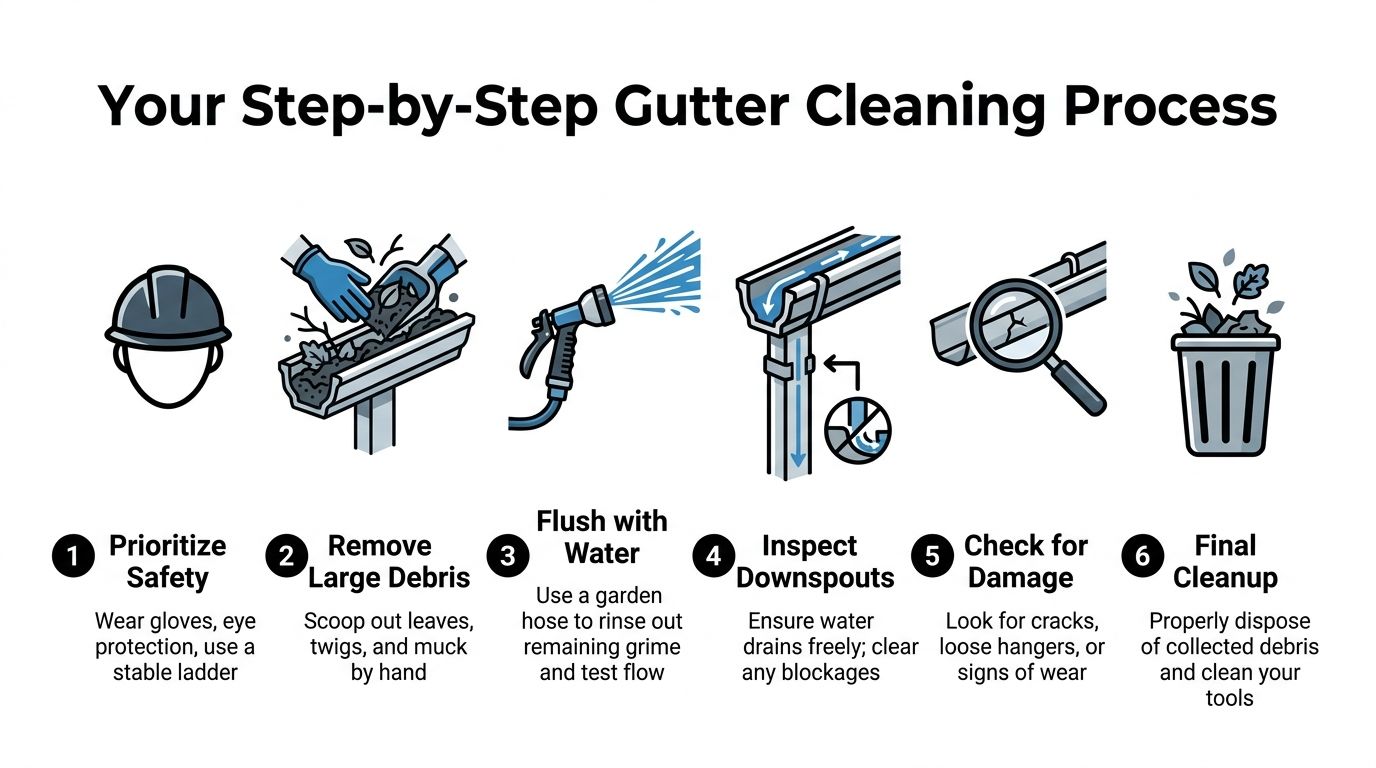
Before you touch the gutter, get organized. You want gloves, eye protection, a stable ladder on firm ground, a scoop or small hand trowel, a bucket or debris bag, and a garden hose with a spray nozzle. Wear shoes that grip well, and don't work near power lines or in windy conditions.
For homeowners who want lower-risk options, ground-based methods can make sense in the right setup. This guide on how to clean gutters without a ladder is useful if your roofline and access allow for it.
Remove debris the right way
Some homeowners make the job harder by blasting water into packed debris right away. That usually turns dry material into heavy sludge and can push it deeper into the outlet.
Use this sequence instead:
- Position the ladder carefully and work in short sections. Move the ladder often instead of leaning too far.
- Lift out large debris first by hand or with a scoop. Bag it as you go so it doesn't end up in flower beds.
- Pay extra attention to corners where needles and roof grit like to settle.
- Keep the outlet area visible so you can tell whether the downspout opening is clear.
If the gutter is packed with needles and granules, treat it like removal work first and rinsing work second. Water is for testing flow, not replacing the scoop.
A short visual can help if you want to see the general motion of the job before doing it yourself:
Flush, test, and inspect
Once the larger debris is out, run water through the gutter and watch how it moves. The goal isn't just to rinse the channel. You're checking whether water travels freely toward the downspout and exits the system without backing up.
Here's what to look for during the flush:
- Smooth flow toward the outlet means the run is probably open.
- Water sitting in one section can point to a pitch problem.
- Overflow near the outlet usually means the downspout or opening still has a restriction.
- Drips at seams or corners suggest a leak that cleaning alone won't solve.
Know when DIY stops making sense
Single-story sections with easy access are one thing. Tall rooflines, steep grades, awkward landscaping, and second-story areas are another. Professionals often reduce ladder time with high-reach vacuum systems using carbon-fiber poles that can extend to about 40 feet, allowing more ground-level cleaning, as described in this guide to professional gutter-cleaning equipment.
That equipment matters because it changes both safety and results. It also helps with hidden clogs that don't show from the ground. If your setup is difficult, or if the first flush shows drainage problems that don't match the visible debris, hiring out the job is usually the smarter call.
Troubleshooting Common Gutter Problems
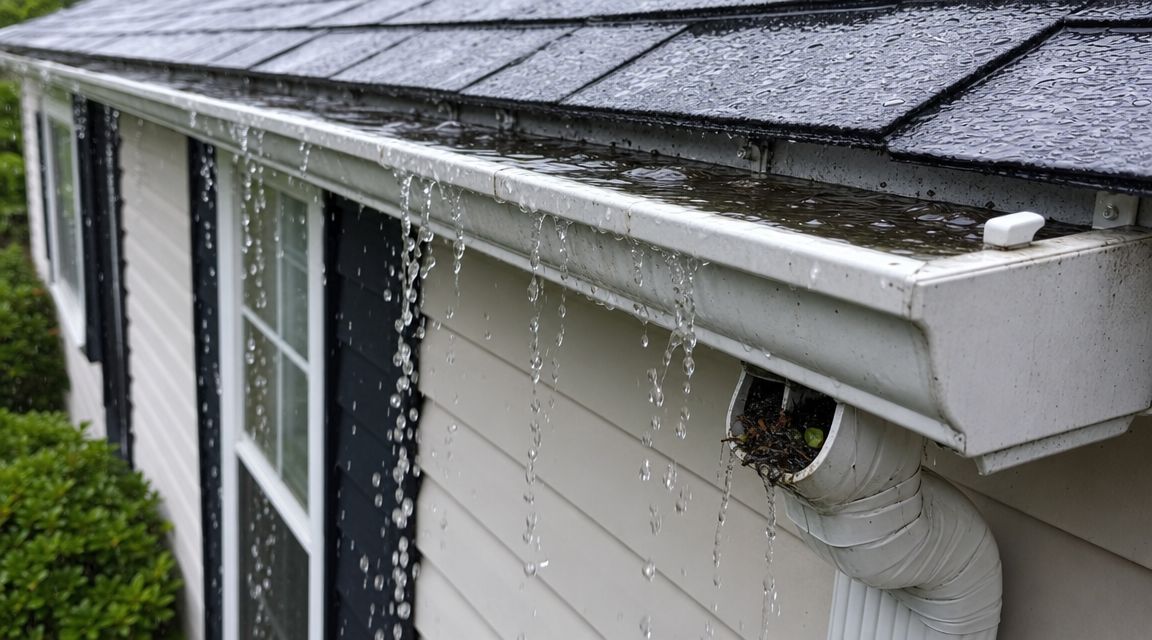
Some of the most frustrating gutter calls happen after a homeowner already cleaned everything they could see. The channel looks open. The leaves are gone. Then the next rain comes, and water still spills over one section of the house.
That usually means the issue isn't just debris.
What the symptom usually means
A useful rule from field diagnostics is this. If clean gutters still overflow, the problem may be pitch, outlet restriction, or discharge placement rather than debris alone. Standing water often points to slope correction, while overflow concentrated at the downspout usually signals an outlet bottleneck, as noted in this gutter overflow diagnostic guide.
Here's a quick way to sort the common symptoms:
| Symptom | Likely issue | Usual next step |
|---|---|---|
| Water stands in the gutter after rain | Improper pitch | Inspect slope and hanger alignment |
| Overflow at one downspout area | Outlet or downspout bottleneck | Clear restriction and retest |
| Water dumps near foundation | Poor discharge path | Extend or redirect runoff |
| Repeated corner overflow | Joint buildup or local low spot | Inspect seal, pitch, and corner debris pattern |
Problems that cleaning alone won't fix
A gutter can be clean and still fail if it doesn't have proper fall toward the outlet. That's common on older systems where hangers loosen over time or a section starts to sag. You may also have a downspout that technically drains, but not fast enough during heavier runoff because the outlet opening is restricted.
Then there's the discharge issue. Even when the gutter and downspout are open, water can still create trouble if it exits too close to the home. That's when you see splashback, soil washout, or pooling near the base of the wall.
Overflow tells you where the symptom appears. It doesn't always tell you where the cause starts.
What to watch after the next rain
The best inspection often happens during or just after a storm. Don't climb a ladder in bad weather. Watch from the ground.
Focus on these clues:
- One section spills first. That often marks the main trouble spot.
- A downspout dribbles instead of pushing flow. That suggests restriction.
- Water pours behind the gutter. That can point to mounting or fascia issues.
- The same area stays wet long after rain. Drainage away from the house may be poor.
When those signs show up, the job has moved beyond routine cleaning. At that point, diagnosis matters more than another round of scooping.
DIY Cleaning vs Hiring a Professional
Most homeowners can understand both sides of this decision. DIY cleaning can seem manageable, especially on a single-story section that doesn't look heavily clogged. Hiring a professional costs more up front, but it changes the risk, the tools available, and the odds that the problem gets solved in one visit.
The safety side deserves real attention. A safety summary citing CDC data says about 20,000 ladder-related injuries occur each year specifically during gutter cleaning, and the same source says average water-damage claims tied to gutter neglect can range from $11,605 to $14,000 in this ladder safety and gutter risk overview.

Where DIY makes sense
DIY is most reasonable when the house is easy to access, the roofline is simple, and the debris load is light enough to remove without much risk. If you're comfortable on a ladder, the ground is level, and you know you're only dealing with routine buildup, cleaning it yourself can be practical.
It also helps if you know what normal looks like on your house. Homeowners who check their gutters regularly usually spot changes earlier.
Where professional service makes more sense
The balance shifts quickly on taller homes, steeper lots, and pine-heavy properties. Those jobs are slower, messier, and riskier than they look from the ground. They also benefit from better inspection methods.
A professional should be the default when:
- The roofline is second story or higher
- The ground is uneven or landscaping blocks safe ladder placement
- You suspect a pitch, outlet, or downspout problem
- The gutters are packed with pine needles and compacted debris
- You want fire-mitigation clearing near the roof edge, not just drainage cleanup
The real trade-off
DIY saves the service call, but it asks you to take on the ladder risk, the time, the cleanup, and the chance of missing a hidden restriction. Professional service costs more, but it usually brings safer access, more efficient tools, and a more complete inspection.
One local option is Cultivate House Detailing, which provides gutter cleaning and fire-mitigation clearing in Colorado Springs. That kind of service is most useful when homeowners want the gutters cleaned, the downspouts checked, and the debris fully removed without spending half a day on ladders and cleanup.
Paying for gutter service isn't only about convenience. In many homes, it's about reducing the odds of a fall and catching drainage problems before they become repair work.
What to Expect from Cultivate House Detailing
When homeowners hire out gutter work, they usually want three things. Clear communication, a thorough job, and no mess left behind. That's what makes the service feel worthwhile instead of just outsourced.
With a local company, the process should feel simple from the first contact. You ask for a quote, get clear scheduling information, and know what's included before work starts. If you're comparing options for gutter cleaning services near me in Colorado Springs, that clarity matters as much as the cleaning itself.
What a solid service visit should include
A proper visit usually starts with a visual check of the roofline, gutter runs, outlets, and obvious drainage trouble spots. Then the crew removes debris, clears downspouts, tests water flow where needed, and checks for signs that the problem may involve pitch, seams, or discharge.
Cleanup matters too. Gutters shouldn't be emptied onto the lawn and called done. Debris should be collected and removed so the property looks better when the work is finished, not worse.
A professional homeowner experience usually includes:
- Straightforward scheduling so you know when to expect arrival
- A visible cleaning process that covers both gutters and downspouts
- Practical feedback if the system has issues cleaning won't solve
- Site cleanup so needles, sludge, and roof grit aren't left around the house
Why local knowledge changes the result
Colorado Springs homes don't all need the same maintenance cadence. A property under pines in a wildfire-aware area needs different attention than a lower-debris lot in a more open neighborhood. A local crew should understand that and adjust recommendations to the property instead of repeating one standard script.
For home-service companies in general, that local specificity is also what makes their online presence useful to customers. If you're curious how service businesses build trust in local search, this guide on local SEO for home services gives a practical overview.
The bigger point is simple. Good gutter service isn't just about removing what you can see today. It's about helping the house handle the next storm, the next freeze, and the next stretch of needle drop with fewer surprises.
If your gutters are due, or you've noticed overflow, pine needle buildup, or drainage issues around the house, Cultivate House Detailing can help you get ahead of it. Reach out for a quote and schedule gutter cleaning that fits Colorado Springs conditions, not a generic checklist.
Need it done properly the first time? Cultivate House Detailing offers gutter cleaning in Colorado Springs. Get a free quote.
Serving Black Forest and the surrounding Colorado Springs area — see our window cleaning services in Black Forest.