Professional permanent Christmas light installation in Colorado Springs typically costs $20 to $40 per linear foot, which puts many homes in the $2,500 to $8,000+ range depending on roofline length, access, and system features. If you're pricing a full-time lighting system instead of a one-season setup, that's the budget range most homeowners should expect before getting an exact quote.
If you're reading this in fall, there's a good chance the same thought is running through your head that hits a lot of homeowners around here every year. The weather turns, the lights come out of storage, one strand doesn't work, the ladder comes out, and suddenly a simple decorating plan turns into a half-day project in the cold.
In Colorado Springs, that annual routine gets old fast. Wind, snow, bright sun, and freeze-thaw cycles aren't especially kind to temporary clips, cheap strands, or rushed installs. A permanent system changes that equation. The lights stay mounted, the wiring is designed to live outdoors, and you control the look from your phone instead of dragging bins in and out of the garage every December.
Homeowners also like that these systems aren't just for Christmas. You can run soft warm lighting for everyday curb appeal, team colors on game day, or holiday colors throughout the year without touching a ladder. The main question is whether the cost makes sense for your house, your roofline, and how long you plan to stay there. That's where the details matter.
Enjoy Year-Round Brilliance Without the Annual Hassle
A lot of permanent lighting jobs start with the same frustration. The homeowner isn't necessarily asking for something flashy. They just don't want to wrestle tangled strands, replace burned-out bulbs, and schedule another install season after season.
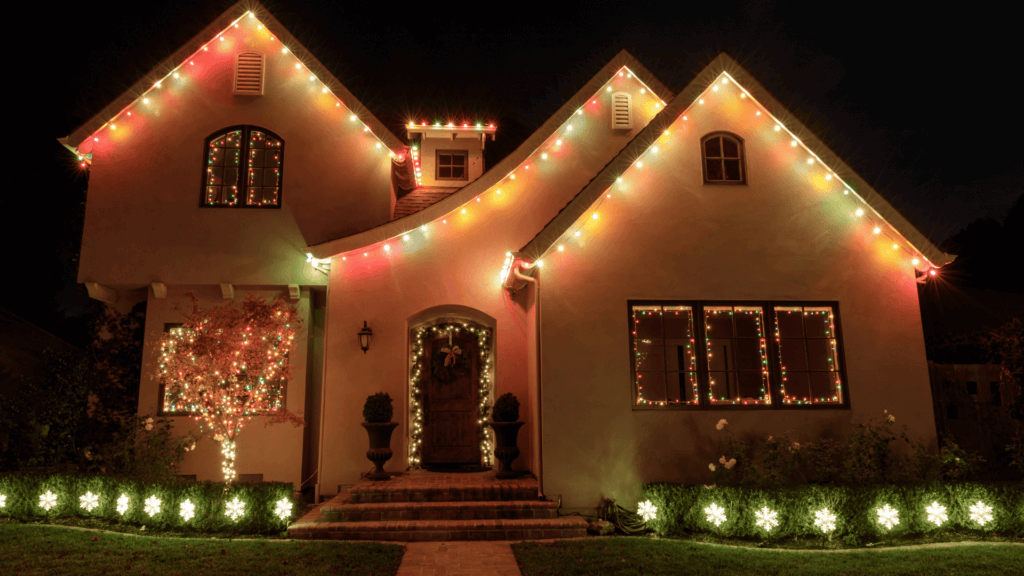
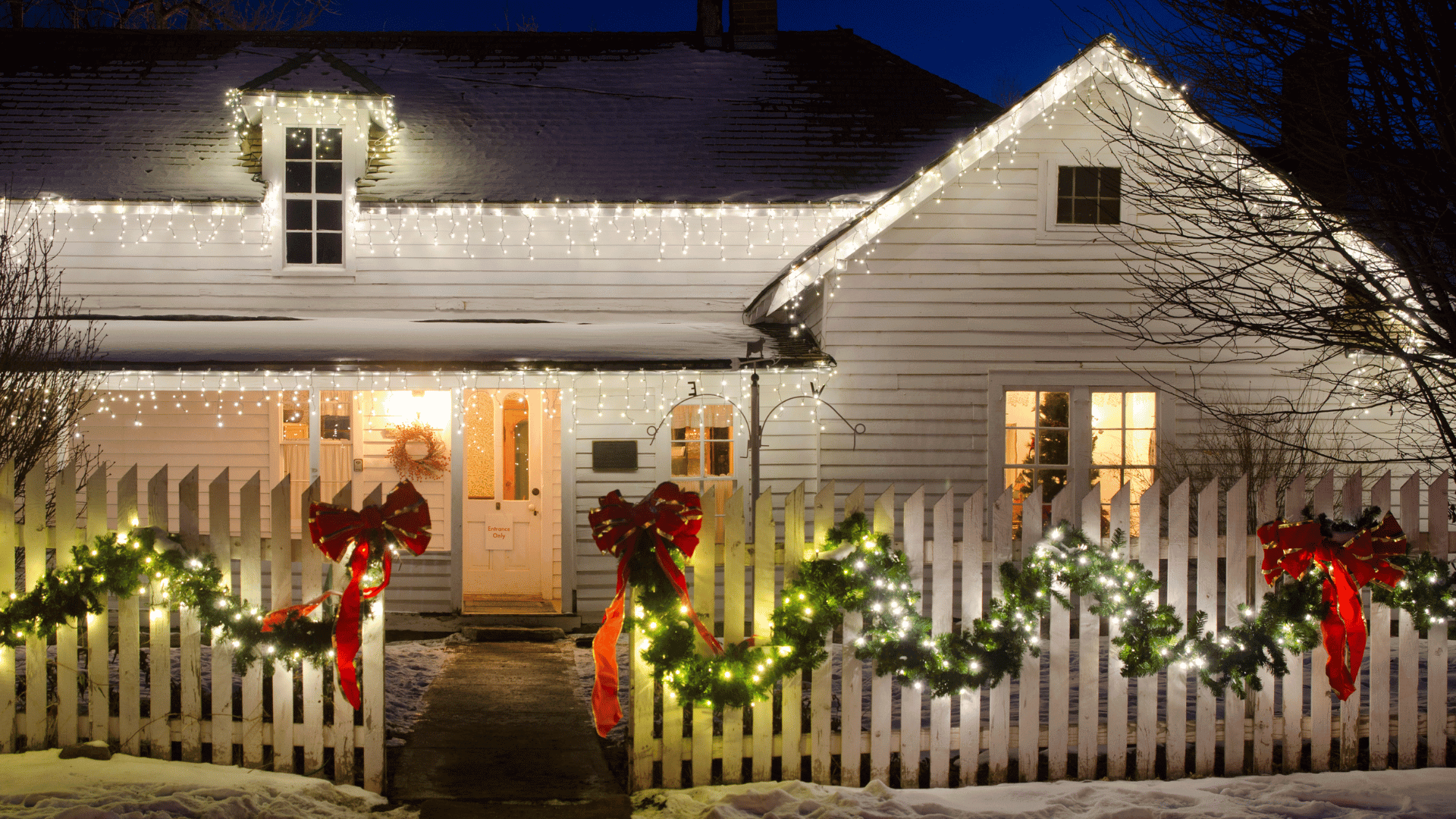
On a Colorado Springs street after a fresh snow, a clean roofline with warm lighting looks great. So does a subtle color pattern for Christmas, red and blue for the Fourth, or amber for a backyard gathering. The appeal isn't only the holiday look. It's the fact that the house can look finished year-round without the annual setup and takedown cycle.
Why homeowners start looking at permanent systems
Some people get interested after paying for temporary lights more than once. Others are done climbing ladders on a cold driveway. For many homeowners here, the turning point is realizing they want exterior lighting to be part of the house, not a temporary decoration they drag out for a few weeks.
A permanent setup fits especially well in neighborhoods with mixed rooflines, stone accents, and taller entry peaks. Those homes can look excellent with discreet architectural lighting, but they're also a pain to decorate with seasonal strands every year.
Practical rule: If you want lighting for more than one holiday and you don't want yearly ladder work, you're usually looking at a permanent system for convenience, not just decoration.
Why Colorado Springs homes are a little different
Local houses often have roof shapes that look simple from the street but add labor during installation. Front-facing gables, second-story peaks, covered entries, and detached garage lines can all change the scope. High-altitude sun and weather swings also reward better materials and cleaner installation methods. Cheap exterior products tend to show their weaknesses faster here.
That doesn't mean every home needs the most advanced package available. It means the actual cost depends on how the system is mounted, powered, and hidden so it looks good in daylight too.
What Exactly Are Permanent Christmas Lights
Permanent Christmas lights are a fixed exterior lighting system installed on the house, usually under the soffit, fascia, or drip edge, so the wiring and hardware stay out of sight in daylight. The goal is simple. Clean roofline lighting without dragging out ladders, clips, and extension cords every season.
On Colorado Springs homes, that matters more than people expect. A lot of houses here have front gables, stepped rooflines, tall entries, and garage returns that make temporary decorating slow and awkward. Sun exposure, snow, hail, and big temperature swings also punish cheap plastics and exposed connections faster than they do in milder climates.
The three parts that matter most
The mounting system
The track or channel is what makes the install look built-in instead of added later. A good mounting system keeps spacing uniform, protects the wiring, and helps the lights disappear against the trim during the day. On stucco, stone-accented, or multi-gable homes, getting that track to follow the roofline cleanly takes planning and time, which is one reason permanent christmas lights cost can vary so much from one house to the next.
The lights themselves
Most professional systems use outdoor-rated LED nodes rather than off-the-shelf strip lights. Higher-end options often include RGB or RGBW LEDs, which give you full color plus a cleaner white for everyday accent lighting. LED makers such as Cree note that well-designed LEDs can deliver long service life, often discussed in terms of tens of thousands of hours in their LED lifetime and reliability overview. In practice, lifespan depends on heat, driver quality, weather exposure, and how well the system is installed.
The controller and app
The controller and app are what deliver the convenience. They handle schedules, brightness, color changes, and zoning from one place, instead of relying on outdoor timers and a tangle of cords. If the house needs added power capacity for the system, this is also the stage where homeowners may run into signs you need a service panel upgrade, especially on older homes with crowded electrical panels.
How they differ from DIY light strips
DIY kits can work on a simple one-story run, but they often leave the homeowner to figure out power injection, weatherproof connections, corner transitions, and how to hide wires on visible roof edges. Those details are manageable on paper and frustrating on a real house.
A professionally installed system is closer to a small exterior remodel than a box of holiday lights. If you want to see how a residential system is typically integrated into the structure, Cultivate House Detailing has a residential permanent lighting page that shows the difference between a mounted system and something that still looks temporary.
A good permanent lighting system should be hard to notice during the day and easy to control at night. If you can see sagging runs, exposed clips, or sloppy corners from the driveway, the install will never look finished.
Key Factors That Determine Your Final Installation Cost
Two homes can have similar square footage and end up with very different permanent christmas lights cost. That's normal. The labor isn't based on home value or zip code alone. It's driven by roofline length, complexity, access, power needs, and the kind of controller package you're installing.
One of the better ways I've seen this explained comes from a consumer guide that notes the fundamental question isn't just price per foot. It's why one quote can come in 30 to 50 percent higher than a neighbor's, driven by roof height, steep pitches, electrical needs, multi-zone controller requirements, and whether the work is for a home, storefront, or HOA display in this breakdown of permanent lights cost differences.
Roofline length is only the starting point
Linear footage matters because materials and labor both scale with how much roofline gets lit. But footage by itself can be misleading. A long, straight ranch roof is usually simpler than a shorter home with multiple peaks, returns, dormers, and tight corners.
A basic install moves faster when the crew can run long clean sections. Cost rises when every few feet requires another cut, turn, splice, or custom fit.
Height, pitch, and access change labor fast
Colorado Springs homes often separate themselves based on these layout factors. A two-story section above a sloped driveway isn't priced the same as a one-story patio line with easy ladder access. Steeper roof pitches also slow the work because crews need to move differently and set up with safety first.
Common factors that raise labor include:
- Second-story elevations: More setup time, taller ladders, and harder material handling.
- Tight side yards or landscaping: Bushes, rock beds, fencing, and retaining walls can limit ladder placement.
- Complex architectural features: Peaks, turret-style corners, or covered entry transitions take more custom work.
- Winter scheduling: Cold-weather installs can still be done, but snow, ice, and shorter daylight hours affect pace.
Electrical setup and controller choice
Some quotes rise because the lighting itself isn't the difficult part. Power is. If the nearest exterior outlet isn't in the right place, if cable runs need to be hidden carefully, or if the system needs multiple zones, the install gets more involved.
If you're not sure whether your house is ready electrically, this guide on signs you need a service panel upgrade gives a useful overview of when broader electrical work may be worth checking before adding another permanent exterior system.
The cleanest-looking installs usually come from careful planning around power location, controller placement, and cable paths. Rushing those decisions often creates the "why do I see wires from the street?" problem later.
Permanent Christmas Lights Cost Per Foot and Per Home
A Colorado Springs homeowner with a simple ranch roofline might price a permanent system and feel pretty good. Then the neighbor with a steep front gable, a walkout lot, and a taller second story gets a quote that looks nothing like it. That difference is normal.
National cost guides commonly place permanent outdoor lighting systems in a broad per-foot range, and HomeAdvisor's permanent holiday lighting cost guide shows why homeowners should treat online averages as a starting point, not a final number. Around Colorado Springs, a realistic planning range for professionally installed roofline lighting is often $20 to $40 per linear foot, with some homes falling below or above that depending on layout and finish details.
That usually puts many local projects in the $2,500 to $8,000+ range.
What the per-foot price usually includes
Per-foot pricing is useful for budgeting, but it is not just the cost of the light nodes. A standard quote often includes:
- LED light runs and mounting track
- Color-matched installation materials
- Controller and app setup
- Basic roofline mounting labor
- Weather-rated components meant to stay up year-round
Some quotes also include minor wire concealment and a standard power connection. Others break those out separately. The only safe assumption is that footage gives you a starting budget, and the written proposal tells you what is included.
Why Colorado Springs homes can price differently
Rooflines here are rarely one-size-fits-all. Many homes in Colorado Springs have front-facing gables, multiple garage breaks, covered entries, and elevation changes that add more corners and cut points than a simple square-footage estimate suggests.
High-altitude sun exposure matters too. Materials that look fine in a milder climate can fade, get brittle, or stand out more against stucco and trim after a few seasons here. Better track materials and cleaner color matching can raise the upfront number, but they usually make more sense on a house that deals with strong UV, snow, hail, and freeze-thaw cycles.
Budget examples by home type
These are planning ranges, not fixed bids.
| Home type | Approximate roofline footage | Typical budgeting range at $20 to $40 per foot |
|---|---|---|
| Single-story ranch with a straightforward front elevation | 125 feet | $2,500 to $5,000 |
| Two-story home with front peaks and a garage line | 175 feet | $3,500 to $7,000 |
| Larger home with multiple gables and more full-perimeter coverage | 200 feet+ | $4,000 to $8,000+ |
The biggest price swings usually show up in the middle category. A two-story Colorado Springs home with a few prominent peaks may not look huge from the street, but it can take much longer to lay out cleanly than a larger single-story ranch with easy access.
For a visual walkthrough of what homeowners are often comparing, this video is a useful reference point:
What pushes one house toward the low end or high end
A front-only install on a straightforward roofline often stays near the lower end of the range. A full-perimeter system with upper peaks, garage returns, dormers, or tricky transitions usually climbs fast.
I also tell homeowners to pay attention to the parts of the house they do not notice at first. A rear elevation over a deck, a side wall above a narrow setback, or a section above uneven grade can add labor quickly. The footage may be modest. The time to install it cleanly is not.
That is why the most accurate quote comes from measuring your actual roofline and matching the system to the house, not from multiplying a national average by a rough guess.
Cost Comparison Permanent vs Temporary Holiday Lights
Most homeowners don't compare permanent lights to doing nothing. They compare them to paying for temporary lights every year, or to spending their own weekends hanging them. That's the more honest comparison.
A 2025 national estimate places typical professional temporary Christmas light installation at about $443 on average, with most projects ranging from $219 to $686. The same source says permanent LED systems are commonly quoted at roughly $2,000 to $8,000 upfront, with an average of about $3,500, in this cost comparison of temporary and permanent lighting.
The trade-off is upfront cost versus repeated labor
Temporary lighting has the lower entry price. That's why it works well for homeowners who only want a holiday look and don't mind repeating the process every year. Permanent lighting asks for more upfront, but the recurring install and removal labor largely goes away.
That changes the decision from "Which one is cheaper today?" to "Which one fits the next several years of this house?"
If you know you're going to decorate professionally year after year, the temporary option stays less expensive at first but keeps billing you for the same labor every season.
A simple 10-year comparison
The table below uses the requested example. It isn't a full ownership model, and it doesn't add maintenance, upgrades, or inflation. It shows how recurring annual installation compares against one larger upfront purchase.
| Year | Cumulative Cost (Temporary Install at $500/yr) | Cumulative Cost (Permanent Install at $4,000) |
|---|---|---|
| 1 | $500 | $4,000 |
| 2 | $1,000 | $4,000 |
| 3 | $1,500 | $4,000 |
| 4 | $2,000 | $4,000 |
| 5 | $2,500 | $4,000 |
| 6 | $3,000 | $4,000 |
| 7 | $3,500 | $4,000 |
| 8 | $4,000 | $4,000 |
| 9 | $4,500 | $4,000 |
| 10 | $5,000 | $4,000 |
That table helps explain why permanent systems appeal most to homeowners planning to stay put. The value isn't only the crossover point. It's also the convenience of never booking another holiday install just to get the same roofline lit again.
Where temporary lighting still makes sense
Permanent lights aren't automatically the right answer.
- Short ownership horizon: If you may move soon, the long-term math may matter less.
- Very limited seasonal use: If you only want lights for a brief holiday window, temporary can be enough.
- Tight budget this year: A smaller one-time seasonal spend may be the only practical move right now.
For homeowners who want everyday accent lighting, holiday flexibility, and less annual hassle, permanent systems usually win on convenience long before they win on cumulative cost.
Long-Term Value Warranty and Other Cost Considerations
A permanent lighting quote can look reasonable on day one and still turn into a headache later if the warranty is thin, the controller is hard to service, or the materials are a poor fit for our climate.
In Colorado Springs, that matters more than many homeowners expect. High UV exposure, wind, snow load, and freeze-thaw cycles put steady stress on exterior plastics, adhesives, wire jackets, and mounting points. A system installed on a simple ranch roofline usually has fewer future service points than one wrapped around steep gables, second-story peaks, dormers, and garage returns that are common across many local neighborhoods.
What long-term value actually looks like
The strongest systems are built to stay put for years and still be serviceable when a section needs attention. That means asking about more than color options or app controls.
Look for clear answers on these points:
- Parts and labor warranty: Get the actual term in writing and ask what is covered versus excluded.
- Service access: A clean-looking install still needs a practical way to reach drivers, controllers, and problem sections.
- Material fit for local conditions: Colorado sun and temperature swings can shorten the life of cheaper housings and clips.
- Track and mounting method: Fascia-mounted systems, soffit installs, and installs along complex rooflines age differently and can affect repair time later.
- Replacement parts: Proprietary components are not always a problem, but they can become one if the installer disappears or parts are hard to get.
A low quote often leaves one of those items fuzzy.
The hidden cost drivers after installation
Service costs usually come from labor, not from a single failed diode. If a technician has to troubleshoot a controller mounted in a bad spot, remove sections on a tall front elevation, or work around brittle trim details, the repair bill climbs fast.
That is why local roofline design matters. A long, straight eave on a one-story home is simpler to maintain than multiple peaks cut into stucco, stone, and covered entryways. Homes at higher elevations west of town also tend to see tougher weather exposure, which makes build quality and attachment method more important over time.
Homeowners comparing options for permanent exterior lighting in Colorado Springs should ask how the system is expected to age on their specific home, not just what it costs per foot.
Maintenance plans and support after the sale
Some installers offer annual service plans. Others handle repairs only when something fails. Neither approach is automatically better, but the homeowner should know the policy before signing.
Ask practical questions. Is software support included? Are trip charges separate? How quickly do they usually respond during the holiday rush? If a color zone stops working two years from now, will the same company still be servicing that product line?
I also like to see whether a contractor thinks like a long-term service provider instead of a one-time installer. These Northern Utah lighting experts show the kind of installation and service mindset that is worth looking for in any exterior lighting company.
A permanent system should feel like a durable exterior upgrade, not a seasonal purchase that becomes your problem once the crew leaves.
Choosing Your Colorado Springs Lighting Installer
The installer matters almost as much as the product. A good system can look average if the track lines are sloppy, the wire paths are visible, or the controller is mounted in a way that makes future service a hassle.
In Colorado Springs, ask any lighting company practical questions before you sign. A reputable installer should be able to answer them clearly and without dodging details.
Questions worth asking before you hire
- Are you licensed and insured for this kind of exterior work? You want a direct answer, not vague reassurance.
- What warranty do you offer on parts and labor? Ask what happens if a section fails after installation.
- What brand or system are you installing, and why that one? The answer should cover durability, serviceability, and appearance.
- How do you handle repairs or service calls? A permanent system needs a service path, not just an install date.
- How will you hide the wiring and controller? Daytime appearance matters.
It can also help to look at how established electricians discuss residential lighting standards in other markets. For example, these Northern Utah lighting experts show the kind of practical, installation-focused thinking homeowners should look for when evaluating any exterior lighting contractor.
What a local homeowner should expect
For a project in this area, the process should start with an on-site look at roofline footage, power access, mounting surfaces, and control preferences. A useful quote should tell you what portions of the house are included, whether the system is front-only or more complete coverage, and what features are part of the controller package.
If you're specifically looking for a local service option, permanent lighting in Colorado Springs is one category where having someone familiar with our rooflines, weather swings, and access challenges helps. The details that affect quote accuracy here are rarely obvious from a street view.
The best quote isn't the one with the lowest number. It's the one that makes the scope clear, explains what drives the cost, and gives you confidence that the system will still look clean after the first winter.
If you're ready to get clear pricing for your own home, contact Cultivate House Detailing for a no-obligation estimate. You'll get a quote based on your actual roofline, access, and lighting goals, so you can budget with confidence and avoid the surprises that come from generic per-foot guesses.