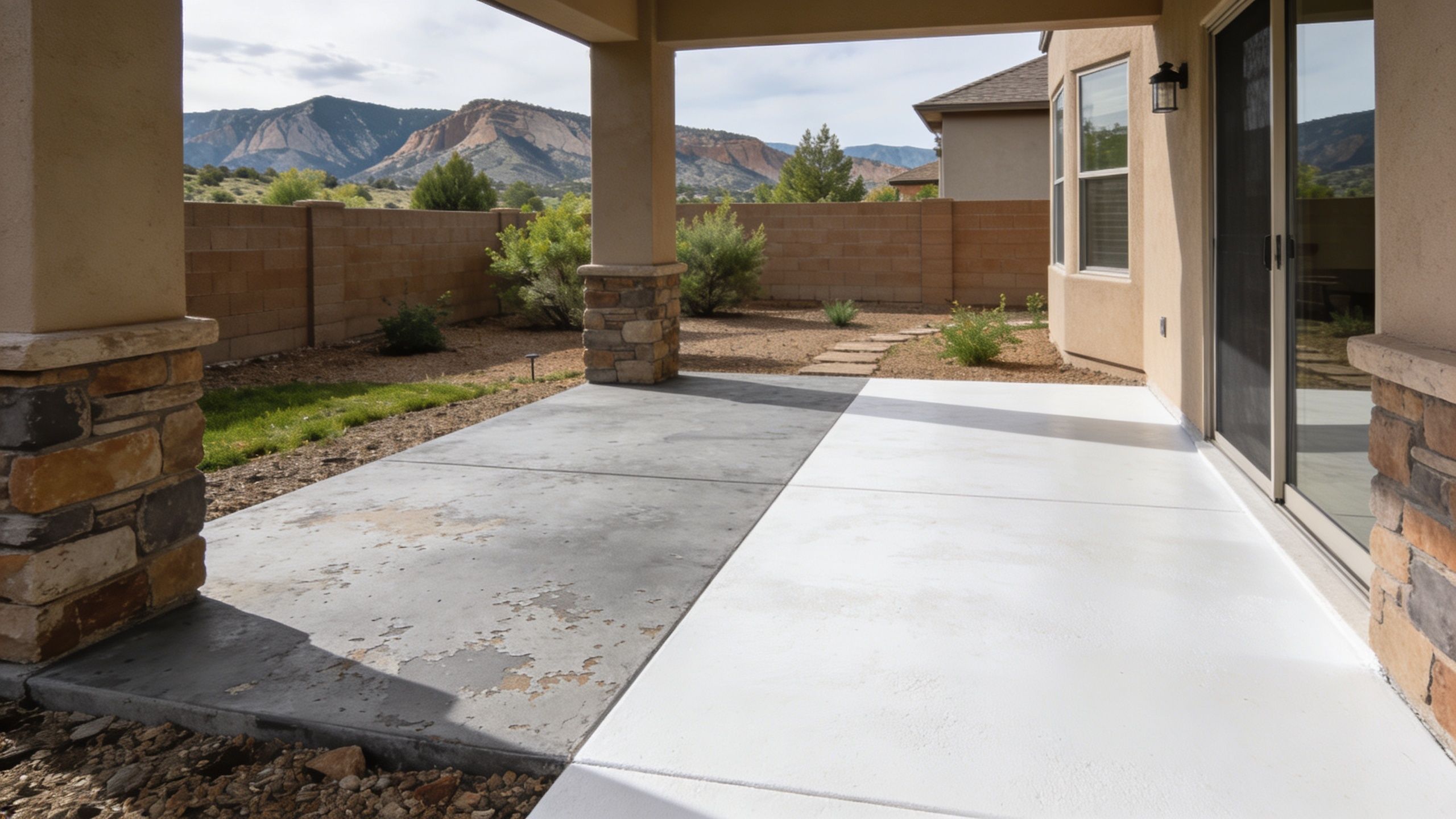
A lot of Colorado Springs patios look fine from the back door and rough once you step onto them. Winter leaves behind grime in the pores. Dry, windy stretches push dust into every corner. Add grill grease, leaf stains, and tracked-in dirt, and the slab that should feel like an extension of your living space starts looking tired.
Knowing how to pressure wash concrete patio surfaces the right way makes a big difference. Done well, it brightens the whole backyard. Done poorly, it leaves stripes, etched lines, and permanent wand marks that are hard to ignore every time you sit outside.
Reclaim Your Outdoor Space From Grime and Dirt
In Colorado Springs, a patio usually has to do a lot. It handles snowmelt, spring grit, summer dust, and the steady wear of foot traffic, furniture, and grilling season. By the time a homeowner is ready to enjoy a warm evening outside, the concrete often looks older than it really is.
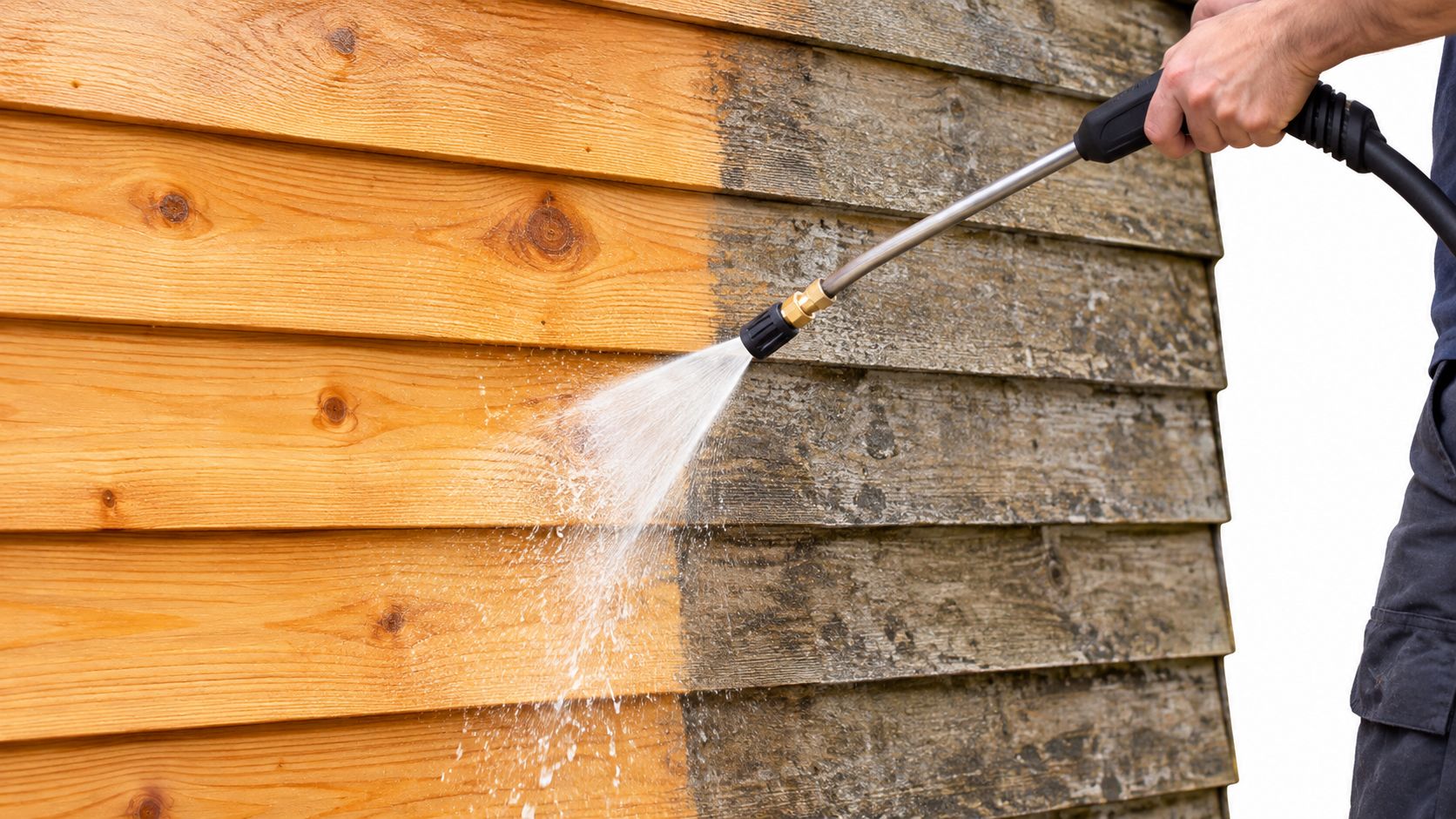
That's why pressure washing appeals to so many people. The change can be immediate. A slab that looked dingy and neglected can start looking clean, even, and usable again in a single work session. If you've seen a strong before-and-after on a driveway, the same principle applies to a patio, especially when the surface is structurally sound and the staining is mostly on the surface. This driveway pressure washing before-and-after example shows the kind of visual reset exterior cleaning can deliver.
What a neglected patio is usually hiding
Most patio slabs don't just get “dirty.” They collect different kinds of buildup at the same time:
- Wind-blown soil and dust settle into the texture of the concrete.
- Organic staining from leaves, shade, and moisture can darken sections unevenly.
- Grease and food residue near a grill area often need more than water alone.
- Runoff patterns create streaking where downspouts or patio edges stay damp longer.
Those details matter because each one responds a little differently to cleaning. A quick blast with too much pressure might remove some grime but still leave shadowing, striping, or a visibly uneven finish.
Clean concrete should look uniformly cleaned, not freshly scarred.
The result most homeowners actually want
The goal isn't often to make old concrete look brand new. They want it to look cared for, safe to use, and presentable when guests come over. That's a realistic goal, and it's usually achievable if the slab is in decent condition and the washing is done methodically.
The catch is that patio cleaning is more physical and less forgiving than it looks online. Large flat surfaces show mistakes fast. Colorado's dry air can also speed up detergent drying, which changes how you handle cleaners and rinse timing. For some homeowners, it's a satisfying weekend project. For others, it's one of those jobs that sounds simple until the hose is connected and the first zebra stripes appear.
Gearing Up with the Right Equipment and Safety Prep
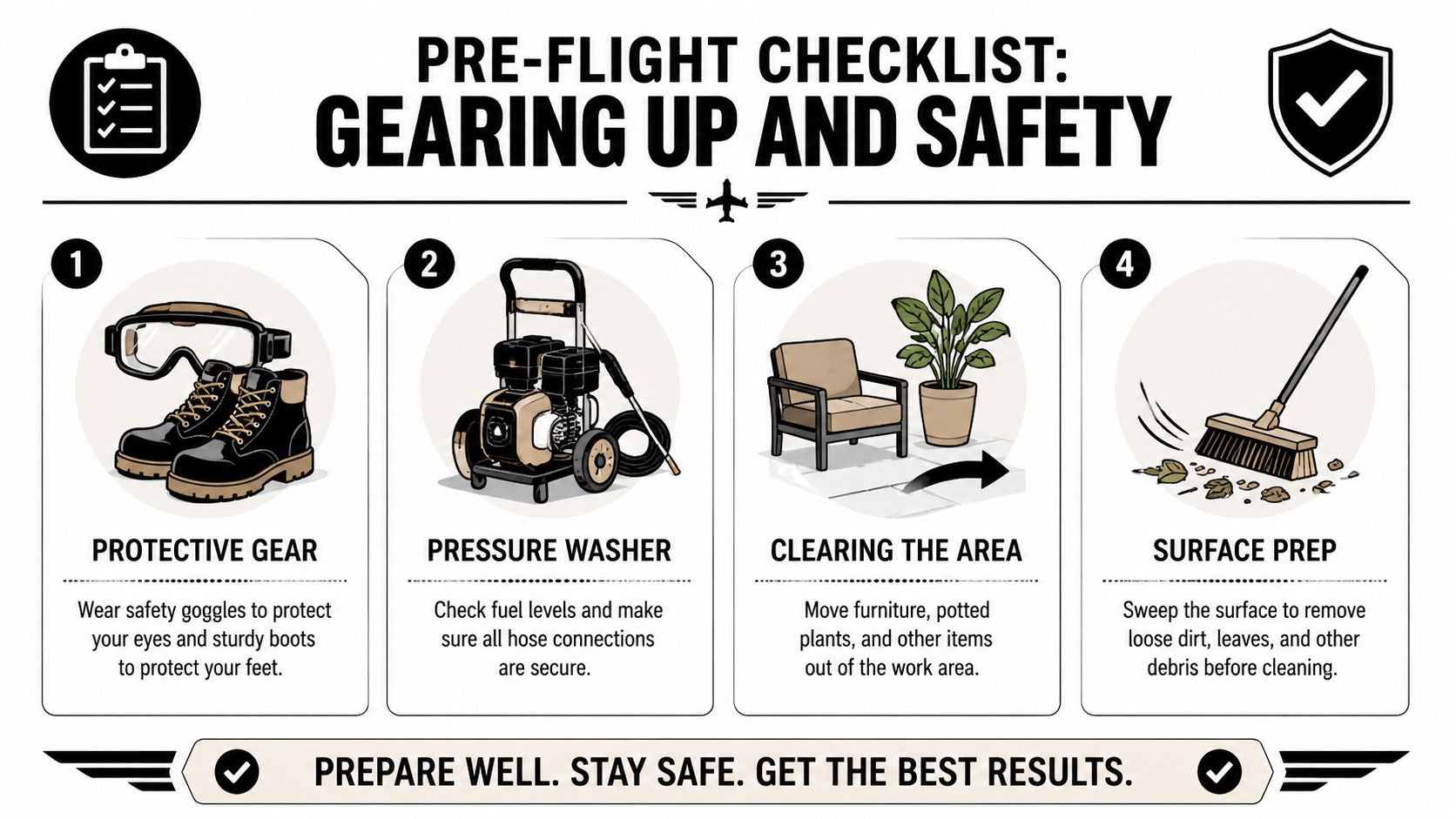
A good patio wash starts before the machine is running. If the area isn't cleared and the equipment isn't matched to the surface, the job gets slower, messier, and riskier.
For residential concrete, a pressure washer capable of 2,000 to 3,000 PSI is often considered the sweet spot. Machines over 1,500 PSI can clean concrete, and stronger pressure works faster, but settings above 3,500 PSI significantly increase the risk of etching or damaging the surface, as noted by Consumer Reports on surfaces safe to clean with a pressure washer.
Clear the work zone first
Move everything off the slab. Patio chairs, planters, rugs, grills, toys, and storage bins all slow you down and create uneven cleaning patterns if you work around them.
Then protect what stays nearby. Pay attention to:
- Doors and thresholds that could take direct spray
- Lower windows and screens near the patio edge
- Electrical fixtures and outlets in the splash zone
- Delicate plants that may not react well to overspray or cleaner runoff
Sweep or blow off loose debris before washing. Small grit on the slab matters more than people think. If you drag it underfoot while spraying, it can turn into muddy residue that smears instead of rinses clean.
Choose the nozzle that gives you control
Nozzle selection matters as much as machine pressure. On concrete patios, a fan tip is the safe default because it spreads force across a wider path.
A practical setup usually looks like this:
- 40-degree fan tip for lighter soil, test passes, or any area you're unsure about
- 25-degree tip when the slab is sound and the grime is more stubborn
- Surface cleaner attachment for broad, flat areas where you want a more even finish
- Zero-degree nozzle should stay off concrete patios in almost every homeowner scenario
Practical rule: If a nozzle feels aggressive enough to gouge, it probably is. Start wider and increase only if the surface can take it.
Don't skip the safety gear
Pressure washing isn't just “getting wet.” Debris bounces back. Small stones move. Dirty water splashes into your face at close range.
Wear the basics every time:
- Eye protection because grit and cleaner splash back fast
- Closed-toe shoes or boots for footing on wet concrete
- Gloves for better grip and hand protection
- Long pants if you want less spray-back against your legs
A pressure washer is easy to underestimate on a flat patio. The machine feels manageable right up until the wand catches an edge, the hose snags a chair leg, or runoff starts pooling where you're standing. A careful setup saves time and usually produces a cleaner result.
Choosing the Best Cleaners for Concrete Stains
Water pressure removes loose dirt well, but it doesn't always solve what's discoloring the slab. If a patio has grill grease, dark organic staining, or old embedded grime, the cleaner does much of the work before the wand ever touches the surface.
The best approach is to match the cleaner to the stain instead of assuming one bottle handles everything.
Match the product to the problem
For most patios, these are the common categories:
- General concrete cleaner for routine dirt, weather film, and broad surface dinginess
- Degreaser for cooking oil, grease drips, or traffic spots near a grill
- Cleaner for organic buildup where shade, leaf decay, or damp corners have left dark staining
If you have a decorative surface, slow down before applying anything strong. Some specialty finishes respond differently to alkaline cleaners, brighteners, or heavy scrubbing. That same caution shows up in adjacent hardscape materials too. Homeowners dealing with more decorative surfaces may find this resource on caring for handcrafted cement tiles useful because it reinforces the value of product compatibility and spot testing before full cleaning.
How to apply cleaner without wasting it
The cleaner should go on an already damp surface, not bone-dry hot concrete. Pre-wetting helps the product spread more evenly and reduces the chance of instant absorption in one spot and runoff in another.
Application methods that work well:
- Pump sprayer for controlled coverage and better targeting.
- Pressure washer detergent siphon if your machine supports low-pressure soap application.
- Hand treatment on isolated stains where you only need to hit a small problem area.
Concentrates need to be mixed according to their own label instructions. More product isn't always better. Over-application can create residue, waste material, and make rinsing take longer.
Dwell time is where cleaner earns its keep
A lot of disappointing DIY results come from spraying on detergent and immediately blasting it off. Concrete cleaners usually need time to loosen what's bonded in the pores.
What matters most is simple:
- Coat the area evenly
- Let the cleaner sit
- Don't let it dry on the slab
If the patio is in direct Colorado sun, work in smaller sections. Dry air and warm concrete can shorten your working window, especially on exposed south-facing patios. For many homeowners, that one adjustment changes the result more than bumping up pressure ever will.
Mastering Your Pressure Washing Technique
The washing pass is where patios either come out clean and uniform or end up with obvious striping. Technique matters more than brute force. A controlled, repeatable motion beats chasing stains with a high-pressure wand.
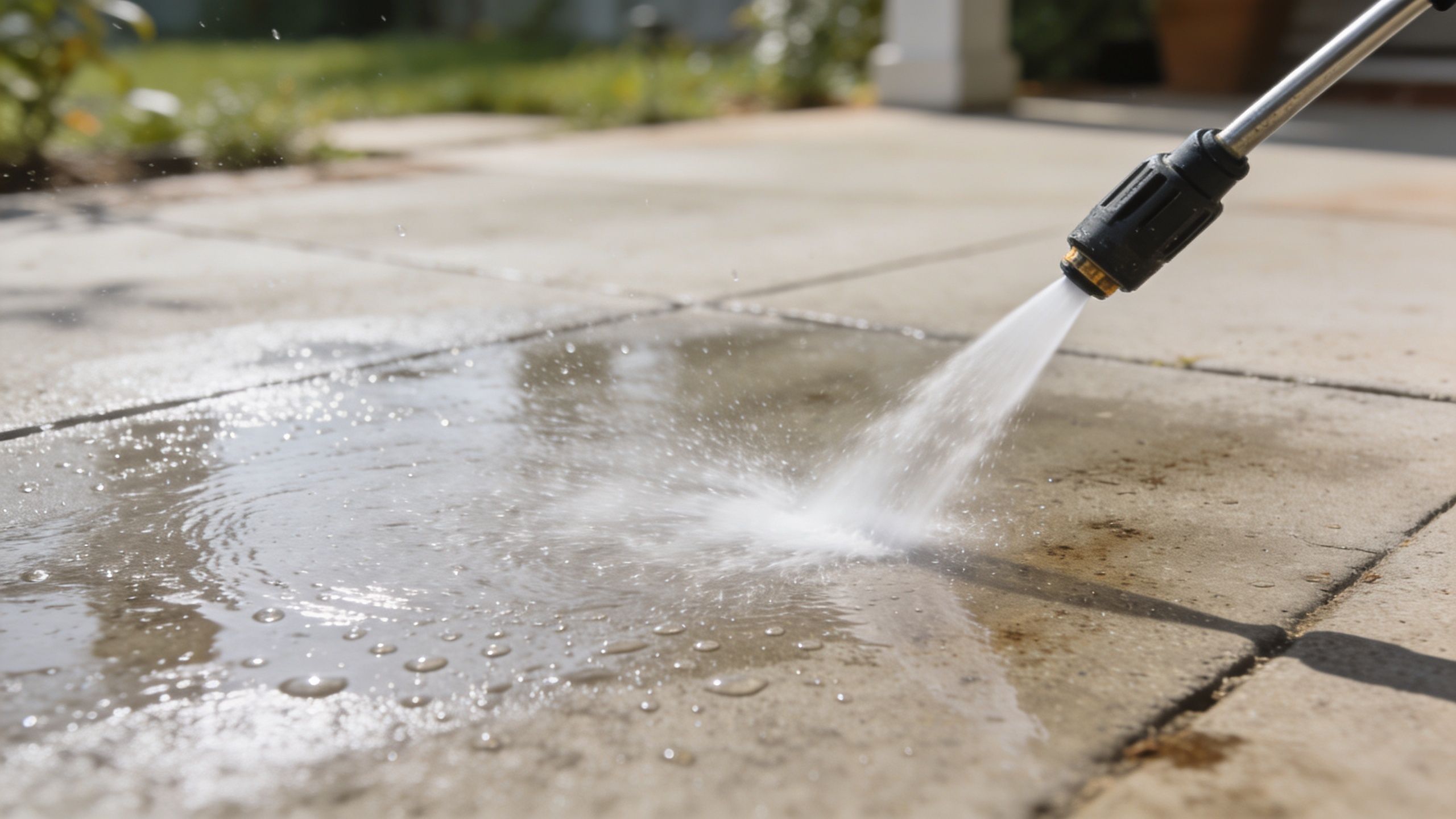
The professional method is straightforward: sweep debris first, pre-wet the slab, apply a cleaner and let it dwell for 5 to 30 minutes without drying, then wash from top to bottom with slow, overlapping passes to avoid striping, as described in this Greenworks guide to pressure washing concrete.
Start with a test area
Always test a small section first, preferably somewhere that won't be noticed if the finish changes slightly. That tells you three things quickly: whether the pressure is too high, whether the cleaner is helping, and how close you can safely hold the wand.
A good test pass should remove grime without roughing up the surface texture. If the concrete lightens in a harsh line or feels newly scratched, stop and back the pressure down.
Use the motion that prevents tiger striping
Keep the wand about 12 inches from the surface and avoid locking your wrist into one angle. The motion should feel like painting a floor with water, not cutting into it.
Follow this sequence:
- Begin at the highest point so dirty runoff moves away from cleaned areas.
- Work in narrow lanes you can track visually.
- Overlap each pass by several inches so no edge dries as a visible stripe.
- Keep moving instead of pausing in one spot.
- Rinse as you go if detergent or dirty slurry starts pooling.
The mistake most people make isn't starting too weak. It's staying too long in one place because they want one pass to solve everything.
For large patios, this is also where a surface cleaner can help. It doesn't eliminate the need for good prep, but it does help distribute pressure more evenly across a broad section of concrete. On a plain slab in good condition, it often produces a more consistent look than a wand alone.
Work with the patio, not against it
Patios aren't always flat, open rectangles. Many have edges against foundations, posts, steps, or expansion joints that trap dirt and runoff. Those transitions need a slower approach.
A useful rhythm is to clean the broad field first, then detail the edges and corners after. That keeps muddy rinse water from being dragged back across finished sections.
This walkthrough gives a decent visual reference for pace and body positioning during the wash:
Finish with a thorough rinse
The patio isn't done when the dirt is off. It's done when the residue is off too. Leftover detergent can dry into a haze or leave streaking that shows up after the slab dries.
A strong final rinse should:
- Push debris fully off the slab
- Flush joints and low spots
- Remove remaining cleaner from edges and corners
If you still see uneven color while the slab is wet, don't panic. Wet concrete hides some marks and exaggerates others. Let it dry before deciding whether a section needs another pass. A lot of patios even out noticeably as moisture leaves the surface.
Avoiding Common Mistakes and Post-Cleaning Care
Most patio damage doesn't happen because someone used a pressure washer. It happens because they assumed concrete is indestructible. It isn't. Concrete is durable, but the surface can still be scarred, especially if it's older, decorative, sealed, or already starting to fail.
That's why the job doesn't end when the slab looks cleaner. You still need to check what the wash exposed and whether the surface should be left alone, touched up, or protected.
Mistakes that leave permanent marks
These are the errors that show up most often on DIY jobs:
- Too much pressure on otherwise sound concrete
- Holding the tip too close to chase a dark spot
- Using a narrow stream that cuts visible lines
- Stopping in one place and etching a wand mark
- Cleaning in random directions that leave a patchwork finish
A patio can look fine while wet and obviously damaged once it dries. That's especially true when the operator keeps increasing pressure instead of improving cleaner dwell time or technique.
Older and decorative concrete need a different standard
Stamped, older, and decorative concrete shouldn't be treated like a plain broom-finished driveway. Those surfaces can scar quickly. Guidance for these slabs is much more conservative. Decorative, stamped, or older concrete can be easily scarred by high-pressure settings used for driveways, so it's critical to test in an inconspicuous spot and consider dropping pressure to as low as 400 to 800 PSI, according to this concrete damage prevention guide from TriStar Built.
Look closely before cleaning if you see:
- Flaking or spalling
- A sealer peeling in thin patches
- Exposed aggregate where the top layer has worn away
- Hairline cracking with loose surface material
If the top layer is already failing, pressure washing can reveal the problem fast and make it look worse, not better.
What to do after the washing is done
Once the slab is clean, let it dry fully before deciding on next steps. A dry surface shows whether stains remain, whether striping needs correction, and whether a sealer makes sense.
Post-cleaning care usually comes down to three choices:
| Condition | Best next step | Why |
|---|---|---|
| Surface looks uniform and sound | Let it dry fully, then use normally | No need to overwork good concrete |
| Surface is clean but porous or stain-prone | Consider sealing after it fully dries | Helps preserve appearance and reduce future staining |
| Surface shows damage, peeling sealer, or deterioration | Pause before more washing | More pressure won't fix a failing surface |
If you maintain other outdoor hardscape materials around the patio, these Paving Supplies tile maintenance steps are a helpful reminder that cleaning and protecting are separate tasks. That same mindset applies to concrete. Washing improves appearance. Protection and maintenance preserve it.
DIY vs Hiring a Pro in Colorado Springs
Pressure washing a patio is a doable project for some homeowners. It's also one of those jobs that looks easier than it feels halfway through. By the time you've cleared the patio, set up equipment, managed cleaner dwell time in Colorado sun, and tried to avoid stripes across a large slab, the appeal of doing it yourself can wear off.
The main decision usually comes down to time, tolerance for risk, and the condition of the concrete.
When DIY makes sense
DIY is usually reasonable when the patio is plain concrete, structurally sound, and only moderately dirty. If you're comfortable using a pressure washer, willing to work carefully, and have time to move slowly, you can get a good result.
It also helps if you're realistic about what “good” means. Some stains need multiple treatments. Some old discoloration won't disappear completely. And some surfaces won't reward aggressive cleaning.
A broader home-maintenance mindset helps here too. If you've ever compared specialty cleaning tasks, you already know the same pattern shows up elsewhere. This guide to tile cleaning services is about a different surface, but the decision logic is familiar. Once material sensitivity, equipment choice, and finish quality start to matter, professional help becomes more appealing.
When hiring a pro is the smarter call
Hiring a pro makes more sense when the patio is large, heavily stained, older, decorative, or surrounded by features you don't want to risk damaging. It also makes sense when you don't want to give up a weekend for a physically demanding project with a narrow margin for error.
The cost is more approachable than many homeowners expect. In 2026, professional patio pressure washing was reported by Angi at about $0.10 to $0.50 per square foot, with a typical 400-square-foot patio costing around $250, according to Angi's patio power washing cost guide. Once you compare that with renting or buying equipment, purchasing cleaner, and spending the time to do the work carefully, the value of outsourcing becomes easier to see.
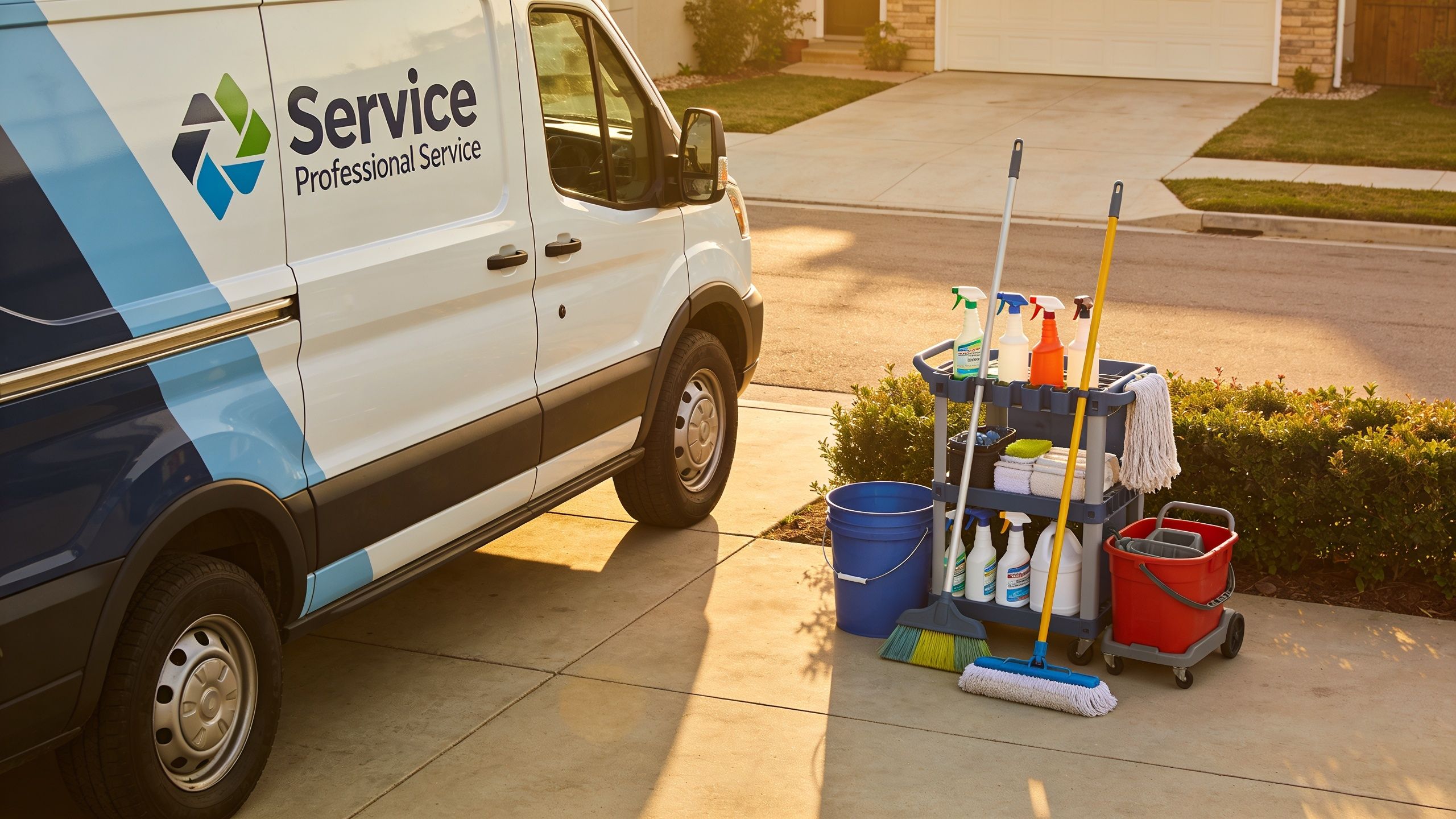
A practical decision checklist
If you're deciding whether to handle it yourself, ask:
- What kind of concrete is this really? Plain and sound, or older and delicate?
- How much result quality matters? “Cleaner” is different from “uniform and professional-looking.”
- What's the downside if you make a mistake? Wand marks on a back patio are still there every day.
- How much time do you want to spend? Prep and cleanup often take longer than expected.
If you'd rather skip the trial-and-error and get a more consistent finish, local exterior cleaning specialists are built for exactly that kind of work. Homeowners looking for help with patios, siding, driveways, and similar surfaces can look into Colorado pressure washing services to compare options and decide whether outsourcing is the better fit.
If your patio needs more than a quick rinse, Cultivate House Detailing can help you restore it without the hassle, guesswork, or risk of damaging the surface. For homeowners in Colorado Springs and nearby communities, professional exterior cleaning is often the fastest path to a cleaner patio, brighter curb appeal, and one less project on your weekend list.
Want it handled by a local crew? Cultivate House Detailing offers pressure washing in Colorado Springs. Get a free quote.