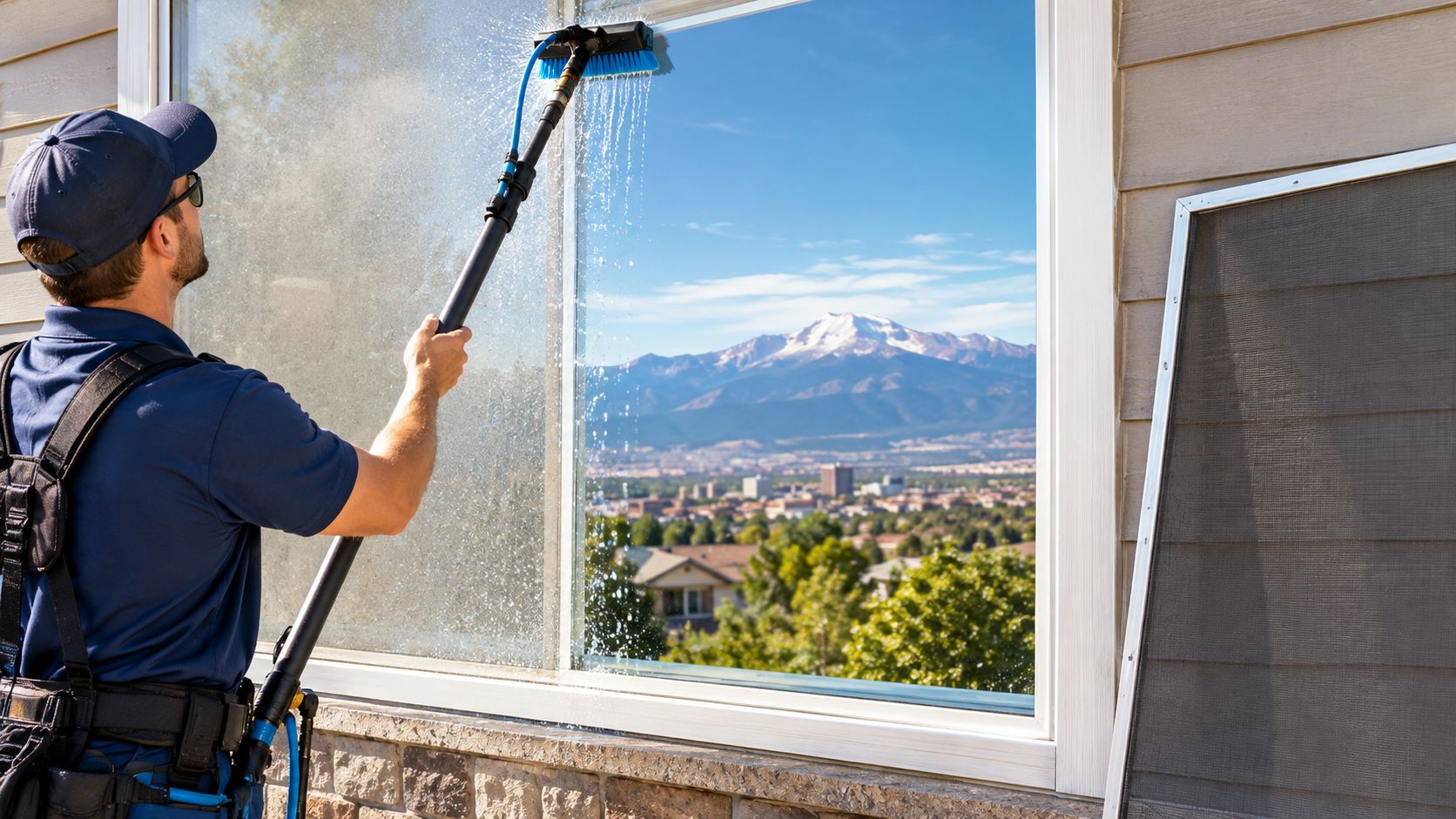
You've spent a Saturday morning washing the outside of a second-story window in Colorado Springs. The glass looks clean from the ground, but when the sun moves across the pane, streaks and a pale mineral haze are still there. You've also got pollen on the screens, grit in the tracks, and a ladder sitting awkwardly on uneven ground.
That's why how to clean outside windows in Colorado Springs, CO requires more than spray and wipe. The right approach accounts for hard-water deposits, pollen, windblown grit, glass coatings, and safe access. This guide covers a practical DIY routine, the point where ladders become a liability, and when professional window cleaning is the more sensible option for homes and businesses.
Why Colorado Springs Homes Need a Smarter Outside Window Routine
Exterior glass around Colorado Springs deals with conditions that punish rushed cleaning. Dry air can leave rinse water evaporating quickly, while irrigation spray deposits minerals on lower panes. Spring pollen clings to screens and oily grime, and wind carries fine grit from surrounding open ground onto glass, frames, stucco, and stone.
A quick wipe can spread that contamination instead of removing it. If the water contains dissolved calcium and magnesium, evaporation leaves a visible film behind. Guidance on hard-water spots explains that these minerals remain on the glass after water dries, and that the wet-versus-dry appearance helps distinguish removable deposits from etching (hard-water damage guidance).
Three results matter more than speed
A good outside window routine should deliver:
- Clarity that lasts: The glass should remain clean after the light changes, not just look good while it's wet.
- Safe access: Upper windows need a method that keeps you off unstable surfaces whenever possible.
- Surface protection: Screens, seals, frames, tinted glass, and Low-E coatings can suffer when people use harsh chemicals or abrasive tools.
Second-story stucco homes create a particular problem. A ladder may sit on sloping soil, landscaping, or a narrow concrete edge, while the operator reaches around siding and rooflines. Third-story windows and steep areas add another level of exposure. The UK Health and Safety Executive reported 35 worker deaths from falls from height across all industries in Great Britain in 2024/25, and falls from height have led workplace deaths in almost every year since 2001/02 (working-at-height window-cleaning safety information).
Seasonal buildup also changes the job. Spring cottonwood and juniper pollen may need a different first rinse than summer dust, and sprinkler overspray can create mineral scale that ordinary soap won't remove. A climate-aware routine starts by identifying what's on the glass and how safely you can reach it.
What Your Exterior Windows Are Really Up Against
Colorado Springs exterior windows face several kinds of contamination at once. Sun exposure can dry cleaning residue before you finish detailing a pane. Low humidity speeds evaporation, which gives mineral-rich droplets less time to sheet away cleanly and more opportunity to leave spots.
Water quality matters because hard-water deposits aren't ordinary dirt. Dissolved calcium and magnesium remain after water evaporates, creating rings, cloudy patches, or a rough-feeling film. Repeated sprinkler overspray can concentrate those deposits, especially on lower windows near xeriscape beds and lawn edges.
Pollen creates a different challenge. Cottonwood and juniper pollen can settle into an oily layer on the glass and screens, so a light spray may move it around without breaking the bond. Wind-driven grit from the foothills adds abrasive particles, which is why dry wiping can leave fine scratches or drag debris across the pane.
Exposure changes the cleaning plan
South- and west-facing windows generally receive stronger direct sun during parts of the day, so solution can dry quickly there. North-facing panes may stay shaded longer but can hold dust and moisture in corners and around frames. Stucco and stone also shed grit onto nearby lower panes, particularly after wind or exterior work.
Sprinklers deserve a separate inspection. A nozzle aimed toward the house can create the same recurring pattern: the window looks clean after washing, then pale spots return after the next irrigation cycle. Before cleaning, correct the spray direction if possible. Otherwise, mineral treatment may become a repeating maintenance task.
The practical consequence is straightforward: rinse away loose grit first, use enough solution to suspend pollen and grime, then remove the water completely with a clean squeegee. Mineral scale needs diagnosis before scrubbing, and hot glass needs smaller working sections so the solution doesn't dry in place.
Tools, Prep, and the Two-Stage Wash Technique
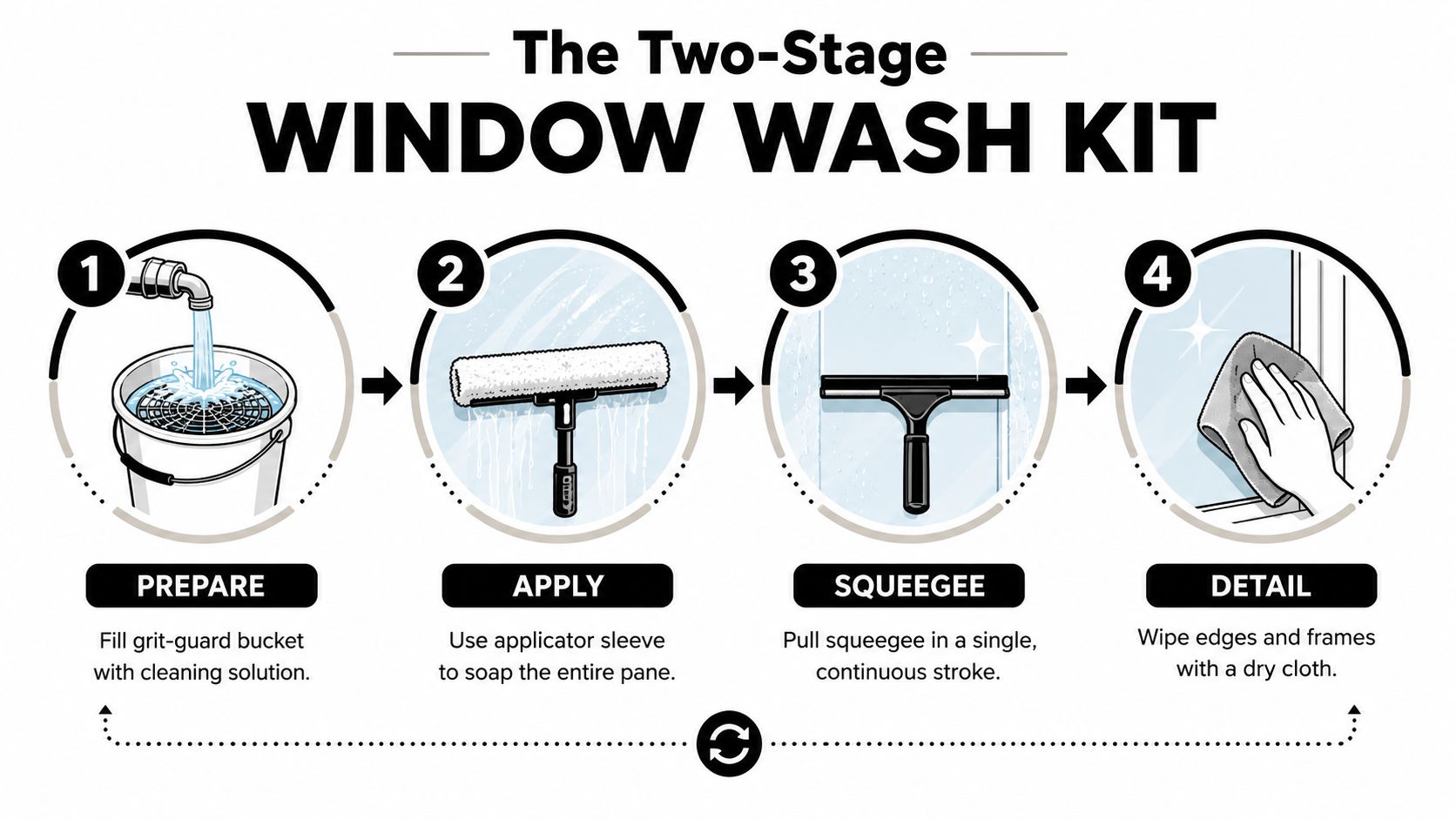
The equipment makes a noticeable difference. A household spray bottle and paper towel can handle a fingerprint, but they're poorly suited to a full exterior wash. For a controlled job, gather:
- Squeegee: Use a professional-grade channel with sharp, clean rubber.
- Applicator: Choose a T-bar or microfiber applicator sleeve.
- Buckets: Keep a grit-guard bucket for solution and a second bucket for rinsing.
- Detailing tools: Add a microfiber scrubber for edges and lint-free cloths for frames.
- Protection: Use drop cloths over soil, shrubs, and interior flooring near accessible windows.
- Solution: Mild dish soap or a dedicated window-wash product is usually enough for routine grime.
Start by dusting frames and removing screens. Brush loose debris away before adding water, because grit can scratch glass and contaminate your applicator. Cover nearby plants and soil, and choose a cloudy morning or begin on the shaded side of the house.
The two-stage sequence
First, pre-rinse the pane from top to bottom. This loosens dust, pollen, and grit before the applicator touches the glass. Wash the pane from the top down with the sleeve, working the solution into corners and along the edges.
Next, remove the solution with the squeegee. Begin at the top corner and use controlled, overlapping pulls. A fluid S-pattern with about 2 inches of overlap helps prevent missed bands, while one published technique guide attributes about 90% of streaks to improper overlap (two-stage exterior window cleaning technique).
Practical rule: Wipe the blade after each pass when the glass is heavily soiled. A dirty or nicked rubber edge can put the residue back on the pane.
Finish by detailing the edges with a dry cloth, wiping frame residue, and buffing the sill. Don't move to the next window until the current pane is rinsed, squeegeed, and checked from more than one angle. For additional ideas on reducing disposable materials and cleaning waste, these low-waste glass cleaning tips offer useful context.
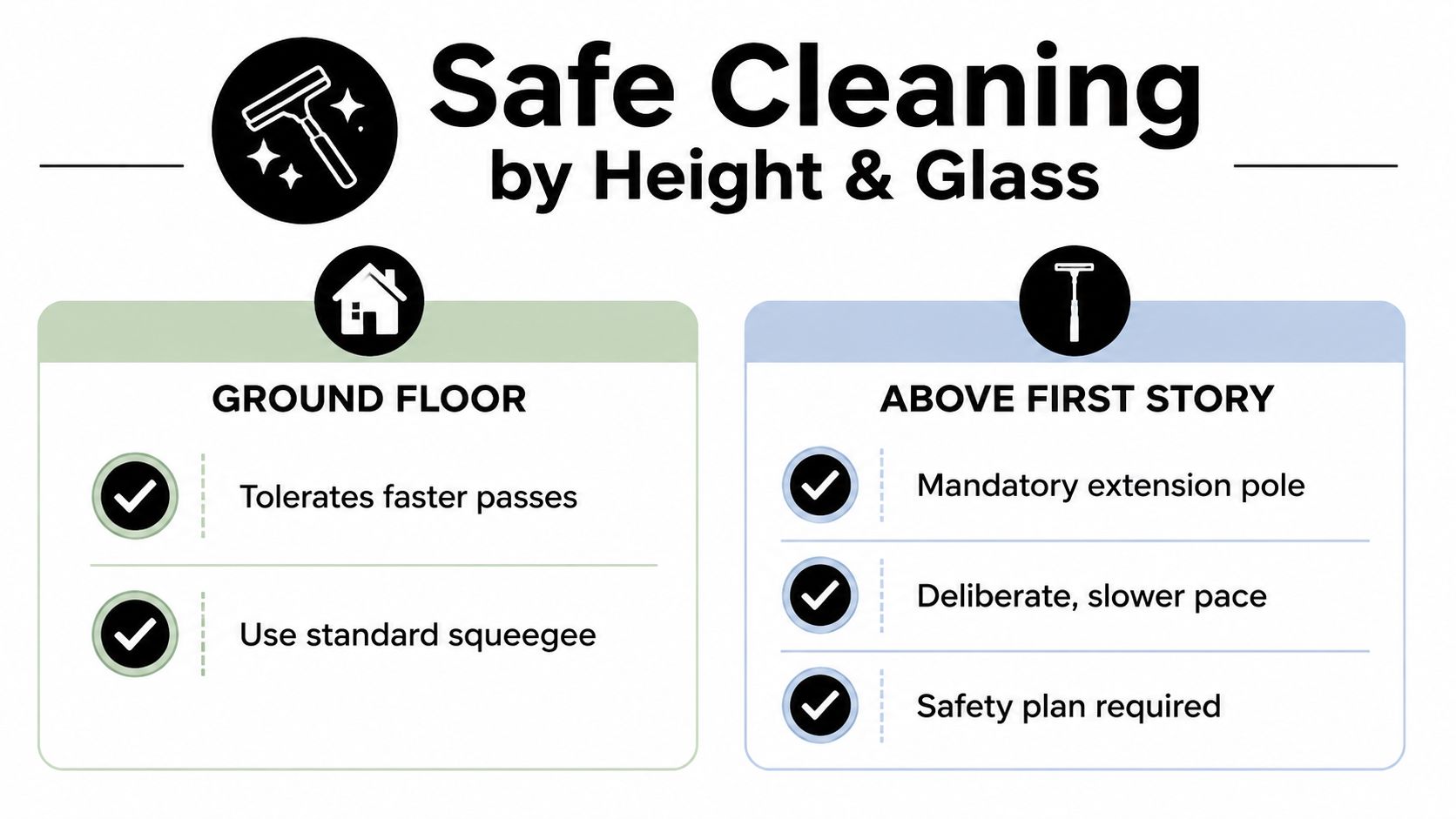
Cleaning by Height and Glass Type the Safe Way
Ground-floor glass is usually the simplest place to start. You can use a standard squeegee, keep your feet planted, and make faster passes because the access risk is limited. Upper windows require a different decision. The question isn't only whether you can reach the glass. It's whether you can control the tool, maintain balance, and respond safely if the surface or equipment shifts.
For first-story and many second-story panes, an extension pole can provide ground-based reach. Keep the pole around shoulder height or lower when practical, and keep both feet planted. OSHA says workers using extension poles for window cleaning should receive training in inspection, assembly, and use, with reference to IWCA and ANSI window-cleaning guidance (OSHA extension-pole guidance).
When a ladder is the wrong tool
If a reach tool can't complete the job, a ladder may be appropriate only on level, stable ground. Use a fiberglass or aluminum ladder at the correct 4-to-1 angle, add a stabilizer standoff that rests on siding rather than glass, keep your belt buckle inside the rails, and never lean sideways.
That list doesn't make every ladder job safe. Landscaping, sloped lots, wet surfaces, roof edges, and hard paving all change the risk. California's window-cleaning rule states that windows shouldn't be cleaned from inside or outside unless safe means are provided for the work (California window-cleaning safety rule).
Third-story windows and steep rooflines are a sensible stopping point for DIY work. Professional reach systems can clean many upper panes from the ground, while high-access work may require permanent building equipment. OSHA states that roof anchorages for window-washing equipment must be permanent, sound, rigid, and capable of supporting the maximum intended load without displacement or deformation (roof anchorage safety information).
Treat tempered, annealed, laminated, Low-E, and tinted glass gently during routine washing. Avoid abrasive pads, razor blades, and dry scraping on coated surfaces. Use a soft sleeve and clean rubber, and replace rubber with nicks or flattened edges.

Hard-Water Spots, Mineral Deposits, and Stain Identification
Hard-water haze is where many DIY window washes run out of road. A pane can be free of dust and still look cloudy because mineral-rich water dried on the surface. The key is to identify the deposit before choosing a chemical or abrasive tool.
Use a small wet test in an inconspicuous corner. If the cloudy area changes when wet, the deposit is likely on the surface and may respond to cleaning. If it looks the same wet and dry, the glass may be etched, and cleaning alone won't restore the original clarity. Polishing or replacement may be necessary, as explained in this hard-water stain removal guide.
| Stain Type | Wet Finger Test | Safe Treatment |
|---|---|---|
| Fresh mineral film | Haze smears or clears when wet | Rinse thoroughly, then try a mild vinegar-based or dedicated glass treatment on a test area |
| Bonded mineral scale | Rough or crystalline feel, little change when wet | Use a dedicated mineral remover only after confirming glass and frame compatibility |
| Etching | Appearance stays nearly the same wet and dry | Stop repeated scrubbing and seek restoration advice |
| Ordinary dust and pollen | Surface loosens quickly with water | Pre-rinse, wash with a mild solution, then squeegee |
A vinegar-and-water solution may help with light surface film, but it won't reliably dissolve bonded scale. Industry guidance notes that neutral or pure water won't remove hard mineral deposits, and that acid descalers may be needed, with caution around aluminum frames, acid-sensitive coatings, and Low-E glass (window-cleaning chemical guidance).
Don't use a razor on tinted, coated, or Low-E glass. Test any product in a small corner, follow its dwell instructions, agitate gently with a white scrub pad if the glass manufacturer permits it, and rinse completely. Resources discussing self-cleaning glass also help explain why specialized glass surfaces shouldn't be treated like bare, uncoated panes.
Screens, Tracks, Frames, and a Seasonal Maintenance Plan
Clean glass can lose its finished appearance when the surrounding parts stay dirty. Screens hold pollen and cobwebs, tracks collect grit, and frames can transfer grime back onto the pane after the wash.
During peak pollen, remove screens when practical, rinse them with low-pressure water, and use a soft brush with soapy water. Let them dry before reinstalling. Vacuum tracks with a crevice tool, then wipe them with a damp microfiber and a mild cleaner that won't damage the finish.
A workable maintenance rhythm
A light rinse and squeegee pass every 4 to 6 weeks during spring and summer can help control recurring buildup. For deeper residential window cleaning, include screens and tracks in spring and fall service. A building-maintenance guide notes that many homes benefit from professional washing twice per year, commonly in spring and fall (residential window-washing schedule guidance).
Use a compatible, non-abrasive cleaner on vinyl, wood, or aluminum frames, and rinse thoroughly. Before listing a home, schedule a full exterior detail that includes:
- Glass: Remove ordinary grime and assess mineral haze.
- Screens: Wash and inspect for tears or bent frames.
- Tracks: Vacuum grit and clear drainage paths.
- Frames and sills: Remove pollen, spider webs, and runoff marks.
- Access areas: Check panes above landscaping or difficult surfaces before choosing DIY methods.
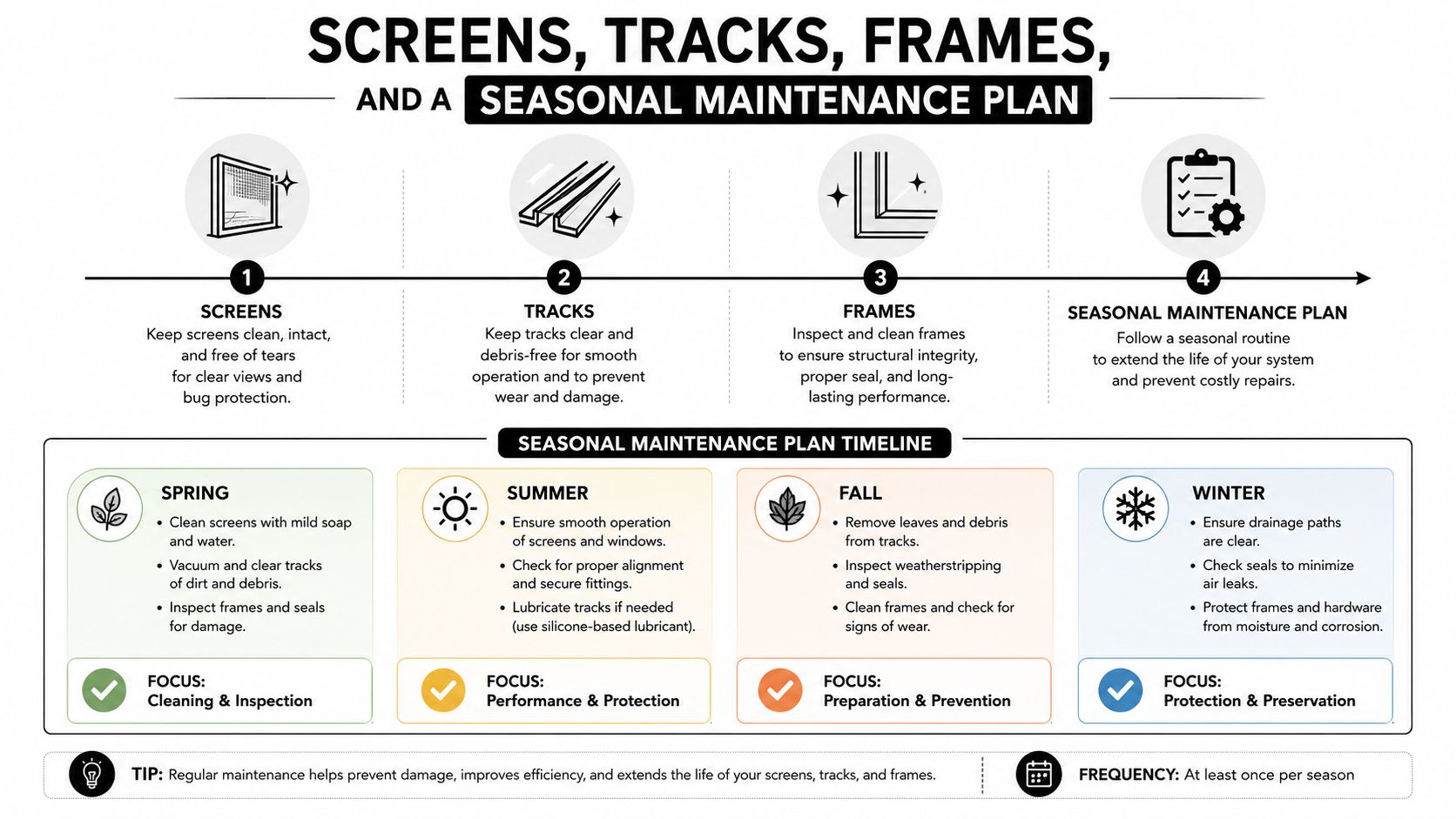
A consistent schedule makes each visit easier because contamination doesn't have as much time to bond to the glass and frames.
When DIY Stops Working and How to Book a Local Pro
DIY outside window cleaning makes sense for accessible ground-floor panes with ordinary dust and pollen. It becomes a poor trade when the work involves third-story glass, sloped landscaping, hard surfaces below a ladder, post-construction debris, storm damage, or bonded mineral scale. Repeating the same scrub-and-rinse cycle won't solve etching, and climbing higher doesn't make a ladder safer.
Professional window cleaning can also reduce setup time. Trained crews may use purified-water-fed poles for ground-based exterior cleaning, helping them reach upper panes without placing a ladder against the home. That approach can be particularly useful for Colorado Springs properties with stucco walls, uneven Front Range lots, and windows above planting beds.
Pricing depends on access, pane count, interior versus exterior scope, screens, tracks, and mineral treatment. For general context on what affects professional window cleaning pricing, compare the scope of work rather than choosing from a bare price alone.
Questions to ask before booking
- Insurance: Can the company provide current liability and worker coverage information?
- Access: How will the crew reach second-, third-, or fourth-story windows?
- Scope: Are screens, tracks, frames, and hard-water treatment included or priced separately?
- Glass care: Will the team avoid blades and abrasives on Low-E or tinted glass?
- Documentation: Will you receive a written scope and clear estimate?
- Follow-up: What happens if a missed edge or spot is found after service?
Schedule before spring pollen becomes heavy or before fall weather makes exterior work less convenient. Commercial properties, storefronts, restaurants, offices, dealerships, and retail buildings also benefit from a written maintenance plan that keeps public-facing glass presentable without leaving access decisions to the last minute.
For Colorado Springs homeowners and businesses, professional window cleaning is about more than shine. It's a way to handle difficult access, recurring mineral deposits, and exterior maintenance without taking unnecessary height risks.
Cultivate House Detailing provides residential and commercial exterior window cleaning in Colorado Springs and surrounding communities, including work on windows up to the fourth story, screens, and hard-water stains. Visit Cultivate House Detailing to request a quote and schedule a safer, streak-free window cleaning service.
Looking for a professional to take care of it? Cultivate House Detailing offers residential window cleaning in Colorado Springs. Get a free quote.