A professional home window cleaning service should clearly state whether its quote covers interior and exterior glass, screens, sills, tracks, access, and stain treatment, while the U.S. window cleaning services market reached about $2.9 billion in 2024 and is projected to reach $3.2 billion by 2029. You should expect a written scope, careful access planning, trained technicians, and a final inspection rather than a vague promise of “clean windows.”
You're probably looking at streaks right now, not because the glass is impossible to clean, but because Colorado dust, mineral-heavy rinse water, bright sun, and hard-to-reach panes make a quick bucket-and-sponge job unreliable. A local professional window cleaning team should explain exactly what will be cleaned, what costs extra, and how the crew will protect your home.
That clarity matters for homeowners, property managers, and businesses searching for window cleaning near me, window cleaning in Colorado Springs, CO, or dependable commercial window cleaning. The lowest quote can look attractive until screens, tracks, interior glass, hard-water treatment, or difficult access appear as add-ons.
Why Colorado Windows Need Professional Attention
A bright Colorado Springs morning can make a dirty window look worse. Sunlight catches every dried droplet, fine dust mark, and swipe left by a household towel. A homeowner may clean the living-room glass twice, then discover that the corners are still gray, the lower sill has gritty buildup, and the second-story panes were never reached safely.
Colorado conditions create several competing problems. Strong sun speeds evaporation while wind carries dust onto exterior glass. Seasonal temperature changes encourage homeowners to postpone cleaning, allowing residue to build on frames, sills, and screens. Water minerals create another challenge. When rinse water contains dissolved calcium and magnesium, evaporation can leave visible haze, spots, or streaks. Industry guidance recommends treated final-rinse water at TDS of 20 ppm or less, or 40 µS or less, for high-clarity glass and especially low-e coated glass. The International Window Cleaning Association explains the role of low-mineral rinse water.

The glass is only part of the job
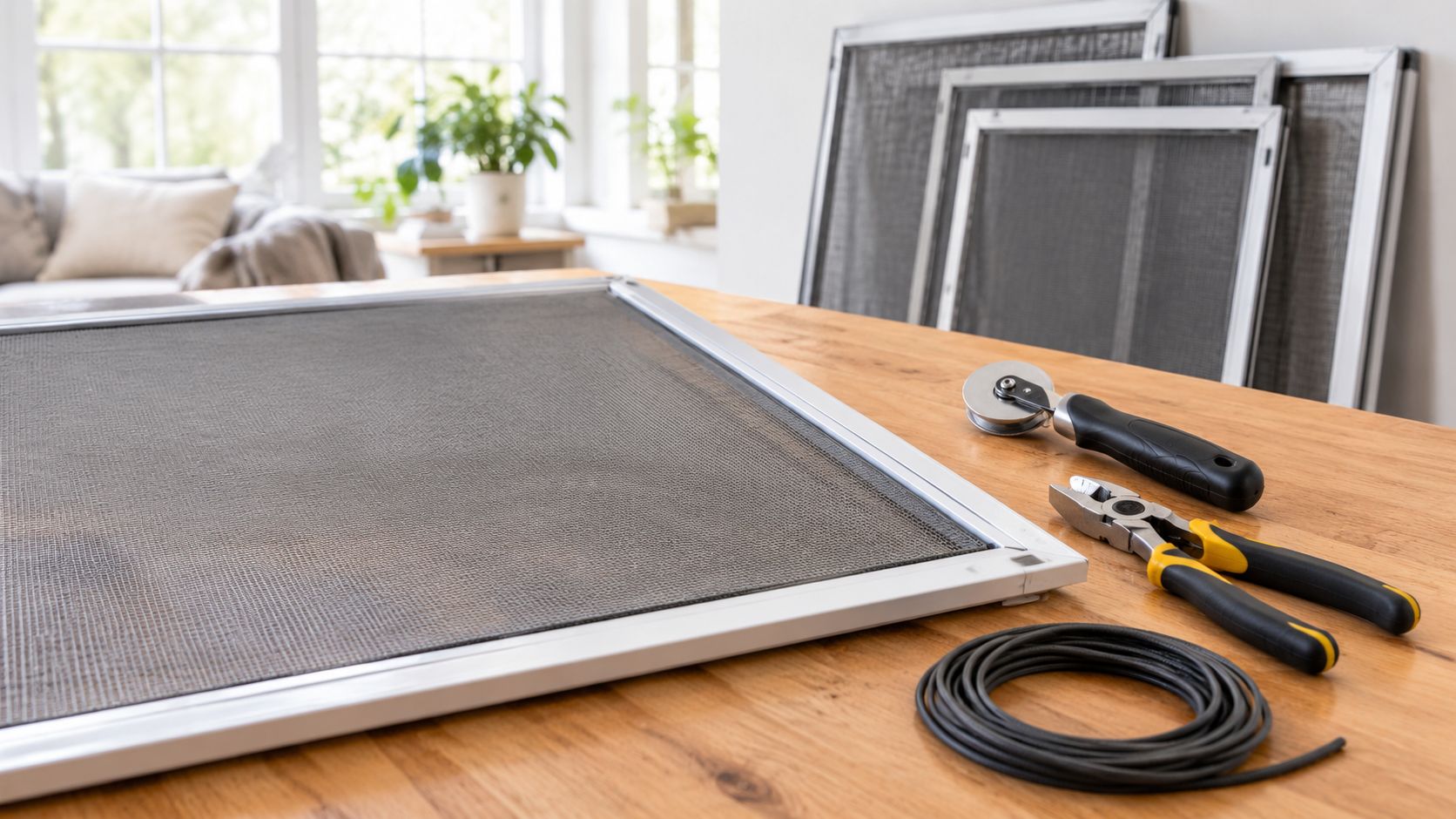
A professional visit should account for the full window assembly. That may include the glass, screen, track, frame, sill, corners, and the access required to reach each opening. Custom panes, bay windows, dormers, older painted frames, and delicate films also deserve a method suited to the material. Homeowners planning renovations may find custom window and door design tips useful when thinking about future access and maintenance.
The demand for this work is not limited to occasional spring cleaning. The U.S. window cleaning services sector grew at an average annual rate of 2.3% from 2019 to 2024, with a projected average annual increase of 1.7% from 2024 to 2029, according to industry data on the window cleaning market. That points to a mature service people use for ongoing residential and commercial property maintenance.
Clean glass also affects how a property feels. Removing surface grime lets more daylight through, improves the view, and gives a home or storefront a maintained appearance. The practical question isn't whether professional cleaning looks better. It's whether the quote tells you exactly what result you're paying for.
DIY Window Cleaning vs Hiring a Home Window Cleaning Service
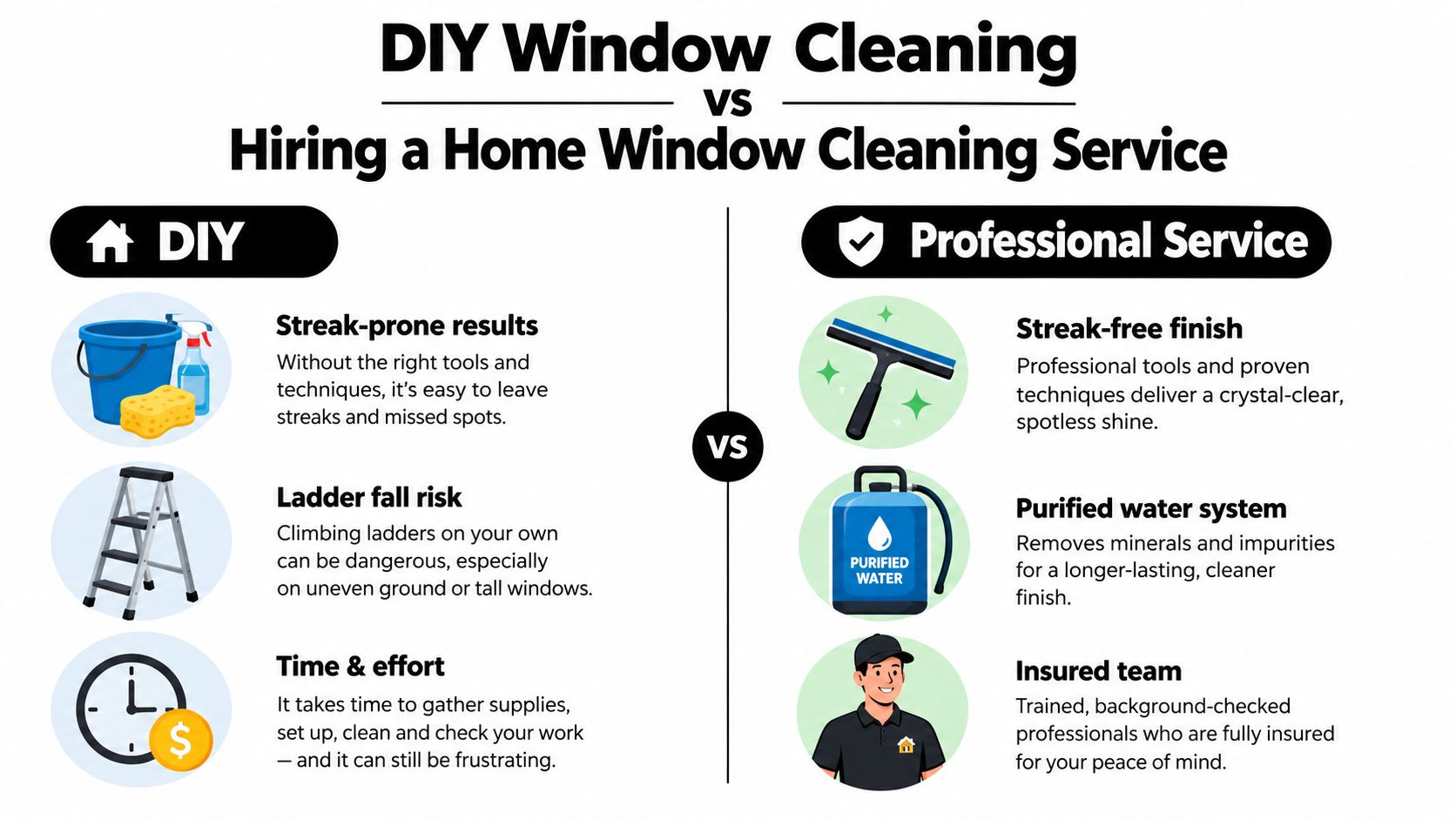
DIY cleaning works reasonably well for a small number of accessible panes. It becomes less attractive when the home has tall glass, persistent mineral spots, screens packed with dust, or windows that need interior and exterior attention on the same visit.
| DIY approach | Professional service |
|---|---|
| Household spray may leave residue or dry too quickly | Technicians choose a method for the glass, frame, and conditions |
| Paper towels can leave lint | Microfiber and lint-free materials reduce residue |
| A stepladder creates access and fall concerns | Trained crews plan access with poles and appropriate equipment |
| Hard-water spots may remain after repeated wiping | Stain treatment can be assessed separately from routine washing |
| Screens, tracks, and corners are often skipped | The written scope identifies included and excluded areas |
Technique matters more than buying another bottle of cleaner. A reliable sequence starts by dusting or pre-wetting to remove grit, then washing from top to bottom. The technician uses overlapping squeegee passes and wipes the blade between strokes, which limits soil re-deposition and edge-line streaking. Working out of direct sun also helps prevent rapid evaporation. A practical window-cleaning guide covers these methods in detail.
Practical rule: If you can reach the glass safely while standing on the floor, DIY may be manageable. If the job requires leaning, climbing, or working around fragile frames, hire a trained professional.
Hard-water stain removal deserves a separate expectation. Routine washing can remove surface dirt, but mineral deposits may have bonded to the glass and need a specialized assessment. Aggressive scraping or abrasive products can damage coatings and leave scratches, especially when the homeowner doesn't know what finish is present.
A home window cleaning service also reduces the temptation to rush. Professionals can work around second-story glass, old painted frames, window films, and tight access points without treating every pane as if it were identical. Scheduled maintenance prevents heavy buildup from becoming the main project.
The equipment has changed over time, too. The modern single-blade squeegee was patented in 1936, while Windex appeared in 1933, milestones that helped move window cleaning toward more standardized tools and methods. For customers, the lesson is simple: a streak-free finish comes from a controlled process, not from the brand of spray alone.
What Happens During a Typical Window Cleaning Appointment
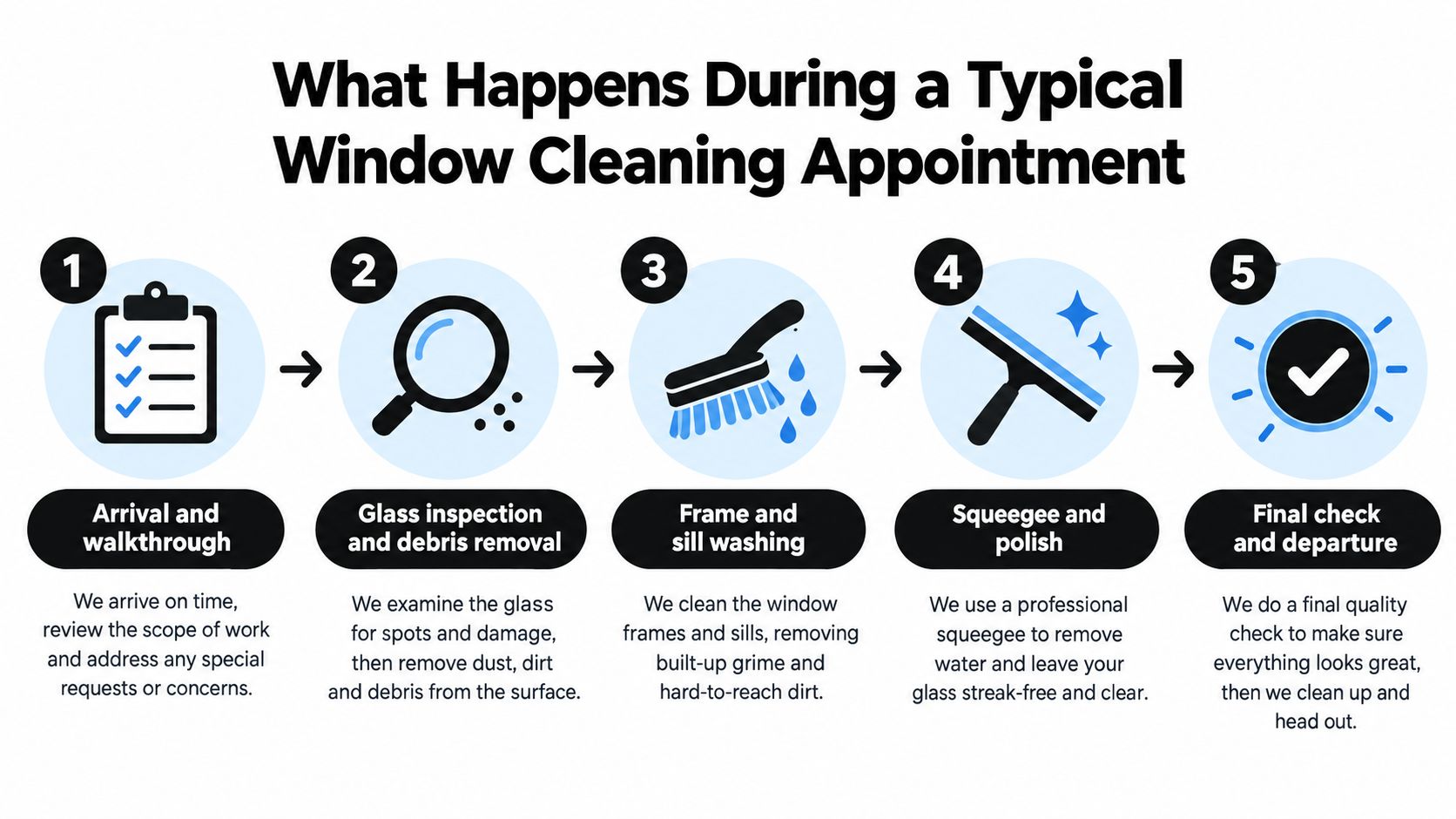
A well-run appointment starts before the first pane is wet. The technician should confirm the requested scope, walk the property, identify access limitations, and note fragile items near the windows. This is the point to confirm whether the booking includes interior window cleaning, exterior window washing, screens, tracks, sills, or hard-water treatment.
The usual workflow
Arrival and walkthrough. The crew reviews the estimate with you, identifies the windows to be serviced, and checks gates, furniture, landscaping, and interior access.
Glass inspection and debris removal. Loose dust, grit, cobwebs, and insects are removed before wet cleaning. Skipping this step can drag abrasive material across the glass.
Frame, sill, and screen work. Included areas are brushed or washed carefully. Screens may be cleaned separately, and damaged screens should be identified rather than hidden under a fresh finish.
Washing and squeegee finishing. The technician applies the appropriate cleaning solution or treated water, works from the top down, and uses overlapping strokes. The blade is wiped between passes to keep dirty water from returning to the pane.
Final inspection and departure. The crew checks edges, corners, tracks, and visible glass from different angles. Any access issue or stain that couldn't be removed should be explained before the team leaves.
The right tools make each step more controlled. Homeowners comparing methods can also review why professional window cleaning tools make a difference before scheduling service.
A final walkthrough protects both sides. You can point out a missed pane while the equipment is still on site, and the crew can distinguish a missed spot from permanent glass damage, etched mineral buildup, or a defect inside the sealed unit. That conversation is far more useful than discovering a surprise after the invoice arrives.
How Window Cleaning Pricing Really Works in Colorado Springs
A transparent quote reflects the work required, not just the number of windows. Two homes can have similar glass counts but different prices because one has accessible single-hung windows and the other has dormers, bay windows, screens, tight landscaping, or interior panes behind furniture.
The most important pricing variables usually include:
| Factor | How It Impacts Pricing |
|---|---|
| Glass area and window count | More panes require more washing, detailing, and inspection time |
| Window style | Divided panes, bay windows, dormers, and specialty designs take more attention |
| Interior versus exterior access | Interior service requires room access, floor protection, and furniture coordination |
| Height and accessibility | Upper-story glass may need poles or other planned access methods |
| Screens, tracks, and sills | These areas add labor when they aren't part of the base scope |
| Hard-water treatment | Mineral removal is different from routine dirt washing and may require separate assessment |
| Property type | Residential window cleaning and commercial window cleaning have different scheduling and access needs |
A vague phone estimate leaves too much room for disagreement. A written estimate should list the sides of the glass, included screens, track or sill cleaning, stain treatment, access assumptions, and any conditions that could change the price. This guide to window cleaning pricing explains the factors that affect service costs.
The cheapest quote is often the least transparent quote when it excludes the work you assumed was standard. A low base price can become less economical once the provider adds screens, interior glass, first-time detail work, or difficult-access charges.
Maintenance frequency affects value as well. General guidance commonly recommends professional cleaning twice a year, usually in spring and fall, while homes exposed to heavy dust, pollen, salt, exhaust, or hard-water spotting may need more frequent service. The Spruce outlines these maintenance considerations. Ask for a maintenance recommendation based on your property rather than accepting an automatic schedule.
Safety Standards, Insurance, and What Protects Your Home
Window cleaning is a property-care service, but it also involves fall exposure, ladders, poles, water, and equipment moving through occupied spaces. A professional company should be able to explain how technicians access difficult glass and how the crew prevents damage to floors, walls, landscaping, screens, and furnishings.
OSHA guidance emphasizes cleaning exterior window surfaces from inside the building when possible. Workers should keep their feet firmly on the floor, arrange the sill height to prevent a fall through the opening, and receive training on the inspection, assembly, and use of poles. When floor-level work isn't practical, a personal restraint system may be needed to prevent a fall through the opening. OSHA's window-cleaning guidance describes these precautions.
Questions that reveal a serious operation
Ask whether the company carries appropriate insurance, trains technicians, inspects equipment, and provides written estimates. You should also ask what happens when weather changes, a pane has existing damage, or a hard-water mark won't come out without risking the glass.
OSHA identifies IWCA fall-protection standards and access-equipment guidance as a resource for window cleaners, building owners, manufacturers, and other parties involved in safe access. The standards separate safety guidance for window-cleaning access equipment from provisions covering equipment manufacturers, distributors, designers, installers, and maintainers.
Local rules can be more specific. California safety requirements, for example, treat a fully opened clear window opening whose lesser dimension exceeds 18 inches as a fall-through hazard requiring safety anchors or approved anchorages. The California regulation provides that example of controlled window access. Colorado Springs homeowners don't need to apply California law to their home, but the principle is useful: a crew should never improvise around a dangerous opening.
Insurance doesn't replace safe work. It complements training, equipment checks, communication, and a plan that keeps people and property protected.
How to Prepare Your Home for a Clean Window Service
Preparation doesn't mean washing the windows before the crew arrives. It means removing obstacles that slow access or prevent the technician from seeing the full frame, sill, and track.
Use this short checklist:
- Clear the interior area: Move lamps, plants, décor, and small furniture away from windows that need interior service.
- Secure pets: Keep dogs and other pets in a separate room while doors and gates are open.
- Prepare access points: Arrange side gates, patio doors, and rooms ahead of time so the crew isn't waiting between sections.
- Move exterior obstacles: Relocate patio furniture, toys, hoses, and movable planters away from the work area.
- Share special concerns: Point out window film, painted frames, loose screens, fragile glass, or previous hard-water treatment.
- Plan vehicle access: Keep a practical parking area available for ladders, poles, water equipment, and protective materials.
Don't remove screens unless the company asks you to. The crew may need to label, inspect, clean, or reinstall them in a particular order. Clearing tracks is also optional unless it forms part of the agreed scope. Leaving the area accessible is helpful, but it doesn't turn excluded track cleaning into included track cleaning.
Interior access matters most when the service includes both sides of the glass. If nobody will be home, confirm whether exterior-only service is possible and how the company handles locked rooms. Good scheduling prevents a situation where the team arrives ready to work but can't reach half the quoted windows.
Colorado weather can change quickly, so ask about rescheduling policies before the appointment. A clear policy protects your calendar and helps the company choose conditions that support a clean finish.
Questions to Ask Before Hiring Local Window Cleaners
A polished website doesn't tell you what the quote includes. Ask direct questions before booking, especially when you're comparing window cleaning near me results and several prices appear similar.
Confirm the scope
Start with the basics:
- Does the price include interior and exterior glass?
- Are screens, tracks, sills, frames, and corners included?
- Is hard-water stain removal part of routine washing or a separate service?
- Does the quote cover every window, including basement panes, dormers, bay windows, and inaccessible glass?
- What happens if a window is unsafe to reach?
A provider who can't answer these questions clearly may be selling an entry price rather than a finished result. Ask for the scope in writing so everyone has the same understanding before the crew begins.
Check the quality and protection details
Ask whether technicians use squeegees, microfiber or lint-free materials, treated water, extension poles, or other equipment suited to your property. Find out how the company handles delicate films, older frames, existing scratches, failed seals, and mineral deposits. You should also ask whether the crew performs a final inspection and how concerns are handled after service.
For a business, clarify arrival windows, storefront access, recurring maintenance, and whether the team can work around customers and employees. Commercial window cleaning requires more than repeating a residential appointment on a larger property.
Finally, ask about insurance, safety training, payment terms, weather delays, and cancellation rules. Written estimates, clear scope, and understandable warranty or follow-up terms are signs of a provider that expects accountability. Reluctance to disclose those details is a warning sign, not proof of efficiency.
Cultivate House Detailing provides residential and commercial window cleaning in Colorado Springs and surrounding communities, including interior and exterior service, screen care, hard-water treatment, and cleaning for windows up to the fourth story. Visit Cultivate House Detailing to request a clear quote and schedule a service built around your property's actual scope.