A Colorado Springs driveway can look fine from the street until the sun hits it after a windy spring. Then the winter grime, dust, and tire marks show up all at once, and the question becomes simple: which cleaning method should you book. A lot of homeowners hear pressure washing and power washing used like they mean the same thing, and most of the time companies do use them that way. The catch is that the difference matters when you're comparing quotes, protecting siding, or trying not to spend money on a method that's too aggressive for the surface.
| Criteria | Pressure Washing | Power Washing |
|---|---|---|
| Water temperature | Unheated water | Heated water |
| Best for | Routine dirt, mud, dust, organic buildup | Grease, oil, stubborn grime, heavy-duty soils |
| Surface risk | Lower when matched correctly | Higher if used carelessly on delicate materials |
| Typical use case | Residential hardscape and siding prep | Driveways with oil, commercial concrete, industrial cleanup |
| Decision point | Good default for many exterior jobs | Better when heat helps break down the mess |
If you're standing in the driveway wondering which one fits, the answer usually comes down to the surface and what's stuck to it, not the name on the flyer.
Introduction
A Colorado Springs homeowner usually notices the problem at the same time everyone else does, when the driveway's winter film and spring dust suddenly make the whole front of the house look tired. The same thing happens on patios, walkways, siding, and fence lines after months of weather and wind. That's when the question comes up, pressure washing or power washing, and the terminology gets muddy fast.
The terms are often used interchangeably. On the surface, that sounds harmless, but it can lead to the wrong machine, the wrong nozzle, or the wrong expectation about what the job should do. A cold-water rinse and a heated wash both clean, but they don't behave the same once you're dealing with grease, oil, or a more delicate surface.
Practical rule: if the surface is hard and the grime is routine, pressure washing is usually enough. If the mess is oily or stubborn, heat can help.
That difference matters in Colorado Springs, where homeowners deal with dust, road film, and hard exterior surfaces, but also with siding, painted trim, and stone that can be damaged if someone gets heavy-handed. The actual choice isn't just about force. It's about matching the method to the material so the job gets cleaner without creating a repair bill.
If you've been comparing window cleaning near me searches with exterior wash options, or you're trying to figure out whether a local pro should handle the whole exterior, the right call depends on more than price. A careful cleaner looks at the surface, the stain type, the runoff, and the risk before starting. That's the standard Cultivate House Detailing brings to exterior cleaning work around Colorado Springs and nearby areas.
What Sets Pressure Washing and Power Washing Apart
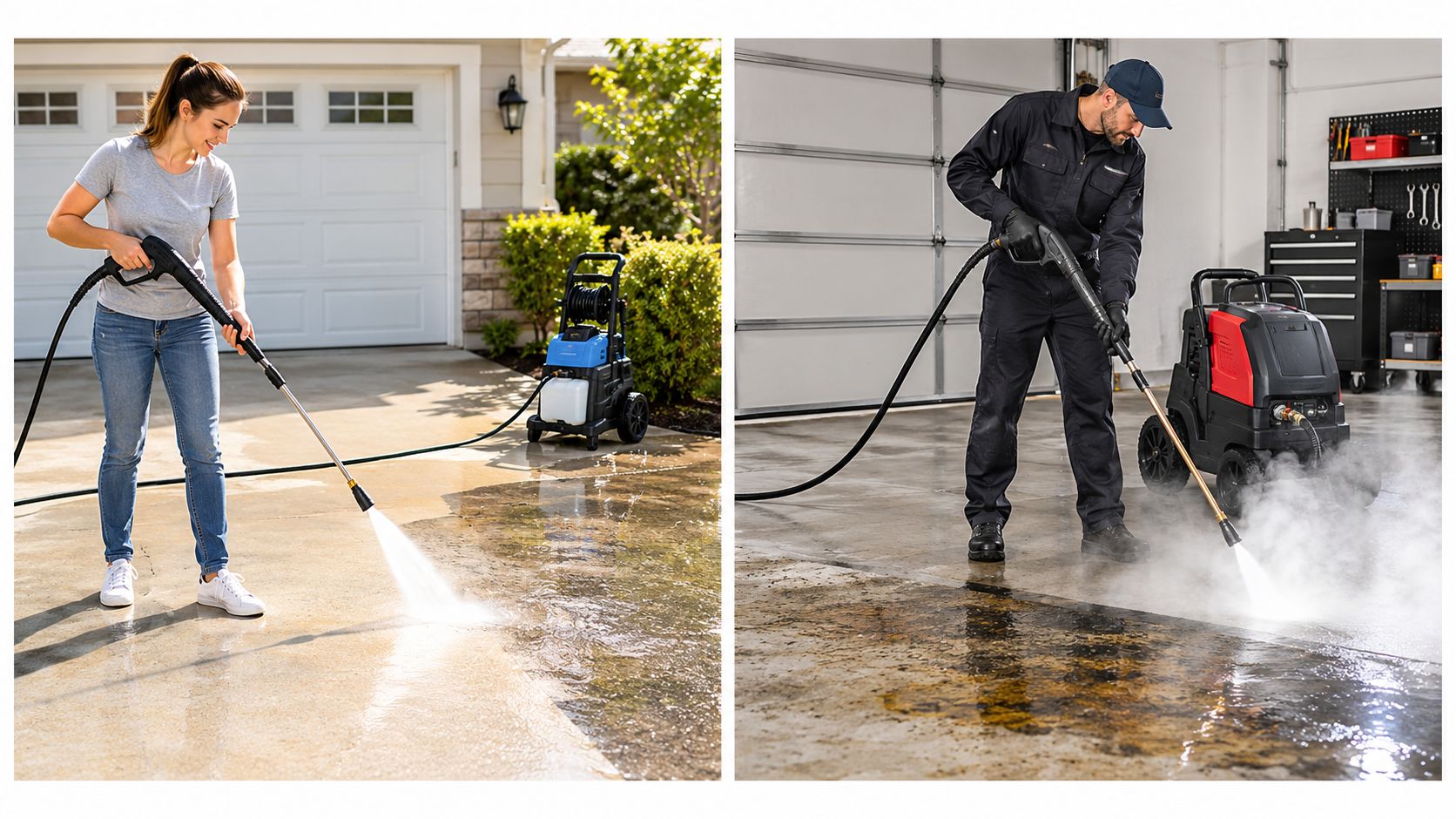
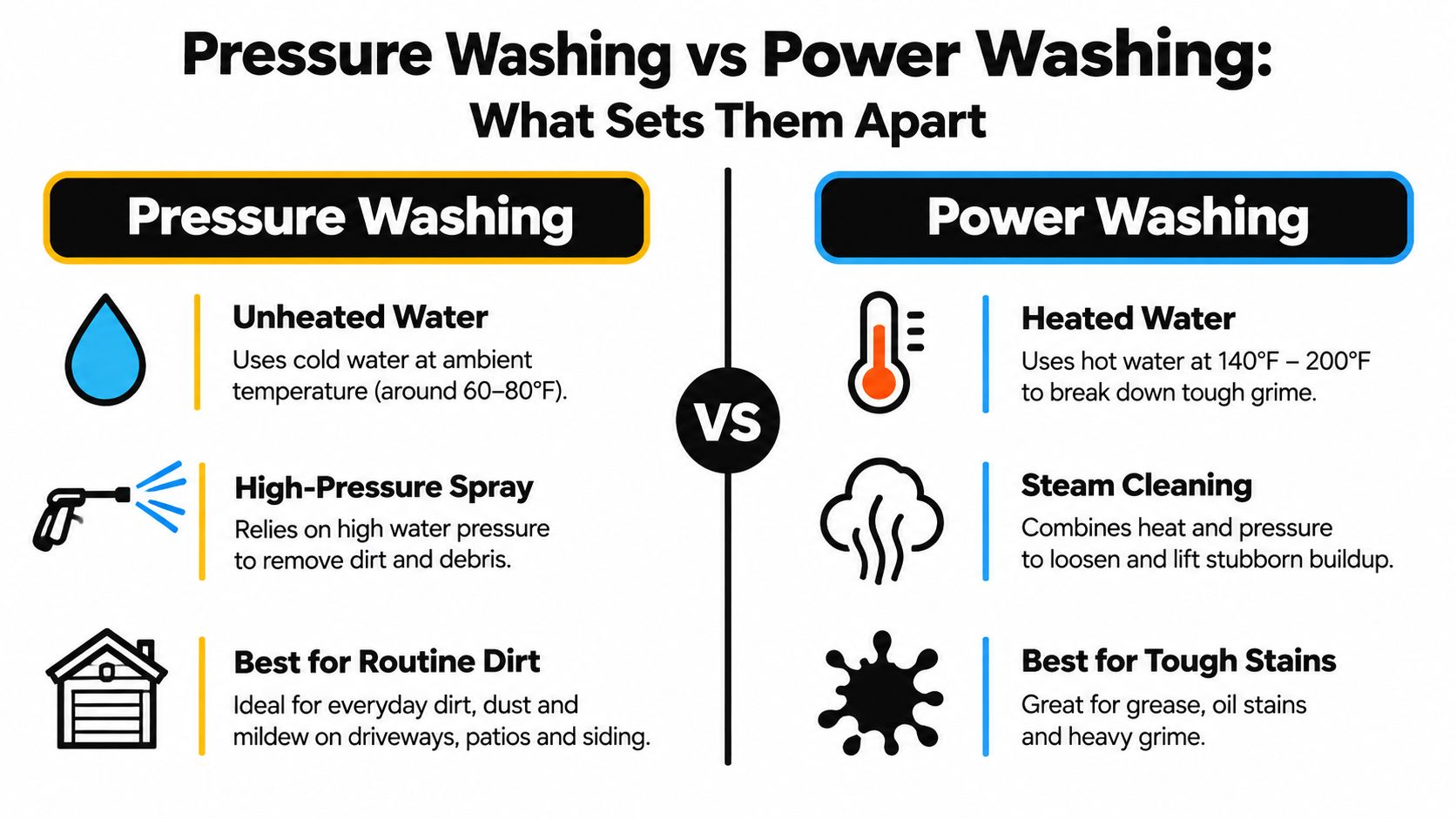
The technical difference is straightforward, pressure washing uses unheated water, while power washing heats the water before it leaves the machine. The pump creates the pressure in both cases, so two machines can have the same PSI and still behave differently because one is cold-water and the other is hot-water. Heated systems commonly work in the 140°F to 200°F range, and some machines go higher depending on the class of equipment.
Heat changes what comes off the surface
Heat doesn't magically make a bad cleaning choice safe, but it does help break down grease, oil, and petroleum-based soils. That's why hot-water equipment is often better on commercial concrete, garage floors, and other jobs where the mess isn't just dust or mud. Cold water still handles routine buildup well, especially on residential surfaces that need a thorough rinse rather than a thermal strike.
For homeowners, that means the right question isn't “Which one is stronger?” It's “What kind of dirt am I removing?” Cold water is usually enough for dry debris, organic film, and day-to-day grime. Heated water becomes more useful when the stain has bonded to the surface in a way plain water struggles to loosen.
The machine's PSI tells you how hard it pushes. The water temperature tells you what kind of grime it can loosen.
That's why two companies can both say they “pressure wash” and still show up with very different tools. One may be using a cold-water setup for routine exterior cleaning. Another may bring heated equipment because the job involves grease, commercial buildup, or a surface that needs a deeper clean to look right.
How the Two Methods Compare Across Key Criteria
| Criteria | Pressure Washing | Power Washing |
|---|---|---|
| Water temperature | Unheated water | Heated water, often 140°F to 200°F |
| Greasy soils | May need detergent or more dwell time | Heat helps loosen oily residue |
| Routine dirt | Strong choice for residential cleaning | Works, though heat may be unnecessary |
| Equipment | Simpler setup | More complex, with heating components |
| Best value | Most residential jobs | Heavy-duty or commercial work |
| Environmental footprint | Often simpler water use | May demand more energy and water |
A useful equipment comparison is Cleaning Units, calculated as PSI × GPM. It accounts for both impact and rinsing capacity, rather than treating PSI as the whole story. A 3,000 PSI machine flowing at 4 GPM produces 12,000 cleaning units (equipment guidance on Cleaning Units).
Nozzle choice still determines how that output reaches the surface. On concrete, a 15° or 25° tip can direct those 12,000 cleaning units toward bonded dirt, while a 40° tip spreads the force for a gentler pass or final rinse. On siding, painted trim, or another delicate finish, a 40° tip, greater distance, and lower pressure are safer starting points. See this comparison of soft washing and pressure washing before choosing a method for delicate materials.
Cold-water machines handle routine residential buildup, including dust, mud, and general exterior grime. Heated equipment earns its place when oil, grease, or stubborn commercial residue takes extra scrubbing to release. Heat may shorten the job, but it does not correct poor technique or make excessive pressure safe.
The practical winner depends on the surface, contaminant, nozzle, and operator control. A machine with higher ratings can still cause damage if the tip is too narrow, the wand stays in one place, or runoff is directed where it should not go.
Bottom line: match PSI to the surface, GPM to the rinse work, nozzle angle to the needed coverage, and temperature to the contaminant.
Hotter water suits oily concrete. It is a poor reason to apply aggressive cleaning to siding or painted trim. In Colorado Springs, the better choice also limits wasted water and keeps dirty runoff under control.
Matching Each Method to the Right Surfaces
Concrete is the obvious place where stronger cleaning makes sense. For driveways and walkways, general guidance commonly lands in the 2,500 to 3,500 PSI range, and concrete cleaning recommendations often call for at least 3,000 PSI and 4 GPM for effective results. That doesn't mean every slab needs maximum force, but it does mean concrete can usually tolerate real cleaning power when the operator knows what they're doing (Lowe's concrete buying guide).
Hard surfaces can take more, delicate ones can't
For concrete driveways, brick, and many paver patios, pressure washing is usually the right starting point. Hot water can help if oil spots or grime are set in, but the actual work still comes from using the right fan tip, keeping the wand moving, and rinsing evenly so you don't leave stripes. On pavers, proper cleanup matters because blasting too hard can disturb the joint sand.
For siding, the approach changes fast. High pressure can force water behind the panels, damage insulation, and contribute to mold growth. It can also chip paint or leave water where it doesn't belong, which is why siding is usually a job for lower pressure, careful technique, or a different cleaning method altogether (pressure-washing guidance for siding).
For wood decks and fencing, the risk is even clearer. Pressure can nick or etch the surface, especially on softer wood, so the goal is to clean without tearing up the grain. On stone, the right answer depends on the type of stone and finish, because some materials etch more easily than they look like they should.
The safe rule is simple. Use more force on hard, durable surfaces like concrete. Use restraint on siding, painted wood, and older stone, because a wash that looks “clean” but leaves damage behind isn't a win at all.
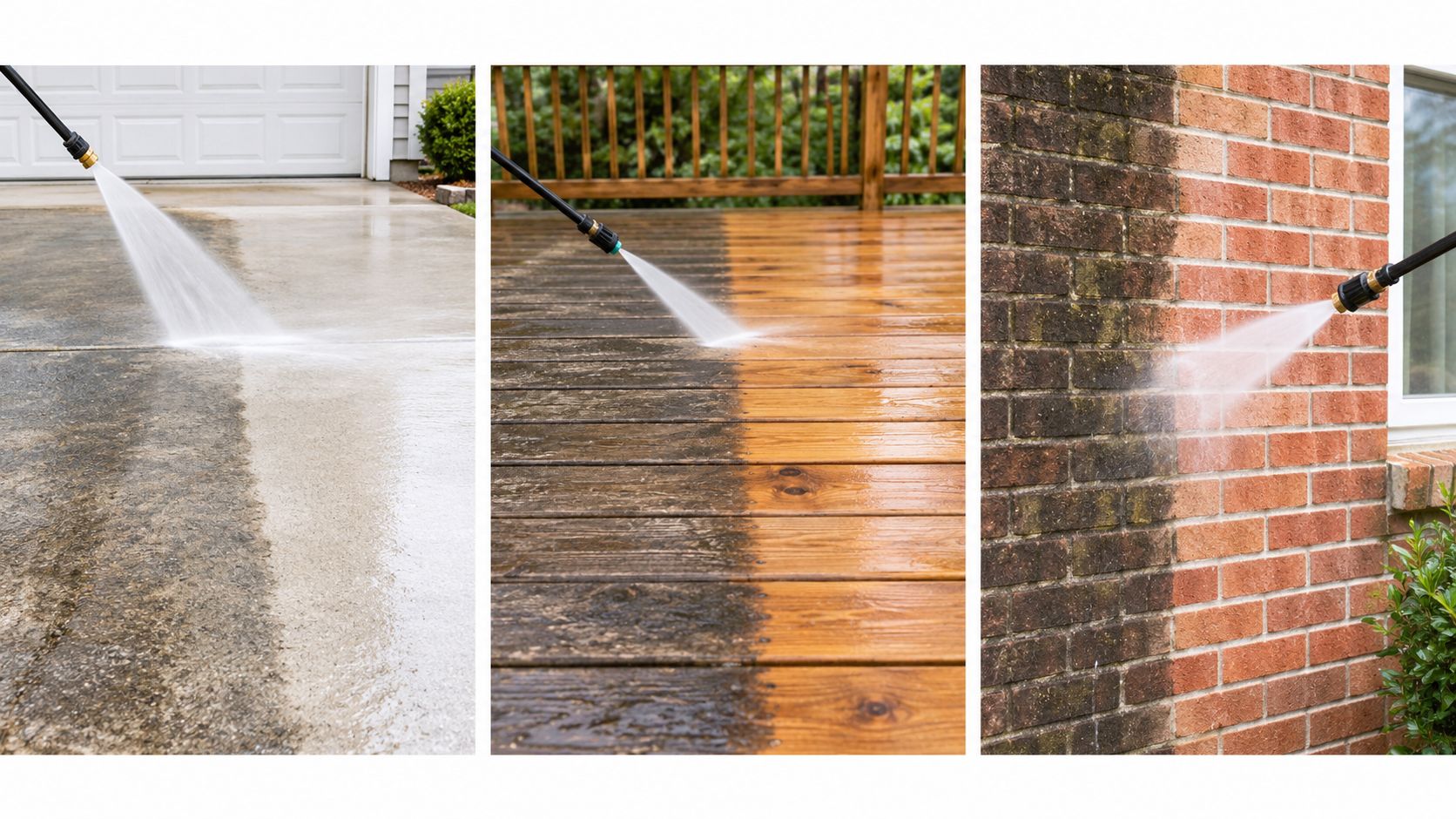
If you're sorting through a whole exterior, the question isn't whether to blast everything the same way. It's which surfaces can tolerate pressure, which ones need a lighter touch, and where heat helps without creating risk.
Safety and Environmental Concerns Homeowners Overlook
The part many homeowners ignore is the one that can hurt someone. Pressure washers can spray up to 4,000 PSI, which is about 80 times the force of a garden hose according to State Farm (pressure washing safety guidance). That kind of force can damage concrete and brick, force water under siding, damage insulation, and start mold growth in places you can't see right away.
Safety starts before the machine starts
The CDC says to test the GFCI before use and to avoid the zero-degree nozzle, because its concentrated stream can injure skin and eyes (CDC pressure washer safety). Those aren't small cautions. They're the difference between a clean weekend and a trip to urgent care.
Runoff is the other issue people miss. Dirty wash water can carry detergent, loosened grime, and debris into areas you don't want it going. In a place like Colorado Springs, where water use and drainage deserve real attention, that's not just a cleanup detail. It's part of the job plan.

Recent market coverage points to a broader shift toward water-efficient, low-emission, and application-specific tools, along with adjustable spray systems and soft-wash methods for more delicate surfaces (market trend coverage). That tells you where the trade is heading. Buyers aren't just chasing raw force anymore, they're trying to clean more precisely with less damage and less waste.
That's why a trained pro makes sense anytime the job involves siding, second-story work, slippery surfaces, chemicals, or a runoff concern. The machine is only part of the equation. Technique and judgment matter just as much.
Cost and Value of DIY Versus Professional Cleaning
DIY looks cheap until you add the actual costs. A consumer machine, nozzles, hoses, detergent, storage space, and repairs all add up, and none of that includes the time spent figuring out which tip, spray pattern, or pressure setting is safe for a given surface. If you only need to clean a small concrete pad once in a while, DIY can make sense. If the job gets larger, more delicate, or more chemical-heavy, the economics shift quickly.
What you're really paying for
Professional pressure washing is part of a real service sector, not a side hustle with a borrowed tool. The U.S. industry reached about $1.2 billion in revenue in 2024, supported by roughly 32,000+ businesses and more than 41,000 technicians (industry statistics). That scale helps explain why equipment, training, and process standards have become more specialized over time.
For homeowners, the value question is practical. DIY can be fine for a short concrete walkway or another hardy, low-risk area. Hiring a pro usually pays off for large driveways, multi-story homes, delicate siding, commercial properties, and any job involving grease, oil, or chemicals. A professional quote also reflects setup, fuel or power, labor, safety practices, and cleanup, not just time at the nozzle.
If you want a useful way to compare estimates, it helps to understand how contractors structure the bill. A clean invoice should separate surface prep, equipment use, and any add-on work. If you're reviewing estimates, this invoice format for pressure washing is a practical reference point for seeing how service details are typically organized.
Cheap equipment is only cheap if the surface survives the job.
That's the core trade-off. A weekend rental may cost less on paper, but a mistake on siding, stone, or a painted surface can erase the savings fast. Professional service makes the most sense when the situation demands more than a small patch of concrete.
Our Recommendation and When to Hire a Pro
For routine grime on concrete, patios, and other hardscape, pressure washing is usually the right fit. If the surface has grease, oil, or stubborn industrial staining, power washing makes more sense because heat helps break the bond. For anything delicate, including siding, painted wood, or older stone, a softer method or a trained professional is the safer move.
What a careful pro looks at first
A good exterior cleaner starts by reading the surface, not by turning the machine on full blast. That means checking material type, stain type, access, runoff, nearby windows, and whether the area needs a rinse-only approach or a more controlled wash. On a typical Colorado Springs home, that kind of judgment matters more than a bold PSI claim on a rental placard.
Cultivate House Detailing handles exterior cleaning for Colorado Springs and nearby communities with a focus on careful assessment, punctual communication, and a finish that looks clean without looking overworked. That matters for busy homeowners, property managers, and business owners who don't want to spend a Saturday wrestling a machine, guessing at nozzle choice, or cleaning up overspray after the fact.
Here's the simplest way to decide:
- Choose pressure washing for durable surfaces with routine dirt, dust, and mud.
- Choose power washing when heat will help with oil, grease, or stubborn buildup.
- Choose a pro when the surface is delicate, high, heavily stained, or tied to runoff concerns.
- Choose caution any time you're unsure, because the wrong spray can cost more than the cleaning job.
That's especially true around homes where siding, trim, stone, and hardscape sit close together. One careless pass can turn a simple clean into a repair conversation, and that's not where anyone wants to end up.
If your driveway, siding, or storefront needs a careful clean in Colorado Springs, Cultivate House Detailing can help you sort out the right method and handle the work start to finish. Visit Cultivate House Detailing to request a quote and schedule exterior cleaning that fits your surface, your property, and your timeline.