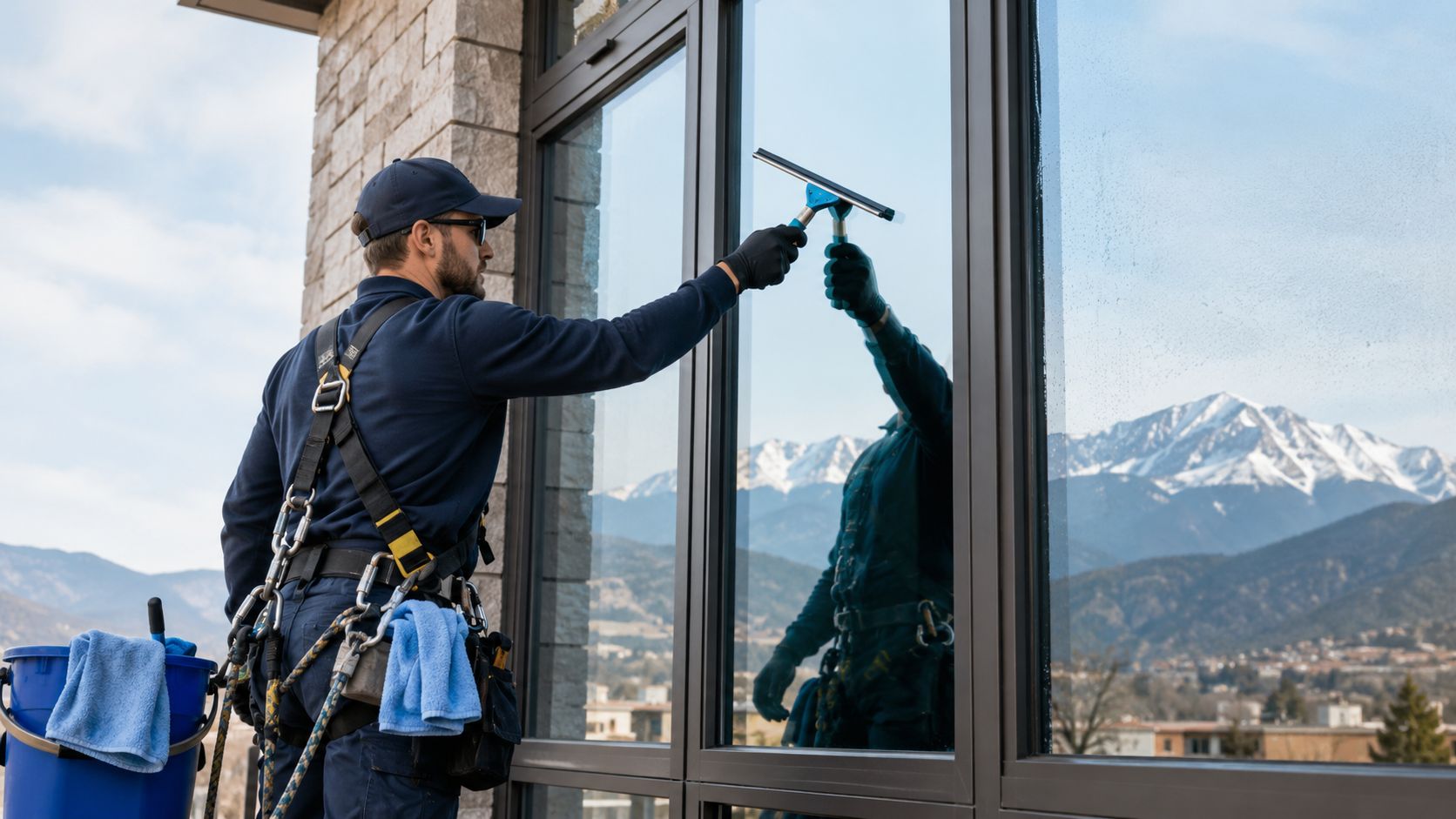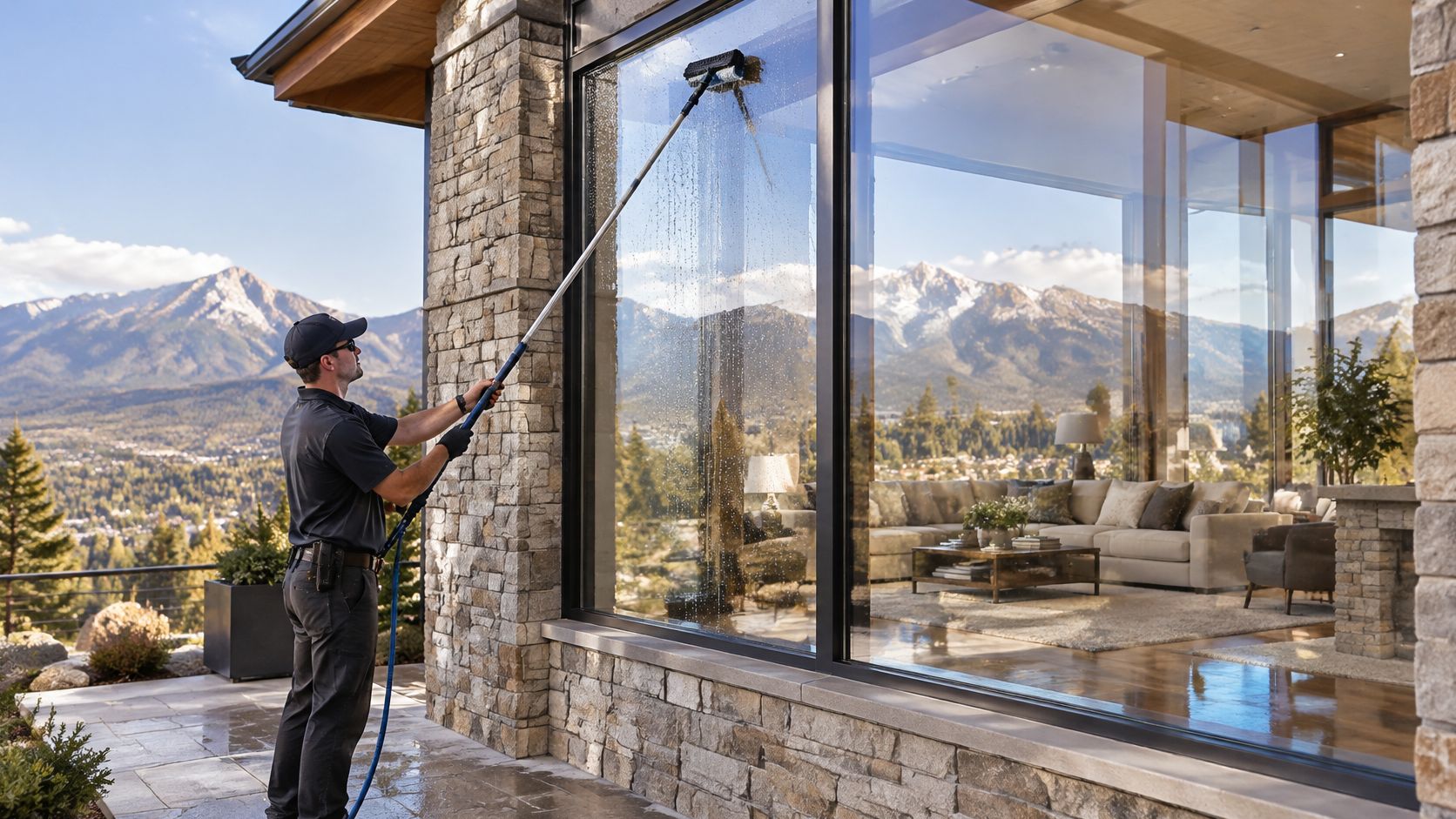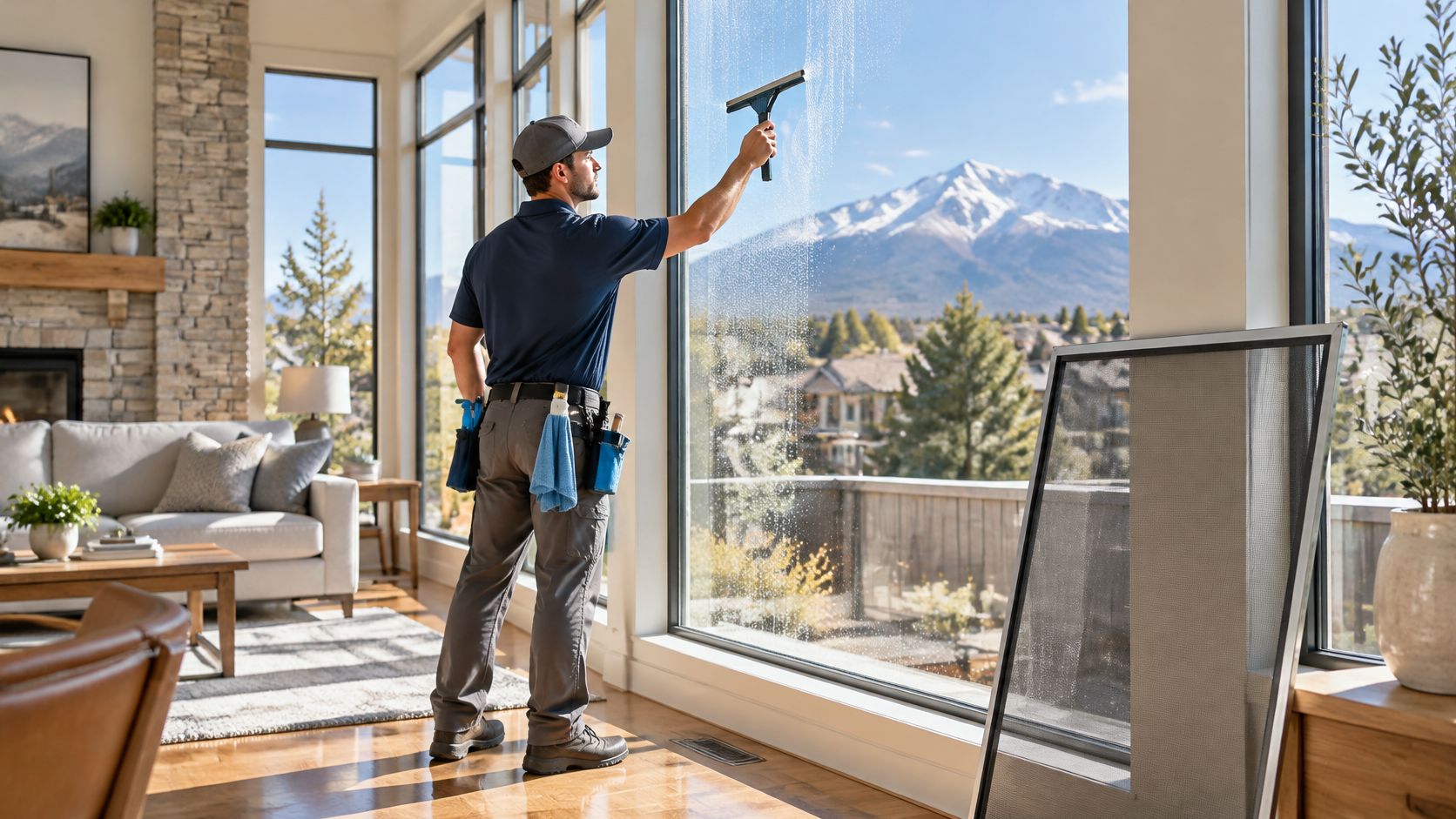
You're ready to open the windows for the first warm evening in Colorado Springs, CO, and that's when you notice it. The glass is hazy, a screen sags at the corner, and a fly slips through a tear you didn't know was there. Washing the glass alone won't fix the room if the screen can't do its job.
That's why Window Cleaning and Screen Repair work best as one visit. Whether you're searching for window cleaning near me for a home or arranging commercial window cleaning for a storefront, a combined appointment covers the glass, the tracks, the frames, and the barrier that lets you enjoy fresh air afterward.
What a Combined Window Cleaning and Screen Repair Visit Covers
A combined visit treats each window as a whole system: glass, track, frame, and screen. You get exterior window cleaning and interior window cleaning in one professional window cleaning appointment, plus the parts that decide whether the window still opens, slides, and seals well.
| Component | What the technician does | Why it matters |
|---|---|---|
| Exterior glass | Squeegee and streak-free solution on outside panes, including upper-story windows | Removes bird droppings, tree sap and hard water spots |
| Interior glass | Cleans inside panes, corners and sills | Restores natural light and clear views |
| Window tracks | Vacuums and wipes out sliding tracks | Removes grit that wears hardware |
| Screen cleaning | Removes screens, cleans them and reinstalls | Keeps airflow and views clear |
| Screen repair | Replaces mesh and repairs spline or frame | Restores the insect barrier |
| Frame wipe-down | Wipes exterior frames during the visit | Prevents grime build-up |
Why the smaller rows matter
Exterior glass gets the visible payoff, especially on upper panes that are awkward to reach safely. Inside, cleaning corners and sills removes the film that keeps glass looking cloudy even after the center is wiped.
Tracks do quieter work. Grit packed into a sliding track grinds against rollers and hardware every time you move the sash, so vacuuming and wiping it out protects how the window operates. We vacuum and wipe out window tracks during interior service, and we wipe down exterior frames as part of the exterior service.
Screens come out for a reason beyond washing. Removing them gives the crew unobstructed access to the glass behind them, and it exposes loose spline, bent corners, or torn mesh before the screen goes back. A torn screen lets insects straight into the home, so plan to have it repaired at the same time, along with any gaps around the window frame.
Know the limit of that repair, though. A sound screen restores the insect barrier. It does not filter the air. When Colorado smoke season rolls in, an open window still pulls smoke indoors no matter how new the mesh is, so on smoky days keep the windows closed and let the fresh air wait.
Clean glass with a torn screen still leaves you choosing between fresh air and insects indoors.
Screen cleaning and track cleaning can be added when you choose them on the quote, and residential pricing typically covers removing any bug screens, washing them, and re-installing them. List the rooms, windows, and screens you want covered before the visit. The same scope works for residential window cleaning in Colorado Springs and for offices or storefronts in nearby service areas, adjusted to each property's count and access.
Hiring a Pro or Doing It Yourself, the Real Trade-offs
Ground-floor glass is one job. Second-story glass, screens that need re-meshing, and mineral marks are a different one, and the trade-offs show up in safety, tools, and finish.

Height changes the decision first
A ladder set on uneven soil isn't a fall-protection system. The OSHA personal fall protection standard states that personal fall-arrest systems must be rigged so an employee cannot free-fall more than 6 feet (1.8 meters), and that lanyards and vertical lifelines must have a minimum breaking strength of 5,000 pounds (22.2 kilonewtons). Those thresholds explain why upper-story exterior window cleaning is safety-managed work, not just taller housework.
That doesn't mean every job needs a pro. It means you should judge the highest, steepest, or most awkward window first, not the easiest one at the patio.
| Factor | DIY | Professional service |
|---|---|---|
| Work at height | Ladder use on second floors and above | Trained crew with fall-protection equipment |
| Equipment | Squeegees, pole, spline roller, mesh bought separately | Full kit and replacement mesh on site |
| Screen repair | Re-meshing takes practice and a steady hand | Re-meshing with correct spline and tension |
| Hard water marks | Repeated scrubbing, often ineffective | Glass-safe treatment and assessment of etching |
| Time | Several hours plus setup and cleanup | Scheduled visit with setup included |
| Typical result | Streaks likely on sunny days | Streak-free squeegee finish |
Tools, time, and the finish you live with
For DIY screen work you'll need the right mesh width, a spline roller, fresh spline cord, a utility knife, and a flat surface big enough to keep the frame square. Roll the spline in too loosely and the mesh wrinkles. Roll it with uneven tension and the frame can bow.
Glass has a similar learning curve. Sun-facing panes dry fast, so a slow squeegee pass leaves edges and arcs behind. Mineral spots add another limit, since scrubbing harder can't solve every mark and can wear you out before the glass improves.
Credibility also has a practical side for local businesses reading reviews before they book. If you run a service company yourself, learning how to get more Google reviews from customers helps future clients judge real work without relying on sales claims.
I would keep DIY to ground-floor interior glass with sound screens and no ladder work. Hire out second-story and higher panes, multiple screens to re-mesh, visible mineral marking, or any window that puts a ladder on sloped or uneven ground.
How a Combined Visit Runs From Start to Finish
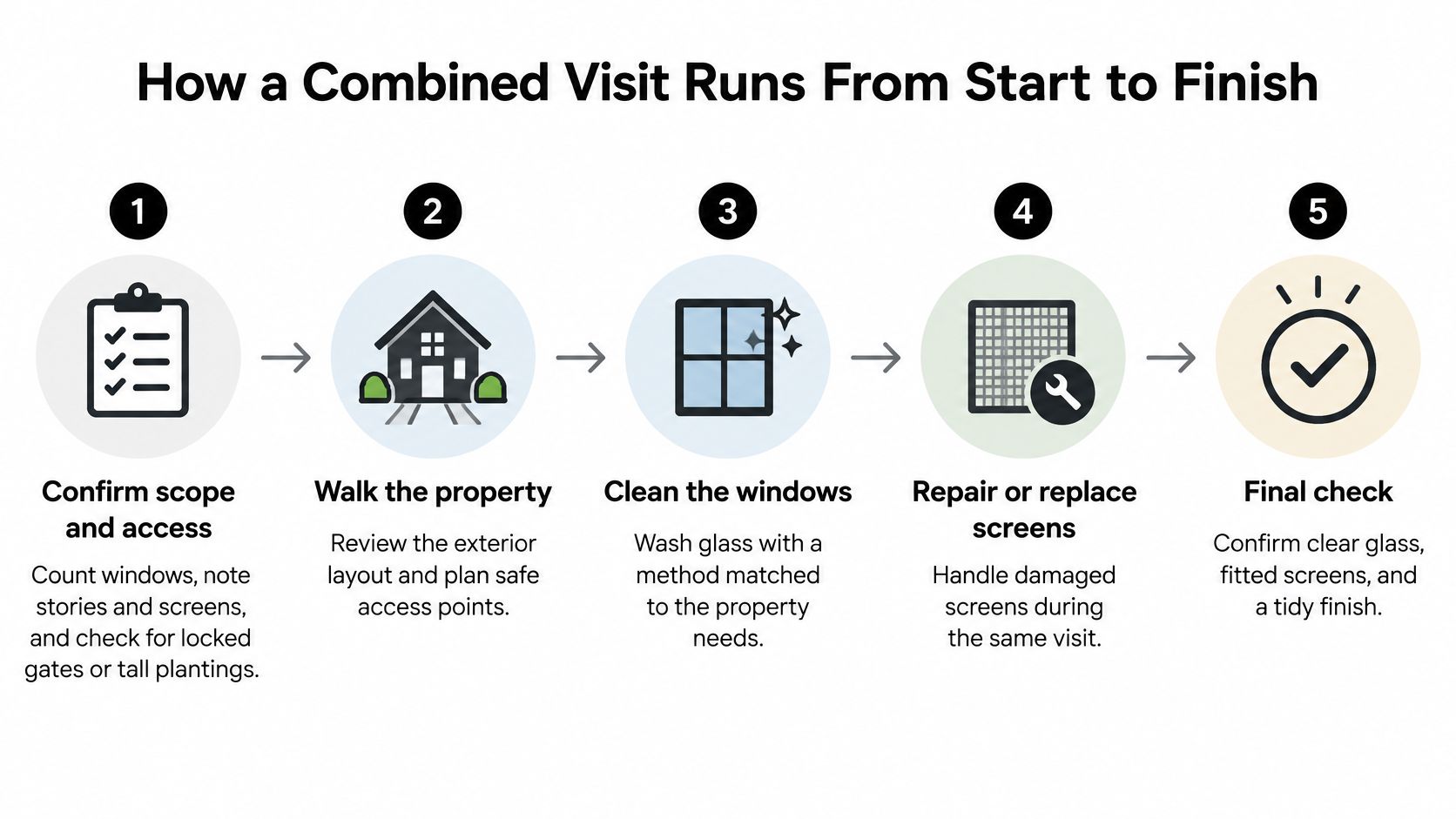
The order matters because screens, tracks, and interior glass all interfere with each other if you tackle them randomly. A planned sequence keeps dirty screens from leaning against finished glass and gives you a clear check at the end.
The workflow below summarizes the same start-to-finish rhythm used on site.
The visit step by step
Confirm scope and access. The crew counts windows, notes stories and screens, and checks for locked gates, tall plantings, or tight side yards. This prevents a quote built for twelve easy panes from meeting twenty panes and three stuck sashes.
Walk the property. Technicians photograph damaged screens, bent frames, and marked glass before work begins. Photos separate pre-existing damage from anything found during cleaning, and they help you decide which screens to repair now.
Protect the work area. Plants, walkways, and siding near the work zone are protected before ladders or poles come out. A few minutes here avoids crushed landscaping and muddy traffic patterns.
Clean the inside first. Interior glass, sills, corners, and tracks are cleaned while screens are being handled. Tracks are vacuumed and wiped, so grit isn't dragged back across a finished sill.
Remove and wash screens. Each screen comes out, gets washed with mild soap and a soft brush, and is set aside if it needs repair. Removing them yourself beforehand isn't necessary, and forcing a stuck frame can bend it.
Clean the exterior glass. The crew uses a squeegee technique and a streak-free cleaning solution, then scrubs bird droppings, tree sap, and hard water spots. Working exterior glass after screens are out gives a clear path to the full pane.
Reinstall and repair. Screens go back seated flush, mesh is repaired or replaced where needed, and exterior frames are wiped down. A screen that's clean but loose in its channel hasn't really been finished.
Walk the results together. You review the glass with the crew and note follow-ups such as etched panes or a frame that should be replaced later. Catching a missed edge now is easier than booking a second trip.
How long to plan for
A small single-story home often takes one to three hours. Multi-story homes, many screens, or heavy track grime take longer, especially when re-meshing is done on site.
After the crew leaves: Check each pane in daylight from inside and outside, slide every moving sash once, and confirm each screen sits flush with no lifted corner.
Clear sills and valuables before the appointment, open gates, and secure pets in a closed room. That ten minutes of prep lets the crew spend the visit cleaning instead of moving obstacles.
When to Repair, Replace or Remove Your Screens
Hole size alone is a weak way to decide. The question is whether the frame, corners, and spline can still hold mesh tight and seat flush in the opening.
| Screen condition | Likely action | Why it matters |
|---|---|---|
| Small tear in a sound frame | Patch or re-mesh | Mesh is the only part that failed |
| Loose or missing spline | Re-spline with new spline cord | Mesh cannot stay tensioned without it |
| Bent corner or warped frame | Replace the frame or screen | Screen will not seat flush |
| Corroded or failed corners | Replace the screen | A repair will not hold |
| Cosmetic discoloration, mesh intact | Clean with mild soap | Often still serviceable |
| Torn screen in an open window | Repair before warm weather | Torn screens let insects in |
Fit decides more than appearance
A small tear in a sound frame is the straightforward case. Re-meshing restores the barrier because the channel and corners still work.
A loose spline is different. The spline cord is what locks mesh into the frame channel, so new mesh over tired spline will creep, wrinkle, and pull out early. Inspect corner joints and press along each edge before you approve re-meshing.
Bent or corroded frames rarely reward effort. If the screen rocks in the opening or leaves a perimeter gap, insects and debris enter at the edges no matter how new the mesh looks. Discolored but intact mesh is the opposite case, since a mild-soap wash may return it to service without replacement. Don't pressure wash screens to speed this up, because high-pressure water can stretch mesh or pull it from the spline channel.
Smoke season needs a separate answer
An intact insect screen does not filter fine smoke particles. Research reported in a PMC wildfire smoke study found indoor PM2.5 concentrations on fire days can approach three times non-fire-day levels even when occupants close windows and use filtration. Screen repair is therefore not an air-filtration substitute.
On poor air days, keep windows closed, use HVAC recirculation where appropriate, and run properly sized HEPA filtration. A warped or poorly seated screen doesn't protect you when the window is shut, and opening that window for air defeats the plan.
Before fire season, repair the screens you'll rely on for clean-air ventilation, or remove and store screens you won't use based on your window type and ventilation strategy. After a smoke event, clean screens, tracks, sills, and exterior glass separately, since washing glass alone doesn't restore indoor air.
What Changes the Price of Window Cleaning and Screen Repair
There's no honest flat rate for every house, because the quote follows pane count, height, access, and how much screen work is hidden behind the word "cleaning." The table shows what to count before you ask for numbers.
| Factor | Effect on the quote | What to tell the provider |
|---|---|---|
| Number of windows | Quote rises with pane count | Count panes per floor |
| Story height | Upper stories need more equipment and time | Note the highest window height |
| Interior and exterior | Interior cleaning adds time | Say which sides you want cleaned |
| Screen count and damage | Each re-mesh adds material and labor | Count screens and note tears |
| Screen material | Fiberglass costs less than aluminum or pet-resistant mesh | Note the mesh you have now |
| Track condition | Heavy grit adds cleaning time | Mention sticky or hard-to-slide windows |
| Hard water etching | Specialist polishing is a separate service | Describe any marks that stay when wet |
| Add-ons | Screen and track cleaning are chosen on the quote | Choose add-ons before the visit |
| Access | Fences, gates and landscaping add setup time | Note locked gates or tight spaces |
The biggest drivers
Window count and story height set the base. A ranch home with ground-level panes moves faster than a two-story home where nearly every exterior pane needs pole or ladder work. Interior service adds a second pass through the house, plus sills, corners, and tracks, while exterior-only work stays outside.
Screen work is where estimates drift if nobody counts carefully. One re-mesh is a small line item, but a house full of torn screens adds material, spline, cutting, and fitting time to every opening. Bent or corroded frames shift the job from repair toward replacement, so our guide to window screen repair cost is worth checking while you note which screens are torn, loose, or out of square.
Material choice matters too. Standard fiberglass mesh is flexible and economical, while aluminum and pet-resistant options cost more and feel stiffer. Choose based on what damaged the last screen, whether that's a dog's paws, hail-driven debris, or sun-brittled mesh.
Quote rule: Count panes by floor and screens by condition. Those two lists do more for estimate accuracy than square footage alone.
Etched glass sits outside standard window washing because polishing is a separate assessment and service. Add-ons and access are simpler, since they're decided on the quote or handled with an open gate and a clear path.
Colorado Springs Conditions and Routine Window Maintenance
Local glass doesn't just get dusty. Sprinkler overspray, fast-drying sun, wind-blown grit, and seasonal pollen stack different problems on the same pane.
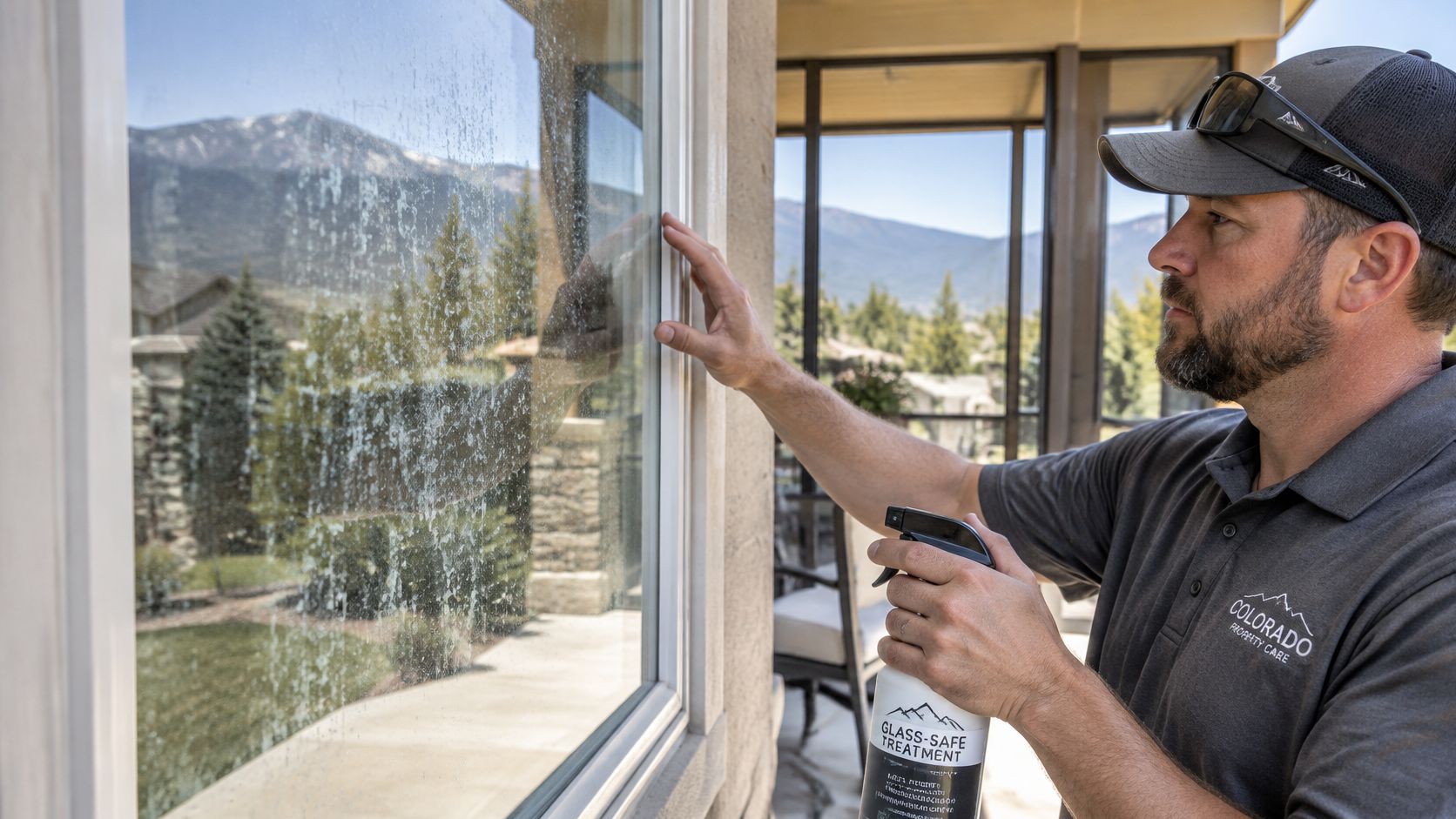
A technician inspects the pane first, since treatment depends on whether the mark sits on the surface or has changed the glass itself.
Hard water starts as a surface problem
Repeated wet and dry cycles leave calcium and magnesium deposits behind. A glass etching guide from Macomb Power Washing explains that early deposits remain on the surface and can be dissolved with a glass-compatible acidic treatment, while continued exposure can etch the silica surface into microscopic pits that ordinary cleaning cannot remove.
Use the wet test at home. Wet the mark and look again, since a stain that softens or changes appearance when wet is more likely surface scale. A rough, unchanged, frosted-feeling patch points toward etching and should get a polishing assessment instead of harder scrubbing.
Don't let acidic treatments dry on hot glass in direct sun, and use non-abrasive applicators. For routine rinsing, low-mineral water reduces fresh deposits because it leaves far fewer dissolved solids behind as it dries.
The short video below shows the kind of pane-by-pane attention that routine maintenance involves.
A seasonal rhythm that fits Colorado Springs
Spring brings pollen and grit that coat screens before you start opening windows at night. Summer sun bakes sprinkler spray onto south and west glass, while fall adds leaves and tree sap around frames and tracks. Winter snow melt and indoor condensation leave haze that makes interior panes look tired even when the exterior was cleaned in fall.
Our breakdown of how Colorado's seasons challenge your windows year-round maps those shifts in more detail. For most homes, a seasonal window cleaning visit every three to four months keeps deposits from hardening, with one visit before spring ventilation and one after sprinkler season ends.
Try these habits between visits:
- Aim sprinkler heads away from glass. Overspray is the deposit you can prevent for free.
- Rinse fresh overspray with clean water. Removing it before it dries limits mineral buildup.
- Wipe tracks monthly. A dry brush and a damp cloth keep grit from packing down.
- Skip acidic cleaners on hot panes. Work shaded glass or cooler hours instead.
Book around those seasonal pinch points, and hard water stain removal stays a maintenance task instead of turning into a restoration question.
Book Your Visit and Request a Quote
A good estimate starts before anyone climbs a ladder. Send a short list and a few daylight photos, and the crew can arrive with the right mesh, spline, cleaning solution, and access plan for up to fourth-story glass.
Six steps before you book
Gather the basics. Count stories, windows per floor, screens and rough sizes, and note panes with mineral marks or sticky sliders that point to track work.
Photograph the problems. Capture torn mesh, bent frames, popped corners, loose spline and gritty tracks in daylight so the quote can separate re-meshing from full screen replacement.
Request the estimate. Give your address and whether you are in Colorado Springs, Black Forest, Monument, Manitou Springs or Woodland Park. A single home usually needs only that detail; property managers coordinating repeat sites can separately compare cleaning business scheduling tools for their own operations while they request this visit.
Check the quote line by line. Confirm which sides of glass are included, whether residential bug screens are being removed, cleaned and re-installed, and which screen cleaning, track cleaning and repair items you selected. Ask about gates, pets and upper-story access before setup.
Pick timing with a purpose. Choose a day when windows can be opened for access and closed again if wildfire smoke is in the air. Screens help with ventilation and insects; they do not protect indoor air during Colorado smoke season.
Walk the glass afterward. Review panes in daylight, open and close each sash, test repaired screens, and note follow-ups such as a frame to replace or an etched pane to assess. That record makes the next visit faster to quote.
Residential services include Window Cleaning, Holiday Lights, Gutter Cleaning, Pressure Washing, and Window Screen Repair, and screen repair covers replacing mesh plus many other screen issues. Repair helps when a torn, loose, broken or worn screen keeps windows shut or lets pests in; it is not a substitute for closing windows and managing indoor air when smoke rolls through. Homeowners and businesses can request window cleaning in Colorado Springs, CO with screen repair handled in the same appointment, so send your counts and photos and request your quote today.
Cultivate House Detailing provides residential and commercial window cleaning and screen repair in Colorado Springs and nearby communities, covering interior and exterior glass up to four stories with screen and track cleaning available on the quote. If your panes are spotted, your tracks are gritty, or a torn screen is keeping windows shut, visit Cultivate House Detailing to request an estimate and schedule a visit that handles the whole window at once.