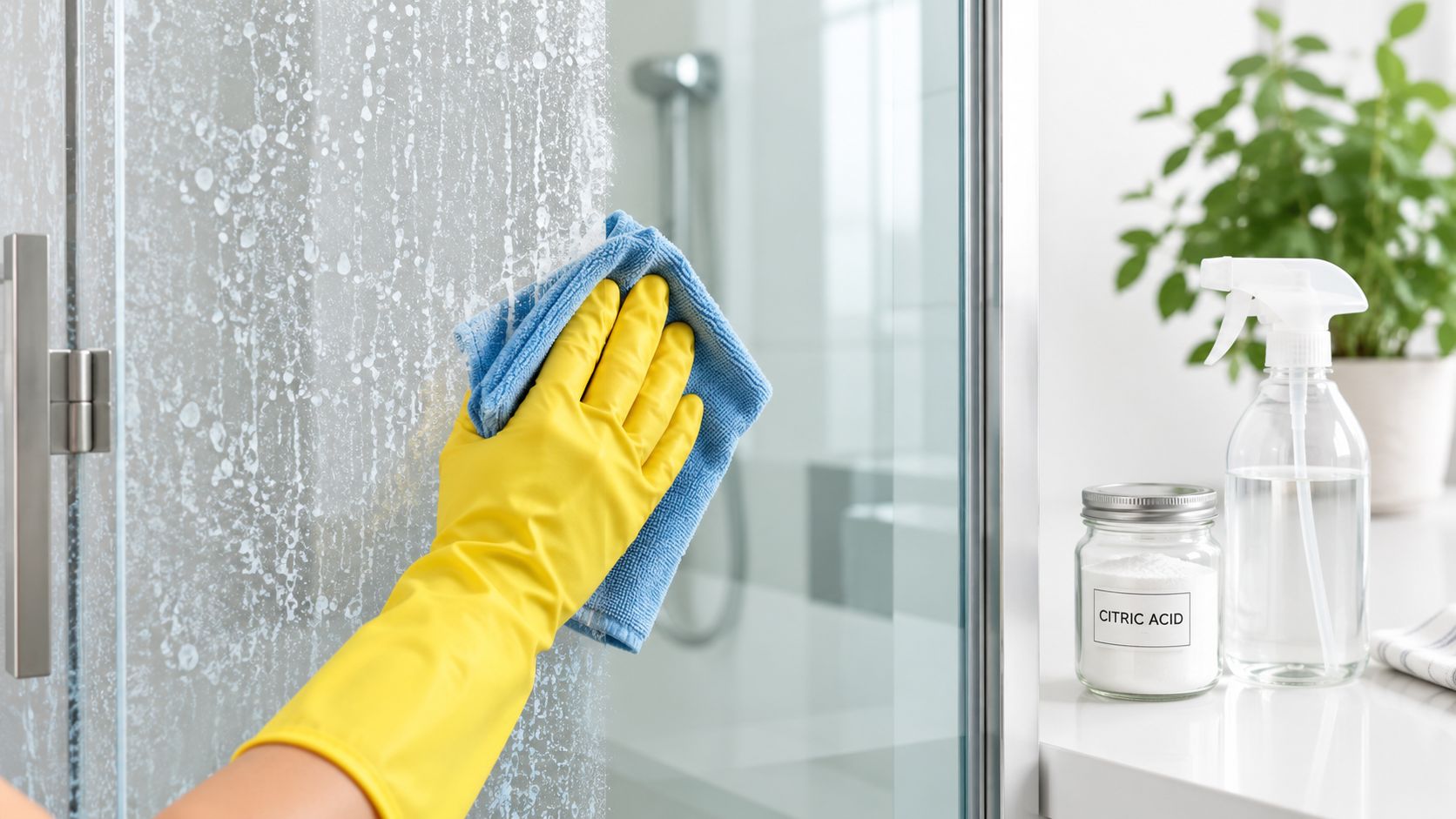
If you're standing in the driveway in Colorado Springs and noticing that the windows look fine but the screens look gray, fuzzy, or chalky after a windy afternoon, you're not alone. That's usually the first sign that the glass and the mesh need different treatment, and the same spray bottle won't solve both problems. A best cleaner for window screens has to remove dust and pollen without loading residue into the mesh, because residue makes screens look dirty again faster and can shorten the life of the frame and spline.
That's the rule I've learned cleaning hundreds of screens across Colorado Springs, Black Forest, Monument, Manitou Springs, and Woodland Park. Our altitude, our wind, and the seasonal pollen swings make screen care a little different here than it is in milder places. A cleaner that works on glass can still be too harsh for fiberglass mesh, too slick for polyester, or too aggressive on aluminum frames, so the right answer depends on what the screen is made of and what's stuck to it.
Why Your Window Screens Need a Smarter Cleaner
A dusty screen after a windy Colorado Springs afternoon can fool people. The glass behind it may still look clear, but the screen itself has already grabbed grit, pollen, and the fine debris that hangs in the air around homes near open lots, foothill edges, and busy streets. If you spray the same cleaner you use on the glass straight onto the mesh, you can leave behind film that attracts even more dust once it dries.

The cleaner has to match the job. Glass wants fast drying and a streak-free finish, which is why Consumer Reports' glass-cleaner testing separated out 4 best glass cleaners and named Sprayway Foaming Glass Cleaner the top-performing spray cleaner because it removed test messes and left surfaces dry after a single wipe (Consumer Reports coverage via 6abc). Screen mesh is different, because it holds onto dust in the weave and can sag or stretch if you overwork it.
Practical rule: the best cleaner for nearby glass is not always the safest cleaner for the screen next to it.
That's why I separate the job in the field. Glass can get a streak-focused cleaner, while the screen usually does better with a mild, rinseable solution that won't leave a sticky residue in the mesh. If you want a deeper look at why clean screens matter more than most homeowners think, this screen-care guide gets into the airflow and maintenance side of the problem.
Colorado Springs also throws in hard-water spotting from overspray and plenty of dry dust. That combination pushes me toward gentle chemistry first, then controlled agitation only if the stain needs it. Screens don't reward aggressive scrubbing, they reward the right cleaner, used the right way.
Comparing the Best Cleaner Types for Window Screens
What works on which screen
Different screen materials respond differently. Fiberglass is the most forgiving-looking and also the easiest to damage with rough brushing. Aluminum-framed screens hold shape better but can still bend at the corners. Polyester and pet-resistant mesh usually tolerate more abrasion, but they still hate residue, harsh chemicals, and heavy pressure.
| Cleaner Type | Best For | Avoid On | Residue Risk |
|---|---|---|---|
| Mild dish soap and warm water | Routine dust, pollen, light grime on fiberglass, aluminum, polyester, pet-resistant mesh | None of the common residential screen types, if mixed lightly | Low when rinsed well |
| Equal parts white vinegar and warm water | Hard-water spots, mineral haze, mildew on most screen types | Sensitive coatings if you haven't tested a small area first | Low to moderate |
| Baking soda paste | Localized mildew, stubborn spots, heavier grime patches | Delicate mesh if you scrub hard | Moderate if you leave paste behind |
| Diluted gentle all-purpose cleaner | General maintenance where a mild commercial product is preferred | Harsh or undiluted use on mesh and frames | Moderate if overapplied |
| Dedicated screen-cleaning foam | Fast touch-ups on dirty mesh near windows and tracks | Heavy buildup that needs rinsing, or screens that already show wear | Moderate if not rinsed fully |
For most homes, mild dish soap and warm water is the safest starting point. A little goes a long way, and it's easy to rinse clean. That matters because the cleaner itself is only half the job, the other half is what stays in the weave after the water dries.
Vinegar is useful when hard-water spotting or mineral haze shows up. I like it more for targeted spots than for every screen in the house. Baking soda has a place too, but only when you need a little more bite on a stain that won't move with soap alone.
Harsh products are where people get in trouble. A frequent missed angle is what cleaner is safest for different screen materials and coatings, not just what is “best” in general, and independent guidance warns against harsh ammonia or chlorine bleach because they can damage screen polymers and cause fading (screen-material safety guidance). That same caution applies to undiluted degreasers. They can strip away the finish you need to keep the screen looking even.
For homeowners who want one practical benchmark, I'd keep it simple. Start mild, spot-test strong, and keep anything foamy or heavily scented away from delicate mesh unless you can rinse it completely. That's the safest route for fiberglass and the least risky route for aluminum, polyester, and pet-resistant screens.
How to Clean Window Screens Without Damaging the Mesh
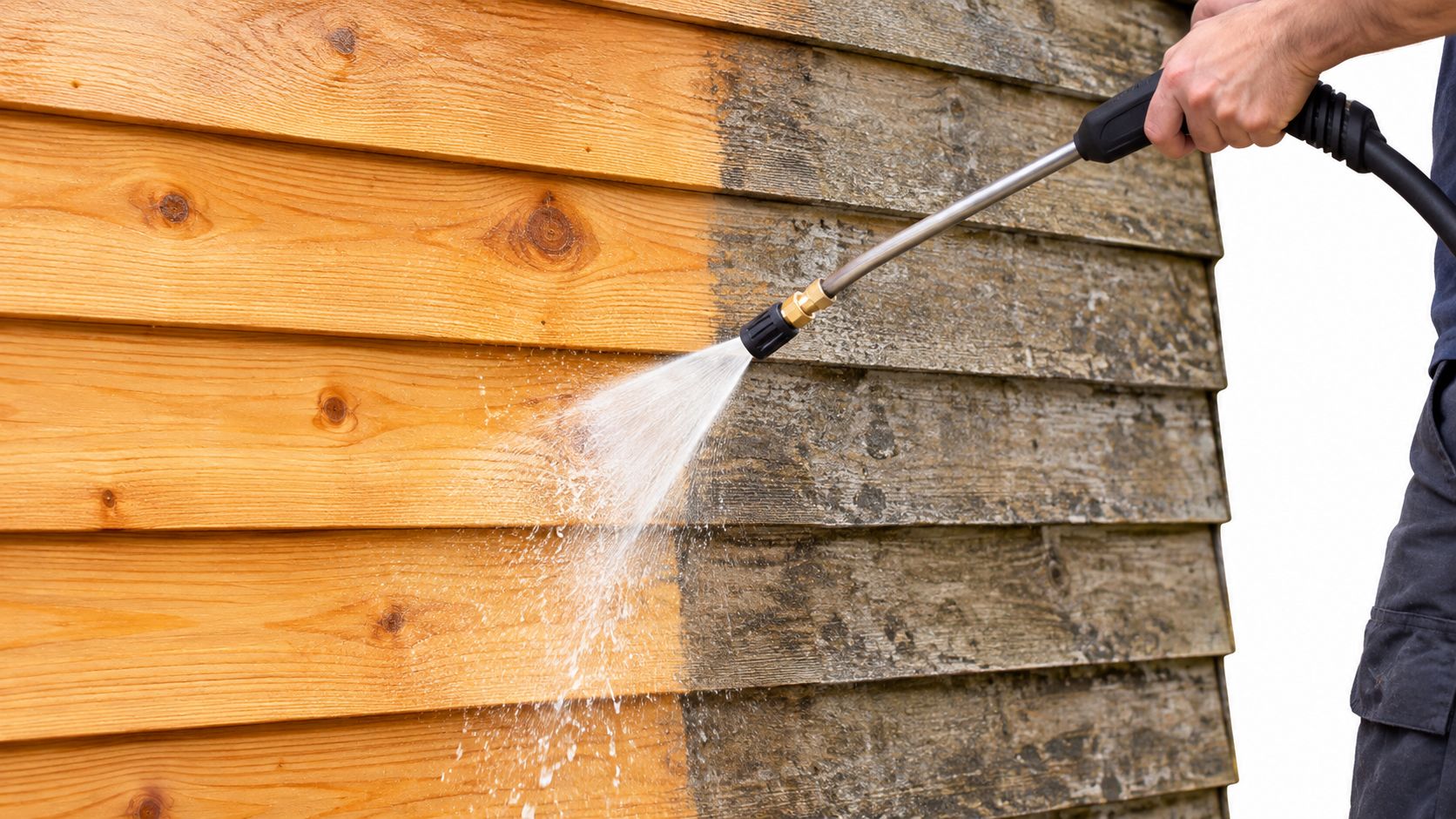
Start with the screen out of the frame, handled by the edges, not the mesh. Set it flat outside or in a tub or shower where runoff stays contained. In Colorado Springs, that setup helps because dry dust, roof grit, and the mineral film from hard water can all turn a quick rinse into a mess if you rush it. Simple Green guidance notes that heavy pressure can loosen the screen in the spline and leave the frame sagging, so keep the rinse light and move from top to bottom.
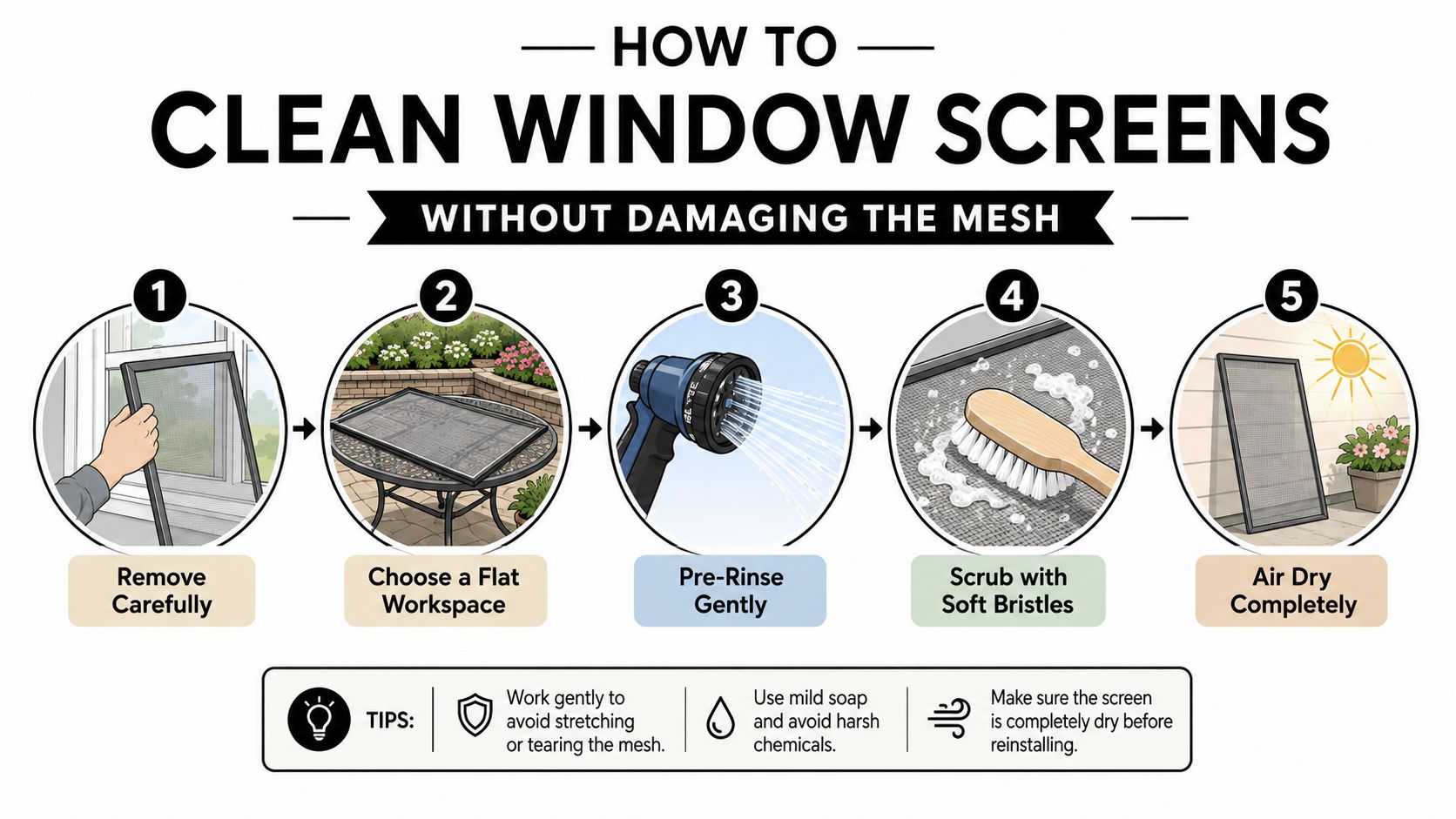
A gentle pre-rinse does the first round of work. It lifts loose dust before you bring in soap, which matters on screens that collect Colorado's fine road grit and pine pollen. If you scrub dry debris first, you push it deeper into the weave and you can scuff softer mesh.
Use the cleaner with the screen material in mind. Fiberglass handles mild soap well and usually gives you the least trouble, aluminum needs a light touch because aggressive scrubbing can leave it looking tired, polyester can take a little more cleaning but still wants a soft brush, and pet-resistant mesh should still be treated carefully even though it is tougher than standard screening. For most screens, warm water with a small amount of dish soap is enough. If you're dealing with mineral haze or light spotting, a diluted vinegar mix can help, but I use it more as a targeted fix than as an across-the-board wash.
Let the cleaner sit briefly. Short dwell time does more than pressure.
That part gets skipped all the time. If the screen has pollen, gray dust, or a thin oily film on it, give the solution a moment to loosen the grime before you agitate it. A microfiber cloth or soft-bristle brush is enough for most jobs, and the key is light pressure. If you have to force it, the cleaner is the wrong match or the stain belongs in the next category.
Rinse gently and keep the flow moving downward so loosened dirt leaves the frame instead of settling back into the corners. Then blot the frame with a towel and let the screen dry fully before you put it back. I also label each screen as I remove it, which saves time on reinstall and keeps a porch screen from ending up in a bedroom window.
A screen should come back clean and still feel true. If the mesh bows, the frame flexes, or the screen looks worse after a careful rinse, stop there and reassess the material, the cleaner, and how much pressure you used.
Tackling Tough Stains on Window Screens
Some stains need a targeted approach, not just a general wash. Hard-water spots from sprinkler overspray in Colorado Springs usually respond best to a 1:1 vinegar-and-water mix, applied only to the affected area and left for a short dwell time before a gentle scrub. That works well on fiberglass and polyester screens, which can take careful spot treatment better than a heavier scrub. Aluminum needs a lighter hand because it shows wear faster, and pet-resistant mesh is tougher but still rewards restraint. Pollen and yellow pine dust usually come off better after a pre-rinse, then a mild soap wash, because dry brushing tends to push that grime back through the weave.
Mildew on shaded screens needs more attention. Glass Doctor recommends a routine of at least yearly cleaning, preferably in spring and fall, and suggests equal parts vinegar and warm water for routine cleaning with a teaspoon of baking soda added for mold (Glass Doctor screen-care guidance). That lines up with what I see on north-facing screens in Colorado Springs, where shade, cool airflow, and lingering moisture give mildew more time to settle.
Greasy film near kitchens or outdoor grills usually needs a slightly stronger soap mix, but not a harsh degreaser. Apply the solution, wait briefly, then scrub with a soft brush and rinse thoroughly. If the stain is still faintly visible after drying, a second gentle pass usually catches what the first pass missed. On fiberglass, that second pass is usually safe. On aluminum, I keep the pressure light and stop as soon as the film lifts.
Practical rule: if you need more force than a soft brush and a careful rinse, the screen probably needs a stain-specific treatment, not a harder hand.
Ventilation matters with vinegar. Keep the area open, especially if you're cleaning inside a tub or shower, and never mix vinegar with bleach-based products. That is basic safety, and it matters just as much on a screen job as it does anywhere else.
For screens near sprinkler zones in Colorado Springs, I'd rather do two restrained passes than one aggressive one. The first pass loosens the stain. The second pass finishes it without stretching the mesh or leaving wipe marks behind. Hard water keeps coming back if the sprinkler aim stays off, so the cleaner matters, but the source of the stain matters too.
Maintenance Habits That Keep Screens Cleaner Longer
The best way to make screen cleaning easier is to stop letting the buildup get heavy in the first place. In Colorado Springs, that means staying ahead of pollen bursts, dust, and the mineral spray that catches screens every time a sprinkler head points the wrong way. A light dusting with a soft brush between deeper cleanings keeps the mesh from loading up with the kind of debris that turns into a full job later.
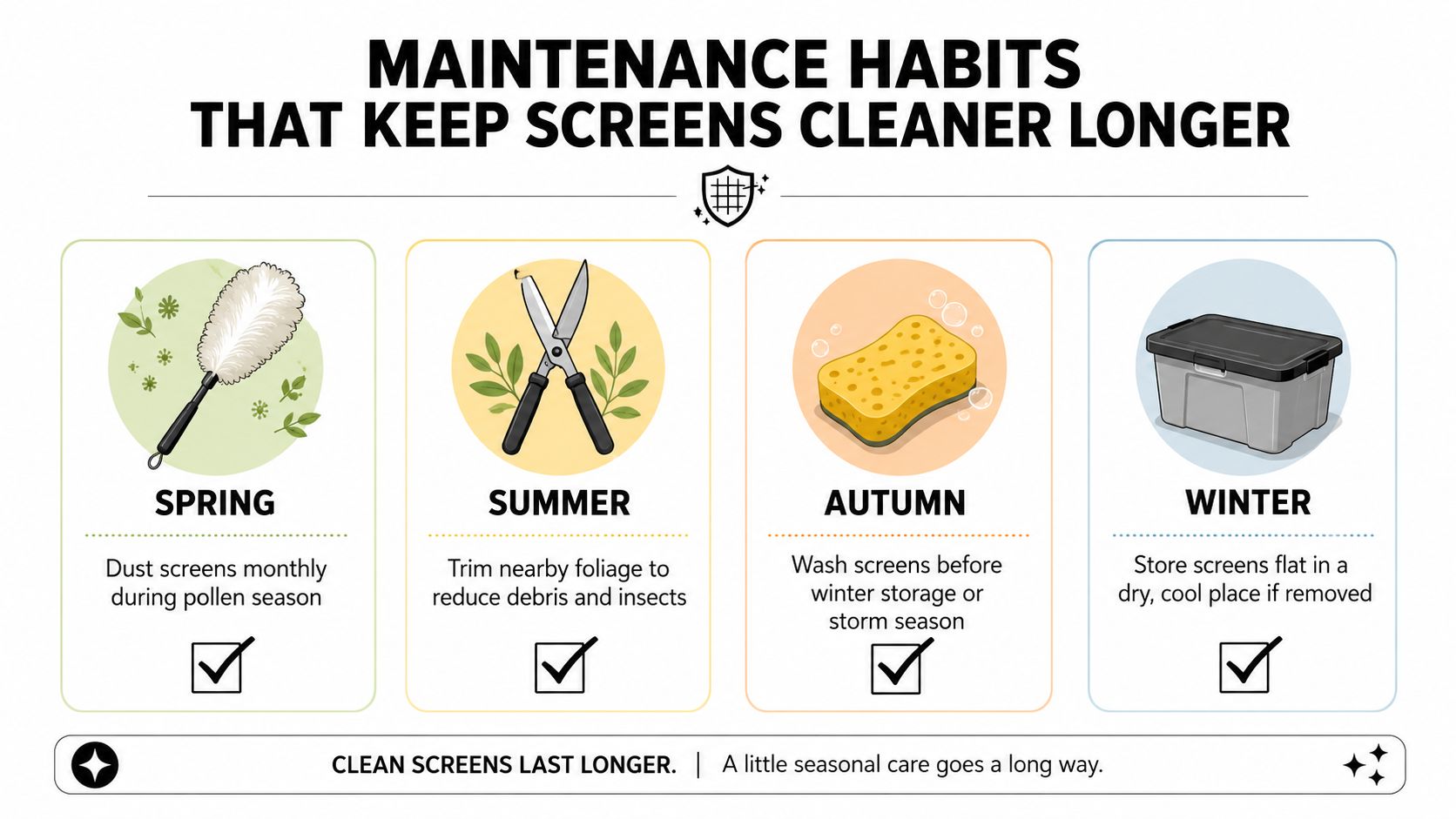
Spring and fall are the best times to do the heavier wash. That schedule lines up with the season changes that bring more open windows, more pollen, and more debris. Between those cleanings, trim shrubs and branches close to the windows so you're not rubbing leaves, sap, and dust onto the mesh every time the wind picks up.
A quick inspection helps too. Look at the spline, the corners, and the frame fit. If a screen starts to rattle in the track or sits crooked after cleaning, that's usually a sign it needs attention before it turns into a repair call.
Clean screens last longer when the surrounding habits stay simple.
I also tell homeowners to check sprinkler aim whenever they notice repeated spotting on the same windows. Fixing the water path solves more than a cleaning product ever will. It also keeps the adjacent glass from developing the same mineral haze that shows up on the mesh.
For seasonal storage, keep removed screens flat or in a dry, cool place if you're taking them out for the winter. Don't lean other items against them. Even a light bend can turn into a fit problem when spring rolls around.
When Cleaning Is Not Enough and Screens Need Repair
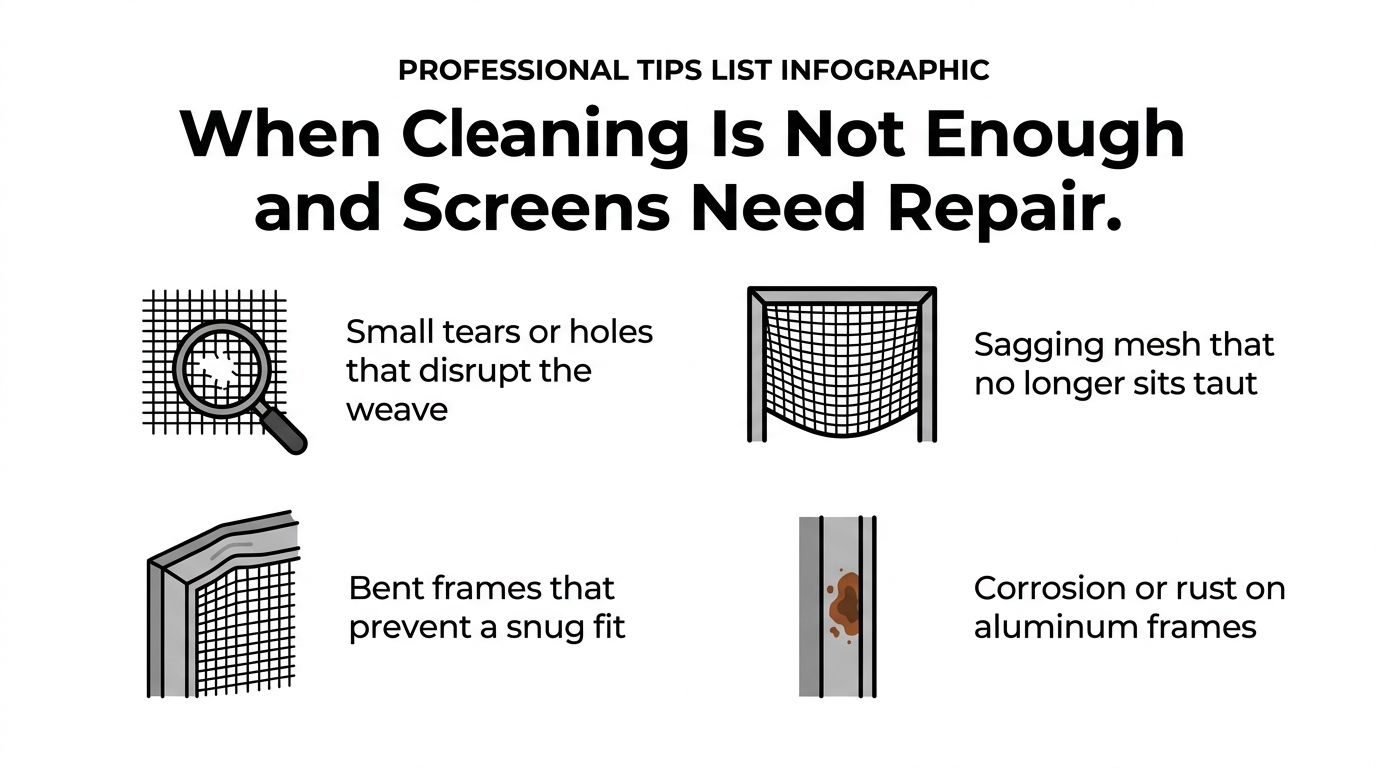
Cleaning can't fix a torn weave or a frame that no longer holds shape. If you see small tears or holes, sagging mesh, bent corners, or corrosion or rust on aluminum frames, you're past the point where soap and water will solve it. That's also true for screens that no longer sit snugly in the track, because a loose fit lets debris and bugs right back in.
A small patch kit makes sense when the damage is local and the rest of the screen is still tight. Full re-screening is the better call when the mesh has multiple weak spots or when the frame is still usable but the material is clearly worn out. For upper-story windows or hard-to-reach openings, professional help is usually the safer route than balancing on a ladder and hoping the frame stays true.
If you want a local repair option, this Colorado Springs screen repair resource is worth looking at before you decide whether to patch, rescreen, or replace. The useful question isn't “Can it be cleaned?” It's “Will it stay functional after cleaning?”
A fast decision checklist helps:
- Tears or holes visible: repair or replace.
- Mesh droops when lifted: cleaning won't restore tension.
- Frame bends at the corner: the fit is compromised.
- Rust or corrosion present: replacement is usually smarter than repeated cleaning.
That same logic applies to window maintenance as a whole. A dirty screen can hide a bigger issue in the frame or track, and a loose screen can keep you from getting a tight, streak-free result on the glass behind it. When the damage is structural, cleaning just delays the proper fix.
Schedule a Professional Screen Cleaning in Colorado Springs
The right cleaner for window screens depends on the material, the stain, and how much buildup you're dealing with. Mild soap handles most routine jobs, vinegar helps with mineral spots, and a soft brush paired with low pressure keeps the mesh from getting ruined in the process. That's why a steady maintenance routine matters more than chasing one universal product.
For homeowners and property managers who want the whole job handled at once, Cultivate House Detailing provides residential window cleaning, commercial window cleaning, interior window cleaning, exterior window washing, screen cleaning, and repair work across Colorado Springs, Black Forest, Monument, Manitou Springs, and Woodland Park. The company also handles full window detailing as part of service visits, which is useful when screens, tracks, and glass all need attention in the same appointment.
If you're comparing service options, a helpful reference from another market is this South Florida window cleaning service, which shows how a professional crew can organize cleaning around both glass and screens. In Colorado Springs, the same idea applies, especially when hard-water buildup and dust keep coming back.
If your screens are dull, dusty, or starting to sag, Cultivate House Detailing can clean them as part of a full window service and help you sort out repair needs before they turn into bigger problems. Visit Cultivate House Detailing to request a quote and schedule professional window cleaning in Colorado Springs, CO and the surrounding area.
Want it handled by a local crew? Cultivate House Detailing offers window screen repair and replacement. Get a free quote.