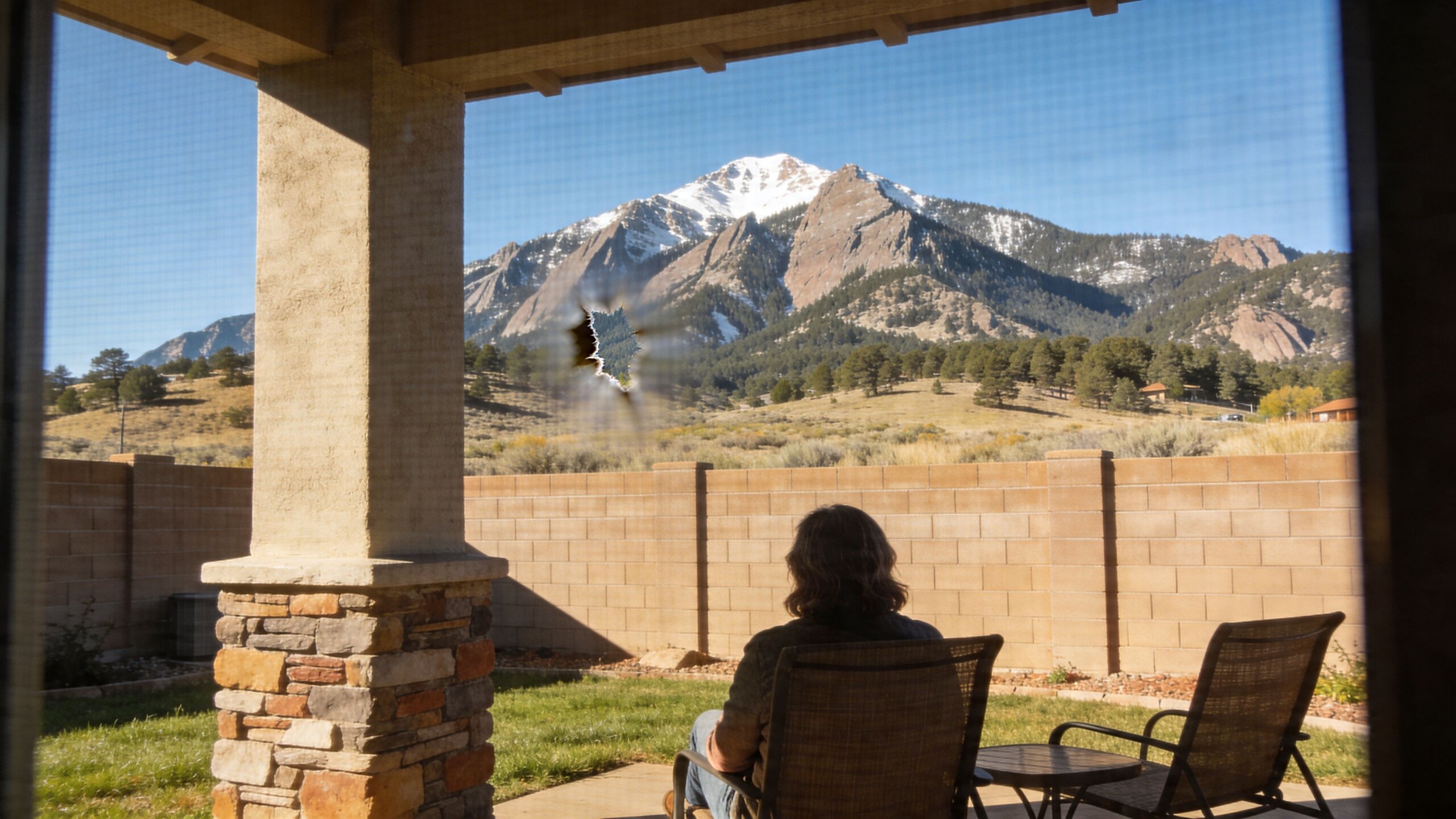
You open the window to catch the evening breeze, look out toward Pikes Peak, and notice the problem isn’t the glass. It’s the screen. Maybe there’s a rip in one corner, the frame won’t sit flat anymore, or the mesh has faded so badly it looks tired even after the windows are cleaned.
That’s a common Colorado Springs problem. Screens here take a beating from strong sun, quick temperature swings, wind, hail, dust, and wildfire ash. A screen that might last as expected in a milder climate often starts showing wear sooner here, especially on homes in exposed areas like Black Forest, Monument, and the west side near the foothills.
For homeowners searching for window screen repair colorado springs, the goal usually isn’t just to patch a hole. It’s to restore airflow, keep bugs out, and make the windows look right again without wasting money on a fix that won’t hold up through another season.
Your Clear Guide to Window Screen Repair in Colorado Springs
You crack a window on a dry summer evening, hoping to pull in cool air after a hot day, and the screen reminds you what Colorado Springs weather does to a house. The mesh is loose. One corner is split. Fine dust and ash have settled into it so heavily that the window still looks tired even after the glass is clean.
Why screens fail faster here
Screens in the Pikes Peak region wear out for practical reasons, not cosmetic ones. High-altitude UV breaks down standard mesh faster than many homeowners expect. Hail can punch clean holes or stretch the material. Wind along the foothills and in open areas like Black Forest twists frames just enough to ruin the fit. Wildfire ash and blowing grit work into the mesh and corners, which cuts airflow and adds abrasion every time the screen moves.
That combination changes how repair decisions should be made. A screen with one small tear may still be a good repair candidate. A screen with sun-brittle mesh and a slightly racked frame usually needs more than a quick patch if you want it to last through another spring and summer.
I see this most often on west-facing windows, second-story openings, and patio screens that take repeated wind pressure. Homes near Garden of the Gods, Rockrimmon, and the broad open stretches east of Powers often show the same pattern. The damage starts small, then one storm or one season of strong sun turns a minor issue into a screen that no longer sits right.
What homeowners usually notice first
The first sign is often simple. The window is open, but the airflow feels weaker than it used to.
After that, the clues get easier to spot:
- Loose mesh: The screen has a wavy look instead of a firm, even pull.
- Small punctures or tears: Common after hail or pet contact near lower windows.
- Bent frame corners: The screen slides in, but it does not sit flat in the track.
- Brittle mesh: The material feels dry and starts splitting near the spline.
- Built-up debris: Dust, cottonwood, pollen, and ash clog the openings and dull the view.
A lot of homeowners wait because the damage seems minor. In this climate, waiting usually costs more time later. Once UV has made the mesh brittle, even careful handling during cleaning or removal can turn a small weak spot into a full tear.
A good repair protects more than the view
Screen repair helps the house work the way it should. You get cross-ventilation during mild weather, fewer insects indoors, and windows that still look clean once the glass has been washed. That matters in a city where people use their windows for fresh air, especially during cooler mornings and evenings.
It is also part of preventive home maintenance. A properly fitted screen reduces rattling in the wind, keeps debris out of tracks, and saves you from putting off the problem until peak bug season or after the next hailstorm. The right fix depends on what failed first. Sometimes that means new mesh in an existing frame. Sometimes it means straightening or replacing the frame so the repair holds up in Colorado Springs conditions.
Identifying Common Screen Damage in the Pikes Peak Region
A screen on the north side of the house can look fine at a glance, while the one facing Garden of the Gods is already drying out, loosening at the corners, and collecting ash in the frame. That is common in Colorado Springs. Damage here tends to follow exposure, elevation, and weather pattern more than age alone.
Sun damage and brittle mesh
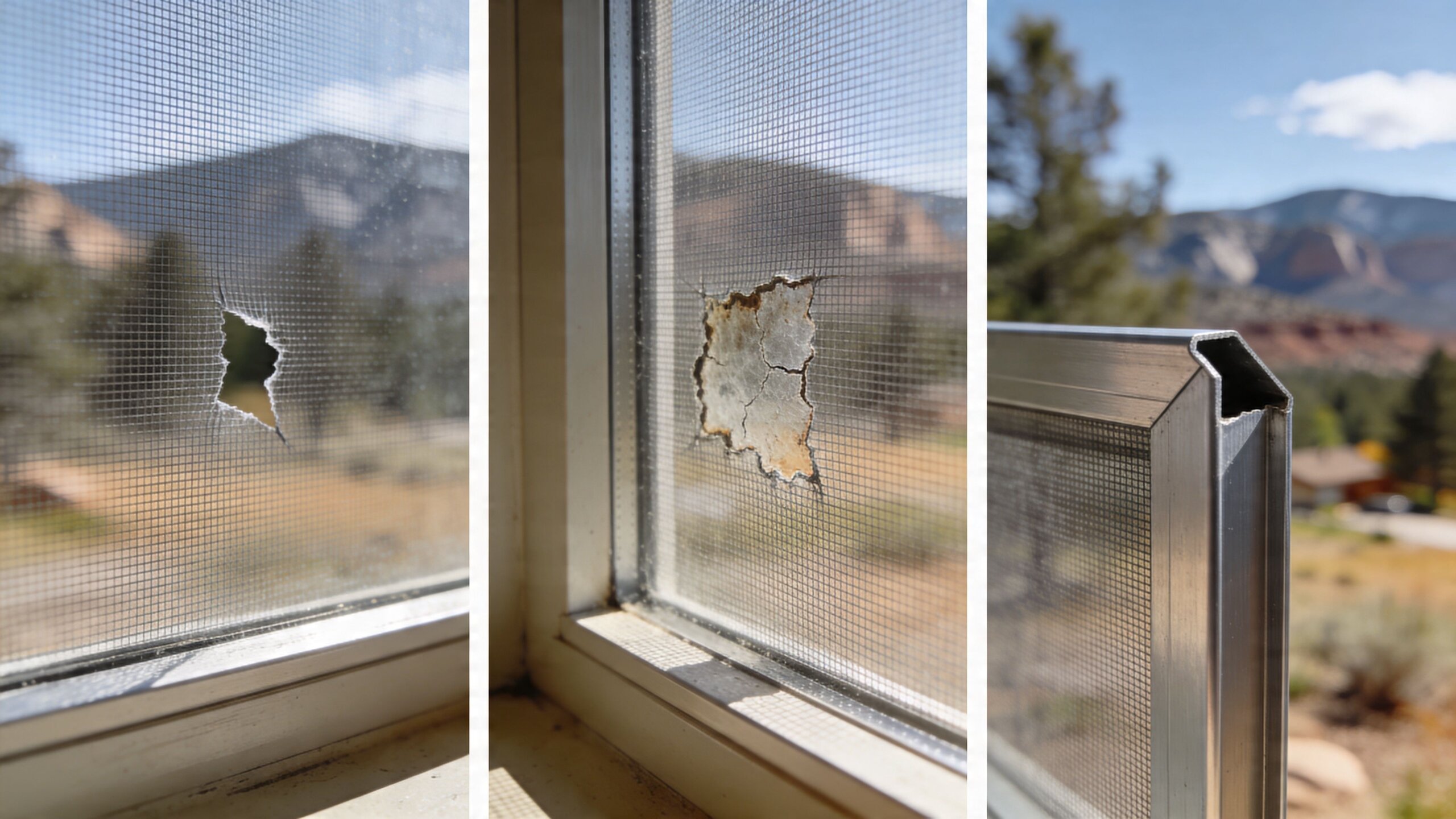
High-altitude sun is hard on standard screen mesh, especially on west- and south-facing windows that take the full afternoon hit. In neighborhoods with little shade, I often see mesh fail first near the spline because UV dries it out long before homeowners notice a visible tear.
Common signs include:
- Color fade: Black mesh starts turning gray or chalky
- Fine splitting: Small cracks show up near corners or along the edge
- Stiff texture: The screen loses its flex and feels dry in your hand
- Surface residue: Older mesh may leave a dusty film when handled
Once the material reaches that point, a small patch usually does not hold for long. The surrounding mesh is already weakened, so the repair area becomes the next failure point.
Hail strikes, wind pressure, and frame distortion
Hail damage usually looks different from UV wear. Instead of even aging across the whole screen, you see isolated punctures, stretched mesh, or one sharp tear where impact hit hardest. After a strong Front Range wind event, that same screen may start bowing or rattling because the frame took stress too.
Frames in Colorado Springs also get pushed around by repeated temperature swings. A screen that fits in April can start binding or sitting crooked by late summer if the frame was marginal to begin with.
A warped or stressed frame often shows up like this:
| Symptom | What it often means |
|---|---|
| One corner will not seat properly | The frame is bent or slightly twisted |
| Mesh is tight on one side and loose on the other | The frame is out of square or the tension is uneven |
| Screen shifts or pops loose on windy days | The fit has degraded in the track |
| Pull tabs or plastic corners feel strained | The frame has been under repeated pressure |
A screen can look repairable on the workbench, but it may still fail in the window if the frame no longer sits flat.
Wildfire ash, dust, and hidden wear
Ash from fire season causes a different kind of problem. It is abrasive, it settles deep into screen fabric, and it works into frame joints and corners where moisture can linger after storms or washing. Add our regular dust, cottonwood, and spring pollen, and screens in exposed areas around Black Forest, Rockrimmon, or the foothills often wear faster than homeowners expect.
As noted in regional wildfire screen damage reporting, ash-related wear can lead to micro-tears and corrosion that are easy to miss early on.
After an ash-heavy stretch, a screen can look merely dirty when the actual issue is that fine debris has worked into the mesh and frame joints.
Check closely for rough-feeling mesh, corrosion around the corners, and weak spots that show up only when the screen is removed or cleaned. Catching those problems early usually means a simpler rescreen instead of dealing with a failed frame later.
Should You Repair or Replace Your Window Screens
A lot of Colorado Springs homeowners notice screen problems after the same kind of week. We get hard wind off the Front Range, a quick hail burst, then days of strong sun and dust. The mesh starts to sag, a corner loosens, or the frame no longer sits right against the window. At that point, the question is not just how to make the screen look better. It is whether that screen still has enough life left to justify a repair.

In the Pikes Peak region, screens wear out faster than many people expect. High-altitude UV makes mesh brittle sooner. Hail can leave tiny punctures that spread later. Wind along areas like Briargate, Flying Horse, and the west side puts extra strain on corners, tabs, and spline. Wildfire ash adds abrasion, especially if a screen is left in place through a dirty summer and then scrubbed aggressively.
When repair makes sense
Repair is the right call when the screen still has a good structure and the problem is limited to the screen material or one small component. If the frame sits square, the corners are holding, and the screen fits the opening without shifting, a rescreen usually gives you more value than a full replacement.
Repair usually makes sense when:
- The frame is still straight and seats properly in the track
- The damage is limited to one tear, one loose edge, or worn mesh
- The corners and pull tabs still feel secure
- The screen is fairly new and has not gone brittle from sun exposure
- You want to restore function after one hail hit or a pet scratch
That kind of repair is practical maintenance, not a cosmetic shortcut. You keep the usable frame and replace the part that failed.
When replacement is the better use of your money
Replacement makes more sense when the screen has several problems stacked together. That is common on older homes around Colorado Springs where screens have gone through years of sun, freeze-thaw cycles, and spring wind.
Replace the screen if you see more than one of these conditions:
- The frame is bent, twisted, or no longer sits flat
- The mesh is brittle, faded, or tearing in multiple spots
- Corners are loose or cracked
- The screen keeps popping out on windy days
- You want stronger material, such as pet-resistant mesh or upgraded solar screening
I usually tell homeowners to stop putting labor into a weak frame. A patch or quick rescreen can buy a little time, but it will not fix a screen that has already lost its shape.
Why this decision matters more in Colorado Springs
Our local climate changes the repair versus replace math. A screen that might survive another year in a milder area can fail much sooner here because UV exposure, grit, and pressure from repeated wind events all work on it at once.
That is why a professional inspection often saves money. We can tell the difference between a screen that needs fresh mesh and one that is close to failing at the corners or along the rails. If you are weighing that choice yourself, this guide on DIY screen repair options for Colorado Springs homeowners can help you sort out what is realistic before you buy materials.
Material choice matters too. If you are considering replacement because you want a stronger mesh, finding the best mesh for DIY window screens is a useful outside reference for comparing common options.
If the frame is weak, replacing only the mesh fixes the cheapest part of the problem and leaves the actual failure point in place.
A simple decision guide
Use this checklist at the window, not just on the workbench:
| Condition | Better choice |
|---|---|
| Small tear, strong frame, good fit | Repair |
| Loose or worn mesh, frame still square | Rescreen |
| Sun-brittle mesh with fading across the screen | Replace |
| Bent frame or poor fit in the track | Replace or rebuild |
| You want heavier-duty or specialty mesh | Replace |
The goal is a screen that fits tightly, holds up through our wind and sun, and does its job for more than one season. Repair the screens that are still structurally sound. Replace the ones that are already breaking down in more than one way.
A Practical Guide to DIY Window Screen Repair
If the frame is in decent shape and you’re comfortable with careful hand work, a simple rescreen is a manageable home project. It’s best for basic window screens on an easy-to-reach work surface, not for badly warped frames or specialty openings.
Tools that make the job easier
A DIY rescreen goes better when you have the right tools before you begin. The core setup is simple:
- Spline roller: This seats the new spline into the frame channel.
- Replacement mesh: Fiberglass is commonly easier to handle for basic projects.
- New spline: Old spline often stretches, dries out, or loses grip.
- Utility knife or sharp cutter: For trimming the excess mesh cleanly.
- Flathead screwdriver: Helpful for removing old spline.
- Stable work table: A flat surface is more important than often assumed.
Mesh choice matters. If you’re sorting through options and want a practical outside reference, this guide on finding the best mesh for DIY window screens gives a helpful overview of common material differences.
Basic steps for a clean rescreen
Start by removing the screen and laying it flat. Work slowly. Most DIY mistakes happen because people rush the tensioning or trim too early.
Remove the old spline
Use a flathead screwdriver to lift one end, then pull it out carefully.Lift out the damaged mesh
Once the spline is out, the old mesh should release easily.Clean the frame channel
Dust, grit, and old debris in the groove can keep the new spline from seating properly.Roll out the new mesh
Leave extra material around all sides so you can tension it evenly.Press in the spline
Start on one side and work around with a spline roller, keeping the mesh flat and controlled.Trim the excess mesh
Use a sharp blade and cut close to the outer edge of the spline.
For homeowners who want a more detailed walkthrough of the basics, this local resource on DIY screen projects and common issues is worth reviewing before you start.
What usually goes wrong in Colorado
The hard part isn’t removing the old mesh. The hard part is getting the final screen to look straight, sit tight, and hold up after a few hot days and a windy afternoon.
Common local DIY problems include:
- Over-tensioning the mesh: The frame bows and no longer fits the opening well.
- Under-tensioning it: The screen sags and looks wavy.
- Reusing old spline: It may not grip consistently, especially in dry conditions.
- Ignoring slight frame damage: Even a minor bend can throw off the whole fit.
- Choosing the wrong material: Some mesh types are easier to install but less suited for how the window is used.
Know when to stop and hand it off
If the frame is bent, the corners are separating, or the screen has to fit a prominent front window where appearance matters, DIY can turn into a frustrating time sink. The same is true for second-story and third-story screens that require ladder work or exact fitting.
A screen that looks “close enough” on the table often looks obviously wrong once it’s back in the window.
There’s nothing wrong with tackling one simple screen yourself. Just be realistic. If the project needs frame straightening, precise tension, or a cleaner finish than a weekend patch can deliver, professional repair usually saves time and redo work.
What to Expect for Screen Repair Costs and Timelines in Colorado Springs
A homeowner in Briargate calls after a windy week, a couple of hail hits, and a fresh layer of ash on the sills. One screen has a tear. Two more are loose in the frame. By that point, the question is not just price. It is whether a simple rescreen will hold, or whether the frame has already taken enough abuse to need more work.
That is why screen repair pricing in Colorado Springs varies so much. Along the Front Range, screens take a beating from high-altitude sun, spring wind, summer hail, and fine debris that works into corners and tracks. A small hole in a newer screen is usually a straightforward repair. A screen that has spent several seasons facing west toward Garden of the Gods or sitting exposed in a wind-prone area near the Powers corridor often needs a closer look.
What affects cost
The biggest cost driver is the condition of the whole screen, not just the mesh.
If the frame is still square and the corners are tight, rescreening is usually the lower-cost option. If the frame is bent, the spline channel is worn, or the corners have started to loosen, labor goes up because the repair has to address fit as well as appearance.
Price usually shifts based on:
- Mesh material: Standard fiberglass is usually the most budget-friendly. Heavier or specialty mesh costs more but may make sense for homes that deal with frequent wind, pets, or stronger sun exposure.
- Screen size: Large patio and oversized window screens take more material and more care to tension correctly.
- Frame condition: A reusable frame keeps the job simpler. A damaged frame adds labor or pushes the job toward replacement.
- Access and handling: Ground-floor screens are faster to service than screens that require ladder work or careful removal from upper-story windows.
- Number of screens: Grouping several repairs into one visit usually improves efficiency and lowers the per-screen service cost.
In practice, the cheapest fix is not always the best value. Installing low-cost mesh in a high-sun, high-wind exposure can mean doing the job again sooner.
Where homeowners can save money
The most practical way to control cost is to repair screens before the frame starts failing. Once wind has bowed the frame or UV exposure has dried out the spline and weakened the corners, the bill usually climbs.
Bundling work also helps. If a house has several worn screens, handling them in one appointment is usually more efficient than calling one at a time as each tear gets worse. For many homes, rescreening an existing frame is the best middle ground between a quick patch and full replacement.
For a more detailed local breakdown, this guide to the cost of window screen replacement in Colorado Springs explains what changes pricing from one home to the next.
Service timeline you can expect
Most standard screen jobs move fairly quickly. If the repair is limited to replacing mesh in common residential frames, turnaround is often much shorter than full window or glass work.
Custom sizes, damaged frames, and specialty materials can slow things down. So can storm season. After a bad hail run on the north side or a stretch of heavy wind in neighborhoods closer to Black Forest, repair schedules tend to fill up because many homeowners are dealing with the same issues at once.
A practical expectation looks like this:
| Job type | Typical expectation |
|---|---|
| Single minor screen issue | Often a quick repair if the frame is still in good shape |
| Multiple standard screens | Usually scheduled and completed efficiently as one batch |
| Custom or unusual frame work | May take longer if parts, frame correction, or precise fitting are needed |
| Full window replacement | Separate scope, much longer than basic screen service |
Good screen repair is maintenance, not a cosmetic extra. In Colorado Springs, staying ahead of sun damage, hail impact, and wind wear usually costs less than waiting until the screen and frame both need to be rebuilt.
The Cultivate House Detailing Advantage for Your Screen Repair
A July hail burst hits the west side, wind follows down from the Rampart Range, and a screen that looked fine in May suddenly starts bowing at the corner. In Colorado Springs, that pattern is common. High-altitude sun dries out mesh faster, gusts work loose spline and corners, and wildfire ash grinds into tracks and frame joints.
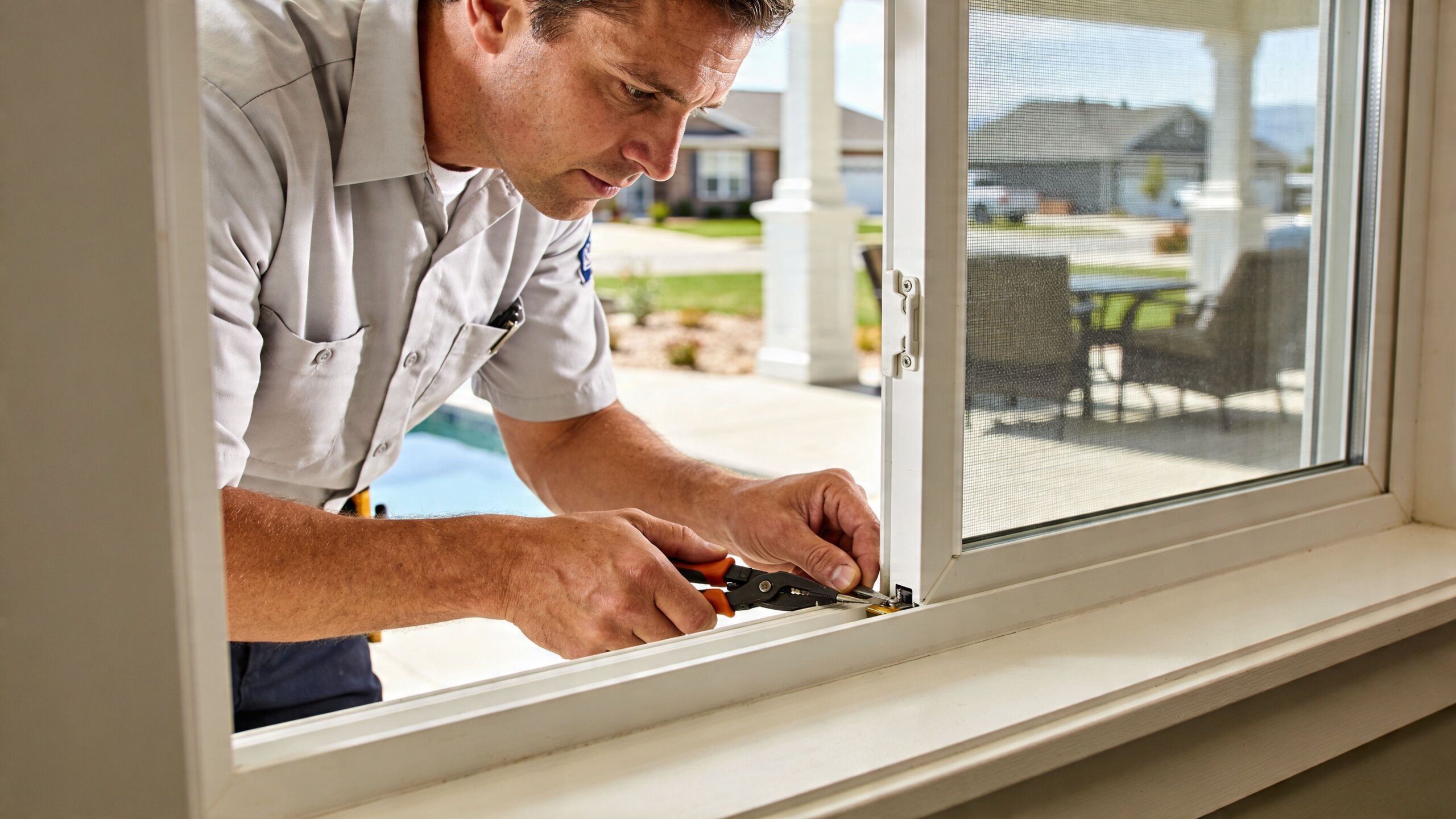
The difference is in the details
Good screen repair starts with fit. A repaired screen has to sit square in the opening, hold even tension across the mesh, and stay put when afternoon wind picks up near Palmer Park, Flying Horse, or out toward Black Forest.
That takes more than rolling in new mesh.
Frames often need minor straightening. Corners need to be checked for looseness. Spline size has to match the frame channel, or the screen can loosen long before the mesh itself wears out. On homes that get hard sun exposure, material choice matters too. Standard mesh may be enough in a shaded area, while sun-beaten elevations and exposed sides of the house often benefit from a more durable option.
A clean-looking repair that sags after the next storm was not a good repair.
Why bundled service is practical
Screen work makes more sense when it is handled as part of exterior maintenance instead of a one-off cosmetic fix. During window cleaning and inspection, it is easier to catch the small issues homeowners usually miss. Bent tabs. Grit packed into the lower frame. Ash residue after fire season. Fine tears at the corner that only show up when light hits from the side.
Those details matter in the Pikes Peak region because screens take a beating from several directions at once. UV weakens the material. Wind flexes the frame. Hail can leave tiny impact points that turn into larger tears later. If the screen is repaired but the surrounding tracks and frames stay dirty, wear starts over again faster.
For homeowners trying to stay ahead of seasonal upkeep, a complete exterior home maintenance checklist is a useful way to keep screens, windows, gutters, and trim on the same schedule.
Safety and consistency matter
Upper-story screens, oversized patio sliders, and older frames are where professional service usually pays off fastest. The job is not just removing and reinstalling the screen. It is doing it without twisting the frame, damaging the window, or forcing a weak corner back into place.
I see this a lot on homes near Cheyenne Mountain and in older neighborhoods where screens have been removed and reinstalled for years. The mesh may be the visible problem, but the underlying issue is often frame fatigue or poor fit.
Well-repaired screens should disappear when you look through them. If you notice ripples, loose edges, or a frame that rattles in the opening, the work is not finished to the standard your home needs. In Colorado Springs, professional screen repair is preventive maintenance. It protects airflow, helps keep ash and insects out, and saves you from replacing more parts after the next round of sun, wind, or hail.
Year-Round Screen Maintenance Tips for Colorado Homeowners
Screens last longer when you treat them like part of the exterior maintenance routine instead of waiting for a tear. In Colorado Springs, that means checking them with the seasons, not just when a bug gets inside.
Spring and summer habits
Spring is when screens start working hard again. Pollen, dust, and winter residue collect in the mesh and along the frame edges. A gentle cleaning clears airflow and makes damage easier to spot before the hot months.
During summer, inspect after hail and wind events. Pay attention to corners, tabs, and any screen on the sunniest side of the house. If you live in a more exposed area, look more often.
A simple warm-weather checklist helps:
- Brush off loose debris before it gets packed into the mesh
- Rinse and dry carefully so dirt doesn’t stay lodged in the corners
- Check fit in the frame after storms or heavy wind
- Look for small punctures that can grow quickly with regular use
Fall and winter protection
Fall is a good time to decide whether your screens should stay in or come out. Some homeowners leave them installed year-round. Others remove certain screens for winter to reduce exposure and make seasonal maintenance easier.
If you do remove them, store them flat and somewhere dry. Don’t lean them in a way that can twist the frame. If they stay installed, at least clear off debris and inspect for any weak areas before colder weather settles in.
For homeowners building a broader seasonal routine, this complete exterior home maintenance checklist is a useful reference for seeing how screens fit into overall home care.
Pair screen care with window cleaning
Professional window cleaning does more than improve the glass. It also removes the mineral deposits and debris that accelerate screen degradation, and market data shows that bundling screen repair with quarterly window cleaning yields 3-4x greater service call efficiency, according to screen and window service efficiency data.
That kind of bundling makes sense for homeowners because the same visit can address glass clarity, dirty tracks, and early screen issues in one pass. It’s efficient, and it helps keep small problems from turning into full replacements.
If your screens are torn, loose, faded, or just making clean windows look unfinished, Cultivate House Detailing can help with professional screen repair, window cleaning, and exterior maintenance throughout Colorado Springs and nearby communities. Request a quote and get a clear plan for what should be repaired, what should be replaced, and how to keep your windows looking right season after season.
Rather not do it yourself? Cultivate House Detailing offers window screen repair and replacement. Get a free quote.
Serving Monument and the surrounding Colorado Springs area — see our window cleaning services in Monument.