
The EPA estimated that 600 million tons of construction and demolition debris were generated in the United States in 2018. That scale is why construction debris removal is a specialized logistics and recycling job, not a matter of filling a dumpster.
A renovation in Colorado Springs can leave behind concrete, drywall, lumber, roofing, metal, packaging, fixtures, and material that shouldn't enter an ordinary waste stream. The cleanup often looks simple from the driveway, but the actual work involves identifying materials, separating loads, choosing an accepted disposal route, protecting people on-site, and coordinating hauling without delaying the project.
Why Construction Debris Removal Matters More Than You Think
A property manager can usually tell when a project is nearing completion. The new cabinets are installed, the framing is finished, or the damaged structure has been removed. Then someone opens the garage, looks behind the property, and finds the part of the job that wasn't included in the mental picture: broken concrete, bent fasteners, drywall scraps, wood offcuts, torn flooring, and several bags of mixed debris.
That pile represents a much larger system. The U.S. Environmental Protection Agency's construction and demolition debris data estimates that 600 million tons of C&D debris were generated in the United States in 2018, more than twice the municipal solid waste generated that year. The material comes from demolition, remodeling, new construction, road work, and recovery activity, so removal is tied to nearly every stage of the built environment.
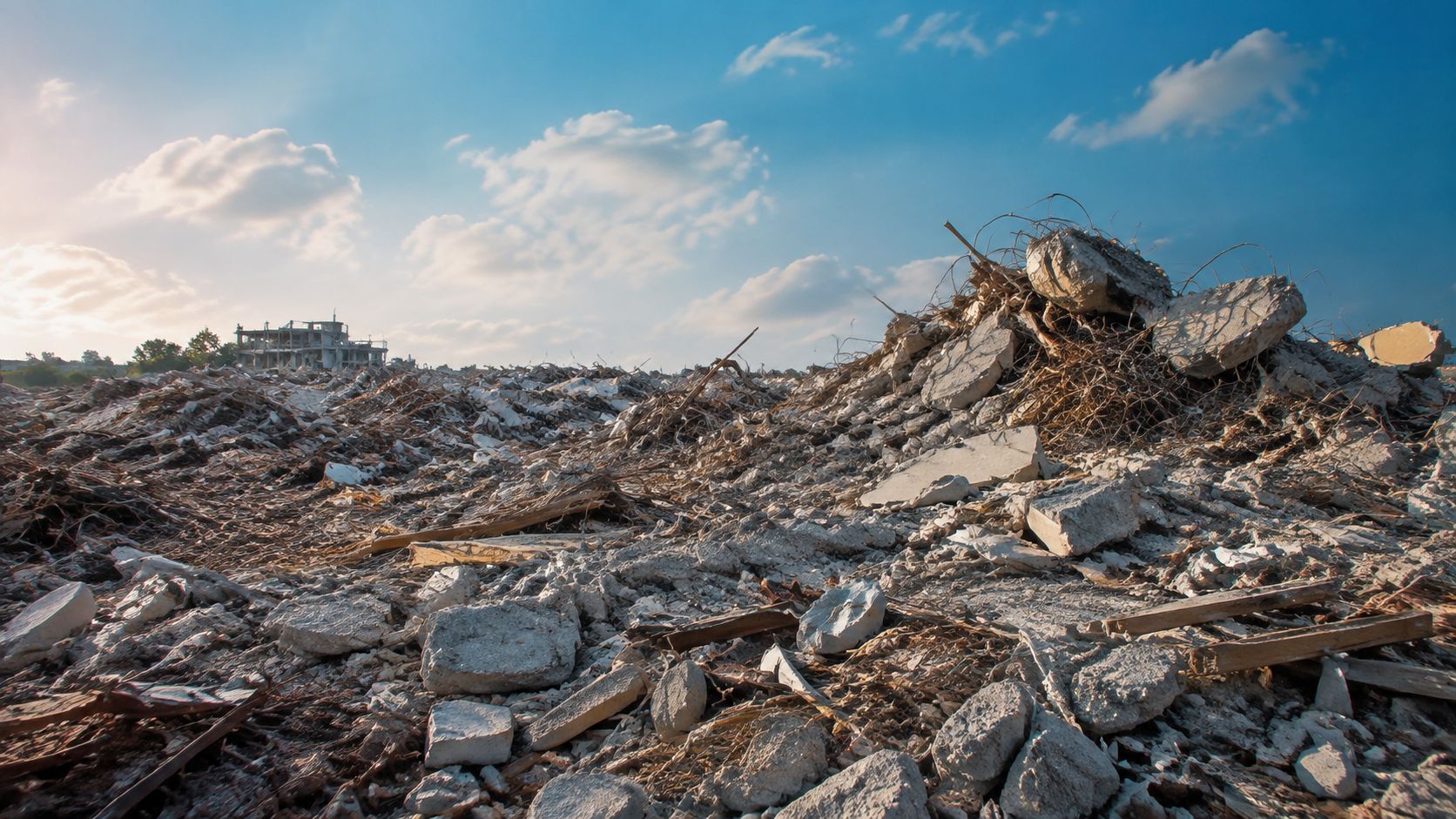
The scale changes the planning decision
Older EPA characterization work estimated 136 million tons of building-related C&D debris in 1996, with 43% from residential sources and 57% from nonresidential sources. The same report estimated a per-person generation rate of 2.8 pounds per person per day. Those historical figures show why debris removal has grown from an occasional cleanup task into a specialized materials-management sector. (EPA characterization report)
For a homeowner, the practical lesson is straightforward. The material shouldn't be treated as one anonymous pile. It needs a plan for sorting, staging, loading, hauling, recovery, and final disposal.
What professional planning actually controls
A good removal plan answers several questions before anyone loads a truck:
- What is the material? Concrete and masonry behave differently from wood, drywall, plastic, or metal.
- How clean is the load? A recyclable stream can lose value when it contains soil, insulation, food waste, paint, or other incompatible material.
- Where can it go? Facilities accept different materials and may apply different rules.
- How will it leave the property? Narrow driveways, stairs, steep grades, occupied buildings, and limited staging areas affect the hauling method.
The global picture reinforces the same point. A review published in Sustainability describes C&D waste as the world's largest waste stream by mass, with recent assessments placing annual generation above 2 billion tonnes and around 10 billion tonnes in some estimates. The exact total varies by methodology, but the operational conclusion doesn't: urban growth, renovation cycles, and demolition create recurring demand for organized removal.
Understanding Debris Categories and Contamination Risks
Contamination is often the hidden cost of construction debris removal. A load that begins as mostly recoverable material can become mixed waste when incompatible items are thrown together. That change can affect the facility that accepts it, the hauling arrangement, the amount of handling required, and the final disposal route.
The main categories are easy to recognize when they're separated early:
- Inert material: Concrete, brick, block, asphalt, and clean masonry can often be directed toward aggregate recovery or a dedicated C&D pathway.
- Wood: Untreated lumber and painted, coated, or treated wood may not follow the same route. Keep offcuts, pallets, framing, and demolition lumber separate.
- Metal: Wiring, pipe, studs, fasteners, fixtures, and appliances can have different recovery options from general debris.
- Mineral and interior material: Drywall, plaster, tile, flooring, and insulation can create contamination problems when mixed with clean rubble or reusable material.
- Plastics and packaging: Wrap, foam, buckets, films, and rigid plastics are lightweight but can spread through a load and reduce its cleanliness.
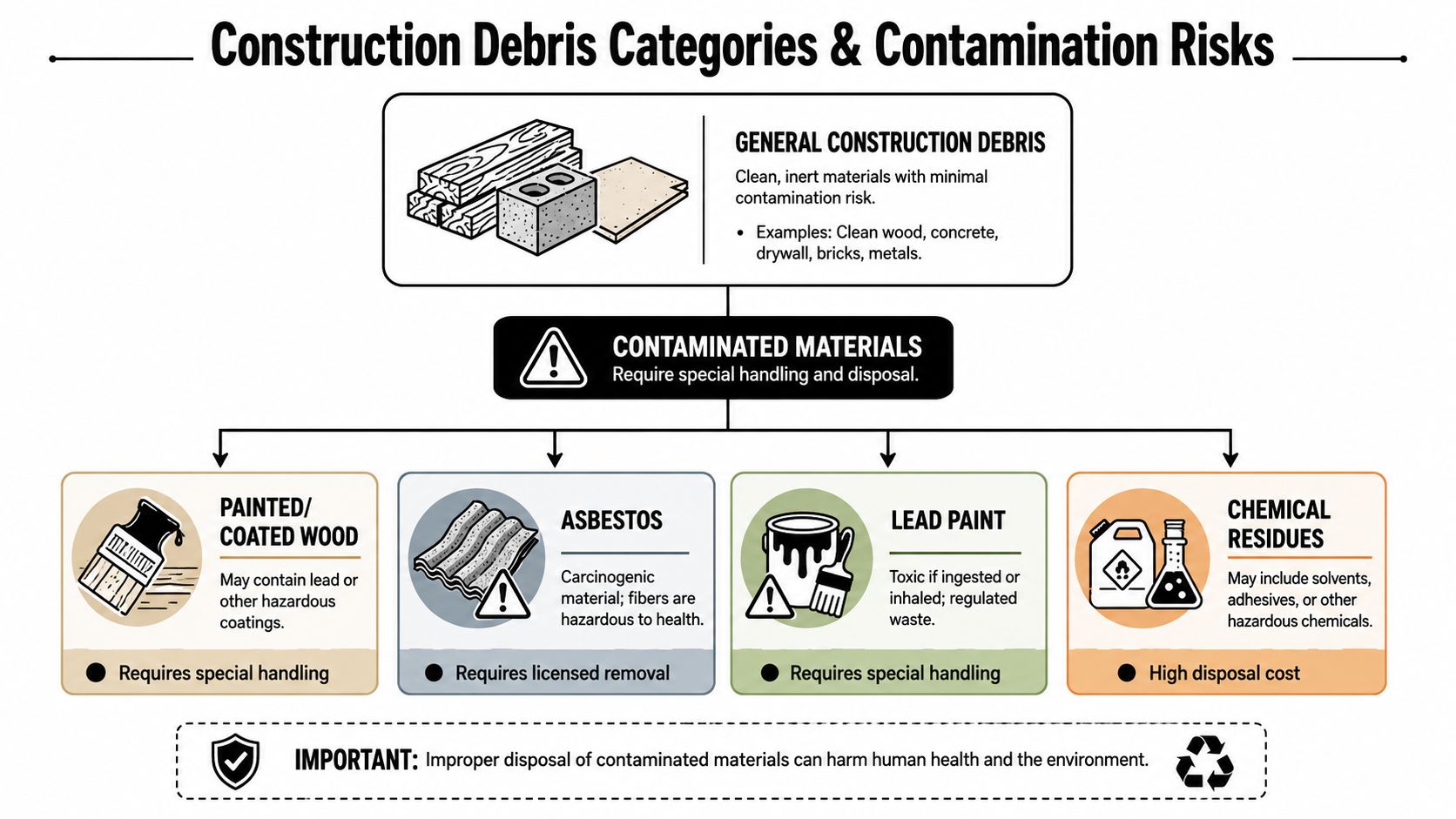
Why one mixed load can become expensive
The temptation is to use one container because it looks convenient. That choice can fail when the load contains clean concrete under loose drywall, broken glass beside lumber, or paint residue mixed with otherwise recyclable material. The facility may classify the entire load according to its least acceptable component, or require extra sorting and handling.
The provided market research identifies contamination as a key restraint in C&D waste management and reports that non-hazardous material represents 97.67% of the stream, while hazardous waste is the fastest-growing segment. (Construction and demolition waste management market coverage) The useful takeaway isn't that most debris is automatically safe. It's that a mostly non-hazardous load can still become difficult and costly when small amounts of problematic material are distributed throughout it.
Practical rule: Keep clean heavy material, recoverable metal, wood, and questionable legacy materials in separate zones before loading begins.
In Colorado Springs, homeowners should be especially careful with older painted surfaces, adhesives, insulation, coatings, and chemical residues. If a material could contain asbestos, lead, or another regulated contaminant, don't break it apart just to make it fit. Ask the receiving facility or a qualified professional what testing, packaging, or disposal pathway applies.
Step-by-Step Process for Effective Debris Removal
A dependable cleanup starts before the first piece reaches the curb. The sequence below works for renovations, demolition work, roofing projects, and smaller commercial improvements.
1. Assess the project
Walk the site and list the material types, approximate volume, access points, and heaviest items. Identify whether the debris is concentrated in one room, spread across several floors, or mixed with existing household contents. A clear assessment prevents the common mistake of choosing a container based only on visible pile size.
2. Create sorting zones
Use clearly marked areas for concrete and masonry, wood, metal, drywall, plastics, reusable fixtures, and questionable materials. Keep the zones away from walkways and protect them from rain or wind where practical. Early separation matters because EPA-cited recovery data show that reported C&D recovery rates in five states ranged from 37% to 77%, with an average of 48%. (EPA building-related C&D characterization)
3. Choose the container and hauling method
A dumpster may suit a predictable, accessible project. Bagged loading, a truck-based removal service, or separate trips to a recycling facility may work better when materials have different destinations. Dense rubble can reach weight limits quickly, while a large volume of light packaging can consume space without adding much weight.
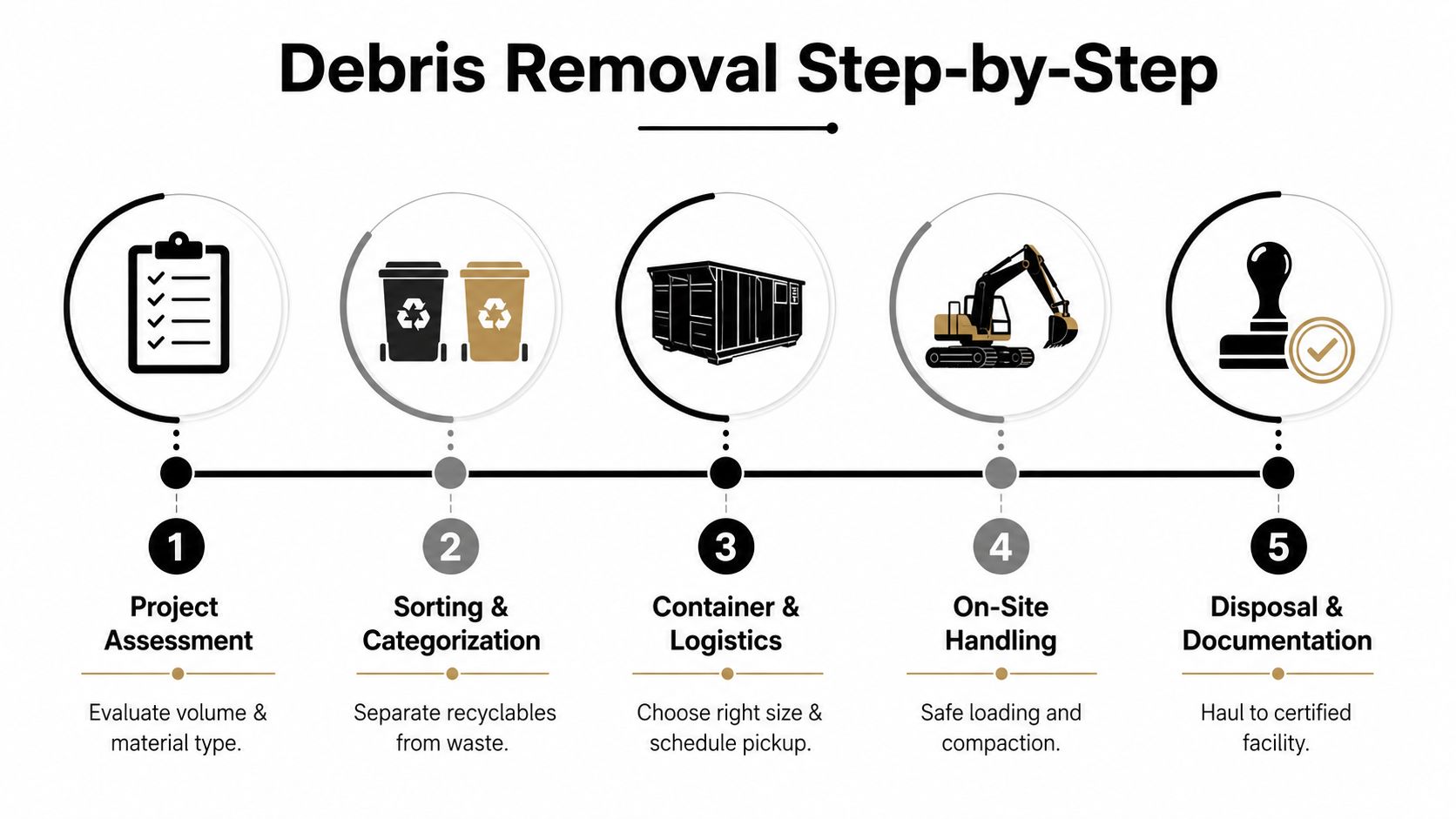
4. Load safely and maintain the site
Break down manageable pieces only when the material is known to be safe. Use gloves, eye protection, sturdy footwear, and suitable respiratory protection when dust is present. Don't bury sharp metal under loose debris, overload containers, or leave nails and broken glass where workers, children, pets, or tires can encounter them.
5. Confirm the final destination
Before pickup, verify what the hauler and facility accept. Ask how the load will be classified, whether separate materials qualify for recovery, and what documentation will be provided. Keep weigh tickets, receipts, facility records, or recycling documentation if the project requires proof of diversion.
For a homeowner managing several material types, these debris sorting and recycling tips can help organize the site before the hauler arrives. The best system is the one workers can follow without guessing.
DIY Debris Removal Versus Hiring Professionals
DIY removal can make sense for a small project with a clean, predictable material stream and easy access. A homeowner may be able to separate a modest amount of untreated wood, metal, or bagged flooring, then arrange an appropriate drop-off. The lower upfront cost can be attractive when the work involves little lifting and no questionable materials.
The calculation changes quickly once the project includes dense rubble, multiple rooms, stairs, limited parking, or a deadline. The homeowner isn't only paying for disposal. They're also committing time to loading, driving, unloading, returning equipment, cleaning the vehicle, and resolving rejected materials.
The trade-off by project condition
| Decision factor | DIY removal | Professional removal |
|---|---|---|
| Safety | The homeowner carries responsibility for lifting, sharp edges, dust, and unstable piles. | Trained crews can organize loading and reduce the amount of manual handling left to occupants or tradespeople. |
| Speed | Progress depends on personal availability, vehicle capacity, and facility hours. | A coordinated crew can remove material in a planned loading window. |
| Compliance | The homeowner must confirm acceptance rules and separate restricted materials. | An experienced service can identify obvious disposal concerns and coordinate an appropriate route. |
| Total cost | Upfront expenses may look lower, but trips, equipment, time, and rejected loads add uncertainty. | The quoted service includes labor and logistics, though material classification still needs to be discussed clearly. |
The most expensive mistake is treating a mixed load as a simple load. EPA data estimate that roughly 35% to 45% of generated C&D waste is managed in C&D landfills, 20% to 30% is recovered for recycling, and 30% to 40% is disposed of in MSW landfills or other sites. (EPA C&D debris characterization PDF) These ranges show why the disposal pathway matters, but they aren't a promise that every local load will receive the same classification.
For related property upkeep after a renovation, house exterior cleaning services can address accumulated exterior grime once the heavy work is complete.
Safety Rules and Local Disposal Regulations
Debris becomes a safety problem as soon as a crew encounters unstable piles, exposed fasteners, broken glass, dust, heavy masonry, or damaged building components. Wear material-appropriate gloves, eye protection, sturdy footwear, and clothing that covers exposed skin. Use mechanical help for heavy pieces, and do not carry awkward loads alone through stairs or occupied areas. Keep walkways clear so the cleanup itself does not create a second hazard.
In Colorado Springs, confirm each facility's acceptance rules before loading a truck or container. A nearby transfer station or landfill may separate clean concrete, mixed construction waste, painted materials, treated wood, insulation, and potentially hazardous substances under different rules. Ask where the load will go, what contamination it can contain, and whether the hauler requires clear access or specific loading conditions.
A mixed load can also create a hidden disposal cost. Once clean masonry is combined with painted wood, insulation, or household chemicals, a facility may classify the entire load differently, require sorting, or reject it. One rejected trip means paying for handling and transport twice, then paying again to separate or reroute the material. Photograph unusual debris and tell the hauler about it before pickup.
Materials that need extra caution
Older buildings may contain lead-painted components, asbestos-containing material, chemical residues, solvents, or treated products that do not belong in an ordinary construction dumpster. Do not saw, crush, sweep, or mix a suspect material into general debris until you know the required handling route.
Compliance affects acceptance, worker protection, and the homeowner's final bill. The European Commission's construction and demolition waste guidance shows that recovery results can range from less than 10% to more than 90%, depending on sorting infrastructure and enforcement. Colorado Springs operates within its own facility and regulatory network, but the practical lesson is the same: separate materials before contamination removes disposal options.
Safety decision: Questionable legacy materials, substantial quantities, height, unstable structures, or difficult access call for professional guidance rather than improvisation.
Real-World Costs and Disposal Options Explained
A useful debris-removal budget starts with the destination, not the container. Tipping fees, travel distance, material weight, container size, labor, loading conditions, and contamination can all influence the final charge. A mixed load may look cheaper at the start and cost more after facility staff classify, sort, or reject it.
EPA data show that just over 455 million tons of C&D debris were directed to next use in 2018, while just under 145 million tons were sent to landfills. (EPA sustainable management of C&D materials) That split explains why early separation has financial value as well as environmental value. Clean material has more possible destinations than a load that has absorbed every leftover from the job.
| Disposal option | Best for | Key cost factor |
|---|---|---|
| Dedicated C&D facility | Organized construction and demolition loads | Material type, weight, and contamination |
| Recycling or aggregate facility | Clean concrete, masonry, metal, or other accepted streams | Sorting quality and transport distance |
| Mixed-waste facility | Debris that can't be separated economically | Weight, volume, and mixed-load classification |
| Special handling facility | Suspect hazardous or regulated materials | Assessment, packaging, testing, and controlled disposal |
One mixed load can create the kind of surprise charge homeowners don't expect. The same principle appears in this guide to unexpected moving fees in Melbourne, which is useful reading for anyone comparing a simple quote with the conditions that can trigger add-ons. For debris removal, ask whether the quote changes for heavy concrete, stairs, long carry distances, blocked access, extra labor, or contaminated material.
Homeowner Cleanup Checklist and When to Call a Pro
Use this checklist before work begins:
- Confirm the material list: Identify concrete, masonry, wood, metal, drywall, plastics, fixtures, and anything that may need special handling.
- Set sorting zones: Mark separate areas before demolition starts, not after the pile has become mixed.
- Protect access routes: Keep stairs, doors, driveways, and fire access clear of debris, cords, nails, and sharp scrap.
- Ask the facility first: Confirm accepted materials, container restrictions, and documentation requirements.
- Photograph the staged loads: Clear records help resolve questions about condition and separation.
- Inspect before pickup: Remove prohibited items, secure loose material, and verify that the hauler can reach the container safely.
DIY removal is reasonable for a small, clean project when you can handle the work safely and confirm the disposal route. Call a professional when the volume is substantial, materials are mixed, access is difficult, the work involves height or heavy rubble, or local permit and disposal requirements aren't clear.
Once construction debris is gone, fine dust often remains on glass, frames, tracks, screens, siding, and sills. Cultivate House Detailing provides post-construction window cleaning for properties that need the finishing cleanup handled carefully.
Cultivate House Detailing serves Colorado Springs and surrounding communities with residential and commercial window cleaning, including exterior glass, interior windows, screens, and tracks after renovation work. Visit Cultivate House Detailing to request a quote and schedule a careful cleanup that leaves your property ready to use.
Rather not do it yourself? Cultivate House Detailing offers pressure washing in Colorado Springs. Get a free quote.