If you're looking out at Pikes Peak or across the red rock lines near Garden of the Gods through dusty, sagging screens, you already know the problem. The view is still there, but old window screens can make a clean Colorado Springs home feel neglected fast. They cut light, trap dust, rattle in the wind, and turn simple window cleaning into a frustrating chore.
That's especially true here. High-altitude sun is hard on older mesh, steady wind works loose tired frames, and airborne dust settles into every corner of the screen and track. Homeowners searching for window cleaning near me, window cleaning in Colorado Springs, CO, or professional window cleaning are often dealing with more than dirty glass. The screen is part of the problem too.
The Hidden Impact of Old Window Screens on Your Colorado Home
Many homes around Colorado Springs still have aging screen setups that have been hanging on for years. Traditional aluminum or plastic window screens have been a standard technology in residential construction for over 100 years, which helps explain why older neighborhoods often still have legacy screens that have taken decades of sun, dust, and weather exposure (FlexScreen history reference).
A common local scenario goes like this. The glass gets washed, but the screen still looks gray, the corners bow outward, and every gust pushes fine dust back into the room. Homeowners think they need better exterior window cleaning, but the screen is often the hidden reason the whole window still looks tired.
Why Colorado Springs screens age differently
In this climate, old window screens deal with three problems at once:
- Sun exposure that dries out older screening material
- Wind pressure that exposes weak corners and loose fit
- Dust buildup that blocks airflow and dulls the appearance of the whole window
Before modern screens became common, homeowners had rough choices. The National Museum of American History notes that before 1870, the only effective way to keep flies and mosquitoes out was to keep windows shut or cover them with cheesecloth, which limited light and ventilation (museum exhibit on window screens). That history still matters because screens were always about comfort, airflow, and everyday livability, not just bugs.
Old screens don't just look worn out. They change how a room feels when the light is dimmer and the breeze carries dust instead of fresh air.
For homes where insects are part of the larger comfort issue, it also helps to understand how screening and pest control work together. If flies are becoming a recurring problem indoors, this guide to residential fly treatment gives useful context on the source side of the issue.
Why this matters for window cleaning
Dirty or damaged screens undercut the results of residential window cleaning, interior window cleaning, and exterior window cleaning. Even when the glass is spotless, a worn screen can still make the window look cloudy from the curb and from inside the house.
That's one reason old screens come up so often during seasonal maintenance. In Colorado Springs, screen condition and glass condition are tied together much more than is commonly expected.
How to Properly Assess Your Screen Condition
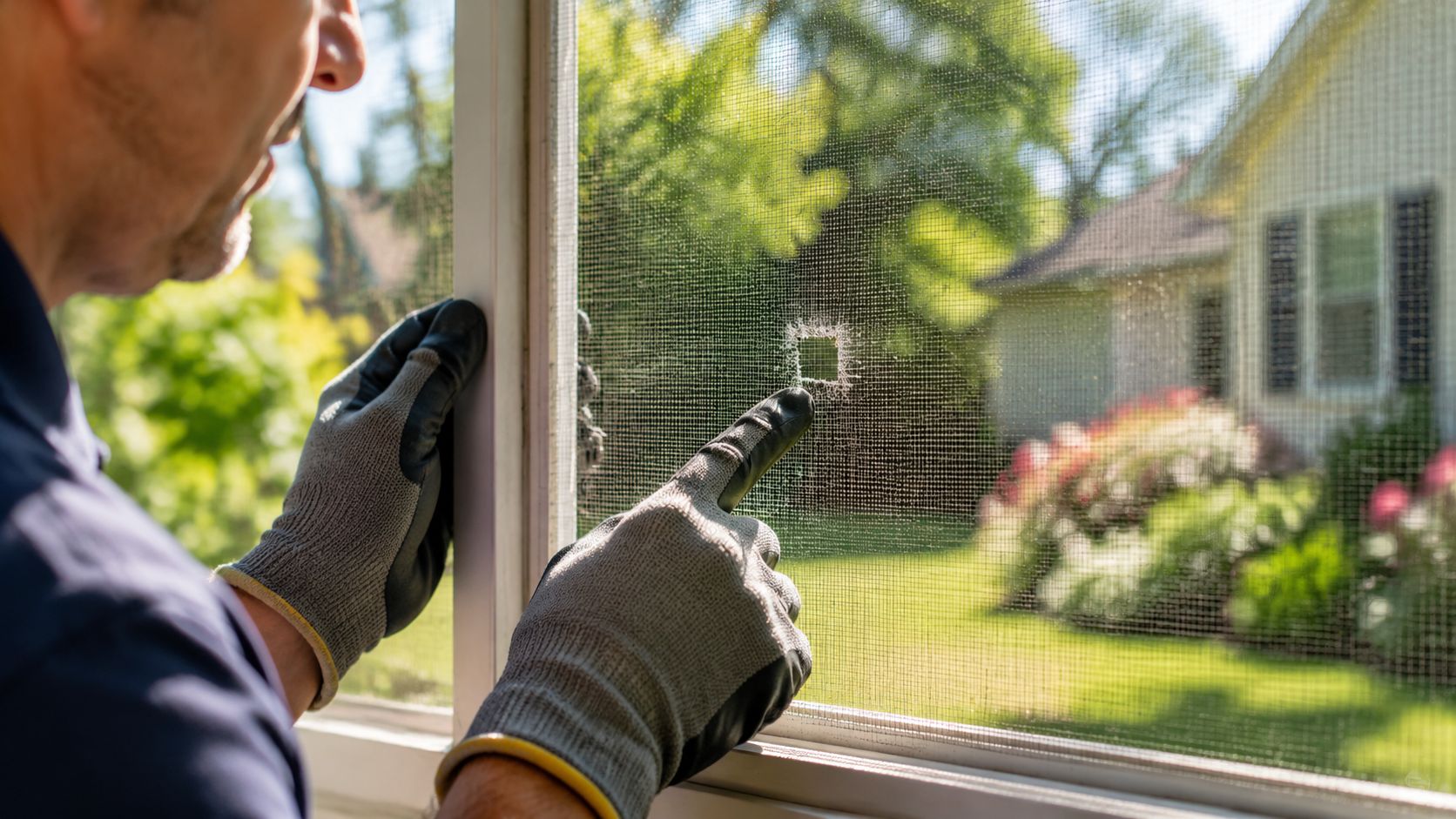
The first step is a real inspection, not a quick glance from inside the room. Pull the screen out, set it in good light, and check the frame, mesh, and spline separately. A screen can look “mostly fine” in place and still be the reason your windows don't feel clean or secure.
Start with the frame
The frame tells you whether you're dealing with a cleaning project, a simple repair, or something that's heading toward replacement.
Bent or warped frames are a bigger issue than most homeowners think. When a frame loses its shape, it no longer fits tightly in the window opening. That weak fit can let in insects and debris, cause flapping in the wind, and even make the screen separate too easily if fast access to the window is needed (Arthur Sailer on signs a screen needs replacement).
Use this quick frame check:
- Check the corners: If one corner lifts when the opposite side lies flat, the frame has likely twisted.
- Look for bowing: Long sides that curve inward or outward usually won't seat well.
- Test the fit: Reinstall the screen and see whether it sits snugly without rattling.
- Inspect hardware: Tabs, clips, springs, and pull handles often wear out before the mesh does.
Check the mesh in full daylight
Small tears hide in the shade. Hold the screen up where sunlight passes through it.
Look for these different failure types:
| Condition | What it usually means | Likely next step |
|---|---|---|
| Surface dust only | Screen is structurally fine | Cleaning |
| Small isolated hole | Damage is limited | Minor patch |
| Brittle mesh | Material is aging out | Re-screening |
| Several tears or stretched weave | Tension is failing | Re-screening or replacement |
| Fraying along edges | Spline or mesh is pulling loose | Closer inspection needed |
Inspect the spline and channel
The spline is the flexible cord that locks the mesh into the frame groove. If it's dry, shrunken, cracked, or popping up at the corners, the mesh may still look intact while the screen is already failing.
Practical rule: If the frame is square and the damage is limited, repair usually makes sense. If the frame is warped and the mesh is tired, don't sink time into patching.
A simple clean, repair, or replace decision
For most old window screens, the decision falls into one of these lanes:
- Clean it when the frame is solid, the mesh is intact, and the main issue is dust or pollen.
- Patch it when there's a small hole or tear in otherwise healthy mesh.
- Re-screen it when the frame is still worth saving but the mesh or spline has aged out.
- Replace it when the frame shape is compromised, hardware is failing, or the whole unit fits poorly.
That kind of inspection saves time. It also keeps homeowners from doing what happens all the time with old screens in Colorado Springs. Cleaning a screen that really needs rebuilding, or trying to rebuild one that should've been replaced from the start.
DIY Screen Cleaning and Minor Patching Guide
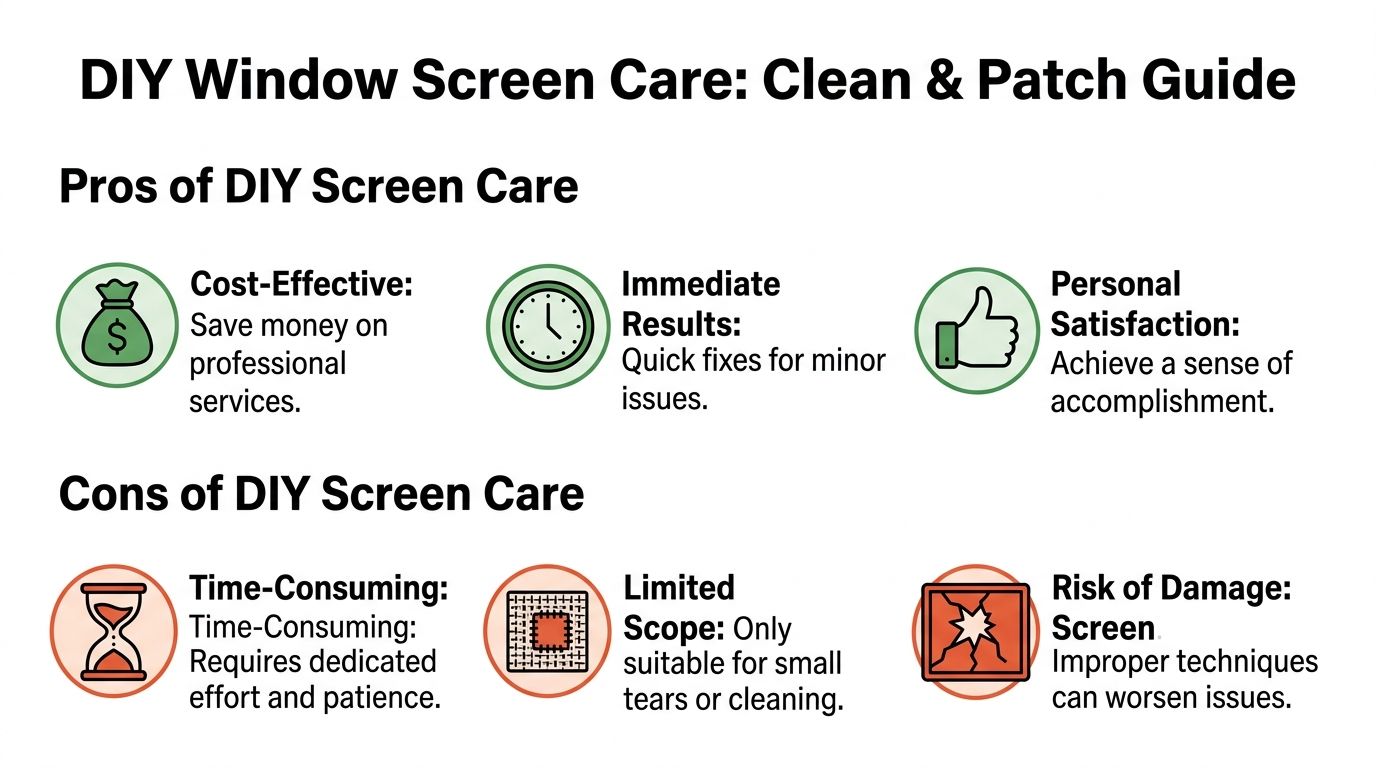
Some screen problems are worth handling yourself. If the frame is solid and the damage is minor, a careful DIY approach can buy you more time and improve how your windows look right away. It's not glamorous work, but it's straightforward if you stay gentle.
What you need before you start
For basic care, set out:
- Soft brush or detailing brush for loose dust
- Bucket of mild soapy water for surface grime
- Microfiber cloths for wiping frames
- Garden hose with light spray for rinsing
- Small patch kit for minor holes
- Flat work surface like a folding table or padded sawhorses
- Gloves if the frame edges are sharp
How to clean old window screens without damaging them
Start by removing the screen and laying it flat. Dry-brush both sides first. That matters because scrubbing a dusty screen with water turns surface dirt into muddy grit that pushes deeper into the mesh.
Then wash gently:
- Brush off loose debris first. Pay attention to corners where dust cakes around the spline.
- Wash with mild soap and water. Use a soft brush, not an abrasive pad.
- Rinse lightly. High pressure can stretch older mesh or force weak corners apart.
- Wipe the frame dry. Aluminum and painted wood both last longer when moisture doesn't sit in the corners.
- Let the screen dry fully before reinstalling.
If the surrounding window still looks dull after the screen is cleaned, the glass and tracks probably need attention too. Homeowners who want to compare the DIY route with a fuller service approach can review this breakdown of window screen repair DIY options.
Dusty screens can make clean glass look dirty. That's why screen cleaning and streak-free window cleaning work better together than separately.
How to patch a small hole
Minor holes can be patched if the surrounding mesh still has strength. If the area around the tear feels brittle, skip the patch and plan on re-screening instead.
For a small patch:
- Trim the damaged edges so there are no loose strands.
- Cut the patch larger than the hole so it overlaps securely.
- Press or weave it in carefully based on the patch style.
- Check visibility from both sides because a bulky patch in the center of the screen can be more annoying than the hole.
Where DIY stops making sense
DIY cleaning works well for seasonal dust and pollen. Patching works for one or two small problem spots.
It starts to fall apart when:
- The mesh is brittle across multiple panels
- The frame doesn't sit square
- Tabs or springs are missing
- The screen is on a high or awkward window
- You want the windows cleaned inside and out at the same time
That's where professional window cleaning, screen cleaning, and repair work save a lot of hassle. It's not just about speed. It's about getting the glass, tracks, and screens back into a condition that lasts through our wind and dust.
A Homeowners Guide to Rescreening and Replacement
Re-screening looks easy until you get halfway through one. The frame shifts, the mesh wrinkles, the spline jumps the groove, and by the end the screen fits worse than when you started. Old wood and aging aluminum rarely behave like the brand-new examples in a hardware store demo.
The measuring step that decides everything
For older wood-framed screens, especially pre-1910 styles, the fit starts with careful measuring. The practical standard is to measure width at the top, middle, and bottom, then height at the left, center, and right, use the smallest measurement, and apply a 1/8-inch deduction so the screen will fit even if the frame has swelled or warped. Older homes also need attention to tabs, clips, and springs because those details change the usable size.
There's also a real gap in DIY guidance for historic windows. Preservation guidance indicates that 30% of older homes in major U.S. markets have non-standard window frames requiring custom solutions, while fewer than 5% of DIY tutorials provide step-by-step guidance for adapting screens to those profiles. That's one reason homeowners get frustrated and assume full replacement is the only option.
Why spline technique matters more than people expect
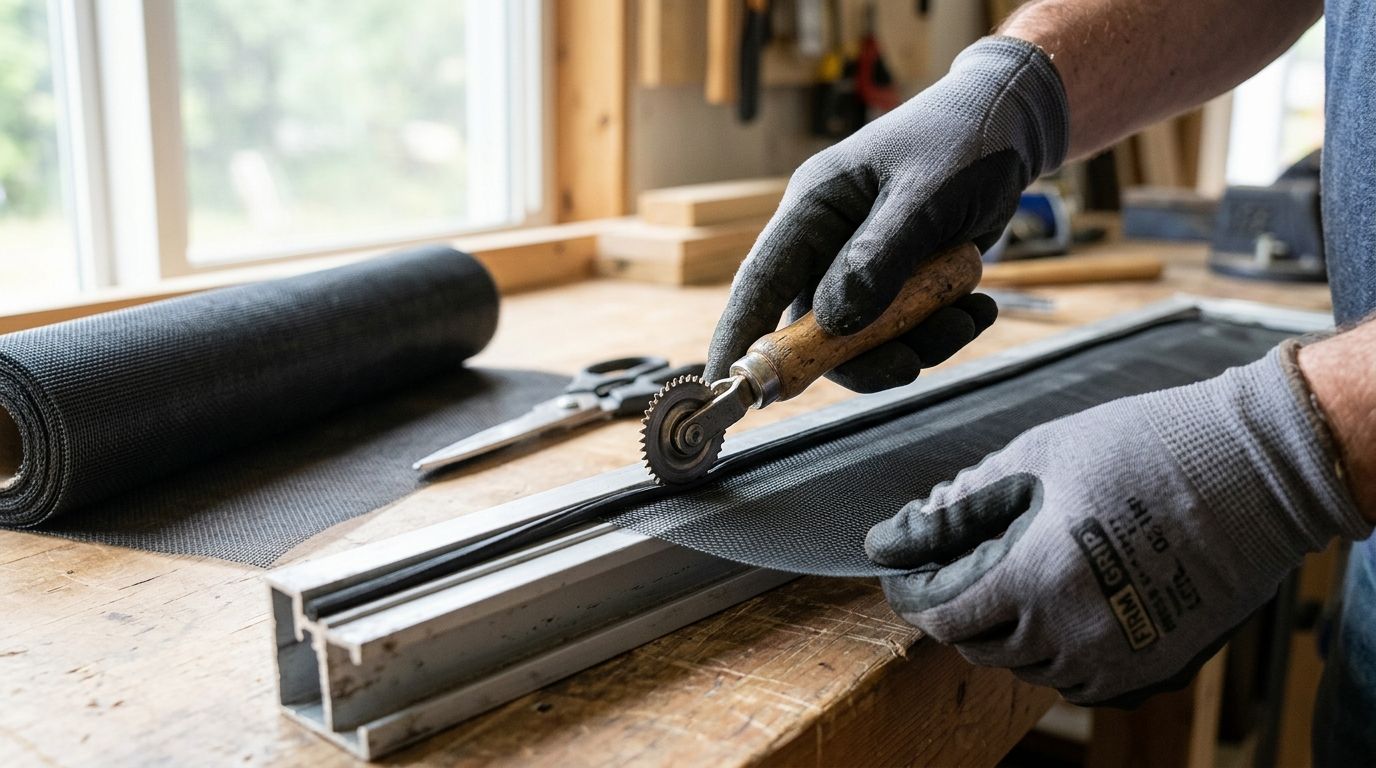
The mesh can only perform as well as the spline installation. The proper setup uses a dual-wheel tool, with a convex roller to push the screen into the channel and a concave roller to lock the spline in place. The spline needs to sit 5/16-inch deep, because inadequate depth causes 40% of spline pop-offs in high-wind regions, and proper technique delivers a 90% retention rate over five years compared with a 55% failure rate for improper tool use.
That sounds technical, but the practical takeaway is simple. Loose spline fails early in windy places like Colorado Springs.
A visual walk-through helps if you're evaluating whether to try it yourself:
Common DIY failure points
Most failed re-screens come down to a few repeat mistakes:
- Wrong measurements: The screen binds, bows, or leaves gaps.
- Poor tension: The mesh sags almost immediately instead of staying drum-tight.
- Incorrect wheel use: The roller rides the spline instead of seating it.
- Ignoring frame condition: Fresh mesh on a distorted frame still won't fit right.
A properly tensioned screen should be tight enough that a quarter can bounce off it without distortion. If it looks loose on the table, it will look worse in the window.
When replacement is smarter than re-screening
Sometimes the frame isn't worth saving. Sometimes it is, but the opening is so irregular that a custom approach makes more sense than forcing a generic one.
That's also where newer retrofit ideas come in. Homeowners dealing with old windows that lack usable grooves sometimes look at bespoke magnetic fly screens because they can offer a no-drill, low-modification option for difficult openings. They're not the answer for every historic or weather-beaten frame, but they're worth knowing about when preserving the existing structure matters.
If you're pricing out whether to rebuild what you have or start over with a new unit, this guide to the cost of window screen replacement helps frame the trade-offs clearly.
In practice, the line is pretty simple. If the job requires exact measuring, custom fitting, proper spline depth, and strong long-term tension, a pro often gets it done cleaner and with less waste. Cultivate House Detailing handles window screen repair and replacement as one practical option for homeowners who'd rather not gamble on a one-weekend trial-and-error project.
Enjoy Clear Views with Your Colorado Springs Screen Solution
Old window screens affect more than appearance. They cut airflow, mute your view, hold dust against the window, and make even freshly washed glass look unfinished. In Colorado Springs, that gets amplified by wind, dry conditions, and the kind of sun exposure that ages materials fast.
For some homes, a careful DIY cleaning or patch is enough. For others, it turns into an all-day project involving warped frames, stubborn spline, and screens that still don't sit right when you're done. That's usually the point where hiring out professional window cleaning, screen cleaning, interior window cleaning, and exterior window washing starts to make more sense.
What homeowners usually want from the service
People aren't looking for a complicated process. They want a straightforward result:
- Cleaner glass with better natural light
- Screens that fit correctly and don't rattle in the wind
- Tracks cleared of dirt and debris
- A better-looking exterior without streaks or patchy buildup

What to expect in Colorado Springs
For homes and small commercial properties in Colorado Springs and nearby service areas, regular maintenance keeps old screens from dragging down the look of the entire property. That applies whether you're booking seasonal residential window cleaning, preparing for guests, listing a home, or keeping up with commercial window cleaning on a storefront or office.
Clear views matter here. If you live near the mountains, there's no reason a tired screen should be the thing you notice first.
If your windows still look dusty after cleaning, if your screens are sagging or torn, or if you're done wrestling with old hardware, it's time to hand the project off and get the whole window system addressed together.
If you need help with old window screens, streak-free glass, or full window cleaning in Colorado Springs, CO, contact Cultivate House Detailing to request a quote and schedule service for your home or business.
Prefer to leave it to a professional? Cultivate House Detailing offers window screen repair and replacement. Get a free quote.