If your driveway in Colorado Springs has started to look dull, streaked, or blotched with tire marks, you're probably weighing whether pressure washing services for driveways are worth it. Maybe the concrete looks older than it is, or maybe the grime just makes the whole front of the house feel tired. A proper clean can change that fast, but the value goes beyond appearance, because driveway washing also has to be done with the right pressure, the right rinse strategy, and the right runoff control.
Why Your Driveway Needs Professional Attention
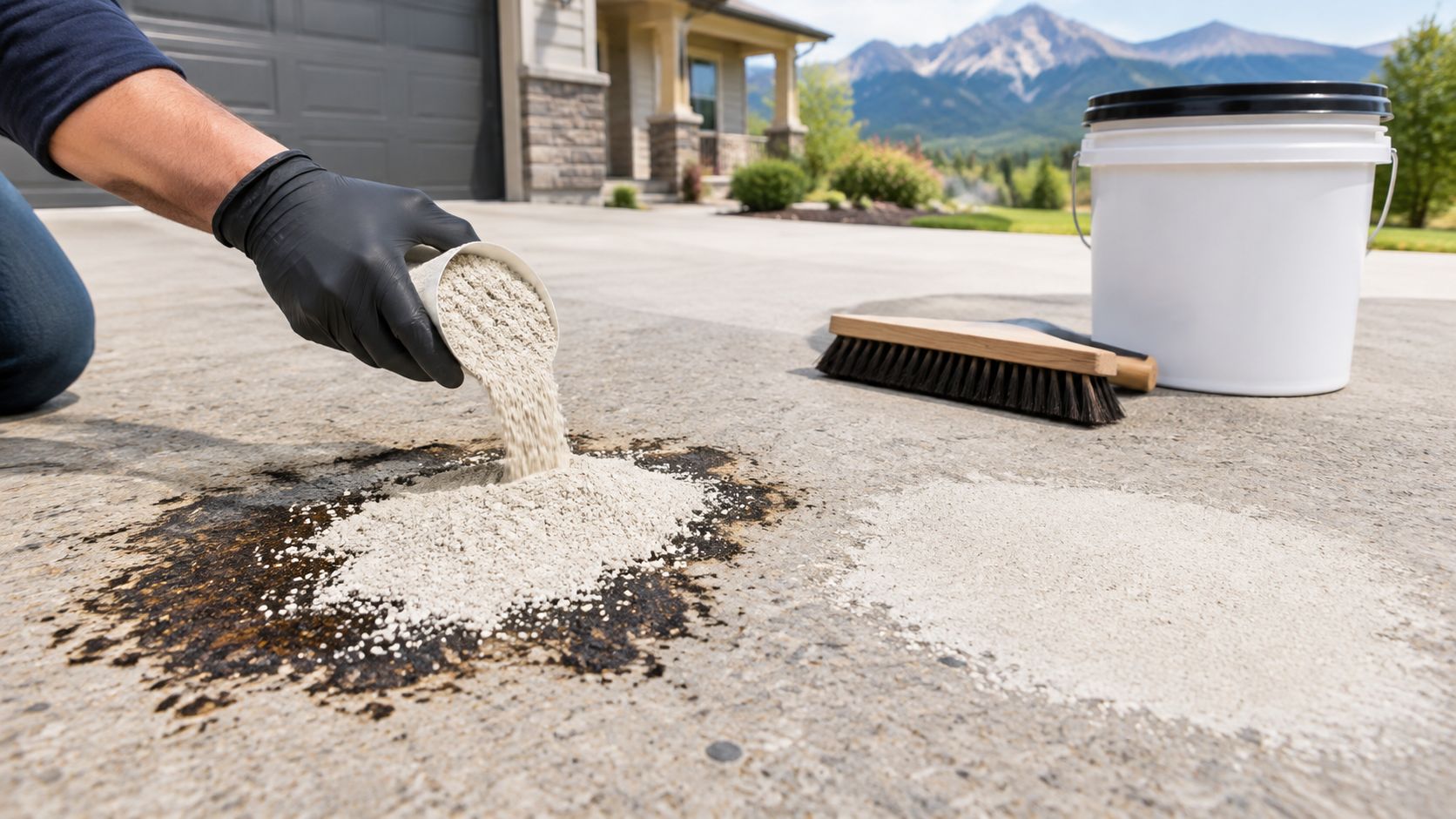
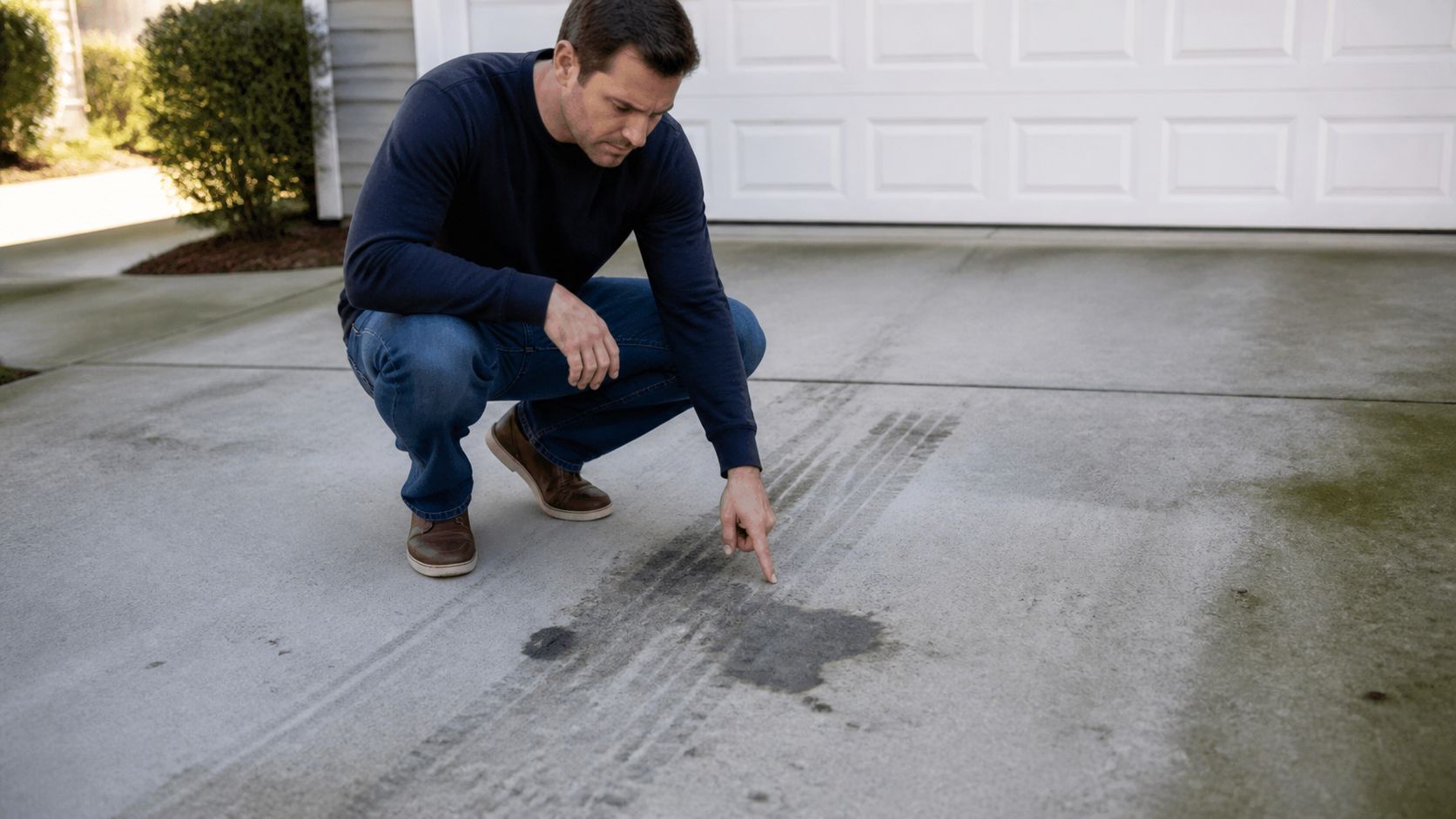
A lot of homeowners wait until the driveway looks obviously bad before they act. By then, the surface usually has a mix of oil spots, tire marks, dust, algae, and winter residue, and that buildup doesn't just affect curb appeal. It can also make the surface slick, especially when moisture hangs around in shaded areas.
Colorado Springs gives driveways a hard life. The high-altitude sun, sudden temperature swings, and wind-blown grit all push dirt deeper into porous concrete, while snowmelt and road grime leave behind stains that don't rinse away on their own. A driveway can look clean from the street and still have embedded buildup that keeps darkening over time.
That's why a homeowner often reaches a point where scrubbing with a hose or store-bought cleaner stops being enough. A professional clean is less about making the slab look washed and more about restoring the surface evenly without leaving wand marks or etched patches. If the driveway also sits near new concrete or adjoining landscaping, the risk of damaging adjacent areas is another reason to slow down and choose the right method.
Practical rule: if the stain changed the color of the concrete, a basic rinse won't solve it. You need the right combination of pressure, flow, and technique.
For homeowners comparing driveway care with other exterior projects, it can help to look at how durable the hardscape itself is. A resource like driveway paving for Atlanta homes shows how surface design and maintenance go hand in hand, even though local climate and soil conditions vary by region.
In real use, professional driveway cleaning also gives you a better read on what's happening to the surface. You can spot early cracking, sealant wear, and drainage issues before they become bigger repair problems. That makes pressure washing services for driveways a maintenance task, not just a cosmetic one.
Understanding Pressure Washing Technology and Techniques
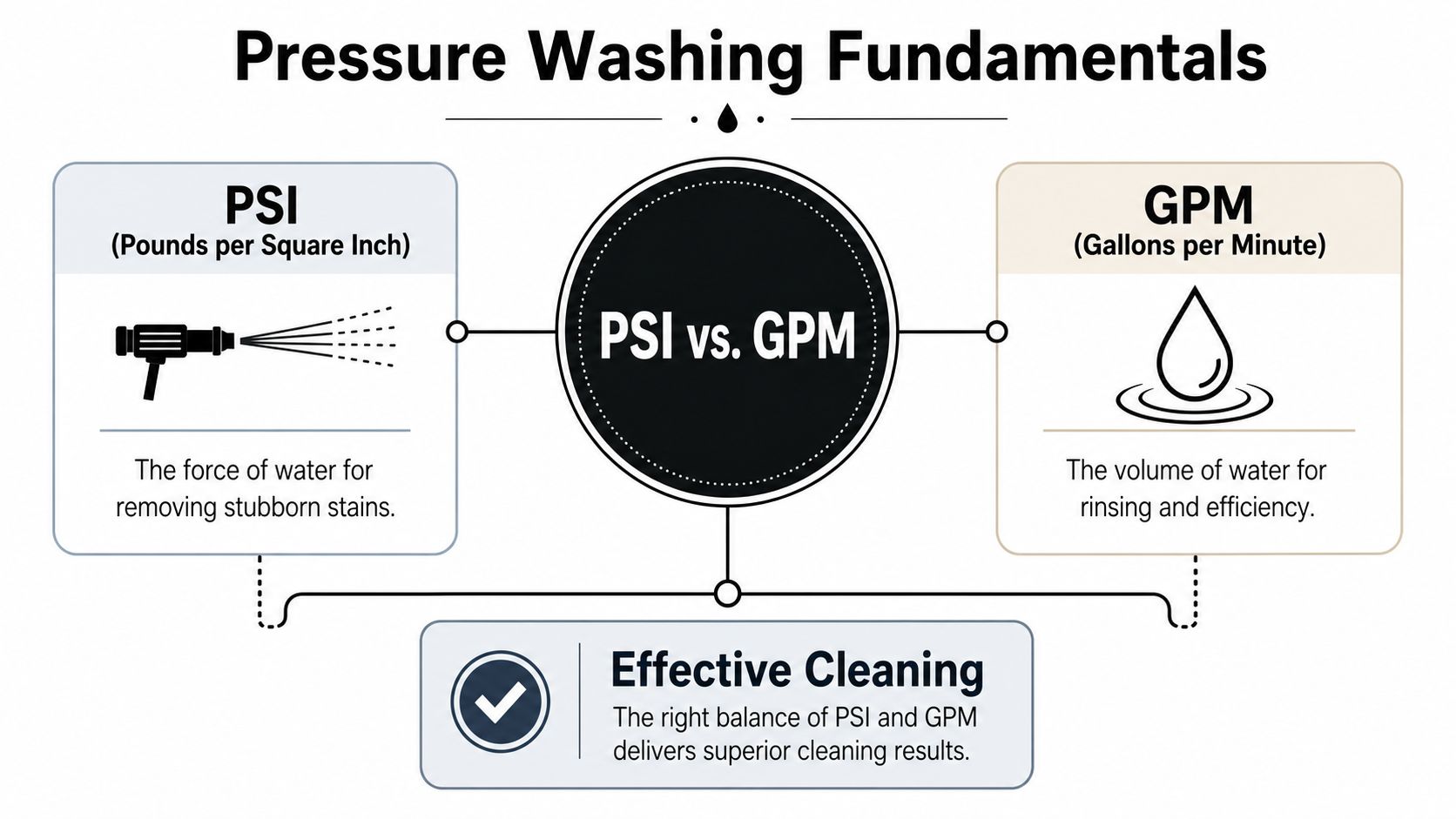
The two numbers that matter most are PSI and GPM. PSI, or pounds per square inch, is the force of the water. GPM, or gallons per minute, is how much water is moving through the machine and carrying loosened dirt away.
A simple way to think about it is this, PSI is the punch, GPM is the rinse. A garden hose nozzle gives you a little force, but without enough volume the dirt just shifts around. On driveway work, both matter because the job isn't only to break up grime, it's also to flush it off the slab cleanly.
What works on concrete
For standard concrete driveways, the practical operating window is typically 2,500 to 3,000 PSI, which is enough to remove oil stains, tire marks, road salt residue, mold, and algae while reducing the risk of etching or scarring the surface. Lower-pressure ranges are usually smarter for asphalt and for sealed or decorative materials, because those surfaces are easier to damage. That material-specific approach is one reason professionals get cleaner results with fewer streaks.
Why equipment choice changes the outcome
Two machines can have the same PSI and still perform differently if one has better flow. Industry guidance describes this difference clearly, and it's why GPM matters so much on larger driveways and heavier soil loads. A setup with about 2.5 GPM or higher paired with a surface cleaner gives more uniform coverage and helps prevent zebra striping from a wand-only pass.
A surface cleaner keeps the spray head at a consistent height and spacing, which matters more than most homeowners realize. A wand can work on spot stains, but it's much easier to overlap unevenly or hold the nozzle too close and leave visible marks. For informed shoppers, the best question isn't just “How much pressure do you use?” It's “What PSI and GPM are you running, and do you use a surface cleaner on driveways?”
You can also compare methods against a practical field guide like pressure washing concrete driveway, which reinforces the idea that the right setup depends on the material, not just the dirt level.
The goal isn't maximum pressure. The goal is controlled cleaning that leaves the slab even, bright, and undamaged.
DIY Versus Professional Driveway Cleaning
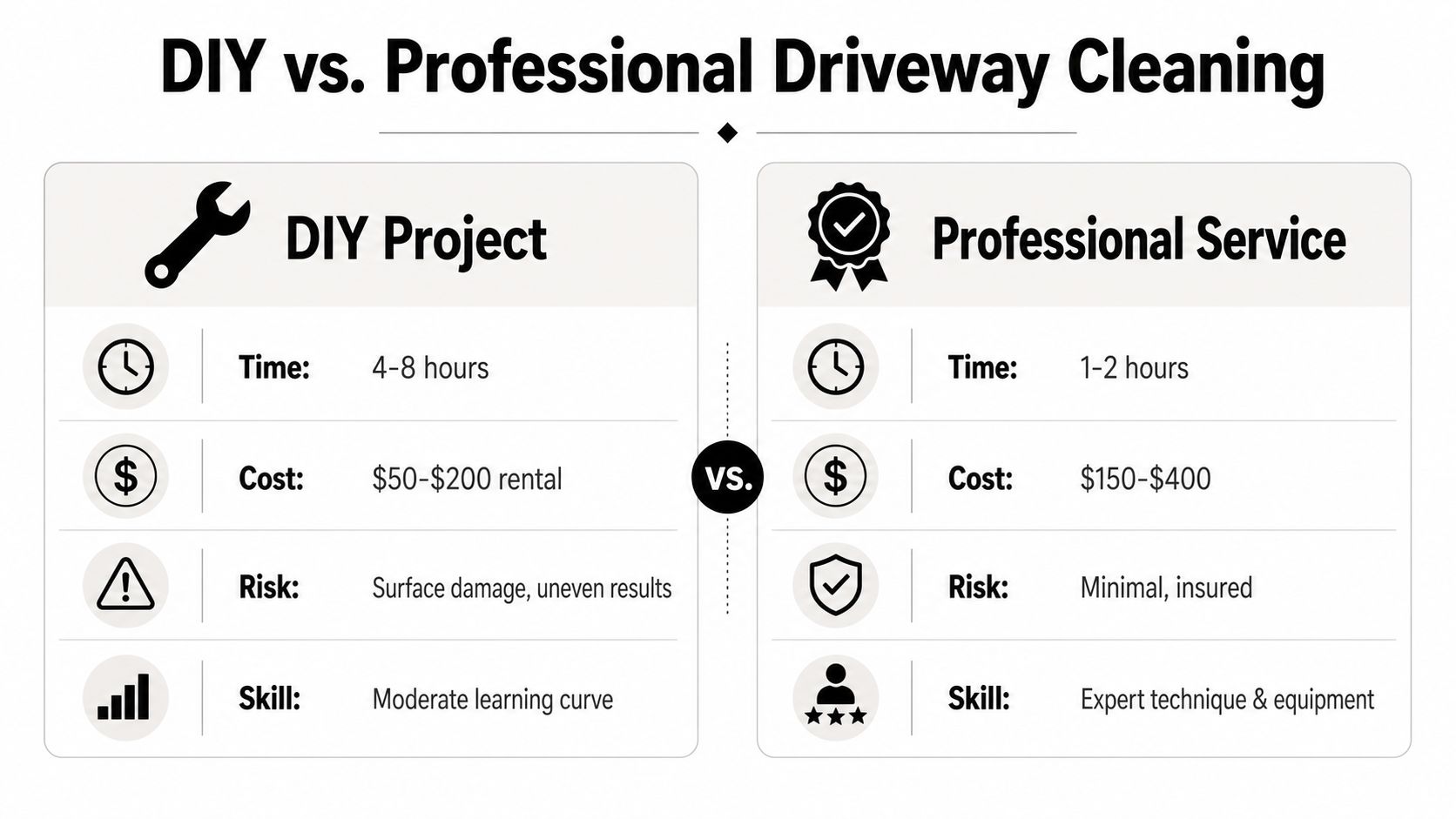
DIY looks cheaper at first glance, and sometimes it is. For a small driveway with light dirt, a rented machine and a free weekend can make sense. The hidden cost is usually time, because driveway work often turns into a long day of setup, pre-treatment, cleaning, rinsing, and post-cleanup.
Consumer machines also create a quality gap. They may have enough pressure for a small patio or a narrow walkway, but driveway results usually depend on a balance of force and flow that rental gear doesn't always deliver well. If the machine lacks enough GPM, you can end up passing over the same area again and again just to move loose dirt out of the pores.
Where DIY goes wrong
Most driveway damage from DIY jobs comes from two mistakes, too much pressure and getting too close. A homeowner can scar the surface by lingering in one spot, especially around oil stains where the instinct is to “blast harder.” Uneven overlap is another common problem, which leaves light and dark bands that look worse than the original grime.
Professional service changes the equation because the homeowner is paying for more than spray time. The value is in the technique, the equipment match, the ability to work faster without compromising the slab, and the fact that a trained cleaner knows when to treat, when to rinse, and when to stop pushing pressure.
When each option makes sense
DIY can work if the driveway is small, the buildup is light, and the budget is tight. Professional service is the better choice when the driveway is large, the stains are stubborn, or the result needs to look right the first time for a sale, a gathering, or routine property upkeep.
A related resource on why DIY sod fails in West Tennessee makes the same larger point about exterior work. Some jobs look straightforward until technique, equipment, and finish quality start to matter.
Bottom line: if you're already nervous about etching the concrete, the job has probably moved past the comfortable DIY zone.
What Driveway Pressure Washing Actually Costs
Pricing is usually straightforward once you know what the market looks like. Professional driveway pressure washing is commonly priced in the United States at about $100 to $350, with a national average near $210, and several pricing guides narrow the typical rate to roughly $0.20 to $0.40 per square foot. That's why a small driveway and a wide, multi-vehicle pad rarely cost the same even if the cleaning process looks similar. The national driveway pricing guide is a useful baseline when homeowners are checking quotes.
The national price band also lines up with broader driveway-specific research. For a standard 2-car driveway, pricing research across 49 U.S. cities found a typical range of $100 to $225 nationwide, with the West and Northeast running $100 to $250 and New York City reaching $125 to $300 for the same job. That spread shows how local market density and operating costs affect the final quote. The same market report also ties driveway cleaning to a mature residential service category, not a niche one. IBISWorld's pressure washing market overview is the clearest source for that context.
Cost ranges by driveway type
| Driveway Size | National Average | West/Northeast | Major Metro Areas |
|---|---|---|---|
| Standard 2-car driveway | $100 to $225 | $100 to $250 | $125 to $300 |
| Larger or more complex driveway | $0.20 to $0.40 per square foot | Higher on the upper end | Often priced toward the upper end |
Condition matters too. Heavy staining, tight access, extra rinsing, and pre-treatment can push a quote higher, while open access and light maintenance cleanings usually keep pricing closer to the middle. Bundling driveway washing with other exterior services can sometimes reduce the total trip cost, but actual savings depend on the provider's route, equipment setup, and how much labor the combined job adds.
If you're comparing bids, a reference like driveway pressure washing cost helps you sanity-check whether a quote feels aligned with the work. A second useful lens is surface type, and a guide such as permeable pavement benefits guide reminds homeowners that drainage-friendly hardscape choices can affect long-term maintenance needs.
Environmental and Regulatory Considerations Most Guides Miss
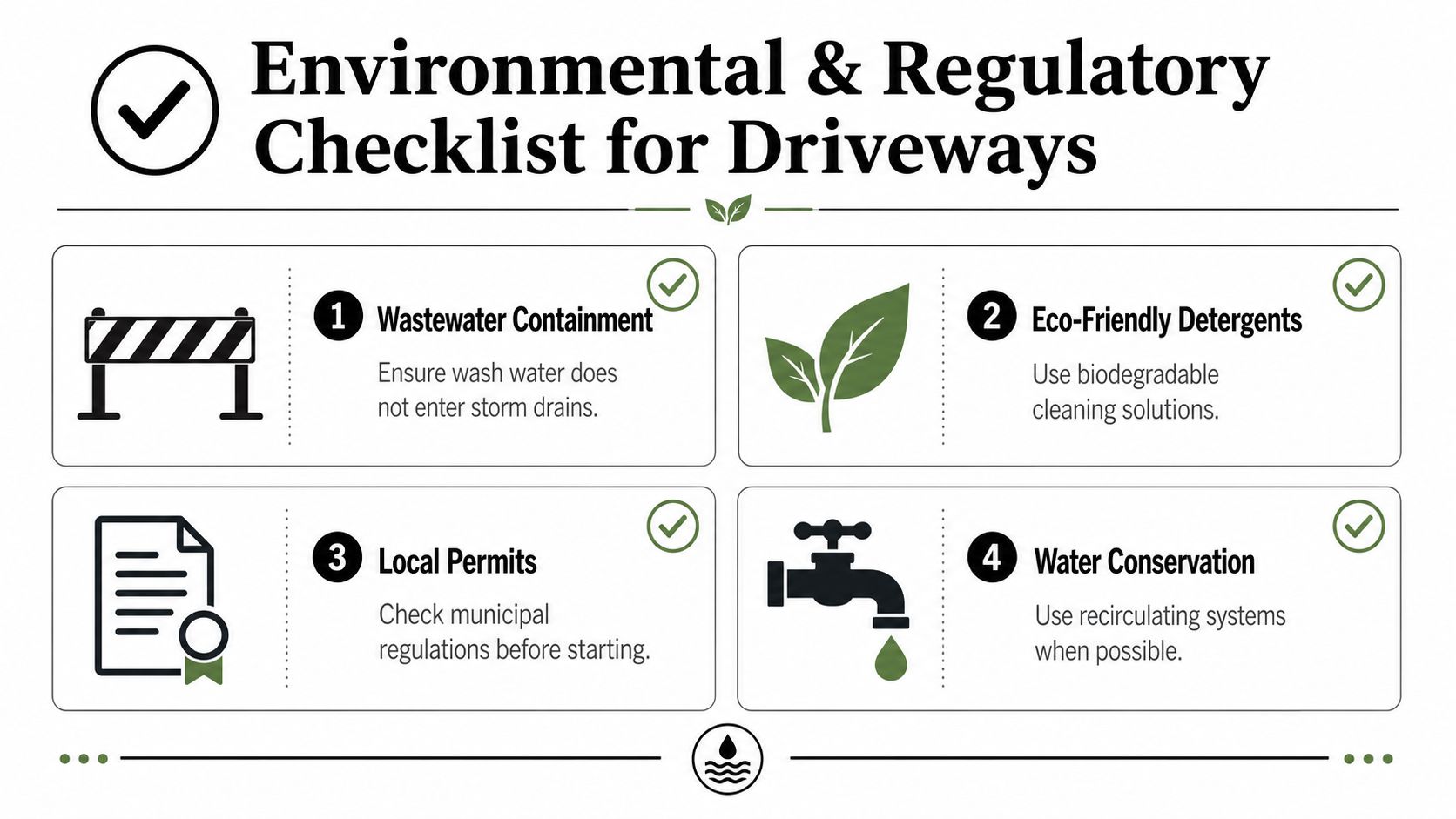
The part most homeowners don't think about is where the dirty water goes. Wash water from driveways and other impervious surfaces should not enter storm drains. Municipal guidance often points to the same basic controls, blocking inlets, vacuuming wash water, or directing runoff onto lawns so it can infiltrate instead of moving straight into the storm system. Local stormwater guidance makes that expectation plain.
That matters because driveway washing isn't only a cleaning job, it's also a runoff job. Detergent residue, loosened oils, and sediment can create compliance issues if they're allowed to leave the site unmanaged. Responsible providers think through hose placement, slope, and discharge before they ever start the machine.
Water conservation can change what's allowed
In drought periods, some regions draw a much harder line. California water rules explicitly say hosing down sidewalks and driveways is prohibited in drought conservation contexts, and the state's FAQ says pressure washing a sidewalk or driveway for aesthetic purposes is not considered an immediate health and safety need. California water board guidance is a good example of how local restrictions can override normal cleaning habits.
For Colorado Springs homeowners, that means timing and method both matter. A good provider should be able to talk about water use, runoff control, and whether a lighter-touch or spot-treatment approach makes more sense during dry periods or near sensitive drainage areas.
Ask the company where the wastewater goes before you ask how shiny the concrete will look.
A practical service provider will also be ready to explain whether detergents are biodegradable, whether runoff will be captured, and whether the job needs any local permission or seasonal adjustment. Even if the driveway is in good shape, the environmental side of the work can still affect how and when the cleaning should happen.
How to Choose the Right Pressure Washing Provider in Colorado Springs
A good provider in Colorado Springs should answer direct questions without getting defensive. Start with whether they carry insurance, use the right equipment for concrete, and understand local runoff and water-use rules. If they work in the field every week, those questions won't sound unusual.
Questions that separate solid providers from weak ones
Ask what PSI range they use on standard concrete, whether they clean driveways with a surface cleaner, and how they handle wastewater. Ask what they do when a driveway has oil staining, old sealant, or decorative concrete. Those answers tell you whether the company is applying a system or just spraying water and hoping for the best.
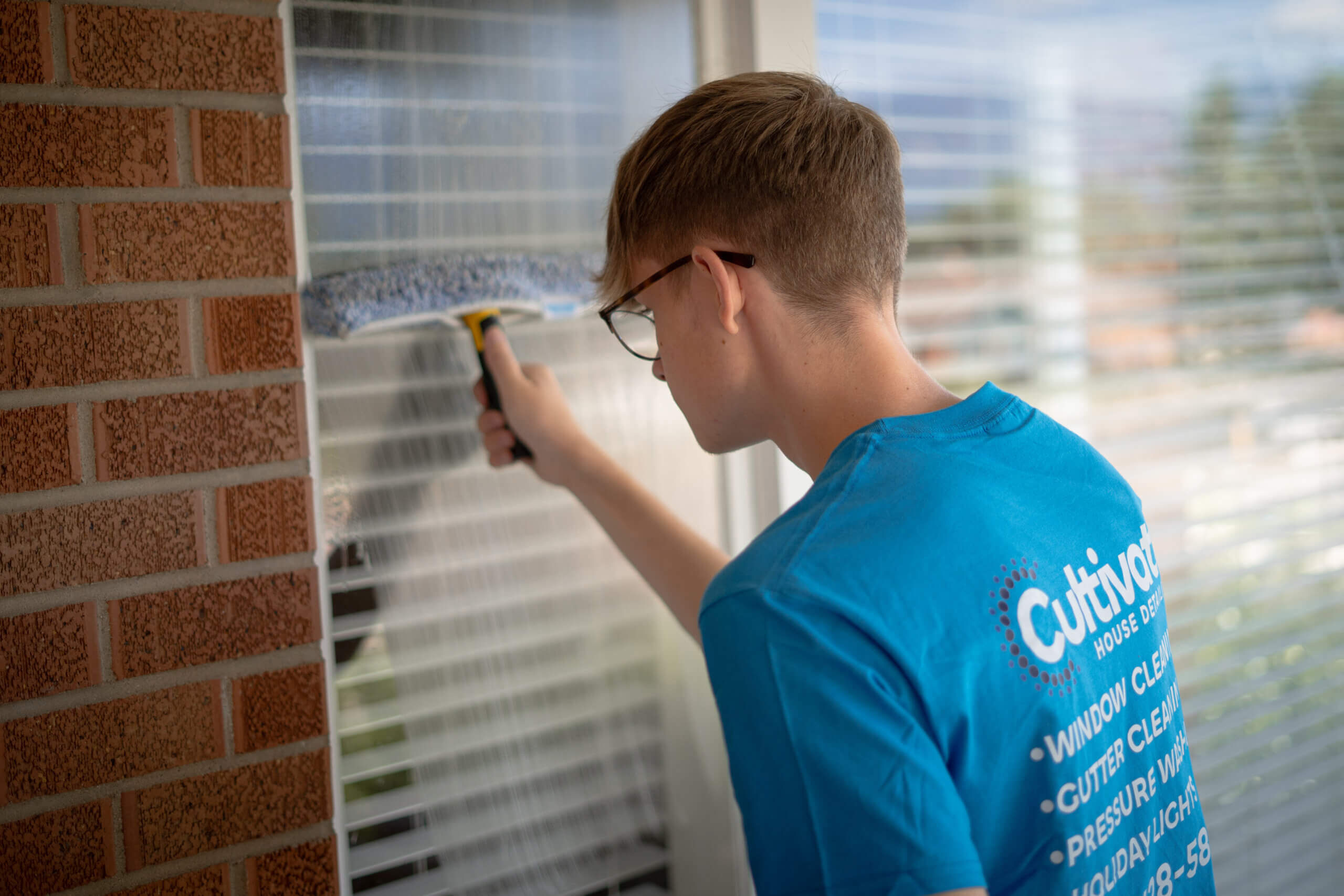
A useful local benchmark is a company that also handles professional window cleaning, residential window cleaning, commercial window cleaning, and other exterior services with the same attention to detail. Cultivate House Detailing, for example, provides driveway pressure washing as part of its exterior cleaning work in Colorado Springs and nearby communities. That matters because a provider already used to careful exterior cleaning is usually more likely to respect finishes, landscaping, and runoff control.
Red flags worth taking seriously
Be cautious if a company won't give a written quote, refuses to explain its process, or pushes you to book before seeing the driveway. A quote that's wildly below the local market can be a sign of rushed work, weak equipment, or no runoff plan. If they can't explain how they avoid etching or striping, they probably don't have a driveway-specific process.
Local experience matters here because Colorado Springs driveways deal with sun, freeze-thaw movement, dust, and seasonal grime that show up differently from one neighborhood to the next. A provider who works in the area should be able to speak plainly about those conditions and adjust the cleaning plan accordingly.
Good sign: the company talks about surface, staining, access, and water management before it talks about price.
If you want a cleaner driveway without the guesswork, request a quote from Cultivate House Detailing. Their exterior cleaning services are built around careful technique, clear communication, and practical results for Colorado Springs homes and businesses.
Need it done properly the first time? Cultivate House Detailing offers pressure washing in Colorado Springs. Get a free quote.