A lot of homeowners in Colorado Springs end up in the same spot. You step onto the patio after a wet stretch, notice that green film spreading between pavers or across the concrete, and suddenly the space you want to use for coffee, grilling, or evening sun feels slick, dirty, and a little neglected.
Pressure washing can absolutely help. It's one of the fastest ways to clear moss off a patio. But it's also one of the easiest ways to scar stone, blow out joint sand, soak nearby outlets, or get a short-lived result that looks good for a week and then starts creeping back. If you want to pressure wash moss off patio surfaces safely, the actual job is less about blasting harder and more about matching the method to the material, the weather, and the way Colorado moisture behaves around shaded hardscapes.
That Green Sheen on Your Patio Is More Than Just Ugly
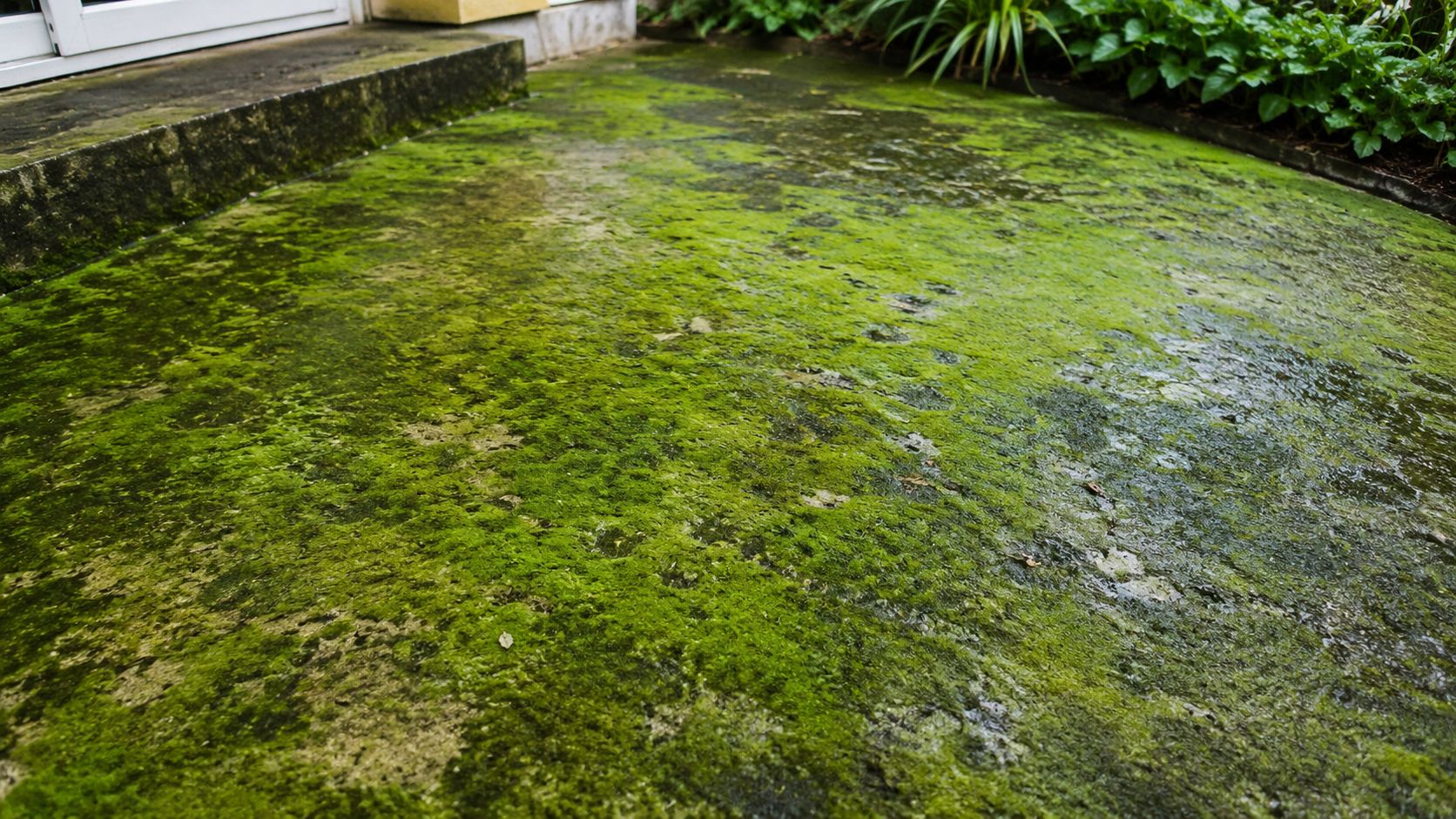
The patio usually doesn't go bad all at once. It starts in the corners that stay damp, under planters, along the north side, or where snowmelt hangs around longer than it should. Then it spreads into the joints, across textured concrete, and into the spots where people walk.
That matters because moss isn't just a cosmetic problem. It makes footing less predictable, holds moisture against the surface, and can turn a patio into something homeowners stop using. In Colorado Springs, that's frustrating. We get plenty of bright days, and people want their outdoor spaces ready to use, not covered in slick green buildup.
Why homeowners reach for a pressure washer first
That instinct makes sense. Pressure washing is a proven, widely used cleaning method for patios and walkways, and the broader pressure washing industry has grown from about $1.88 billion in 2019 to approximately $2.5 billion in 2021, with a projection of $3 billion by 2026 according to Markets and Markets. In the U.S., more than 22,000 pressure washing businesses employ over 33,000 people, according to IBISWorld. Those numbers reflect how common and practical pressure washing has become for removing moss, algae, and grime from exterior surfaces.
Moss removal looks simple from a distance. Up close, the difference between a clean patio and a damaged one usually comes down to setup, nozzle choice, and restraint.
The part most DIY guides skip
Homeowners often assume the machine does the work. In practice, the machine can also create the problem. A quick blast may remove the green top layer while leaving the deeper growth in joints and pores. On some surfaces, especially pavers and older masonry, too much pressure strips out the very material that keeps the patio stable.
That's why a good moss-removal job doesn't start with the trigger. It starts with prep, protection, and choosing a method that fits your specific patio.
Preparation Is 90% of the Job
If you want clean results without collateral damage, prep has to happen before the washer comes out. Most of the avoidable mistakes show up in the setup phase, not the wash itself.
Clear the work area completely
Take everything off the patio. Furniture, rugs, planters, grills, decor, kids' toys, and anything that can trap moisture or block your view of the surface needs to move.
Then sweep thoroughly. Loose grit, leaves, pine needles, and dry moss fragments get in the way and can turn into muddy debris once water hits the area.
A simple prep checklist helps:
- Remove obstacles: Clear anything that forces you to work around objects or rush your spray pattern.
- Sweep dry debris first: A stiff outdoor broom gives you a cleaner surface and helps expose where moss is rooted.
- Check the edges: Moss often spreads from borders, fence lines, and shaded transitions where runoff collects.
Protect what's around the patio
Pressure washing isn't isolated to the slab or pavers. Overspray, dirty runoff, and pre-treatment solution can reach plants, siding, nearby windows, door thresholds, and electrical fixtures.
Cover delicate plants if you're using any moss treatment. Shut nearby windows and doors. Avoid directing water toward weep gaps, garage thresholds, or exterior outlets. If your patio slopes toward landscaping, think through runoff before you apply anything.
Practical rule: If you wouldn't spray that area directly with a garden hose for several minutes, don't let pressure washer runoff pool there either.
Dress for the job
This isn't a flip-flops project. Mossy patios are slippery before you start, and they're even slicker once solution and rinse water are moving across the surface.
Use:
- Safety glasses: Grit and chipped debris can kick back fast.
- Closed-toe shoes with traction: Wet pavers and algae-covered concrete are a bad mix.
- Gloves: Helpful for handling cleaners, moving rough furniture, and brushing stubborn patches.
- Hearing protection: Especially with gas-powered units.
Test before you commit
Pick a small inconspicuous area and test your full process there first. That means pre-treatment, dwell time, nozzle choice, distance, and rinse pattern. Surfaces don't always react the way homeowners expect. Older brick can chip. Decorative concrete can etch. Unsealed pavers can lose material more quickly than they appear to.
A professional setup takes time because it protects the property. That's also why many homeowners in Colorado Springs decide the project is doable in theory, but not worth the risk in practice.
Pressure Washers Settings and Solutions
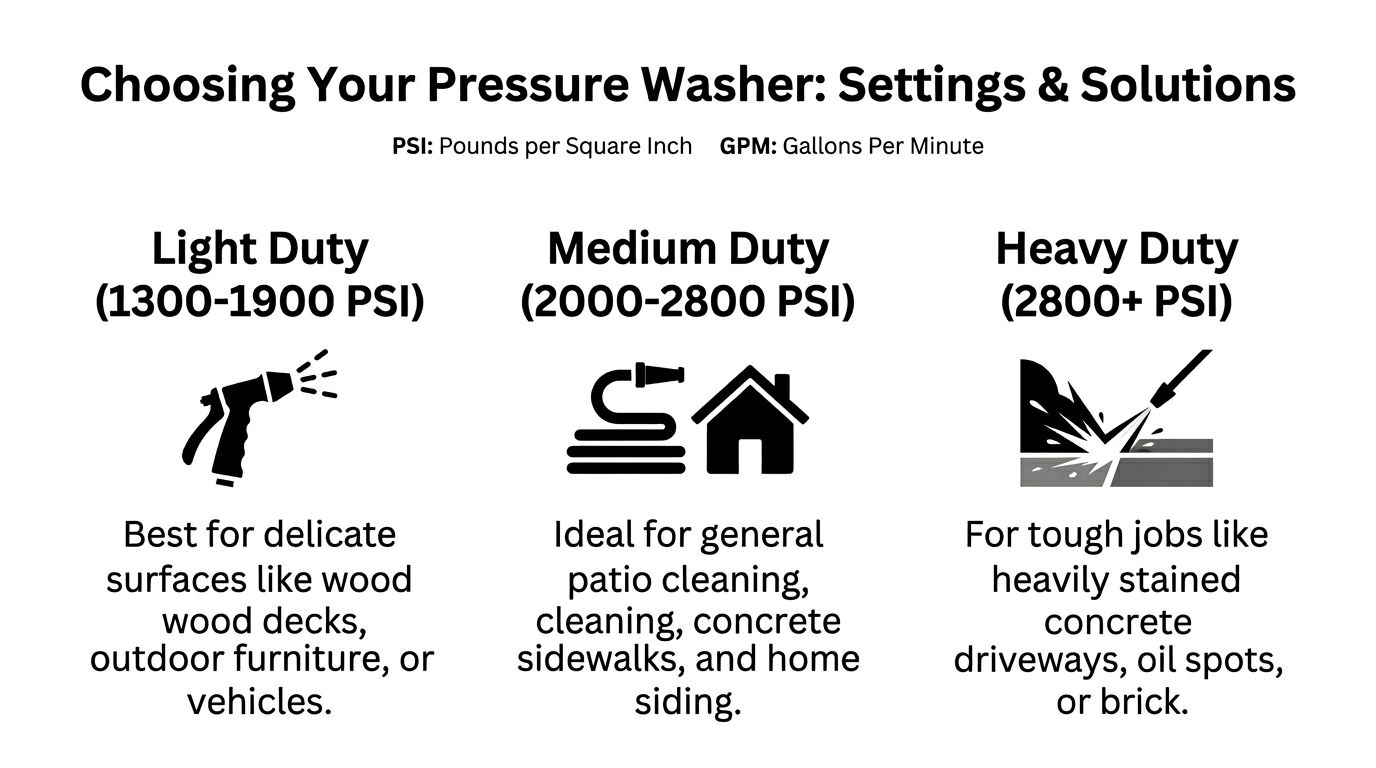
The biggest misunderstanding about patio cleaning is that more pressure equals better cleaning. It doesn't. The goal is controlled removal. You want enough force to lift dead growth and grime, but not enough to damage the surface underneath.
What the settings actually mean
A pressure washer can generate up to 80 times more water pressure than a standard garden hose, and a 25-degree green nozzle is the standard choice for patio cleaning because it creates a wider sheet of water that lifts grime without the narrow, aggressive strike of a tighter tip, as noted in this guidance on pressure washer settings for patio cleaning.
That one detail matters more than most homeowners realize. A narrow tip concentrates force. A wider fan spreads that force out. On a patio, that wider fan is usually what keeps you in the cleaning zone instead of the damage zone.
A safer starting point
For most mossy patios, the first pass should be conservative. If the surface is porous, aged, decorative, or made of natural stone, think in terms of low pressure plus cleaning solution, not brute force.
Here's a practical perspective:
| Surface type | Safer starting approach | Main risk |
|---|---|---|
| Concrete | Wide fan spray, steady motion | Etching from holding too close |
| Pavers | Lower pressure, angle away from joints | Sand loss and joint erosion |
| Natural stone | Soft wash style cleaning | Surface flaking or chipping |
| Brick | Very cautious test area first | Face damage and staining |
For homeowners comparing tools, a surface cleaner attachment often gives more even results than spraying with a wand alone. If you're looking at compatibility options, Value Tools Co for Ryobi equipment shows the kind of patio attachment that can help reduce striping on flatwork.
Pre-treatment usually beats pressure alone
Bosch DIY recommends a high-pressure washer with a dedicated patio cleaner attachment for large patio areas, and that aligns with what works in the field when the attachment matches the surface. But for moss, pressure alone often isn't the smartest first move.
Chemical pre-treatment gives the moss time to break down before rinsing. Kärcher notes that vinegar, washing soda, or cola should be diluted, applied to a dry surface, and left to dwell for at least five hours, ideally several days, before rinsing with clear water in its guide to removing moss from outdoor surfaces.
Cultivate House Detailing also offers soft washing for patios, which uses low-pressure water and cleaning solutions to break down moss and organic growth before a gentle rinse. That method fits surfaces where preservation matters more than raw force. For a closer look at flatwork care, this page on power washing patio pavers is a useful reference.
Start with the least aggressive method that can still do the job. That's how pros protect patios and avoid turning a cleaning project into a repair project.
Techniques for Different Patio Surfaces
Every patio cleans differently. The mistake is treating concrete, pavers, stone, and brick like they all respond the same way.
Concrete patios
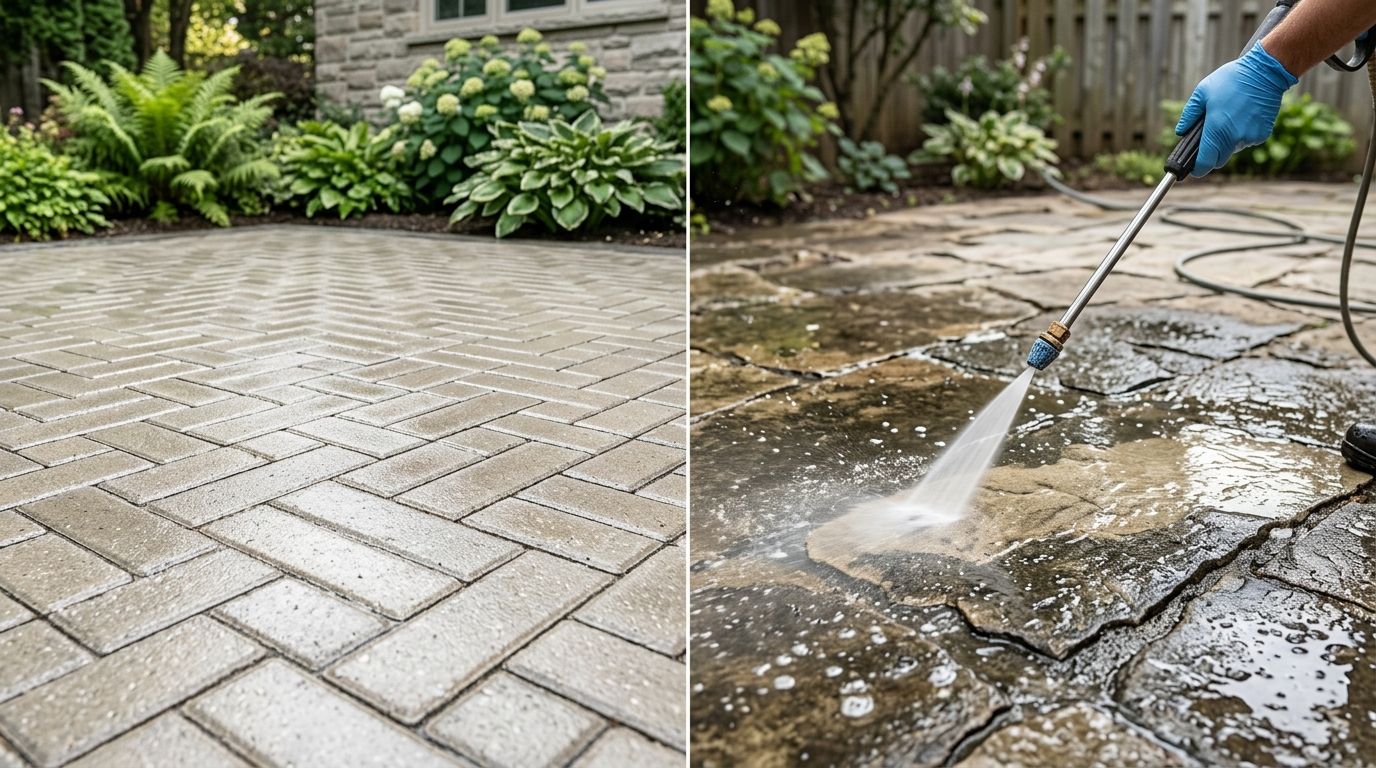
Concrete is forgiving compared with other patio materials, but it still has limits. Start by sweeping well, then apply your chosen moss treatment if growth is established. Let it dwell, then rinse using a wide fan pattern and a consistent distance from the slab.
Keep the wand moving. The easiest way to leave tiger stripes or etched lines is to pause in one spot. If the concrete has a decorative finish or exposed aggregate, test a small area before opening up your pattern.
A more detailed walkthrough on how to pressure wash a concrete patio can help if your surface is standard concrete and the moss hasn't become embedded in joints or cracks.
Paver patios
Pavers need a different mindset. The surface may look sturdy, but the joints are the weak point. High-pressure nozzles are a major risk here. According to the National Institute of Building Sciences, 42% of Colorado patio pavers lose structural integrity within 5 years due to pressure washing-induced sand loss, which compromises stability and increases water infiltration by 35%, as summarized in the earlier pressure-setting guidance.
That's why the spray angle matters as much as the pressure level. Don't aim directly down into the joints. Work across the surface with a controlled fan spray and keep your distance steady. If joint sand starts moving, stop and reset your method.
A good rule for pavers:
- Aim across, not into, the joints: Direct strikes are what remove stabilizing material.
- Work in sections: Smaller passes let you catch sand movement before it becomes widespread.
- Plan for re-sanding if needed: Even careful cleaning can disturb some joints.
For related flatwork techniques, this article on how to clean pool deck is helpful because many of the same traction and surface-protection issues apply.
Natural stone and older brick
DIY jobs can quickly go wrong. Porous stone and aged brick don't respond well to aggressive blasting. A soft wash approach is usually safer. Apply a biodegradable, pH-neutral moss treatment, allow it to dwell, then rinse at low pressure with a wider fan nozzle.
The purpose is to loosen and lift the moss, not carve the surface. If you see surface grains releasing, edges chipping, or color variation after testing, stop there.
On stone and older masonry, the cleanest-looking result isn't the best result if the surface ends up weaker than when you started.
This video shows the kind of controlled technique that matters more than raw power:
Wood-adjacent patio areas and transitions
Some patios connect directly to wood steps, pergola posts, thresholds, or composite trim. Treat those transitions carefully. Overspray from the patio pass can scar softer material even if the patio itself can take more force.
If your cleaning path crosses multiple materials, that's usually the point where a professional setup becomes the smarter route. The patio might be simple. The surrounding surfaces often aren't.
After the Wash Preventing Moss Regrowth
A patio can look dramatically better right after washing and still head back toward the same problem if nothing changes. Clean appearance and lasting control are not the same thing.
Seal the surface if it needs it
Porous patios hold moisture, and moisture is what keeps moss comfortable. Without sealing, moisture retention remains 35% higher, leading to moss recurrence in as little as 6 to 8 months. Resealing every 2 to 3 years can reduce moisture penetration by up to 90%, as noted in the earlier patio maintenance data.
That doesn't mean every patio needs the same sealer or schedule. It means porous concrete, natural stone, and many paver systems benefit from a maintenance plan instead of a one-time cleaning mindset.
Fix the conditions that invited moss in
If the patio never dries out, the moss problem doesn't stay solved for long. Look at the site the way a cleaner would.
A few common causes:
- Shade that lingers all day: Trim back overhanging growth where possible.
- Debris buildup: Leaves and pine needles trap moisture against the surface.
- Poor runoff: Water that drains back onto the patio keeps joints and pores damp.
- Crowded layout: Tight furniture groupings and planters can block airflow.
A clean patio stays cleaner when sunlight, airflow, and drainage improve. Washing removes the symptom. Site conditions decide whether it comes back.
Keep up with light maintenance
You don't need to deep clean constantly. You do need to interrupt early buildup before it mats down and roots in.
Sweep regularly, especially after storms and seasonal debris drops. Spot-treat small patches before they spread. If you notice the same corners staying dark and damp, that's a sign to address slope, gutter runoff, or irrigation overspray rather than repeating the same wash cycle.
The homeowners who get the best long-term results usually treat moss control as patio maintenance, not patio rescue.
When to Call a Professional Patio Cleaner in Colorado Springs
By the time most homeowners finish learning how to pressure wash moss off patio surfaces the right way, they usually see the catch. It's possible to do it yourself. It's just not always simple, fast, or low-risk.
The jobs that stop being good DIY candidates
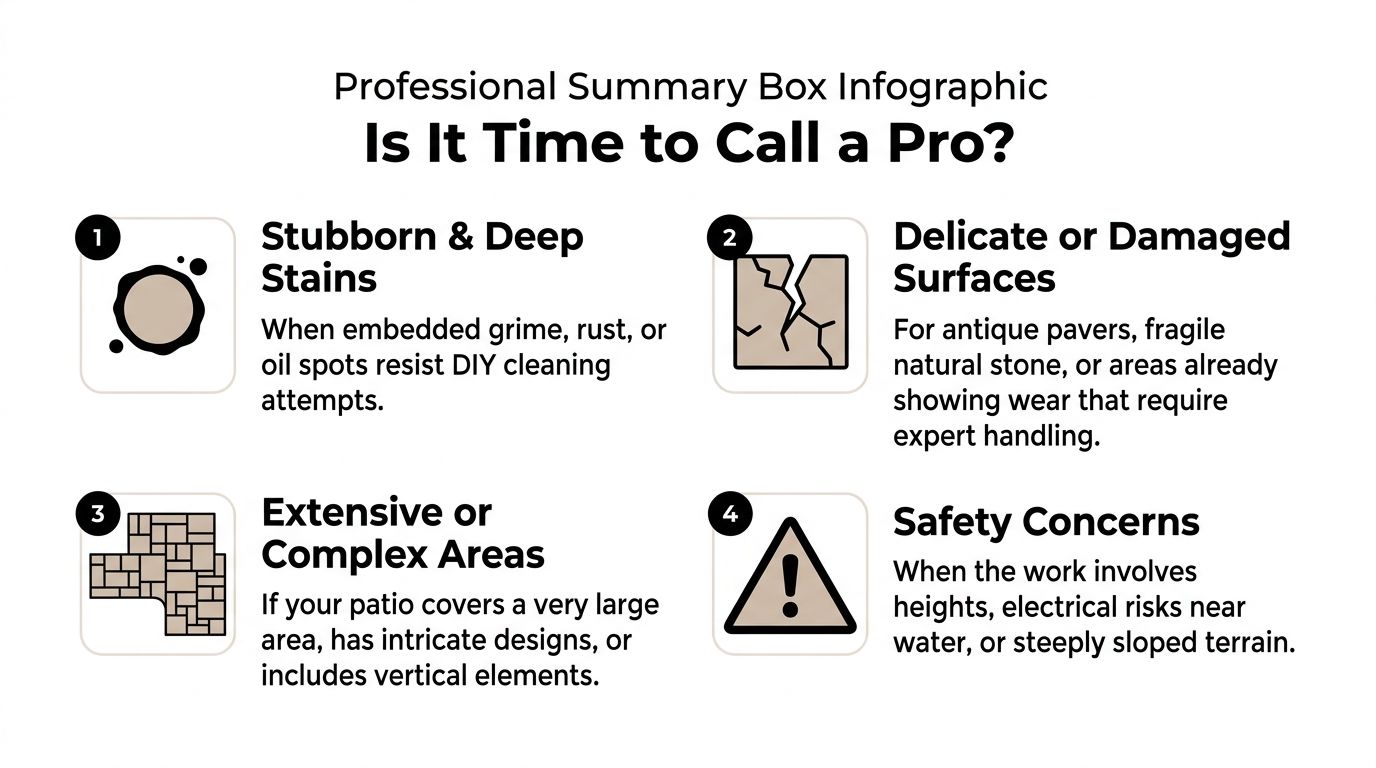
Some patios are straightforward. Others have old brick, fragile stone, loose joints, uneven drainage, heavy shading, or moss that's worked deep into cracks and paver gaps.
High pressure alone often fails because it removes the surface growth while leaving root systems in the joints intact. In Colorado's climate, moss spores have a 300% higher survival rate under high-pressure washing compared with professional techniques that disrupt root structures, as summarized in the earlier pressure-setting source.
That's the part many homeowners don't see until later. The patio looked clean. The growth didn't stay gone.
What a professional is really bringing
It isn't just a stronger machine. It's judgment. A professional cleaner evaluates the material, picks the least aggressive effective method, manages runoff, and watches for signs of sand loss, etching, or saturation at transitions and edges.
That matters in Colorado Springs, where freeze-thaw conditions, shaded microclimates, and jointed hardscapes can turn a small cleaning mistake into a bigger repair issue later. The right approach often includes soft washing, careful rinsing, and a maintenance recommendation after the surface is clean.
If you're comparing what separates average contractors from careful operators, HomeProBadge's pressure washing guide offers a useful look at how homeowners evaluate service quality and consistency.
When it makes sense to hand it off
Consider professional help if any of these apply:
- Your patio has pavers or natural stone: These materials punish bad technique quickly.
- The moss keeps returning: That usually means the roots or site conditions weren't addressed.
- You're renting equipment: Rental machines can be powerful, but the setup is only half the skill.
- The area connects to delicate surfaces: Wood, windows, trim, planters, and thresholds raise the stakes.
For many homeowners, hiring a pro isn't about avoiding work. It's about protecting the patio, saving time, and getting a result that lasts longer than the first sunny weekend.
If your patio in Colorado Springs is slick, green, or starting to show moss deep in the joints, Cultivate House Detailing can help you sort out the safest option. We handle exterior cleaning with the same care homeowners expect from any service around the home. Clear communication, surface-appropriate methods, and practical recommendations that protect the patio instead of just making it look better for a few days. Reach out for a quote if you'd rather skip the guesswork and get the job done cleanly and safely.
Need it done properly the first time? Cultivate House Detailing offers pressure washing in Colorado Springs. Get a free quote.