The most popular advice about pressure washing cedar siding is also the advice that causes many avoidable repairs: turn up the machine and blast the dirt away. Cedar isn't concrete, brick, or vinyl. It's a relatively soft wood that responds to pressure, spray direction, moisture, and drying conditions. In Colorado Springs, intense sun, dry air, and freeze-thaw exposure can make weathered boards especially unforgiving.
A safe cleaning starts with a condition assessment, not a machine setting. The right approach may be a garden hose and soft brush, a low-pressure wash, or no washing until damaged boards and failed joints are repaired. That distinction matters whether you're maintaining a home in Colorado Springs, CO, or preparing a property in a nearby community for staining or sale.
Why Cedar Requires a Different Cleaning Approach
Cedar siding is hygroscopic, which means it continually absorbs and releases moisture from the surrounding environment. The USDA Forest Products Laboratory guidance on exterior wood finishes identifies moisture accumulation and rapid moisture fluctuations as conditions that can shorten the service life of wood siding through checking, warping, coating failure, and, in severe cases, decay.
That changes the purpose of pressure washing cedar siding. The goal isn't to maximize water pressure. A forceful stream can push water into board joints, end grain, cracks, and areas around flashing or trim where drying takes longer. If the siding is being cleaned before staining or painting, trapped moisture can also interfere with the finish.
Practical rule: Clean cedar to remove the deposit, not to abrade the wood beneath it.
Colorado Springs homes can face strong sunlight and repeated temperature changes. Those conditions don't make every cedar wall unsafe to wash, but they make a visual inspection more important. Brittle fibers, open laps, and failed coatings leave more paths for water to enter, while rapid drying on the face of a board can hide moisture retained in shaded joints.
The same moisture-control thinking applies to other exterior wood features. Homeowners comparing wood privacy fence ideas should look at drainage, exposed end grain, finish condition, and maintenance access rather than judging wood only by its appearance. A cedar fence and cedar siding both reward careful water management.
For homeowners weighing soft washing versus pressure washing, the material and its condition should decide the method. A mild rinse and hand brushing often work better than a pressure washer on fragile, weathered, or historically finished cedar. Pressure-assisted cleaning has a place, but it should be treated as a controlled tool, not the default answer.
Inspecting Your Siding Before Turning on the Water
A cedar wall should pass a simple triage before anyone connects a hose or pressure washer. Walk the exterior in good light and look closely at the lower edges of boards, corners, window trim, penetrations, and areas beneath roof lines. These locations commonly reveal the condition problems that a broad view misses.

Use the surface as your decision guide
Look for loose boards, failed caulk, open lap joints, damaged finish, raised fibers, cracks, and soft areas. Loose or fiber-lifted siding shouldn't receive a concentrated spray. Failed caulk around openings can allow water to reach the wall assembly, while open laps can turn an ordinary rinse into hidden moisture intrusion.
A practical inspection sequence is:
- Check the boards. Press lightly on questionable areas and look for movement, splitting, cupping, or softness. Don't force a board that appears loose.
- Study the finish. Peeling, flaking, chalking, or bare wood may indicate that cleaning should be part of a broader repair and refinishing plan.
- Examine the laps and joints. Look beneath overlapping edges without lifting them. Open gaps deserve caution because upward spray can drive water behind the courses.
- Test first. Choose a small, inconspicuous area and use the gentlest method you think will work. Stop if the grain lifts, the finish changes unexpectedly, or fibers begin to fuzz.
The conservative workflow described in cedar siding care guidance from Hewn starts with inspection, then protection of windows, plants, and fixtures. It recommends pre-rinsing with a garden hose or low-pressure sprayer, testing a manufacturer-approved cleaner, working in manageable shaded sections, rinsing from the top downward, and allowing the wood to dry fully before staining or sealing.
Don't pressure-wash visibly cracked, loose, heavily weathered, or fiber-lifted boards. If dirt is the only issue and the finish remains sound, hand brushing or hose rinsing may provide the needed result with far less risk.
Selecting the Right PSI and Nozzle Configuration
Cedar doesn't need the same equipment settings used for a driveway. The wood's softer surface can develop raised grain, fuzzing, gouges, stripped finish, and water intrusion behind laps when the operator relies on machine capacity instead of the siding's condition.
Available wood-washing guidance places general ranges around 500 to 1,200 PSI, but specifically advises reducing cedar and redwood exposure to approximately 500 to 600 PSI maximum. Grain raising becomes more likely above about 800 PSI, and a nozzle held closer than 8 inches can cause immediate surface damage, according to this wood-surface pressure-washing reference.
Choose control over power
Use a wide 40-degree fan pattern or a low-pressure tip. Avoid turbo nozzles and narrow-degree tips on cedar because they concentrate force in a small area. Keep the wand moving, follow the grain, and use the lowest pressure that removes the deposit. If a garden hose and soft brush work, they remain the safer choice.
Some cedar-care specifications are more conservative than PSI-based guidance. They recommend the lowest available pressure and a working distance of 4 to 6 feet when a pressure washer is used. That approach makes sense for older siding, delicate finishes, and boards exposed to severe weather.
The useful setting is the minimum effective pressure, not the highest setting the machine can produce.
Pressure also depends on the objective. Removing loose dust is different from treating biological growth, and preparing a failing finish for removal is different from routine maintenance. Those jobs shouldn't be forced into one setting. A small test panel reveals more than a label on the washer.
For homeowners comparing equipment, this guide to the best pressure washer for house siding reinforces an important point: a suitable machine still requires the correct tip, distance, movement, and operator judgment. Equipment doesn't compensate for damaged wood or poor spray technique.
Mastering the Downward Rinsing Technique
Spray direction matters as much as pressure. Overlapping cedar courses are designed to shed water moving down the wall. Spraying upward beneath the laps reverses that drainage path and can force water behind the boards.
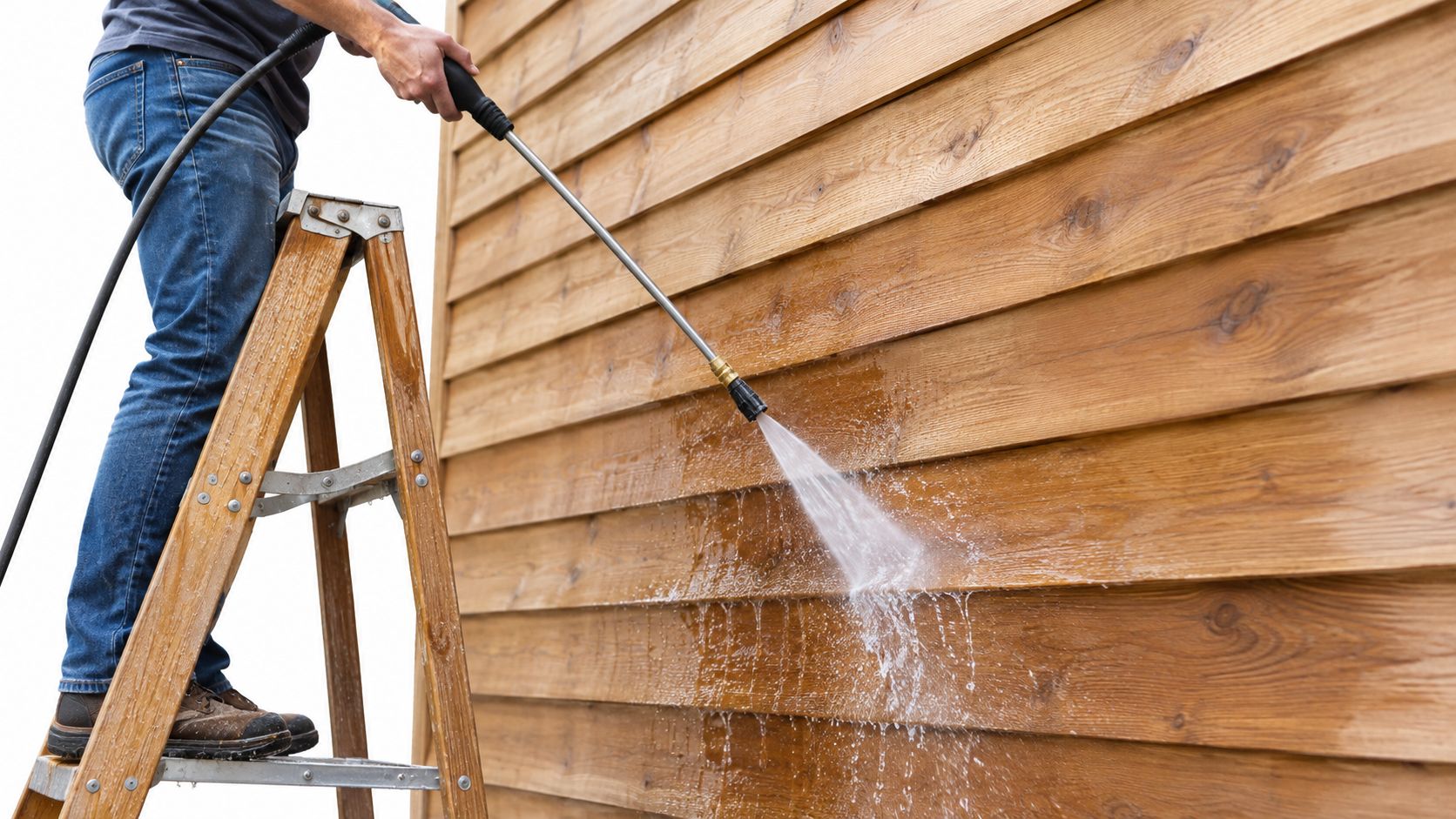
Start at the top of a manageable section and work downward. Hold the nozzle at roughly a 45-degree angle, keep the fan moving, and direct the water along the face of the siding rather than underneath the overlapping edge. The cedar shake maintenance guidance from Power Washing of Tulsa warns that upward spraying can loosen boards and create moisture conditions that contribute to rot.
Work around windows, vents, light fixtures, electrical penetrations, and loose shingles with extra space and a wider spray. Don't concentrate the stream on a seam to remove a stubborn mark. If a deposit doesn't release with gentle rinsing and the approved cleaner, stop and reassess rather than increasing force.
A good rinse removes cleaner and loosened soil without flooding the joints. Keep windows closed, protect plants and fixtures, and watch where runoff travels. On a taller home, ladder placement and footing add another safety concern, especially when the surface becomes wet.
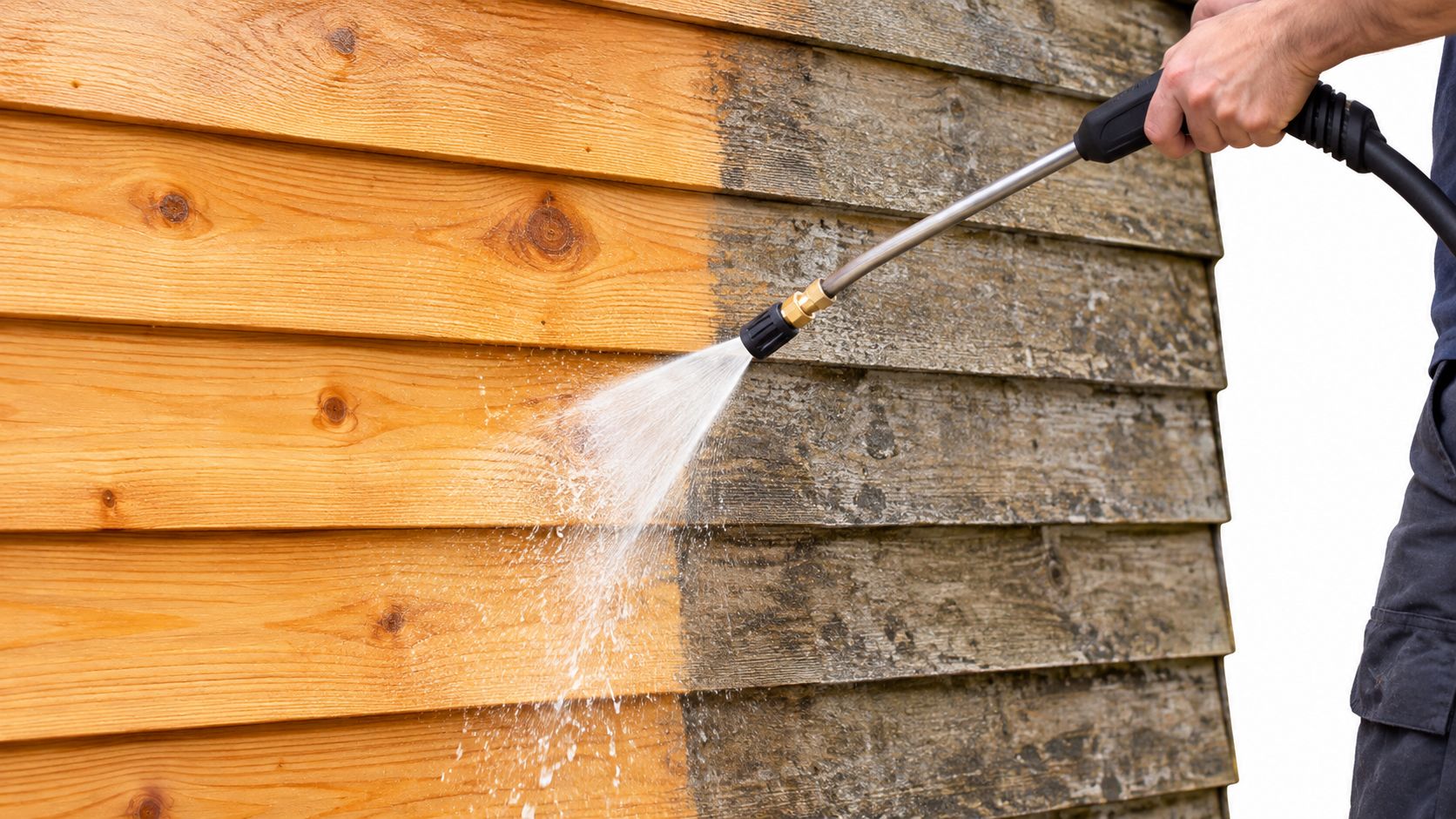
The following visual demonstrates the kind of controlled positioning that matters during the work. It shouldn't be interpreted as permission to spray upward or to use a high-pressure setting.
If fibers lift, the finish strips, or water begins entering a joint, stop immediately. Cedar cleaning should produce a cleaner surface, not a newly textured one.
Managing Moisture Content and Drying Times
The wash isn't finished when the dirt disappears. It's finished when the cedar has dried sufficiently for the next maintenance step. The USDA-based painted wood siding guidance from the National Paint and Coatings Association describes moisture control as central to preserving coating adhesion and limiting uneven board movement.
Exterior wood moisture problems should be minimized when moisture content is approximately 9% to 14%, and wood generally shouldn't receive a finish above 20% moisture content, according to that guidance. These are not visual estimates. Cedar can look dry across its face while retaining water in end grain, shaded joints, cracks, and behind damaged laps.
Drying needs verification
After rinsing, give special attention to shaded elevations, lower courses, corners, and board ends. Colorado Springs' dry conditions may make the surface feel dry quickly, but that doesn't prove the deeper joints have reached a suitable condition for stain or paint. Sun and airflow help, yet neither replaces an inspection.
A moisture meter provides a more reliable check than touch alone. Before refinishing, confirm the reading across representative areas rather than testing only the sunniest board. If readings remain high, wait and improve airflow instead of applying a coating that may trap moisture or fail to bond.
Sealing exposed board ends also matters. USDA Forest Products Laboratory guidance emphasizes that end-grain wicking can contribute to premature coating failure and that sealing exposed ends helps reduce this pathway. Refinishing therefore requires more than washing the visible face. It requires attention to the places where cedar absorbs water most readily.
A dry-looking surface isn't the same thing as dry siding.
The best maintenance plan separates cleaning, inspection, and refinishing. That prevents a rushed schedule from turning a gentle wash into a coating problem.
When to Call Local Exterior Cleaning Professionals
A light garden-hose rinse may be reasonable for sound, accessible cedar. Pressure washing becomes a different decision when the siding is raised, weathered, coated, cracked, or close to sensitive openings. A mistake can leave etched grain, blown seals, loose boards, or moisture inside the wall assembly.
Local experience helps because the technician can account for the home's exposure instead of treating every elevation alike. A professional should inspect before washing, identify areas that need hand work, protect nearby surfaces, choose a siding-appropriate cleaner, and adjust the rinse to the finish and wood condition. Some cedar-care guidance recommends water alone, while other technical guidance uses a mild oxygen-bleach cleaner with a dwell time of approximately 10 to 15 minutes. The siding or finish manufacturer's instructions should control.
What a careful service should include
Ask how the company will handle:
- Pre-wash inspection: The crew should identify loose boards, failed caulk, open laps, damaged coatings, and fragile areas before applying water.
- Test cleaning: A small hidden panel can reveal whether the cleaner or rinse is lifting fibers or changing the finish.
- Controlled application: The operator should use a low-pressure method, avoid upward spray, and protect windows, fixtures, landscaping, and openings.
- Drying and refinishing guidance: The company should explain whether the siding needs additional drying or repairs before staining or sealing.
Cultivate House Detailing provides pressure washing for wood siding, patios, walkways, siding, and driveways, with surface-appropriate pressure and cleaning techniques. For a Colorado Springs homeowner, that type of service is useful when the job requires more judgment than merely connecting a washer and pulling the trigger.
Professional cleaning doesn't make damaged cedar safe to wash. It gives the property owner a better chance of identifying the damage first and choosing a method that preserves the siding. That is the core value of experienced exterior cleaning, protecting the home's appearance while reducing avoidable moisture and surface damage.
For pressure washing cedar siding in Colorado Springs and nearby communities, Cultivate House Detailing can assess the wood, use a surface-appropriate cleaning method, and help you decide whether the siding is ready for washing or needs repair first. Visit the company to request a quote and schedule careful exterior cleaning for your home or property.