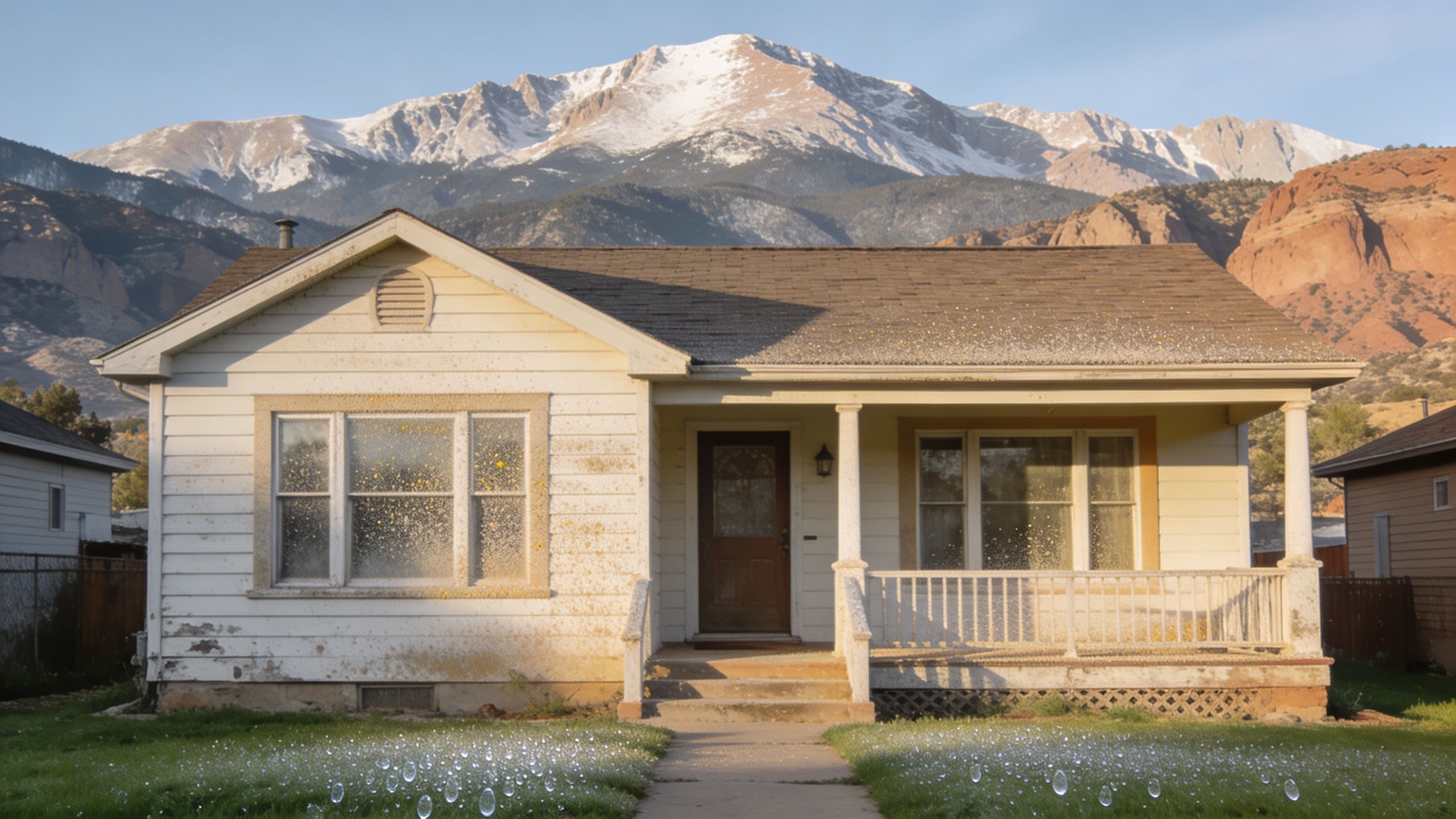
Dust settles fast in Colorado Springs. Add pollen, wind, mineral-heavy water, and strong sun, and a home that looked sharp a month ago can start to look tired around the siding, driveway, patio, and entryway. Many homeowners notice it in small ways first. The concrete darkens, the north side of the house looks dingy, and the deck no longer matches the rest of the property.
That buildup isn’t just cosmetic. It can cling to paint, collect in textured surfaces, and leave exterior materials looking older than they are. Good pressure washing services for homes remove that layer safely, but only when the method matches the material.
Restoring Your Home’s Curb Appeal in Colorado Springs
A lot of homes in the Pikes Peak region wear the same kind of grime. Fine dust sticks to siding after windy weeks. Pollen settles into trim lines and porch corners. Driveways collect dark streaks, and patios lose the color homeowners remember from when they were first installed.
That’s usually when pressure washing moves from a “maybe later” task to something more urgent. A house can be structurally sound and still look neglected because the exterior is carrying months of buildup.
Why homeowners keep coming back to exterior cleaning
Homeowners don’t invest in house washing by accident. The demand is established. The residential pressure washing sector accounted for 55% of the total $1.2 billion U.S. pressure washing industry revenue in 2024, reflecting steady homeowner demand for cleaning decks, driveways, and home exteriors, according to Jobber’s pressure washing industry statistics.
That lines up with what makes sense on the ground here. When the outside of the home is clean, the whole property reads differently. Trim looks sharper. Stone and concrete regain contrast. Painted siding looks maintained instead of faded under a film of dirt.
Practical rule: If your exterior still looks dull after a hose rinse, the problem usually isn’t water alone. It’s bonded grime, organic residue, or mineral buildup that needs the right process.
What restoration actually looks like
Real curb appeal restoration usually includes more than one area:
- Siding cleanup: Removing dust, mildew staining, and runoff marks that flatten the look of the house.
- Concrete brightening: Cleaning driveways, walks, and entry pads so they don’t pull attention away from the home.
- Outdoor living spaces: Refreshing patios, porches, and decks so the property feels usable again.
- Detail areas: Hitting the spots homeowners notice every day, like garage fronts, steps, and traffic-heavy walkways.
Done correctly, pressure washing services for homes don’t leave surfaces looking blasted. They leave them looking cared for. That’s the difference homeowners in Colorado Springs usually want. Clean, even results without damage, striping, or the chalky look that comes from using too much pressure.
What Our Pressure Washing Services Include
A professional house wash isn’t a quick pass with a powerful machine. It’s a surface-by-surface process. Different materials hold dirt differently, and they also fail differently when cleaned the wrong way.
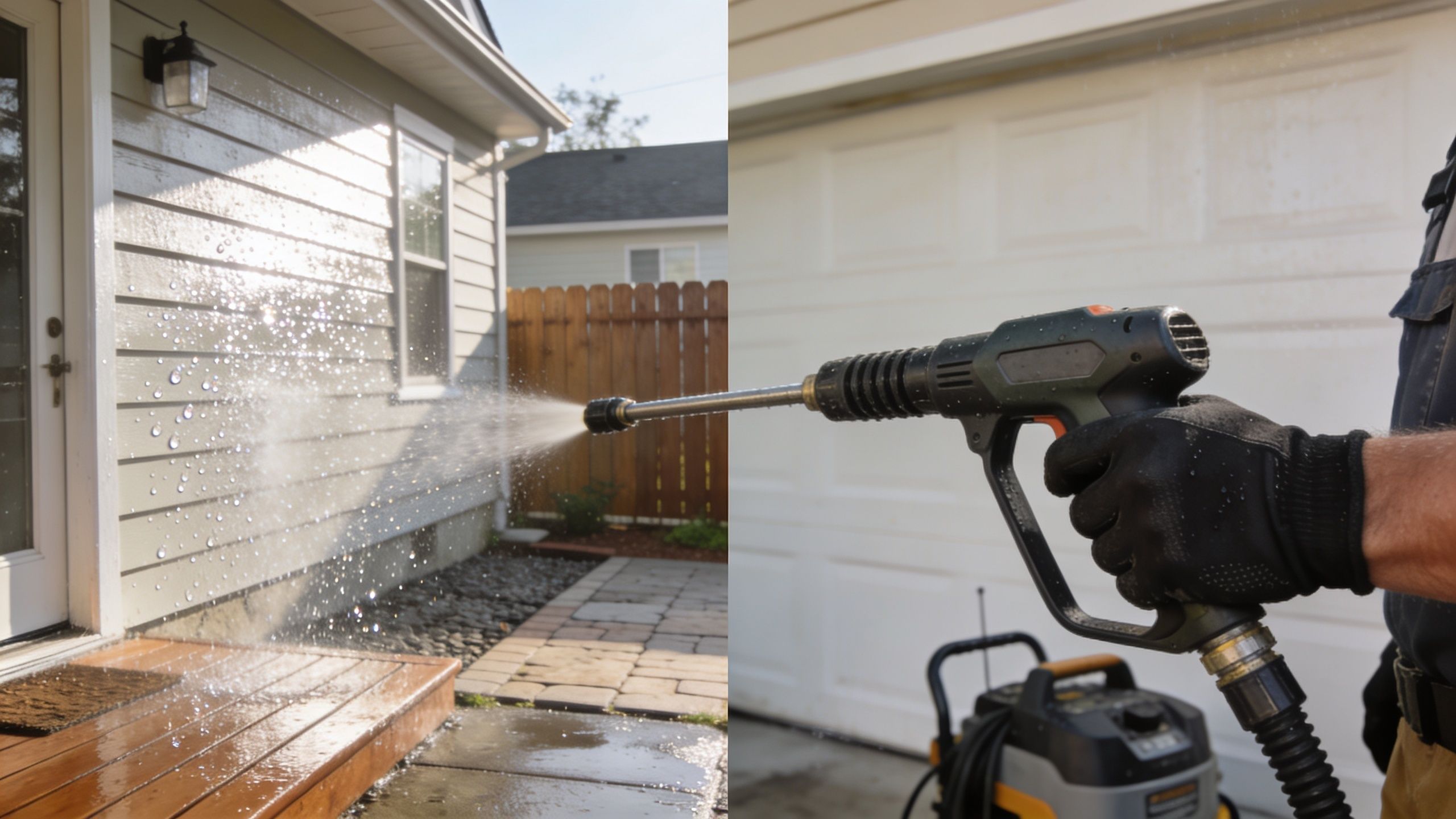
Surfaces that usually need different treatment
On most homes in Colorado Springs, the work often includes a mix of these areas:
- Vinyl siding and painted siding: These need controlled cleaning that removes grime without forcing water behind panels or damaging the finish.
- Stucco: Stucco traps dust and can scar if pressure is too aggressive.
- Brick and stone accents: These can handle more force than delicate finishes, but mortar lines still need care.
- Concrete driveways and walkways: These often hold oil marks, dark weather staining, and embedded dirt.
- Patios and porches: Texture matters here. Uneven washing can leave obvious striping.
- Decks and fencing: Wood and composites need a more careful approach than hardscape.
The contaminants matter just as much as the surface. We’re usually dealing with a combination of dirt, pollen, mildew, algae staining, dust, and general weather film. Removing that buildup protects appearance, but it also helps stop the slow discoloration that makes surfaces look permanently worn.
What a real service process looks like
Good pressure washing services for homes follow a sequence, not guesswork.
- Inspection comes first. The technician checks the material, the condition of the finish, and any vulnerable areas.
- Pre-treatment is selected for the surface. Some grime releases with dwell time and detergent, which means less force is needed later.
- Pressure and flow are adjusted. The goal is enough cleaning power to remove buildup, not as much pressure as the machine can produce.
- Rinse patterns are controlled. Overlap matters. Distance matters. Technique matters.
- Final checking catches missed areas and residue. A proper finish should look even, not patchy.
A lot of homeowners compare service options before booking, and broad pricing expectations can help frame the conversation. If you want a market-level reference from another region, this guide to Tampa pressure washing is useful for understanding how scope and surface type can affect cost, even though local conditions in Colorado Springs are different.
Here’s a quick look at house washing in action:
What homeowners should expect from the result
A finished job should leave surfaces visibly cleaner, but also consistent. No tiger stripes on concrete. No etched siding. No shredded wood grain. No leftover detergent drying in corners.
Some of the most expensive pressure washing mistakes come from treating every surface like concrete.
That’s why the scope of service matters. A professional exterior cleaning visit should account for material type, buildup type, runoff control, and finish protection. When those pieces are handled correctly, the home doesn’t just look washed. It looks restored.
Pressure Washing vs Soft Washing The Right Method for Your Home
Pressure washing and soft washing solve different problems. The easiest way to think about it is this. One is a stronger scrub for durable surfaces. The other is a gentler cleaning method for finishes that can be damaged by force.
Many homeowners use the terms interchangeably, but they shouldn’t. The wrong method can mark stucco, scar wood, dislodge paint, or force water where it doesn’t belong.
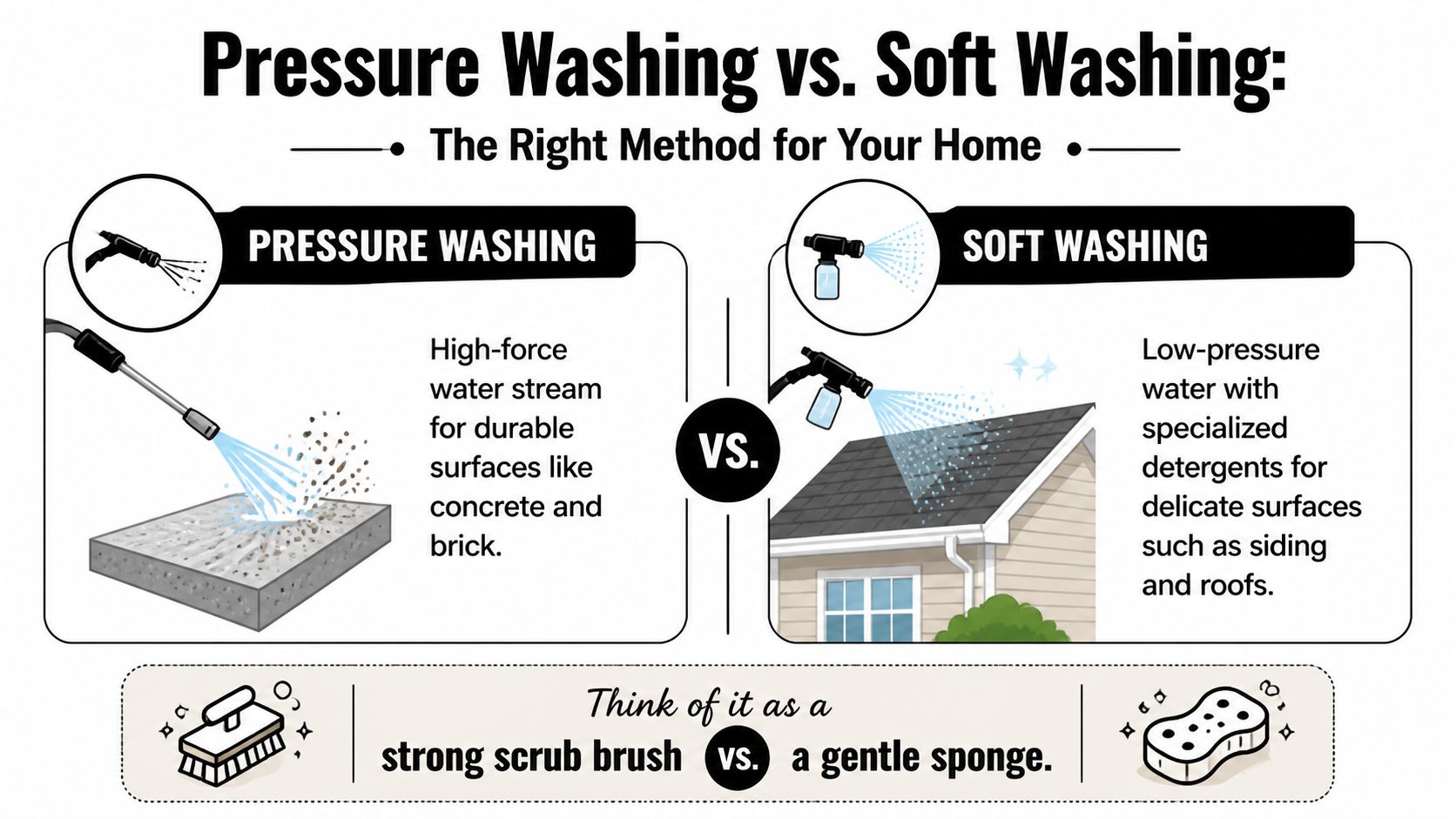
What pressure and water flow actually do
PSI is the pushing force. GPM is the water volume that carries debris away. Both matter. According to this breakdown of power washing technology and cleaning units, professional machines can be adjusted from 100 to over 5,000 PSI and 1 to 10 GPM, producing 10,000 to 20,000 Cleaning Units, which makes them 2 to 3 times more powerful and efficient than consumer models when used correctly. That same source notes those adjustments allow safe cleaning on surfaces such as stucco under 1500 PSI and stained concrete at 3000+ PSI.
That adjustability is the key point. A machine isn’t “good” because it’s powerful. It’s good because the operator can match the output to the surface.
Pressure washing vs soft washing which is right for your home
| Feature | High-Pressure Washing | Soft Washing |
|---|---|---|
| Best use | Durable surfaces like concrete, some brick, and certain stone areas | Delicate exterior surfaces like siding, painted trim, and other finishes that can be damaged by force |
| Cleaning action | Uses stronger water force to break loose embedded grime | Uses lower pressure and cleaning solutions to loosen buildup with less mechanical force |
| Main advantage | Effective for heavily soiled hardscape | Better for protecting finishes and avoiding surface damage |
| Main risk | Can etch, gouge, stripe, or force water into vulnerable areas if misused | May not be the right choice for heavily stained concrete or other hard surfaces that need stronger force |
| Typical surfaces around a home | Driveways, walkways, some patios, masonry | House siding, trim, exterior finishes, selected roof-adjacent areas |
For homeowners comparing methods in more detail, this soft wash house cleaning page gives a useful overview of where low-pressure cleaning fits.
What works and what usually doesn’t
What works:
- Soft washing for siding and painted surfaces
- Higher pressure for concrete that can take it
- Test spots before full cleaning
- Changing nozzle angle and distance based on the material
What doesn’t:
- Using one setting for the entire property
- Assuming more PSI means better cleaning
- Standing too close to the surface
- Trying to blast away organic buildup when detergent dwell time would do the work more safely
Use force for the surfaces built to take force. Use chemistry and controlled rinse for the surfaces that aren’t.
Homeowners don’t need to memorize machine settings. They do need to know that method selection is the whole job. If the contractor can’t clearly explain why your stucco, siding, deck, and driveway are being treated differently, that’s a warning sign.
Key Benefits of Regular House Washing
Regular house washing pays off long before a home looks obviously dirty. Exterior buildup starts working on surfaces early. Mildew, grime, and residue don’t just sit there. They hold moisture, stain finishes, and make maintenance jobs harder later.
For most homeowners, the biggest value is protection. Cleaning keeps small exterior problems from becoming repainting, repair, or replacement problems.
It protects paint and exterior finishes
According to The Clean Start’s guide to professional pressure washing, annual professional pressure washing can extend the life of exterior paint by up to 3 years by removing acid-etching mildew. The same source notes that the service typically costs $0.10 to $0.50 per square foot and can support a 15% to 25% curb appeal boost for real estate listings.
Those numbers matter because repainting a house is a much bigger project than maintaining one. If a wash removes the grime that’s actively wearing on the finish, the math often favors cleaning well before the exterior looks far gone.
It improves how the whole property presents
A clean exterior changes the feel of a home quickly. The driveway doesn’t look abandoned. The entry looks cared for. Patio spaces become places you want to use again instead of areas you mentally add to a future to-do list.
That matters whether you’re staying put or preparing to sell.
- For daily living: Cleaner surfaces make the property feel maintained and easier to enjoy.
- For listing photos: Dirt on flatwork and siding stands out more in photos than many homeowners expect.
- For neighborhood appearance: A washed exterior often makes landscaping and architectural details look better without changing anything else.
It supports healthier exterior conditions
Dust, pollen, and organic buildup collect where people spend time. Around doors, patios, rails, and outdoor seating areas, that residue can make the home feel neglected and grimy even when the inside is spotless.
Clean exteriors are easier to maintain because new buildup is easier to spot and remove before it settles in.
Regular service also helps homeowners stay ahead of seasonal buildup. Waiting until everything looks heavily stained usually means the work is slower, tougher, and more likely to require specialized treatment. Maintenance cleaning is usually the smarter play.
What to Expect When You Hire Cultivate House Detailing
Most homeowners want the same thing from an exterior cleaning appointment. Clear communication, a fair quote, a crew that shows up when expected, and results that don’t come with surprises. The process should feel straightforward from the first message to the final walkthrough.
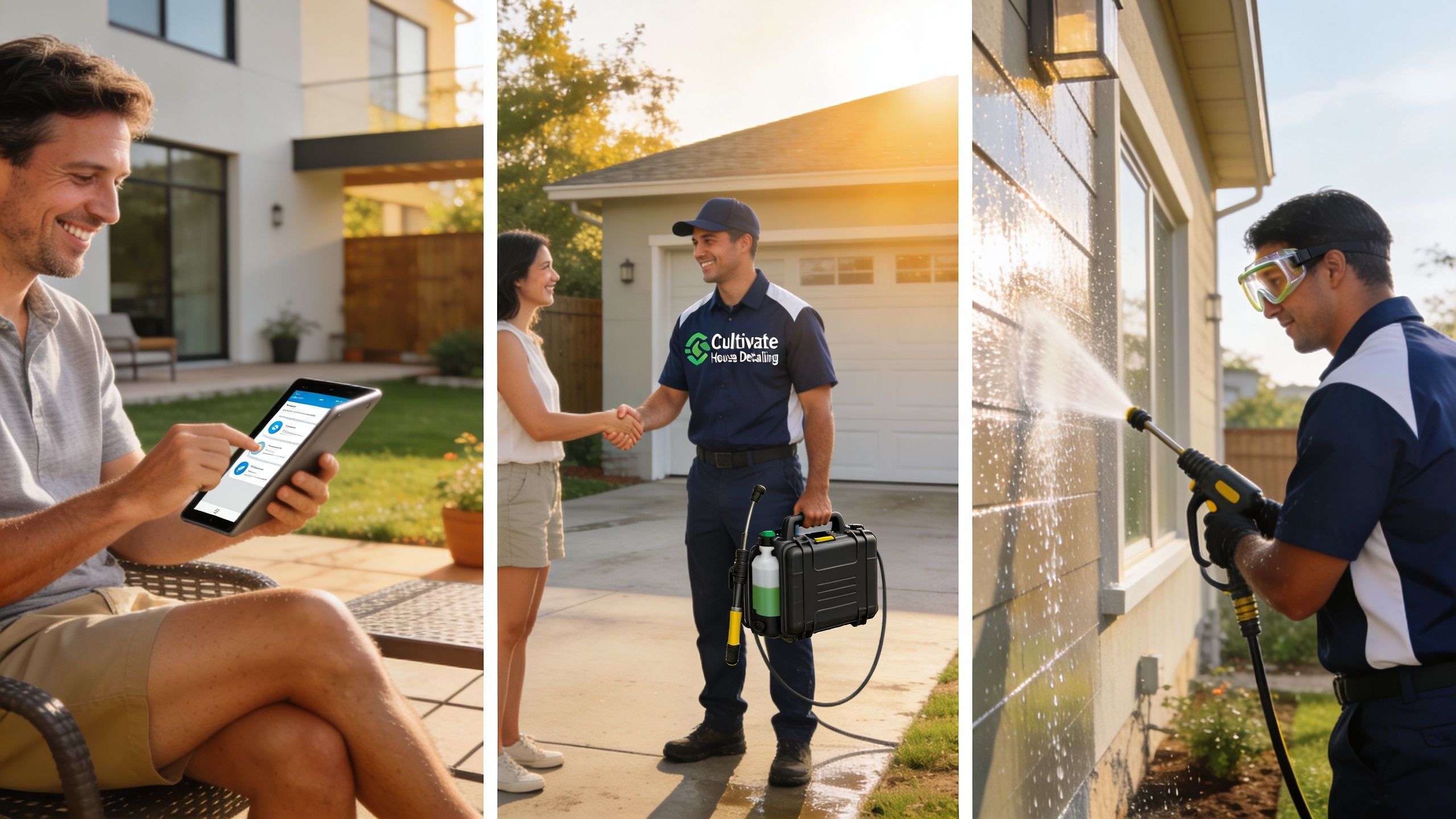
Before service day
The process starts with the property details. Homeowners usually share which surfaces need attention, what kind of buildup they’re seeing, and whether there are problem areas such as traffic-darkened concrete, dust-heavy siding, or a patio that hasn’t come clean with basic rinsing.
From there, the next step is matching the service to the home. That includes identifying which areas need pressure washing, which need a softer method, and whether any spots require extra prep because of stains, loose finishes, or delicate materials.
A homeowner can make service day easier with a short prep list:
- Close windows and exterior doors: This reduces the chance of unwanted water intrusion.
- Move light furniture and décor: Open access helps the technician work evenly and safely.
- Clear vehicles from the driveway: Concrete cleaning goes faster without obstacles.
- Secure pets: Gates opening and hoses moving around the property can create avoidable stress.
- Point out any concerns early: Loose trim, peeling paint, or sensitive areas should be identified before cleaning starts.
What happens on site
The work should begin with a walkaround. During this, the technician confirms the materials, checks the condition of the surfaces, and reviews the plan with the homeowner if needed. That step matters because no two homes weather the same way in Colorado Springs.
A solid service visit usually includes:
- Surface assessment
- Area preparation
- Cleaning agent application where needed
- Method-specific washing
- Thorough rinse and detail pass
- Final review
One practical option for homeowners looking for pressure washing services for homes in Colorado Springs is Cultivate House Detailing, which provides exterior cleaning for siding, patios, walkways, and driveways as part of its local service lineup.
After the washing is done
The last part of the appointment should be simple. The surfaces are checked, any remaining concerns are addressed, and the homeowner gets a clear look at the finished result.
The final walkthrough is where quality control becomes visible. Even cleaning, no missed bands, and no damage should be obvious without anyone having to squint for it.
Good service doesn’t feel rushed. It feels organized. Homeowners should come away knowing what was cleaned, what method was used, and whether any areas may need future attention because of staining, finish wear, or environmental exposure.
Special Considerations for Pressure Washing in Colorado Springs
Colorado Springs changes how exterior cleaning works. Advice written for lower-elevation, wetter markets often misses what homeowners here deal with every season. The air is drier. The sun is harsher. Dust moves constantly. Mineral-heavy water leaves stubborn residue. All of that affects both the cleaning process and the result.
Altitude changes the way surfaces clean
This is one of the biggest local differences. According to this note on high-altitude pressure washing conditions, high-altitude environments like Colorado Springs at about 6,000 feet can reduce cleaning efficiency by 20% to 30% compared to sea-level conditions, largely because spray patterns and detergent performance change. The same source points to the need for adjusted chemical dwell times and specialized nozzles for local conditions, especially when dealing with hard water buildup.
That explains why generic online advice often disappoints homeowners here. A method that works cleanly in another climate can leave streaks, uneven rinsing, or lingering deposits in Colorado Springs.
Hard water and sun create their own problems
Mineral deposits around spigots, trim, and sun-exposed surfaces can cling much more stubbornly than loose dirt. Intense sun also bakes contamination onto siding and concrete faster, especially on south- and west-facing sides of the home.
A smart local approach usually includes:
- Longer or adjusted dwell time: Enough time for cleaning agents to break down buildup before rinsing.
- Nozzle selection based on local conditions: Spray pattern matters more than many homeowners realize at elevation.
- Close attention to rinse quality: Mineral residue can leave the surface looking only partly cleaned if rinsing is rushed.
- Surface-specific planning: Stucco, painted siding, and decorative stone all react differently under Colorado conditions.
Homeowners comparing local service options can review pressure washing in Colorado Springs, CO to see how exterior cleaning is positioned for area-specific conditions.
Cleaning and fire mitigation belong in the same conversation
In many parts of the Springs and nearby communities, exterior cleaning isn’t just about looks. It also connects to defensible space and debris management. Dust, needles, leaves, and organic buildup collect in gutters, along siding lines, on patios, and around edges where structures meet landscaping.
That matters in places closer to open land, wooded lots, and fire-prone corridors. House washing and debris clearing often support the same goal. A cleaner exterior is easier to inspect, easier to maintain, and better aligned with responsible property care in a region where fire mitigation is part of ownership.
Local exterior cleaning should account for altitude, mineral deposits, and fire-season realities. If it doesn’t, it’s only half a plan.
How to Choose the Right Pressure Washing Company
Hiring a pressure washing company is less about finding someone with a machine and more about finding someone who understands surfaces, methods, and local risk. That matters even more now because the market is crowded. According to Fortune Business Insights pressure washer market coverage, the number of U.S. exterior cleaning businesses grew into the 33,000 to 35,000 range in 2025, which makes careful vetting more important for homeowners.
Questions worth asking before you book
A good company should be able to answer these clearly:
- Are you insured? If a provider avoids the question or answers vaguely, keep looking.
- What method will you use on my siding, stucco, deck, and concrete? You want a surface-specific answer, not “we wash everything the same way.”
- Do you offer soft washing when pressure isn’t the right choice? This is one of the clearest signs that the company understands material protection.
- How do you handle local conditions in Colorado Springs? Dust, mineral buildup, and strong sun should already be part of their thinking.
- What should I do before service day? Organized providers give simple prep guidance.
- Will we do a walkthrough after the work is done? Final review matters.
What solid answers sound like
Good answers are specific. A capable provider should talk about material type, cleaning method, and how they avoid damage. They should be comfortable explaining why one surface gets a soft wash while another gets higher pressure.
Watch for signs of weak practice:
- One-size-fits-all language
- No mention of surface testing or adjustment
- No discussion of soft washing
- No concern about local environmental conditions
- No clear post-job review
A practical way to make the decision
If you’re comparing pressure washing services for homes, don’t start with price alone. Start with process. The cheapest quote can become the expensive one if it leaves stripes on concrete, scars wood, or forces water behind siding.
Choose the company that can explain what they’ll do, why they’ll do it that way, and how they’ll protect the home while cleaning it. That’s the standard homeowners should expect in Colorado Springs.
If your siding, driveway, patio, or walkways are due for a reset, Cultivate House Detailing offers a straightforward way to request service and get answers about the right cleaning method for your home in Colorado Springs and nearby communities.
Looking for a professional to take care of it? Cultivate House Detailing offers pressure washing in Colorado Springs. Get a free quote.