You can usually tell when solar panels need attention before anyone pulls out a ladder. The array still looks fine from the ground, but the bills feel higher, the app shows weaker production, and the panels have that fine Colorado dust that never seems to quit after a windy week. In Colorado Springs, that's not cosmetic. It's lost output, and it's exactly why a solar panel cleaning service is worth taking seriously.
If you've invested in solar, you want it to earn its keep. The right cleaning approach protects the glass, preserves performance, and keeps you from turning a simple maintenance job into a roof safety problem. Cultivate House Detailing works with homeowners who want straight answers, careful service, and a local crew that understands what Colorado weather does to exterior surfaces.
Why Colorado Springs Homeowners Need Solar Panel Cleaning
A Colorado Springs homeowner usually doesn't notice panel buildup all at once. It starts with a little haze, a bit of pollen after spring, then wind-blown dust settles in again after the dry stretch. By the time someone checks the monitoring app, the array may already be underperforming in a way that's easy to ignore and expensive to keep ignoring.
Local conditions change the cleaning need
Colorado Springs creates a different soiling pattern than a damp coastal market. High altitude UV, strong wind, spring pollen, construction dust, and debris from unpaved roads all leave residue that sticks around long enough to matter. Even hail season can leave panels looking “fine” from the ground while still carrying grime that affects output.
The bigger point is simple, cleaning is performance preservation. The solar panel cleaning market is growing because soiling creates real operating losses, not just visual annoyance. One industry source cites annual energy production losses of about 3 to 5% from soiling, with USD 3 to 5 billion in global losses tied to added operating and capital expenses, according to the IEA PVPS program as cited by Global Market Insights (Global Market Insights).
Practical rule: if the panels are visibly dusty, near a busy road, or sitting through a long dry spell without rain, don't wait for a dramatic drop in production before acting.
Why local expertise matters
Colorado Springs homes vary a lot. One roof might sit under trees with spring pollen, another might face open wind and road dust, and another may be in a newer development where construction debris is still part of the picture. A local provider sees those patterns every day and can tell the difference between a panel that needs cleaning now and one that can wait.
That's why a solar panel cleaning service should be judged on method, safety, and local judgment, not just a quick hose-down. If the crew understands the difference between normal dust and actual soiling that affects yield, you're protecting your investment instead of just washing glass.
What a Professional Solar Panel Cleaning Service Includes
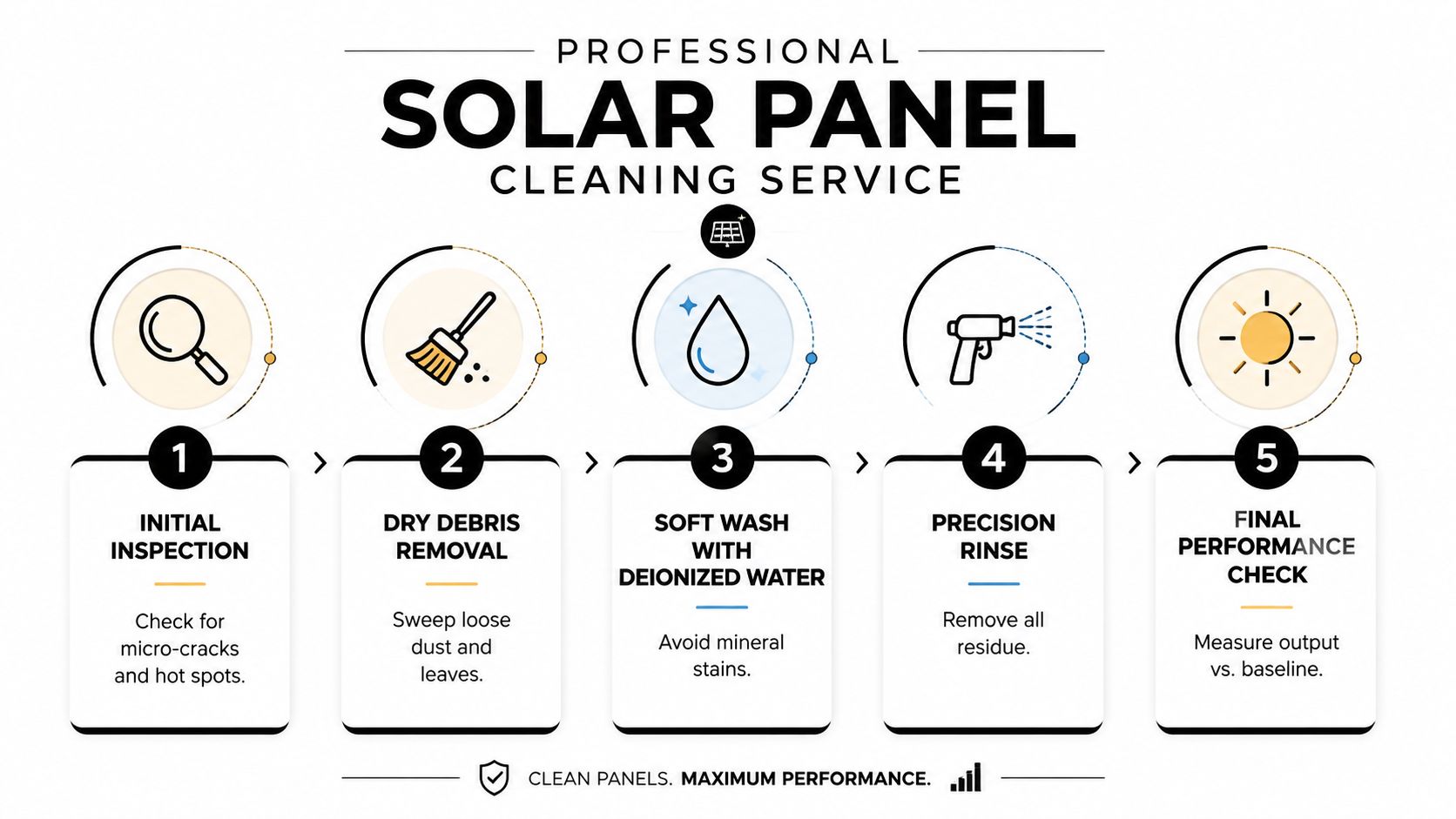
A real service visit should feel methodical, not rushed. You're paying for more than water and a brush, you're paying for a process that protects the panels, the roof, and the surrounding property. The best crews work in a sequence that reduces risk and leaves no residue behind.
The inspection comes first
Before any water hits the array, a technician should inspect the system for visible damage, loose mounting concerns, and anything that suggests a more cautious approach. That includes spotting issues around wiring paths and looking for cracked glass or obvious wear that should be documented before cleaning starts.
A good provider also thinks about what the camera doesn't show. Pre-cleaning notes matter because if a panel has an issue after the visit, there's a record of what was already there. That kind of documentation is one reason homeowners should ask for before-and-after photos, especially on rooflines that are hard to check from the ground.
The cleaning method should protect the panel surface
The right equipment matters. Pure-water or deionized water systems help prevent mineral deposits and streaking, which is especially useful when Colorado water chemistry would otherwise leave a film behind. Soft-bristle tools are the norm because abrasive pads and harsh cleaners can scratch the anti-reflective coating.
For multi-story or steep roofs, water-fed poles let technicians clean from safer positions instead of walking where they don't belong. If you want to see the safety side of that process, Cultivate House Detailing explains its approach in its safe methods used by solar panel cleaning professionals.
Clean panels should look uniform, not shiny in spots and dull in others. If residue is left behind, the job wasn't finished.
Final checks separate a real service from a quick rinse
The last step should be a visual review and a performance check against the baseline. That doesn't always mean fancy equipment. It means confirming the panels are clear, the rinse water didn't leave streaks, and the surface is ready to produce again. A hose-down can't do that. A professional solar panel cleaning service should.
For homeowners who want a broader explanation of why maintenance matters, this guide on why solar panels need regular cleaning to maximize energy output connects the service back to long-term system care.
Efficiency Gains and Longevity Benefits of Clean Panels
Dirty panels don't just look neglected. They lose incoming light, which cuts production at the module level and drags down the whole system. A review found that 10 g/m² of dust loading can lower maximum power by about 34%, and field trials showed that both short-circuit current and open-circuit voltage decline as dust accumulates because particles block irradiance and increase module losses (PDF review).
The payoff depends on the site
That doesn't mean every roof needs constant washing. It means the value of cleaning rises fast when the panels sit in dry, dusty, or pollen-heavy conditions. Colorado Springs homeowners near construction zones, unpaved roads, or open land are much more likely to see a meaningful improvement than a roof that gets regular rain and light soiling.
A useful reference point is the University of California, San Diego study on uncleaned panels during a California summer drought. The researchers found a 7.4% efficiency loss over 145 days without rain, and estimated that washing a typical 5-kW residential system halfway through summer would add only about $20 in electricity value before the drought ended in roughly 2.5 months (UC San Diego). That's a reminder to be practical. Light soiling in a low-dust area may not justify frequent service, but Colorado's dry conditions often make the math different.
Cleaning also protects the hardware
Regular cleaning helps avoid hard-water residue and sticky organic buildup that can become harder to remove later. It also reduces the chance that grit sits on the surface long enough to dull the finish or turn routine maintenance into restoration work. Clean panels can't stop aging, but they can stay closer to their intended operating condition for longer.
The practical takeaway is to compare the panel condition with output, not just appearance. If the system is visibly dirty and production has slipped, cleaning is usually worth it. If the array is clean, recently rained on, and still producing well, the better move is to wait and monitor.
Here's a useful resource on panel geometry and sun exposure if you want to understand why tilt and orientation matter to maintenance planning, the HighFlow Energy tilt guide explains how roof angle affects performance and exposure.
DIY Versus Professional Solar Panel Cleaning
DIY cleaning sounds cheap until you price in roof risk, time, and the chance of doing the job badly. A homeowner with a garden hose and a squeegee can knock down surface dust, but that's not the same as a proper rinse, a safe roof workflow, and a finish that doesn't leave minerals behind. On steep or awkward Colorado roofs, the ladder is usually the most dangerous part of the project.
What homeowners can safely do
A ground-level soft brush can help with light dust between professional visits, especially on easy-to-reach panels. That's the limit I'd recommend for the average homeowner. Once the job requires walking the roof, reaching around skylights, or handling panels above a second story, the risk starts to outweigh the savings fast.
Why professionals get better results
A trained crew brings the right water system, roof access gear, and a cleaner finish. They're also less likely to leave streaks or scratch the surface. If a panel is cleaned with the wrong tool, the damage may not show up immediately, but the warranty issue can show up later, and that's a headache nobody wants.
The service quality difference is obvious on the roof and in the output check afterward. A homeowner may rinse off visible grime. A professional cleans, inspects, and documents the condition so the service has an actual record behind it.
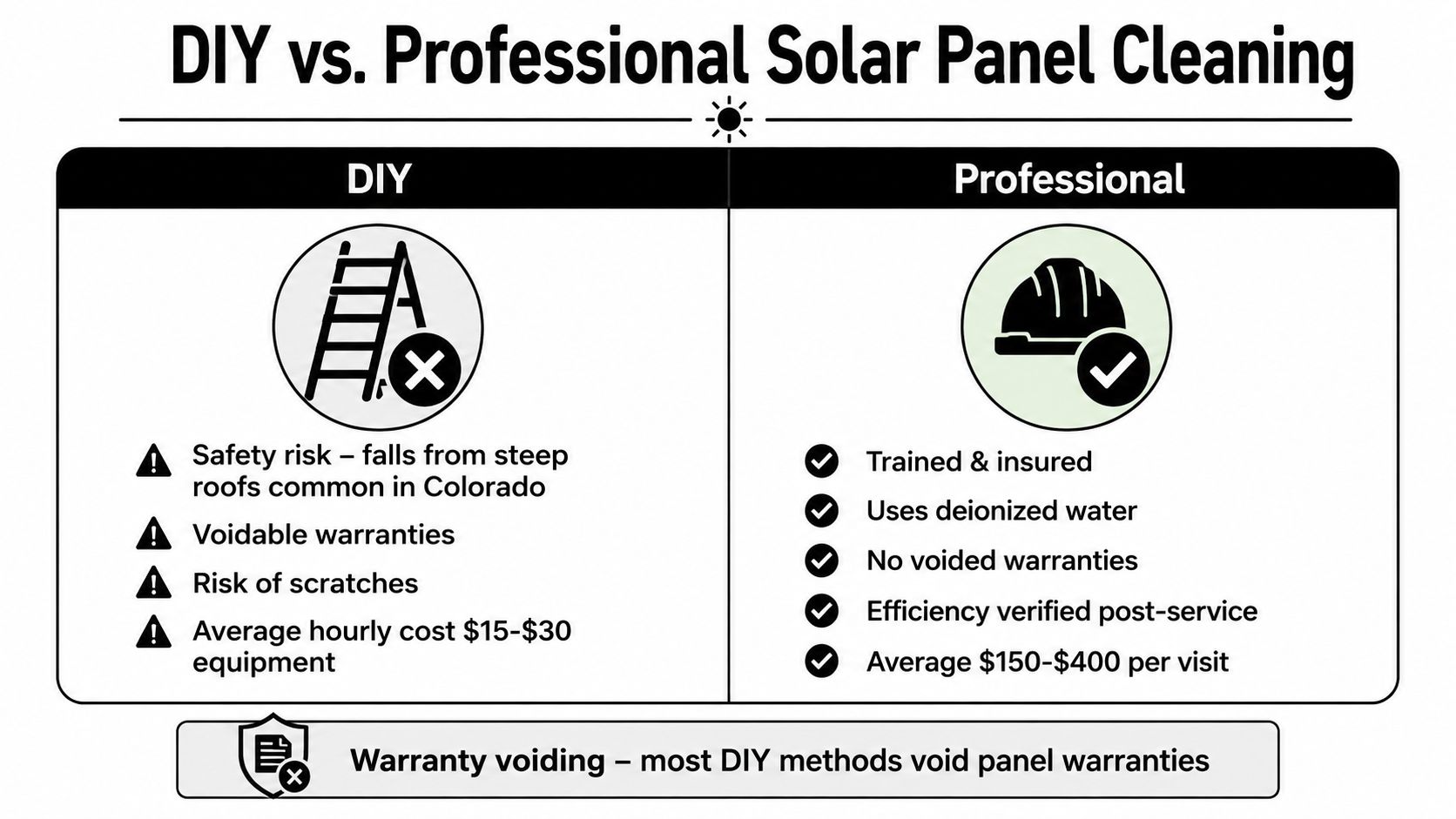
If your roof is steep enough that you'd think twice about carrying a paint bucket across it, it's steep enough to hire out the cleaning.
Seasonal Cleaning Timing for Colorado Springs Properties
The smartest schedule isn't a fixed national rule. It's a local calendar tied to weather, dust, and what's happening around your property. In Colorado Springs, spring and late summer are the two windows I'd pay closest attention to.
Spring sets up the year
Spring cleaning clears off winter debris and gets the array ready for stronger summer production. Pollen is part of the story too, especially when warm weather arrives and everything starts coating horizontal surfaces. If you wait until the panels are obviously grimy, you've already spent part of the season losing output.
Late summer and early fall catch the dry-season buildup
Dry months are tough on exterior surfaces here. Windblown dust, road residue, and nearby development all stack up. A late-summer or early-fall cleaning makes sense for properties that have been getting pounded by that pattern, especially around Black Forest, Monument, or neighborhoods with active construction.
Some homes need a more frequent schedule
The generic twice-a-year recommendation is a starting point, not a rule. Homes near unpaved roads, agricultural activity, or heavy dust sources may need quarterly cleaning to stay ahead of buildup. That's also the right time to look at panel tilt, tree cover, and how quickly the array gets dirty after a service.
Good schedule check: if the panels look dull before the next planned visit, or the monitoring app shows a steady drop without another explanation, move the cleaning up.
Post-hail inspections matter too. Even if the panels appear fine from the ground, a good visual review after a storm can catch issues early enough to avoid bigger problems later. Seasonal maintenance is less about tradition and more about keeping the array in the part of the year when it produces the most.
Cost Factors and Pricing Estimates for Solar Panel Cleaning
Pricing should be clear before anyone climbs a ladder. The biggest mistake homeowners make is accepting a vague quote that doesn't say what's included. A proper estimate should spell out whether the job covers inspection, rinse method, hard-water treatment, and hard-to-reach roof sections.
What moves the price
The cost of a solar panel cleaning service usually shifts with the size of the array, the number of panels, roof pitch, and how easy the system is to access. Heavy soiling can take more time, and difficult rooflines take more equipment and more care. Travel also matters when the home sits farther from the main service area.
Consumer guidance places professional solar panel cleaning at $100 to $350 on average (ConsumerAffairs). That's a useful reference point, but local pricing in and around Colorado Springs can vary for homes in outlying communities such as Woodland Park or Manitou Springs, especially when the crew is handling more complex access.
A simple cost factor table
| Solar Panel Cleaning Cost Factors | Impact on Cost | Typical Range |
|---|---|---|
| Panel count | More panels take more labor and rinse time | Varies by system size |
| Roof pitch and access | Steeper or harder-to-reach roofs increase safety setup | Higher on complex roofs |
| Soiling severity | Heavy buildup takes longer to remove safely | Higher when panels are visibly dirty |
| Travel distance | Outlying service areas can add time and overhead | Higher outside central routes |
| Add-on services | Bundling with exterior cleaning can improve efficiency | Often lowers total trip cost |
Bundling can be smart if you already need window cleaning, gutter cleaning, or other exterior maintenance. That keeps the visit efficient and can reduce the cost of multiple separate trips. The main thing is to get an estimate that tells you exactly what you're buying, not just a per-panel number with half the work left out.
What to Look for in a Solar Panel Cleaning Provider
Hiring the wrong company can turn a routine service into a roof problem. The provider you choose should be able to explain the method, prove the insurance, and show that they understand solar systems, not just pressure washing in general.
Start with the basics
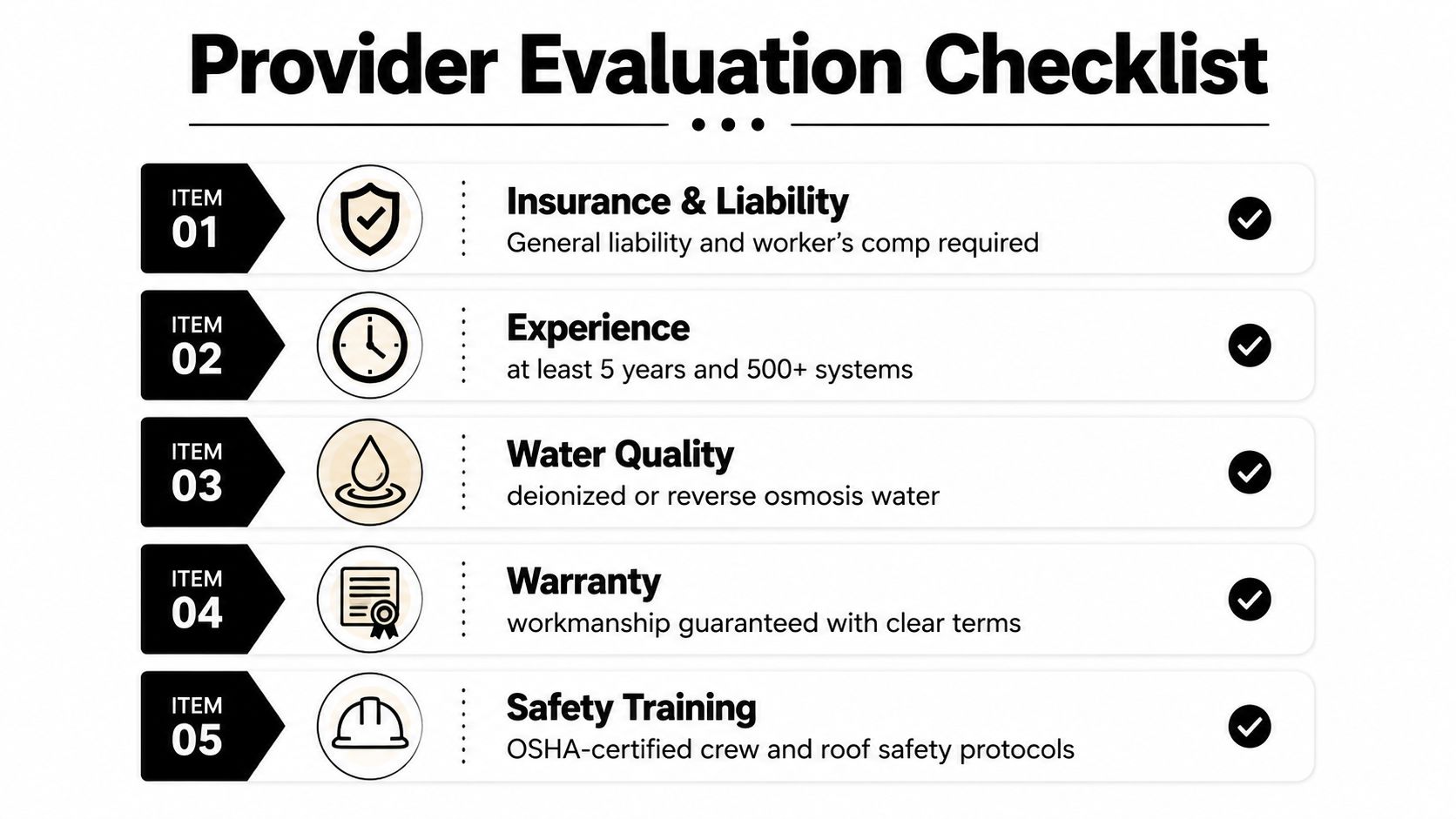
Ask whether the company carries general liability and workers' compensation. Then ask how they clean panels and what water system they use. Pure-water or deionized water is a strong sign the crew is thinking about the finish, not just the dirt.
The provider should also be comfortable talking about roof safety protocols. If they clean steep or multi-story roofs, they need the right access tools and training, not improvisation. You want a team that knows how to work around skylights, wiring, and fragile roof edges without making a mess.
Look for local judgment, not generic promises
A Colorado Springs provider should understand the weather, the dust patterns, and the typical roof types in the area. That local knowledge matters because a clean-looking roof in one neighborhood can still be underperforming in another. For a homeowner trying to vet a contractor carefully, the step-by-step contractor vetting process is a solid place to start.
A few things worth confirming before you book
- Insurance and liability coverage: ask for proof, not a verbal assurance.
- Water quality: confirm deionized or reverse osmosis water, especially if streaking is a concern.
- Warranty-safe methods: make sure they don't use abrasive pads or harsh chemicals.
- Documentation: request before-and-after photos or notes if you want a record.
- Scope of work: verify whether inspection and rinsing are included or charged separately.
Cultivate House Detailing also offers solar panel cleaning as part of its exterior service lineup in Colorado Springs, so homeowners comparing options can ask about method, scheduling, and bundled exterior work in one conversation.
Local Solar Panel Cleaning Questions and Next Steps
Rain doesn't keep panels clean for long in Colorado Springs. It can help, but it won't wash away sticky dust, pollen, or residue that settles during dry stretches. If your system is producing normally and the panels look light on buildup, you may not need service right away. If they look dull, or the app shows weaker output, it's time to schedule a look.
Older solar installations can still be cleaned safely, but they deserve a careful eye. That's where professional service matters most, because an experienced technician can spot fragile conditions and choose the right cleaning method instead of forcing a one-size-fits-all approach. If you're trying to decide between waiting and booking, use panel condition, roof access, and local dust exposure as your guide.
For homeowners who want a deeper technical reference on operations and aerial inspection workflows, the guide to drone operator certification is a useful example of how safety and compliance shape service work in other exterior industries too.
If you want straight answers about your own roof, request a quote from Cultivate House Detailing. They serve Colorado Springs and nearby areas with local exterior cleaning experience, transparent pricing guidance, and a careful approach that fits real homes, not generic service scripts.
Cultivate House Detailing cleans solar panels with the same attention to detail they bring to exterior glass and other home surfaces, which means careful methods, clear communication, and work that respects your roof. If your panels are dusty, streaked, or just overdue for maintenance, visit Cultivate House Detailing to request a quote and schedule service in Colorado Springs or a nearby community.
Prefer to leave it to a professional? Cultivate House Detailing offers solar panel cleaning in Colorado Springs. Get a free quote.