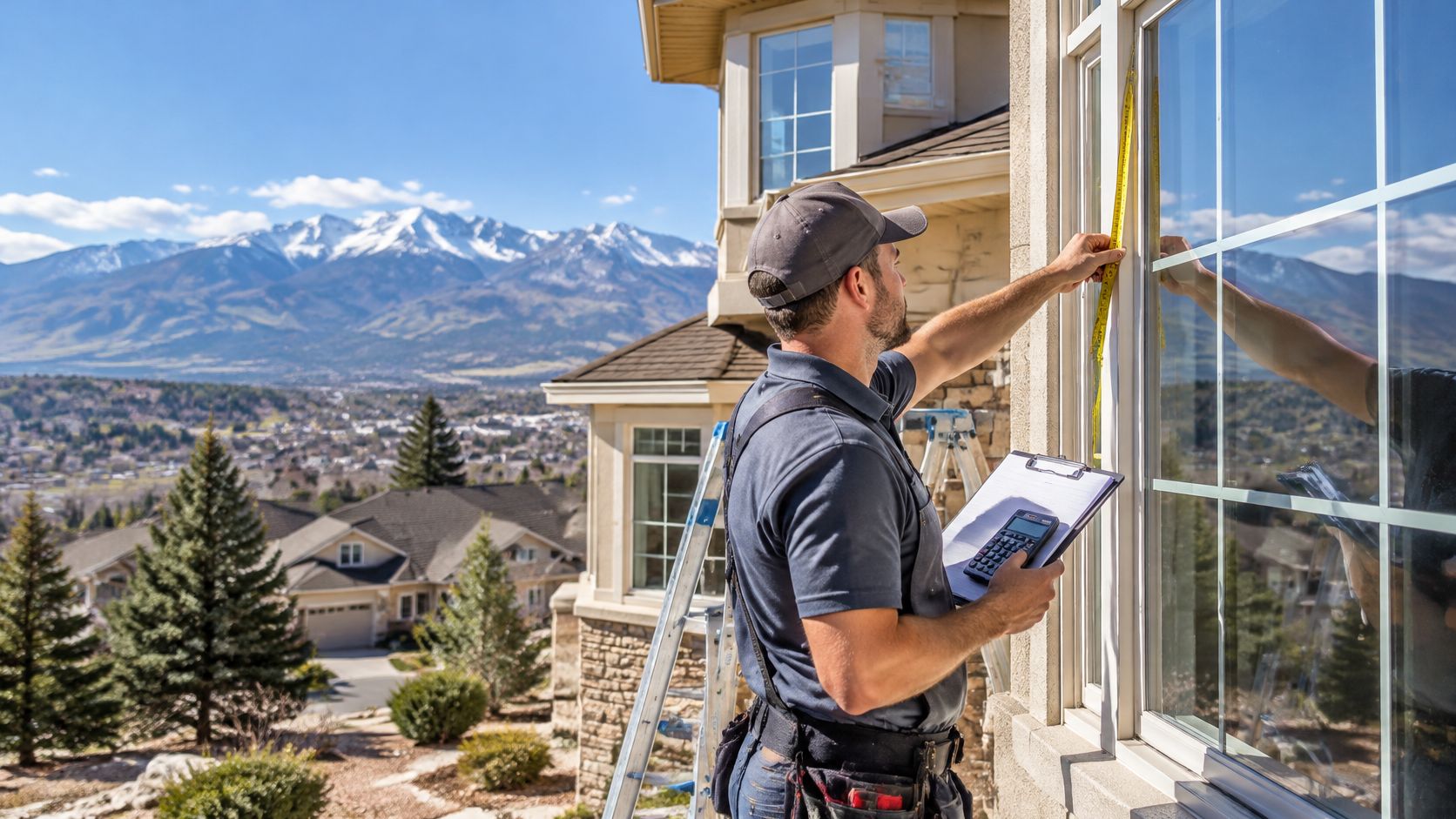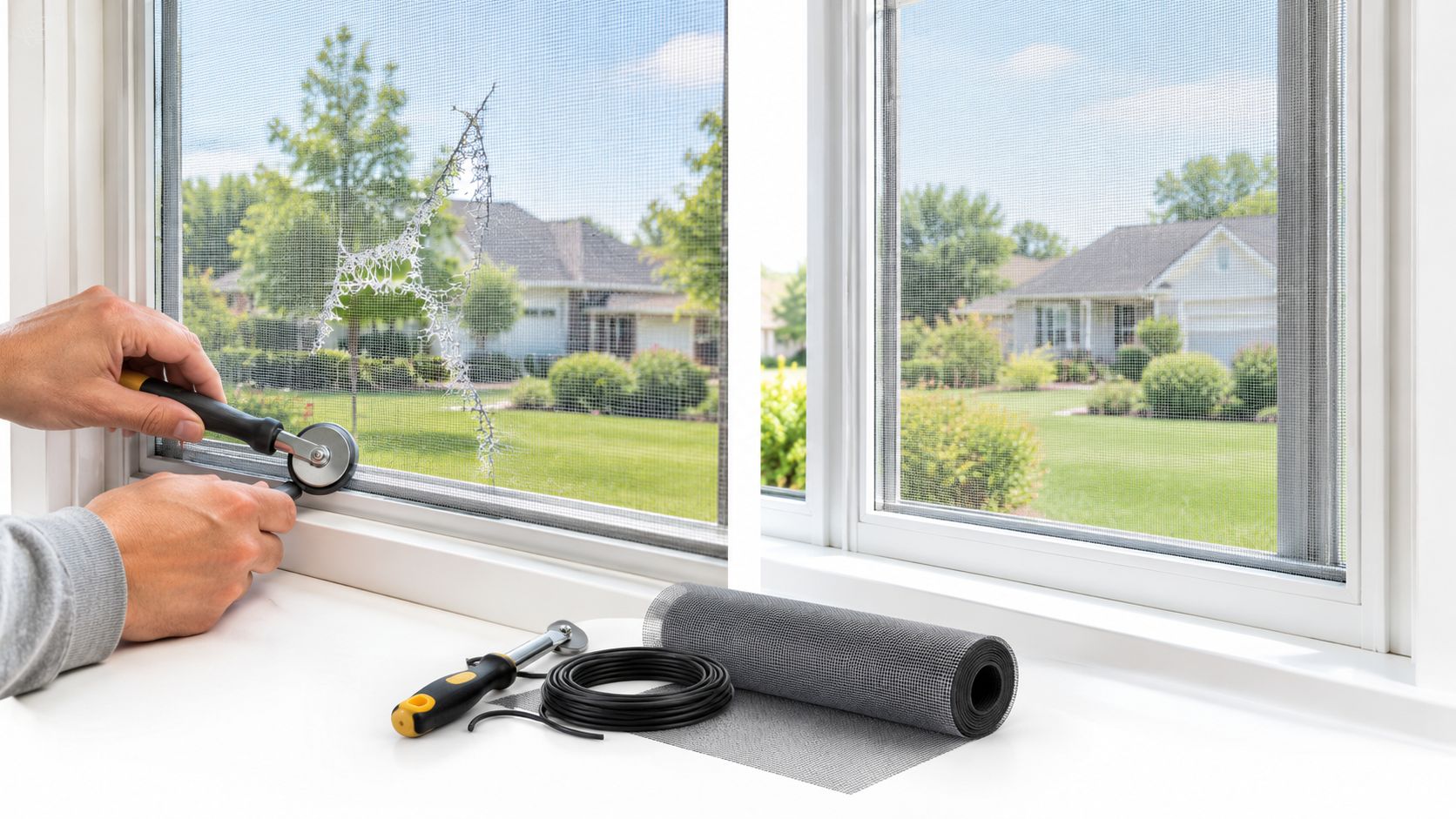
Dirty screens are easy to overlook until a spring windstorm leaves a tear across the mesh, hail dents the frame, or afternoon sunlight reveals years of dust and brittleness. In Colorado Springs, a damaged screen affects more than appearance. It can let insects inside, reduce airflow, and make otherwise clean windows look neglected.
The practical question is simple: should you patch the screen, rescreen the existing frame, or replace the entire unit? This local guide explains how Colorado Springs weather, screen materials, frame condition, and installation quality should shape that decision. It also shows when a professional window cleaning and screen repair service makes more sense than another temporary fix.
When looking for window cleaning near me, window cleaning in Colorado Springs, CO, or help with residential window cleaning, screen cleaning, and exterior window washing, use the same inspection to identify related maintenance needs. Clean glass, intact screens, and clear tracks work together to protect your property and improve its appearance.
The Colorado Springs Screen Dilemma
A homeowner in the Broadmoor area notices a jagged opening in a bedroom screen after a windy afternoon. Another homeowner near Black Forest sees fiberglass mesh pulling away from the corners after years of direct sun. In both cases, the first instinct is often to press the screen back into place or cover the opening with whatever material is nearby.
That quick fix may keep the problem out of sight, but it rarely addresses the cause. Colorado Springs homes face strong UV exposure, sudden hail, dry wind, and blowing debris. Those conditions can turn flexible mesh brittle, stretch a loose spline, or bend a lightweight frame. A screen that looks acceptable from the curb may already be too weak to survive the next weather event.

Start with the frame
The mesh is usually the replaceable part. The frame determines whether rescreening will produce a straight, secure result. Set the screen on a flat surface and check whether it sits evenly. Press lightly near the corners and along the rails. If the frame rocks, twists, has a cracked corner, or won't sit flush in the window track, a new mesh won't solve the underlying problem.
A small isolated tear is different. If the frame is square and the spline remains seated, a patch or mesh replacement may be sensible. If the entire surface has faded, feels brittle, or pulls loose when touched, rescreening is the more reliable option.
Local rule: Colorado Springs weather makes weak screens fail faster. Don't judge the repair by the size of the hole alone. Judge the condition of the frame, mesh, spline, and hardware together.
Protect appearance and pest control
A torn screen also affects how you use the room. You may keep the window closed, tolerate insects, or accept a dusty interior because opening the window no longer feels practical. Damaged mesh can also make a clean home look unfinished, especially after professional exterior window cleaning removes dirt from the glass but leaves worn screens in place.
The right decision isn't always the cheapest action today. It's the repair that keeps the window functional, fits securely, and matches the weather exposure around your home.
Repair vs Replacement Decision Matrix
Use the table below before buying mesh or scheduling service. It separates damage that needs a limited fix from damage that calls for rescreening or a complete replacement.
Screen Damage Assessment Guide
| Damage Type | Visual Cue | Recommended Action |
|---|---|---|
| Small isolated tear | One small opening, with surrounding mesh still flexible and intact | Apply a screen patch as a short-term repair, or rescreen if the mesh is aging |
| Local puncture | Clean hole caused by a pet claw, branch, or impact, with no frame movement | Patch temporarily, then rescreen when appearance and durability matter |
| Loose or failed spline | Rubber cord has lifted from the channel, especially near a corner | Remove the loose section and reinstall matching spline, or replace the mesh if tension has been lost |
| Brittle fiberglass | Mesh feels dry, cracks when pressed, or tears beyond the original damage | Rescreen the existing frame with a suitable material |
| Mesh pulling from corners | Edges lift when pressed, or the weave looks distorted near the spline | Rescreen carefully, without over-tightening the mesh |
| Bent aluminum frame | Rail no longer sits straight, frame rocks on a flat surface, or corners have separated | Replace the complete screen frame |
| Cracked corner or damaged hardware | Corner key is broken, pull tab is missing, or retaining hardware no longer holds | Replace the affected hardware if the frame remains square, otherwise replace the screen |
| Corroded or badly worn frame | Visible deterioration, weakened joints, or a frame that won't sit securely | Choose a full replacement rather than rescreening |
The three practical choices
A patch makes sense when the opening is limited and the rest of the screen remains sound. Treat it as a temporary measure, not a permanent upgrade. A patch can stop insects from using the hole, but it won't restore uniform appearance or solve widespread UV damage.
Rescreening is the best value when the frame is straight and the problem is worn mesh. This approach preserves a properly fitting frame while letting you choose fiberglass, aluminum, polyester, or a specialty material suited to the window's exposure.
Full replacement is the right call when the frame is bent, cracked, missing, or incompatible with the opening. A new mesh installed in a distorted frame may sag, leave gaps, or fail to lock into the track. Measure carefully before ordering. Lowe's measuring guidance recommends checking the inside width at the top, middle, and bottom, then using the smallest measurement. Record the height and frame depth or style as well.
Don't force a frame that won't fit. A screen that sits loosely can fall out, while one that's too large can damage the window track during installation.
Understanding Screen Materials and Lifespans
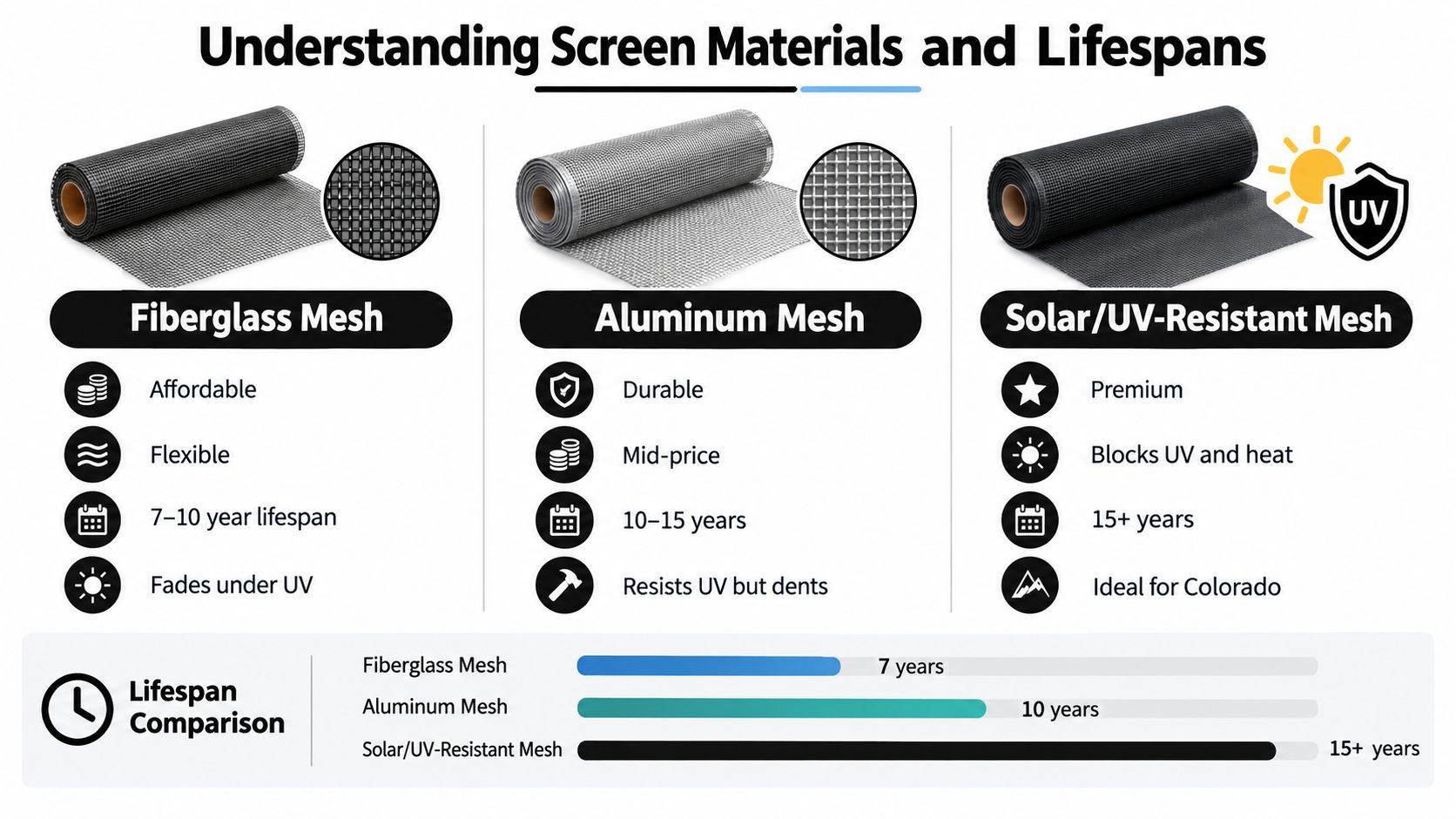
Material choice matters more in Colorado Springs than it does in a mild, shaded setting. UV exposure, wind, hail, pets, and insect pressure each favor a different type of mesh. The familiar gray fiberglass screen is affordable and easy to work with, but it isn't automatically the best replacement for every opening.
Fiberglass for ordinary residential use
Fiberglass is the most common residential screen material. Standard fiberglass mesh is commonly woven in an 18×16 pattern, meaning 18 strands per inch in one direction and 16 in the other. That design balances airflow, visibility, and cost, which is why it remains the baseline choice for many homes. This material guide explains the standard 18×16 weave and typical service life.
Fiberglass generally lasts about 10 to 15 years before UV exposure makes the strands brittle, according to industry guidance on window screen mesh. Colorado's intense sun can make older mesh feel fragile even when the frame is still in good shape. Fiberglass is forgiving during installation because it doesn't crease as easily as aluminum, making it a reasonable choice for a straightforward rescreen.
Aluminum for strength and longevity
Aluminum resists sagging and puncture better than fiberglass. In inland environments, it generally lasts 20 or more years, and some guidance places service life at 20 to 25 years or more in non-corrosive settings. The tradeoff is clear: aluminum can dent permanently from impact, and it can crease during installation if it's handled roughly.
That makes aluminum a strong choice for windows exposed to pets, routine contact, or higher wear, but hail damage should be checked carefully. A dented panel may still hold mesh, yet a permanently bent frame should be replaced rather than pressed back into shape.
Polyester and specialty screening
Lowe's identifies aluminum, fiberglass, and polyester as common replacement choices. Its replacement screen guidance describes polyester as heavier and more durable than fiberglass while remaining weather-resistant and relatively easy to install.
Pet-resistant polyester can suit homes where claws or repeated contact cause failures. Solar and UV-resistant screens can also help where harsh afternoon sun is a priority, but select them for the specific window and desired light level rather than assuming a specialty material belongs everywhere. For a useful overview of replacement materials, compare options through this replacement screening resource.
A large opening may need structural support. This Old House notes that a screen 36 inches or taller needs a center support to prevent bowing. Confirm the frame design before installing a wider panel.
DIY Screen Repair Step-by-Step Overview
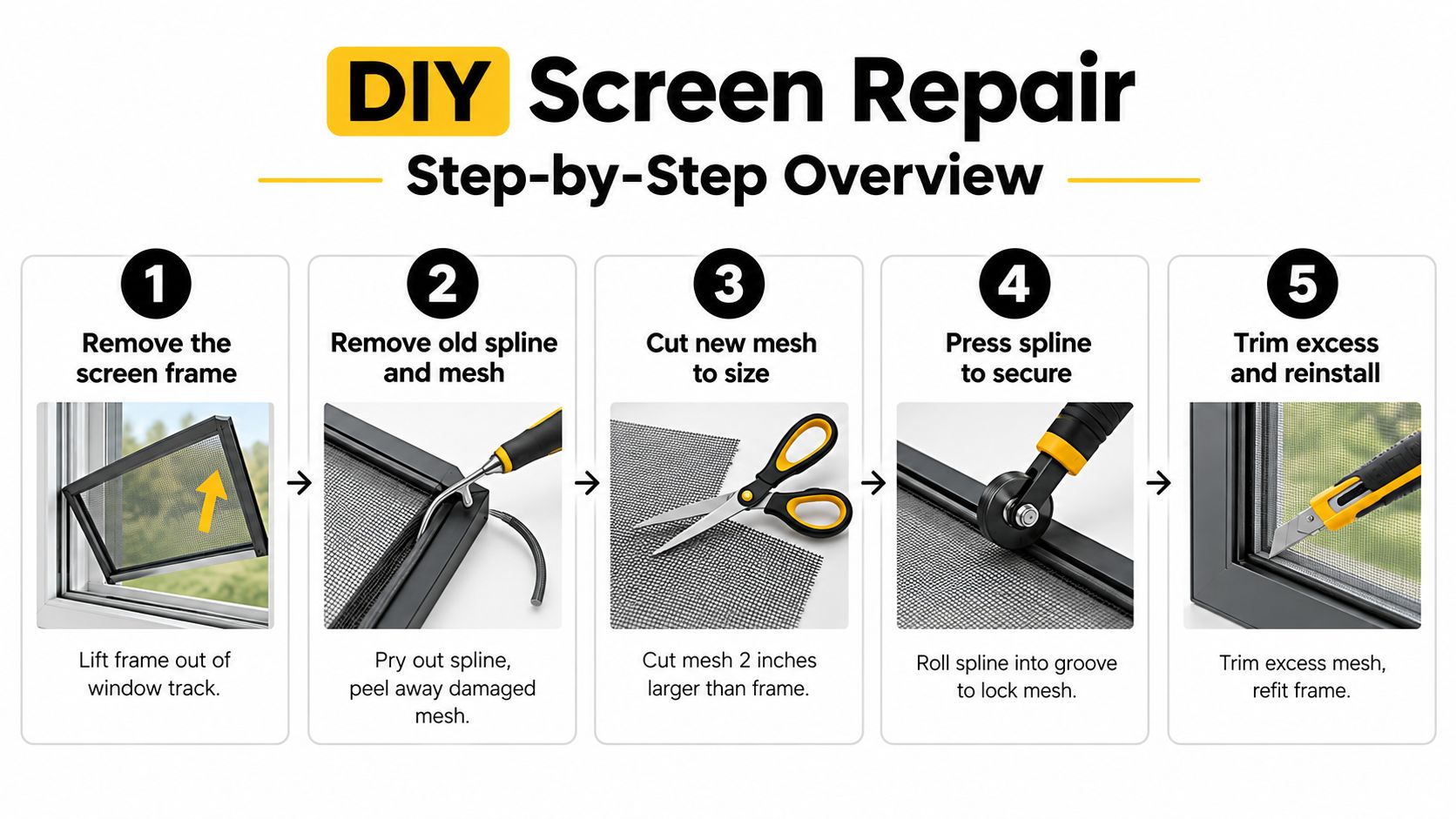
A handy homeowner can rescreen a sound, removable frame with basic tools and patience. You'll need replacement mesh, matching spline, a spline roller, a utility knife, a flat work surface, and something to clear debris from the channel. The quality of the final result depends less on speed than on alignment and even pressure.
Remove and prepare
Lift the screen out carefully. Release the springs, tabs, or plungers without twisting the frame. Put the panel on a clean, flat surface and inspect every corner before removing the old material.
Pull out the old spline. Find the cord in the channel and pry it up with a small screwdriver or pick. Peel away the damaged mesh, then brush dirt, old rubber, and debris from the groove. A dirty channel can prevent the replacement spline from seating fully.
Check the frame again. If the frame is no longer square after the old mesh is removed, stop. Rescreening a warped frame usually creates more frustration than value.
Lay, roll, and trim
Spread the new mesh over the frame with about 1 to 2 inches of extra material on every side before trimming, as described in this standard repair guide. Align the weave with the frame. Don't pull the mesh tight by hand because excessive tension can bow the rails inward and create corner gaps.
Press the spline into one corner, then use the spline roller to work around the channel. Let the rolling action create the tension. Match the replacement cord to the existing groove. Common spline diameters include 0.100 inch, 0.125 inch, and 0.155 inch, so take a sample of the old spline to the hardware store instead of guessing.
Installation warning: A screen can look tight on the worktable and still fail to fit if the mesh was pulled too aggressively. Smooth tension is more important than maximum tension.
Once the spline is fully seated, trim the excess mesh with a sharp utility knife. Keep the blade against the outside edge of the spline so you don't cut the new mesh or loosen the cord. Reinstall the panel, confirm that it sits flush, and operate the window gently.
For a visual walkthrough, use the embedded repair demonstration below.
When to Call a Professional in Colorado Springs
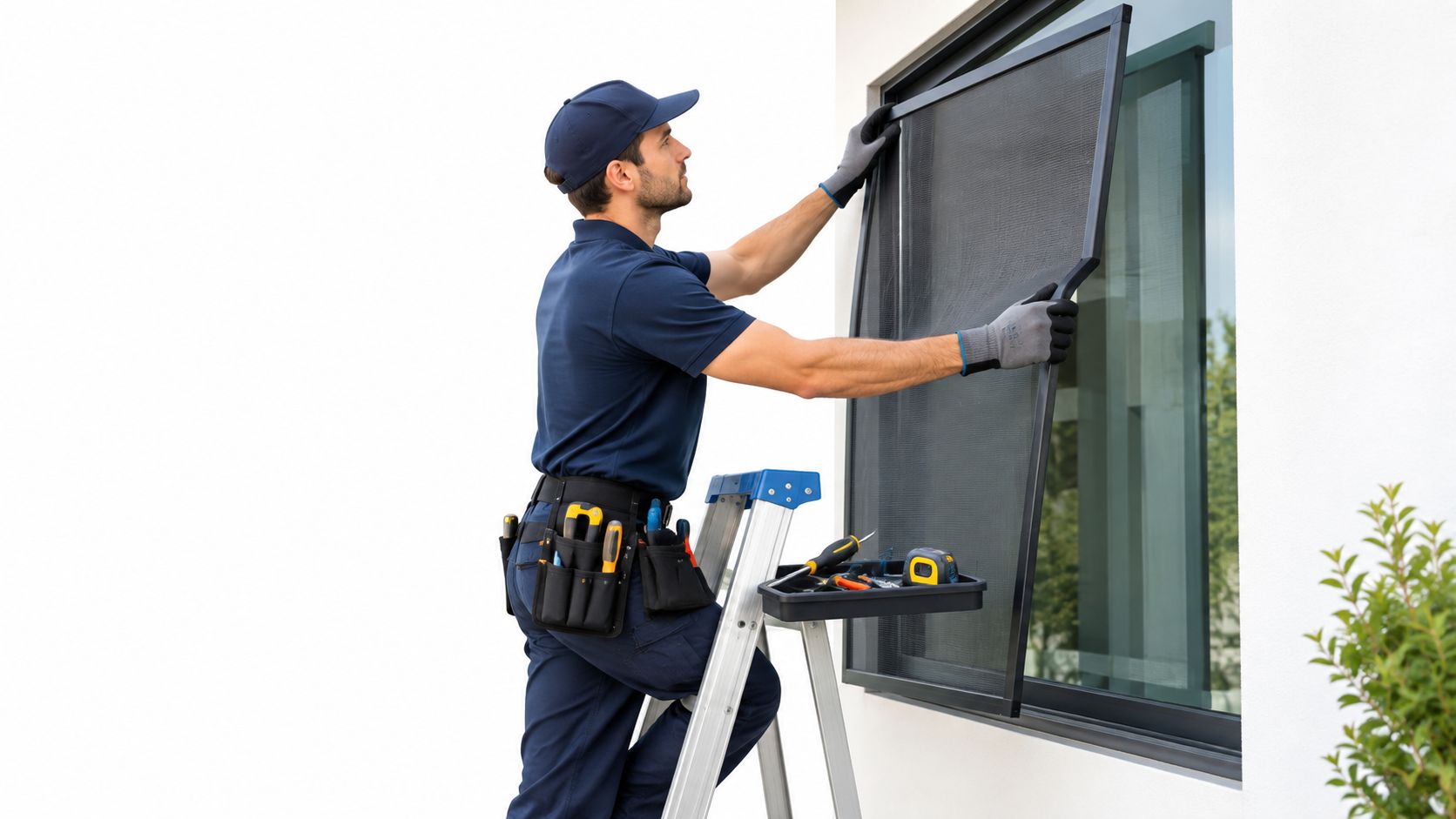
DIY rescreening is reasonable for a ground-level panel with a straight frame. It becomes a poor bargain when the screen is on a second story, the opening is difficult to access, or the frame has already been damaged. A ladder on sloped landscaping, gravel, or uneven ground can turn a simple maintenance task into an avoidable fall or a dropped panel.
Know when the panel needs precision
Call a professional when the frame is bent, corroded, cracked, or missing. Those conditions require accurate measurements and sometimes a custom-built replacement. The same applies to large panels, patio screens, solar mesh, security mesh, and openings where the screen must align perfectly with specialized hardware.
A professional also makes sense when several screens need attention at once. One visit can address loose panels, worn mesh, dirty tracks, and exterior glass. Track cleaning removes the grit that interferes with smooth operation, while exterior window washing clears the dust and residue that make screens and glass look dull together.
Combine screen work with window maintenance
Screen repair often reveals related problems. Dirt can collect in the track, hard-water residue can cloud the glass, and windblown debris can settle around the frame. A coordinated visit for professional window cleaning, screen cleaning, interior window cleaning, and exterior window cleaning keeps the maintenance work organized.
For businesses, commercial window cleaning can be scheduled alongside screen inspection where applicable. Retail stores, offices, restaurants, property managers, and other facilities benefit from a consistent maintenance plan rather than waiting for a loose or damaged screen to become a customer-facing problem.
Safety-first choice: If you can't reach the screen from stable ground or the frame won't sit square, hiring a trained exterior maintenance team is the sensible option. The goal is a secure result, not a risky afternoon on a ladder.
Cost Analysis and Long-Term Value
The cheapest repair is a patch. The best value depends on what the patch is covering. A temporary repair can be reasonable for isolated damage, but spending time and materials on an old, brittle panel only to redo it soon afterward creates false savings.
DIY rescreening costs include mesh, spline, a roller, blades, and replacement materials if the first spline size doesn't fit. The work also requires a clean table, careful tension control, and enough time to correct mistakes without damaging the frame. A professional replacement adds labor, measurement, fitting, and access to materials that match the opening and exposure.
The decision becomes clearer when you consider the whole property:
- Patch: Useful for limited damage when the surrounding mesh remains sound.
- Rescreen: Appropriate when the frame is straight and the mesh has reached the end of its useful condition.
- Replace: Necessary when the frame or corners are damaged, or when a higher-performance material is required.
Spend where the weather demands it
A basic fiberglass rescreen may be sufficient for a shaded bedroom. A south- or west-facing opening, a pet-accessed window, or a panel exposed to frequent contact may justify aluminum or polyester. Paying for a more suitable material can prevent another premature failure, though no mesh eliminates the need to inspect hail and frame damage.
Market demand also points toward broader interest in upgraded screen solutions. A market forecast referenced by the GSA projects the global window screen category rising from $5.05 billion in 2026 to $7.6 billion by 2034. That projection suggests homeowners and property operators are looking beyond basic repair, but your material choice should still follow the actual needs of the opening.
For a closer look at the factors that affect service pricing, review this window screen repair cost guide. Ask for clear scope, material details, measurement responsibility, and whether related cleaning work is included.
Final Checklist and Next Steps
Walk around the property before the next storm season and inspect every accessible screen. Don't focus only on the most visible torn panel. One weakened screen often indicates that other panels installed during the same period may have similar UV wear.
Use this inspection checklist
- Look for tears: Check the center of the mesh, the edges, and each corner for openings or pulled weave.
- Test flexibility: Press lightly on fiberglass. If it cracks, flakes, or feels unusually brittle, plan for rescreening.
- Inspect the spline: Make sure the rubber cord remains fully seated in the channel and hasn't lifted at the corners.
- Check the frame: Set removable screens on a flat surface. Replace panels that rock, twist, or show cracked corners.
- Test the fit: Reinstall the screen and confirm that it sits flush, locks securely, and doesn't wobble in the track.
- Watch the hardware: Check pull tabs, springs, plungers, and corner connections for looseness or damage.
- Clean the track: Remove grit and debris so the window opens smoothly and the screen hardware isn't forced.
- Review the glass: Look for hard-water stains, windblown dirt, and streaks that may call for exterior window cleaning or interior window cleaning.
Choose the next action
Patch an isolated opening when the mesh and frame are otherwise healthy. Rescreen a sound frame when UV exposure has made the mesh weak across the panel. Replace the complete unit when the frame is bent, cracked, corroded, or no longer fits securely.
Homeowners and businesses in Colorado Springs, Monument, Manitou Springs, Black Forest, and nearby communities can also combine screen work with residential window cleaning, commercial window cleaning, screen cleaning, track cleaning, and seasonal maintenance. That approach handles the visible problem while addressing the dirt and wear around it.
Cultivate House Detailing provides window screen repair and replacement, interior and exterior window cleaning, screen cleaning, and track cleaning for homes and businesses in Colorado Springs and surrounding communities. Visit Cultivate House Detailing to request a quote and schedule a practical, safety-focused service for your screens and windows.