You step outside on a bright Colorado Springs morning, coffee in hand, and notice what the last few months have done to your home. The siding has a dull film on it. The driveway looks darker than it should. The back patio that looked great last season now feels dusty, stained, and tired.
That happens fast here. Wind pushes fine grit onto every horizontal surface. Snow, sun, and freeze-thaw cycles leave marks that don’t rinse away with a garden hose. Even well-kept homes in Colorado Springs can start looking worn before homeowners realize how much buildup is sitting on concrete, stucco, wood, and stone.
Professional pressure washing fixes that, but only when it’s done with the right method for the surface. In this city, that matters more than people think. Our altitude changes how equipment performs. Hard water changes how surfaces dry. Local runoff rules change how a job should be set up from the start.
Your Guide to Restoring Your Home's Shine in Colorado Springs
A lot of homeowners search for pressure washing colorado springs co when they’re already frustrated. They’ve tried scrubbing one section of the patio. They’ve sprayed off the walkway. They may even have rented a machine and realized pretty quickly that blasting everything with the same wand setting is how surfaces get damaged.
That’s why the first step isn’t “use more pressure.” It’s figuring out what the surface can handle and the type of buildup present.
What Colorado Springs homes deal with
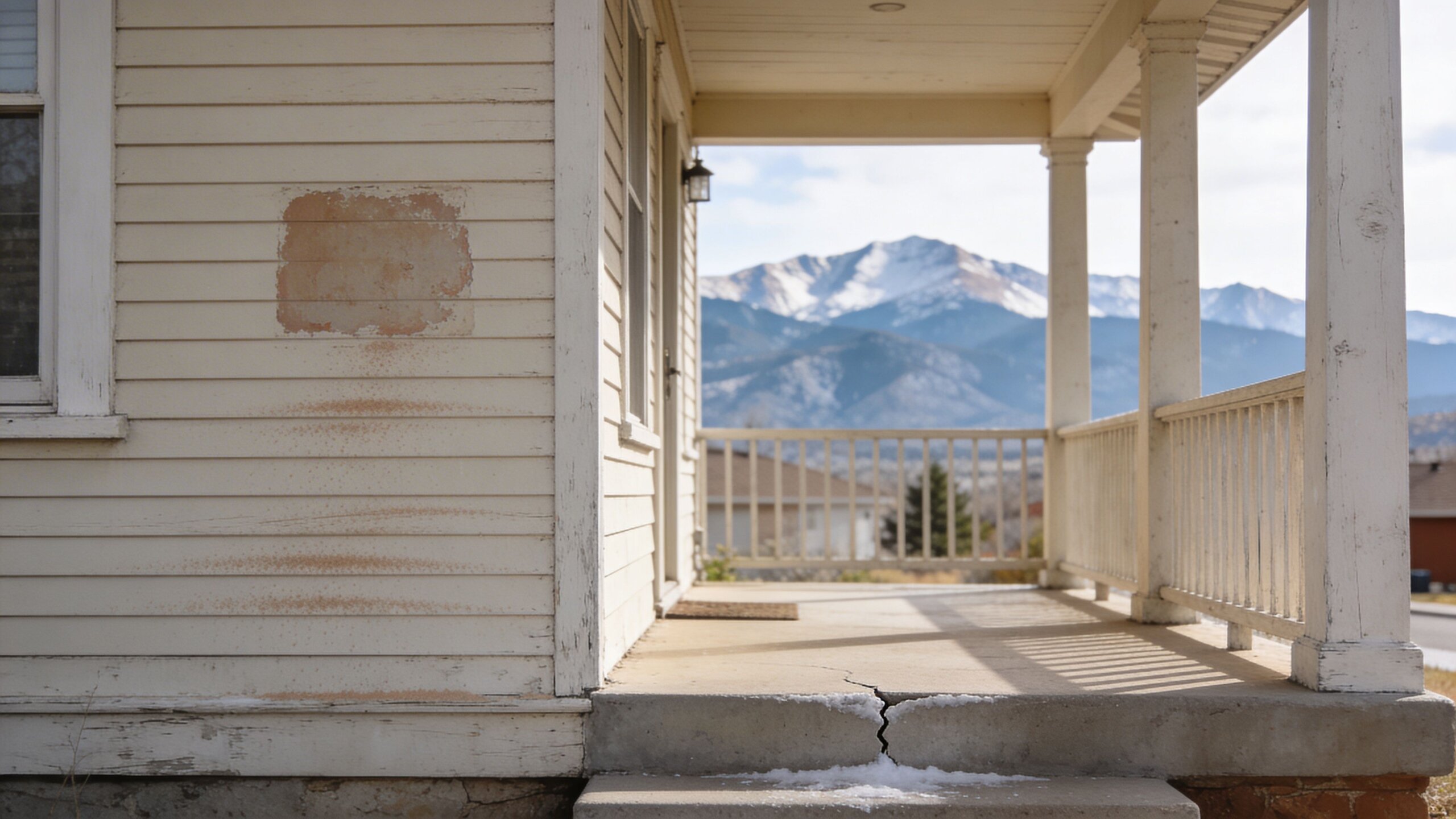
Homes here take a beating from the environment. Dust settles into textured siding. Driveways hold onto grime and runoff stains. Patios collect organic buildup in the shaded spots and mineral spotting in the sunny ones.
The result is familiar. Your house may still be in good shape, but it doesn’t look like it.
Why hiring carefully matters
Colorado Springs has about 120 active pressure washing businesses, and those companies hold more than 7,200 customer reviews with an average rating of 4.4 out of 5 stars, according to Colorado Springs pressure washing market data. That tells you two things. First, there are plenty of options. Second, average service isn’t hard to find.
What homeowners usually want is better than average. They want someone who shows up on time, explains the process clearly, protects landscaping, and leaves the surface cleaner without leaving wand marks or streaking behind.
Local reality: In Colorado Springs, a clean exterior isn’t just about appearance. It’s part of staying ahead of the weather and keeping surfaces from looking older than they are.
Pressure washing is one of the simplest ways to restore a home’s appearance without a renovation. When it’s handled properly, it lifts the film, grime, and staining that make a property feel neglected and brings the whole place back into focus.
More Than Curb Appeal The Benefits of Pressure Washing
A cleaner exterior looks better immediately. That part is obvious. The bigger value is what routine cleaning helps you avoid.
Dirt doesn’t just look bad
On many surfaces, buildup acts like a trap. Dust, organic residue, and moisture hold against the material longer than they should. On concrete, that can make stains settle in deeper. On painted trim and siding, it can shorten the life of the finish. On patios and walkways, it can create slick spots that nobody notices until someone nearly slips.
A neglected driveway is rarely just a color problem. The same goes for a shaded walkway or a back patio under trees.
The practical benefits homeowners notice
- Safer walking surfaces. Walkways, pool decks, entry paths, and patios feel more secure when slippery residue is removed.
- Easier routine upkeep. Once heavy grime is gone, normal maintenance gets simpler because dirt has fewer layers to cling to.
- A sharper-looking property. Clean concrete, siding, and hardscape can make landscaping, trim, and windows look better too.
- Better prep before painting or staining. Coatings bond better to a properly cleaned surface than to dust, chalk, or film.
- A more enjoyable outdoor space. People use clean patios, porches, and entertaining areas more often. Dirty surfaces discourage that.
Why it matters before problems become expensive
Homeowners often wait until the grime is visible from the street. By then, buildup has usually been sitting for a while. Pressure washing works best as maintenance, not just rescue work.
If you’re getting ready to host, list a home, freshen up a rental, or clean up after winter, it’s one of the fastest ways to improve how the property presents. If you’re trying to protect surfaces for the long run, it’s also one of the more sensible maintenance tasks because it removes the stuff that sits there doing damage slowly.
Clean surfaces let you spot real issues sooner. Cracked caulk, failing paint, rust bleed, and drainage stains are easier to see after the grime is gone.
Where homeowners get the most visible payoff
Some areas almost always deliver an immediate visual improvement:
| Surface | What changes after cleaning |
|---|---|
| Driveways | Tire marks, dirt film, and general darkening lift off |
| Walkways | Entry paths look brighter and feel safer |
| Patios | Entertaining spaces feel usable again |
| Siding | The whole house looks fresher from the curb |
| Retaining walls and hardscape | Texture and natural color show back up |
Pressure washing isn’t a cosmetic extra. Done at the right time, it’s straightforward property care.
Understanding Professional Pressure Washing Services
Not every exterior surface should be cleaned the same way. That’s where homeowners get into trouble with rental machines and one-setting-fits-all advice.
Pressure washing, power washing, and soft washing
Pressure washing uses pressurized water to remove dirt, grime, and surface buildup. It’s a good fit for durable materials like concrete, some stone, and many walkways.
Power washing is similar, but it uses heated water. Hot water can help on grease-heavy or commercial surfaces, though it isn’t necessary for every residential job.
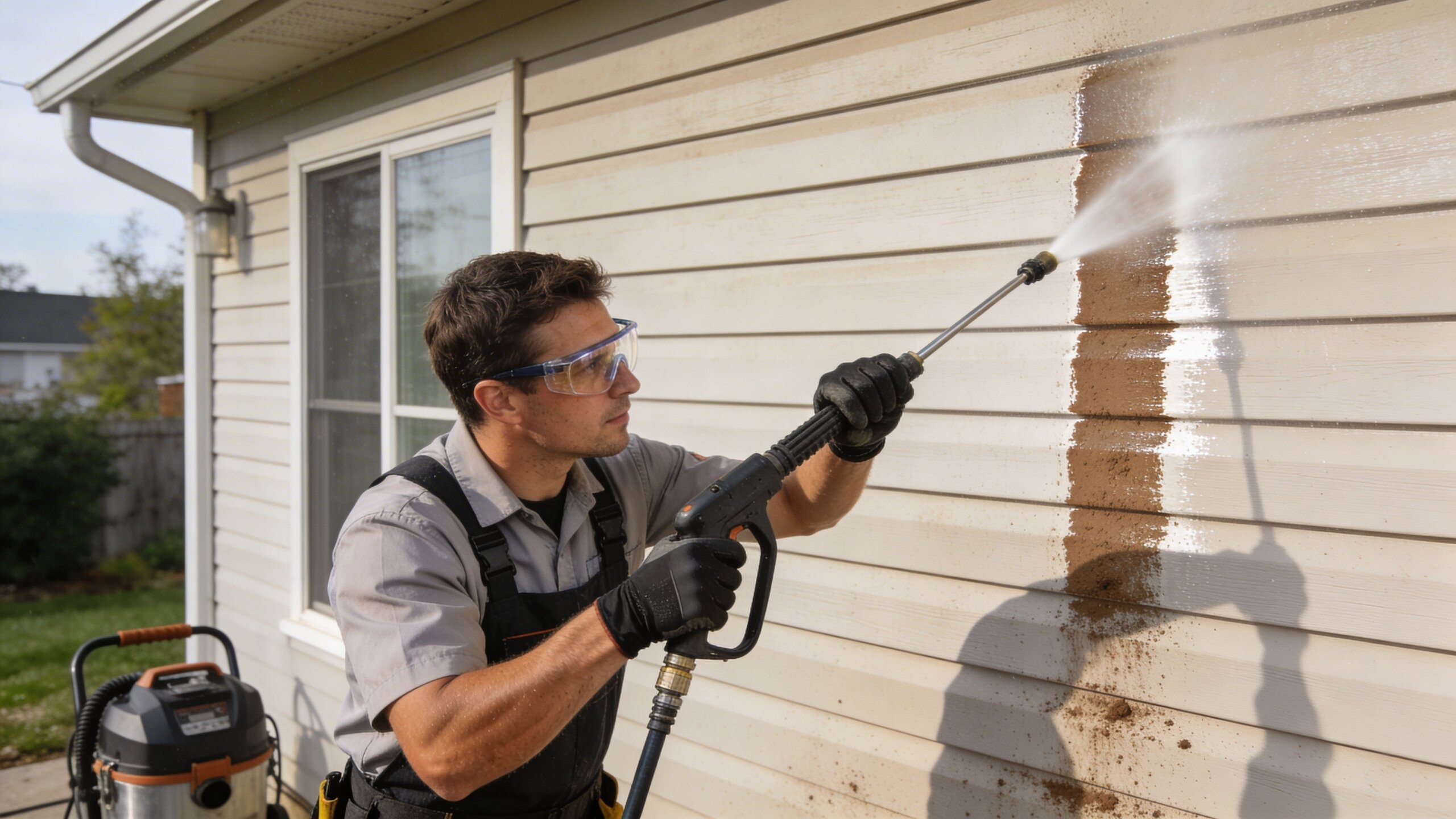
Soft washing uses much lower pressure and relies more on cleaning solutions, dwell time, and rinsing technique. It’s often the safer choice for painted surfaces, siding, stucco, trim, and areas where force could scar the material.
Why professionals talk about PSI and GPM
A homeowner usually hears “pressure” and thinks only about PSI. Pros also care about GPM, or gallons per minute, because cleaning speed and rinse quality depend on flow as much as raw force.
For Colorado Springs conditions, professional equipment typically needs between 1300 and 3100 PSI with high GPM to clean effectively without causing damage, according to this Colorado pressure washing equipment guide. The same source notes that above 4,000 PSI you start risking surface erosion, while below 1,300 PSI often won’t remove the biofilm that shows up in our local climate.
That’s why a pro doesn’t clean siding the same way they clean a driveway.
Matching the method to the material
Here’s the basic trade-off:
- Concrete and some pavers can often handle more aggressive surface cleaning.
- Stucco needs care because texture can trap grime, but too much force can rough it up further.
- Painted wood can be stripped if pressure is too high or the nozzle is held too close.
- Vinyl siding can be cleaned well, but angle and pressure matter so water doesn’t get forced where it shouldn’t.
- Composite and delicate exterior finishes often benefit from a soft wash approach instead.
Field rule: If a contractor can’t explain why they’re choosing a certain nozzle, pressure range, and wash method for your surface, they’re guessing.
Some homes need a mix of methods on the same visit. That’s normal. A driveway may call for direct pressure cleaning, while the adjacent siding and trim should be handled with a lower-pressure process. Homeowners comparing methods for delicate surfaces can also look at soft wash house cleaning to see where a lower-pressure approach makes more sense than standard pressure washing.
The best results usually come from restraint, not force. Good exterior cleaning is controlled.
The True Cost of Pressure Washing in Colorado Springs
A homeowner usually calls about price after seeing a driveway turn dark over winter or noticing the north side of the house looks dingy against the Front Range sun. The hard part is that two homes on the same street can price very differently, even when the square footage looks similar from the curb.
Exterior cleaning is labor, setup, judgment, and risk management rolled into one service. A simple concrete wash with open access is one kind of job. A stucco home with tight side yards, mineral staining, fragile landscaping, and second-story sections is another.
What changes the price
Square footage still matters, but it does not tell the whole story. The quote usually moves up or down based on how long the surface will take to clean safely and how much prep the property needs before water ever starts flowing.
Contractors are usually pricing around a few practical variables:
- Surface material. Concrete, painted wood, stucco, and masonry all require different cleaning methods.
- Buildup and staining. Light dust and seasonal grime clean faster than years of runoff marks, oxidation, or embedded dirt.
- Access and layout. Sloped lots, narrow walkways, fencing, and multi-story sections slow production and change equipment setup.
- Detail areas. Steps, railings, retaining walls, trim lines, and edges add time.
- Protection work. Plants, electrical fixtures, door seals, stained wood, and nearby windows may need extra care before cleaning starts.
In Colorado Springs, that last point matters more than many homeowners expect. A fast bid can look attractive until you realize it leaves out prep, post-rinse detail work, or treatment for heavier staining.
Typical price ranges homeowners run into
For planning purposes, many local jobs fall into familiar ranges. Driveways and walkways often price lower per square foot than house washing because flatwork is usually faster to clean. Exterior walls, trim, and mixed-material surfaces tend to take more time and more care.
If you want a clearer breakdown of how those estimates are commonly structured, this guide to pressure washing prices and rates explains the pricing models homeowners usually see.
The best use of online pricing is budgeting, not picking a contractor solely by the lowest number.
Why cheap pressure washing often gets expensive
Low bids usually come from one of three places. The contractor is underestimating the work, rushing the job, or using one cleaning approach on every surface.
That can leave you with visible striping on concrete, patchy results on siding, blown debris packed into corners, or damage that does not show up until the surface fully dries. I have seen homeowners pay twice because the first company cleaned too aggressively, left lines, or skipped the areas that needed treatment.
A solid estimate should spell out what is included. House only, or house plus soffits, gutters, entry, and spot treatment. Surface cleaning only, or cleaning plus stain treatment. Basic rinse, or detail work around doors, trim, and high-visibility areas.
Ask how the company built the quote, what surfaces are included, and what conditions could change the final price. Clear answers usually signal a contractor who knows the work.
The right quote reflects the property in front of the contractor, not a flat number pulled from a script. In Colorado Springs, good pricing also accounts for the local realities that affect cleaning results and job setup.
Navigating Altitude Water and Local Regulations
Colorado Springs isn’t a generic pressure washing market. Local conditions change how a job should be performed from start to finish.
Altitude changes equipment behavior
At 6,000+ feet, machines don’t always behave the way they do at lower elevation. Engines and pumps can feel less responsive, and pros who understand local conditions account for that before they begin cleaning.
That matters because pressure calibration isn’t guesswork here. A setup that feels fine in one region can underperform here, and over-correcting can push an operator toward settings that are too aggressive for the surface.
Hard water changes the finish
Hard water is another local headache. If the wash process is sloppy, the surface may look cleaner at first and then dry with mineral residue or uneven spotting. That’s especially frustrating on darker surfaces, trim, stucco details, and areas next to windows.
In practical terms, a good local contractor pays attention not just to how dirt comes off, but to how the surface dries. Technique matters on the rinse as much as on the wash.
Colorado Springs homes can look “almost clean” when the operator removes dirt but leaves mineral-heavy water to dry poorly. That’s not a finished job.
Runoff rules are not optional
Runoff rules are not optional. Consequently, local knowledge is more than a nice extra. In Colorado Springs, EPA-compliant water reclamation is mandatory under local stormwater regulations, captures 95 to 100 percent of runoff, can cut freshwater use by 70 percent, and helps prevent fines up to $37,500 per day, according to this Colorado Springs EPA compliance guide for pressure washing.
That affects how responsible contractors set up a site. They don’t just wash and hope runoff disappears. They pay attention to drains, containment, recovery, and where wash water is going.
Fire mitigation has changed the conversation
In areas around Black Forest, Monument, and similar foothill properties, exterior cleaning can also overlap with fire-conscious maintenance. Pine needles, dust, and debris collect in places homeowners don’t always notice until buildup gets heavy.
Pressure washing isn’t a substitute for full fire mitigation, but exterior cleaning can support a broader maintenance plan when it’s done with the right amount of force and with attention to surrounding surfaces and drainage.
Here’s what local specialization looks like in practice:
| Local factor | Why it matters |
|---|---|
| High altitude | Equipment needs proper calibration and operator awareness |
| Hard water | Poor rinsing can leave mineral residue behind |
| Stormwater rules | Runoff must be managed, not ignored |
| Fire-prone areas | Cleaning should support safe property upkeep without needless damage |
A contractor who understands Colorado Springs doesn’t just bring equipment. They bring judgment that fits the environment.
DIY Pressure Washing vs Hiring a Professional
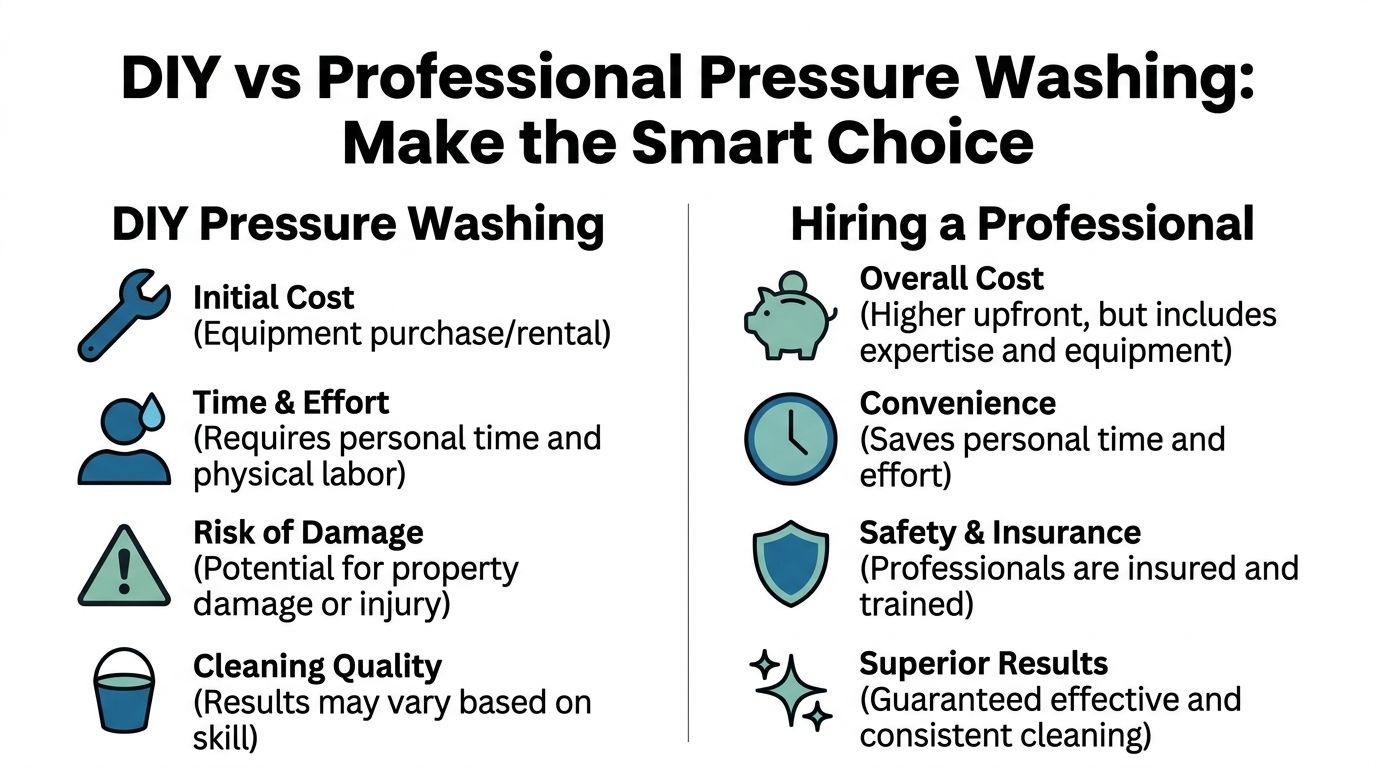
DIY pressure washing can work for small, low-risk tasks if you know the material, use the right tip, and stay realistic about the result. The problem is that many homeowners find out what they didn’t know after the damage is already done.
Side-by-side reality check
| DIY pressure washing | Hiring a professional |
|---|---|
| You handle setup, troubleshooting, and cleanup | The contractor handles equipment, setup, and process |
| Results depend on your nozzle choice and technique | Method is matched to each surface |
| Easy to leave wand marks or force water where it shouldn’t go | Lower risk when the operator knows the material |
| Usually takes longer than expected | Faster, especially on larger properties |
| You carry the safety risk | A trained crew manages the work |
Where DIY usually goes wrong
The biggest mistake is treating all grime as if it needs more pressure. That’s how concrete gets striped, paint gets peeled, wood gets furred up, and window seals get hit by overspray.
Another common issue is uneven cleaning. A homeowner starts strong on the visible area, gets tired, then ends up with sections that dry differently or still show staining. That patchy result is common on driveways and patios.
When a pro makes more sense
Hiring out is usually the smarter move when:
- The home has multiple surface types such as stucco, siding, trim, concrete, and stone in close proximity.
- Access is awkward because of slopes, retaining walls, fences, or second-story areas.
- The staining is stubborn and may need treatment, dwell time, and a careful rinse process.
- You want a finished result instead of “good enough from the street.”
A pressure washer is easy to rent. Knowing when not to pull the trigger is the part people pay professionals for.
DIY appeals because it seems straightforward. Sometimes it is. But once a property includes delicate finishes, water-sensitive areas, or visible front-facing surfaces, most homeowners are better off protecting the house and their weekend by bringing in someone who does this routinely.
How to Choose the Right Pressure Washing Contractor
The easiest way to avoid a bad experience is to ask better questions before the job is scheduled. A good contractor won’t be bothered by that. They’ll expect it.

What to verify before you hire
- Insurance matters. Ask whether they carry the appropriate coverage for property damage and on-site work.
- Method matters too. Ask how they decide between pressure washing and soft washing for your specific materials.
- Local experience helps. A contractor who understands Colorado Springs conditions will talk comfortably about hard water, runoff, and delicate surfaces common here.
- Written estimates are worth waiting for. A clear quote reduces misunderstandings and helps you compare companies fairly.
Read reviews with a filter
Don’t just look for star ratings. Read for patterns. Are customers mentioning punctuality, communication, care around landscaping, and whether the finished work held up after drying?
A lot of homeowners also don’t realize how much a company’s review quality reflects its internal follow-up process. If you want a broader look at how service businesses build and maintain trust online, these online reputation management strategies are useful background.
Questions worth asking on the phone
Here’s a simple shortlist:
- What surfaces do you recommend cleaning, and which ones should be handled with lower pressure?
- How do you protect nearby windows, plants, and painted surfaces?
- Do you account for runoff and local drainage concerns?
- What should I expect the property to look like when it dries?
- Is the estimate itemized enough that I know what’s included?
The right contractor sounds calm and specific. They don’t rely on buzzwords or vague promises. They explain the process in plain language and make it easy to understand what you’re buying.
For homeowners in Colorado Springs, that clarity is a strong sign you’re dealing with someone who knows the work, not just someone with a machine in the back of a truck.
Your Next Step to a Cleaner Home with Cultivate
Pressure washing works best when it matches the property, the material, and Colorado Springs conditions. The right process can clean up dust, grime, and weather staining without scarring the surface. The wrong one can do the opposite.
That’s why homeowners should look for local experience, clear quoting, and a contractor who understands more than just pressure. Altitude, hard water, runoff control, and fire-conscious upkeep all matter here.
If you also like to understand how local home service companies make themselves easier to find and evaluate online, this contractor's guide to local SEO for home services gives helpful context from the business side. For homeowners, that usually translates into a simpler lesson. Companies that communicate clearly online often communicate clearly during the estimate too.
For homeowners comparing options, Cultivate House Detailing is one local provider that handles exterior cleaning services including pressure washing for patios, walkways, siding, and driveways in Colorado Springs and nearby communities.
If your home looks tired from dust, runoff staining, or a long season of weather, now’s a good time to get ahead of it.
If you want a straightforward quote for exterior cleaning in Colorado Springs, from Monument to Manitou Springs, contact Cultivate House Detailing. You’ll get clear communication, a practical recommendation for your surfaces, and a service plan built around what your property needs.