You clean the glass, step back, and the view still looks off. The mountains are there, the light is coming in, but the window has streaks, a little haze near the edges, and that faint worry in the back of your mind that the cleaner you grabbed from under the sink might be the wrong one.
That’s a common problem with tinted windows in Colorado Springs, CO. Tinted film gives you privacy, glare control, and a cleaner look from the street, but it also changes how you need to approach window washing. What works on plain glass can damage film, leave scratches, or create residue that’s even more obvious in our bright sun.
If you’ve been wondering what to clean tinted windows with, the short answer is simple. Use an ammonia-free cleaner, distilled water, soft microfiber cloths, and a soft rubber squeegee. The better answer is that technique matters just as much as the liquid in the bottle, especially with our hard water, wind, dust, and intense daylight.
Protecting Your Views and Your Window Tint in Colorado Springs
A lot of homeowners around Colorado Springs notice the same thing first. The tint still looks good from across the room, but once the afternoon sun hits it, every streak and smudge shows up.

That frustration usually starts with good intentions. Someone wants clearer interior window cleaning results, grabs a regular spray cleaner, wipes with paper towels, and ends up making the film look worse instead of better. On a bright day in the Pikes Peak region, tinted glass doesn’t hide mistakes. It magnifies them.
Why tinted windows need a different approach
Tint film isn’t just glass with a darker appearance. It’s a surface that needs gentler care than standard exterior window cleaning or interior touch-ups on untinted panes.
The biggest issue isn’t usually dirt. It’s using the wrong cleaner or the wrong towel, then dragging residue and fine debris across the film. Once that happens, you can get haze, lint, fine scratching, or weakened edges.
Practical rule: Clean tinted windows as if you’re protecting a finish, not scrubbing a hard surface.
Colorado Springs makes the problem more obvious
Local conditions make bad cleaning habits show up fast.
- Bright sun makes even light streaking easy to see.
- Windblown dust settles on the glass quickly, especially on exterior-facing windows.
- Hard water leaves behind minerals that can create spotting if the wrong water or rinse method is used.
- Large view windows in homes and storefronts are less forgiving than smaller panes.
That’s why safe, streak-free window cleaning in Colorado Springs, CO often comes down to using the right supplies and keeping the process controlled from start to finish.
For homeowners and business owners, the goal isn’t just clean glass. It’s protecting the tint so it keeps doing its job while the view stays sharp.
The Right Supplies for Safe Tinted Window Cleaning
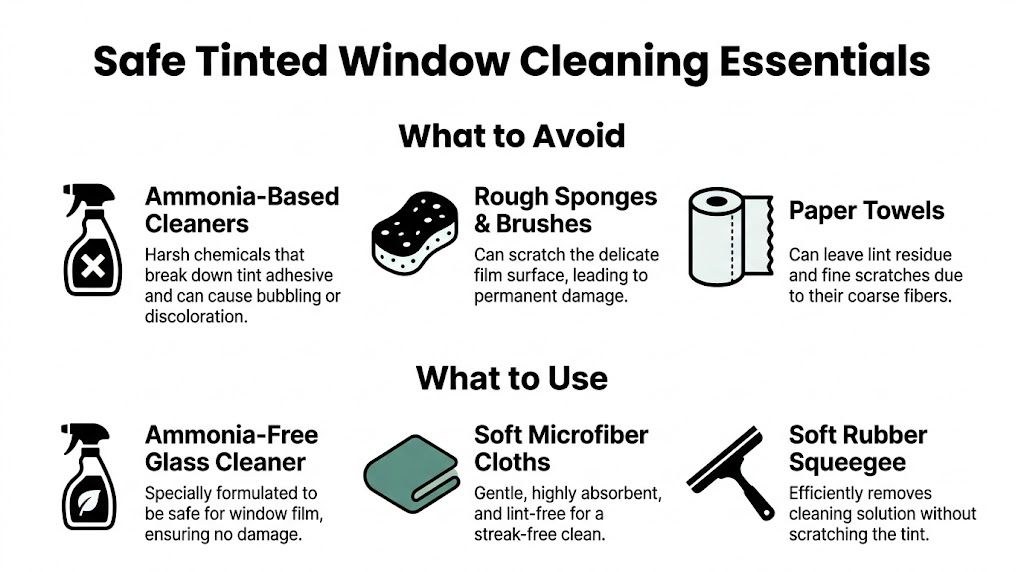
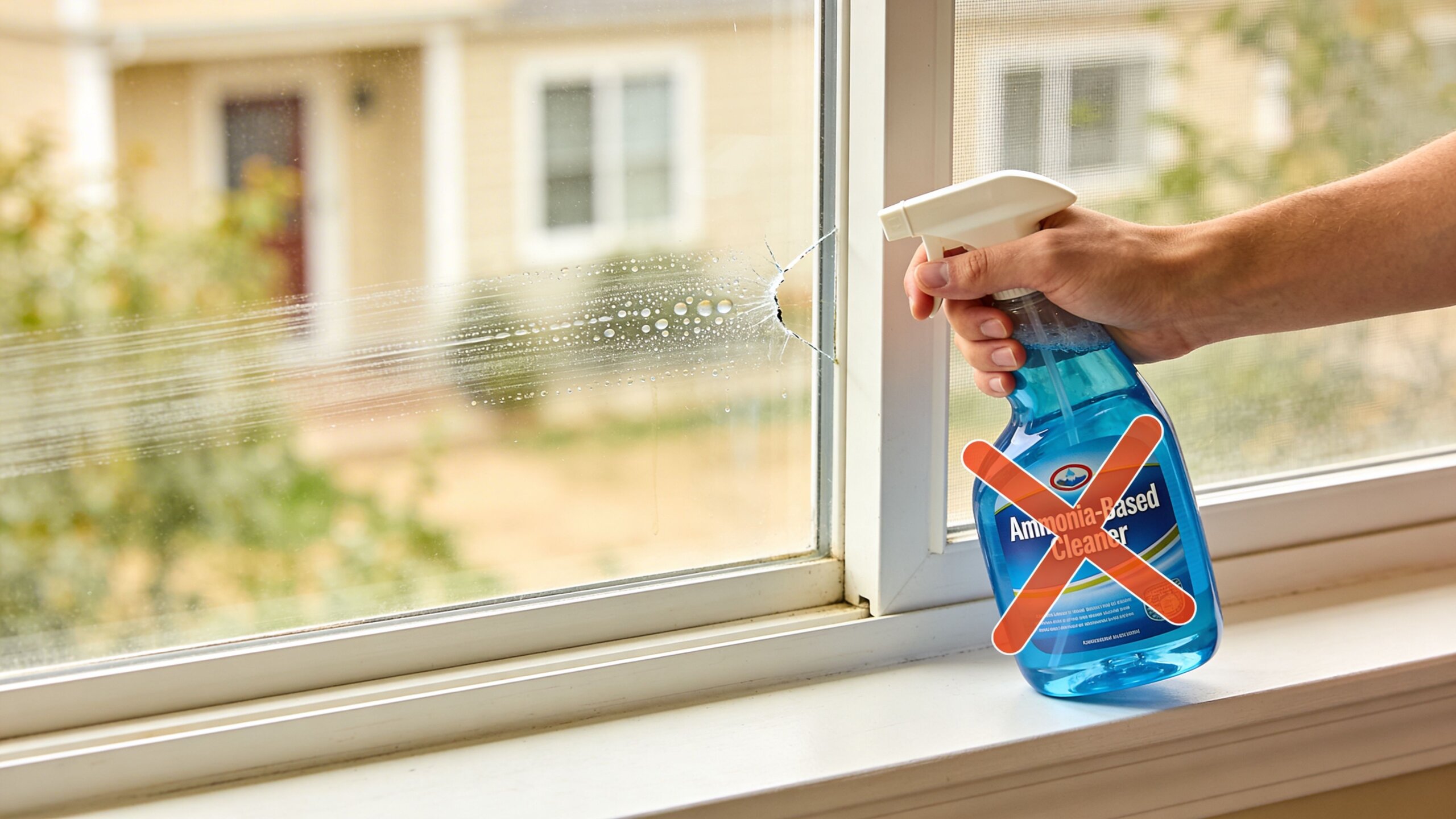
If you only remember one thing, remember this. Don’t use ammonia on tinted windows.
According to Chemical Guys’ guidance on cleaning tinted windows, ammonia is present in approximately 80-90% of standard household glass cleaners and can reduce tint lifespan by up to 50% within 1-2 years of improper care. That’s why the question isn’t just what to clean tinted windows with. It’s also what to keep far away from the film.
What to use instead
For most residential window cleaning and light commercial window cleaning needs, a simple setup works best.
| Supply | Why it works |
|---|---|
| Distilled water | Helps reduce mineral spotting, which matters in Colorado Springs where tap water often leaves residue behind |
| Mild ammonia-free dish soap | Gives you gentle cleaning power without attacking the film |
| Spray bottle | Lets you control how much solution you use |
| Soft microfiber cloths | Safer on film than rough paper products |
| Soft rubber squeegee | Helps produce a cleaner, more even finish |
A reliable home mix is distilled water with 2-3 drops of mild, ammonia-free dish soap per quart, based on the verified guidance provided above from Chemical Guys. Keep the mixture light. More soap doesn’t mean cleaner glass. It usually means more residue to chase.
What to leave in the cabinet
Some tools and products create damage fast. Others create damage slowly enough that homeowners don’t realize what caused it.
- Ammonia-based glass cleaners can weaken the adhesive in the film.
- Paper towels can leave lint and create fine wear over time.
- Scrub pads and rough sponges can scratch the tinted surface.
- Harsh degreasers can leave a film or react poorly with window tint.
- Dirty rags can carry grit that drags across the surface.
If you want a helpful companion read for vehicle glass, this guide on the best way to clean car windows without streaks does a good job covering the habits that lead to a clearer finish.
Why professionals care so much about tools
Window cleaning isn’t just product choice. It’s tool control. A soft, clean towel, a fresh squeegee blade, and water that doesn’t leave minerals behind all matter more than people think.
For a closer look at why equipment changes the result, this article explains why professional window cleaning tools make all the difference.
Tinted glass rewards gentle tools and punishes shortcuts.
If your goal is safe interior window cleaning, cleaner exterior window washing, and fewer streaks in direct Colorado light, start with a small kit and keep it dedicated to glass only. Don’t use the same towel on tracks, frames, and film.
A Step-by-Step Guide to Cleaning Your Tinted Windows
A good result comes from a calm process, not extra force. Tinted film responds best to light pressure, controlled moisture, and clean tools.
Start with dry dust removal
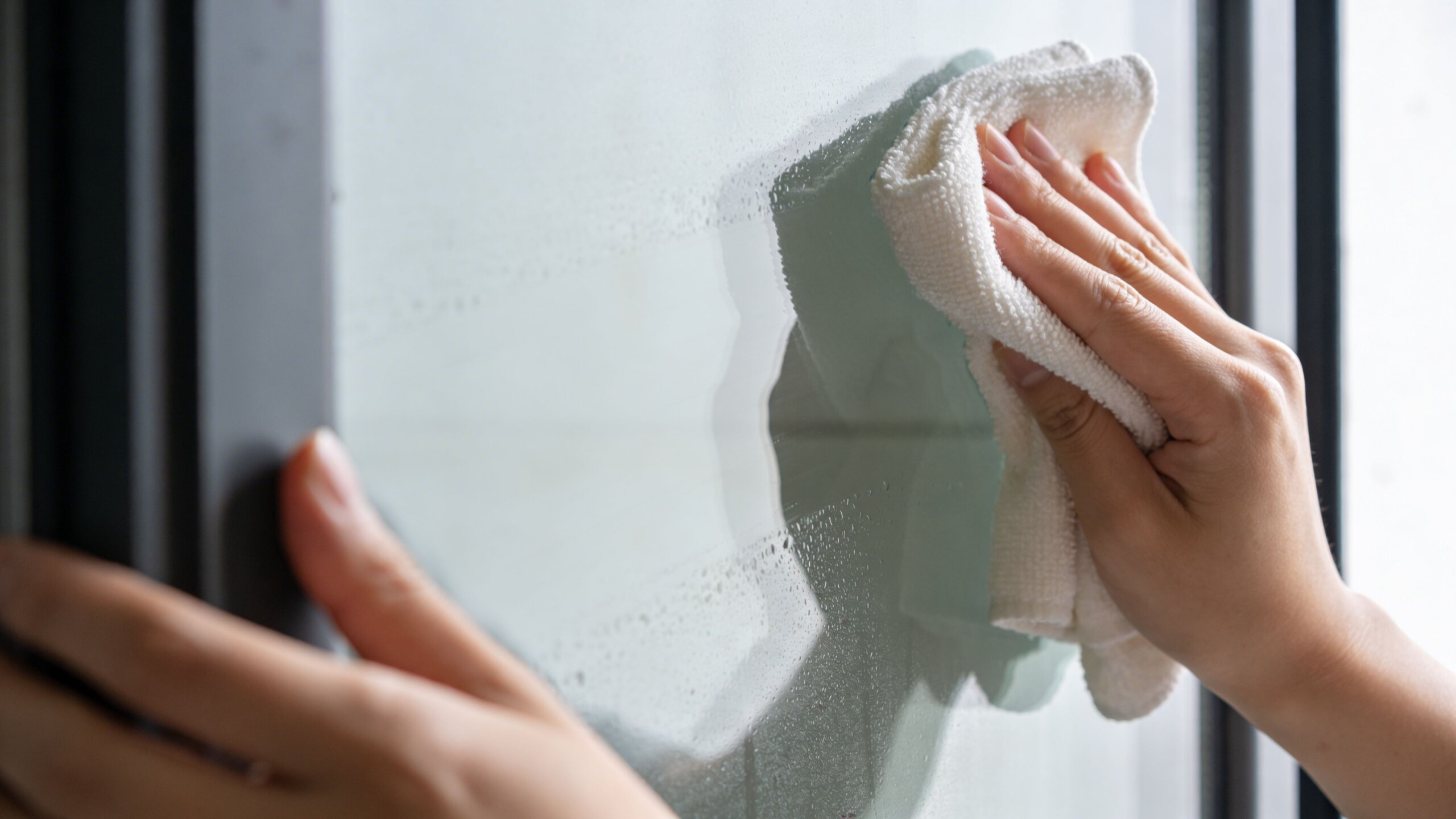
Before any liquid touches the glass, remove loose debris with a clean, dry microfiber cloth. This step gets skipped all the time, and it’s one of the main reasons a simple cleaning turns into fine scratching.
Dust, pollen, and grit act like abrasives once they get wet. In Colorado Springs, where dry air and wind move dust around constantly, this first pass matters more than most homeowners expect.
A quick pre-wipe is enough. You’re not polishing yet. You’re just clearing the surface so the next step doesn’t grind debris into the film.
Apply solution to the cloth, not the glass
Mist your cleaning solution onto a microfiber cloth instead of spraying the tinted window directly. That keeps excess liquid from collecting around the edges, where moisture can work its way into vulnerable areas.
This is especially important for residential window cleaning on larger panes and for interior window cleaning near frames, seals, and finished trim.
Use enough solution to lift grime, not enough to flood the film.
Wipe from the top down
Once the cloth is lightly damp, wipe the window from top to bottom. Keep your pressure gentle and consistent.
Some people like circular motions. Others prefer straight passes. Either can work if the cloth is clean and your pressure stays light. What matters most is avoiding aggressive scrubbing.
A practical order looks like this:
- Top edge first so dirt doesn’t travel into already cleaned areas.
- Middle section next with smooth, overlapping passes.
- Bottom section last because it usually holds the most residue.
- Edges carefully with a lighter touch and less moisture.
Use a squeegee for the cleanest finish
Many DIY jobs improve immediately with this step. A soft rubber squeegee removes moisture more evenly than a towel alone, which is why it’s a staple in professional window cleaning.
According to Pure Reach Window Cleaners’ tinted house window cleaning guidance, professionals achieve 95-98% streak-free results by using a squeegee with top-to-bottom straight pulls and wiping the blade after each pass. Improper methods can drop results to 70% and may introduce micro-abrasions that reduce film lifespan by up to 30%.
That sounds technical, but the move is simple.
- Start at a top corner.
- Pull straight down in one smooth pass.
- Overlap the next pass slightly.
- Wipe the blade before the next stroke.
That blade wipe is one of the easiest ways to avoid dragging residue back onto the glass.
For a visual example of controlled technique, this quick demo helps:
Finish with a dry microfiber buff
After the squeegee pass, use a fresh, dry microfiber cloth to touch up any remaining moisture along the edges or corners. Don’t rework the whole window unless you see a clear issue.
This final buff is also the right time to check the glass from different angles. What looks clean head-on may still show a faint streak when the light shifts.
A simple routine that works
For most homes and storefronts, the safest process is:
- Dry wipe first
- Lightly damp cloth second
- Gentle top-down wipe
- Soft squeegee finish
- Dry edge buff
That process works better than spraying heavily and wiping until the glass looks tired.
If you’re handling larger panes, upper-story exterior window cleaning, or windows with built-up mineral spotting, the same method still applies. It just gets harder to execute consistently without the right access, water quality, and tools.
Common Mistakes That Can Ruin Your Window Tint
Tint damage rarely starts with one dramatic mistake. More often, it comes from small habits repeated over time.
The cleaner is a little too harsh. The towel is a little too rough. The film gets cleaned a little too soon after installation. Then the haze, lifting, or scratching starts to show.
Cleaning too soon after installation
New tint needs time to settle and bond. Impatience during this period often causes significant problems.
According to Auto Trim Group’s guidance on keeping tint flawless, the 3-5 day curing period is the industry standard after tint installation, and premature cleaning contributes to a 30-40% higher failure rate because moisture can get under the edges before the adhesive has fully bonded.
If your tint is new, ask the installer for their exact care window and follow it. A clean-looking pane today isn’t worth edge failure later.
Using abrasive materials on the film
Tint film is not the place for scrub pads, rough paper towels, or blades. On plain glass, a razor scraper may be useful in the right hands. On film, it’s a fast way to create permanent damage.
Watch out for these common mistakes:
- Paper towels on repeated cleanings because they can leave lint and create fine wear
- Scouring pads for stuck-on residue because they scratch
- Old shop rags because they often carry embedded grit
- Heavy-handed scrubbing near corners because edge damage starts there
If a tool feels aggressive in your hand, it’s probably too aggressive for tint.
Treating all residue like it should be scraped
Some spots don’t wipe off easily. Adhesive smears, paint specks, and construction dust can tempt people into scraping first and asking questions later.
That’s how minor cleanup turns into film replacement.
If you’re dealing with failing or outdated film instead of routine cleaning, this article on how to remove auto window film is useful background because it shows how different removal is from normal maintenance. Cleaning should preserve the film, not test how much abuse it can take.
For more everyday pitfalls that affect both tinted and standard glass, this guide on common window cleaning mistakes to avoid is worth a read.
Ignoring process discipline
A lot of poor results come from rushing.
One dirty towel gets used for everything. The cleaner is sprayed too heavily. Edges stay wet. The window is wiped in direct sun. By the time the glass dries, there are streaks and fresh frustration.
Tint rewards patience and punishes sloppy habits. If you want the finish to last, every step needs to stay controlled.
Why DIY Cleaning Often Falls Short in Colorado Springs
DIY advice usually assumes average conditions. Colorado Springs isn’t average.
A basic online tip like “just use a vinegar mix and wipe with a cloth” ignores what local windows deal with every week. Our climate puts more stress on both the glass and the cleaning process.
Hard water changes the job
Exterior window cleaning in Colorado Springs often runs into the same issue. Mineral-heavy water leaves visible residue after the surface dries.
That matters even more on tinted windows, because the darker appearance can make spots and haze stand out. A homeowner may think the window is still dirty, but mineral residue left behind by the rinse or the mix itself is the underlying problem.
Guidance specific to high-altitude, arid climates often gets missed. As noted by Choice Window Tint’s discussion of tinted window cleaning challenges, hard water mineral buildup is a common problem in places like Colorado Springs, and vinegar solutions, while popular, may lead to higher failure rates on modern tints in dry climates. The same source notes that pH-neutral chelating agents are proving more effective.
Dust and sun make timing harder
Dust settles fast here. Even after a careful wipe-down, wind can put fresh debris back on the surface before you finish the next pane.
Then there’s the sunlight. Strong daylight makes streaks easy to spot, but it also dries solution too quickly if you’re cleaning at the wrong time. That leaves behind drag marks, uneven drying, and excessive towel work.
Access and consistency become the real problem
Single-pane touch-ups are one thing. Full residential window cleaning on upper-story homes, or commercial window cleaning on storefronts and office glass, is another.
What usually breaks down in DIY work isn’t effort. It’s consistency.
- One window gets too much solution.
- Another dries before it’s squeegeed.
- Exterior panes get spotted again.
- Screens and tracks stay dirty, so the whole opening still looks neglected.
That’s why homeowners looking for window cleaning near me often start with a simple plan to wash a few windows and end up deciding the better route is professional help. In this climate, the challenge isn’t just cleaning the glass. It’s getting a uniform, streak-free result across the whole property.
The Cultivate House Detailing Difference for Your Home or Business
When tinted windows need more than a light wipe-down, professional service starts making sense quickly. The benefit isn’t just labor saved. It’s using the right process for the glass, the film, and the local environment.
For homes and businesses in Colorado Springs, CO, that means controlling contamination, using tint-safe methods, and avoiding the kind of shortcuts that create edge damage, streaks, or haze.
Better process, fewer risks
Professionals don’t treat every pane the same. Tinted glass needs a lighter touch, cleaner tools, and a more deliberate workflow than standard window washing.
That attention to detail matters. In the verified guidance drawn from the referenced professional video, using a razor scraper on the glass only, never on the film, can remove 99.9% of particles before washing, and separate tools help prevent cross-contamination, which can reduce amateur success rates by up to 40% when those habits aren’t followed. The original reference is this professional cleaning walkthrough on YouTube.
What homeowners and property managers can expect
A strong professional window cleaning service usually includes more than wiping the glass.
- Interior window cleaning for fingerprints, haze, and film-safe detailing
- Exterior window cleaning that accounts for dust and mineral spotting
- Screen cleaning so debris doesn’t blow back onto freshly cleaned glass
- Track cleaning to improve the full appearance of the window opening
- Safer access methods for upper-story glass and difficult layouts
That matters for homes in neighborhoods with large view windows, and it matters for commercial window cleaning where appearance affects first impressions every day.
Clean tinted windows should look clear, even, and quiet in the light. No haze, no lint, no fight with the afternoon sun.
For property owners who want reliable window cleaning in Colorado Springs, CO, the difference is usually visible right away. Better water, better tools, and a tighter process produce cleaner glass and help protect the tint you’ve already paid for.
If you’d rather stop experimenting with sprays and towels and get a clear, professional result, Cultivate House Detailing provides residential and commercial window cleaning in Colorado Springs and nearby communities. From interior and exterior window cleaning to screen and track cleaning, the team handles the details that make tinted windows look sharp without putting the film at risk. Request a quote and get your view back.
Prefer to leave it to a professional? Cultivate House Detailing offers residential window cleaning in Colorado Springs. Get a free quote.