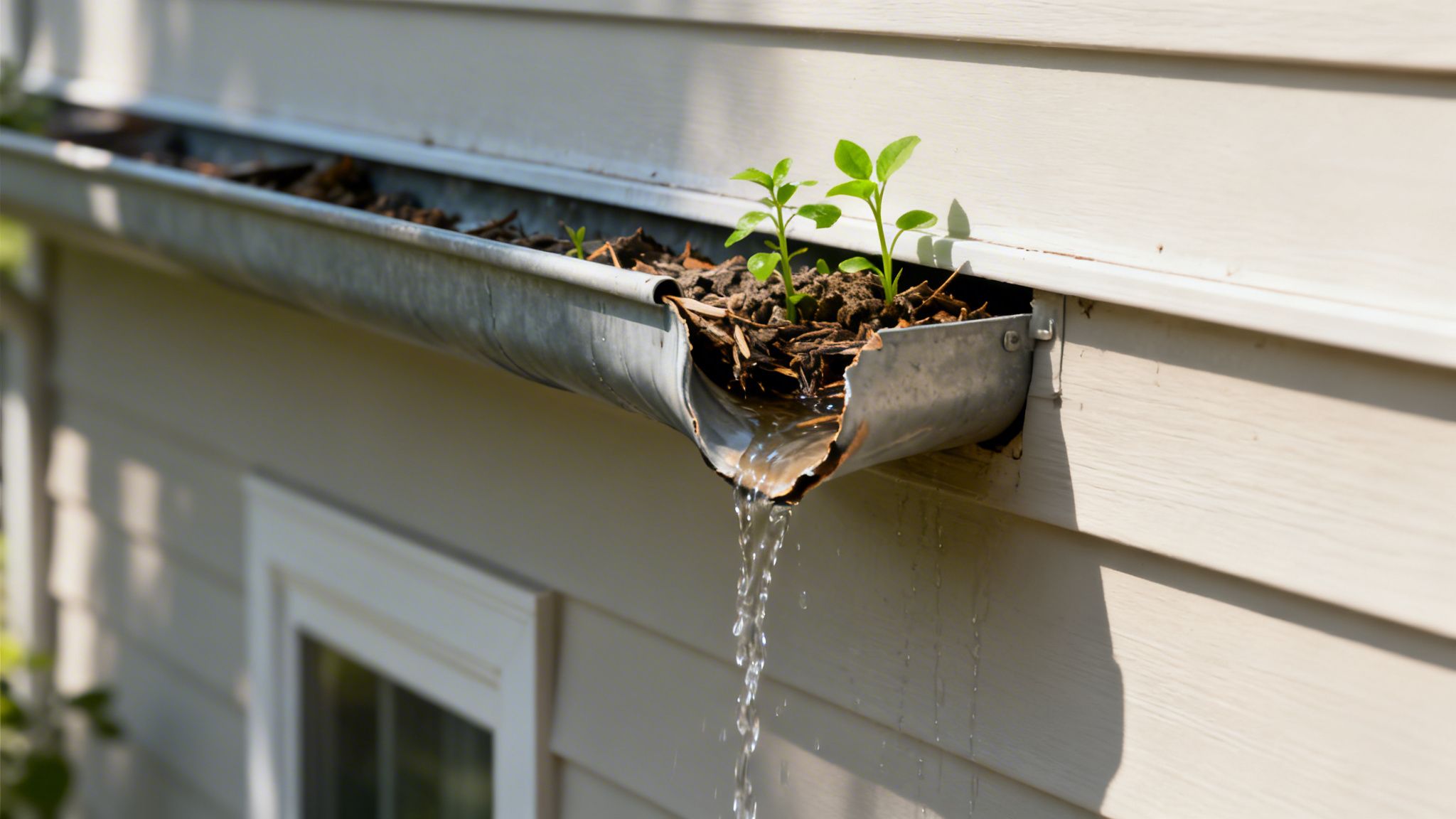
If you've looked up at your gutters after a windstorm in Colorado Springs and seen pine needles packed into the corners, you're not alone. A lot of homeowners notice the mess, plan to deal with it later, and then get busy until the next hard rain, early snow, or wildfire warning puts the issue right back in front of them.
That delay is where small exterior problems turn into expensive house problems.
In our area, gutter cleaning and maintenance isn't just about keeping water moving off the roof. It's also about protecting siding, fascia, foundations, landscaping, and in some neighborhoods, reducing combustible debris near the roofline. Colorado's mix of sun, hail, snow, pine litter, and freeze-thaw weather makes gutters work harder here than many national articles admit.
Why Gutter Maintenance Is Essential for Homeowners
You see the problem after the storm, not during it. A hard Colorado rain hits in the afternoon, runoff jumps the front gutter instead of dropping through the downspout, and by evening you have splatter on the siding, washed-out mulch, and a wet strip of soil tight against the foundation.
That is how a gutter problem usually starts here. Not with a dramatic collapse. With water going where it should not go.
A small clog can turn into house damage fast
Gutters only have one job. Collect roof runoff and move it away from the house. Once debris slows that flow, water starts spilling over the face, running behind the gutter, or backing up at the roof edge.
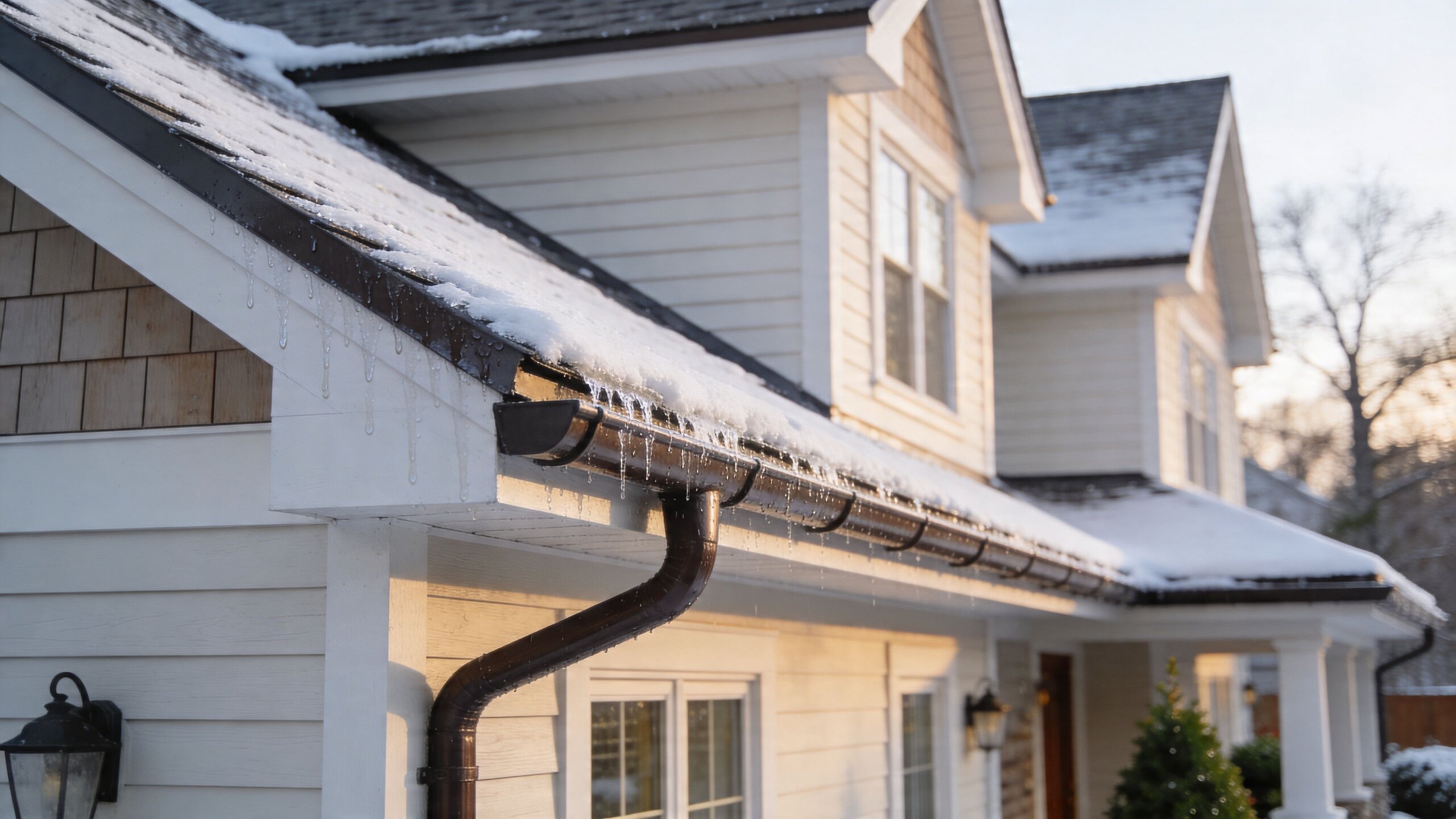
In Colorado Springs, that backup is not just a rain issue. Snowmelt refreezes. Afternoon thaw turns into overnight ice. Dry pine needles and roof grit sit in the same trough that is supposed to carry water, and in fire-prone areas, that debris also creates fuel near the roofline. Generic national guides usually stop at moisture damage. Here, neglected gutters can contribute to both water intrusion and ember risk.
If you want a clear picture of how quickly overflow gets out of hand during our heavier storms, this breakdown of what happens inside your gutters during heavy Colorado rainstorms shows why minor buildup causes major runoff problems.
The real cost is usually outside the gutter
Homeowners rarely call because they are worried about the gutter itself. They call because they noticed a stain, a drip, erosion, or ice hanging where it should not be.
I see the same pattern over and over. Debris builds up in one corner. Water overshoots the system during a storm. That water keeps hitting the same area of siding, fascia, window trim, or soil line. Given enough time, the repair bill moves well beyond a routine cleaning.
Common signs the system is already underperforming include:
- Water marks on soffits or siding
- Mulch and soil washout below roof edges
- Peeling paint near the fascia
- Persistent damp areas near the foundation
- Sagging gutter runs that keep holding water and debris
- Overflow at one corner during heavier rain or snowmelt
Some of those issues look cosmetic at first. They are not.
In Colorado, neglect also raises fire concerns
This point gets missed all the time. In treed parts of Colorado Springs, Black Forest, and Monument, gutters collect dry needles, seed pods, and roof grit for months at a time. Once that material dries out, it is no longer just a blockage. It is combustible debris sitting at the roof edge.
That matters during fire season and during high-wind ember events. A clean gutter reduces one more place where embers can lodge and smolder. It will not harden a home by itself, but it is one of the simpler maintenance tasks that supports defensible-space work.
Routine maintenance is cheaper than repairs
A scheduled cleaning is predictable. Fascia replacement, interior leak repair, foundation drainage correction, or ice-related gutter reattachment is not.
That is the trade-off. Spend a modest amount on regular maintenance, or risk paying for carpentry, paint, drainage work, or roof-edge repairs later. For most homeowners, the smart move is to keep the water path open and catch small alignment or fastening problems before they spread.
That is why gutter maintenance belongs on the regular home care list, especially in a climate like ours. At Cultivate, we treat it as preventive exterior maintenance, not a cosmetic chore.
Unique Gutter Threats in the Pikes Peak Region
Generic gutter advice usually assumes one main problem: rain. Around Colorado Springs, Black Forest, Monument, and nearby areas, that's too narrow.
Our gutters deal with several different threats across the year. Pine needles build up differently than broad leaves. Dry debris raises fire risk. Hail can knock a system out of alignment. Freeze-thaw cycles turn small drainage issues into structural strain.

Pine needles are more than a clog
In heavily treed neighborhoods, pine needles don't just sit loosely on top. They mat together with roof grit and dust, especially in valleys and gutter corners. Once that happens, water starts flowing over or behind the debris instead of through the system.
In wildfire-prone areas, the risk goes beyond drainage. Dry needles collected at the roof edge can act like ready fuel if embers land there.
A 2023 Colorado State Forest Service report noted that 70% of homes in high-risk zones like Black Forest have inadequate gutter clearing, contributing to ember accumulation that can ignite structures during a wildfire. The same source notes that professional clearing can reduce these fuel loads by up to 80%, as explained in this overview of gutter cleaning services and fire-mitigation clearing.
That matters here because rooflines are vulnerable. Gutters packed with dry debris create a bad combination: exposure, airflow, and fuel in one place.
Freeze-thaw weather exposes weak spots fast
Colorado doesn't need constant snow to damage gutters. The bigger issue is repeated thawing during the day and refreezing at night.
Water trapped by debris or poor drainage freezes, expands, and adds stress at seams, brackets, and low spots. A gutter that looked only slightly clogged in October can start pulling away by mid-winter if runoff keeps freezing in the same area.
That's one reason local gutter work has to focus on flow, not just appearance. A quick cleanup that leaves compacted material in downspouts or leaves standing water in a low section isn't much of a solution.
In the Pikes Peak region, a gutter can fail from dryness, ice, or hail. Sometimes all three in the same year.
Hail and storms can shift the whole system
Hail damage isn't always obvious from the driveway. Homeowners tend to look for cracks or major dents, but the more important issue is often subtle misalignment.
A gutter run can get knocked out of pitch, a bracket can loosen, or a seam can start leaking after a storm. Then the next rain reveals the problem by sending water over one section while the rest of the system seems normal.
What makes this tricky is timing. A storm-related issue can show up well after the weather event, especially if the damaged section only misbehaves under heavier flow. That's why post-storm inspection matters in Colorado Springs.
For a closer look at what intense local weather does to drainage systems, this article on what happens inside your gutters during heavy Colorado rainstorms is a useful local reference.
What works here and what usually doesn't
Some maintenance habits hold up well in this region. Others sound good and underperform.
| Approach | What works in Colorado Springs | What often falls short |
|---|---|---|
| Debris removal | Clearing needles, roof grit, and downspout buildup completely | Only skimming the top layer |
| Fire mitigation | Treating gutters as part of roof-edge fuel reduction | Ignoring dry debris because it isn't blocking water yet |
| Storm follow-up | Checking pitch, seams, and brackets after hail or wind | Waiting for a visible leak indoors |
| Seasonal timing | Cleaning before snow and during debris-heavy seasons | One annual cleanup regardless of tree cover |
Colorado homes don't all need the same schedule. A house in a sparse subdivision and a house under dense pines near Black Forest don't collect debris the same way. Local conditions should drive the maintenance plan.
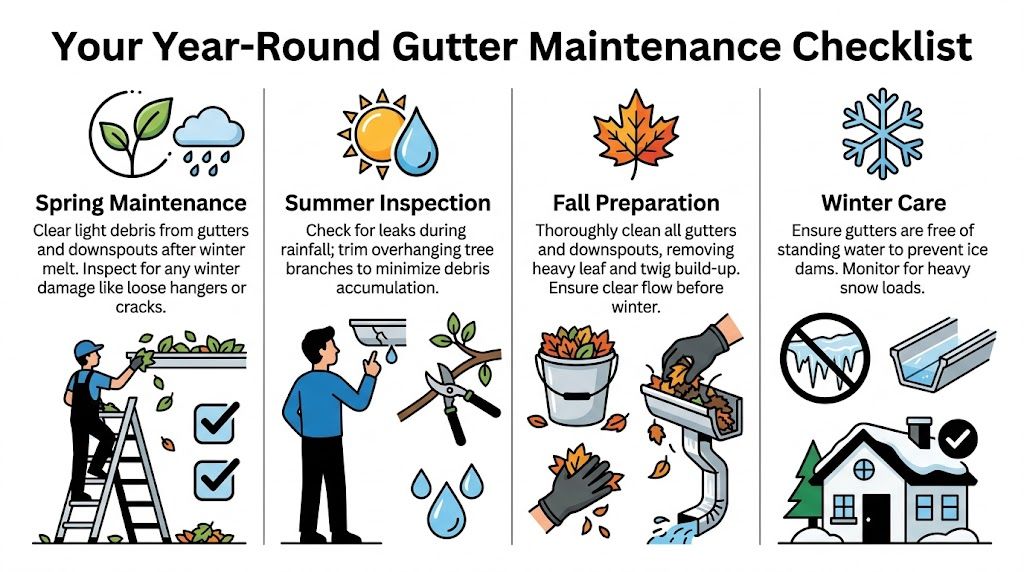
Your Year-Round Gutter Maintenance Checklist
A lot of Colorado Springs gutter problems start with a simple pattern. Debris sits through one season, weather shifts, then the trouble shows up in the next one. Pine needles bake dry in summer and raise fire risk along the roofline. The same gutter can freeze up in winter if that material was never cleared out.
A workable schedule follows the seasons, but it also adjusts for your lot. A stucco home in a newer neighborhood may get by with two solid cleanings a year. A property under pines near Black Forest or on the west side usually needs more frequent checks. For a general benchmark on how often gutters should be cleaned, that guide is a useful outside reference. In our area, tree cover, wind exposure, and wildfire risk usually matter more than a generic national calendar.
The visual below gives you a simple rhythm to follow.
Spring cleanup after snow and wind
Spring is cleanup season in Colorado. Snowmelt, freeze-thaw movement, and wind-driven debris all leave their mark.
Start with flow. Remove debris from the troughs and, just as important, from the outlet where the downspout begins. That spot plugs first. Then check for joints that have opened slightly, spikes or hangers that have loosened, and sections that no longer hold the right pitch.
If rain is in the forecast, watch one downspout during a storm. You will learn more in five minutes of active flow than you will from a quick dry look from the ladder.
Summer inspection before peak fire concern
Summer maintenance in Colorado is not only about drainage. It is also part of basic fire mitigation.
Dry needles, seed pods, and roof-edge debris can sit in a gutter for weeks without causing overflow. That does not make them harmless. In a fire-prone area, especially near open space or dense pines, gutters packed with dry material can act like a fuel tray right under the eaves. Clear that buildup before the hottest, driest stretch of the season. While you are there, cut back overhanging branches and check that downspout discharge is still pushing water away from the foundation.
A short visual walkthrough can help homeowners spot the basics before bigger problems develop.
Fall service before the first real cold snap
Fall is the cleanup most homeowners expect, and in this region it often matters the most.
Leaves are only part of the problem. Pine needles, roof grit, and compacted sludge in end caps can hold water long after the rest of the gutter looks clean. Before temperatures drop, make sure the entire run is cleared, flush every downspout, and confirm that water exits where it should. A system that drains poorly in late October often turns into an ice problem by the first hard freeze.
On homes we service around Colorado Springs, fall is also when we catch small alignment issues before snow load and ice make them worse. A slight sag or loose bracket is cheaper to fix now than after a section starts pulling away from the fascia.
Clean gutters in fall for drainage. Clean them thoroughly enough that they still drain after the first freeze.
Winter watch from the ground
Winter checks should stay simple and safe. In icy conditions, ladder work is usually a bad bet.
Walk the property from the ground and look for repeated trouble spots:
- Icicles forming in the same section
- Sagging gutter runs
- Water spilling over one edge
- Debris visible above the gutter line
- Snow melt draining unevenly from one area
Those signs usually point to blockage, poor pitch, or damage from earlier in the year. If you see them, put the repair or cleaning on the list for the next safe weather window. Waiting until spring often means you are also dealing with fascia rot, foundation splash-back, or a gutter section that has started to fail.
How to Safely Clean Your Own Gutters
A lot of Colorado Springs homeowners can handle their own gutter cleaning on the right house, in the right conditions. A one-story home with solid footing around the perimeter is one thing. A tall home on sloped ground, with rock beds, window wells, or icy shade on the north side, is a different job.
The biggest risk is not the mess. It is the ladder.
That matters even more here because our gutters often hold more than leaves. Pine needles, dry seed pods, roof granules, and packed debris from windy afternoons can create clogs that are stubborn to remove. In a dry season, that same buildup also adds to the combustible material sitting along the roof edge. Cleaning gutters in Colorado is partly about drainage and partly about reducing fire fuel around the home.
Start with ladder safety and the right tools
Before you touch the gutter, set up the ladder correctly and make sure the ground is stable. The National Safety Council's ladder safety guidance recommends the 4-to-1 setup rule. For every four feet of height to the support point, place the ladder base one foot out.
Use:
- An extension ladder rated for your weight and tools
- Level, firm ground
- Non-slip shoes
- Work gloves
- Safety glasses
- A small bucket or debris bag
- A plastic gutter scoop or plastic trowel
- A garden hose with a spray nozzle
Skip metal tools if you can. They can scratch painted gutters, damage seams, and gouge softer aluminum.
If you have to lean, climb down and move the ladder. Reaching too far is how routine gutter cleaning turns into a fall.
If someone can spot you from the ground, even better.
Clean the system in a sequence that makes sense
Start dry. Scoop out the loose debris first so you are not turning everything into muddy sludge right away. Around here, pine needles often knit together over the outlet and hide the blockage underneath, so check the downspout opening carefully.
A safe, practical order looks like this:
- Remove dry debris by hand or with a plastic scoop
- Drop it into a bucket instead of onto the landscaping below
- Clear the outlet at each downspout
- Flush the gutter run with a hose
- Watch whether water moves freely through the downspout and exits away from the house
The goal is not a gutter that looks cleaner from the top. The goal is a gutter that drains.
If the downspout stays slow after a basic flush, stop before you force the issue. Jamming a metal rod into an elbow can separate joints or punch through older material. On homes with stubborn clogs or poor access, it often makes more sense to hand it off to a crew that already has the right tools and knows what you're really paying for with gutter cleaning service.
Know what should make you come back down
Gutter cleaning often exposes problems that are not cleaning problems.
Come off the ladder and reassess if you see:
- Gutters pulling loose from the fascia
- Standing water after flushing
- Seams dripping
- Rust, pinholes, or cracked sealant
- Water slipping behind the gutter
- Downspouts that remain clogged after basic flushing
- Wasp activity, bird nests, or anything that limits safe access
Those signs point to pitch issues, failing fasteners, joint failure, or sections that may need repair or replacement. On Front Range homes, I also pay attention to debris packed tight in corners and end caps. That material tends to stay damp longer, adds weight, and can sit there unnoticed until freeze-thaw cycles start opening seams.
Set clear limits for DIY work
DIY gutter cleaning makes sense sometimes. It does not make sense on every house.
I would be cautious about doing your own gutters if you have a two-story home, steep terrain, overhead power lines nearby, icy walk surfaces, or heavy buildup that has turned into compacted muck. The same goes for homes with tall downspouts that are hard to test from the ladder safely.
A good rule is simple. If you cannot set the ladder firmly, move it often without strain, and work without reaching past the rails, the job is outside safe DIY territory. That is especially true after summer wind events, during fall needle drop, or anytime debris has been sitting long enough to create both drainage problems and extra fire fuel at the roofline.
Why Professional Gutter Cleaning Is a Smart Investment
Most homeowners don't hire out gutter work because they can't understand the task. They hire it out because the task is awkward, risky, time-consuming, and easy to do halfway.
That's the difference between clearing visible debris and getting the drainage system working correctly again.

Safety changes the equation
The first benefit is simple. You stay off the ladder.
That matters even more on multi-story homes, walkout properties, or houses with awkward rooflines. According to Roof Revivers, professional service is especially important for multi-story homes. Pros use equipment such as telescoping wands and follow OSHA height safety standards, while labor costs can multiply 2 to 4 times for DIYers who need lift rentals. The same source states that every $1 invested in professional maintenance saves an average of $5 to $10 in future repairs.
That's why professional service isn't just about convenience. It's often the more responsible choice.
Equipment helps, but inspection matters more
Professional crews do bring better tools. Telescoping wands, high-powered blowers, vacuums, and flushing equipment all help remove debris faster and more thoroughly than a bucket-and-glove approach.
But the bigger value is what trained eyes catch during the job:
- Loose hangers
- Sagging sections
- Improper pitch
- Early rust or seam issues
- Downspouts that drain poorly even after clearing
- Debris patterns that point to recurring roof-edge problems
Those details matter because they explain why a gutter keeps failing in the same spot.
If you want a clearer breakdown of the labor, equipment, and service details behind the price, this page on gutter cleaning services explained and what you're really paying for lays out the components well.
Professional service makes more sense on Colorado homes
Colorado Springs homes often add one or more complications: pine debris, storm damage, ice history, high rooflines, sloped lots, or fire-mitigation needs.
A service provider with exterior-cleaning experience can usually handle those variables more efficiently than a homeowner doing occasional ladder work. For example, Cultivate House Detailing offers gutter cleaning, fire-mitigation clearing, and access for work up to the fourth story in Colorado Springs and nearby communities.
That's a practical fit for homeowners who need more than a quick scoop-out.
| DIY approach | Professional approach |
|---|---|
| Good for simple, low, accessible runs | Good for multi-story, storm-prone, pine-heavy, or fire-conscious properties |
| Limited by homeowner tools and time | Uses specialized equipment and established safety practices |
| Easy to miss pitch or hardware issues | Better chance of catching developing problems early |
| Higher personal fall risk | Removes homeowner ladder exposure |
The real trade-off
DIY can save money on straightforward jobs. That's true.
But if the home is tall, the debris is packed, the downspouts are stubborn, or the system may already be damaged, professional service usually wins on safety, completeness, and long-term value. Gutter cleaning and maintenance is one of those chores where "done enough" often isn't enough.
Hiring a Gutter Service in Colorado Springs
When homeowners call for gutter help, the first question is often price. That's fair, but it shouldn't be the only filter.
The better question is what kind of company is showing up to your property, climbing around your roofline, and telling you whether your drainage system is in good shape. In Colorado Springs, that matters because local conditions ask more from a gutter crew than a basic scoop-and-go.
What to look for before you book
A reliable company should make a few things easy to verify.
- Insurance and safety practices matter because gutter work involves ladders, heights, and property edges where mistakes can get expensive.
- Local climate awareness matters because pine debris, wildfire risk, hail, and winter ice all affect how a system should be maintained.
- Clear pricing matters because nobody likes vague service windows or fuzzy estimates.
- Communication matters because homeowners want to know what was found, what was cleaned, and whether repairs should be considered.
If you're comparing providers, reviewing how other companies describe professional gutter cleaning services can help you build a solid checklist of what a complete service should include.
What the customer experience should feel like
A good gutter service visit shouldn't feel rushed or unclear.
It should look more like this:
- You make contact and describe the property. Tree cover, height, access, and any trouble spots all matter.
- The company explains scope and pricing clearly. You know whether the visit is basic cleaning, cleanup plus flushing, or a broader inspection.
- The crew arrives with the right tools. Not guesswork. Not a patchwork setup.
- The work addresses the actual problem. That includes downspouts and visible trouble areas, not just the easy sections.
- You get straightforward feedback. If the system needs repair, adjustment, or more frequent service, you should hear that plainly.
The right company doesn't just remove debris. It helps you understand how your gutters are performing on your specific home.
Local knowledge makes a difference
National advice tends to flatten every house into the same scenario. Local service shouldn't.
A Colorado Springs gutter crew should understand why a property in Black Forest collects more combustible debris than a property with fewer trees. It should understand how hail can create subtle drainage issues and why a system that looked acceptable in October may struggle once freeze-thaw weather starts.
That's the kind of practical context homeowners should expect when hiring locally. Not a sales pitch. Just informed service.
FAQs About Gutter Cleaning and Maintenance
How much does professional gutter cleaning cost in Colorado Springs
Pricing varies by the house and the condition of the system. A single-story home with open access usually costs less than a taller home with steep rooflines, heavy pine buildup, clogged downspouts, or sections that need minor adjustment during the visit.
For most homeowners, the better question is whether routine service costs less than ignoring the gutters. It usually does. A neglected system can lead to overflow, fascia rot, foundation moisture problems, ice-related damage, and in our part of Colorado, dry pine needles sitting in the gutters also add to fire risk. Regular cleaning is usually cheaper than repairing the damage that follows neglect.
Do gutter guards eliminate the need for cleaning
No. Gutter guards cut down on larger debris, but they do not stop maintenance.
Pine needles, seed pods, roof grit, and shingle granules still build up over time. I see this a lot around Colorado Springs, especially on homes near pines or in wind-exposed areas where debris gets driven into corners and valleys. Guards can help extend the interval between cleanings, but they still need inspection and occasional clearing to keep water moving properly.
How can I tell if my gutters are damaged
Start with what you can see from the ground. Look for sagging sections, dripping joints, overflow during rain, staining on siding, loose fasteners, downspouts pulling away from the wall, or water collecting near the foundation.
Some signs are less obvious. Water marks behind the gutter, peeling paint near the roofline, and repeated ice buildup at the edge of the roof can all point to drainage problems. If gutters stay packed with dry debris through summer, that is also a maintenance problem in Colorado, not just a drainage issue.
How often should gutters be cleaned in Colorado Springs
The right schedule depends on tree cover, wind exposure, roof design, and how your property sheds debris through the year.
Many homes do well with seasonal service. Homes under heavy pine canopy, near open space, or in higher wildfire concern areas often need more frequent checks. A house can look fine from the driveway and still have packed valleys, blocked outlets, or combustible debris sitting in the troughs. In this region, cleaning is not only about stormwater. It is also part of reducing avoidable fuel around the home.
Is DIY gutter cleaning worth it
Sometimes. If the home is single-story, the ladder footing is solid, and the gutters are easy to reach, a careful homeowner may be able to handle basic debris removal.
The trade-off is safety and visibility. Once you are dealing with second-story sections, awkward rooflines, compacted material, or possible damage from hail and freeze-thaw cycles, the job changes. At that point, it is less about scooping leaves and more about spotting small failures before they become expensive ones.
If your gutters are overflowing, packed with pine needles, or overdue for a seasonal check, Cultivate House Detailing can help with practical gutter cleaning and maintenance in Colorado Springs and nearby communities. Reach out for a quote if you want a clear assessment, straightforward pricing, and service that accounts for the realities of Colorado weather.
Want it handled by a local crew? Cultivate House Detailing offers gutter cleaning in Colorado Springs. Get a free quote.
Serving Monument and the surrounding Colorado Springs area — see our window cleaning services in Monument.