You want your home to feel festive, polished, and welcoming the moment the sun goes down. In Colorado Springs, that often means warm roofline lights against a cold evening sky, clean outlines along peaks and gutters, and a display that feels cheerful without looking chaotic.
Then real life shows up. The tote of old lights is tangled. One strand works, the next doesn't. The ladder has to go on frozen ground. The wind picks up. You're halfway through the front elevation before realizing the plug run doesn't land where you thought it would.
That gap between the idea and the actual installation is why so many homeowners look for a simpler way to handle the season.
Brighten Your Home This Holiday Season in Colorado Springs
A well-lit home in December changes the whole feel of a street. In Colorado Springs, holiday lighting stands out even more because of the setting. Snow on the roof, dark early evenings, and the Front Range backdrop all make a clean lighting design look sharp and memorable.
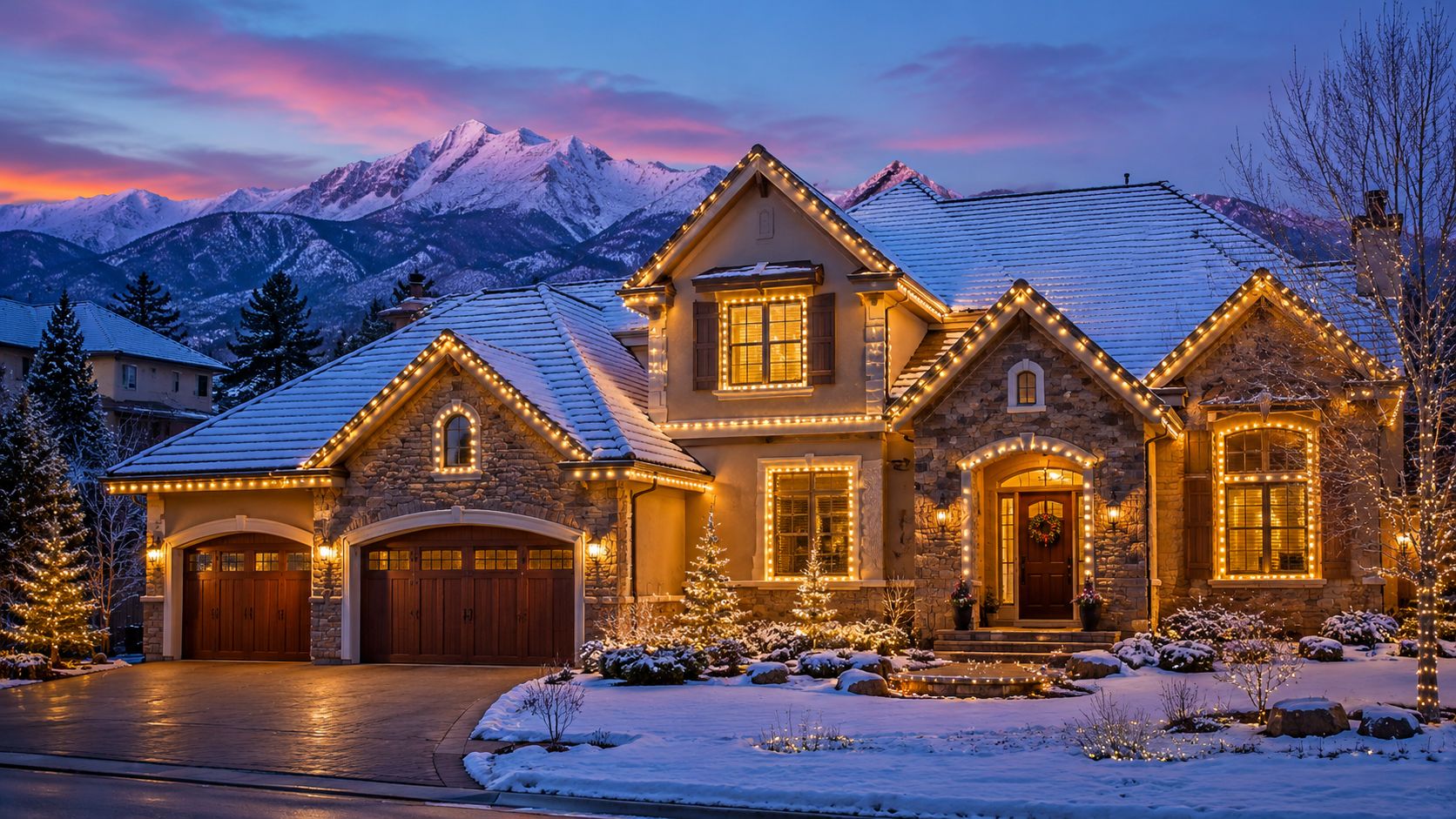
For a lot of homeowners, the plan starts out simple. Outline the roof. Wrap a tree. Add a little glow around the entry. Then the job grows fast. Gables need custom lengths. Extension cord paths get awkward. A steep front pitch suddenly doesn't feel like a weekend project anymore.
That interest in lighting isn't niche. Roughly 60% of Americans install outdoor holiday lights, and some estimates say the residential side of the market contributes over $3.5 billion annually, according to industry reporting on the holiday lighting market. Homes are the center of demand, which makes sense if you've ever driven through a Colorado Springs neighborhood in December and seen how much care people put into curb appeal during the holidays.
What homeowners usually want
Homeowners generally aren't asking for the biggest display on the block. They want a setup that feels intentional.
- Clean rooflines that match the shape of the house
- Balanced focal points around entries, peaks, columns, or one feature tree
- No visible mess from cords, sagging strands, or crooked bulbs
- A setup someone else handles from install to removal
There's also the winter reality around here. If you're already thinking ahead about snow and ice management, resources like SaberTask for winter services can be useful for broader cold-weather home planning while you decide how much of your exterior upkeep you want to handle yourself.
A good holiday display should look effortless from the street. It rarely is effortless to install.
A professional residential holiday light installation solves the part homeowners usually don't enjoy. Measuring, planning, mounting, power access, seasonal upkeep, and removal all happen in a way that protects the home and gives the display a finished look. That's the difference between “we put lights up” and “the house looks ready for the season.”
The DIY Dilemma vs Professional Holiday Light Installation
DIY holiday lighting sounds manageable until the house itself starts dictating the job. A single-story ranch with easy outlet access is one thing. A Colorado Springs home with multiple peaks, stone accents, slick walkways, and a second-story entry line is something else entirely.
The biggest issue isn't usually design. It's risk.
Where DIY gets difficult fast
Public safety guidance makes the core problem clear. Falls are a major hazard when working on ladders and roofs, and that risk gets worse in Colorado conditions like snow, freeze-thaw cycles, and steep roof pitches, as noted in holiday light safety guidance from GAF. What looks simple from the driveway can become dangerous once you're carrying strands, reaching past a gutter line, or repositioning a ladder on uneven winter ground.
The hidden frustrations pile up too:
- Time drain means the project stretches over multiple cold afternoons instead of one efficient install.
- Visual inconsistency shows up when bulb spacing changes, lines sag, or clips don't hold evenly.
- Power problems happen when cords have to cross walkways or plug points aren't where the design needs them.
- Mid-season failures are harder to troubleshoot when the display went up without a clear plan.
Why professional installation changes the result
Professional work isn't just about avoiding hassle. It changes the quality of the final display. The lines are straighter. The mounting method is cleaner. The layout usually makes more sense because someone planned the route, the attachment points, and the power access before climbing.
That matters on homes with architectural features common around Colorado Springs, including taller front entries, mixed rooflines, and exposed areas that catch wind. A display can look understated and still require careful routing to keep cords hidden and bulbs aligned.
Practical rule: If the install requires repeated ladder repositioning on frozen or sloped surfaces, it's no longer a casual DIY task.
There's also the convenience factor homeowners underestimate. Holiday lighting isn't one event. It's design, install day, weather timing, occasional maintenance, and eventual takedown. Hiring a pro turns a multi-step seasonal chore into a managed service.
For many homeowners, that's a significant benefit. They still get the welcoming home, the curb appeal, and the holiday feel. They just don't have to spend their weekends on a ladder to make it happen.
Choosing Your Lights Temporary vs Permanent Systems
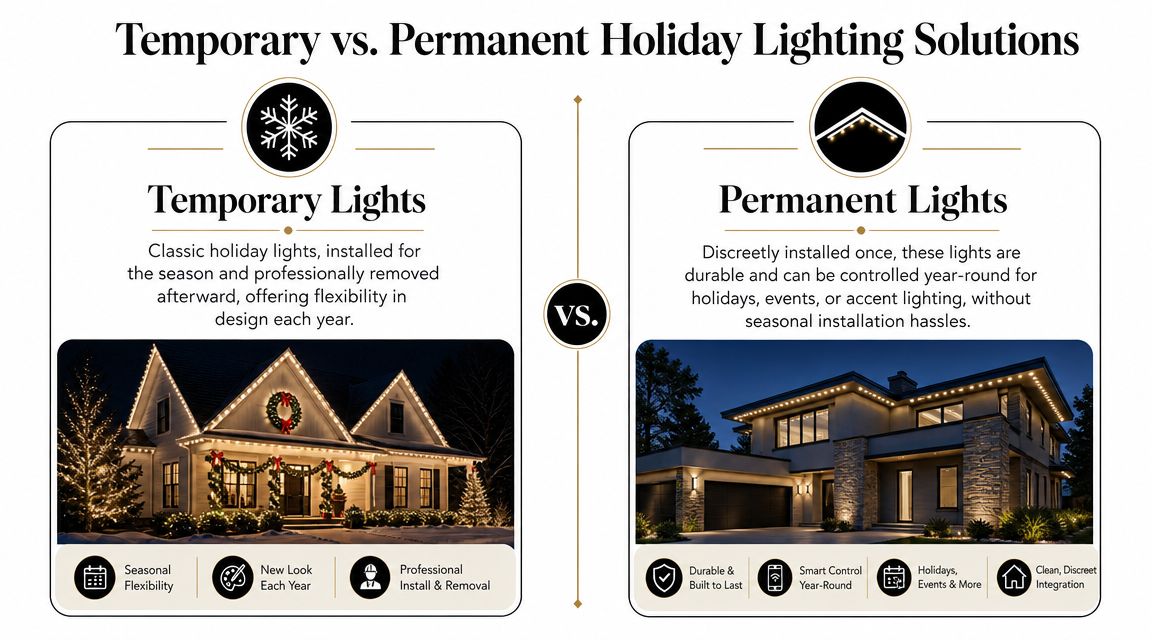
Not every homeowner wants the same kind of setup. Some want a classic holiday look that changes from year to year. Others want a more permanent lighting solution that stays discreetly in place and works beyond December.
Temporary holiday lights
Temporary lighting is the traditional option. The lights go up for the season, create the exact holiday look you want, then come down after the holidays.
This works well for homeowners who like flexibility. You can keep things simple with warm white roofline lights one year, then add wreath lighting, tree wraps, or a different color pattern the next. Temporary systems also make sense if you enjoy a seasonal look but don't need year-round control.
Typical strengths include:
- Seasonal variety so the design can change
- Classic curb appeal that fits traditional holiday decorating
- No year-round visible system beyond the season itself
The trade-off is that temporary lights still require annual installation, service if something fails mid-season, and post-holiday removal.
Permanent lighting systems
Permanent lighting is a different category. These systems are installed to stay in place and are designed to look subtle during the day. At night, they can be programmed for holidays, game days, parties, or simple architectural accent lighting.
For homeowners who want convenience, this is often the cleaner long-term solution. You avoid the yearly install cycle, and the house is ready whenever you want to use the system. If you're comparing budgeting and scope, this guide to permanent Christmas lights cost helps frame what typically affects pricing and value.
A permanent system usually fits homeowners who care about:
- Low ongoing hassle
- Consistent architectural lighting
- Multiple use cases through the year
- A more integrated, built-in appearance
If you're also thinking about decorative elements beyond the roofline, ideas like e-commerce tips for post lamp sellers can be useful for evaluating how post lights and entry features complement a broader exterior lighting plan.
Holiday lighting options at a glance
| Feature | Temporary Holiday Lights | Permanent Lighting System |
|---|---|---|
| Installation timing | Installed for the season | Installed once and kept in place |
| Design flexibility | Easy to change year to year | Flexible through programming rather than reinstallation |
| Daytime appearance | Visible during the season | Typically more discreet year-round |
| Best fit | Homeowners who want a classic holiday setup | Homeowners who want convenience and multi-season use |
| Removal | Removed after the holidays | No seasonal takedown required |
One option isn't automatically better than the other. The right choice depends on how you decorate, how much annual setup you want to avoid, and whether you see lighting as a holiday tradition or a year-round exterior upgrade.
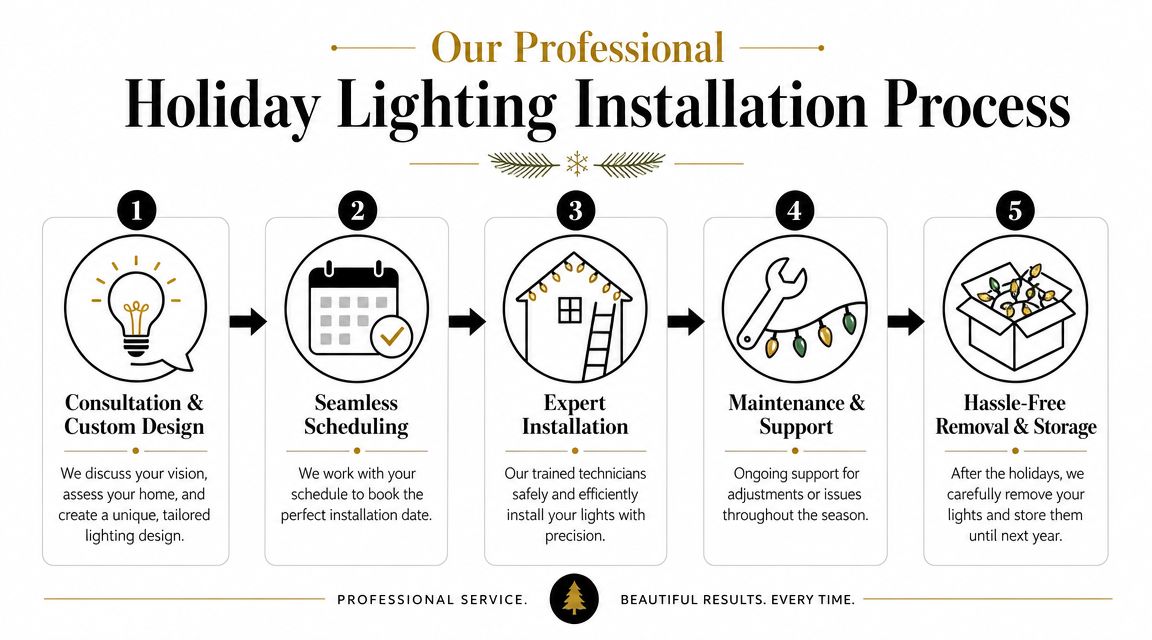
Our Professional Installation Process from Start to Finish
The difference between a rushed light job and a polished one usually shows up before the first clip is attached. Good installs are planned, measured, and staged in advance.
Industry guidance puts it well. A professional installation is a measurement-and-circuit exercise first, and a decorative task second, with best practices that include measuring rooflines and other surfaces, laying out strands on the ground to confirm fit and plug alignment, and using plastic clips instead of nails or staples, according to professional installation guidance for Christmas lights.
That approach is what keeps a display clean and prevents a lot of preventable rework.
It starts with the house, not the lights
Every home gives you a different set of constraints. The roofline might be straightforward, but the outlet location is awkward. A front tree may be perfect for wrapping, but only if the power route can stay hidden. A dramatic peak may look great lit up, but only if the ladder setup and attachment method are safe.
That first planning phase usually includes:
- Measuring visible surfaces such as rooflines, fascia, windows, columns, and selected trees
- Reviewing power access so cords don't end up stretched across walking paths
- Checking the design balance so the house looks intentional from the street
A local provider like Cultivate House Detailing handles this as part of a full residential holiday light installation service, including custom-fit planning, installation, seasonal support, and takedown.
Quote, scheduling, and installation day
Homeowners want a clear quote, not a vague range and a surprise later. The useful version of a quote identifies what's being lit, what type of system is being used, what's included during the season, and what happens after the holidays.
Once the scope is settled, scheduling matters more than people think. Early-season installs are usually easier to complete in safer conditions. Waiting too long can mean colder surfaces, shorter weather windows, and a tighter calendar.
This short video gives a helpful look at what a polished holiday lighting service can feel like in practice.
On install day, the work should feel organized. Strands are confirmed on the ground first. Clips are used to protect shingles and gutters. Lines are straightened and bulbs are oriented consistently. The result should look like it belongs to the house, not like it was improvised around it.
The best installs rarely look “busy” up close. They look neat, measured, and calm.
Support during the season and after
Good service doesn't end when the lights turn on the first night. Weather, wind, and winter wear can affect any temporary display, especially on exposed sections of a home. Homeowners should know who to contact if something shifts or stops working.
After the season, removal matters just as much as installation. Careful takedown protects clips, preserves reusable materials when applicable, and keeps the property from getting nicked or scraped during cleanup. For homeowners, that full cycle is what makes the service worth it. It's not just the pretty result in December. It's not having to manage the entire process yourself.
Understanding Holiday Light Installation Costs in Colorado
Most homeowners start with one question. What's this likely to cost for my house?
The honest answer is that price depends on the design, the home, and the level of service included. But broad ranges are still useful for setting expectations.
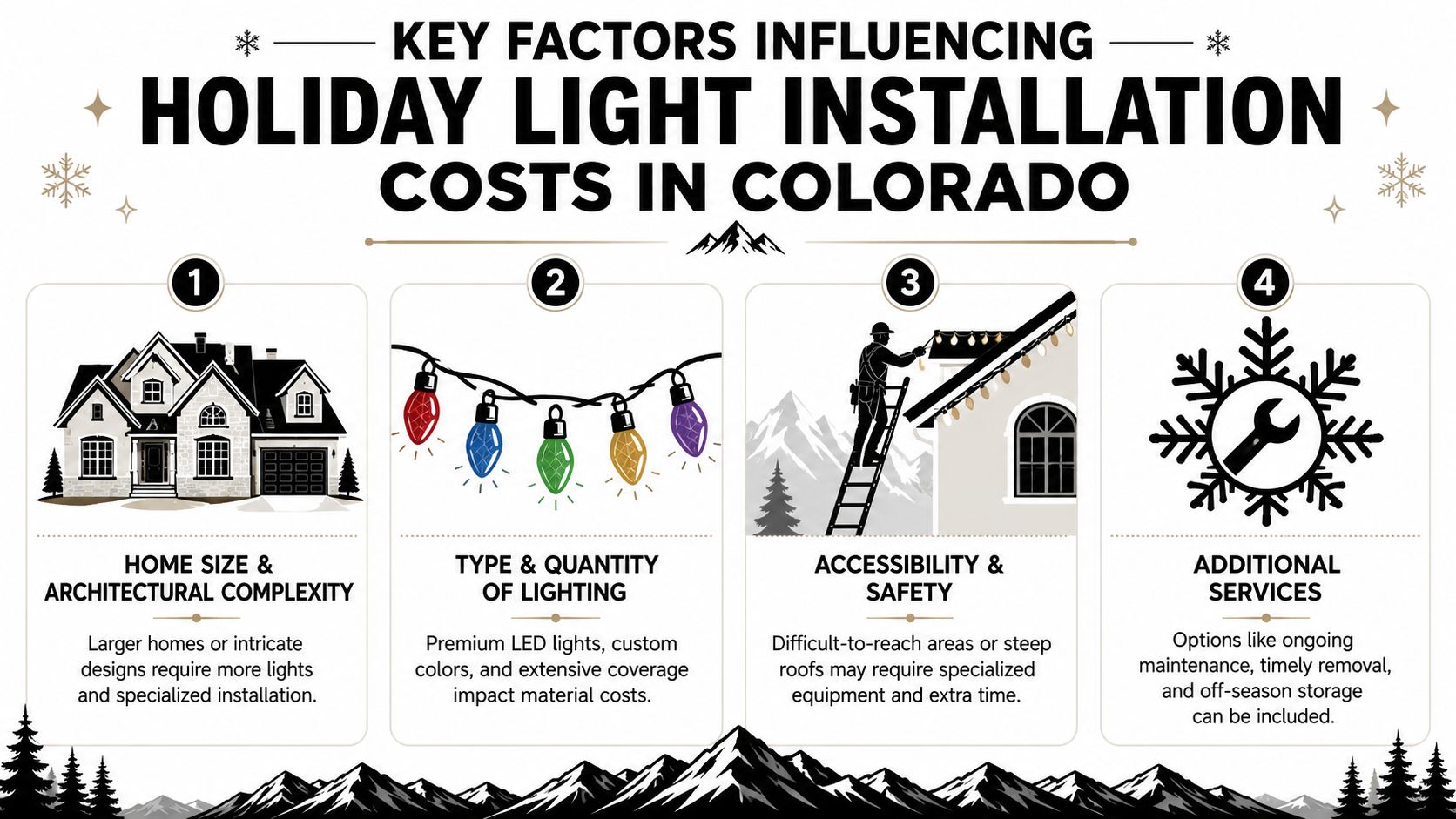
Nationally, professional Christmas light installation often ranges from $2 to $5 per linear foot, with many total projects landing between $300 and $900. Larger or more complex homes with full wraps can run from $1,500 to $5,000 or more, based on national holiday light installation pricing guidance.
That range is wide because residential holiday light installation is highly custom. A straightforward roof outline on an accessible home is different from a multi-story property with steep sections, tree wraps, and several focal areas.
What usually drives the price
Some homes cost more because they're larger. Others cost more because they're harder.
Common pricing factors include:
- Roofline length and shape. Long, simple lines are easier to plan than homes with multiple peaks, dormers, or layered elevations.
- Height and access. Second-story sections, steep pitches, and tricky ladder placements add labor and safety considerations.
- Scope of the display. Rooflines only cost less than a package that includes trees, entry features, columns, and outdoor features.
- Lighting type. Temporary seasonal lights and permanent systems are priced differently because the materials and installation methods differ.
- Included service. Maintenance, removal, and storage support affect the total value of the package.
Why custom quotes matter
Two homes can look similar from the street and still require very different work. One may have clean outlet access and easy clip points. The other may need longer concealed runs, more custom cutting, or more careful placement around architectural details.
For homeowners who want a more detailed breakdown before requesting service, this page on professional Christmas light installation cost can help you understand how scope changes pricing.
A low quote can leave out the parts homeowners assume are included, especially maintenance, removal, or the work needed to make the display actually look finished.
In Colorado Springs, winter conditions can also affect scheduling and labor. The safest and cleanest installs usually happen when there's enough time to plan the display properly instead of forcing the job into the first bad-weather opening on the calendar.
Our Commitment to a Safe and Secure Installation
Holiday lighting only looks good if it's installed safely. That starts with the products themselves.
According to the U.S. Consumer Product Safety Commission, temporary lighting products need key safety features including minimum wire sizes, strain relief, and overcurrent protection such as fuses to reduce shock and fire hazards. Their guidance is the reason professional installers should inspect components carefully and use compliant products, as outlined by the CPSC guidance on seasonal and decorative lighting products.
What that means on a real home
A safe install doesn't stop at buying outdoor lights and plugging them in. The actual job includes checking the condition of strands, looking for frayed insulation, confirming fuse protection in the plug, and avoiding stressed connection points where wires can bend or pull.
On the house side, safe work means the mounting method matters too. Fastening lights with nails or staples can damage materials and create unnecessary problems. Plastic clips are the better approach because they secure the strand without puncturing roofing components or forcing awkward bulb angles.
Colorado conditions change the standard
Colorado Springs adds another layer. Cold weather can make plastics and wire jackets less forgiving. Wind can tug on poorly routed sections. Snow and moisture make roof movement and ladder placement more serious than they seem from the ground.
That's why a professional crew should be willing to pause when conditions aren't right. Not every weather window is an installation window.
A safe residential holiday light installation should include:
- UL 588-compliant temporary products with the right safety features
- Careful component inspection before anything goes on the roof
- Outdoor-appropriate power planning rather than improvised cord routing
- Non-damaging attachment methods that protect the home
- Weather judgment that puts safety ahead of speed
For homeowners, this is the part that often matters most after the fact. You want the display to look festive. You also want to know the system on your home was installed with the right products, the right methods, and the right decision-making.
Frequently Asked Holiday Lighting Questions
When should I book residential holiday light installation in Colorado Springs
Earlier is better. The best booking window is before the seasonal rush hits and before weather starts shrinking installation days. If your goal is to have lights on well before major gatherings or neighborhood events, don't wait until the calendar is crowded.
Do I need to be home for the installation
Usually, access and communication matter more than your physical presence. If the installer can access the work areas and the design has already been approved, many homeowners don't need to be onsite the entire time. It helps to confirm outlet locations, gate access, and any areas you don't want included.
What if a section goes out during the season
That depends on the service arrangement, which is why it's smart to ask this before booking. A professionally managed setup should include a clear plan for troubleshooting mid-season issues, whether that means replacing a failed component, adjusting a section affected by weather, or correcting a connection problem.
If you're comparing companies, ask who handles service calls after installation and what counts as normal seasonal support.
Can large trees or special features be included
Yes, but the design has to stay balanced. One well-lit feature tree often looks better than trying to light every tree on the property. Entry features, columns, and select outdoor elements can also work well when they support the architecture instead of competing with it.
Will the lights damage my roof, gutters, or trim
They shouldn't if the installation is done properly. The safer approach uses non-damaging clips and a plan that fits the house instead of forcing strands into place. Problems usually start when lights are attached with the wrong hardware or when cords are stretched where they don't belong.
What happens after the holidays
That should be part of the conversation from the start. Some homeowners only think about installation, then realize in January they still need to remove everything, pack it, and store it. A full-service setup should make the end of the season as easy as the beginning.
If you'd like a straightforward plan for your home this season, Cultivate House Detailing can help you talk through design options, installation timing, and what makes sense for your property in Colorado Springs. Request a quote and get a clear next step without the guesswork.
Want it handled by a local crew? Cultivate House Detailing offers holiday lighting installation in Colorado Springs. Get a free quote.