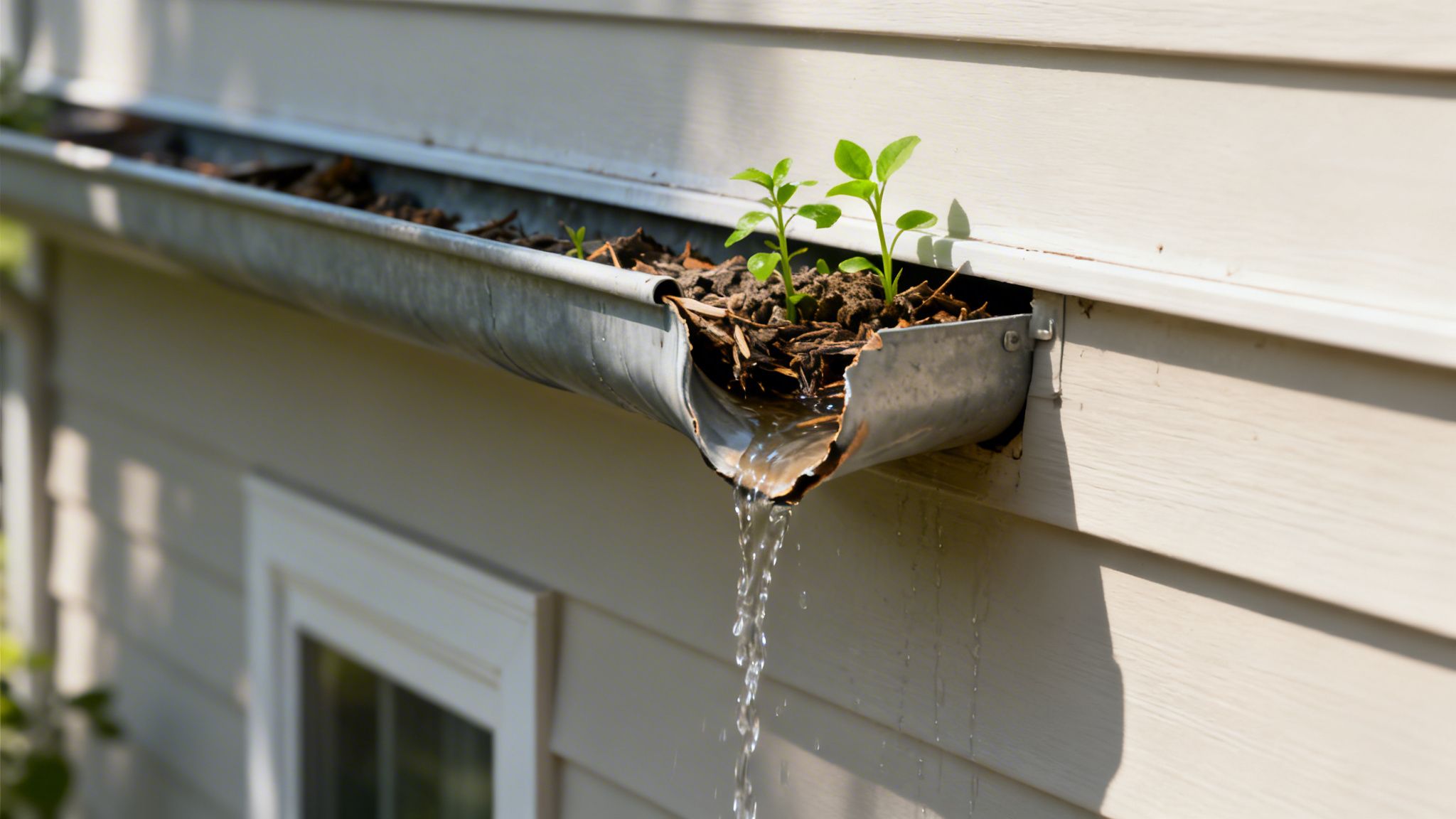
If you've ever looked up at your gutters after the first cold snap in Colorado Springs and thought, “I should've handled that weeks ago,” you're not alone. Around here, timing matters more than brute force. A clean gutter at the wrong time can still overflow after a wind event, freeze solid after a snap of cold, or pack down with pine debris before the next storm rolls through.
The best time for gutter cleaning isn't a single date on the calendar. It's a rhythm that fits your roof, your trees, and Front Range weather, which can flip from sunny to sloppy fast. If you want fewer surprises, less ladder work, and fewer chances of water getting where it doesn't belong, schedule with the weather, not your memory.
Why Gutter Timing Matters More Than Gutter Effort
A homeowner in north Colorado Springs can climb a ladder in October, clear every handful of leaves, and still end up with a clogged downspout in November. That's because gutters fail on timing, not just on effort. Clean them too early, and fresh debris lands right back in the channel. Clean them too late, and the first freeze turns damp debris into a heavy blockage.
Practical rule: if your gutters are going to be full again in two weeks, you didn't really clean them. You just bought yourself a shorter window before the next problem.
That's why I tell homeowners to think in terms of debris cycles and weather cycles. In Colorado Springs, you're not just fighting leaves. You're dealing with sudden snow dumps, hail, freeze-thaw swings, and long stretches of sun that bake material into a stubborn mess. That mix is hard on gutters and even harder on lazy scheduling.
If you run a service business or you're trying to keep messages moving while you're on a ladder, tools that help route inbound calls can keep the rest of the day from getting buried. One practical option is route inbound calls to your crew, so you can stay focused on the home in front of you instead of missing the next booking.
For Front Range homes, the decision is simple. When you clean determines whether the system drains when it needs to. That's the whole game.
The Twice-Yearly Baseline Every Homeowner Should Know
The standard schedule is still the one I recommend first, because it works for most homes: two cleanings per year. Multiple home-maintenance guides agree on the pattern, one in late fall after leaves drop, often November, and one in spring, often April or early May NSS Group. Fall cleaning clears debris before winter rain or freezing weather, and spring cleaning clears winter grit before seasonal rain builds up.
That's the baseline because gutters have two obvious pressure points. In fall, the job is to get the channel clear before wet leaves settle in and start holding moisture. In spring, the goal is to restore flow before heavier rain shows up and exposes every half-blocked downspout you forgot about.
| Service Window | Typical Month | What It Prevents |
|---|---|---|
| Late Fall | November | Leaf buildup, freezing debris, winter overflow |
| Spring | April or Early May | Winter grit, spring overflow, downspout blockage |
If you only clean once a year, late fall is the window I'd protect first. That's the one that keeps winter from turning trapped debris into a frozen plug. Spring still matters, but fall is the cleanup that can save you from a miserable cold-weather mess later.
A good rule of thumb is to keep the schedule boring and repeatable. That's how gutters stay functional without becoming a project every time the forecast changes.
Adjusting the Schedule for Colorado Springs Weather and Trees
Colorado Springs isn't a flat, gentle gutter market. Homes near ponderosa and piñon pines deal with needles that don't behave like broad leaves, and those needles can keep feeding debris into the system long after the obvious fall drop is over. Add late-spring snow, fast hail, and gusty weather, and the calendar needs a local adjustment.
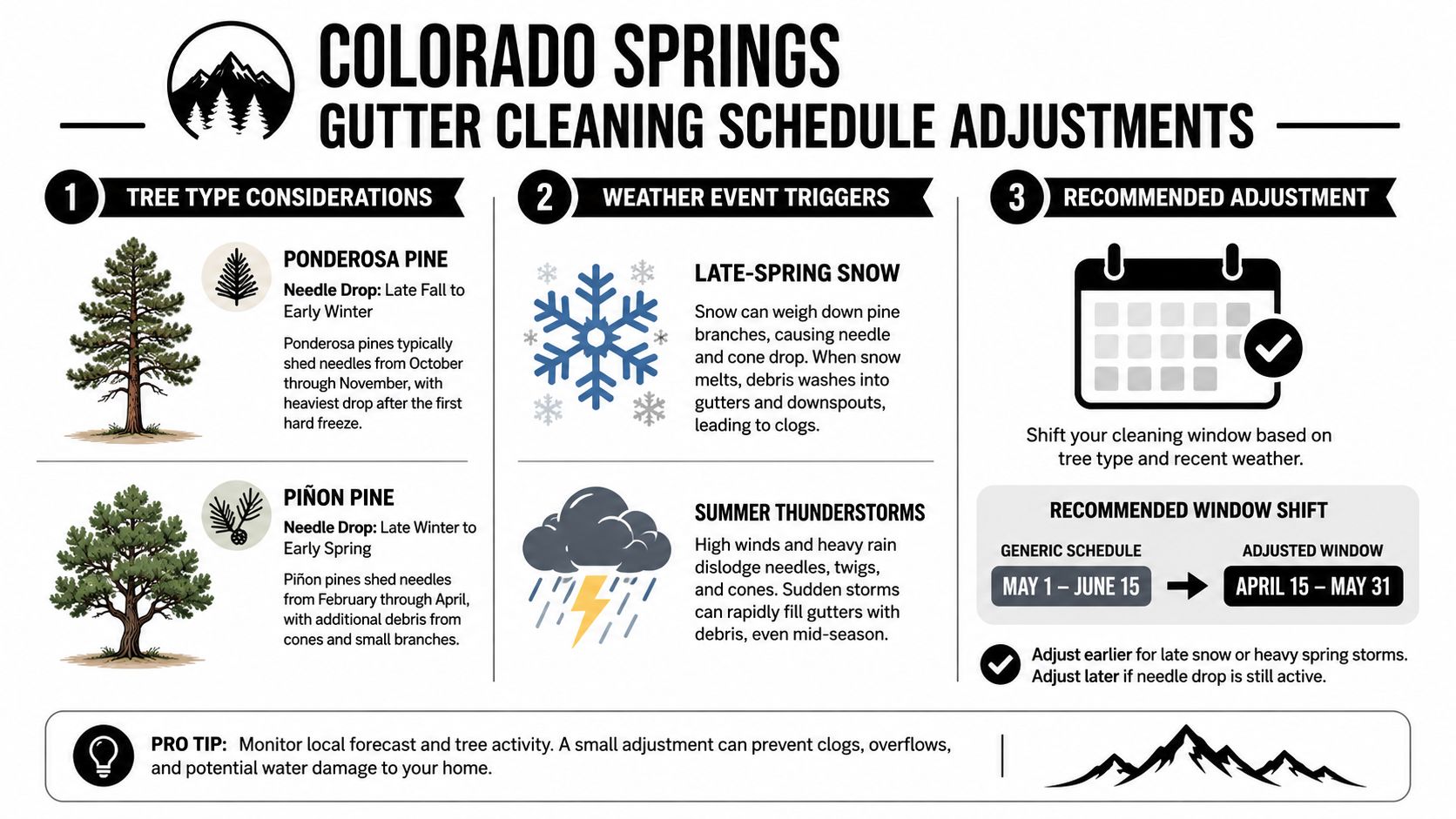
Homes near many trees, in storm-prone areas, or with gutter guards may need more frequent service, ranging from every 18 to 24 months for some guarded systems to 2 to 4 times per year in heavily wooded or windy locations Modernize. That's not overkill when the roofline sits under constant litter.
What Changes the Schedule Here
On a wooded lot near the city's tree-heavy corridors, I'd treat the baseline as the minimum, not the goal. Pine needles slip through, stack up, and keep feeding small clogs that don't look dramatic until water starts spilling over the edge. Storms can also dump fresh material into valleys and downspouts without warning.
If you want a local service example that handles this kind of timing and cleanup in the area, Colorado Springs gutter cleaning is the kind of maintenance homeowners usually need when trees and weather are working against them at the same time.
For extra context on why downspouts matter as much as the open trough, All Custom Roofing insights are useful because they reinforce a simple truth, the whole system only works when water can move through every part of it.
The best local mindset is this, schedule by what your property collects, not by what a generic calendar says. If your roof sits under dense pines or you've got a wind-exposed lot, you may need more than the twice-yearly baseline.
Warning Signs That Mean Clean Now, Not Later
A seasonally perfect plan still loses to a gutter that's already failing. If you see water spilling over the edge, don't wait for your next planned appointment. That's a live clog, and it's telling you the system can't keep up.
For regions with strong storm seasons, an additional post-storm inspection is recommended after major wind or hail events, because impulse loads from storms can deposit debris at downspouts and valleys even when the seasonal leaf-drop cycle is incomplete Window Hero.
If the gutter is sagging, the problem is already structural, not cosmetic.
Read the System, Not Just the Calendar
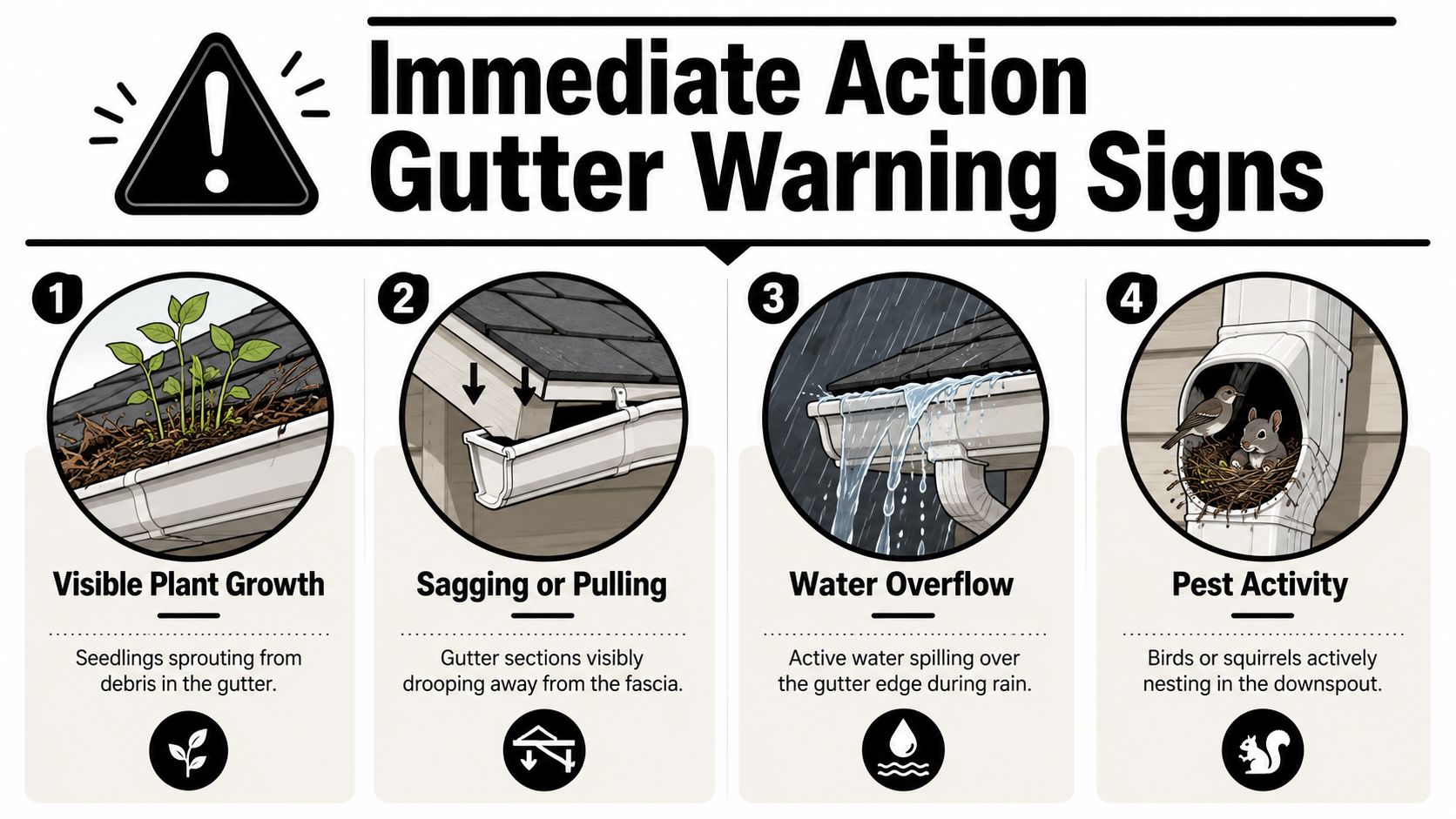
Look for these signs and act fast:
- Visible plant growth: seedlings or moss in the channel mean debris has been sitting long enough to hold moisture.
- Sagging or pulling sections: the gutter is carrying too much weight or the hangers are stressed.
- Water overflow during rain: the channel or downspout is blocked right now.
- Pest activity: birds or squirrels nesting in debris usually means standing material has turned into shelter.
Staining on the fascia, pooled water near the foundation after a storm, and a downspout that barely drains are all reasons to move up the service date. Don't wait for a “better weekend.” By the time the problem is obvious from the driveway, water has probably already taken the shortest path to trouble.
DIY vs Professional Gutter Cleaning in the Pikes Peak Region
A careful homeowner can clean some gutters, and plenty do. A single-story ranch with easy access, dry debris, and level ground is a different job from a steep roof with packed pine needles, awkward downspouts, and landscaping that blocks the ladder. Match the job to the house, not to pride.

For homeowners who want to stay off the ladder, leaf raking service for Atlanta homeowners is a reminder that debris cleanup works better when it is handled as part of a broader exterior maintenance plan, not as a one-off errand.
The Safety Rule Set That Actually Matters
Skip gutter cleaning during rain or strong winds. Set the ladder on stable, level ground, avoid leaning it directly on the gutter edge because that can bend or damage the metal, and flush the system with a garden hose after cleaning to make sure water runs freely into the downpipe RACV.
Homeowners often rush past the setup and pay for it later. The cleaning itself goes fast. The climb, balance, and cleanup are where people get hurt or leave the system half-fixed. If you want a step-by-step guide on safe gutter cleaning, see our how to clean gutters safely resource.
Where Professional Help Makes Sense
If the roof is steep, the gutters sit high, or the debris is wet and heavy, hire it out. You get safer access, a more complete cleaning, and a second set of eyes on loose hangers or a blocked downspout before those issues turn into repairs. Cultivate House Detailing is one local option that handles gutter work as part of exterior care in Colorado Springs.
The tradeoff is simple. DIY makes sense for a straightforward single-story cleanup. Professional service makes more sense when the ladder is the main risk or when you want the whole system cleaned, flushed, and checked without guessing your way through it.
How Gutter Cleaning Fits Into Your Full Exterior Care Plan
Gutters don't live on their own. In Colorado Springs, the smartest homeowners line up gutter work with the rest of their seasonal exterior tasks so they're not repeating ladder setups every few weeks. That matters even more when spring winds, summer storms, fall leaf drop, and winter freeze-up all hit the same property in a single year.
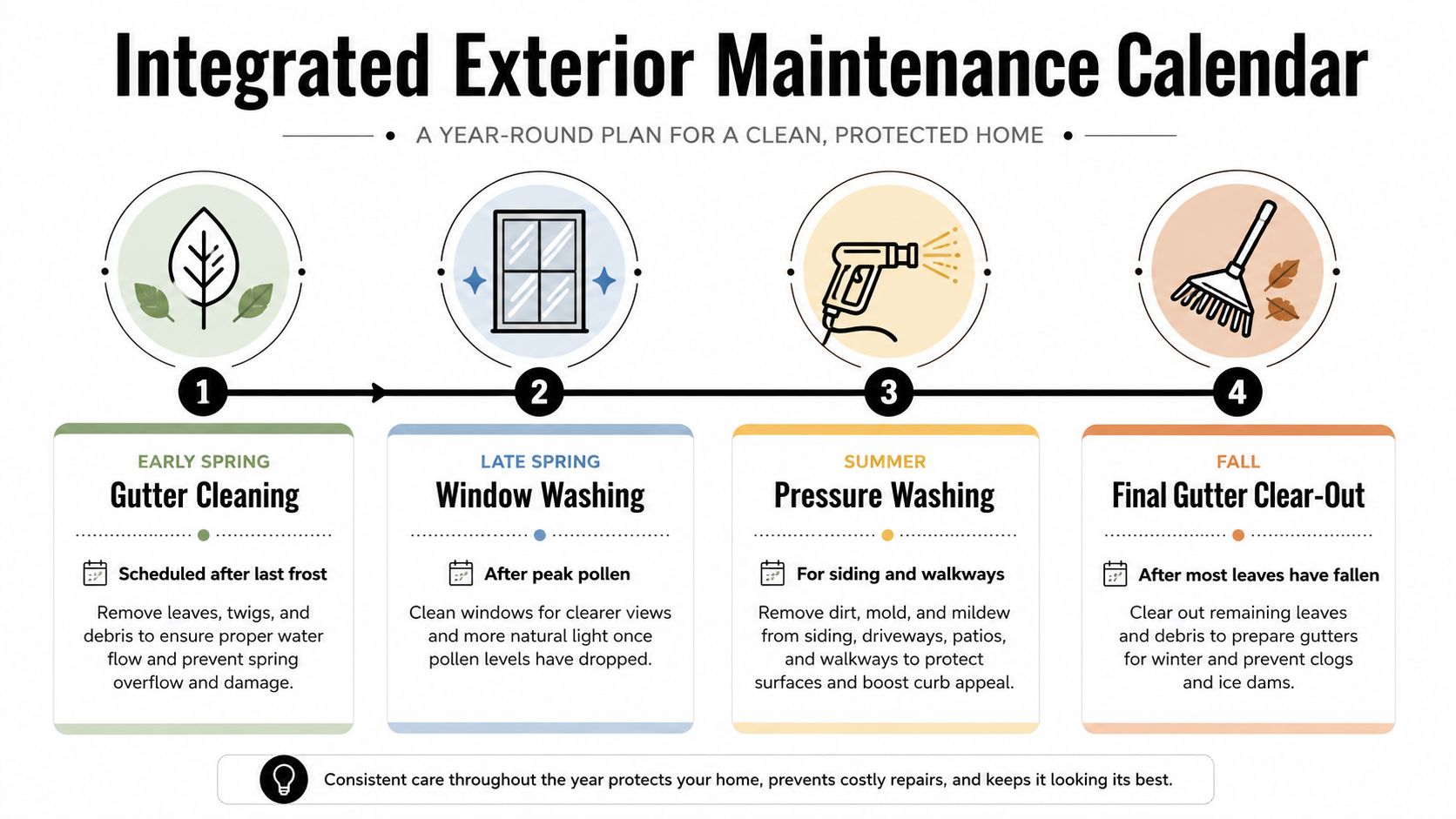
One Seasonal Plan Beats Random Chores
A clean gutter in early spring pairs naturally with other exterior reset work. Once the roofline is clear, it's easier to schedule window cleaning after peak pollen, pressure washing once the grime starts showing on siding and walkways, and final gutter clear-out after most leaves have dropped in fall. That sequence keeps the house ready instead of always playing catch-up.
A clean exterior calendar also reduces wasted effort. If you're already doing one ladder visit, it makes sense to handle related maintenance while you're there. That means fewer repeat trips and less chance of missing something obvious.
Where Gutter Timing Sits in the Year
Spring is the reset. Fall is the shutdown. Everything else fits between those two jobs. If you think of your exterior care that way, gutter cleaning stops being an annoying seasonal surprise and becomes part of a predictable rhythm that protects the roofline and keeps water moving where it should.
The strongest habit is to use the gutter schedule as the anchor, then build the rest of your exterior maintenance around it. That's the cleanest way to stay ahead of the climate without making home care a full-time job.
Your Colorado Springs Gutter Timing Checklist
Start with the last time the gutters were cleaned. If you can't remember it, you're probably already behind. Then walk the property after the next rain and look for overflow, staining, sagging, or pooled water near the foundation.
Count the trees within about fifty feet of the roofline and be honest about what they're dropping. A home under dense pines should not follow the same rhythm as a house with open sky and minimal debris. That's how homeowners end up undercleaning the properties that need the most attention.
Use this simple rule:
- Few trees, easy access: stay close to the twice-yearly baseline.
- Moderate debris or windy exposure: add a mid-season check.
- Heavy tree cover or repeated overflow signs: move to more frequent service.
If the home is taller than you're comfortable with, or if water is already escaping the system, book a professional visit instead of waiting for the next planned cleaning. For homeowners in Colorado Springs and nearby communities, that's the difference between staying ahead of the season and chasing problems after they start.
If your gutters haven't been checked since the last leaf drop, schedule a professional inspection and cleaning with Cultivate House Detailing.
Looking for a professional to take care of it? Cultivate House Detailing offers gutter cleaning in Colorado Springs. Get a free quote.