New window screens cost can range from about $30 for a simple DIY replacement to $100 to $500 per screen for professional installation, with some specialty options going higher. For many professionally handled replacements, homeowners often see pricing in the roughly $147 to $513 per window range, and the final number depends mostly on size, material, frame condition, and how custom the job is.
If you're reading this because you just noticed a torn mesh, a bent frame, or a screen that's gone brittle in the sun, you're in good company. Around Colorado Springs, that usually happens right when you want the windows open. Fresh air sounds great until the screen sags, pops out, or starts letting bugs through.
That local context matters more than most online guides admit. In the Pikes Peak region, screens deal with intense sun, wind, dust, and repeated seasonal use. A cheap fix can absolutely make sense in some situations. In others, it turns into a redo that costs more in time and frustration than it saved up front.
Understanding the Real Cost of New Window Screens
You usually notice screen problems at the worst time. A warm afternoon hits, you crack the window for fresh air, and the screen is torn, loose, or so brittle it flexes in your hand. Around Colorado Springs, that is common after a few seasons of hard sun, wind, and dust.
What goes into the cost of new window screens is usually less about the mesh itself and more about what condition the whole screen is in. A small bedroom screen with a solid frame is a straightforward job. A larger screen with a bent frame, loose corners, or sun-damaged spline takes more labor, more fitting, and sometimes a full rebuild instead of a simple re-screen.
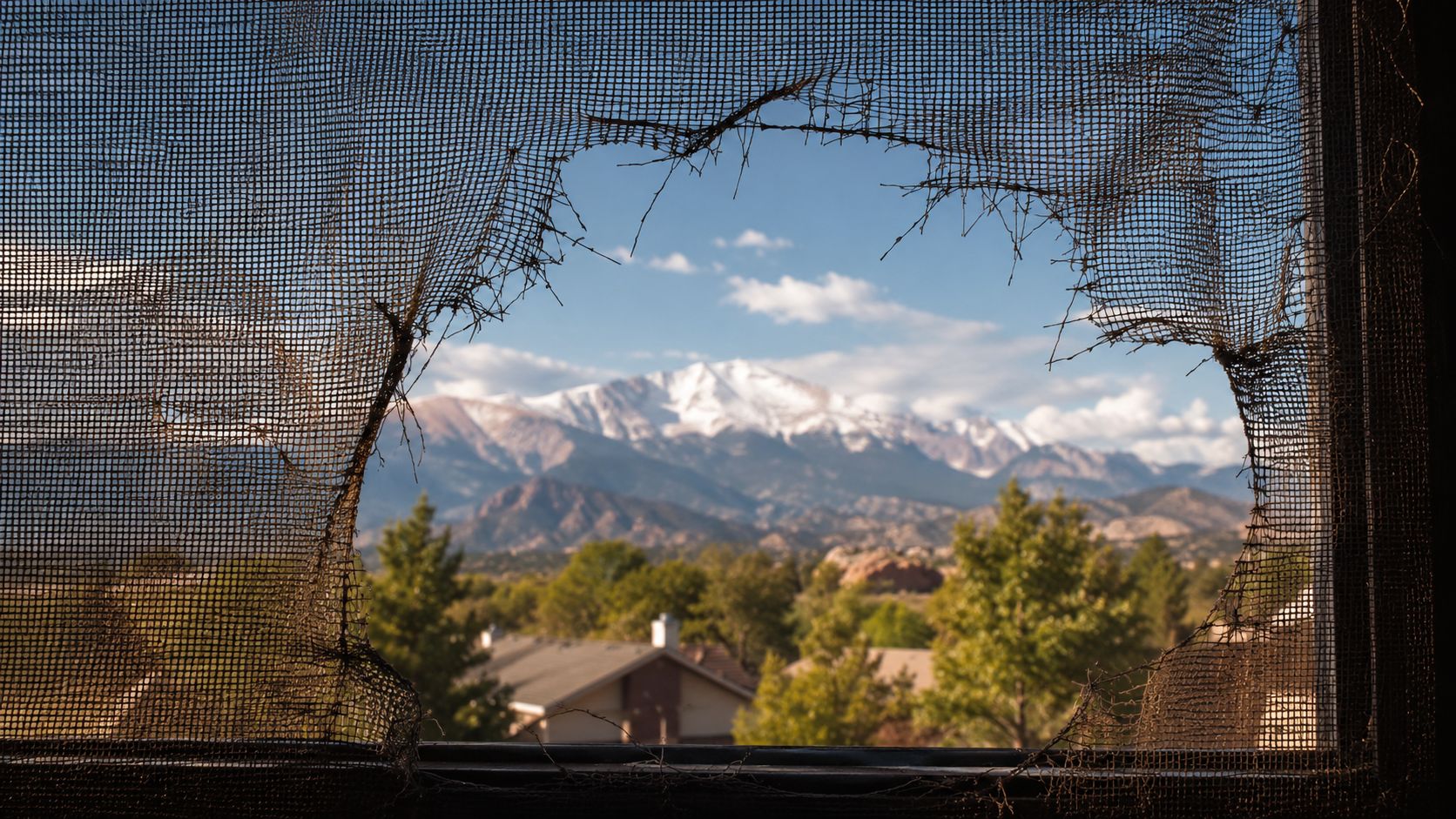
Why the price range feels so wide
Homeowners often expect a standard price because screens look simple. In practice, two screens that appear similar from the ground can price very differently once they are removed and inspected. One may need fresh mesh only. Another may need a new frame because years of UV exposure dried the material out, or because repeated wind pressure twisted it enough that it no longer seats correctly.
That matters here in the Pikes Peak region. Higher-altitude sun is hard on screen mesh and frame components, especially on south- and west-facing windows. Add our spring wind and airborne dust, and cheaper materials often wear out faster than homeowners expect.
Practical rule: Most cost differences come from frame condition, fit, and material quality, not just from the square footage of mesh.
What Colorado Springs homeowners are usually paying for
In local homes, the price question usually comes down to the kind of result you want.
A quick repair makes sense if the frame is still square and the goal is to keep bugs out for another season. A full replacement makes more sense when the frame is warped, the corners are failing, or the screen has already been patched once and still does not sit right. Homeowners getting ready to sell also tend to replace damaged screens because faded or sagging screens make clean windows look unfinished.
The best way to judge cost is to ask how long the fix is likely to hold up in our climate. Spending less up front can be the right call. It can also mean doing the job twice if the materials or frame are already near the end of their life.
Key Factors That Influence Window Screen Pricing
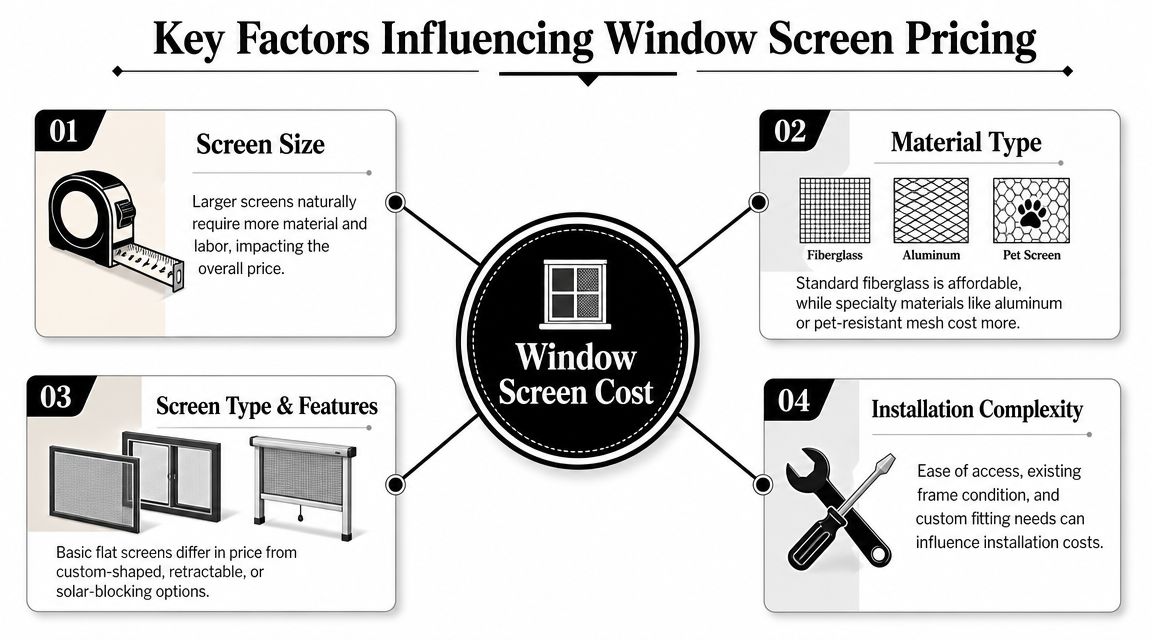
The easiest way to understand new window screens cost is to break the quote into the parts that influence the number. Four things do most of the work: size, material, screen style, and installation complexity.
Size changes more than homeowners expect
A small bathroom or basement screen uses less material and is faster to build and fit. A larger living room window or patio opening takes more mesh and more handling, and it's less forgiving if the frame is slightly out of square.
A 2025 guide reports that window screen replacement usually falls between $147 and $513 per window. It also shows how size alone creates major swings. A small 18×18-inch screen may cost $30 to $210, while a 32×55-inch screen can cost $80 to $550. That breakdown is available in this window screen replacement cost guide from Argo Window Repair.
Material choice affects both cost and lifespan
Standard mesh is usually the most affordable route. Specialty mesh costs more because it cuts differently, installs differently, or is built for a specific use such as durability or sun control.
What homeowners often miss is that the material decision isn't only about price at install. In Colorado Springs, sun exposure can make that choice matter more over time. A budget mesh may be fine on a shaded side of the home. It may not be the smartest move on a hot west-facing elevation that takes hard afternoon sun.
Screen type and features matter
Not every screen is a simple flat rectangle. Costs rise when a screen has unusual dimensions, specialty corners, tight tolerances, or a less common application.
A simple way to consider this is:
| Screen situation | What tends to happen to cost |
|---|---|
| Basic flat screen | Usually the most budget-friendly option |
| Larger or oversized opening | More material and more labor |
| Custom fit or uncommon shape | More measuring and fabrication time |
| Specialty mesh or upgraded features | Higher material cost and slower installation |
Installation complexity often decides the final number
Several factors lead to different quotes. A straightforward re-screen with a solid frame is one thing. A worn frame, damaged spline groove, or awkward second-story access is another.
- Good existing frame. Usually a simpler job.
- Bent or loose frame. Often pushes the project toward full replacement.
- Custom openings. Require more precise measuring and fitting.
- Hard-to-access windows. Add time, caution, and labor.
A cheap material choice won't save much if the installer has to fight a warped frame the whole time.
That last point is why quotes can vary even when two homes seem similar from the street. The labor side often tells the true story.
Comparing Window Screen Materials and Their Costs
Once the frame and measurements are sorted out, the next decision is the mesh itself, influencing whether homeowners save money, waste money, or make a smart long-term choice depending on how they use the room and what the screen has to put up with.
The common material choices
Here's a practical side-by-side look at what tends to work.
| Material | Cost tier | Good fit for | Trade-off to know |
|---|---|---|---|
| Fiberglass | $ | Most standard windows | More basic durability |
| Aluminum | $$ | Homeowners who want a stiffer screen | Less forgiving during handling |
| Pet-resistant mesh | $$ to $$$ | Homes with dogs or cats | Costs more and can be heavier to work with |
| Solar screen | $$ to $$$ | Sunny exposures | Darker view outward than standard mesh |
Fiberglass is usually the default because it's affordable and works well in a lot of homes. If the goal is restoring function on standard windows, it often makes sense.
Aluminum can appeal to homeowners who want a firmer feel. It can be a good option, but it also tends to be less forgiving during fitting and handling. If the frame isn't in good shape, that rigidity doesn't fix the underlying problem.
Where specialty mesh earns its price
Pet-resistant mesh is worth discussing if you have dogs pushing on lower screens or cats that treat the window as a lookout post. It costs more, but it can prevent repeat damage in the right house.
Solar mesh is especially relevant in Colorado Springs. Homes here get strong light, and some homeowners care less about a perfectly open view than they do about cutting glare and heat at the window. If you're considering that option, this explanation of how to cut UV with solar screens gives a useful overview of why people choose them.
The cheapest mesh is not always the lowest-cost choice if you already know the screen sits in direct sun or gets bumped every week.
Matching the material to the room
A good material decision starts with use, not just price.
Bedroom and standard living areas
Standard fiberglass often does the job well.Ground-floor windows near pets or foot traffic
Pet-resistant mesh usually makes more sense.Bright south or west-facing rooms
Solar-oriented options can be worth considering.Screens you remove and reinstall often
Material and frame stiffness both matter, because frequent handling exposes weak spots.
If you want a closer look at the actual options homeowners compare, this page on replacement screening material choices is a useful reference.
What doesn't work well is choosing a premium mesh while keeping a failing frame, or choosing bargain mesh for a high-abuse location and expecting it to last. Good screen replacement is about matching the product to the opening and the way the home is used.
DIY Screen Replacement Versus Hiring a Professional
A Colorado Springs homeowner usually reaches this decision after the same moment. You pull a screen out on a windy afternoon, the corner flexes more than it should, the mesh feels brittle from sun exposure, and a simple weekend fix suddenly looks less simple.
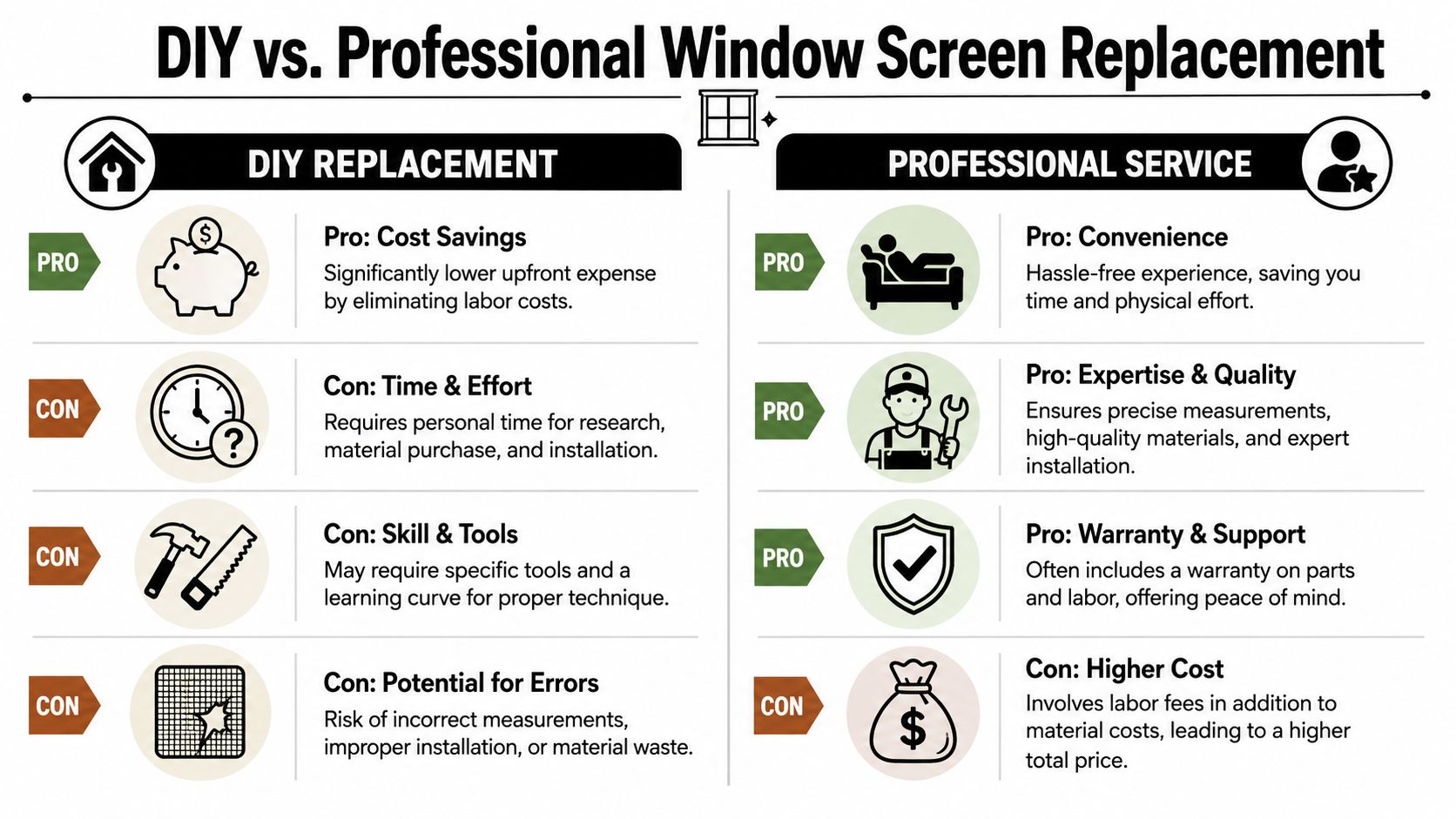
DIY screen replacement can make sense. It usually works best on one or two standard screens with straight frames, easy access, and no fit issues. If the frame is still solid and you have the patience to measure carefully and roll spline evenly, you can save money on labor and get a perfectly acceptable result.
When DIY usually works
DIY is a reasonable option if the job checks most of these boxes:
The frame is still square
No bowing, cracked corners, or loose joints.The screen is easy to remove and reinstall
A basic ground-floor window is much more forgiving than a tall or awkward opening.The opening is standard
Common sizes are easier to work with than older, custom, or slightly out-of-square windows.You can tolerate a little trial and error
Getting mesh tension right often takes more than one attempt.
If you want to size up the project before buying supplies, this guide on how to make your own window screens gives a clear picture of the steps involved.
Where DIY starts costing more than expected
The material cost is only part of the decision. The primary question is whether the first attempt fits well, looks clean, and lasts.
The mistakes I see are pretty consistent. Homeowners reuse old spline that no longer holds tension, stretch the mesh unevenly, cut corners a little too tight, or discover too late that the frame was already slightly bent. The screen may look fine on a workbench and still rattle, gap, or bind once it goes back into the window.
That shows up faster in Colorado Springs than in calmer climates. High-altitude sun dries out cheaper mesh and plastic corners sooner. Wind puts extra stress on loose material and light frames, especially on larger openings or exposed sides of the house. A screen that is "good enough" in the garage can turn into a callback after one season of sun and gusts.
Why homeowners hire a professional
Professional service is usually the better choice when fit matters, access is difficult, or the existing screen has more going on than torn mesh.
That includes:
Upper-story windows
Safer and less frustrating to handle with the right setup.Bent or loose frames
Re-screening a bad frame rarely solves the underlying problem.Large screens or specialty mesh
Bigger spans and upgraded materials leave less room for error.Multiple screens at once
The time savings alone often makes professional work the practical option.Homes with strong sun or wind exposure
Better materials and proper tension pay off longer here.
Around Colorado Springs, I usually tell homeowners to be honest about what they want from the result. If this is a back window in a low-traffic spot, DIY may be perfectly fine. If it is a front-facing screen, a large slider, or something that takes a beating from sun and wind, professional replacement often saves money by avoiding redo work and shortening the gap between "fixed" and "fixed right."
That is also why many homeowners bundle screen service with window cleaning or track cleaning. The whole window opening gets checked at once, and problems with fit, debris, or worn hardware are easier to catch before a new screen goes in.
The Professional Screen Service Process in Colorado Springs
A lot of Colorado Springs homeowners call after the same frustrating pattern. A screen gets patched or swapped, it looks fine at first, then one windy season or a stretch of hard sun leaves it loose, faded, or rattling again. Around the Pikes Peak region, the process matters because the conditions are rougher on screens than many national guides assume.

It starts with identifying the real issue
The first step is figuring out what failed. Torn mesh is only one possibility. On many homes here, the bigger problem is a frame that has twisted slightly, corners that have loosened, or a screen that no longer fits tightly after repeated removal and weather exposure.
A proper visit usually checks four things:
- Frame shape. Is it still square and firm, or has it bowed?
- Mesh condition. Is it torn, brittle, sun-faded, or pulling away from the spline?
- Fit in the opening. Does it sit securely, or does it chatter in the wind?
- Exposure and use. Is this window on a sunny south or west side, near a patio, or in a spot that gets strong gusts?
That local exposure check matters more than homeowners expect. High-altitude UV in Colorado Springs can dry out cheaper mesh faster, and wind across open lots or foothill-facing neighborhoods puts extra stress on corners and frame tension.
Pricing usually changes because of labor and fit
Mesh is often the cheapest part of the job. Time is what moves the quote.
Analysts at Angi found that installed screen replacement can vary widely, with labor commonly charged by the hour or by the screen, and material costs staying relatively low unless you choose an upgraded product. Their cost breakdown in this window screen replacement pricing guide from Angi lines up with what happens in the field.
The work that affects price is measuring correctly, checking frame condition, choosing a mesh that fits the location, and installing it so it sits flat and stays put. A basic ground-floor re-screen with a solid frame is one thing. A large screen with a worn frame groove, custom sizing, or heavier mesh takes more time and usually costs more for good reason.
What a professional appointment usually includes
A solid service process tends to follow a straightforward order:
Review the problem windows
The goal is to separate simple re-screen jobs from screens that need frame work or full replacement.Measure each opening carefully
Careful measurement helps avoid fit problems, especially on older homes where openings are not always perfectly consistent.Match the material to the location
Standard mesh may be fine in a protected area. Sun-heavy or wind-exposed sides of the house often justify a stronger or longer-lasting option.Build or re-screen the unit
Good existing frames can often be reused. Bent, loose, or poorly fitting frames are usually a better candidate for replacement.Install and test the final fit
The finished screen should slide or seat properly, sit flat, and stay secure when the weather picks up.
For homeowners who want to see the service side of that process, this short video gives a helpful visual:
Many homeowners also prefer to have screen work handled during another exterior service appointment. Cultivate House Detailing does that as part of window-related service work, which can save time when the glass, tracks, and screens all need attention during the same visit.
Sample Window Screen Costs and Money Saving Tips
A common call in Colorado Springs goes like this. One screen tore in a spring windstorm, but once the homeowner starts looking around, the west-facing windows are brittle, the patio screen is loose, and a few frames have been rattling for years.
That is why screen pricing is rarely one flat number. The cost depends on whether you are reusing a solid frame, upgrading to a tougher mesh, or replacing a screen that has already been worn down by high-altitude sun and steady Front Range wind.
Three common scenarios
A small apartment screen with an intact frame
This is usually the least expensive type of job. If the frame still fits well and the corners are tight, re-screening is often the practical option. Homeowners can compare that approach with broader window project planning by reviewing this guide on budgeting for new windows, especially if several parts of the window system are starting to show age at the same time.Several ground-floor screens getting upgraded material
Costs rise when the goal is durability, not just a basic re-mesh. On homes in Colorado Springs, I often recommend stronger mesh on sides of the house that take direct afternoon sun or regular wind exposure. That upgrade costs more up front, but it can save a second service call if standard mesh would likely dry out, loosen, or tear again.A larger replacement near a patio or main living area
Larger screens take more material and more care to fit cleanly. If the frame is bowed or the screen has to sit tight in a high-use opening, labor and material both increase. Patio-adjacent screens also tend to take more abuse from traffic, pets, and furniture movement, so cheaper materials do not always hold up well there.
Smart ways to keep the bill under control
The lowest estimate is not always the lowest long-term cost.
Group the work by condition
If two or three screens are already showing sun damage, handling them together usually makes more sense than replacing one now and booking another visit in a few months.Use better mesh only where it pays off
A shaded upstairs bedroom may do fine with standard mesh. A west-facing patio door or a windy corner of the house may justify heavier material.Do screen work during other window service
Many homeowners save time and trip costs by having screens handled during the same appointment as glass and track cleaning. Cultivate House Detailing often does that for local clients who want the whole window area addressed in one visit.Avoid putting new mesh into a bad frame
Re-screening a weak frame can look cheaper on paper and cost more later if the screen will not stay seated or tensioned.
One honest rule of thumb helps here. Spend according to exposure, not just square footage. In Colorado Springs, sun and wind often do more damage than age alone.
For sellers, landlords, and property managers, there is another practical savings angle. Clean, properly fitted screens make the whole window look maintained, which helps exterior cleaning jobs look finished and can reduce the small punch-list items that come up before a showing or tenant turnover.
Deciding Between Window Screen Repair or Full Replacement
The easiest way to decide is to look at the frame first, then the mesh.
Repair usually makes sense when
- The frame is still straight
- The corners are secure
- The screen fits properly in the opening
- The damage is limited to tears, holes, or loose mesh
In that situation, re-screening is often the practical answer.
Full replacement is usually smarter when
- The frame is bent or warped
- The mesh is brittle from prolonged sun exposure
- The screen keeps popping loose
- You're upgrading to a different material for a reason
If you're already thinking beyond screens and planning larger window work later, this guide on budgeting for new windows can help you think through where screen replacement fits into the bigger picture.
For most Colorado Springs homeowners, the right call comes down to this. Repair what still has a good structure. Replace what has already failed at the frame or fit level. That's the cleanest way to avoid paying twice.
If you want a straightforward quote for screen repair, replacement, or window cleaning in Colorado Springs and nearby communities, contact Cultivate House Detailing. You'll get clear guidance on what should be repaired, what should be replaced, and what isn't worth paying for yet.
Need it done properly the first time? Cultivate House Detailing offers window screen repair and replacement. Get a free quote.