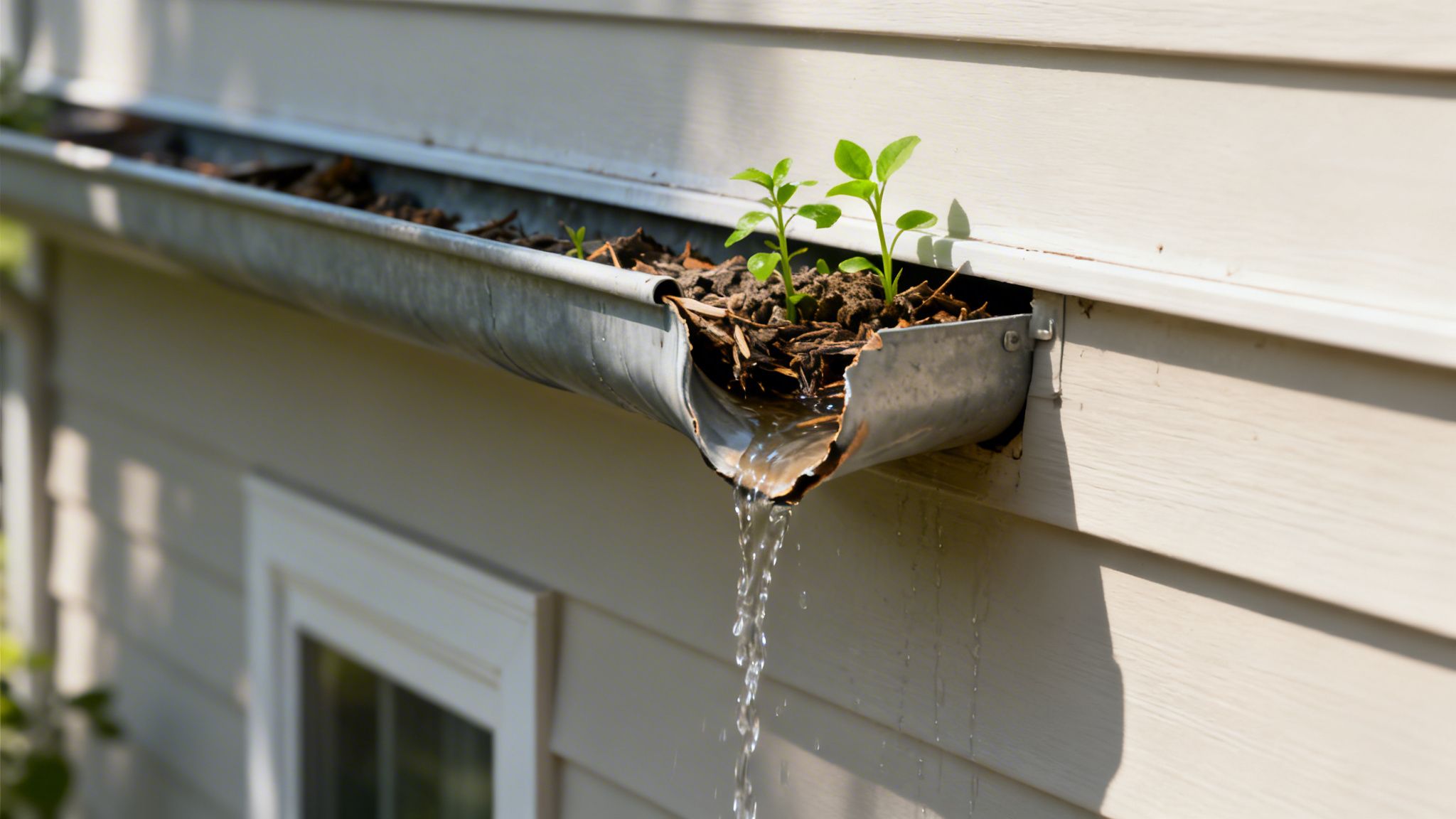
If you've watched water spill over the edge of a gutter during a summer storm, you already know how fast a small maintenance issue can turn into a mess. In Colorado Springs, that spillover can come from pine needles, hail grit, snowmelt, and windblown debris, all of which land in gutters and downspouts that were supposed to move water away from the house in the first place. A professional gutter cleaning service is about more than scooping out leaves, it's about making sure the whole drainage path still works when the weather turns rough.
That matters here because Front Range homes take on a lot. Rooflines collect pine needles, gutters catch hail debris, and spring melt can push water through a system that looked fine a month earlier. A good local service should help you understand what's happening on your property, what needs attention now, and what can wait until the next seasonal visit.
Why Colorado Springs Gutters Work Harder Than You Think
A July storm can make the problem obvious in seconds. Water backs up, dumps over the lip, and runs straight down the siding while the homeowner stands under the porch wondering how a clean-looking gutter failed so quickly. Around Colorado Springs, that scene isn't unusual because the mix of wind, snowmelt, hail, pine needles, and wildfire debris loads gutters in ways that milder climates just don't see.
The weather here keeps changing the job
On one week, a roof may be dry and dusty. On the next, it's taking in hail, ash, or a quick thaw that sends runoff into every low spot in the gutter line. That constant change is why a clogged system here isn't just a cosmetic issue, it can contribute to foundation staining, fascia rot, ice-dam risk, and erosion when water starts taking the wrong path.
Practical rule: if the water isn't leaving the roof quickly and cleanly, it's already putting stress on the home.
The bigger issue is that damage often starts where you can't see it from the ground. Wet debris holds moisture against seams and hangers, and hidden buildup can make a gutter look “mostly clear” while it still fails during a heavy downpour. That's why local homeowners who live near trees, open space, or burn-scar areas usually get better results from a scheduled maintenance plan than from waiting until a leak shows up.
Why Colorado homes need a local eye
A house in Colorado Springs doesn't face the same debris pattern as a house in a flatter, milder market. Pine stands, gusty afternoons, freeze-thaw cycles, and ash from nearby fire activity all make the gutter system work harder for a longer stretch of the year. If you've got a driveway that shows runoff stains after every storm, the gutters are probably telling you the same story.
For homeowners comparing local exterior maintenance options, even a properly installed gutter system still needs regular attention, and a resource like gutter installation for Colorado Springs can help make sense of replacements or upgrades if repeated overflow has already damaged the system. The main lesson is simple, gutters are part of the home's water management, not a set-it-and-forget-it feature.
What a Professional Gutter Cleaning Service Actually Includes

A real professional gutter cleaning service does a lot more than pull out a few handfuls of leaves. The work should start with a quick look at access points, roof height, downspout placement, and any problem areas the homeowner has noticed. From there, the technician should choose the safest access method, then clean, inspect, and test the system before packing up.
The service should follow the whole drainage path
The actual workflow should include debris removal, flushing, and verification. Hand-scooping clears the obvious material, but it can leave fine sediment behind, which still slows water down. Industry guidance also stresses a full flow test, camera inspection where needed, and a final flush to confirm that water moves through the gutters, joints, and downspouts freely. That last part matters because hidden buildup can mimic a clog long after the big debris is gone. See the full process overview in this inspection-to-final-rinse guide.
A solid visit usually covers:
- Debris removal: Leaves, twigs, grit, and other loose material get pulled out of the trough.
- Downspout flushing: The technician checks for hidden blockages where water exits the system.
- Flow testing: Water is run through the system so the homeowner knows it drains properly.
- Inspection points: Hangers, seams, fascia, and downspout joints should be checked for wear.
- Cleanup: The mess shouldn't be left on the roof, driveway, or landscaping.
- Service notes: Good crews document what they found, especially if a repair is coming later.
A gutter that looks clear from the ladder can still fail if the downspout is packed with fine sediment or shingle grit.
For older homes, or roofs with hard-to-see runs, camera inspection adds another layer of confidence. If a company is doing the job right, it should leave you with more than clean gutters, it should leave you with a simple record of what was found and whether the system needs follow-up work.
Warning Signs Your Gutters Need Attention Now
Some gutter problems are loud. Others are easy to miss until the next storm sends water exactly where it shouldn't go. A quick walk around the house can tell you a lot if you know what to look for.
The obvious signs
Overflowing water during rain is the clearest warning. So is a gutter run that sags, pulls away from the fascia, or looks bent in the middle. If you can see plants growing in the trough, the system has already gone past routine maintenance and into a clog that's been sitting there long enough to hold moisture and debris together.
Other signs are less dramatic but just as useful:
- Water streaks on siding: Usually means overflow is reaching the wall.
- Tiger-striping on the gutter face: Often points to ongoing runoff and grime buildup.
- Puddles below downspouts: Suggests discharge is blocked, redirected, or too concentrated.
- Eroded soil near the foundation: Water is landing too close to the house.
- Basement dampness: Can show up after repeated overflow, even if the gutters look fine from above.
What those signs usually mean
If water is running over the edge, the downspout may be buried, the pitch may be wrong, or the channel may be packed with material that a quick sweep won't catch. If the gutter is sagging, the weight of wet debris and standing water may already be stressing the hangers. If the damage shows up in the yard first, like washed-out mulch or channels carved through soil, the overflow has been happening more than once.
For Colorado homeowners, snowmelt adds another clue. When gutters can't drain before a freeze, that trapped water can create ice-related stress on the system and the roof edge. That's why a short ground-level check after big weather changes can help you decide whether the next service is routine, urgent, or paired with a small repair.
How Often Colorado Homes Really Need Gutter Cleaning
The generic twice-a-year rule is a decent starting point, but it doesn't fit every Colorado property. A home tucked under pines, exposed to wind, or sitting near wildfire-prone terrain can build up debris much faster than a house on an open lot. The smarter schedule is based on risk, not habit.

A simple Colorado schedule
For many homes, late spring and late fall are the right anchors. That timing clears out winter grit before summer storms and removes fall debris before the first hard freeze. Homes with heavier tree cover, especially pine-heavy lots, often need more visits because needles shed in a way that clogs gutters again faster than broadleaf debris. Homes that sit near burn scars or open wind corridors may also benefit from more frequent inspections, especially after a rough weather event.
The old “just clean them twice a year” advice doesn't account for guard systems either. Gutter guards can reduce large debris, but they don't remove the need for inspection, downspout flushing, and occasional cleanouts. Fine material still gets in.
For a broader maintenance framework, homeowners can also look at this Colorado gutter cleaning schedule guide, then decide whether their property needs seasonal, quarterly, or post-storm visits.
When to add an extra visit
A third or fourth cleaning makes sense when the property collects debris quickly or when the weather has been especially rough. That often happens after:
- Major wind events
- Hail storms
- Heavy snowmelt
- Fire-mitigation work around the property
- Repeated needle drop from nearby trees
The point isn't to overservice a home. It's to match the schedule to the way the property behaves through the year. A home that drains cleanly in May may still need attention again by late fall if the site keeps feeding debris into the system.
Typical Pricing and What Drives Your Quote
A gutter quote usually starts making sense once you look at access, size, and debris load instead of the total alone. According to national gutter statistics, typical professional service often falls in the roughly $120 to $400+ range, with examples that include an average of $167 and a common homeowner spend of $119 to $234. Pricing guides from Angi for 2026 place appointments around $360 on average and a broader $191 to $529 range depending on location and complexity according to 2026 pricing guides from Angi. That spread is why two homes on the same street can still end up with different quotes.
What changes the price
The main drivers are straightforward. Home height affects the price because ladder setup and safety time increase with each story. Linear footage matters because more gutter means more labor, and published pricing often falls around $0.95 to $2.25 per linear foot professional vs DIY gutter cleaning guide. Debris load changes the job too, since packed, wet buildup takes longer to remove. Accessibility also matters, because steep roofs, awkward additions, and tight side yards slow the work down.
A few published examples show how that plays out. A single-story home under 150 linear feet may land near $218 professional vs DIY gutter cleaning guide. A two-story property with 220+ feet of gutters may run closer to $470 professional vs DIY gutter cleaning guide.
| Typical Gutter Cleaning Pricing by Home Profile | Linear Footage | Typical Price Range |
|---|---|---|
| Small single-story home | Under 150 feet | About $218 |
| Larger two-story home | 220+ feet | About $470 |
| General residential service | Varies | Roughly $120 to $400+ |
Add-ons can change the quote too, especially if the crew has to flush stubborn downspouts, deal with guard systems, or document a condition issue that needs repair later. A clear estimate should show where the money is going, not hide the details in one vague total.
Safety, Insurance, and Equipment Standards That Matter
A ladder is not a safety plan. A professional gutter cleaning service is hired partly because the work involves height, balance, and weather exposure that a normal weekend project does not handle well. On Colorado homes, that risk climbs fast when pine needles pack into corners, hail drops grit into the troughs, snowmelt freezes overnight, or wildfire debris settles on the roof and washes into the system. Industry guidance says ground-based vacuum or telescoping systems should be used when possible on accessible runs, because they can reduce ladder time significantly, and professional engagement is appropriate when eave height exceeds 12 feet or the roof pitch is steeper than 6:12 source.
What to ask for before anyone climbs up
Ask for proof of general liability insurance and, if a crew is going on the roof, workers' compensation. Ask how the company handles anchor points, because OSHA-related guidance says roof anchors used for this kind of work must be engineered and tested to 5,000 pounds per employee. That number indicates the company is thinking about the job the right way, with planning instead of improvisation source.
The equipment matters too. A crew using telescoping tools or a vacuum setup can often handle accessible runs with less time on the ladder. On more complex homes, the safe setup may take longer, and that is part of what you are paying for. The right approach is like choosing the right snow shovel for the driveway, the tool changes how safely and cleanly the job gets done.
If a contractor cannot explain the safety setup in plain language, keep looking.
Cultivate House Detailing treats safety as part of the job, not an extra. That approach matters because careful work protects both the house and the people doing the work. A well-run visit should feel organized, not rushed, and a real inspection should catch more than leaves. It should look for loose hangers, standing water, sagging sections, downspouts that back up, and other signs that the gutter system is already under strain from local weather.
A quick insurance check
Before you book, make sure the company can answer three things clearly:
- What coverage do you carry?
- Who is covered on the job site?
- What is your safety plan for roof access and ladder work?
If the answers sound vague, the quote is probably the least important part of the conversation. A company that works cleanly on Colorado homes should be able to explain how it protects the crew, the roof edge, and the gutters themselves.
Questions to Ask Before Hiring a Colorado Springs Gutter Company
A polished website doesn't tell you whether a company will show up prepared. The better test is the estimate and the answers behind it. A local contractor should be able to explain the work, show proof of coverage, and tell you how they handle problems when they find them on site.

What a good vetting conversation sounds like
Start with the reviews, but don't stop at star ratings. Look for comments that mention specific work, like downspout flushing, before-and-after photos, or how the crew handled a surprise issue. Then ask whether the team is W-2 staff or subcontracted, because the answer often tells you how consistent the service will be from visit to visit.
A few questions are especially useful:
- What does your inspection report include?
- Do you photograph before and after conditions?
- How do you handle a clogged downspout discovered mid-job?
- Are small repairs itemized separately?
- Can you show proof of insurance directly?
A local company also needs to understand the area's weather patterns and seasonal pressure points. Colorado Springs homes can need fast turnaround after hail, snow load, or fire-mitigation clearing, so the crew should be comfortable explaining how scheduling works when the weather changes fast. That's one of the reasons local presence matters, the work is tied to the season, not just the calendar.
If a quote is unusually low and the scope is vague, that's a warning sign. If the company won't put the service in writing, that's a bigger one. The right contractor should make the process easier to understand, not harder.
Gutter Guards, Local Service Areas, and Booking Your Cleaning
Gutter guards help, but they don't end maintenance. They can reduce large leaf buildup, yet fine needles, shingle grit, and storm debris still collect on top of and inside guard systems, especially in pine-heavy parts of the area. That means even guarded gutters still benefit from inspection and downspout flushing, usually at least once a year.
What to do if you already have guards
Don't assume the system is maintenance-free just because you can't see the debris. Water still needs a clean path out of the gutter, and a clogged exit point can cause the same overflow problems as an open gutter full of leaves. If your home sits near pines, open fields, or areas that get a lot of wind-driven debris, the guards may slow the mess down, but they won't erase it.
Cultivate House Detailing serves Colorado Springs, Black Forest, Monument, Manitou Springs, and Woodland Park, so homeowners in those areas can ask about seasonal scheduling, quote timing, and other exterior services when they request a visit. A typical booking starts with a quick description of the home, the gutter setup, and any problem areas the owner has noticed. From there, the company can plan around seasonal demand for fire-mitigation clearing, holiday lighting, and general exterior detailing.
If you're ready to get your gutters checked, request a quote, ask a few questions about your roofline, or schedule service before the next storm rolls through. A clean, flowing system is easier to maintain than a damaged one, and the right local crew should help you keep it that way.
A CTA for Cultivate House Detailing.
Rather not do it yourself? Cultivate House Detailing offers gutter cleaning in Colorado Springs. Get a free quote.