A torn screen has a way of showing up at the worst time. One gusty Colorado Springs afternoon, a pinecone, pet claw, or stray branch can leave a hole that lets in bugs, dust, and a lot of frustration. For a small rip, a window screen repair patch is usually the quickest fix, and the old repair logic hasn't changed much over the years, small damage gets covered with a properly sized overlay instead of replacing the whole screen. Texas A&M's extension guidance describes patching with an oversize piece, and modern home-improvement advice still follows the same basic idea, just with tighter overlaps for smaller repairs (Texas A&M screen repair guidance, Home Depot screen repair guidance).
That's why patching is still the first move for many Colorado homeowners. It's fast, low-fuss, and it keeps a screen doing its job while you decide whether a full rescreen is worth it. For bigger tears, worn-out mesh, or a screen that no longer sits square, the smarter answer is often replacement or professional rescreening, especially when you want a clean finish that looks right from the curb.
That Annoying Tear Your First Step to a Quick Fix
A small tear usually starts the same way. A dog scratches at the frame, a kid presses against the mesh, or a branch catches the screen, and a minor opening appears before anyone notices. In Colorado Springs, that kind of damage gets annoying fast because people want airflow without inviting bugs inside.
A patch makes sense when the problem stays limited to one spot. If the frame is still straight and the mesh around the tear is holding together, a window screen repair patch gives you a fast way to close the gap and keep the window usable. Once the damage spreads, though, the repair choice changes. Multiple tears, frayed edges, or a screen that has gone brittle usually point to a stronger fix, because patching those problems only delays the bigger job.
Practical rule: if the tear is isolated and the frame still feels solid, patching is usually the quickest way to get back to normal airflow.
That is the point where patching helps Colorado homeowners most. It keeps insects out, lets fresh air back in, and avoids the extra work of replacing a screen that still has plenty of life left. It also gives you time to assess the screen properly. If the mesh is fading, the corners are weak, or the frame no longer sits square, a patch can still work for a while, but a full rescreen or professional repair will usually make more sense for the long run.
Gathering Your Tools and Materials
A clean repair starts before the patch ever touches the screen. If you have to hunt for scissors halfway through the job, the mesh sits open too long, dirt gets in the way, and the patch usually looks worse than it should. A few minutes of prep makes the work smoother and gives you a repair that looks more intentional.
For most window screen repair patch jobs, keep the basics close at hand:
- Sharp scissors or a utility knife: These give you a clean patch edge, which matters more than people think.
- Measuring tape: You don't need anything fancy, just a quick way to size the damaged area before you cut.
- Stiff brush: This clears loose dirt, pollen, and debris from the mesh.
- Isopropyl alcohol and a clean cloth: These help remove grime and oils so adhesive can grab properly.
- Matching patch material: Fiberglass, aluminum, or a pre-sized kit should match the screen as closely as possible.
- Hair dryer: Useful for adhesive patches when you want to help set the bond.
If you're doing a sewn repair, a small sewing needle and durable outdoor thread make sense for a more traditional fix. Matching the material matters too, because a fiberglass patch on an aluminum screen can stand out, especially in bright sunlight. For homeowners replacing more than one worn section, it also helps to look at the full range of screening material before you start, including replacement options like the ones described at Cultivate House Detailing's replacement screening material guide.
Clean surface, dry surface, right-sized patch. Those three things do more for durability than most people expect.
A little prep also keeps the repair from feeling improvised. When everything is on the table before you start, the job moves from “quick fix” to something that will last.
Choosing the Right Window Screen Repair Patch
A patch only works well if it matches the job. A tiny puncture in a screen that is otherwise sound usually calls for a self-adhesive patch, because it is quick, low-fuss, and good enough when you just need to close a small opening without changing the whole screen.
A more traditional repair makes sense when you want the fix to blend in better. On fiberglass screens, a cut piece of matching mesh sewn in with outdoor-rated thread can sit more naturally in the panel, especially on a visible window or a door that gets used often. Aluminum mesh needs a matching metal patch, since the repair should act like the screen around it instead of bending or wearing differently. If you are comparing replacement options for a larger job, it helps to look at screening material choices for repairs and replacements before you buy.
The decision usually comes down to three practical choices:
- Adhesive patches: quickest and easiest, best for small holes.
- Sew-on mesh patches: more hands-on, but often a better fit for a durable and less noticeable repair.
- Pre-sized kits: handy when you want the materials bundled together and do not want to guess at what to buy.
Patch size matters just as much as patch type. A repair needs enough overlap to stay seated on clean, stable mesh, not just cover the hole itself. That is why oversize patches are the safer bet for keeping the edges from lifting, and for making the repair last longer on a screen that still has good structure. If the tear is near the middle of the panel and the surrounding mesh is still in decent shape, a patch can be a practical fix. If the screen is brittle, stretched out, or already breaking in more than one place, a patch is usually only a short-term answer.
For Colorado homeowners, the choice also depends on visibility and how long you want to live with the repair. A small tear tucked in a back window is a solid candidate for adhesive. A front-facing window or screened door usually deserves a cleaner repair, or even a full rescreening if the screen has seen enough sun, wind, and wear to keep failing in new spots.
Applying Your Patch for a Lasting Repair
A patch only holds if the screen around it is ready for one. Start by brushing away loose dust, then wipe the area with isopropyl alcohol and a clean cloth so the mesh is dry and free of oils. That kind of prep matters most with adhesive repairs, because leftover grime is what usually makes a patch lift early.
Trim any frayed strands around the tear so the opening has a clean edge. A fuzzed-out hole keeps unraveling under the patch and makes the repair look worse than it needs to. Then cut the patch with enough overlap to cover the damaged spot and sit on solid mesh around it. For a small hole, that extra margin gives the adhesive or stitching something stable to grab.
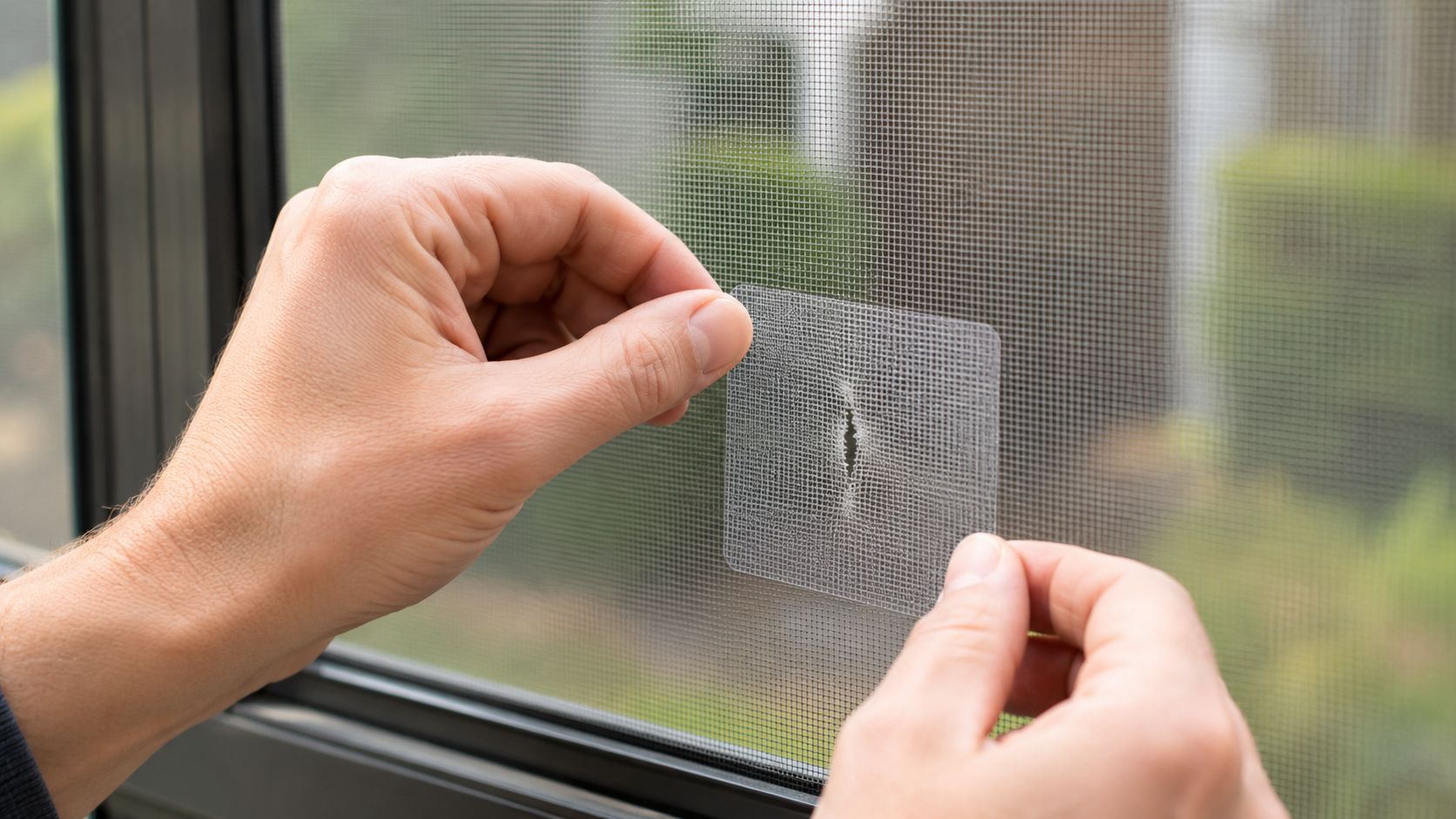
For adhesive repairs, peel the backing, center the patch over the tear, and press from the middle outward. Hold it firmly for 30-60 seconds so the edges seat well, and a brief pass with a hair dryer can help the bond settle. If you're sewing in a patch instead, use a simple whipstitch around the border so the new mesh is tied back into the original screen instead of just sitting on top of it.
Once the patch is in place, run your fingertips around the edges. If anything lifts, press it again before you reinstall the screen. Good screen work is usually straightforward, but it rewards patience and a clean finish.
For Colorado homeowners, the bigger question is whether a patch makes sense at all. A small tear in a screen that is still tight and in good shape is a fair DIY fix. A screen that has gone brittle from sun, wind, or repeated wear is a different story, because the patch may hold the hole closed while the rest of the panel keeps failing. In that case, rescreening is often the better long-term investment, especially on front-facing windows and screened doors that need to look decent and stay reliable through changing weather.
A short video can help you see the movement of the hands and tools before you start.
The repair should feel snug, not stiff or distorted. If the patch puckers the mesh, the opening was probably too large for a simple patch, or the screen material around it has already weakened enough that a full rescreen is the better call.
Pro Tips for a Fix That Blends In and Lasts
The difference between a patch that looks temporary and one that blends in usually comes down to small details. Match the patch material to the screen material whenever you can. Fiberglass on fiberglass and aluminum on aluminum usually look cleaner in direct sunlight, and they also tend to age in a more similar way.
Temperature matters too. Patches hold better when the screen is not baking in midday heat or stiff from cold air. For adhesive repairs, clean the surface thoroughly, press the patch firmly for 30 to 60 seconds, and use brief heat from a hair dryer to help the bond settle.
A few small habits make a big difference:
- Use the right overlap: A patch that is too small will start lifting at the edges.
- Keep the surface dry: Moisture under the adhesive shortens the life of the repair.
- Match the screen color: Charcoal and silver are common, and a close match makes the patch less visible.
- Seal tiny pinholes early: Small fiberglass pinholes can sometimes be handled with a minimal dab of clear nail polish or a similar adhesive before they become a bigger tear.
- Work on a flat surface: The screen holds its shape better, and the patch seats more evenly.
The neatest repair is not always the biggest one. It is the one that fits the damage and disappears into the screen from a few steps away.
For Colorado homeowners, the better decision is not always how to patch, it is whether the screen is still worth patching. A tight screen with one small tear is a reasonable DIY job. A screen that has gone brittle from sun, wind, or repeated wear is a different case, because the patch may hold the hole closed while the rest of the panel keeps failing. That is where a local professional becomes the smarter long-term choice, especially on front-facing windows and screened doors that need to stay clean-looking and reliable through changing weather. If you are weighing that choice, the 2026 guide to window decisions gives useful context, and Cultivate House Detailing's window screen repair in Colorado Springs is the kind of local option that makes sense when the screen is past simple patch territory.
These are the details that separate a quick patch from a repair that earns its place on the window. Colorado weather can be hard on exterior materials, so anything you can do to improve fit and bond strength is worth the extra minute.
When to Skip the Patch and Call a Professional
A patch stops making sense once the damage is too large or too widespread. The average cost to replace a window screen in the U.S. is $317, with a typical range of $147 to $515, and that price context matters when you're deciding whether to keep patching or move to a more durable solution (Angi window screen cost guide). If the screen has multiple tears or damage beyond a few inches, replacement is often the cleaner long-term choice.
Here's the practical decision line:
| Patch It Yourself | Call a Pro |
|---|---|
| Minor rip or isolated hole | Tear is large or the mesh is failing in several spots |
| Frame is straight and sturdy | Frame is bent, warped, or broken |
| One concentrated problem area | Multiple damaged zones across the screen |
| You want a fast temporary or mid-term fix | You want a taut, clean, long-lasting finish |
When the frame is bent or the spline is brittle, patching only treats the mesh. The screen still won't sit right in the window, and it may sag or pop out again. That's why professional rescreening becomes more cost-effective when the problem is structural instead of cosmetic. For Colorado Springs homeowners who want a local service option, Cultivate House Detailing's window screen repair in Colorado Springs is the kind of resource that makes sense when the screen needs more than a patch.
A useful comparison from another home-maintenance decision guide is the 2026 guide to window decisions, which follows the same general logic, small isolated damage can often be repaired, but widespread wear calls for replacement. That same thinking applies to screens. If the window is high-visibility, the screen is part of a screened door, or the repair needs to be undetectable from the outside, a professional rescreening usually delivers a better result than a visible patch.
If your screen has a small hole, a patch can absolutely buy you time. If the damage is larger, repeated, or tied to a bent frame, don't keep fighting it, request a professional screen repair estimate from Cultivate House Detailing and get the screen handled the right way for your Colorado Springs home.
Want it handled by a local crew? Cultivate House Detailing offers window screen repair and replacement. Get a free quote.