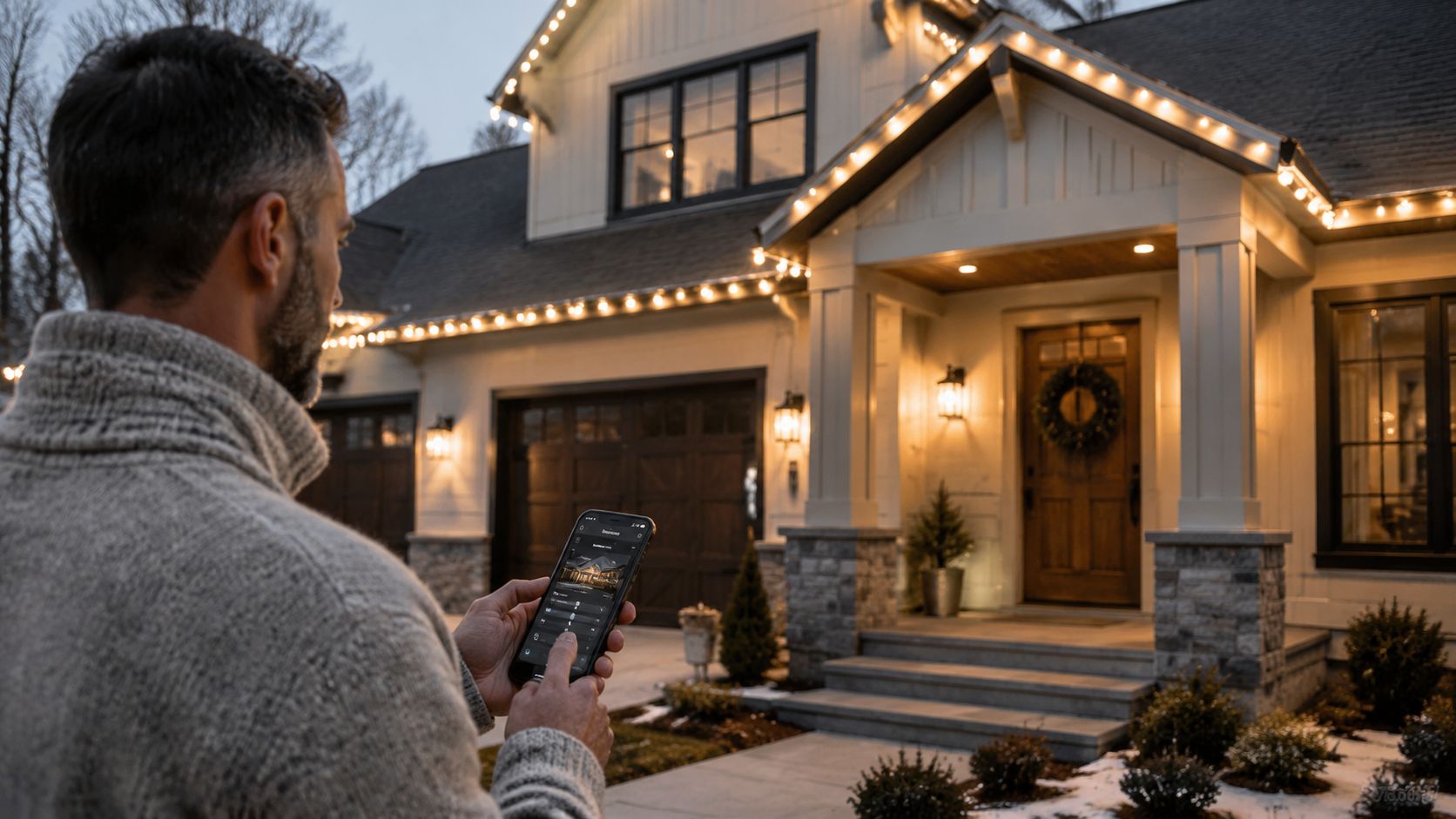
You're standing on a Colorado Springs porch in December, looking at the roofline and thinking about the ladder still sitting in the garage. The lights are tangled, the weather is cold, and the thought of climbing near an icy roof doesn't feel appealing. A professionally planned permanent holiday lighting installation changes that routine. With a phone app, you can turn on a clean architectural glow without unpacking a storage bin or spending a weekend hanging strands.
Cultivate House Detailing provides seasonal and permanent lighting services alongside exterior cleaning for homes and businesses in Colorado Springs and nearby communities. The right system can make holiday displays easier, but the decision deserves more thought than choosing colors. You'll want to understand how the lighting is mounted, how it handles snow and hail, what code and safety issues apply, how roof and gutter access will work later, and what the full ownership cost may look like.
What Permanent Holiday Lighting Means for Today's Homeowner
Permanent holiday lighting is a professionally mounted exterior lighting system that stays on the property throughout the year. Instead of taking down a string of lights after the holidays, a low-profile track, LED nodes, wiring, and controller remain installed along selected rooflines or exterior features. Many systems let you change color, brightness, timing, and patterns through an app or a dedicated controller.
The appeal is practical. A homeowner can use warm white lighting for everyday architectural accenting, switch to color for a birthday, choose team colors for a game-day gathering, or create a festive display for December without climbing a ladder. The system becomes part of the home's exterior rather than a seasonal item that moves between the roof and the garage.
Why homeowners make the switch
Temporary lights create the same cycle every season. You find the strands, test them, sort out missing clips, climb up, adjust the spacing, and eventually remove everything when the weather turns. Storage takes room, and replacement becomes part of the yearly routine.
Permanent systems address that inconvenience, but they aren't automatically the right choice for every property. The higher initial investment, future service needs, and installation quality all matter. The useful comparison is not just "cheap lights versus expensive lights." It's the trade between recurring effort and a professionally integrated system that stays ready.
Electric holiday lighting has a notable historical starting point. On 22 December 1882, Edward H. Johnson, vice president of the Edison Electric Light Co., displayed the first known electric Christmas lights by hand-wiring 80 bulbs on a tree in his New York City home, a milestone described in this history of holiday lighting. LED holiday lights entered the market by the late 1990s, helping improve durability and reduce energy use compared with incandescent strings.
Colorado Springs homeowners should also think beyond the install day. Roof access, gutter cleaning, hail inspection, fascia repairs, and future exterior work can all affect how convenient a permanent system remains. A good design accounts for those tasks before the first track is mounted.
How Permanent Lighting Systems Work
A permanent lighting system is easier to evaluate when you separate its four working parts. The track supports and hides the lights, the LEDs create the illumination, the controller sends commands, and the app lets you choose how the system operates. Together, they function like a small outdoor appliance built into the home.
The track and LEDs
A discreet aluminum track mounts beneath the fascia or along another approved exterior surface. It keeps the lights in a straight, even line and helps hide them from normal street-level views during daylight. A track matched to the home's trim can blend into the roofline instead of looking like a seasonal strand left in place.
The LED points sit along the track and may be individually addressable. Each light can then respond separately, allowing dimmed scenes, moving patterns, solid colors, or distinct color zones, depending on the product. Layout and spacing vary, so the installer should demonstrate how the lighting will appear across peaks, dormers, garage lines, and patio areas.
That planning also matters for future access. In Colorado Springs, roof inspections, gutter cleaning, hail checks, fascia repairs, and other exterior work may require safe reach to the roofline. Tracks should be positioned so the system does not make those tasks harder.
The controller and app
A compact controller connects the lights to their power source and receives commands from the app. It is commonly installed near a garage, soffit outlet, or another protected location that remains reachable for service. Through the app, homeowners may select colors, animations, schedules, brightness levels, and presets such as warm white, patriotic colors, or game-day themes.
Permanent systems commonly use low-voltage LED architecture. UL 2108 covers low-voltage lighting systems, while industry guidance connects permanent low-voltage decorative lighting with NEC Article 411. Outdoor-lighting guidance also addresses systems at 24 volts or less. Review the UL 2108 safety standard information when comparing product specifications.
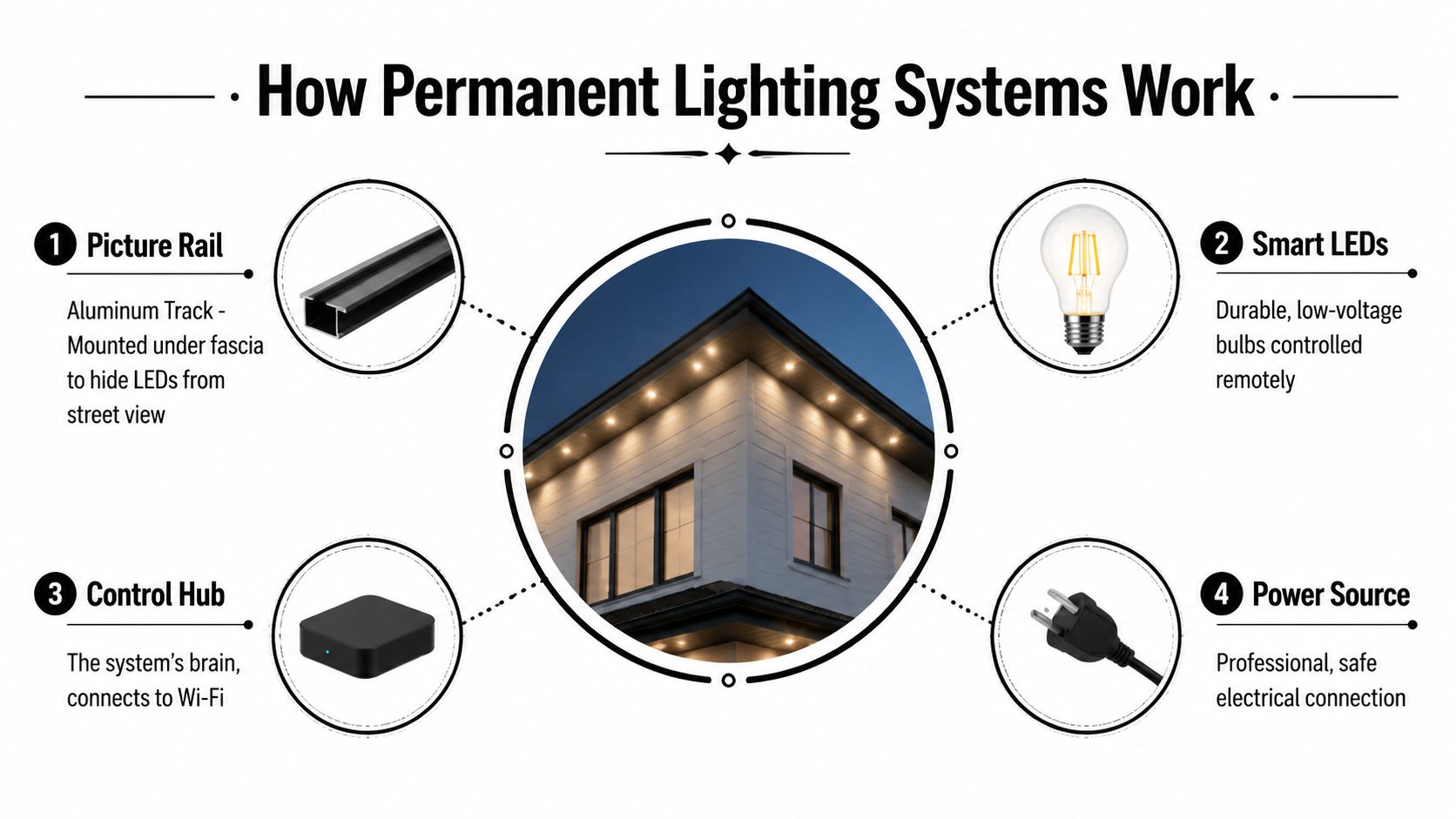
Low voltage still requires careful outdoor installation. Drivers, wiring methods, mounting points, and connections must suit the location. A well-designed system also lets technicians service individual sections or bulbs without removing an entire roofline, making later repairs more manageable.
Permanent vs Temporary Holiday Lights
Temporary lights can seem like the obvious budget choice because the purchase happens one season at a time. That lower entry point doesn't show the complete ownership picture, however. Each season can bring new purchases, replacement bulbs, storage needs, setup time, removal work, and the safety risk of accessing a roofline in poor weather.
Permanent lighting reverses that pattern. You pay more at the beginning for design, materials, mounting, controls, and professional labor. In return, the lighting stays in place and can serve holiday, event, and architectural purposes without another installation cycle.
| Factor | Temporary Lights | Permanent Lighting |
|---|---|---|
| Initial spending | Usually lower at purchase | Higher upfront investment |
| Annual effort | Install, adjust, remove, and store | Use the app or controller after installation |
| Safety exposure | Repeated ladder work and outdoor connections | One planned installation, followed by inspection and service |
| Appearance | Seasonal strands may be visible when not in use | Low-profile tracks can blend with the exterior |
| Flexibility | Limited by the strands and layout | Color, brightness, zones, and patterns can be programmable |
| Future access | Easy to remove, but setup repeats | Requires a design that preserves roof and gutter access |
The honest trade-off
Temporary lights may make sense for renters, occasional decorators, or homeowners who enjoy changing the display every year. Permanent lighting may suit someone who wants dependable year-round control and doesn't want December ladder work to remain on the calendar.
Practical rule: Compare the total routine, not just the checkout price. Include storage, removal, replacements, access equipment, and your own time.
A permanent system also needs a professional approach. The National Electrical Code permits temporary holiday decorative lighting and associated wiring only when it isn't installed for more than 90 days, as explained by the UL Code Authority guidance on year-round string lights. A system intended to remain in place across seasons should be planned as a permanent installation rather than treated like an extended temporary display.
The Installation Process From Start to Finish
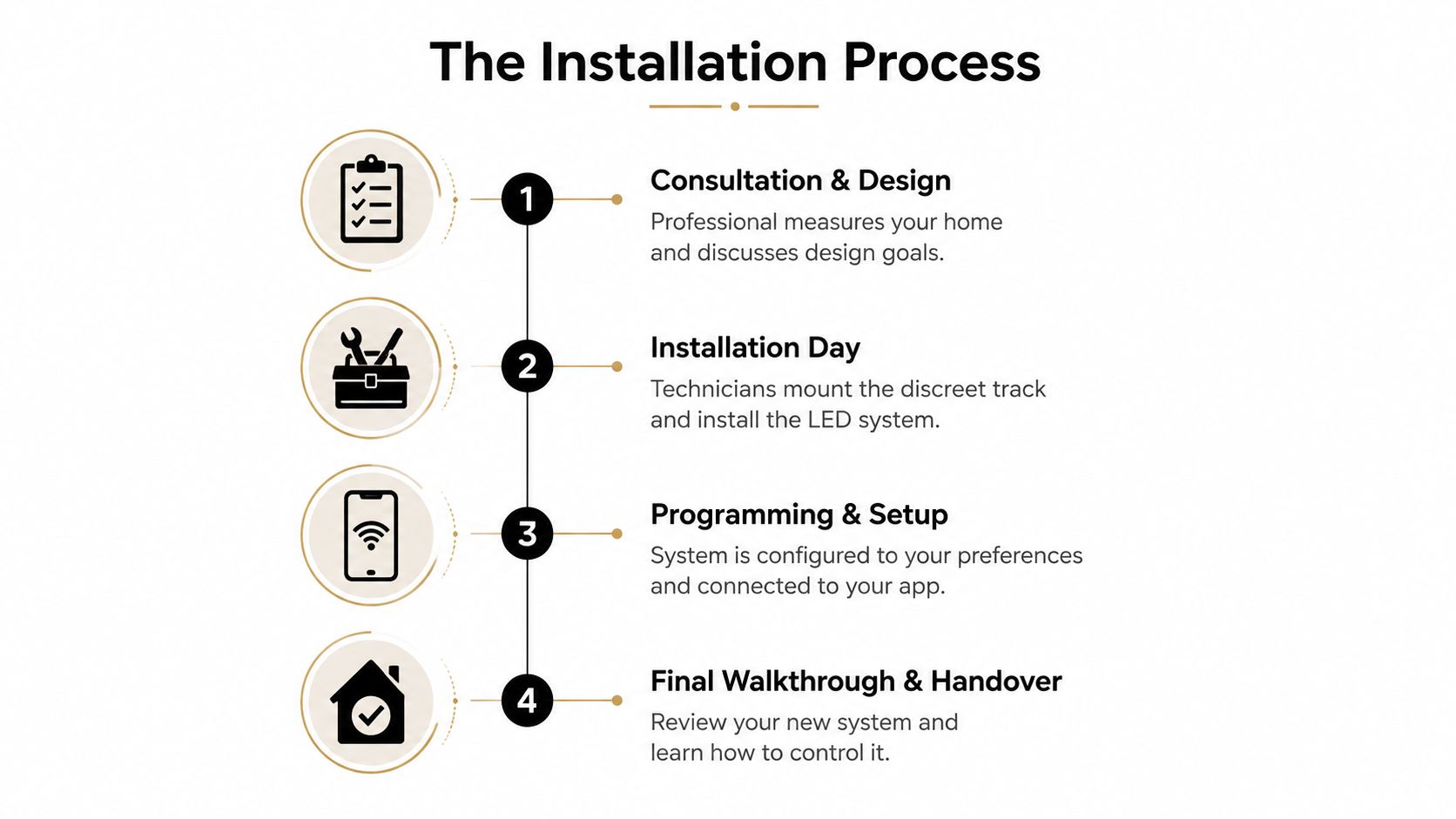
A clear installation begins before anyone brings a ladder to your house. During a consultation, the installer examines the roofline, fascia, soffits, peaks, dormers, garage, patio covers, and likely control-box location. The conversation should also cover the look you want when the lights are off, not only the holiday scene you want at night.
From design to scheduled work
The proposal should identify the areas being illuminated, the product or system type, the control method, the warranty, the payment schedule, and the expected installation window. Ask questions before signing if the document doesn't distinguish materials from labor or explain what happens if a section needs service later.
Before the crew arrives, clear the driveway if a ladder setup or lift requires space. Make outdoor outlets accessible, move fragile decorations away from work areas, and secure pets indoors. Those small preparations help the crew work safely and keep the day moving.
What happens on installation day
The crew typically protects work areas, sets up ladders or lift equipment, and marks the planned track locations. Technicians then mount color-matched aluminum tracks along appropriate fascia or soffit areas, route wiring to a discreet control box, insert the LED modules, and connect the system to its approved power source.
The installer pairs the controller with the homeowner's phone app and tests each zone. A single-story home may be completed in a day, while a two-story property or complex roofline may require two days. Actual timing depends on access, design, weather, electrical conditions, and the amount of roofline included.
The handover matters
At the final walkthrough, look at the system from the street and from the yard. Confirm that the track follows the architecture, wiring is protected, and the controller is reachable. The installer should demonstrate brightness changes, color selection, scheduling, presets, and basic troubleshooting.
Keep the warranty paperwork, product information, app credentials, and service contact details together. Ask who handles controller problems, damaged sections, app updates, and repairs after severe weather.
What Permanent Holiday Lighting Really Costs
Permanent lighting quotes vary because homes vary. A compact one-story ranch with a simple front outline needs a different amount of track, wiring, access equipment, and labor than a two-story home with steep roof pitches, dormers, peaks, garage lines, and a covered patio.
For Colorado Springs homeowners, many residential installations fall around $1,500 to $5,000 or more installed, based on pricing guidance for permanent systems and local project variables in this permanent Christmas lights cost guide. Some providers quote by linear foot, with market analyses placing certain projects around $25 to $45 per linear foot, while others prepare a whole-project price. These ranges aren't interchangeable, so ask what each quote includes.
| Home Profile | Size (linear ft) | Typical Installed Cost |
|---|---|---|
| Compact one-story outline | Qualitative estimate based on measured roofline | Lower end of local range |
| Larger one-story home | Qualitative estimate based on measured roofline | Mid-range project |
| Two-story or detailed roofline | Qualitative estimate based on measured roofline | Higher end of local range or more |
| Complex home with peaks, dormers, garage, and patio areas | Qualitative estimate based on design scope | $5,000+ may apply |
The main price drivers are measurable during the consultation:
- Roofline length: More linear footage requires more track, LEDs, wiring, and labor.
- Access: A steep two-story roofline can require more setup than an accessible one-story elevation.
- Design: A single front outline costs less than multiple zones across peaks, dormers, patio covers, and garage lines.
- System type: Basic track systems and premium app-controlled products have different hardware and feature sets.
- Electrical access: The location of the panel, outlet, driver, and controller can affect routing and labor.
- Finish details: Track color matching, concealed wiring, and difficult transitions require careful fitting.
The initial quote isn't the only financial question. Maintenance, controller replacement, weather damage, and future access can shift the long-term cost. A transparent proposal should identify materials, labor, warranty coverage, app setup, and any first-year service check so you can compare complete scopes instead of competing headline prices.
Industry pricing commentary places many residential systems around $1,500 to $8,000 or more installed, with recurring maintenance sometimes estimated at $100 to $300 per year or 15% to 25% of original cost in some market analyses, as discussed in this 2025 permanent lighting installation pricing analysis. Treat those figures as broad market guidance, not a promise for a Colorado Springs property.
Colorado Weather, Safety, and Maintenance Considerations
Colorado Springs weather gives exterior lighting a demanding assignment. Snow can load roof edges, hail can damage exposed components, strong ultraviolet exposure can age plastics, and wind can test weak mounts and loose connectors. A durable design starts with outdoor-rated products and correct placement, not with brightness alone.
A commercially specified IP67 LED strip can resist immersion and may be paired with UV resistance, an operating ambient range of about -20 to +55 °C, and a rated life of 50,000 to 60,000 hours, depending on thermal conditions, according to this premium outdoor LED strip specification. The broader lesson is that heat management, UV resistance, mounting, ventilation, and driver sizing influence service life.
Mounting and electrical protection
Tracks should be mounted to suitable fascia or trim rather than shingles. That approach helps preserve roofing materials, avoids unnecessary penetrations, and allows snow to shed without placing the lighting hardware in the most vulnerable position.
Use GFCI-protected circuits, weather-resistant connectors, and properly grounded control equipment. Don't accept improvised attic splices, exposed conductors, loose connections, or a controller installed where water can collect. The U.S. Consumer Product Safety Commission's seasonal lighting guidance identifies minimum wire size, sufficient strain relief, and overcurrent protection as essential observable safety characteristics.
Outdoor clearances also matter. The Electrical Safety Foundation International advises keeping outdoor holiday lights at least 10 feet from overhead power lines, keeping electrical connections off the ground, and positioning sockets downward to reduce water intrusion, as outlined in this holiday lighting safety guidance.
A practical service routine
Inspect the system visually each fall before heavy seasonal use. Check for loose track, damaged connectors, visible wiring, and changes in brightness. Rinse accumulated debris from accessible tracks when appropriate, install app firmware updates, and check the bulbs after a major hail event.
Local permit requirements can depend on the electrical work. Many residential low-voltage lighting projects don't require a building permit, while a hardwired 120V addition may require one. HOA rules can add a separate approval process, so verify both before work begins. If inspection requires a tall ladder, roof access, electrical troubleshooting, or post-hail repair, call a qualified professional instead of taking the risk yourself. For broader guidance on safe exterior access, review lights and ladders safety considerations.
Design Ideas and the Curb Appeal Payoff
A well-designed system follows the architecture instead of covering every edge with equal intensity. On a Colorado Springs home, a warm-white outline along the front roofline can emphasize clean geometry without making the property look like a temporary display. During a holiday, the same zone can change color while the backyard remains subdued.
Match the placement to the property
Peak outlines draw attention to roof shape and create a strong view from the street. Gutter lines provide a clean border, while dormer lighting highlights architectural details that can disappear after sunset. Patio and pergola lighting extends the useful area beyond the front elevation, making an outdoor space feel intentional for gatherings.
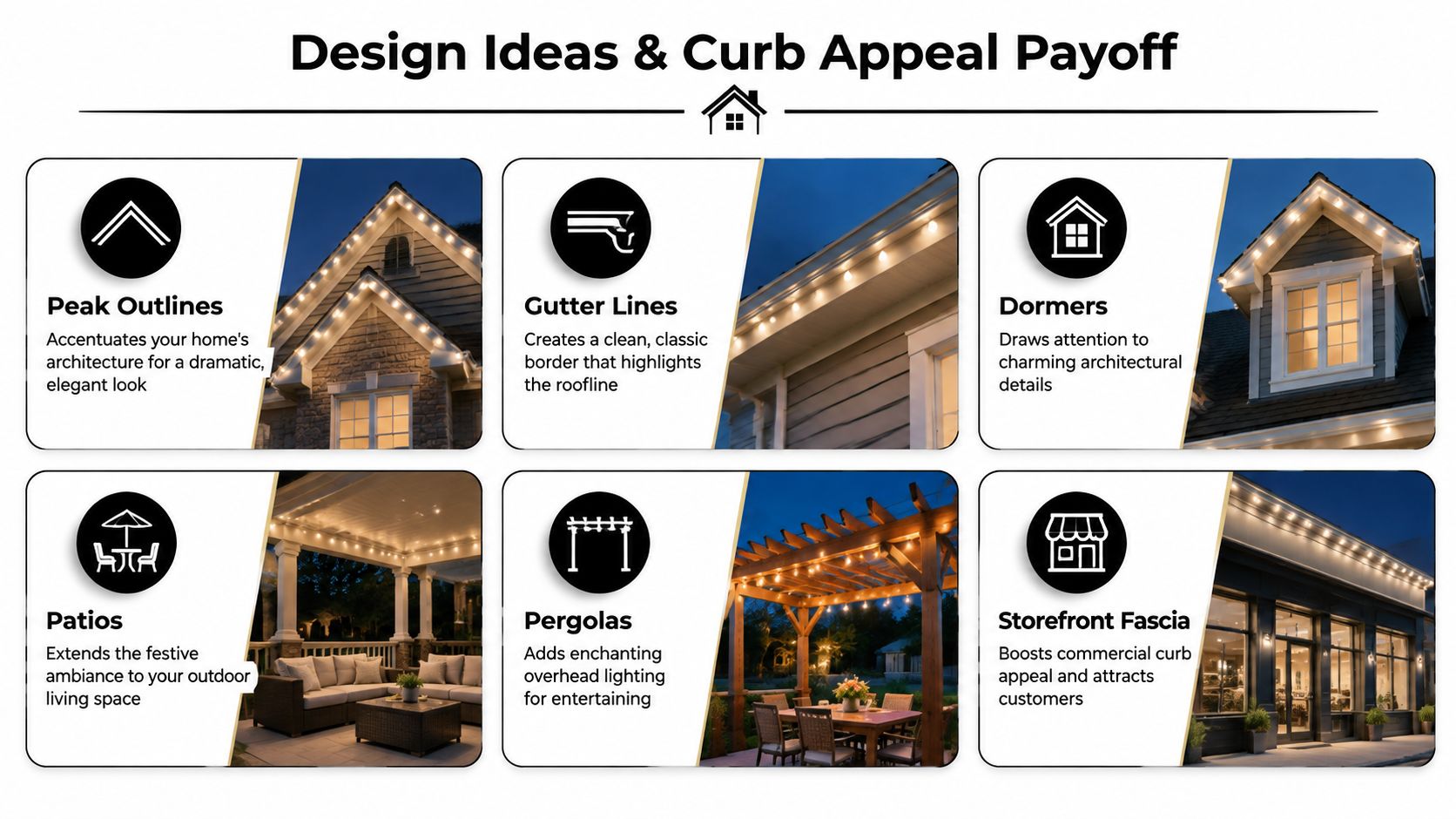
For businesses, storefront fascia can provide a consistent visual edge after dark. A restaurant may want a restrained architectural setting, while a retail property may use seasonal color zones. The design should fit the building, the neighboring streetscape, and the way customers approach the entrance.
Use zones rather than one large scene
Separate zones let the front of the home use a quiet warm-white setting while a patio uses a softer entertaining scene. Scheduling can turn lights on at a chosen time, dim them later, and shift from holiday color to everyday accent lighting without a manual reset.
Lighting is one part of a broader exterior presentation. Homeowners planning several improvements may also find this resource useful for ways to improve your home's curb appeal. The most convincing result usually comes from coordination, clean mounting, controlled brightness, and a layout that supports the property's existing lines.
The payoff is easiest to notice in daily life. A defined roofline can make the home easier to see from the street, improve the arrival experience for guests, and give a property a finished appearance during darker winter evenings. Lighting doesn't replace sound maintenance, but it can complement clean siding, clear gutters, tidy walkways, and well-kept landscaping.
Hiring the Right Installer in Colorado Springs
A permanent lighting quote should answer more than “How much will the lights cost?” You're hiring someone to work around your roof, fascia, electrical connections, and future exterior maintenance. The installer's planning process matters just as much as the color menu.
Start with business and safety qualifications. Ask whether the company carries liability insurance and Workers' Compensation coverage, and confirm how it handles work at height. You can also ask whether the crew consists of employees or subcontractors, who supervises the project, and who returns if a problem appears after installation.
Questions to ask before signing
- Product specifications: What outdoor rating applies to the LEDs, track, connectors, and controller?
- Weather durability: How does the system handle UV exposure, snow, hail, and moisture?
- Track finish: Can the track be color-matched to the fascia or trim?
- Service design: Can one failed section or bulb be repaired without removing the entire installation?
- Electrical scope: Is the quote limited to low-voltage work, or does it include a hardwired electrical addition?
- Controls: Are controller hardware, app setup, programming, and homeowner training included?
- Warranty: Which components are covered, for how long, and who performs warranty service?
- Maintenance: Is a first-year inspection or service visit included?
- Scheduling: What are the current lead times, deposit terms, cancellation terms, and weather policies?
- Local references: Can the installer provide references from recent Colorado Springs-area projects?
Ask for a written roofline drawing or marked proposal. It should show whether the design covers only the front elevation or also includes peaks, dormers, garage lines, patios, pergolas, and other zones. That detail prevents a low initial quote from becoming a larger project after work starts.
A reliable installer will also discuss access after installation. Gutter cleaning, roof repairs, pressure washing, siding work, and hail inspection shouldn't become needlessly difficult because the track was placed without considering future upkeep. The best next step is a site-specific estimate that explains the design, equipment, labor, warranty, and service expectations in plain language.
Cultivate House Detailing offers permanent and seasonal lighting installation for homes and storefronts in Colorado Springs and surrounding communities, with setup and app guidance included in the service conversation. Visit Cultivate House Detailing to request a personalized estimate and discuss a lighting plan that fits your property, exterior goals, and maintenance needs.