You're standing in a Colorado Springs driveway with a pressure washer in one hand and a new siding brush attachment in the other. The house has collected dust, pollen, and dark organic staining, but the last thing you want is cracked vinyl, dented aluminum, or water hidden behind the panels. The right pressure washer siding brush can help, but it isn't a universal shortcut. The brush, detergent, pressure setting, spray angle, and siding material all have to work together.
For homeowners searching for professional exterior cleaning in Colorado Springs, CO, the central decision is simple: use the brush to improve controlled contact, not to justify more pressure. That distinction protects siding and produces a cleaner finish, whether you're maintaining vinyl, wood, fiber cement, or aluminum.
Why a Siding Brush Changes the Pressure Washing Game
A homeowner usually reaches for a pressure washer because the siding looks like it needs force. On real houses, though, grime often responds better to dwell time, detergent, and gentle agitation than to a concentrated blast. A brush loosens soil at close range while water carries it away, giving you cleaning contact without making raw PSI do all the work.
Vinyl siding is commonly considered suitable for pressure washing when handled correctly. Consumer Reports explains that vinyl is pliable enough to withstand pressure washing in many cases, while also warning that the wrong technique can damage the surface. Spraying upward or too forcefully can push water behind the panels, creating hidden moisture problems and possible mold growth. Consumer Reports' pressure-washing guidance supports the conservative approach used by experienced exterior cleaners.
Why local conditions matter
Homes around Colorado Springs deal with dry dust, strong sun, seasonal pollen, and buildup around shaded elevations. That combination can leave siding looking dull even when the panels remain structurally sound. A brush-assisted wash is useful because it lets the operator spend more time loosening contamination instead of increasing pressure to compensate for poor contact.
Industry and homeownership guidance has gradually moved away from pressure-only cleaning toward detergent application, brush agitation, and controlled rinsing. That shift also favors ground-level extension wands over ladders and encourages wide fan nozzles instead of concentrated tips. Habitat for Humanity Orlando's pressure-washing safety advice reflects this more cautious method.
Practical rule: If the brush isn't removing soil at a controlled setting, change the chemistry, dwell time, or contact technique before increasing pressure.
A siding brush can reduce nozzle aggression, but it can't correct loose panels, failed seams, brittle siding, or an upward spray angle. The tool is helpful because it changes how the operator cleans, not because it turns every pressure washer into a safe system for every surface.
Choosing the Right Pressure Washer Siding Brush
Brush selection starts with the siding and ends with the pressure washer's actual output. A soft-bristle utility brush is usually the safest general choice for vinyl, aluminum, and fiber cement because it adds contact without aggressively scraping the finish. Many models connect through Quick Connect fittings and work with electric or gas pressure washers, but compatibility doesn't mean every machine should be operated at full power.
A water-powered rotary brush uses the machine's water flow to turn the brush head. One professional model is sized to the equivalent flow of a #7 pressure-washer tip and lists an operating range of approximately 290 to 725 PSI at the brush, with flow around 2.3 GPM. The same product information lists a maximum of 580 PSI at the brush head, brush widths of 31.5 to 39 inches, and bristles measuring 0.6 inches. Those specifications come from the ProTool water-powered rotary brush details.
That apparent difference between an operating window and a maximum rating matters. Always follow the specific attachment's rating. A brush designed for lower pressure can become difficult to control if the machine overdrives it, and spinning bristles won't make excessive pressure safe for siding laps.
Matching the attachment to the surface
Soft-bristle brushes suit delicate finishes and hard-to-reach areas. Rigid brushes may help with stubborn, localized soil on durable surfaces, but they demand more restraint around painted finishes, chalking aluminum, aged vinyl, and fiber cement coatings. Manufacturer guidance for pressure-washer brushes also describes compact rigid variants, including one listed at approximately 0.2 kilograms and roughly 333 by 82 by 164 millimeters, showing that a small attachment can still deliver concentrated contact. The manufacturer's siding-brush technical information recommends pairing brushing with low-pressure rinsing and a downward working angle.
| Brush Type | Typical PSI Range | Best For | Key Caution |
|---|---|---|---|
| Soft-bristle utility brush | Low pressure or soft wash | Vinyl, aluminum, fiber cement, delicate areas | Don't use stiff contact or abrasive motion on aged finishes |
| Water-powered rotary brush | 290 to 725 PSI at the brush, depending on the model | Broad siding elevations and controlled soil removal | Stay within the brush-head rating, including any listed maximum |
| Rigid-bristle brush | Attachment-specific, generally used with controlled rinsing | Small areas of stubborn soil on durable siding | Can scuff, scratch, or wear coatings if pressed too hard |
A wide brush can cover more of a multi-story wall from the ground, especially when paired with an extension wand. For homeowners comparing machines and attachments, this guide to the best pressure washer for house siding can help match equipment to the job without treating maximum PSI as the deciding factor.
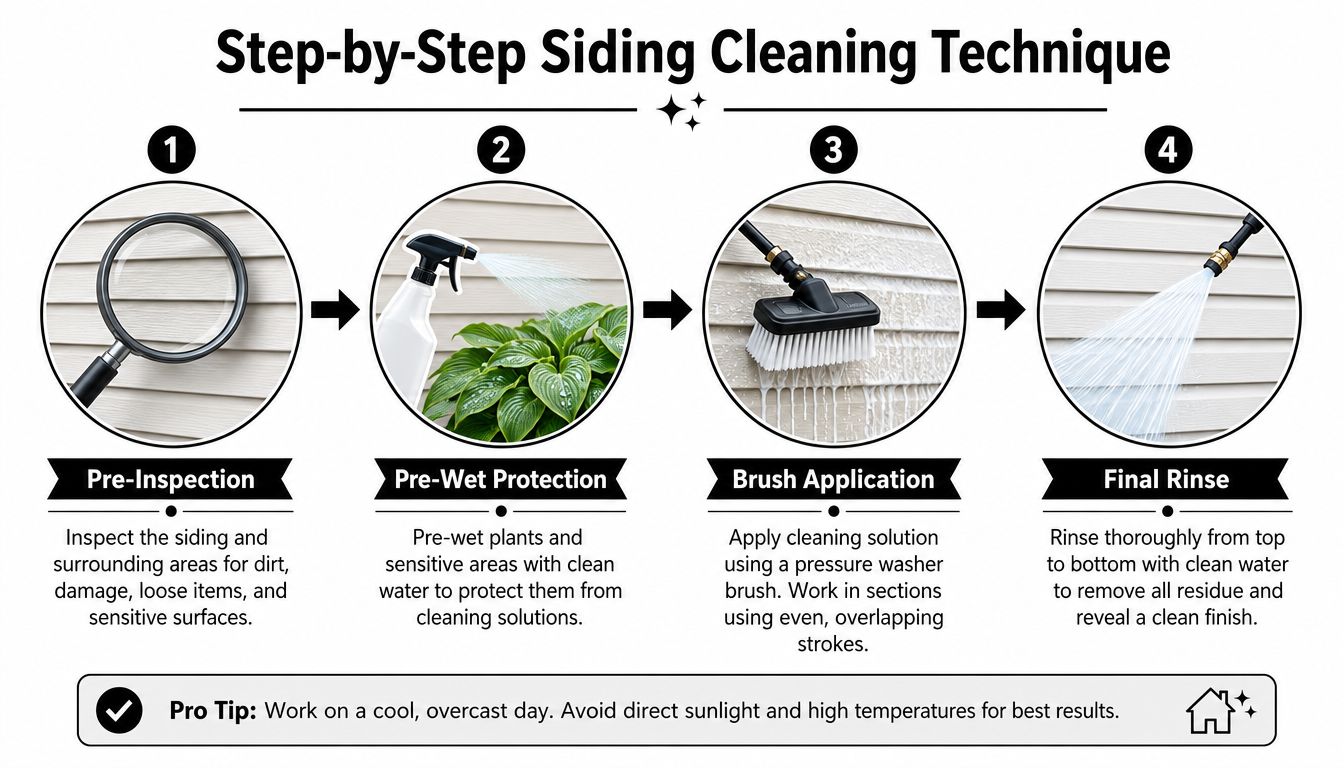
Step-by-Step Siding Cleaning Technique
Set the brush head to the siding material before applying detergent. On vinyl and fiber cement, a soft brush can replace aggressive pressure for surface dirt. On wood or failing paint, it supplements gentle cleaning rather than making higher PSI acceptable. Check that the brush feeds water evenly, then test it on an inconspicuous area.
Protect the work area by moving furniture, covering sensitive items, and pre-wetting nearby plants. Keep windows, exterior outlets, light fixtures, door seals, and screens in mind. For a second- or third-story wall, use an extension wand from the ground instead of climbing with an active pressure washer.
Apply detergent for cleaning, not decoration
Apply siding-safe detergent in manageable sections. A bottom-to-top application helps reduce uneven dirty runoff across dry areas, but the solution must stay wet until rinsing. Colorado's bright sun can dry exposed walls quickly, so smaller sections give the detergent enough working time.
Allow the solution to loosen organic staining and bonded dust before brushing. If a section dries, re-wet it first. Brushing dried residue can spread grime and tempt you to increase pressure.
The brush should make contact more consistent while the detergent works. It does not replace appropriate dwell time.
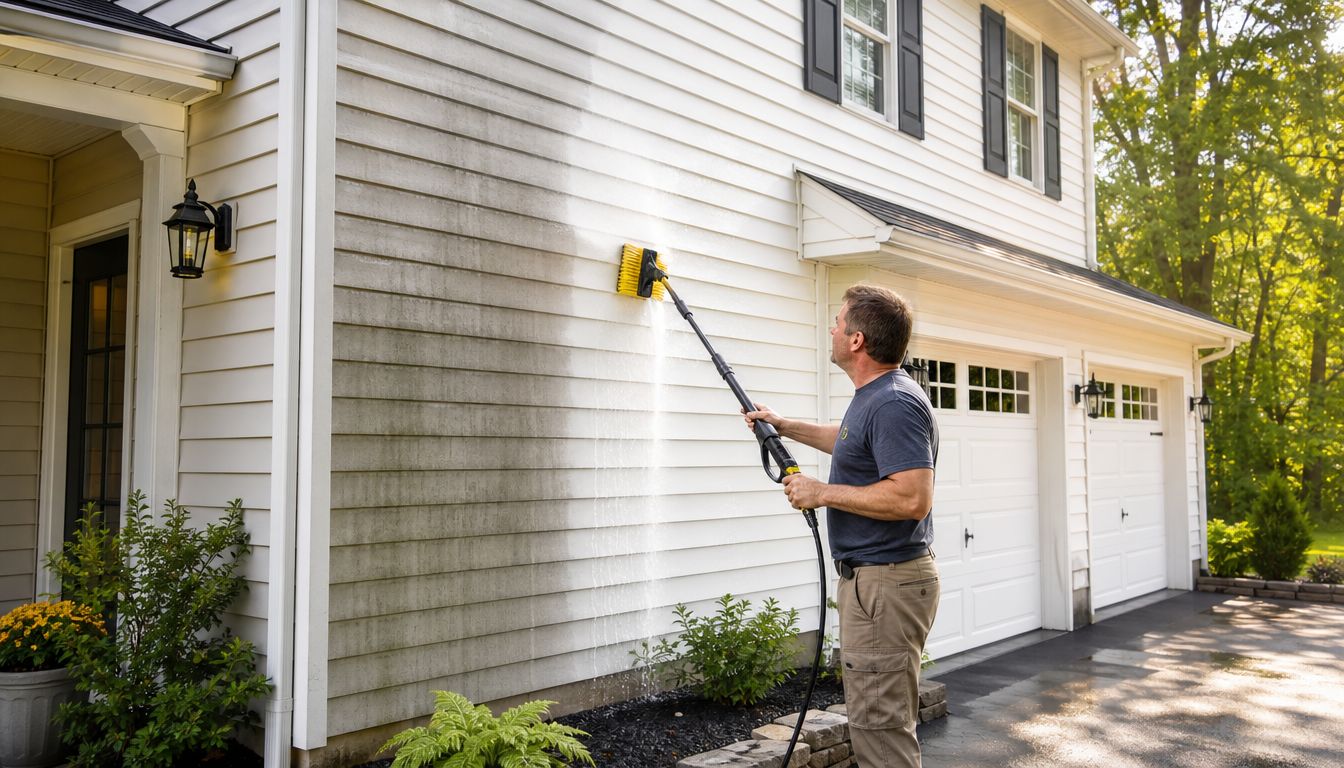
Attach the soft brush and keep light, overlapping passes moving across the siding. On lap siding, maintain a downward angle so water travels over the panel faces instead of toward the seams. Use less pressure on aged finishes, where stiff bristles or repeated passes can wear the coating.
For general rinsing, independent how-to guidance recommends beginning approximately 18 to 24 inches from the surface and using a 40-degree nozzle. This conservative siding-washing guide also recommends testing first and favoring soft washing for vinyl and fiber cement when possible.
Rinse from the top down
Once the brush has loosened the soil, rinse from the top downward with a wide fan pattern. Keep the wand moving, avoid spraying upward into laps, and overlap each pass so detergent does not remain in seams or around trim. Windows need extra care because screens, seals, and tracks collect runoff.
On neglected elevations, the brush can remove thicker dirt while the machine stays at a controlled setting. The siding maintenance guide SuperiorPRO offers practical guidance for routine exterior care. Inspect the wall as it dries, checking for streaks, missed corners, water around fixtures, and panel movement.
Material-Specific PSI Limits and Damage Risks
Siding material determines whether a brush should replace pressure, supplement a soft wash, or stay out of the process entirely. Vinyl is often washable with controlled pressure, but its overlapping panels create a specific water-intrusion risk. Spraying upward or too forcefully can drive water behind the siding and contribute to hidden mold, warping, or trapped moisture.
Common guidance places vinyl cleaning around 1,200 to 2,000 PSI, while more conservative surface-specific recommendations place practical vinyl limits around 1,300 to 1,600 PSI. Other guides note that manufacturers may cap vinyl closer to 1,000 PSI, so the manufacturer's instructions and the siding's condition should take priority. A 25-degree to 40-degree fan tip and downward spray angle reduce the chance of forcing water behind the panels. These ranges and nozzle recommendations are summarized in this pressure-washing PSI chart for siding.
Read the material before choosing the tool
Wood needs more restraint because pressure can lift grain, strip coatings, and leave a rough or furred surface. A soft brush and controlled detergent application may be more appropriate than direct pressure, especially on older painted boards or areas with weathered coating.
Fiber cement requires careful distance and a broad spray pattern. James Hardie recommends using a wide fan tip, staying at least 6 feet away, and keeping pressure below 1,500 PSI in its homeowner care guidance. James Hardie's maintenance guide should be checked against the specific product installed on the home.
Aluminum can dent, and its finish can scuff or chalk when the operator uses excessive force or abrasive bristles. Consumer guidance also warns that shingle siding shouldn't be pressure-washed at all. For material comparisons and service considerations, see this overview of pressure washing for siding.
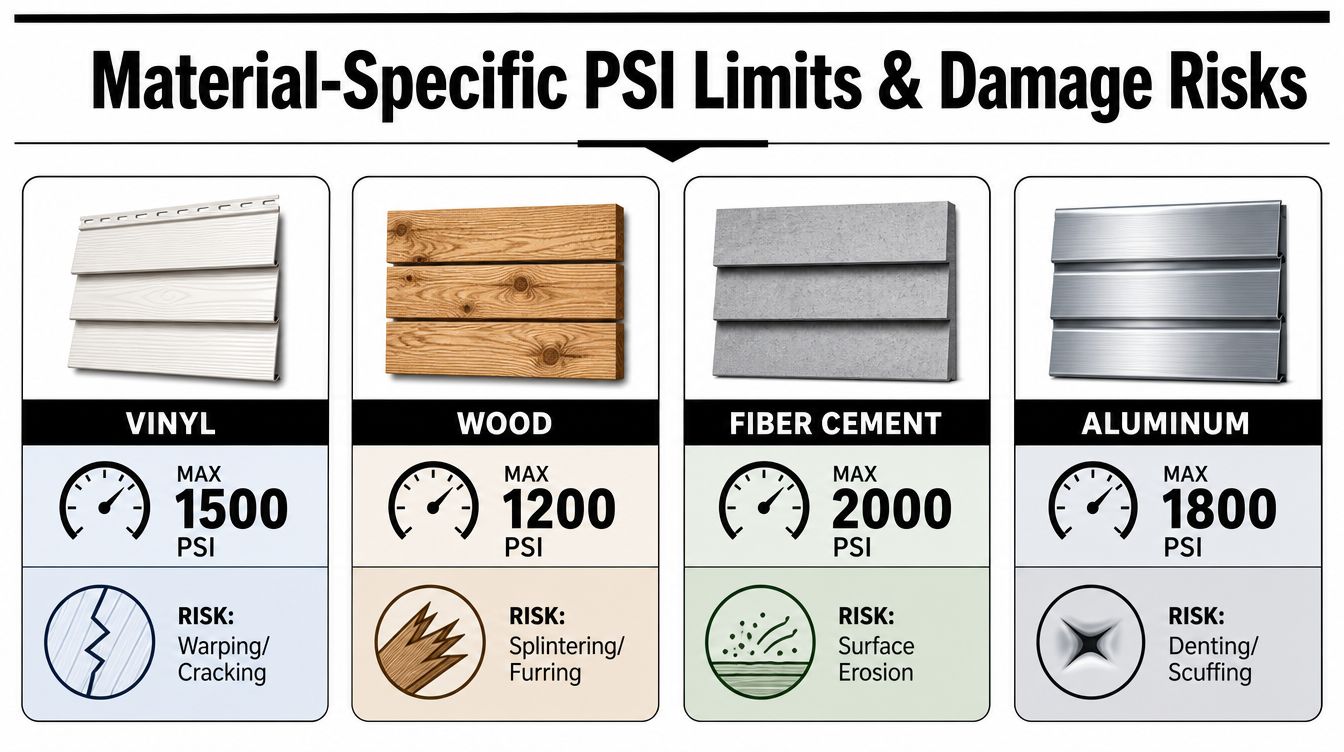
Material-specific caution beats a universal PSI chart. A setting that's acceptable for one wall can damage another because age, coating condition, panel profile, and installation quality change the risk.
Common Mistakes That Ruin Siding and How to Avoid Them
Most siding damage comes from technique errors, not from a lack of scrubbing power. The same attachment can produce a clean, even result in one operator's hands and drive water behind panels in another's because the angle, distance, or pressure changed.
The most serious mistake is spraying upward into lap seams. Water follows the path of least resistance, and an upward jet can enter the overlap rather than rinsing across the face. Keep the spray and brush angle downward, especially beneath windows, around corners, and along horizontal joints.
Pressure can overdrive the attachment
A water-powered rotary brush needs enough flow to operate, but more pressure isn't automatically better. If the machine exceeds the brush head's rated limit, the attachment becomes less controlled and the operator may push water into siding laps while believing the faster rotation is improving the clean.
Use the brush's specifications as a boundary. Don't assume a pressure washer's advertised maximum is appropriate for the attachment, and don't press the brush into the wall to compensate for weak detergent or insufficient dwell time.
Streaks usually start before the rinse
Letting detergent dry on a large elevation creates uneven residue and visible lines. Apply smaller sections, watch the surface as you work, and rinse before the solution dries. A concentrated tip can also leave striping or etching, so use a wide fan pattern for general rinsing.
A practical decision framework looks like this:
- If the siding is delicate, use soft chemistry and gentle brushing, or choose a soft wash.
- If the soil is bonded, improve dwell time and brush contact before raising pressure.
- If the panels move, stop and reduce pressure rather than continuing.
- If the wall is multi-story, use an extension wand and controlled reach instead of a ladder.
- If the surface is shingle siding, don't pressure-wash it.
The brush replaces high PSI when agitation can remove the contamination safely. It supplements soft washing when chemistry does most of the work. It isn't permission to ignore material limits.
When to Call a Professional Exterior Cleaning Service
DIY siding cleaning becomes a poor trade-off when the home has multiple stories, years of buildup, fragile materials, loose panels, or difficult access around windows and rooflines. Older vinyl and wood shingles deserve particular caution because a small mistake can create damage that isn't visible until moisture reaches the structure behind the siding.
Soft washing is generally defined as cleaning at under 500 PSI, relying on cleaning chemistry rather than force. This explanation of soft washing clarifies why professionals often choose a low-pressure method for vulnerable cladding. The process still requires proper detergent selection, controlled application, careful rinsing, and attention to landscaping and openings.
A professional exterior cleaning service can also combine siding washing with residential window cleaning, exterior window cleaning, screen cleaning, and track cleaning. For commercial properties, a coordinated maintenance visit can include storefront or building glass alongside exterior surfaces. Homeowners researching qualified contractors by Four Seasons Roofing can also use contractor directories as part of their evaluation process.
Cultivate House Detailing provides pressure washing and soft wash house cleaning for siding, along with window cleaning and related exterior maintenance in Colorado Springs and nearby communities. Regular, material-appropriate cleaning keeps grime from becoming a larger maintenance problem and helps preserve curb appeal without relying on unnecessary pressure.
Cultivate House Detailing offers siding pressure washing, soft wash house cleaning, and streak-free residential and commercial window cleaning in Colorado Springs, CO and surrounding communities. Visit Cultivate House Detailing to request a quote and schedule careful exterior cleaning for your home or business.
Need it done properly the first time? Cultivate House Detailing offers pressure washing in Colorado Springs. Get a free quote.