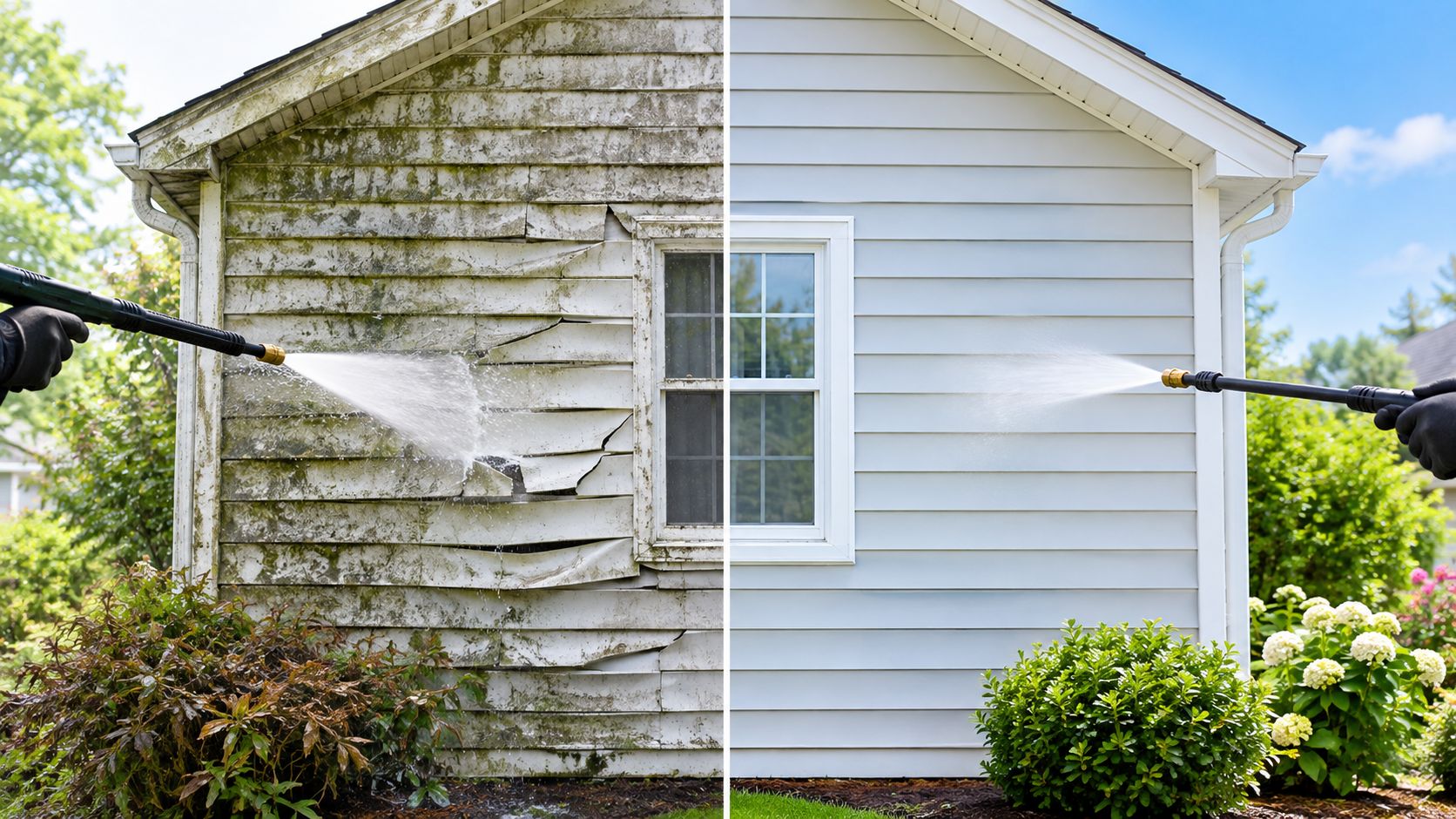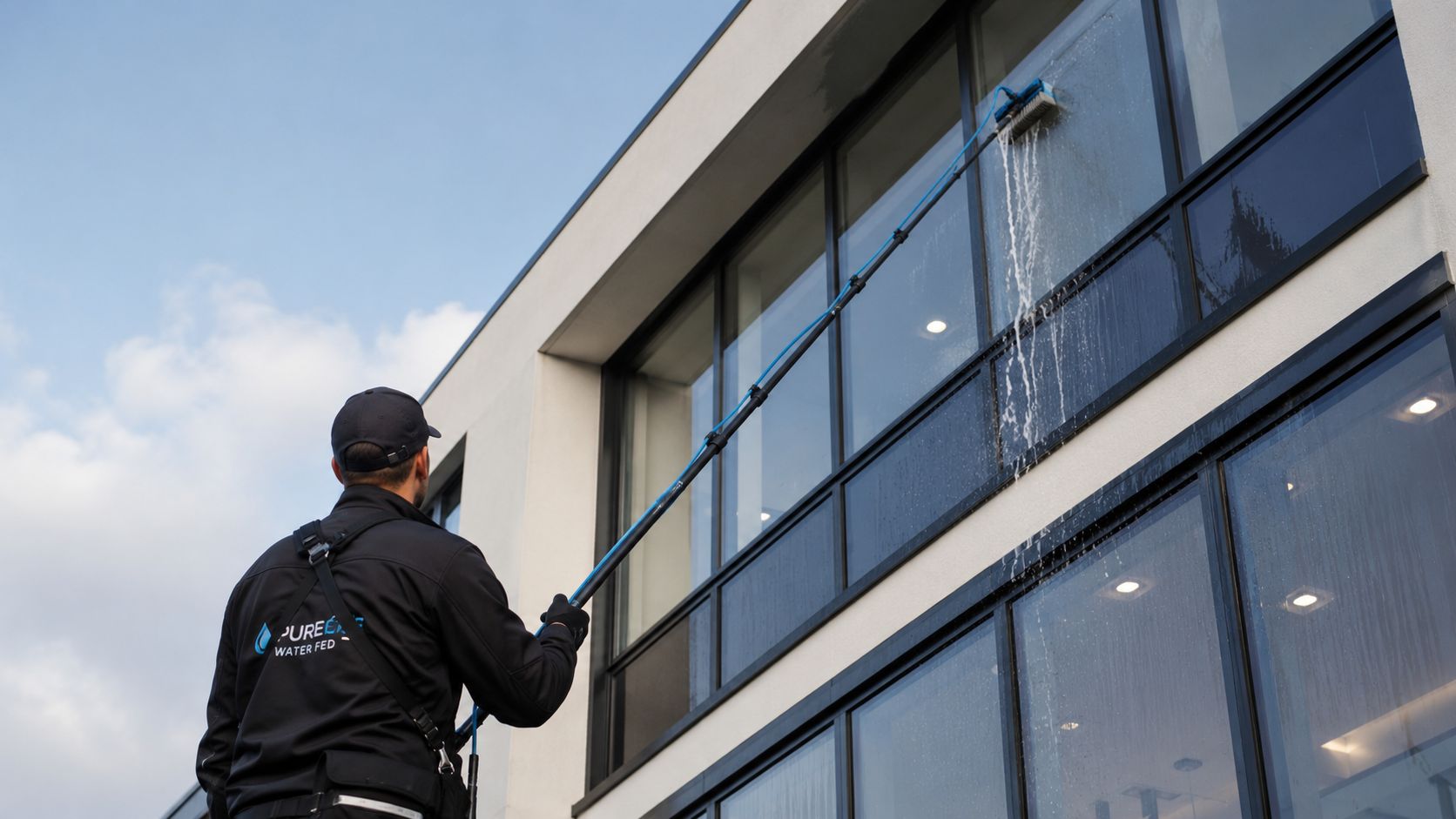
Pure water window cleaning scrubs glass with purified water near 0 ppm TDS through a water-fed pole, then lets it dry without mineral residue. In many cases, that means no soap, no squeegee, and fewer ladders.
You may be looking at windows dulled by dust, pollen, sprinkler marks, or winter grime right now. Tall panes can be awkward to reach, and a quick do-it-yourself wash can leave the familiar streaks behind. For homeowners and businesses searching for window cleaning near me or window cleaning in Colorado Springs, CO, pure water cleaning offers a practical way to handle routine exterior glass, while still leaving room for traditional tools when the glass needs restoration or detailed interior work.
What Is Pure Water Window Cleaning
Pure water window cleaning is the practice of washing exterior glass with ordinary tap water that has been stripped of dissolved minerals. Professional systems use reverse osmosis and deionization to bring the finished water close to zero total dissolved solids, or TDS. At that point, the water can dry without leaving the calcium, magnesium, and other mineral residue that creates spots on ordinary glass. Technical guidance on deionized water systems describes the spot-free working range as roughly 0 to 10 ppm TDS, while 20 to 50 ppm can begin leaving marks on some surfaces.
The method depends on two pieces of equipment. A portable purification unit prepares the water, usually with RO and DI stages. A water-fed telescopic pole carries that water to a soft brush head, allowing a technician to scrub and rinse exterior windows from the ground. The water does the rinsing, but the brush still supplies the physical agitation that loosens dust and grime.
Colorado Springs glass has plenty to contend with. Strong high-altitude sunlight can bake residue onto a pane. Semi-arid wind carries dust and pollen across the Front Range, while spring cottonwood fluff can collect around frames and sills. Winter road film often shows up on lower panes, especially near busy streets and driveways.
The honest definition: Pure water is a cleaning method, not a miracle coating. It excels when brush agitation can loosen the contamination and the rinse can carry it away.
For routine exterior window cleaning, that combination can produce a clear finish without detergent residue. It doesn't automatically remove etched hard-water deposits, hardened construction material, greasy fingerprints, or every bit of debris packed into a frame. Those conditions call for a technician to choose additional tools and techniques.
A Short History of Water-Fed Pole Cleaning
The modern story has older roots than many homeowners realize. Industry history traces commercial development to the 1950s, when Irv Tucker introduced an early pole kit in Cedar Rapids, Iowa. The early kit used a pole that extended from 3 feet to 6 feet, and cleaners later adapted the idea for commercial work during the 1960s. The method spread internationally by the 1970s, according to the history of window cleaning and water-fed pole systems.
The distinct modern pure-water method emerged in the late 1990s, when U.K. cleaner Craig Mawlam launched a telescopic pole system integrated with water purification in 1997. That combination solved the central weakness of tap-fed pole cleaning. A long brush could reach difficult glass, but untreated water could still dry with minerals on the pane.
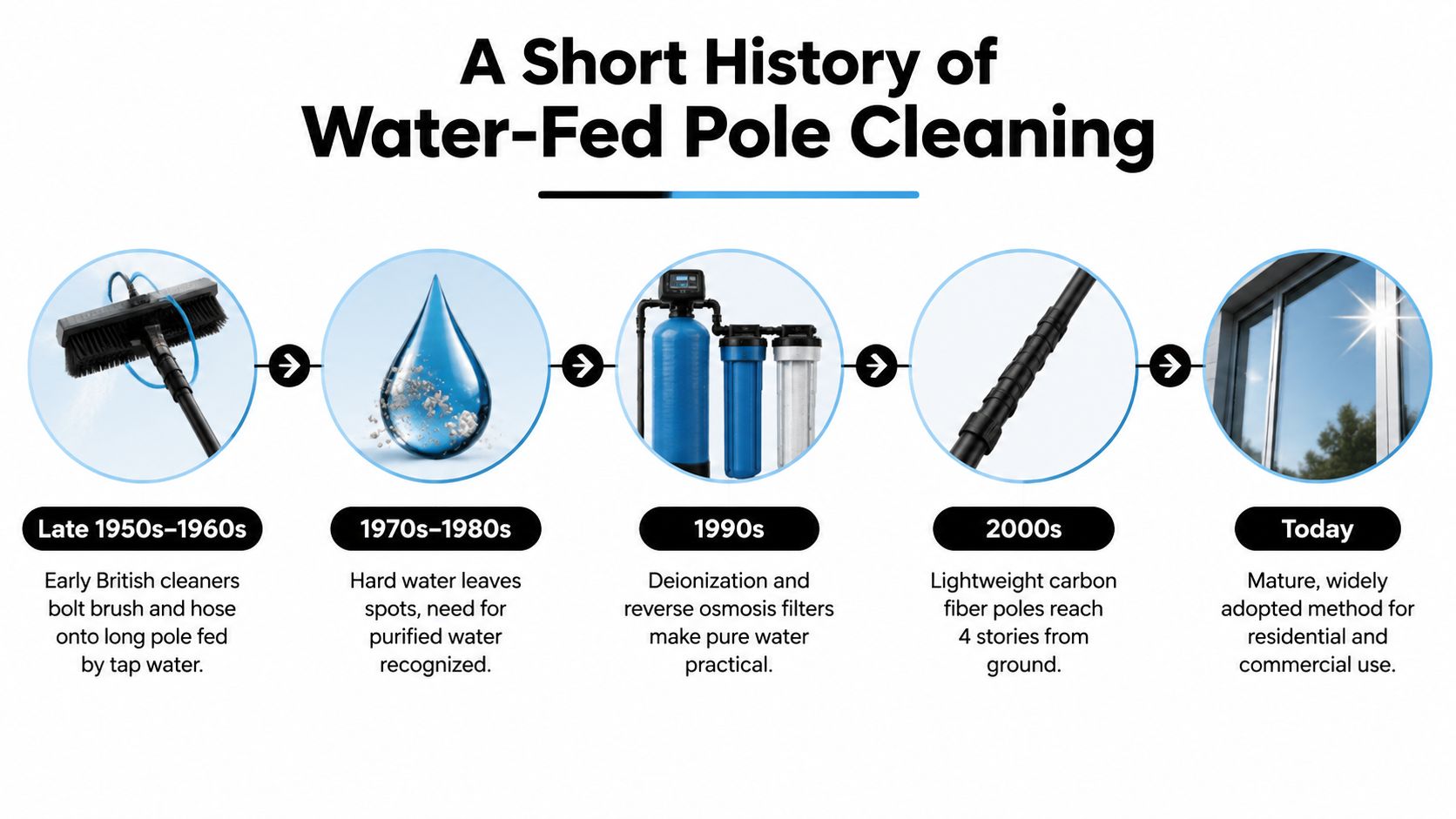
Today's equipment reflects those lessons. RO membranes remove most dissolved solids, DI resin polishes the output, and a TDS meter lets a technician check the water before it reaches the glass. Lightweight pole sections, soft brush heads, and controlled water flow make the system useful for residential window cleaning, commercial storefronts, skylights, and other exterior surfaces.
The result isn't a longer pole. It's a coordinated system that gives the cleaner reach, a reliable rinse, and a way to reduce ladder use on suitable buildings. For a closer look at the equipment itself, readers can review this guide to water-fed pole window cleaning.
How Pure Water Window Cleaning Actually Works
A pure-water system works a little like a kitchen filtration line, except the final product is designed to rinse glass rather than fill a drinking glass. Each stage has a job, and skipping one can affect the finish.
From tap water to purified rinse water
First, source water enters a pre-filter. This stage catches sediment and helps manage substances such as chlorine, much like a kitchen sieve catches unwanted particles before they reach the next step.
Next, the water moves through a reverse osmosis membrane under pressure. The membrane holds back most dissolved salts and minerals while allowing purified water to pass through. RO systems commonly remove about 95% to 99% of dissolved solids before DI polishing, as described in this explanation of professional pure-water window cleaning.
The remaining water then passes through deionization resin. DI removes the remaining charged mineral particles, bringing the output toward 0 TDS. A technician checks the reading with an inline or handheld meter because exhausted resin, contaminated hoses, or a dirty storage tank can lower cleaning quality even when the original source water was treated correctly. RO and DI system guidance explains why RO alone often isn't enough for true zero-TDS output.
What happens at the window
A hose carries the finished water up a telescopic carbon-fiber pole to a soft brush. The technician moves the brush across the pane, loosening dust, pollen, bird debris, and other surface contamination. On west-facing Colorado Springs windows, that agitation matters after a windy afternoon because a rinse alone won't necessarily dislodge particles that have settled and adhered to the glass.
The final rinse floods the pane with purified water. The water carries the loosened grime downward, and because the rinse contains almost no dissolved minerals, it can evaporate without leaving a mineral film. That's why the glass may look wet when the technician finishes. The drying stage is part of the method, not a missed step.

A useful deionized water window cleaning guide can help homeowners understand why the brush, the rinse, and the TDS check all matter. The process is simple to watch, but the water quality and technique behind it determine whether the pane dries cleanly.
Benefits and Honest Limitations to Know
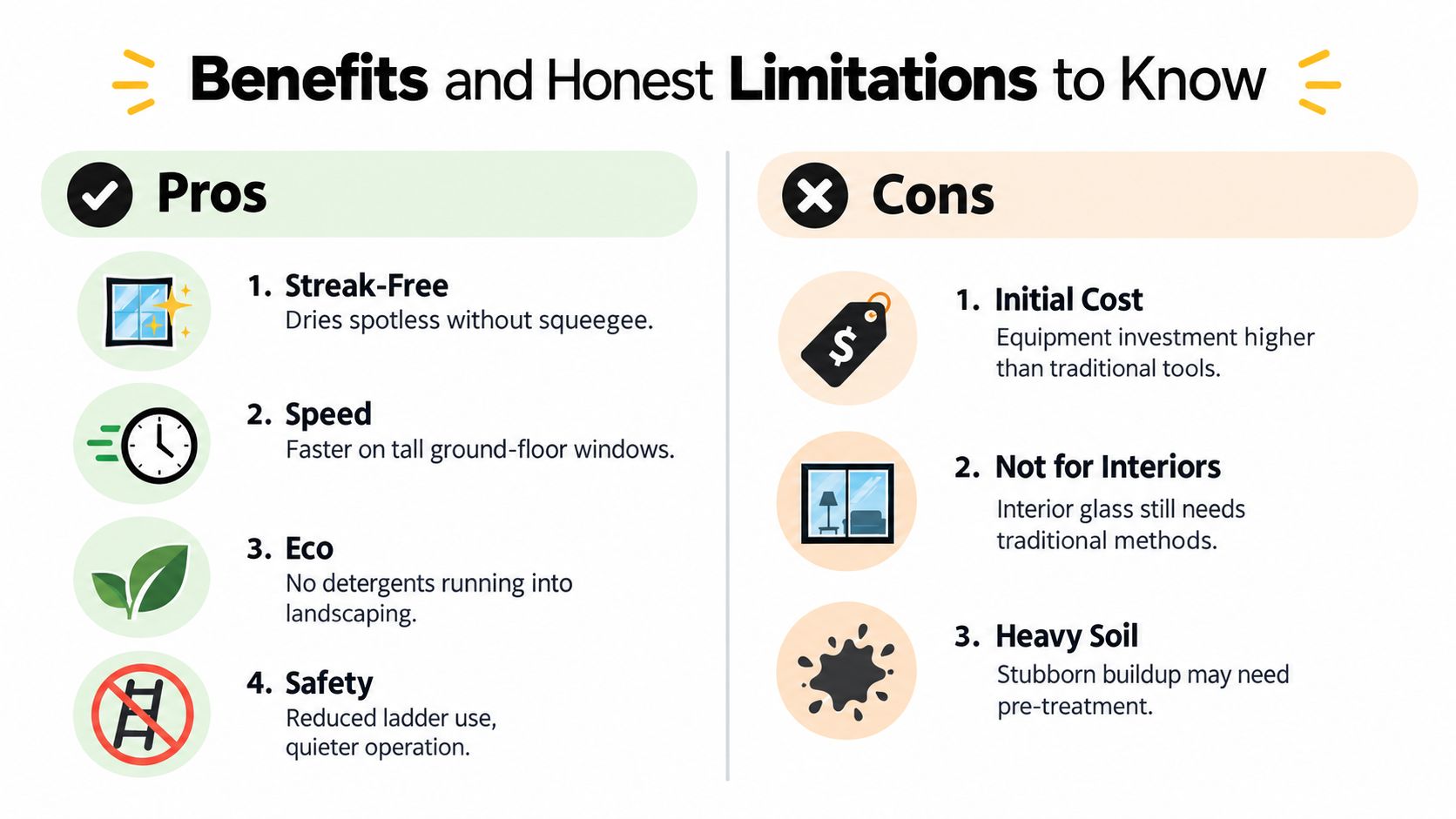
Pure water earns its reputation on the right kind of glass. Once a soft brush has loosened ordinary exterior dirt, the purified rinse can remove the residue without leaving detergent or mineral marks. That creates a clean, uncluttered finish and reduces the need for a technician to drag a ladder from pane to pane.
What the method does well
For suitable exterior work, homeowners and property managers may value:
- Spot-free drying: The rinse can evaporate without the mineral film associated with untreated water.
- Reduced ladder use: A water-fed pole lets the technician reach many windows from the ground.
- Cleaner landscaping: The process doesn't depend on detergents running across planting beds or xeric landscaping.
- Efficient exterior work: Tall, accessible panes can often be brushed and rinsed in one continuous process.
- Quiet operation: The equipment avoids the noise and force associated with pressure washing.
The method also helps with glass that would otherwise require awkward ladder positioning. That can matter around sloped ground, delicate landscaping, and multi-story elevations.
Where pure water needs help
Pure water isn't a substitute for restoration cleaning. Years of neglect can leave grime bonded to the pane. Irrigation overspray can create hard-water deposits that require mineral-stain treatment or polishing rather than ordinary rinsing. Construction dust can turn into a paste, while paint, silicone, sticky tree sap, and oxidation haze may need specialty tools.
Frames and sills create another boundary. A brush can rinse loose debris, but a frame packed with dead insects, roof grit, or compacted dirt may need hand detailing. Interior glass has a different soil profile as well. Cooking grease, fingerprints, pet smudges, and indoor dust usually respond better to a traditional applicator and squeegee.
Practical rule: Routine maintenance and restoration are different services. Pure water is excellent for loosening and rinsing ordinary exterior soil, but bonded contamination may require pre-treatment or hand work.
Where Pure Water Shines and Where It Does Not
The best way to choose a window washing method is to match the tool to the soil and access problem. Pure water is a strong fit for standard exterior glass, especially when the panes are difficult to reach, or surrounded by landscaping that a customer doesn't want exposed to detergent.
Strong applications
A water-fed pole system is well suited to:
- Residential exterior glass: Accessible windows on homes, including panes that can be reached safely from the ground.
- Commercial window cleaning: Storefronts, offices, restaurants, and other buildings where repeat exterior maintenance matters.
- Skylights and atriums: Glass overhead or above stairs can be difficult to approach with a ladder.
- Solar panels: The brush and purified rinse can remove ordinary surface dust without detergent residue.
- Delicate surroundings: Ground-based work can reduce the need to place ladders beside gardens, patios, or uneven surfaces.
The method also makes sense for maintenance visits. A property that receives regular exterior window cleaning generally presents less accumulated soil than a pane that has been ignored for years.
Situations that need a different tool
Traditional squeegee work still earns its place on interior glass, mirrors, and panes covered with skin oils or cooking film. Post-construction cleanup may require careful removal of paint, silicone, adhesive, or plaster residue before any pure-water rinse can produce a satisfactory result.
Old hard-water spots can be more complicated. If minerals have etched the glass, washing the surface won't restore the original clarity by itself. Storm-window tracks, screens, sills, weep holes, and security-film edges also need separate hand-detail steps in many homes.
A professional cleaner should inspect the glass rather than promise one technique for every condition. For routine maintenance, pure water may be the most practical choice. For restoration and interior window cleaning, a combination of squeegee work, hand detailing, screen cleaning, track cleaning, and specialty treatment is often more appropriate.
Safety, Environment, and Why It Fits Colorado Springs
Pure water cleaning makes a strong safety case because the technician can handle many exterior panes from the ground. That doesn't remove every site hazard, and it doesn't mean every window can be reached with a pole, but it can reduce ladder movement around multi-story homes in neighborhoods such as Rockrimmon, Peregrine, and Broadmoor.
The environmental advantage comes from the cleaning chemistry. The method uses purified water rather than a detergent solution for the main exterior rinse, so there isn't a soap mixture flowing into gardens or hardscape drainage. Water use still depends on the operator, the equipment, the glass condition, and the rinse process. It shouldn't be marketed as water-free.
Colorado Springs conditions make maintenance especially practical. Mineral-rich city or well water can leave visible spotting, while dust, pollen, cottonwood fluff, wildfire ash, and winter road film create different kinds of exterior buildup throughout the year. Freeze-thaw conditions can also make ladder placement less appealing around icy roofs, steps, and sloped ground.
For background on the broader household impact of mineral-heavy water, this resource on hard water costs Northern Colorado homeowners offers useful context, even though window glass has its own cleaning requirements.
| Property Scenario | Pure Water Fit | Best Use |
|---|---|---|
| Two-story home with accessible exterior glass | Strong fit | Routine exterior window cleaning |
| Storefront or office with repeat maintenance needs | Strong fit | Commercial exterior cleaning |
| Skylights, atriums, or elevated panes | Often a good fit | Ground-based pole work where access allows |
| Glass with etched mineral deposits | Limited fit | Hard-water stain removal or restoration |
| Greasy interior panes and detailed tracks | Limited fit | Interior cleaning with hand tools and squeegees |
The right question isn't whether pure water is universally superior. It's whether the property's glass, access, and soil match the method.
What to Expect When You Book a Pure Water Service
A professional visit should begin before the van arrives. During an online or phone quote, the cleaner may ask about the number of windows, building stories, access around the property, and whether you want screens, sills, or tracks included. Sharing photos of difficult elevations can help the company plan the right pole length and equipment.
Weather matters in Colorado Springs. A technician can schedule exterior work around conditions that support a predictable rinse and drying process, while also considering recent pollen, wind, ash, or precipitation. Before arrival, close windows and move patio furniture or small objects away from the work area.
A typical exterior visit
The technician arrives with a vehicle-mounted or portable RO/DI setup, runs a short hose to an exterior tap, and checks the water source. The system prepares the rinse water, and the operator confirms that the output is sufficiently low in TDS before starting.
Cleaning generally proceeds from ground level with the water-fed pole. The brush agitates the glass and frames, then the technician performs a thorough rinse. Most suitable jobs don't require ladders for the main exterior panes, although site conditions can change the plan.
At the end, the technician checks the elevations and performs a walkaround. Interior-only cleaning, screen cleaning, track cleaning, and hand-detail work can be handled as separate or complementary services when the scope calls for them.
Scheduling for local conditions
There isn't one perfect schedule for every property. Homes exposed to spring pollen, summer wildfire ash, irrigation spray, or heavy roadside dust may benefit from more frequent maintenance than sheltered properties. Some owners choose a visit every two to four months in response to local seasonal buildup, but the appropriate cadence depends on exposure and personal expectations.
If you're comparing service providers in another region to understand what a professional booking process can involve, you can compare top Treasure Valley window companies. For Colorado Springs customers, the important questions are simpler: what glass will be cleaned, which details are included, how will difficult deposits be handled, and how will the final result be checked?
Quick Recap and Common Questions
Pure water window cleaning uses RO and DI purification to bring rinse water near 0 ppm TDS, then sends it through a water-fed pole and soft brush. The brush loosens exterior soil, while the mineral-free rinse dries without leaving the residue that causes ordinary water spots.
Does it remove old hard-water spots?
It can clean loose surface soil from glass with hard-water spotting, but it won't automatically remove mineral deposits that have bonded to or etched the pane. Those conditions may need dedicated hard-water stain removal or restoration work. A technician should inspect the glass before promising a spot-free result.
How often should Colorado Springs windows be cleaned?
Seasonal exposure matters more than a universal calendar. Monsoon moisture, wildfire smoke or ash, cottonwood fluff, windblown dust, and winter road film can all change how quickly exterior glass looks dirty. Many homeowners consider a maintenance visit every two to four months, while sheltered properties may need a different rhythm.
Can screens and tracks be cleaned during the same visit?
Often, yes, but they aren't automatically cleaned by the pure-water rinse. Screens, tracks, sills, and weep holes may need removal, brushing, vacuuming, or hand detailing. Ask for those items when requesting a quote so the scope and time are clear.
What does it cost compared with squeegee cleaning?
There isn't a reliable universal price for a typical two-story home because window count, access, interior work, screens, tracks, soil, and hard-water treatment all change the job. Pure water may be efficient for suitable exterior glass, while traditional squeegee work remains necessary for many interiors and restoration tasks. A property-specific quote is more useful than comparing a single method by name.
If your Colorado Springs home or business has dusty exterior glass, difficult elevations, or mineral spotting, request a clear assessment that separates routine cleaning from restoration needs.
Cultivate House Detailing offers purified water exterior window cleaning for residential and commercial properties in Colorado Springs and nearby communities, along with interior window cleaning, screen work, and hard-water stain removal when needed. Visit Cultivate House Detailing to request a quote and schedule a service suited to your glass, access, and seasonal buildup.