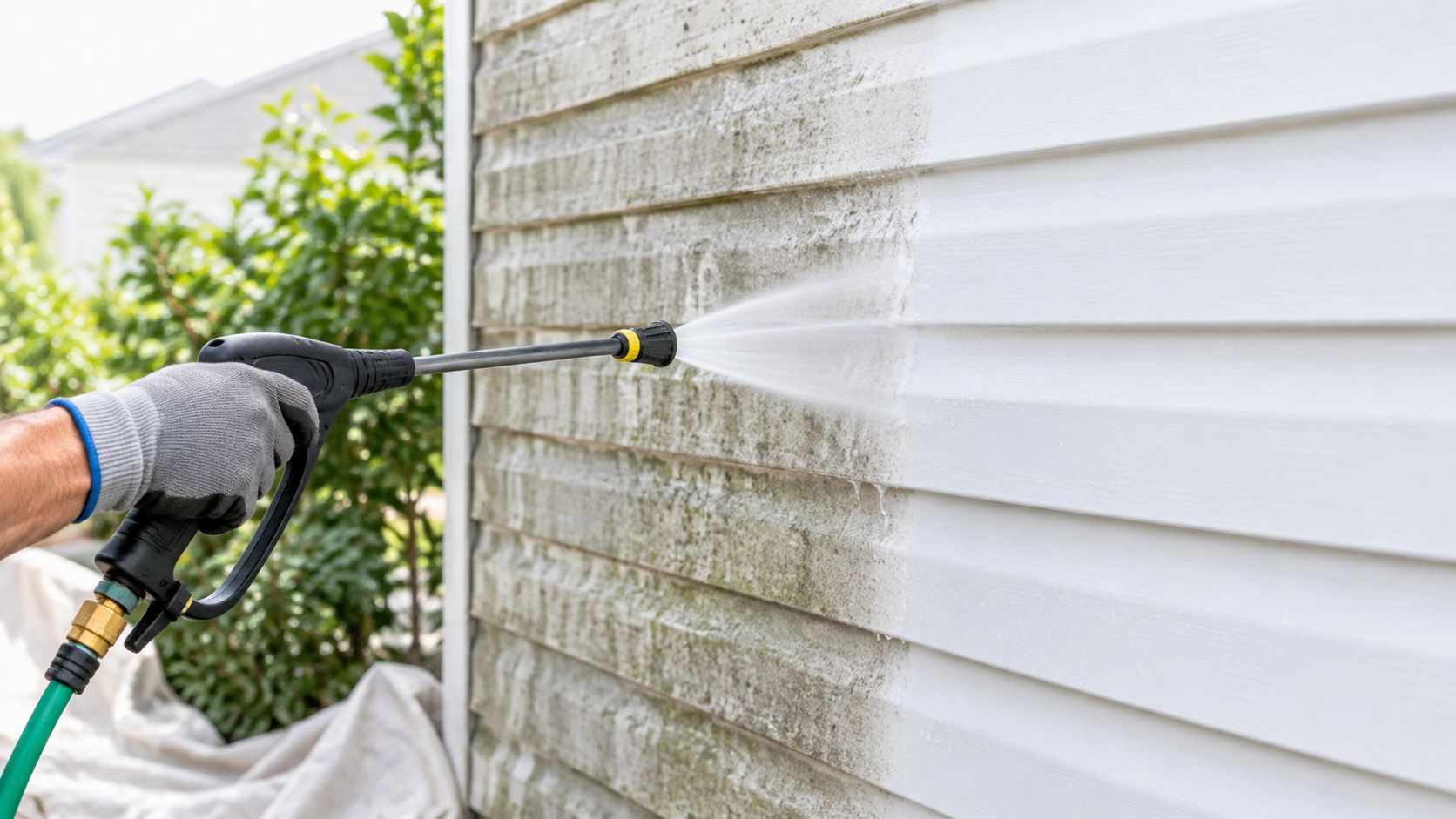
You're looking at the side of your Colorado Springs home and seeing more than ordinary dirt. The aluminum siding looks streaked, chalky, or faded, while dust has collected around the laps, windows, and trim. A pressure washer seems like the fastest answer, but aluminum siding can punish the wrong nozzle, pressure setting, or spray angle with dents, lifted paint, and water forced behind the panels.
A pressure washer for aluminum siding should be treated as a controlled cleaning tool, not a contest for maximum PSI. The safe result comes from inspecting the coating and building envelope first, testing a small area, and accepting that washing can remove grime without restoring a failing finish. If the project involves hard-to-reach areas or visible coating damage, professional siding washing in Colorado Springs may be the more practical choice.
Why Aluminum Siding Needs a Gentler Approach
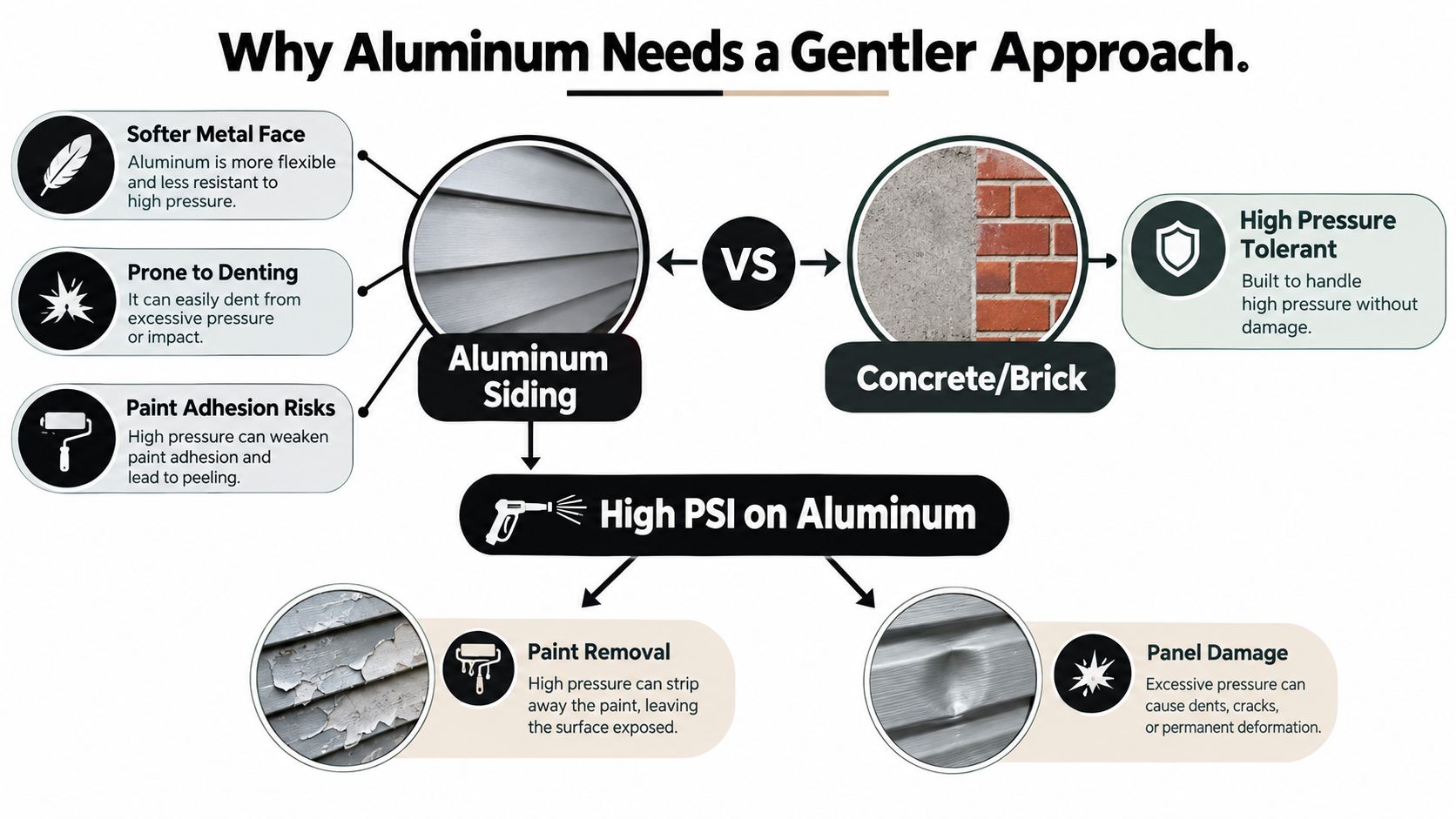
That chalky film on the wall may look like removable dirt. Sometimes it is. Sometimes it's the coating itself breaking down after years of ultraviolet exposure, weather, and repainting. Aluminum has a softer metal face than masonry, and the factory-baked or repainted finish can lose adhesion long before the panels appear structurally damaged.
Aluminum siding became a major residential cladding material in the United States during the late 1940s. Interlocking aluminum siding was developed in 1946, Jerome Kaufman patented a process for baking enamel coatings onto aluminum siding in 1947, and Kaiser Aluminum entered the siding market in 1948, as documented in this history of aluminum building products. Many homes still have coatings that are several decades old, especially in established neighborhoods.
Cleaner doesn't mean restored
Brick and concrete generally tolerate more concentrated impact than a painted aluminum panel. Aluminum can dent under a narrow stream, while an aging coating may lift, etch, or show uneven color after a forceful wash. Water can also enter behind overlapping courses if you spray upward into the laps.
Practical rule: Treat aluminum siding as a finish and a wall assembly, not just a hard exterior surface.
That distinction changes the entire project. A careful pressure-washing process can remove pollen, dust, mildew, and atmospheric residue. It can't rebind loose paint or reverse oxidation. For a broader comparison of cleaning methods, review this guide to soft washing versus pressure washing, then choose the least aggressive method that can do the job.
Pre-Wash Inspection and Equipment Setup
Don't start by pulling the trigger. Start with a walkaround while the siding is dry and easy to inspect. Look for loose or dented panels, open seams, brittle paint, chalking, failed caulk around windows and doors, damaged vents, and gaps around utility penetrations.
Pay special attention to bottom edges and overlapping courses. These areas can look intact from the ground while still providing a path for water behind the siding. Check trim around windows and doors as well, because a low-pressure stream can still cause trouble if the sealant has already failed.
Build a simple pre-flight checklist
Set out the equipment before you connect the washer:
- Washer and adjustment control: Start in the recommended low-pressure range rather than using the machine's maximum output.
- Fan nozzle: Use a 25° to 40° fan nozzle so the water spreads across the panel face.
- Siding-compatible detergent: Follow the product label and don't let the solution dry on the finish.
- Garden hose: Keep clean rinse water available for surrounding surfaces and delicate areas.
- White or dark cloth: Use a cloth test to check whether the surface is producing chalk.
- Plant protection: Pre-wet nearby landscaping and use drop cloths where runoff could collect.
The Aluminum Association reported approximately 2.5 billion pounds of aluminum used in U.S. building-and-construction products in 2022, representing about 30 percent of total aluminum demand, according to this construction aluminum analysis. That broad category includes siding, gutters, trim, and window components, so material-specific handling matters on many exterior cleaning jobs.
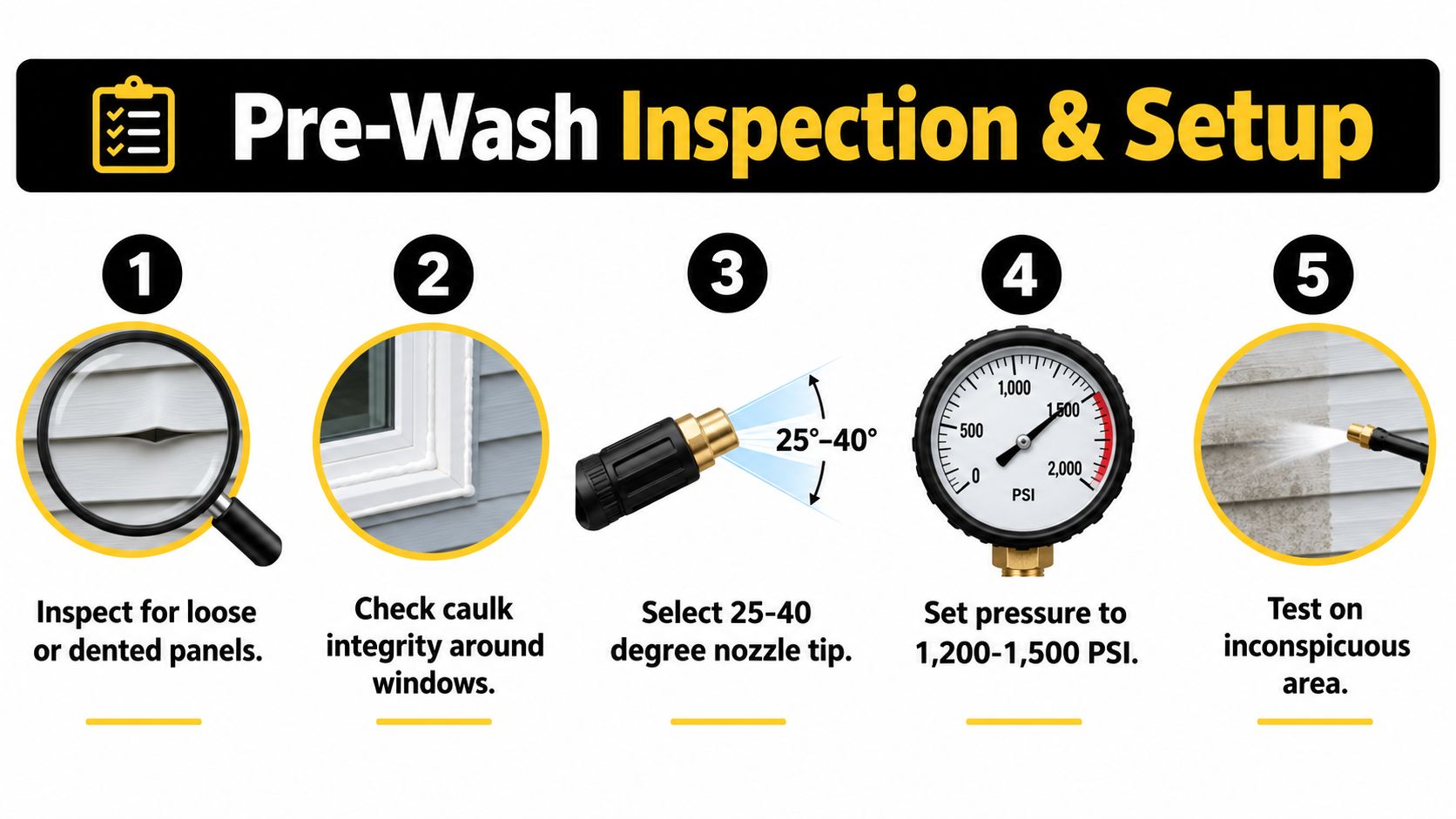
Before washing the visible wall, test an inconspicuous section. Choose a spot behind landscaping or low on the house, spray briefly, and check for paint transfer, metal flexing, new marks, or a change in gloss. If the finish fails that test, stop using pressure and switch to gentler hand cleaning or call a professional.
For equipment selection and siding-specific setup, this pressure washer guide for house siding provides useful context, but the machine is only one part of the decision. Condition, distance, detergent, and spray direction matter just as much.
The Actual Washing Sequence Without the Damage
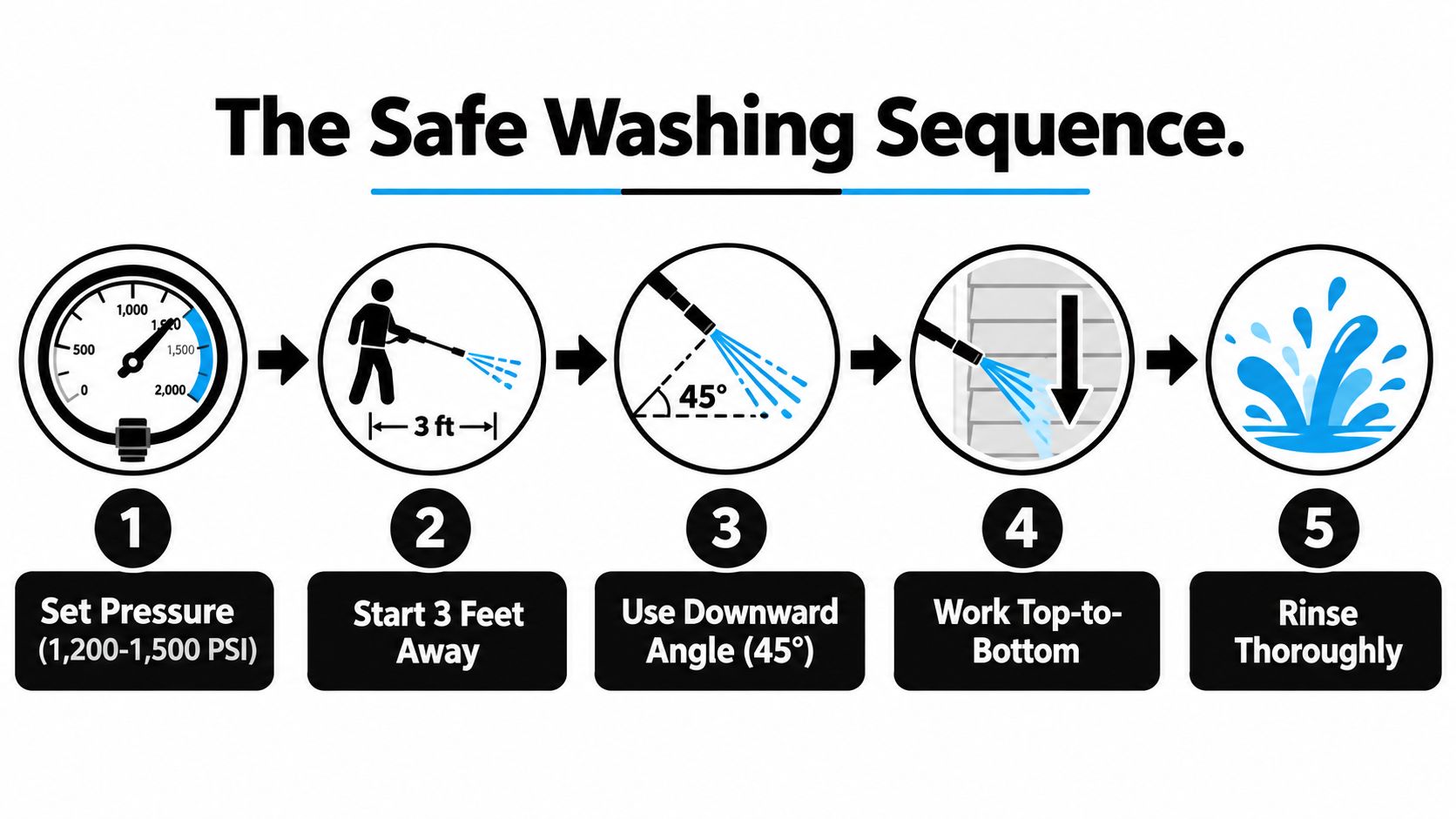
Set the washer initially to approximately 1,200 to 1,500 PSI, attach a 25° to 40° fan nozzle, and begin at least 3 feet from the siding. The guidance for washing a house safely supports starting with distance and adjusting gradually. Do not move closer just because the first pass looks slow. Increase impact only enough to release soil without lifting paint or deforming the panel.
Begin by pre-rinsing the wall with clean water. Work on a manageable section, preferably in shade, so the surface and detergent stay workable. Apply siding-compatible detergent from bottom to top. That direction helps reduce dirty clean-run marks across areas you haven't washed yet.
Allow the detergent to dwell for the time stated on its label. Keep an eye on the wall while you wait. If the solution begins drying, rinse that area rather than leaving concentrated chemistry on an aging finish.
Direction controls the risk
Rinse from top to bottom in overlapping passes. Keep the stream pointed downward or nearly perpendicular to the panel face. A working angle around 45° helps spread the spray across the surface, but don't direct water upward into laps, seams, vents, window trim, or door trim.
The direction rule matters more than many homeowners realize. Low pressure isn't automatically safe if the wand is too close or aimed under the panels. Water can travel behind the siding, reach compromised openings, and remain hidden after the visible surface dries.
Keep the wand moving. A broad fan pattern should cross the siding steadily, not sit on one patch while you chase a stubborn mark.
Work across each section with overlapping strokes, then inspect before moving on. Look for consistent color and gloss, complete detergent removal, and clean edges around trim. If the wall still looks uneven after the dirt is gone, the problem may be oxidation or coating failure rather than insufficient washing.
If you're preparing a home for the wettest part of the year, this resource on how to protect siding after monsoon season offers additional maintenance context. The same basic principle applies here: inspect the exterior, control runoff, and don't force water into seams.
Chalking and Oxidation When Washing Is Not the Fix
A pressure washer removes material from the surface. It doesn't repair a finish that has started to fail. That difference is critical on older aluminum siding, where chalking can make a faded coating look like ordinary dust.
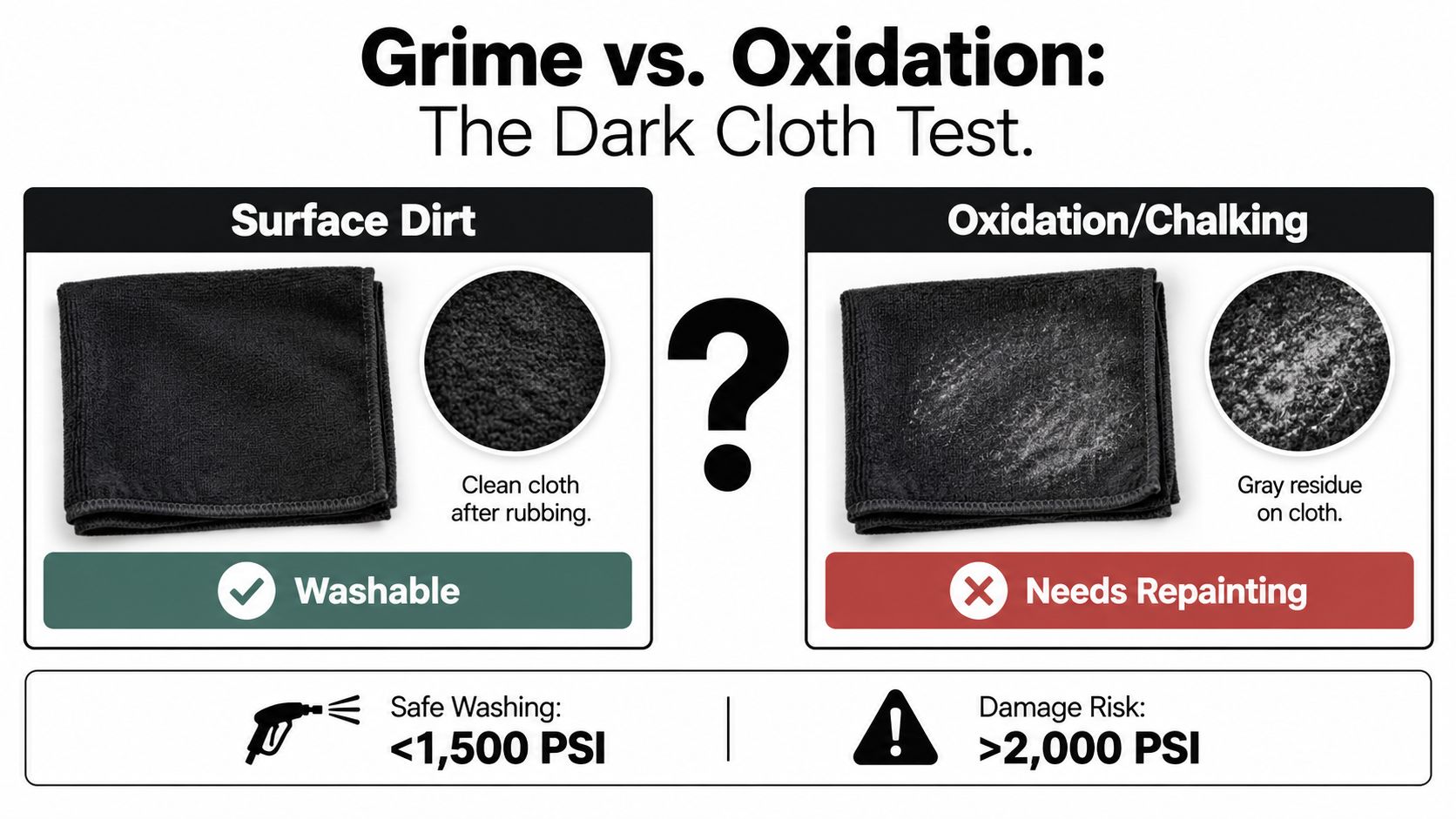
Take a dark cloth and rub an inconspicuous area. If the cloth picks up white powder, the finish is breaking down. This simple oxidation cleaning guide explains why aggressive washing can remove that oxidation unevenly and leave patchy color instead of a restored appearance.
Use the test to choose the treatment
If the cloth stays mostly clean and the siding has stable paint, a controlled low-pressure wash may be appropriate. If the cloth shows chalk and the color changes noticeably when rubbed, use gentle chemical treatment and hand agitation instead of trying to blast the coating clean.
If the finish is brittle, heavily chalked, or already peeling, repainting or replacement may be the honest answer. Washing can expose the contrast between protected areas under eaves and fully exposed areas on the wall. The result may be cleaner but less uniform, because the wash reveals the finish's actual condition.
Colorado Springs homes face a combination of strong sunlight, dry air, dust, and freeze-thaw exposure. Those conditions can make oxidation look like a removable film even when the coating has deteriorated. Set expectations before you begin, especially if the goal is listing preparation or a like-new appearance.
A clean surface isn't necessarily a restored surface. If the coating is coming off on the cloth, the washer isn't the repair.
Don't confuse this diagnosis with a siding-material comparison. If replacement becomes necessary, a fiber cement siding installation guide can help explain how another cladding system is installed. It doesn't change the immediate decision on whether the existing aluminum finish can be safely cleaned.
Common Mistakes That Leave Permanent Marks
Most aluminum siding damage comes from concentrated spray, excessive impact, or the wrong angle. The machine may be operating normally, but the operator creates a problem by pairing the wrong tip with a fragile coating.
The most dangerous setup uses a 0° or 15° tip, a turbo nozzle, or a rotary nozzle. These attachments concentrate force into a small area. They can leave visible wand marks, dent panels, and strip paint before the operator realizes what happened.
Match the mistake to the visible damage
- Working too close: The impact rises sharply as the nozzle approaches the wall. You'll see lifted paint, etched areas, or a line where the wand passed.
- Pausing on one spot: Even a broad fan can damage a weak coating when held still. The signature is often a bright patch, paint loss, or a shallow dent.
- Spraying upward: Water enters panel laps, seams, vents, and trim. The visible siding may look fine while water intrusion develops behind it.
- Letting detergent dry: Dried chemistry can leave spotting, streaks, or uneven gloss that won't disappear with a quick rinse.
- Using an unregulated gas washer: A powerful machine can exceed what the finish can handle before you have time to react.
Maintain a working distance of roughly 12 to 18 inches with a broad fan pattern, while adjusting farther away if the panel is fragile, as recommended in this aluminum siding cleaning guidance. Start farther away during the initial test, then move only as needed.
Before washing, photograph existing dents, oxidation, faded areas, and damaged trim. Afterward, judge the work by a simple standard: uniform color and gloss from edge to edge, no new dents or paint loss, no tiger-striping, and no water intrusion around seams or openings. If the coating transfers to a cloth or the metal visibly flexes, stop.
When to Call a Professional in Colorado Springs
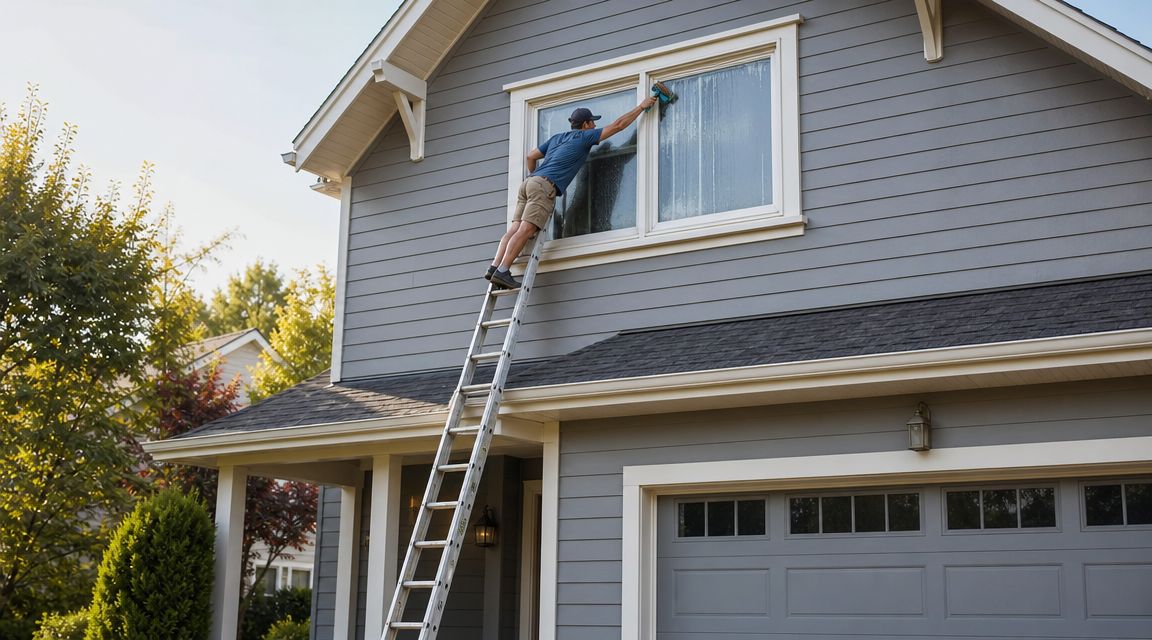
DIY cleaning makes sense when the siding is stable, accessible, and only lightly soiled. Stop and call a professional when the work involves multi-story areas beyond safe ladder reach, active chalking, suspected water intrusion around windows or doors, visible coating failure, or preparation for a real estate listing.
A professional can inspect the siding before choosing between low-pressure washing, soft-wash-style treatment, and hand work. That's especially useful when one elevation is sound but another has oxidation, brittle paint, loose panels, or damaged trim. The estimate should identify those differences rather than promise one pressure setting for the entire house.
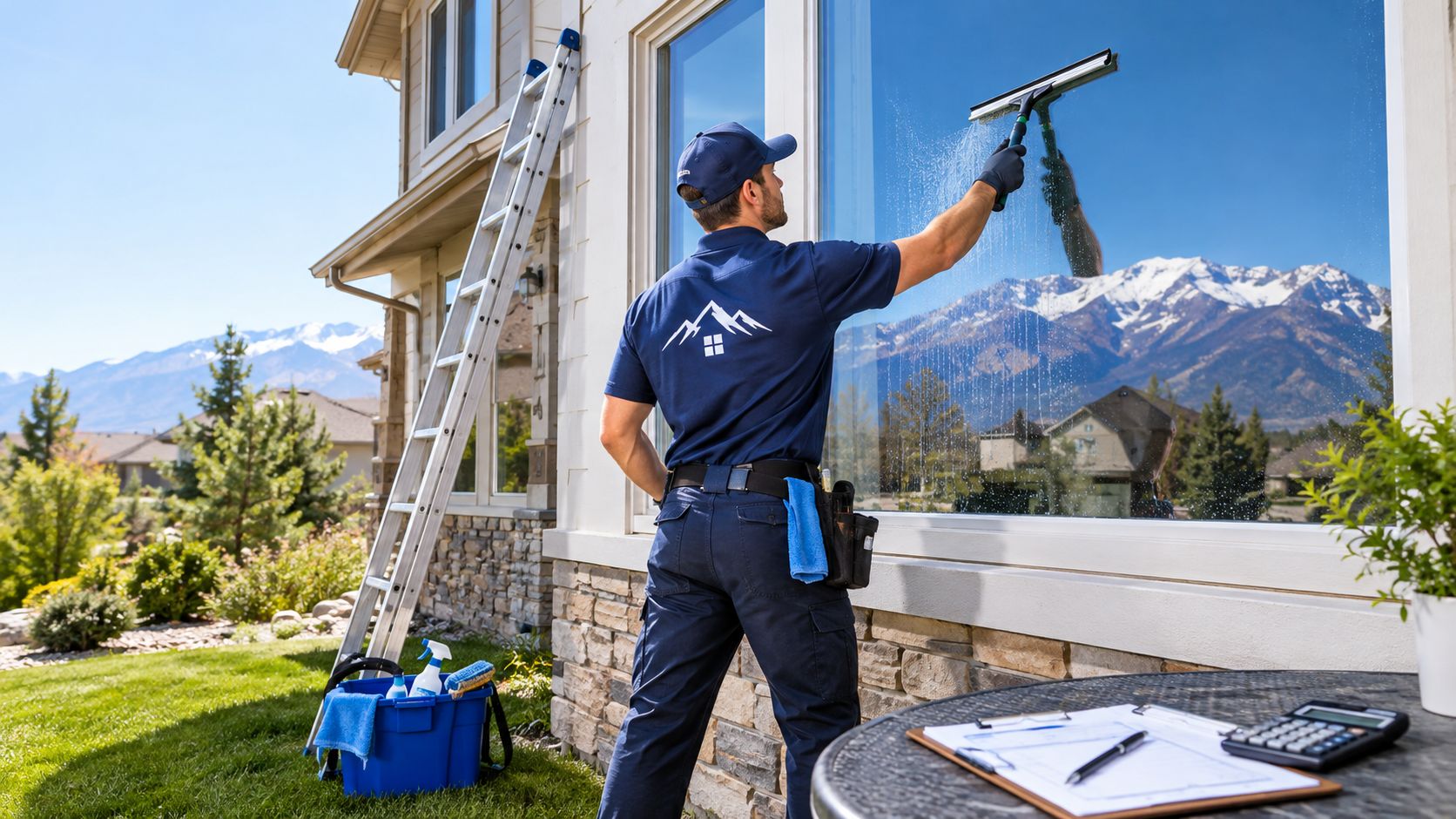
Cultivate House Detailing provides pressure washing for siding in Colorado Springs and nearby communities, with attention to wide spray patterns, safe distance, and controlled force. You can expect an assessment, a clear scope of work, careful cleaning around openings, and a final walkthrough that separates cleaned areas from coating problems that require another trade.
Cultivate House Detailing offers siding pressure washing and exterior cleaning for Colorado Springs homes and businesses, including careful work around aluminum panels, windows, trim, and other vulnerable surfaces. Visit Cultivate House Detailing to request a quote or schedule a professional assessment before your Saturday project turns into siding repair.