Skip the straight vinegar in a spray bottle. That's the most popular advice for how to clean windows with vinegar, and it's usually too strong, too smelly, and wrong for the glass in front of you. Most Colorado Springs panes need a weak, measured mix, clean tools, and a quick check of coatings and frames before you spray anything. Get the ratio right and vinegar handles light mineral film well. Get it wrong and you'll chase streaks, leave residue, or risk a finish that shouldn't touch acid at all.
Vinegar Ratios for Routine, Heavy and Hard-Water Jobs
Ordinary dust and fingerprints do not need a strong acid. For uncoated panes, Utah State University Extension's home cleaning guidance lists 1/2 cup distilled white vinegar in 1 gallon of water, equal to 2 tablespoons per quart, and advises testing any formulation on a small, concealed area first. I would keep that dilution as the default for routine Colorado Springs glass.
Why Dilution Matters
Vinegar works because acetic acid reacts with alkaline mineral residue, including the calcium and magnesium behind water spots and cloudy film. Household vinegar in the United States is regulated to contain at least 4% acetic acid. Common bottles are often around 5% and may reach 8%, according to Harvard's public-health nutrition resource on vinegar. That resource notes 5% vinegar can kill some household pathogens but does not eliminate all of them, including Salmonella. Do not treat it as a registered disinfectant.
That chemistry sets the limit. Vinegar targets mineral deposits, not heavy grease, grit, sap, or cooking film. Loose dirt still has to come off first. Greasy interior glass can take the same weak mix plus a small amount of liquid detergent. Never combine vinegar with bleach or other chlorine cleaners. Acidic products can generate hazardous fumes with chlorine-containing products.
Water choice matters as much as vinegar strength when tap water spots quickly. The role of water quality in streak-free window cleaning is why distilled water is the better carrier for the mix.
Vinegar and Water Ratios by Cleaning Situation
| Situation | What to use |
|---|---|
| Light dust and fingerprints | Default gallon mix above, after a hidden-corner test |
| Quick spray for standard panes | That same default, transferred to the spray bottle |
| Lightly soiled glass | Default mix only after loose grit is wiped or rinsed off |
| Heavy soil with soap | Default mix plus a small amount of liquid detergent for grease |
| Hard-water deposits | Default mix left in contact with the mineral film, not a stronger unmeasured pour |
Practical rule: Use the weakest mix that removes the mark. A stronger pour is not cleaner when the problem is dirt, grease, or a dirty squeegee blade.
Treat the table as a starting point. Keep solution off frames and sills. Stop if the weak mix leaves the surface unchanged after a careful wash. That result tells you more than another splash of vinegar will.
How to Wash Windows with Vinegar Step by Step
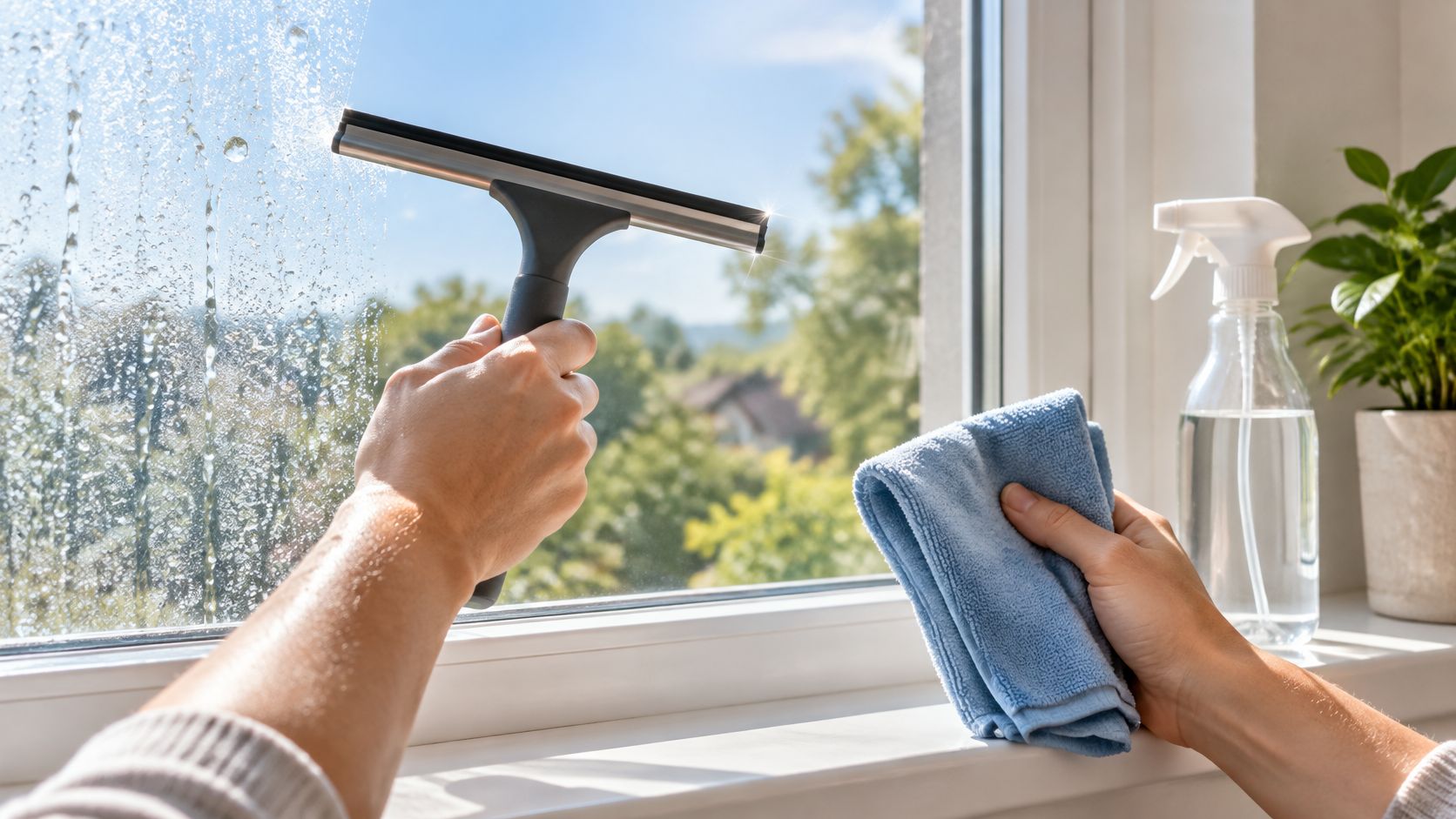
You don't need specialty equipment for ground-level glass. Gather two clean microfiber cloths, a microfiber washer or soft sponge, a rubber squeegee with an undamaged blade, a spray bottle, and a bucket. Dirty tools undo good ratios, so start with cloths that haven't picked up wax, fabric softener, or grit from another job.
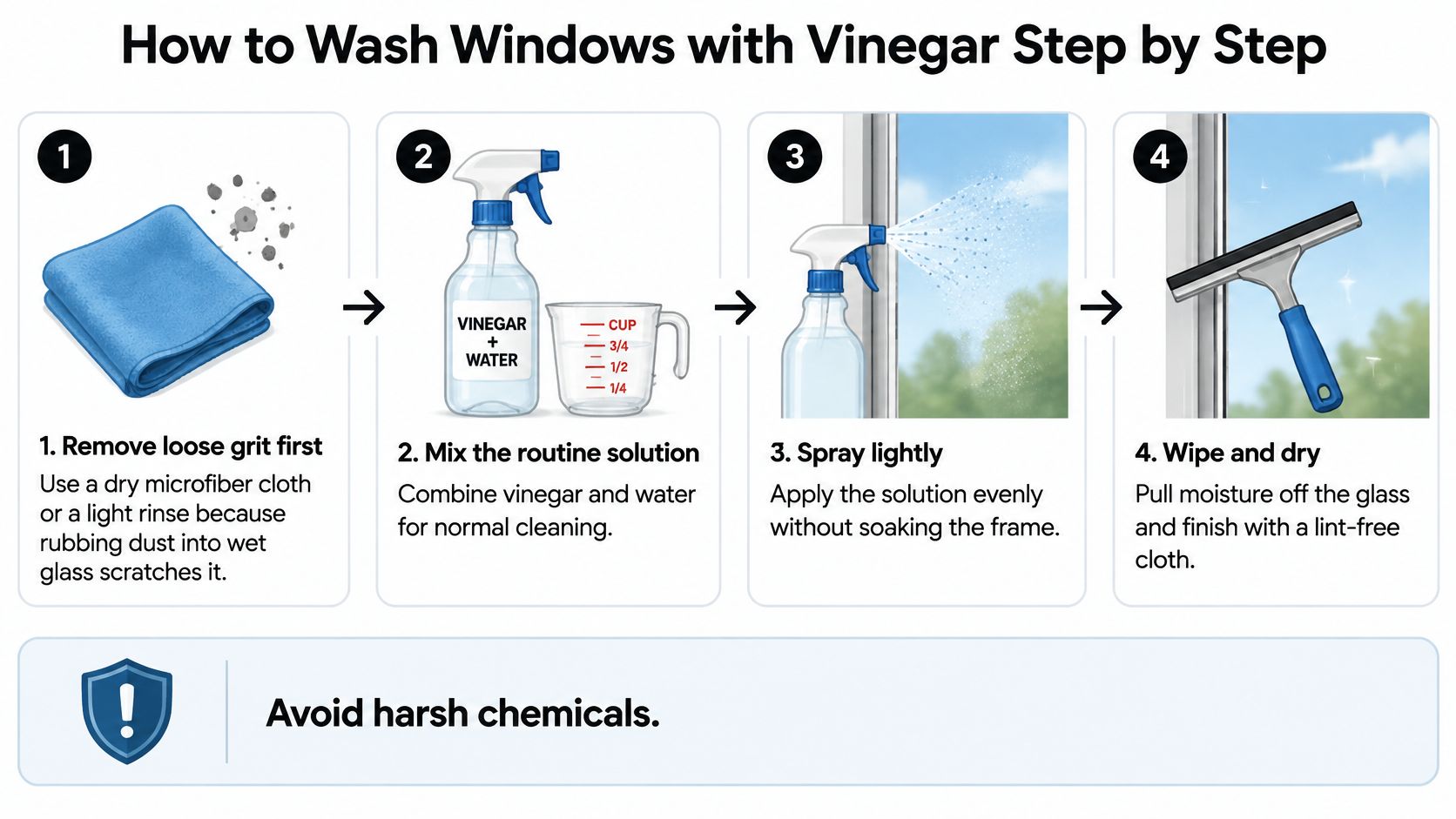
The Seven-Step Wash
Remove loose grit first. Dry-wipe frames and glass with a clean microfiber cloth, or give exterior panes a light rinse. Rubbing Colorado dust and sand into wet glass can scratch it, so don't let your washer become sandpaper.
Confirm chemical compatibility, then mix. Check the label of any other cleaner already in use and don't combine vinegar with bleach. Mix the routine solution in your bucket or spray bottle, using distilled water if your tap water routinely leaves spots.
Work on cool glass in shade. Hot panes and direct sun flash-dry the solution before you can squeegee it. Early morning, late afternoon, or an overcast stretch gives you working time and more even drying.
Wash top to bottom in small sections. Dampen the washer, don't soak the frame, and clean an area about a yard square at a time. Working downward keeps dirty drips off glass you've already finished, and small sections stay wet long enough to remove cleanly.
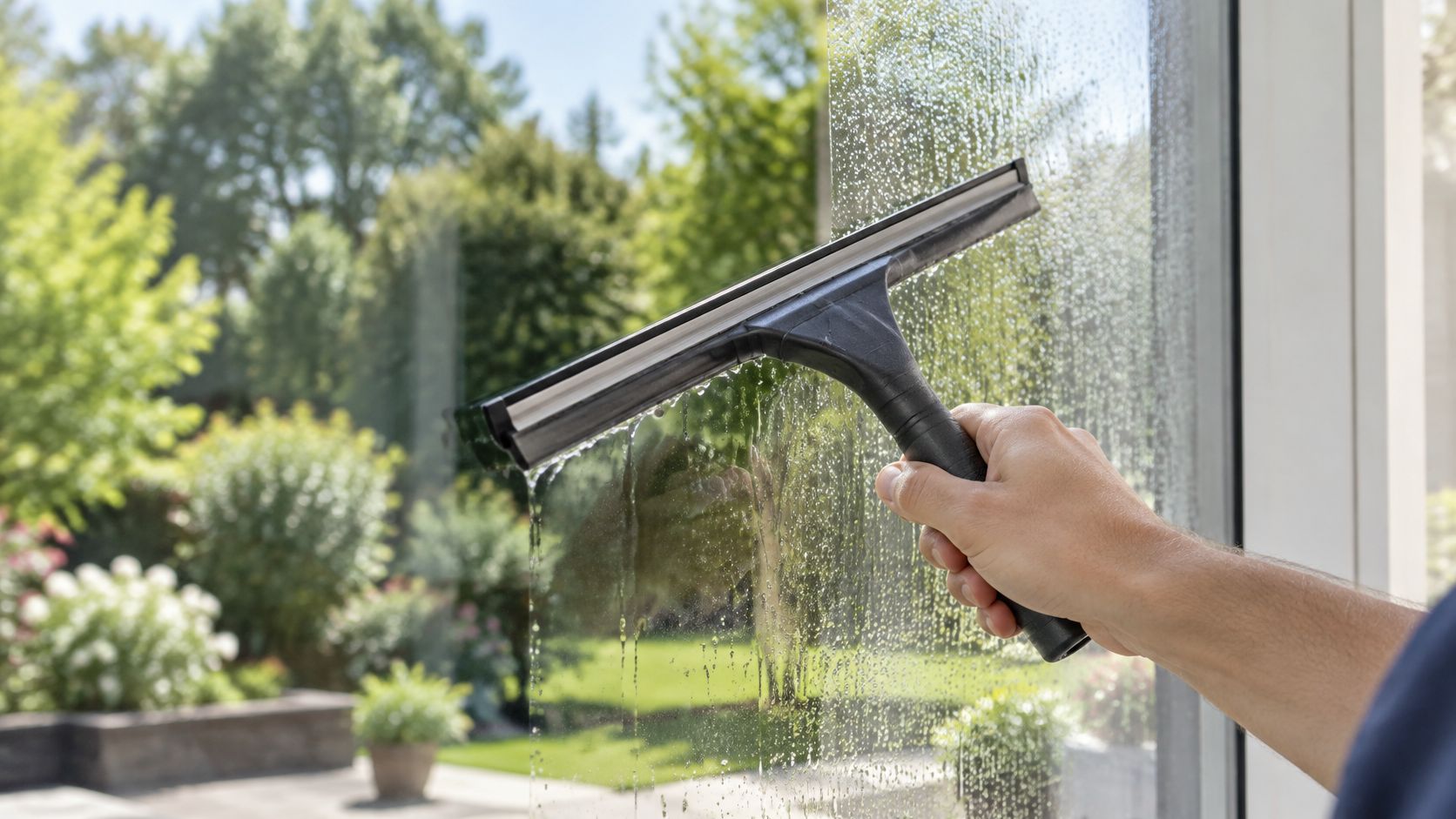
Squeegee in overlapping strokes. Pull the blade down steadily, overlap the previous pass slightly, and wipe the blade on a clean cloth after every pass. A dirty or nicked blade redeposits film in a neat line that looks like a solution problem.
Detail edges, sills, and tracks. Use a cloth wrung nearly dry where drips collect. Corners and tracks hold gritty water, and that water creeps back onto the pane if you leave it sitting there.
Buff and inspect dry. Remove remaining moisture with a dry microfiber cloth, then view the pane from several angles after it's fully dry. Light changes reveal missed edges and faint lines you won't see straight on.
What a Finished Pane Looks Like
A finished pane has even clarity from every angle, no beads along the edges, and no sharp vinegar smell lingering after about 20 minutes. If it looks clear wet but hazy dry, don't immediately remix stronger vinegar. Check your blade, cloth, detergent amount, and rinse water first.
Keep each section wet until the squeegee passes. Vinegar solution that dries on glass leaves the very residue you're trying to remove.
For interior window cleaning, use less liquid and protect flooring and painted sills. For exterior window cleaning, rinse away grit before contact and keep overspray off stone, plants, and frame finishes. The method stays the same, but water control matters more inside.
Streaks, Cloudy Film and Other Fixes
Streaks after drying are the complaint that sends people back to the vinegar bottle. Don't add acid yet. Remaining streaks usually indicate contaminated cloths, dirty squeegee rubber, overuse of detergent, mineral-heavy water, or incomplete edge detailing, not a need for stronger vinegar, according to New Mexico State University's guide to cleaning and care in the home. That guide also recommends washing hard stains with soapy water before applying a stronger spot treatment.
Match the Symptom to the Cause
| Symptom | Likely cause | Fix |
|---|---|---|
| Streaks after drying | Dirty cloth, nicked squeegee blade or too much detergent | Fresh microfiber, new blade, detergent cut to 1/4 teaspoon |
| Cloudy white film | Hard-water mineral deposits | Soapy wash, rinse, then a brief 1:4 vinegar treatment |
| Water spots that return | Mineral-heavy tap water | Use distilled water for the final rinse |
| Sour smell or sticky residue | Vinegar left on the glass | Wipe again with plain water and dry |
| Hazy surface that will not wipe clean | Etched or damaged glass | Stop and get a professional assessment |
For cloudy white film, wash with soapy water first, rinse, then apply the diluted vinegar briefly and agitate gently with a nonabrasive cloth. That order matters because soap removes surface soil that blocks the acid from reaching mineral scale. Rinse or wipe the solution away and dry fully before judging the result.
Returning water spots point to your rinse, not your scrubbing. Switch the final rinse to distilled water and dry edges completely. If spots appear mainly below sprinklers, fix overspray where you can, because fresh mineral water will keep rebuilding the deposit.
A sour smell or sticky feel means solution stayed behind. Wipe with plain water, squeegee again, and buff dry. Don't mask it with another cleaner, since layered products make diagnosis harder and can create compatibility problems.
If a pane still looks cloudy from several angles after two careful washes, stop adding acid.
Etched glass is the hard boundary. Vinegar can dissolve removable scale, but it can't restore a surface that minerals have roughened or damage sealed inside insulated glazing. Repeated treatments waste time and increase contact with frames and coatings. At that point, hard water stain removal needs an assessment of whether polishing, professional treatment, or glass replacement makes sense.
Glass and Frames Where Vinegar Does Harm
Treat the frame as the first limit, not an afterthought. Ordinary clear glass, tinted glass, low-E coatings, and applied films do not share one safe cleaner. Wood, vinyl, paint, and stone often fail before the pane does.
Pilkington's technical bulletin on manual washing of clear and tinted glass permits one part clear vinegar to as many as ten parts clean water, and it warns that some acids and alkaline solutions can damage glass or coatings. Hard-coated low-emissivity glass calls for a weak solution, gentle lint-free cleaning, and no abrasive contact. Check the manufacturer's care instructions before you mix anything.
Vinegar Guidance by Glass and Frame Type
| Surface | Vinegar guidance | Reason |
|---|---|---|
| Ordinary clear glass | Weak dilution for light soil; do not leave acid sitting | Gentle mineral removal on uncoated glass |
| Tinted glass and low-E coatings | Weak solution, lint-free cloth, no abrasive contact; follow the maker's care sheet for low-E | Stronger acid and scrubbing can damage coatings |
| Wood, fiberglass, or vinyl frames | Keep vinegar off the frame | Acid may discolor the finish |
| Painted trim and stone sills | Keep off; rinse any overspray | Acid can etch or dull the surface |
| Unsealed grout and some metals | Avoid contact | Acid can etch or corrode |
Aftermarket film is a separate case. Check its care limits before you choose a cleaner. These bubble-free window film application tips are a practical reminder that film handling is not the same job as washing bare glass. For tint specifically, the guide on what to clean tinted windows with covers the gentler approach those panes need.
Run This Check Before You Spray
- Read the manufacturer's instructions. Coatings and films set their own limits, and a generic vinegar mix does not override them.
- Test a concealed area. Use the weakest solution on a hidden corner, let it dry, then look for haze, a color shift, or a dull finish.
- Name the surface before you spray. Clear glass, tint, low-E, film, and the frame each need a different pass. If you cannot tell them apart, do not spray the whole elevation.
In hard-water homes around Colorado Springs, I recommend the weakest mix the surface allows. A stronger dose will not fix a coating or a frame that should never have seen vinegar.
Safety Limits and When to Hire a Local Pro
Vinegar belongs on ground-level panes you can reach with both feet planted: light soil or a mineral film that still wipes away, and glass the manufacturer allows an acid mix on. Hand the job off when the only route is a lean from a household ladder, the coating rules are unclear, the glass is already etched, or you need a whole house finished evenly and safely.
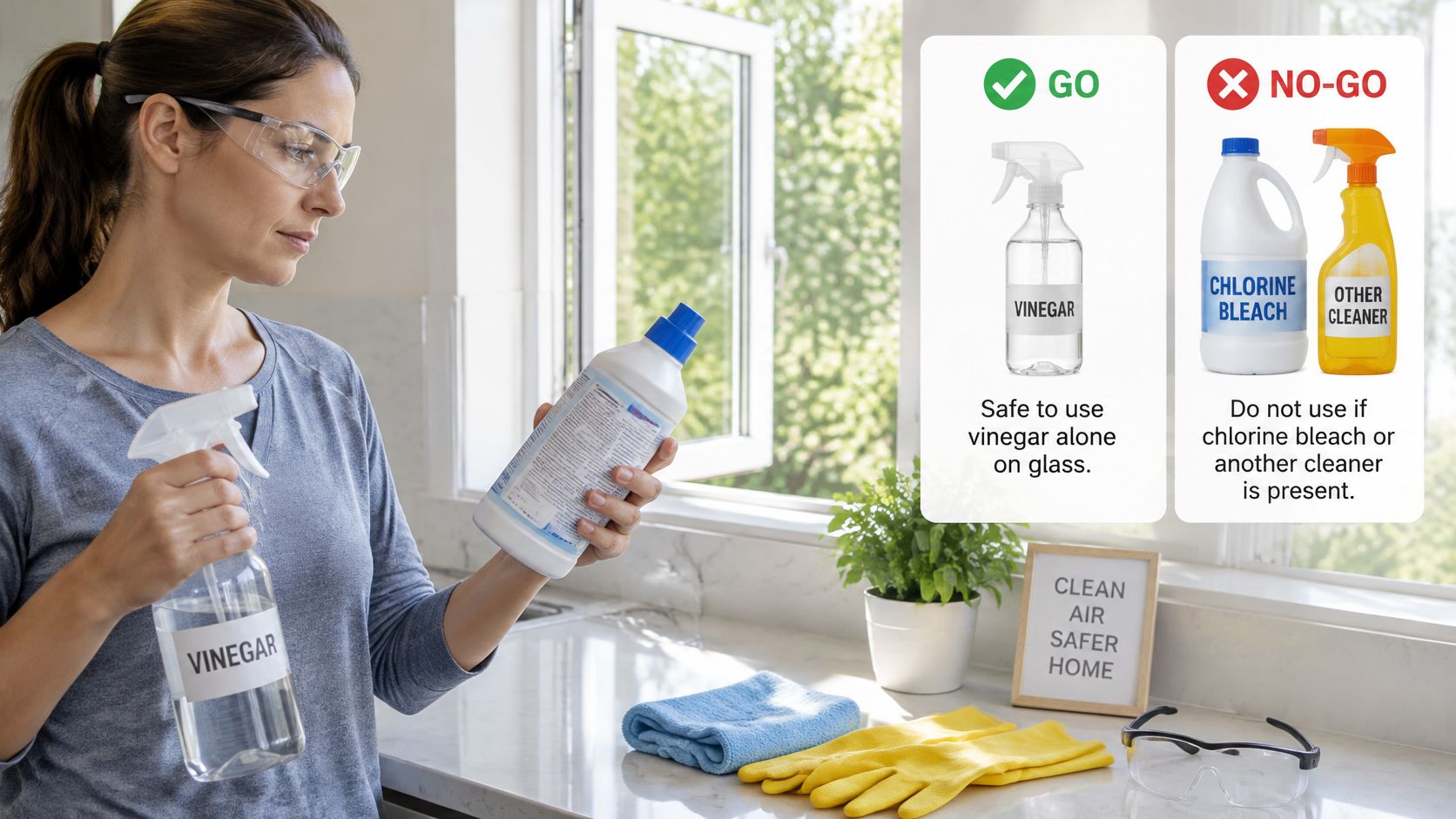
Chemical Rules That Aren't Optional
Never mix vinegar with chlorine bleach or with another cleaner unless the product's label specifically tells you to. Ventilate the room, follow the label, and wear eye and skin protection while you spray, especially overhead or in a breeze. If the house holds stale air while you clean, it may help to find home ventilation solutions that improve everyday airflow. During the job, open windows and a running local exhaust fan are the controls you use.
Keep the mix off natural stone, unsealed grout, sensitive metals, painted finishes, and frame materials that discolor. Wipe or rinse overspray as soon as it lands. Store the mixed solution in a labeled bottle, away from bleach, so nobody combines the two by mistake.
Height Changes the Job
Second-story glass stays a pro job even when the ladder in the garage is long enough to touch the frame. Climbs above modest heights need fall protection, stable footing, and a way to work without leaning out. Fixed-ladder hardware, harness systems, and rest points belong to trained access work, not a bucket on an extension ladder.
Sloped yards, shrubs, dormers, and bay windows add risk on Colorado Springs houses. Professional crews use access built for the height, including water-fed poles that pump purified water onto high exterior glass, instead of asking a homeowner to balance a squeegee overhead.
No-go rule: If you can't keep both feet stable, reach without leaning, and control your tools with both hands available when needed, hire the height work out.
What to Expect from a Local Pro
Cultivate House Detailing serves Colorado Springs, Black Forest, Monument, Manitou Springs, and Woodland Park with residential and commercial window cleaning. The work covers interior and exterior glass from ground level through the 4th story. Crews tailor the method to the window, including tinted glass, historic wooden frames, and modern vinyl fixtures. Interior cleaning includes dirt and grime in corners and tracks, and screen repair is available when a damaged screen lets grit back onto the glass.
A quote depends on the number, size, and location of the windows. Before you call, count the panes, note rough sizes, and flag anything high or awkward to reach. Mention coated, tinted, filmed, or etched glass so the method matches the surface.
Cultivate House Detailing recommends cleaning windows at least 2 times per year. That pace limits hard-water minerals before they harden, keeps natural light and curb appeal, and makes each visit faster than a rescue job on neglected panes. Choose help when height, an unknown coating, etching, or the size of the house makes vinegar the risky option.
If vinegar is not clearing the glass, or the panes sit above safe reach, Cultivate House Detailing cleans interior and exterior windows in Colorado Springs and nearby communities, with methods matched to the glass and frames. Visit Cultivate House Detailing to request a quote based on window count, sizes, and locations, and get streak-free windows without hauling out a ladder.